Breaking Down New York Giants' Situation at Offensive Line
Up next in my New York Giants positional preview is the offensive line, the last of the units on the offensive side of the ball.
2015 in Review
Lately the Giants have been about setting the wrong kind of notables in their franchise history, and the 2015 season was no exception when it came to the offensive line.
TOP NEWS

K9's Blunt Postgame Quote 😑
Rodgers Calls Out Owners After Paris Game
.jpg?w=2560 "LA Premiere of \"Chad Powers\"")
Latest Peyton-Colts Rumors

For the first time in recent memory, the Giants fielded five new faces at all five of the offensive line positions.
Ereck Flowers stepped in for the injured Will Beatty at left tackle, Justin Pugh moved from right tackle to left guard, Weston Richburg moved from left guard to center, Geoff Schwartz moved from left guard to the injured list to right guard and newcomer Marshall Newhouse stepped in at right tackle.
That, ladies and gentlemen, is simply unheard of in today’s NFL, where it’s generally preferred that the offensive line have some sort of continuity.
So how did it all play out?
The good included an offense that finished at No. 8 overall and a passing offense that finished No. 7 overall.
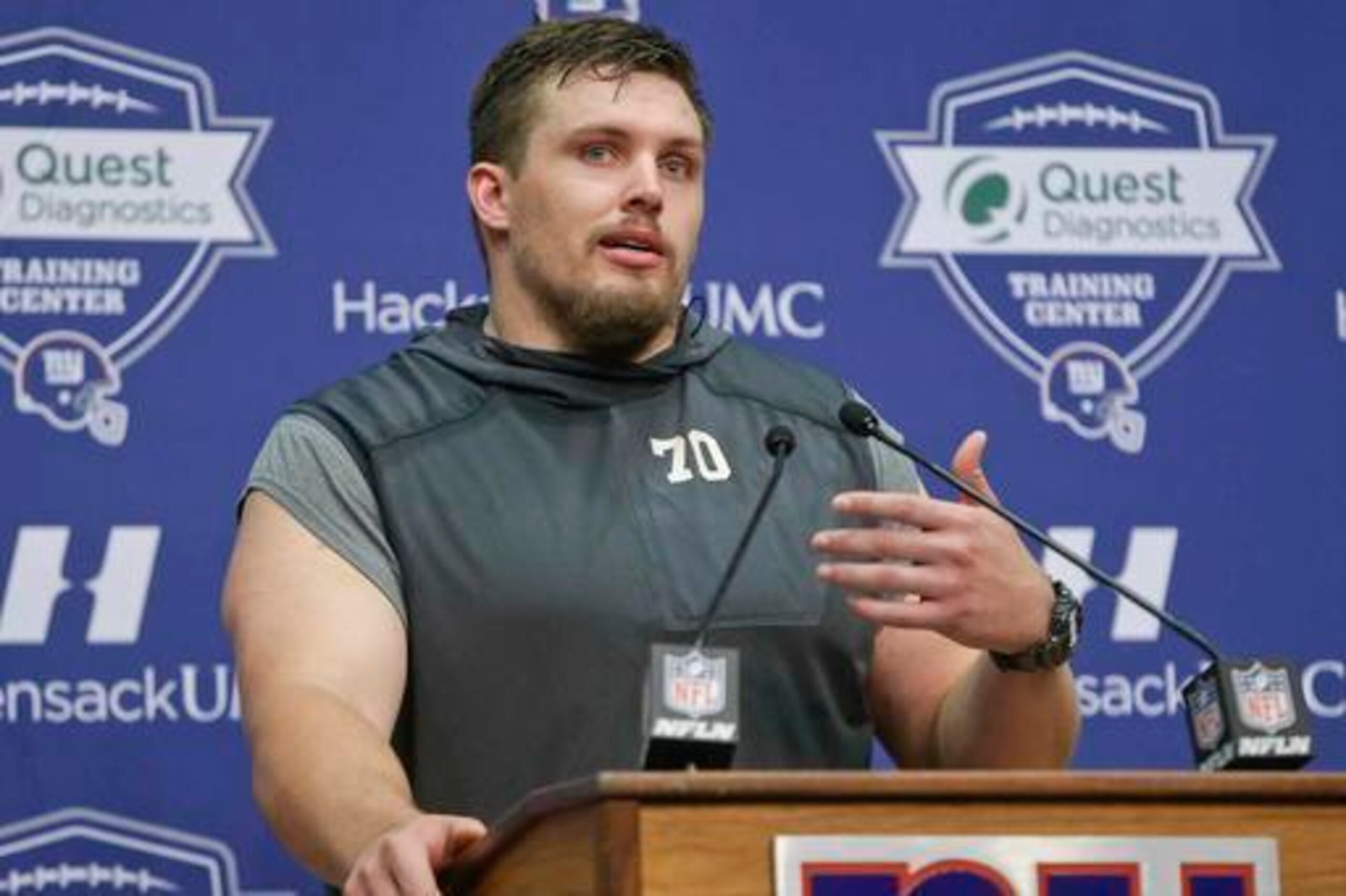
The offensive line also tied for fourth-fewest sacks (27), so in that regard, it was nice to see that the jumbled offensive line came together quickly enough to allow the Giants offense to play to its strength, which is the passing game.
Another good thing that largely went unnoticed by many people: the development of Richburg at center.
Richburg might not be a fan of Pro Football Focus’ grading system, but I’d guess he was pleased that his play at his natural position of center is starting to earn him recognition, such as being named to PFF’s 2015 Pro Bowl Team.
".@Giants C Weston Richburg allowed only 12 pressures last season, third-fewest among centers; sits at No. 89 on PFF's top 101 of 2015 list.
— Pro Football Focus (@PFF) May 9, 2016"
In Richburg, Pugh and Flowers, the Giants have a strong nucleus at that critical unit.
However, the unit, much like the unfinished construction project formerly known as Xanadu that overlooks the Giants stadium and team headquarters, is a work in progress, with the offensive line probably closer to completion and looking a lot better than the multi-colored structure.
2016 Outlook: Where Can This Unit Improve?
There are two areas where the Giants offensive line can most improve: penalties and run blocking.
Let’s start with drive-killing penalties.
According to NFL Game Statistics and Information System, tackles Ereck Flowers and Marshall Newhouse were flagged 10 and eight times, respectively (Flowers led the team while Newhouse tied Odell Beckham Jr. for second-most penalties on the team).

The pair’s penalties resulted in 113 total penalty yards and led to eight stalled drives.
In breaking down some of their penalties further, the bulk of those infractions were holding (four for Flowers and five for Newhouse) followed by false starts (three for Flowers and two for Newhouse).
The run blocking is another area in which there needs to be improvement. While the Giants’ struggles to run the ball aren’t all on the offensive line—part of the blame has to go to the running backs and to the tight ends—the line didn’t exactly help the situation.
The following table breaks down the average yards gained per rush according to where the play was run:
| Left End | Left Tackle | Left Guard | Middle | Right Guard | Right Tackle | Right End | |
| Play Count | 23 | 58 | 74 | 112 | 71 | 38 | 15 |
| NFL Rank | 31 | 8 | 2 | 15 | 6 | 24 | 30 |
| Avg. Gain | 2.17 | 4.33 | 4.66 | 4.82 | 3.58 | 4.26 | 5.27 |
| NFL Rank | 32 | 14 | 10 | 2 | 22 | 18 | 12 |
To add to the above, according to Football Outsiders, the Giants offensive line ranked 30th overall in power, 11th in stuffs (zero or negative yards allowed), 21st in average second-level yardage and 23rd in open-field yardage in the run game.
While the passing game might be the Giants’ bread and butter, if they want balance, they’re going to have to do a much better job of run blocking up front.
The X-Factor: Bobby Hart
Going into the draft, one of the arguments that some people made against New York drafting another offensive lineman was that it would have meant that the team devoted an excess amount of resources to one unit.
Agree or disagree, such a move wouldn’t have necessarily spelled the end of the Giants, not after several poor drafts in which the Giants did add offensive line help that simply didn’t pan out.
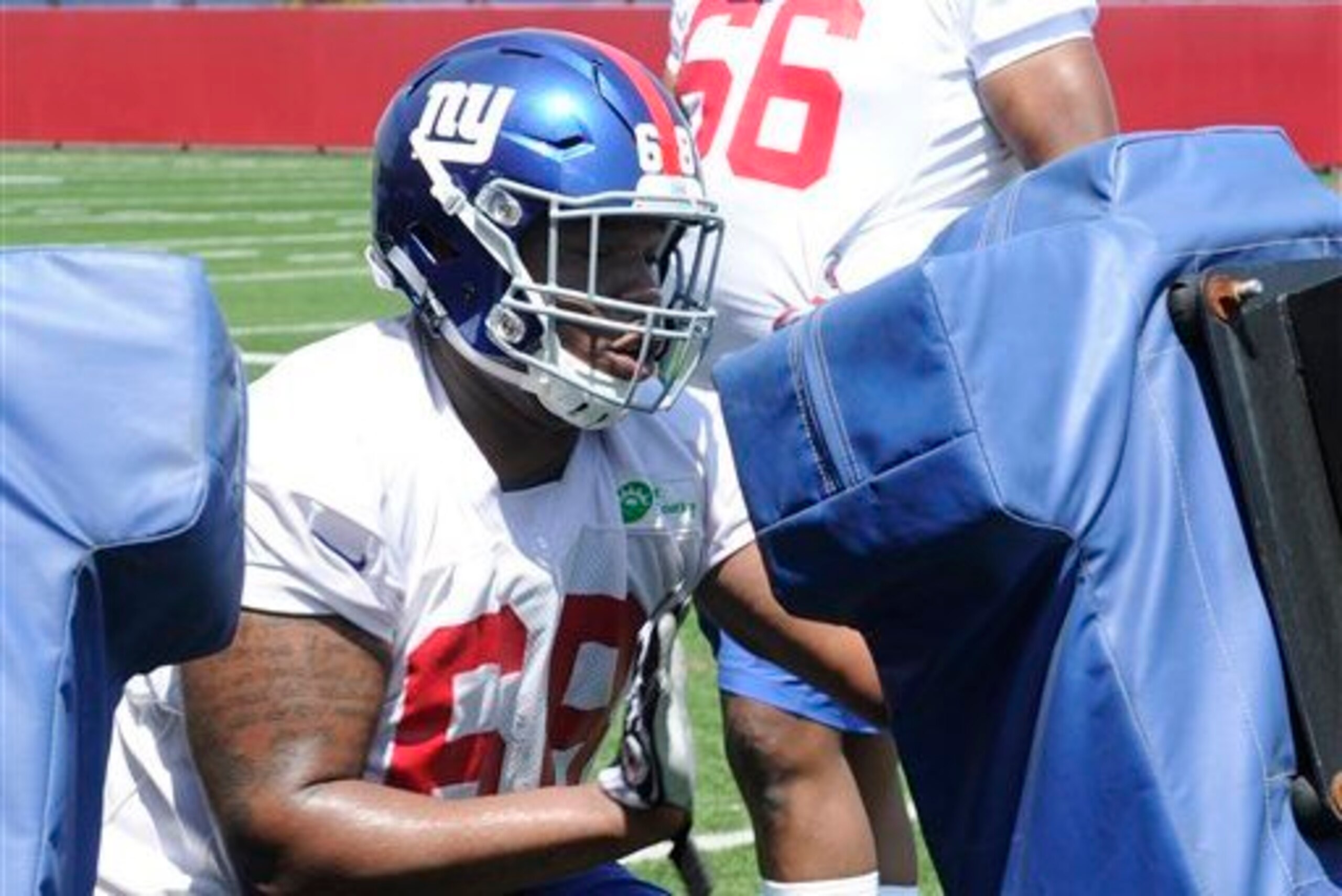
But I digress. This year, the Giants are looking toward one draft pick, 2015 seventh-rounder Bobby Hart, to step in as one of the final missing pieces of what is shaping up to be a solid and young offensive line.
There are two questions, however, regarding Hart. The first one is where his best fit on the line is, at guard or tackle, both positions he has experience in.
According to his NFL.com draft profile, Hart’s best position is at guard despite the fact that he played right tackle for a Florida State team that won a national championship.
There are two other questions regarding where Hart might play, assuming he wins a starting job. The first, as Lance Zierlein of NFL.com pointed out, is that at just 21 years old, Hart’s body is still developing into an NFL player’s body.
With that in mind, Hart told Dan Graziano of ESPN.com that he shed 25 pounds in the offseason and is down to 315 pounds. Playing at a lighter weight should help Hart's mobility and his stamina in getting through a 16-game season.
Getting back to Hart’s best position, playing tackle requires better feet and mobility than Hart showed coming out of college. However, in the limited practices that were open to the media for viewing, the coaches had Hart working primarily at right tackle with the second string offensive line.
Whether that changes remains to be seen, but one thing is for certain, Hart appears to be the main domino as far as the right side of the offensive line is concerned.
Questions
Why didn’t they add someone—anyone—to this unit during free agency?
They tried—honest! The problem is the offensive tackles they targeted—Russell Okung and Donald Penn—were both career left tackles who had no interest in moving to the right side.

Okay, so why not be accommodating to a new player and move Ereck Flowers, who struggled at left tackle to the right side, which is where he was supposed to have played last season before Will Beatty’s pectoral injury?
The Giants always viewed Flowers as their future left tackle; unfortunately, the future had to start a little earlier than they wanted it to.
Thus after one year of cutting his teeth at left tackle at the NFL level, the strong preference was to leave Flowers at left tackle where the hope is that under new offensive line coach Mike Solari, Flowers will clean up some of the sloppiness that showed up in his footwork in the second half of the season (though to be fair, how much of that sloppiness was due to his seemingly season-long ankle issue is something that needs to be taken into account).
One final thought. General manager Jerry Reese said on more than one occasion that sometimes the answer is already on the roster.
From the moment he first expressed that sentiment, it was pretty clear that draft pick Bobby Hart was being viewed as part of the solution if he can show progress this spring and summer.
How will the right side of the offensive line shake out?
Barring the addition of a veteran who shakes loose sometime between now and the start of the 2016 season, the most likely scenario, and the one I think the coaches would prefer would see John Jerry at right guard, Bobby Hart at right tackle and Marshall Newhouse on the bench.

As previously noted above, Hart is the X-factor.
If something goes astray and he doesn’t develop as they hope, then a return engagement of Jerry and Newhouse at guard and tackle respectively isn’t out of the question, though my guess is that would be the absolute last resort.
There is another X-factor that creates two other potential combinations and both have to do with Byron Stingily, an offensive tackle whom the Giants picked up late in free agency.
If Stingily, who has appeared in 20 NFL games with nine starts, wins the battle at right tackle, then the right guard could potentially come down to either Jerry or Hart.
So when will we know what the offensive line will look like?
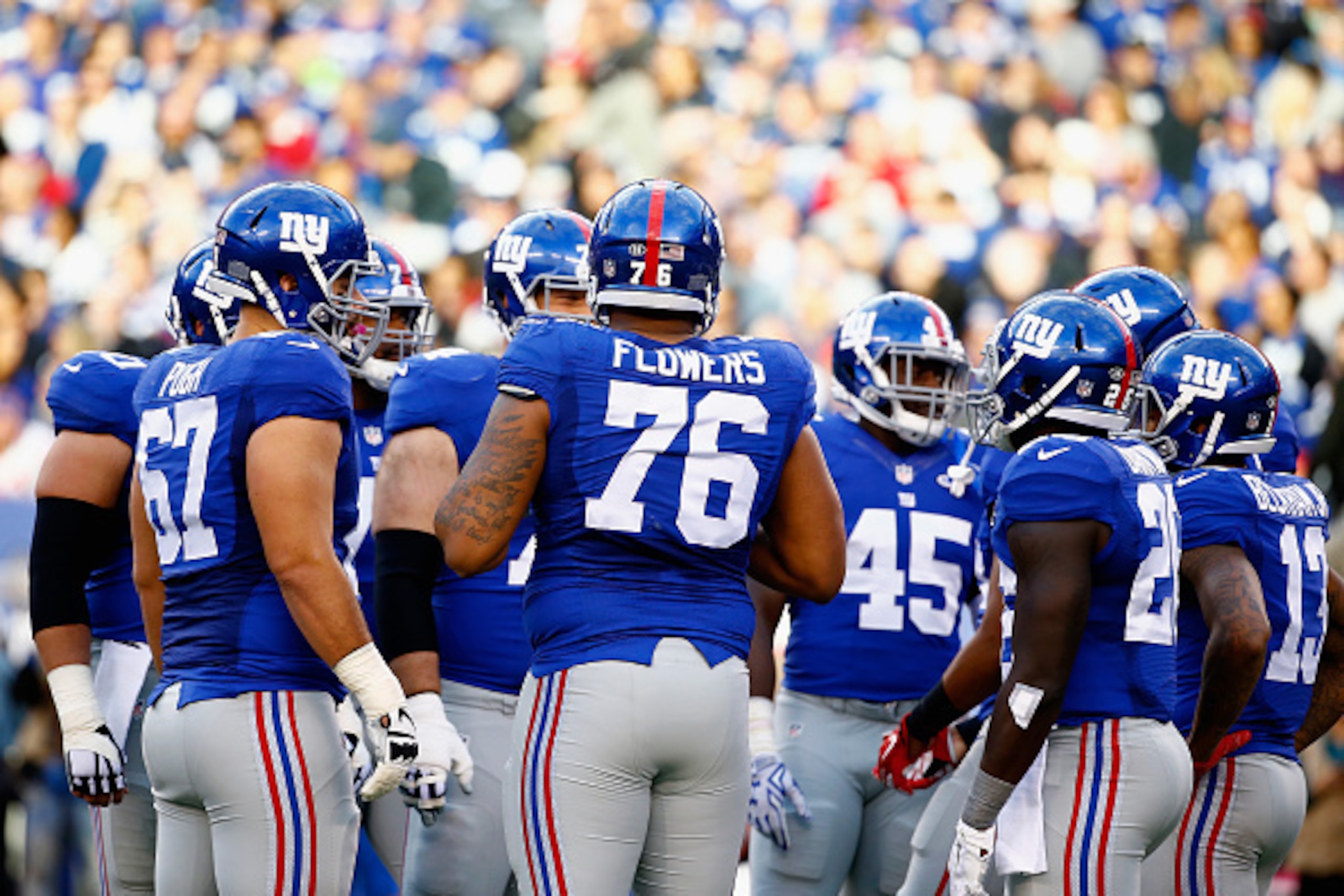
Hopefully sooner rather than later. The Collective Bargaining Agreement puts a limit on the number of padded practices a team can have. It also limits how long the practices can run, so the sooner the Giants can figure out what configuration works best for them, the better.
This hasn’t always been the case in the past—last year, for example, the Giants were still tinkering with different combinations right down to the nub.
The sooner they get the line settled, the more time the chosen five will have in building camaraderie and an understanding of how each other thinks and reacts when things don’t always go according to how it’s drawn up on the chalkboard.
Key Newcomer
Byron Stingily, 6’5”, 318 lbs., Louisville
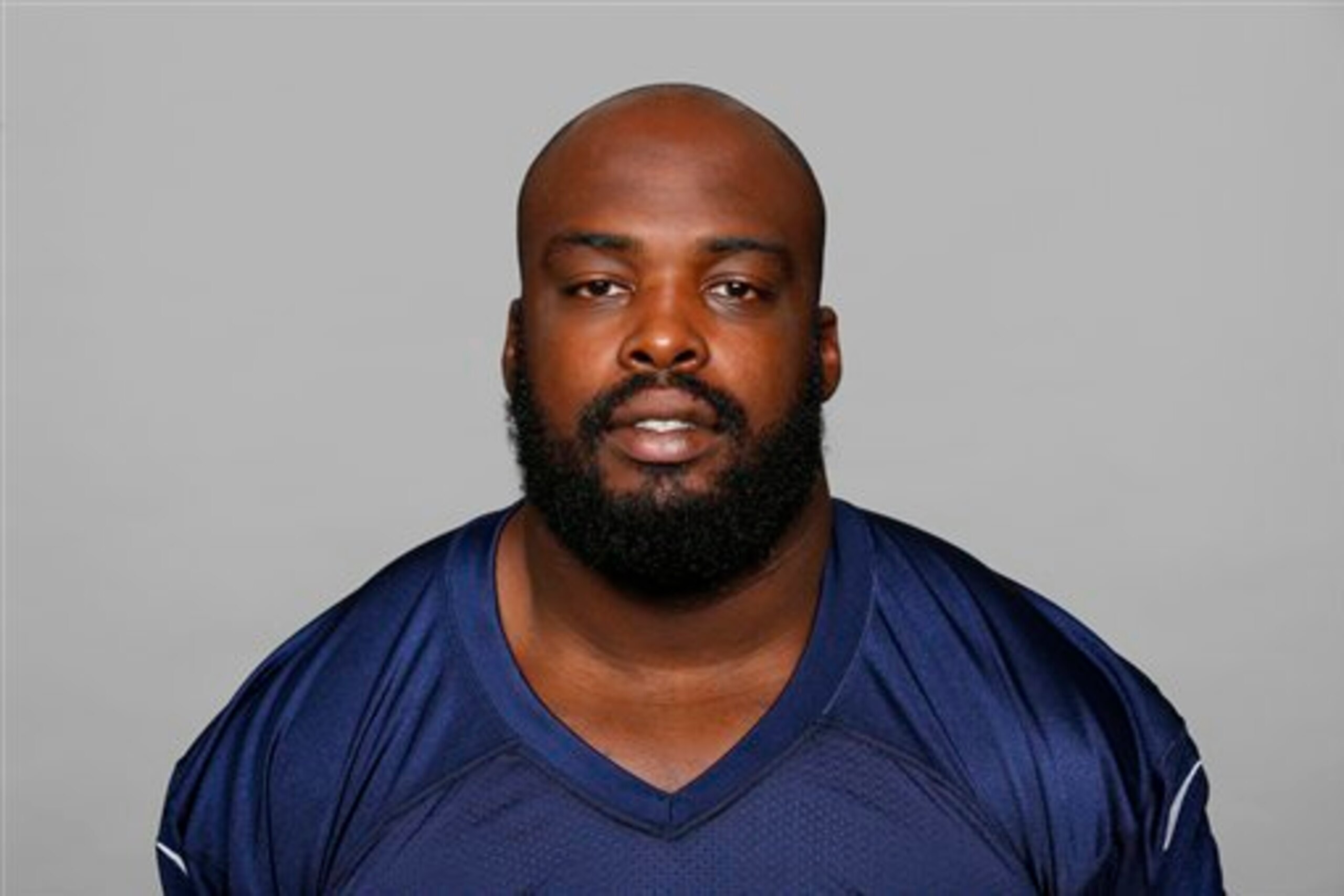
Byron Stingily isn’t exactly the sexy name that many Giants fans were hoping to see land in the offensive line competition. Regardless, he could end up being one of the most underrated signings by the team depending on how things shake out in the summer.
Stingily has played in 20 games with nine starts, all for the Tennessee Titans, who drafted him in the sixth round of the 2011 draft.
He spent last year with the Steelers on October 19 to add depth to their left tackle position after the Steelers lost Kelvin Beachum to a torn ACL. However, Stingily was inactive for the rest of the season and through the postseason.
Patricia Traina covers the Giants for Inside Football, the Journal Inquirer and Sports Xchange. All quotes and information were obtained firsthand unless otherwise sourced. Advanced stats courtesy of Pro Football Focus.
Follow me on Twitter @Patricia_Traina.
.jpg?w=2560)


.jpg?w=2560 "Landing Spots for Trade Candidates 📍")