
MIAMI — For the first time all season, during the 84th and 85th games of his 13th NBA campaign, Dwyane Wade cleared the 30-point threshold in consecutive contests.
His 38-point performance gave Miami a puncher's chance in Game 3, but his teammates disappeared, and the Heat suffered a 95-91 decision to the Toronto Raptors. Wade came back with 30 points two nights later and got just enough help to claw out a 94-87 overtime win.
The 34-year-old said he's "as confident as I've been all season," and Heat head coach Erik Spoelstra warned the future Hall of Famer is "getting stronger." It's hard to argue with either, given the evidence compiled over the past two contests: 34.0 points on 53.1 percent shooting (50.0 from deep), 6.0 rebounds and 3.0 assists per outing.
TOP NEWS

J-Dub Suffers Gruesome Injury
Mazzulla Weighs In on Brown-Tatum Drama

Blockbuster Trade Idea To Shake Up the East
But this is hardly a viable strategy for surviving and advancing, let alone competing against a blistering Cleveland Cavaliers team boasting a perfect 8-0 playoff record. Wade clearly needs more help for a postseason push that won't include Chris Bosh (blood clots) and may not feature a full-strength Hassan Whiteside again (MCL sprain).
Miami's options are limited, but they do exist.
Expanding the Attack
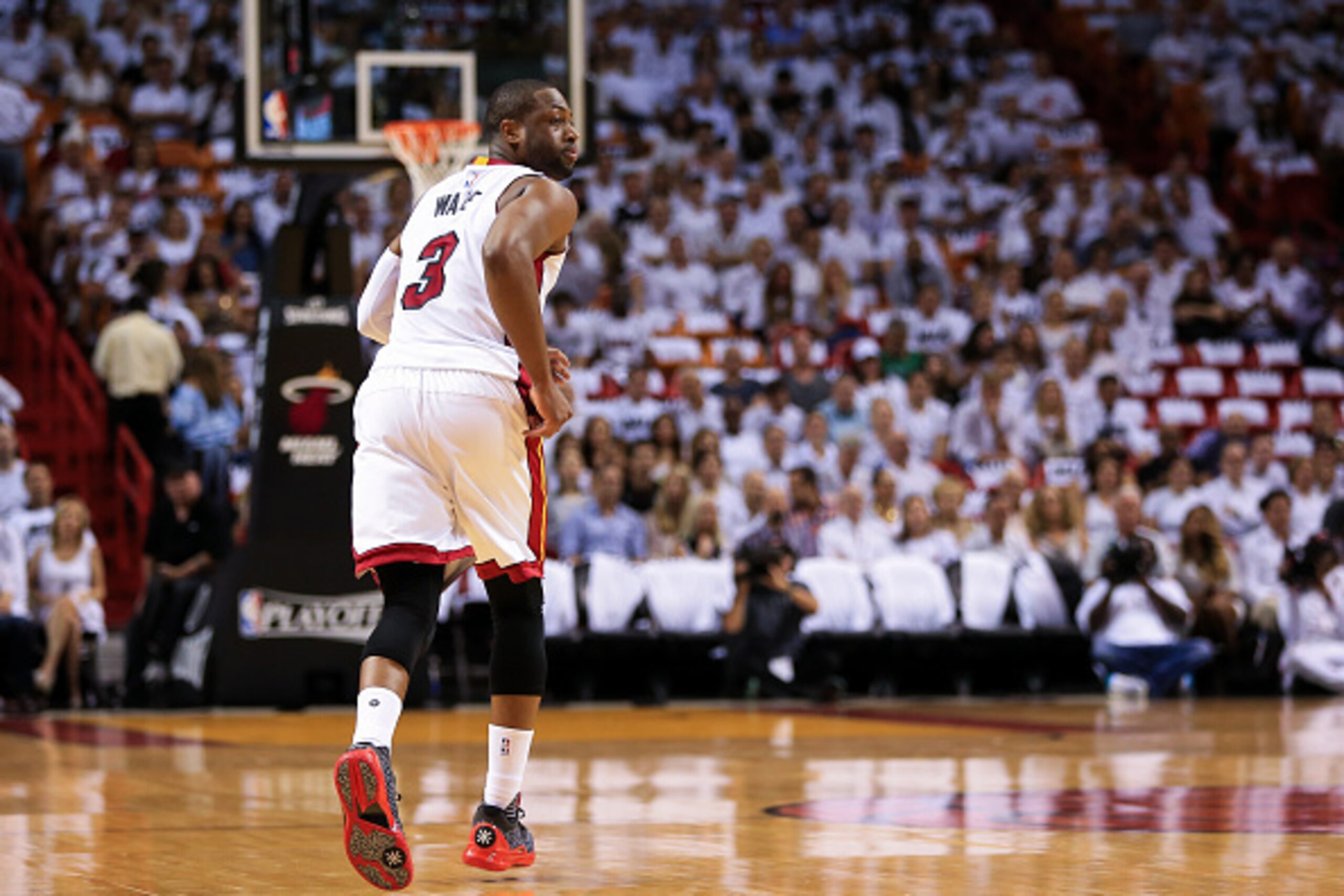
After slogging through 48 minutes of regulation in Game 4, Miami's offense finally showed signs of life during the extra session.
It's not just that the Heat tallied 11 points over the final three minutes, 36 seconds. It's that all four other players got on the board before Wade.
"Down the stretch, that was probably the best that we've trusted, moved the ball, had secondary drives from different guys where we've had better patience and poise in the last 10 seconds of the clock," Spoelstra said.
Yes, Wade willed his club to overtime with a game-tying layup in the closing seconds of regulation. But Goran Dragic delivered the ultimate knockout blow, after Joe Johnson had his chance to create.
This may seem obvious, but Miami's key to properly supporting Wade is getting more players involved.
The Heat's prolific post-All-Star offense discovered an egalitarian approach—six different players averaged double figures. Wade paced that group, but he only averaged 4.5 points more than Miami's No. 4 scorer (19.7 to Luol Deng's 15.2).
During this round, the number of double-digit scorers has been sliced in half. And the gap between Wade and the fourth-best scorer has exploded to 18.0 (27.3 to Whiteside's 9.3).
"He's been putting us on his back," Johnson said of Wade. "We have to chip in and help him out."
The Raptors are struggling to get their primary scorers going too—All-Stars Kyle Lowry and DeMar DeRozan are shooting a combined 35.2 percent in this series—and their ancillary options lack the Heat's track record. If this series turns into a numbers game, Miami has the advantage, provided DeRozan's thumb continues to sap his efficiency.
But it only works if the Heat are smart with how they deploy Wade's support staff.
Playing with Pace
The Heat saved their season once by going smaller. A second downsizing could have the same effect on this round.
When the Heat lost Bosh at the All-Star break, their primary response was going smaller and faster. Deng shifted from the 3 to the 4, and Miami sprinted to a 19-10 finish down the stretch.
The Heat averaged 97.70 possessions per 48 minutes—a spike of more than three from their pre-break numbers (94.67). With that added speed came newfound efficiency. Miami had the league's sixth-highest offensive rating after the intermission—up 18 spots from where it stood before.
Through 11 playoff games, the Heat are playing slower than ever (92.74). They've failed to crack the century mark in seven of those contests and needed an overtime session the only time they've cleared it this round. They aren't finding as many transition opportunities either, averaging just 9.3 fast-break points in the Eastern Conference Semifinals, down from 12.2 during the second half of the season.
Credit Wade for making it work often enough to secure a 2-2 split, but this isn't the Miami team that opened eyes during the season's second half.
"We want to get back to a game that looks like how we play," Spoelstra said.
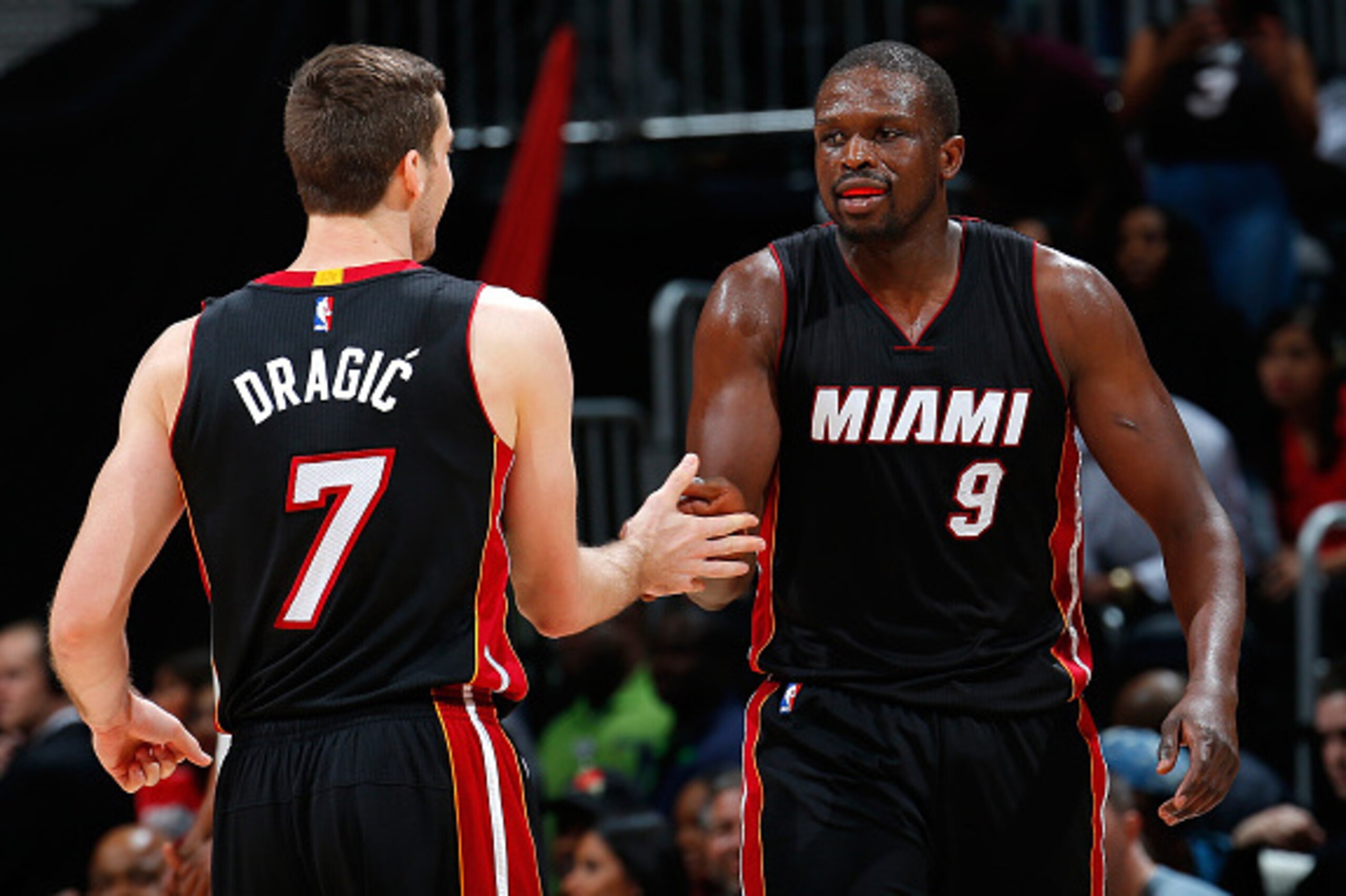
Wade can dazzle at a methodical pace, but Miami's next scoring options—Dragic, Deng and Johnson—all work best at a faster tempo. All three made a major impact after the All-Star break. And all three have since lost volume, efficiency or both.
They need the easy ones, since their non-Wade half-court activity isn't producing much. And they should look to push whenever possible, to potentially attack a defense that isn't set yet.
To that end, the shift away from injured bigs (Raptors center Jonas Valanciunas is sidelined by a sprained ankle) should help Miami play at a better speed. The Heat played their best in Game 4 when they went without a traditional post player—the Wade-Dragic-Deng-Johnson-Justise Winslow quintet posted a game-high plus-14 in its 10 minutes together.
"It helps us get out and run," Winslow said of the smaller look.
Better Movement

In addition to pace, the other key trait of the Heat's post-All-Star-break offense was precise movement— both of bodies and the ball.
Neither aspect is currently clicking. Miami's actions take longer to materialize. The Heat are using more time (3.32 seconds) and more dribbles (2.95) per touch against Toronto than they did in the second half (2.87 and 2.43, respectively).
And those touches are becoming more predictable, since Miami's ball movement has tailed considerably. The Heat averaged 304.7 passes and 22.1 assists per game after the All-Star break. They're down to 262.5 passes and 13.0 assists this round.
"We're simply not moving the ball the way we're normally used to and getting everybody involved," Spoelstra said.
Miami has catch-and-shoot threats in Johnson, Deng and Josh Richardson. Deng, Winslow and Tyler Johnson are expert off-ball cutters. Everyone in the rotation can fill a scoring lane in transition.
Credit Toronto's defense, (as Spoelstra has multiple times), for being active in the passing lanes and hugging tightly on shooters. But the ball moves faster than players can, and putting a higher priority on passing might unlock the missing pieces of this offense.
"We can get inside the paint as long as we move the ball," Dragic said. "If we have two or three passes, we can always penetrate from the weak side."
Wade has proved he doesn't need others to create for him. He's pacing all playoff participants in made field goals with 99—80.8 percent of which have been unassisted.
But many of Miami's other scorers need someone else to set them up. And that starts with putting themselves in scoring position.
As remarkable as it's been to watch Wade carry this club, that may not be enough to escape this round, and it certainly won't cut it against Cleveland. For the Heat to extend their season, they must open other offensive avenues.
All quotes obtained firsthand. Statistics used courtesy of Basketball-Reference.com and NBA.com.



.jpg?w=2560 "Latest Peyton-Colts Rumors")
.jpg?w=2560 "Ugly Jets Scoring Stat 😳")

.jpg?w=2560 "Landing Spots for Trade Candidates 📍")