Expansion and Title Game Talk Are Not Worth It for the Big 12
The Big 12 survived the last wave of realignment in college football, but now the waters are getting choppy again.
Just when the conference had stabilized, it began toying with the idea of causing a storm that could put it at risk for its biggest loss yet.
Despite concerns from several of its coaches and its biggest charter member, the Big 12 has discussed expansion and the return of a conference championship game during meetings in Phoenix.
.png?w=2560)
The chain reactions that could easily arise from either move—the addition of two more teams and a football championship game—would put the league at greater risk for the financial and competitive problems it's seeking to avoid.
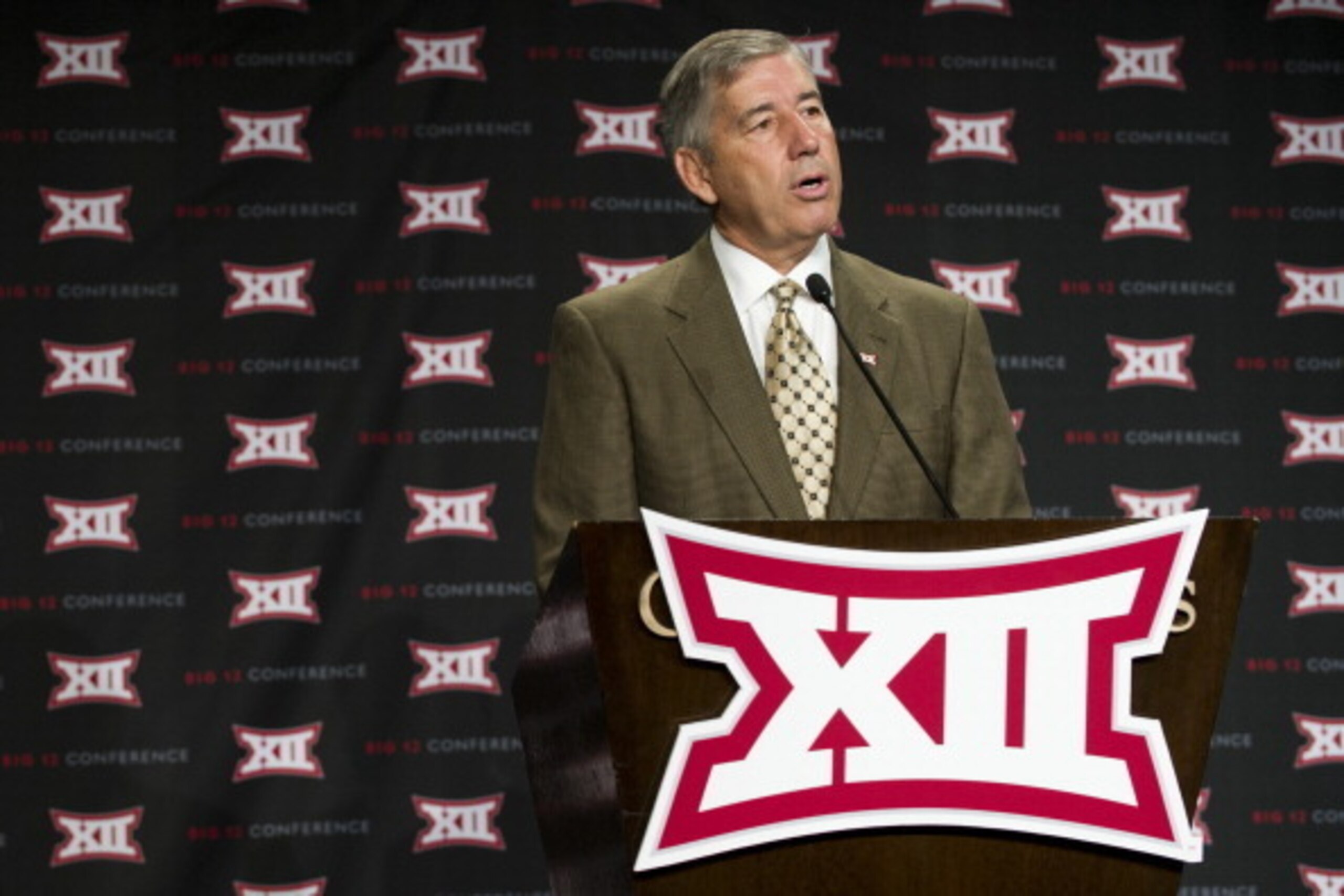
According to Stewart Mandel of Fox Sports, analytics firm Navigate Research gave a presentation to the Big 12 on Wednesday that "concluded the conference would improve its playoff chances by 10 to 15 percent if it expands to 12 teams, drops from nine conference games to eight and adds a championship game."
Navigate ran thousands of season simulations and came up with that figure, which was more than twice the number Big 12 commissioner Bob Bowlsby gave the league's athletic directors and head coaches earlier in the week, per Dennis Dodd of CBS Sports.
On the surface, that sounds like a no-brainer for the Big 12. Navigate, whose past clients include ESPN, the NFL, Major League Soccer and the United States Olympic Committee, is a trustworthy source telling the league that it's mathematically better off if it expands.
However, that conclusion seems odd, given the sample size. After all, the College Football Playoff has only been around for two years. The playoff is selected by 13 individuals—who could vary from year to year, as we've already seen—and their own individual criteria.
As Matt Scalici of AL.com put it Wednesday, it's hard to project the actions of a two-year-old system:
Right now, with the 10-team round robin, the Big 12 is batting .500 when it comes to getting a team into the playoff. The league had a shot at being 2-of-2 in its current state if it had done the painfully obvious thing of declaring the Baylor Bears the champion in 2014 by virtue of the head-to-head win over the TCU Horned Frogs.
If that happened in 2014, in the words of Baylor head coach Art Briles, per ESPN Insider Brett McMurphy, there wouldn't be any expansion talk right now:
But the debate rages on, and it centers on the idea of a "13th data point": a conference title game like the other four power conferences have.
Get to 12 teams, split them into two divisions and bring back the old Big 12 Championship Game. The Big 12 would be on equal footing with everyone else in the race for the playoff.
But of all conferences, the Big 12 should know that having a conference championship game can do more harm than good for a national title contender, as Peter Berkes and Jason Kirk of SB Nation wrote earlier this week:
"The bones of many BCS contenders were scattered in the old Big 12 title game. Upsets between 1996 and 2010 cost the Big 12 four BCS title appearances and nearly put three others on ice.
Since the Big 12 ended its title game in 2010, the conference would've made a hypothetical Playoff in 2011 and 2012, in addition to 2015. That would be three out of five years, or exactly as frequently as the ACC, Big Ten and Pac-12.
The memory of the 2014 snub is fresh, but this is silly. It might help sometimes, but there's also something to be said for sitting at home during conference championship weekend and letting other contenders be the ones taking the risks.
"
The danger of getting that 13th data point to appease a large committee made of humans is even greater if the Big 12 doesn't expand and still brings in a title game at 10 teams. New legislation passed in January allows the conference to do just that.
In a round-robin system though, that would mean there would be a weird rematch on conference championship weekend that already had a clear winner. Last year, that would've meant a rematch between the 8-1 Oklahoma Sooners and 7-2 Oklahoma State Cowboys, by way of the Cowboys' win over 7-2 TCU.
Beating Oklahoma State again wouldn't have made much of a difference for Oklahoma, who won by 35 on the final weekend of November. If anything, all the rematch would've done is opened up a chance at disaster. The Cowboys get their revenge in a title game, and no one goes to the playoff from the Big 12.
The round robin in its current state would avoid that, and several Big 12 coaches have already spoken out against the idea of expansion for similar reasons.
"Everybody wants to say you have to have expansion so you have a better chance of playing for a national title. They should try to play everybody every year," TCU head coach Gary Patterson said last month, per the Associated Press (via USA Today). "I like the model that we have now, even though it's tougher."
So while it's tough to definitively say the conference would be better off in a playoff race with a title game, what is really behind the expansion efforts?
According to George Schroeder of USA Today, Bowlsby has said "if the Big 12 does nothing, it will be left behind financially by several other Power Five leagues."
The problem is that none of the expansion candidates for the Big 12 right now are true heavy hitters. If the league wants to catch up financially to the likes of the money-printing SEC and Big Ten, then any pairing of BYU, Cincinnati, Houston, Memphis, UCF and UConn aren't going to make up the difference.
More members would also force the Big 12 to ask for more TV money from ESPN and Fox in a restructured deal. And live sports on TV isn't the money-making enterprise it was the last time realignment was a hot topic. As Mandel wrote in January, this could be the worst time to start a network, especially with the lack of national fanbases in the current crop of expansion candidates.
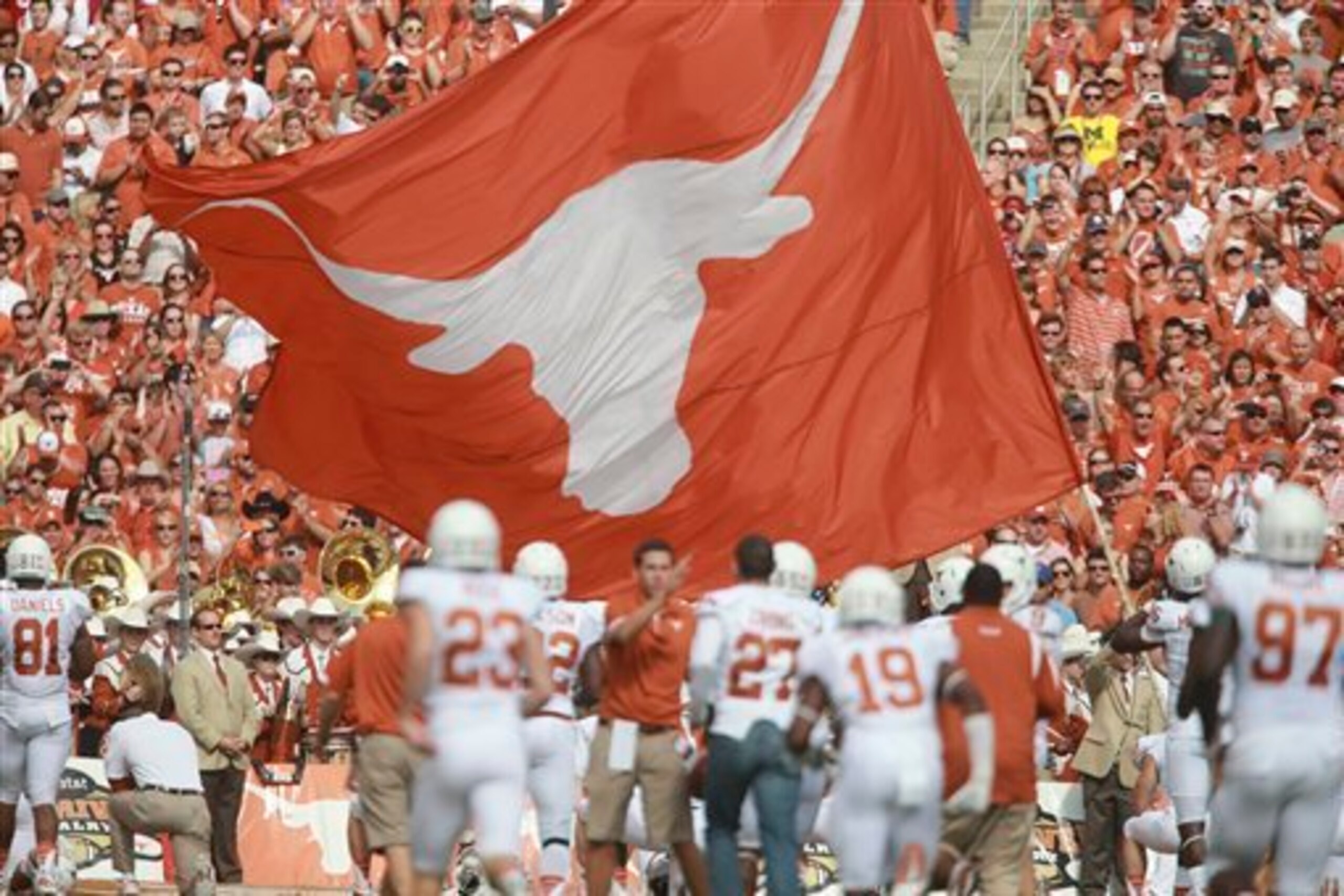
Even worse, if the Big 12 pushes for expansion this summer, it could potentially lose its biggest member in Texas. According to Jason Williams of the Cincinnati Enquirer, Texas is reluctant to expand and is pressuring TCU and Texas Tech to vote "no" with it.
Why? Per Williams, the Big 12 has talked about converting Texas' Longhorn Network into a larger Big 12 Network with ESPN. Texas would still get more money than the rest of the league, but Kirk Bohls of the Austin American-Statesman says the Longhorns would balk at that idea:
"I still see no willingness on Texas’ part to fold the Longhorn Network into a Big 12 network, even if the league gives the Longhorns an extra $15 million share to cover its LHN income, because, the Texas source said, “we would get the same money, but lose our branding and having our own channel? Not very compelling. If we get rid of LHN, it will be to change conferences, in my opinion.”
"
If the Big 12 pushes to expand and tries to get Texas to give up its network for the greater good of the conference, then the biggest athletic program in the league could go elsewhere.
That would be a monstrous loss for the conference, and no combination of current expansion candidates can fill that gap.
So, as it stands right now, the Big 12 has these options on the table as it looks to come to a conclusion this summer:
- Expand to 12 teams and add a conference championship game, potentially angering Texas. This would improve the league's CFP playoff chances by only a few percentage points at best, as the power of the conference wouldn't dramatically increase with the addition of the current candidates.
- Stay at 10 teams and add a conference championship game. With the round-robin schedule, this could do more harm than good because it would create odd rematches at the end of the season for games that have already been decided. (If there's a three-way tie, a conference title game isn't going to solve that problem, either.)
- Remain at 10 teams and hold off on a title game. Several of the league's coaches have already voiced their support of this system, and it didn't cost the conference a College Football Playoff contender last year.
The Big 12 isn't magically going to catch up to other leagues financially with the addition of a BYU or a Cincinnati. A conference title game isn't necessarily going to be a net positive, as its recent history suggests.
The league should listen to its coaches and stand still for now. Besides, it's just getting used to this whole "stability" thing.
Justin Ferguson is a National College Football Analyst at Bleacher Report. You can follow him on Twitter @JFergusonBR.
.jpg?w=2560 "Florida Shooting")
.png?w=2560)


.jpg?w=2560 "Latest Peyton-Colts Rumors")
.jpg?w=2560 "Ugly Jets Scoring Stat 😳")

.jpg?w=2560 "Landing Spots for Trade Candidates 📍")