
Every NBA player participating in the 2016 playoff bracket is chasing a championship, but others are also chasing dollar signs.
Some soon-to-be free agents don't need the postseason to beef up their resumes. We know what DeMar DeRozan, Andre Drummond, Kevin Durant, Al Horford, et al. will command on the open markets.
Players with undefined market value are different. Postseason basketball is a small sample size regardless of its actual length and won't make or break most future contracts. But it is one last chance for mid-end talents or, in some cases, rock-bottom causes to drum up their cost ahead of July's free-agency bonanza.
TOP NEWS

J-Dub Suffers Gruesome Leg Injury
Mazzulla on Tatum-Brown Drama

Blockbuster Trade Idea To Shake Up the East
Honorable Mention: Harrison Barnes, Golden State Warriors (restricted)
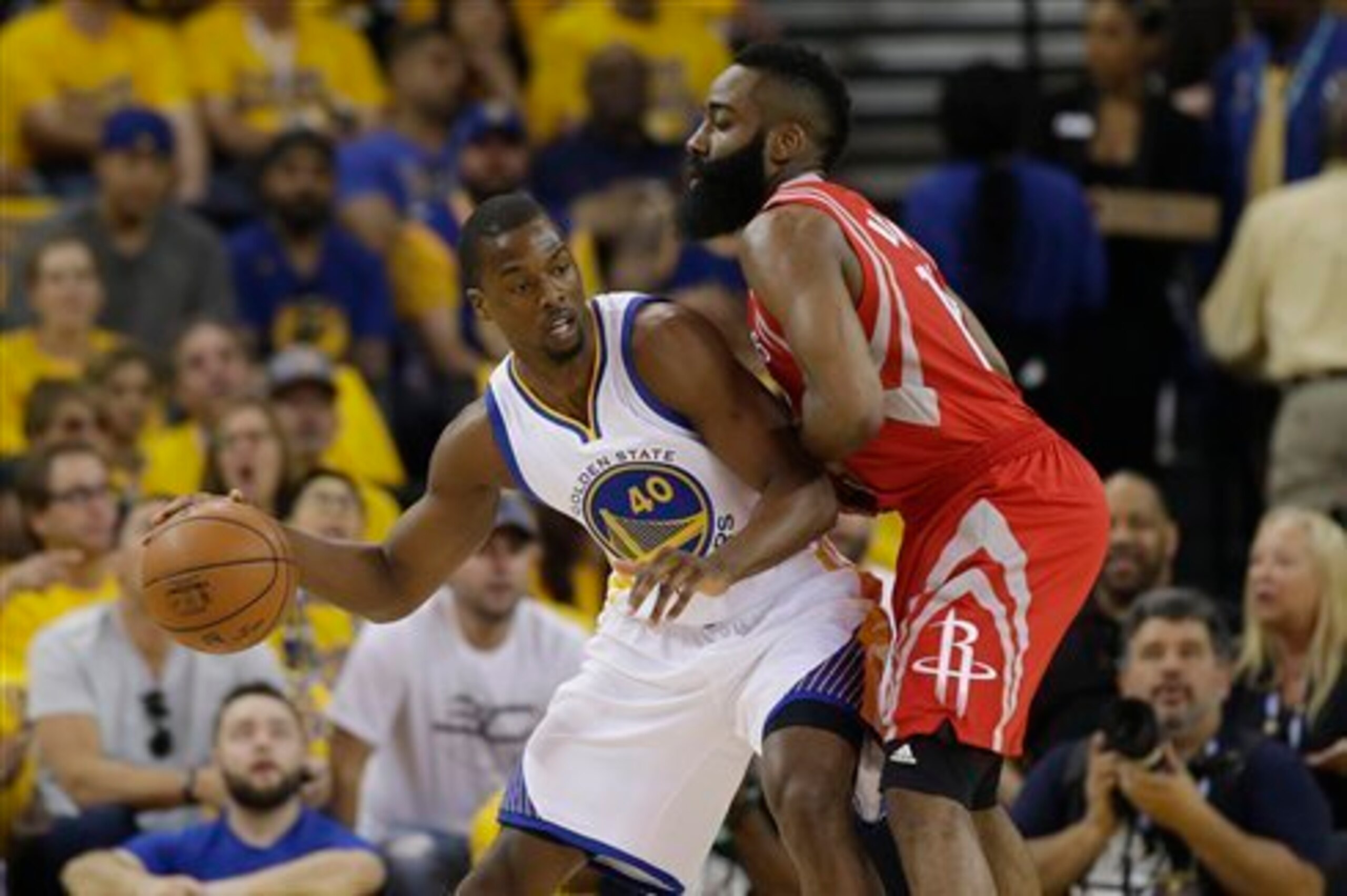
Harrison Barnes has become a max-contract formality, if only because that's what it will take to dare the Golden State Warriors, who can match any offer he receives, to cut him loose. His postseason performance isn't going to change that.
Barnes can, however, distance himself from that "only worth a max deal to an NBA dynasty" stigma.
That hasn't happened through his first two outings. He is shooting under 20 percent from the floor and has yet to hit a three-pointer.
Still, he routinely gets charged with one of the two toughest perimeter assignments on defense, and there will be more than enough chances for him to reinvent his offensive numbers if Stephen Curry's ankle injury becomes a multigame issue.
Kent Bazemore, Atlanta Hawks
Three-and-D talents who don't kill ball movement are going to get hundy-sticks-as-toilet-paper paid with the salary cap rising.
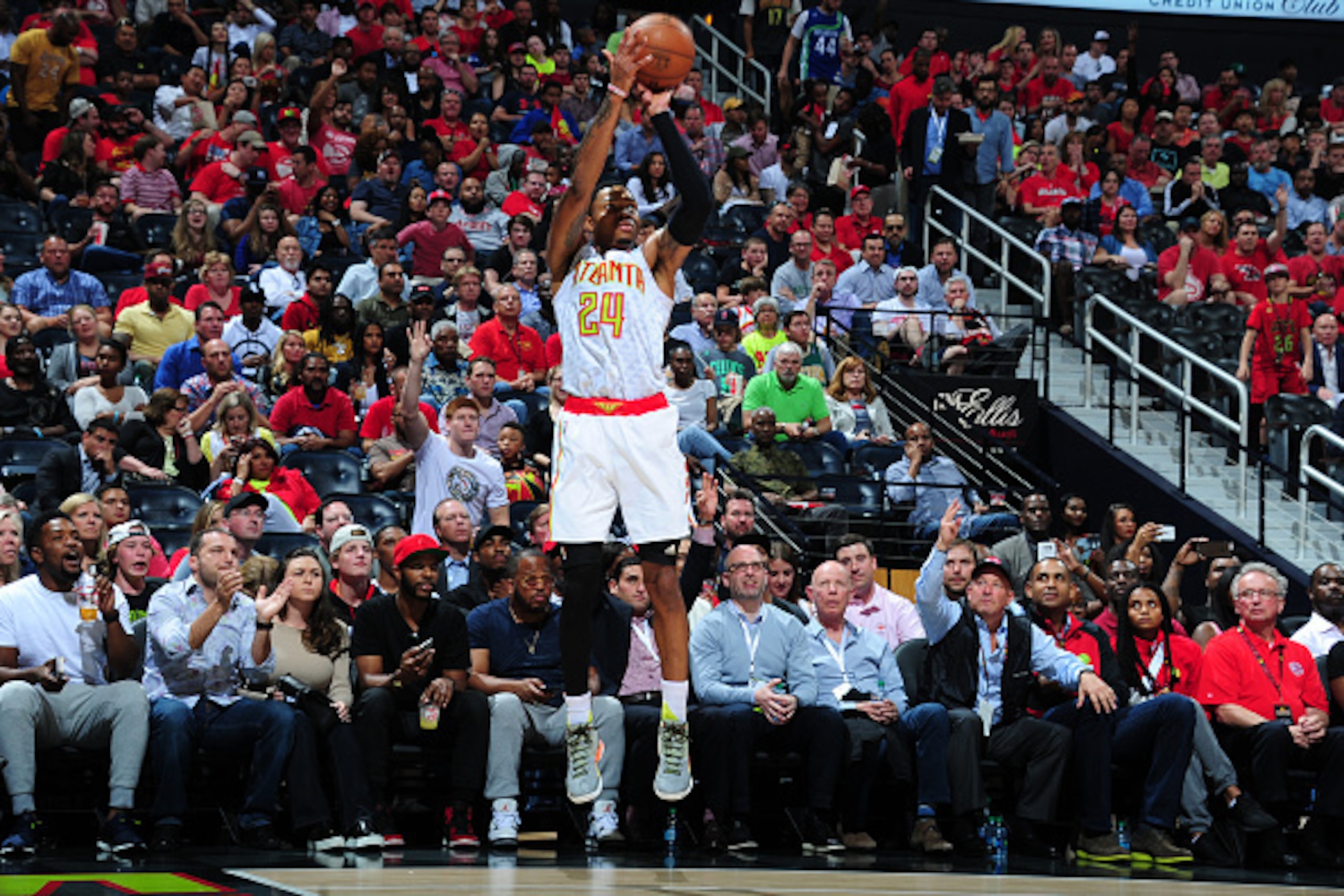
Enter Kent Bazemore, whose value has been on the rise for a while now.
League executives told ESPN.com's Zach Lowe back in January he could command $12 million annually on the open market this summer. That number figures to rise if Bazemore's playoff performance holds.
He helped alleviate some of the Atlanta Hawks' offensive burden in a Game 1 win over the Boston Celtics, pumping in 23 points on 7-of-13 shooting. His efficiency trailed off in Game 2, but he dished out four assists and remained a strong defensive presence.
Though the Celtics are hard-pressed to score from the outside in general, especially with Avery Bradley on the sidelines, they are even worse when challenging Bazemore. He is holding Boston's shooters to a 25 percent success rate from beyond the arc and doing a fantastic job sealing off any open lanes the Celtics' suddenly clunky offense creates.
Bazemore's three-point percentage has momentarily dipped, but he drained almost 36 percent of his triples during the regular season. And his playoff offensive rating with that decline is the highest of any Hawk.
Mix in his defensive dynamism at the 2 and 3 spots, along with an ability to hang with point guards on switches, and his price tag should explode by postseason's end—more so than it already has.
Allen Crabbe, Portland Trail Blazers (restricted)
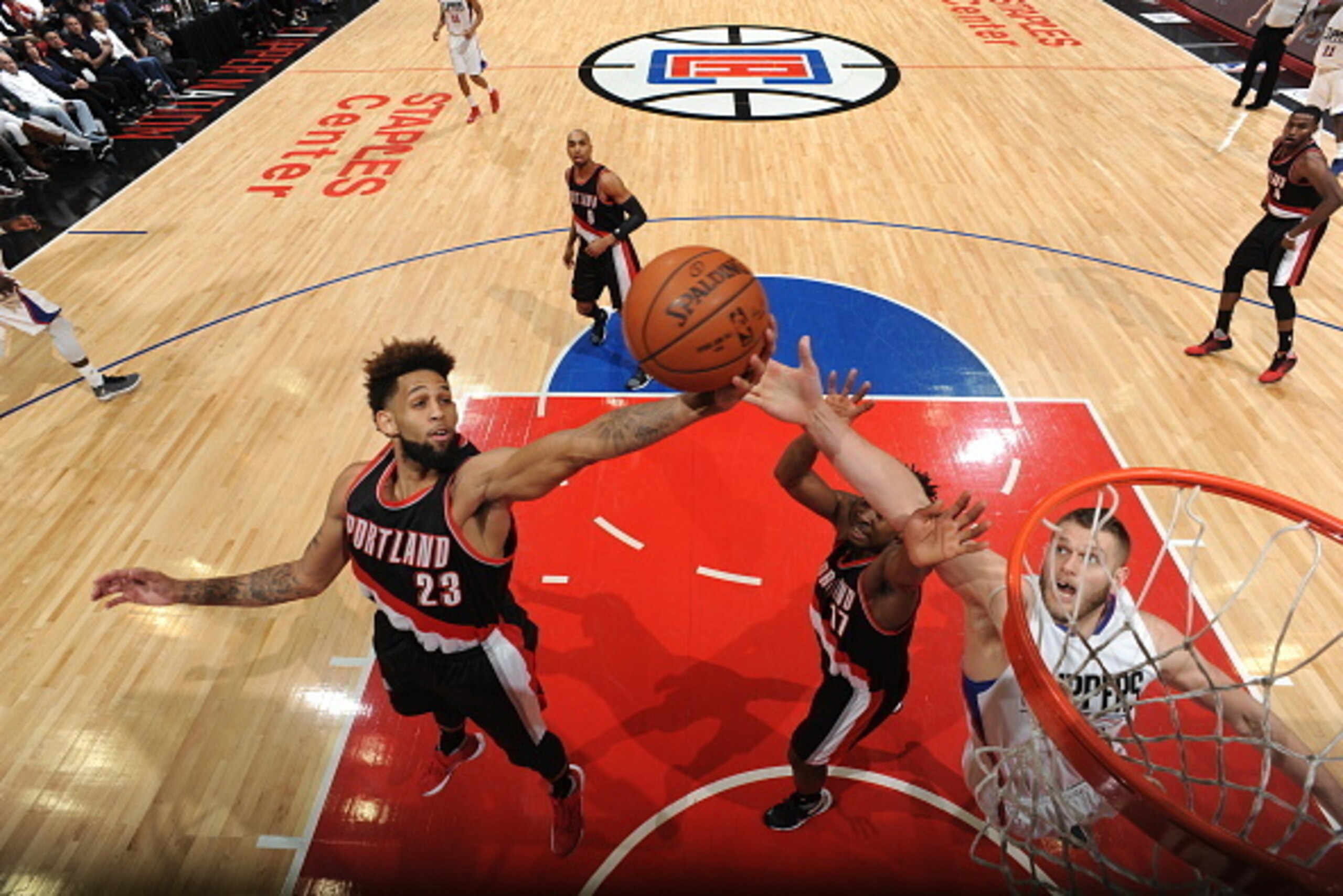
Allen Crabbe has a real opportunity to leave his imprint on the playoff picture, even if the Portland Trail Blazers' push is short-lived. In fact, if the Blazers are to be more than an infinitesimal steppingstone in the Los Angeles Clippers' postseason march, he'll absolutely need to make a wallet-wadding impact.
His offensive value is pretty cut and dry. He doesn't drive or handle the ball especially well—or often, for that matter. He keeps the rock moving in half-court sets, has developed solid chemistry with Portland's bigs and does most of his damage as a catch-and-shoot sniper who trails dribble penetration and swings around screens.
Of the 75-plus players to see at least 200 spot-up touches during the regular season, he finished third in points scored per possession, ceding status to only Kawhi Leonard and Chandler Parsons. His effective field-goal percentage—cumulative measurement of two-point and three-point efficiency—on standalone looks ranked second among all Blazers, behind only C.J. McCollum.
This team-friendly offensive game alone will drive up Crabbe's market value. But he can distinguish himself from the other catch-and-shoot specialists with a stronger defensive showing.
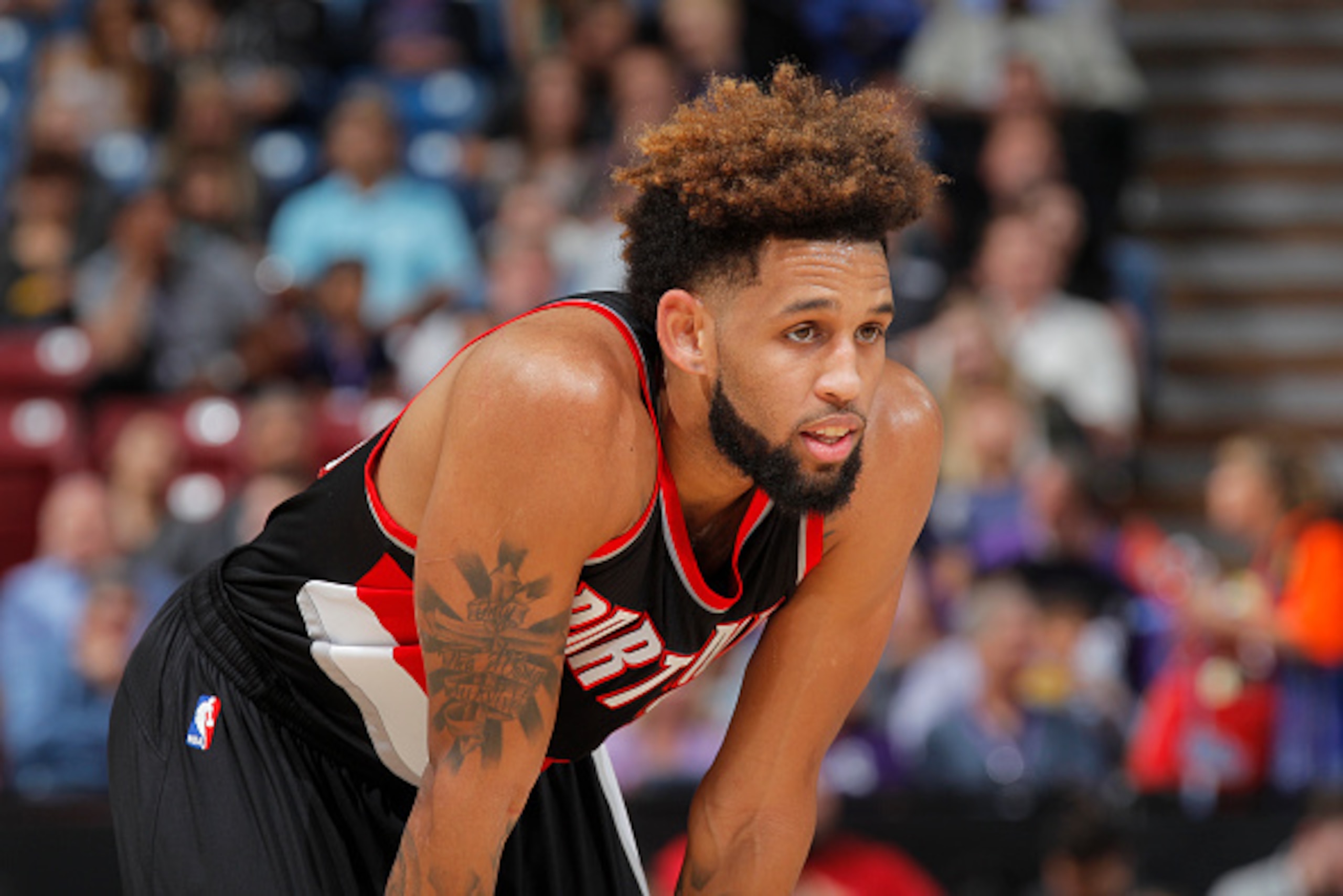
Crabbe has held his own against the Clippers' shooters, but he's been badly beaten inside the arc and has seen extensive time within lineups that slotted him against power forwards outright or left him to cover for two to three defensive liabilities.
Head coach Terry Stotts can help Crabbe by pinning him alongside the Al-Farouq Aminu-Ed Davis dyad. Those three have already logged time together to start the playoffs, just not with Damian Lillard and McCollum. That arrangement lets Crabbe stick to the Clippers' weakest spot, at small forward, while providing help at the point guard and shooting guard positions.
Basically, it's the lineup with the best chance of saving the Blazers' season. And Crabbe's inclusion is non-negotiable. So if this group plays any part in bolstering Portland's ebbing playoff hopes, his checking account stands to feel the success, however slight, later on.
Luol Deng, Miami Heat

If Luol Deng looks like a different player since the All-Star break, that's only because he is.
As Jason Lieser wrote for the Palm Beach Post following the Miami Heat's Game 1 shellacking of the Charlotte Hornets:
"Constant motion always has been the key to Luol Deng’s offense, and the shift from waiting in the corner as a spot-up shooter back to his trademark darting and cutting has enlivened him as a scorer.
He spent all of Sunday’s game daring the Hornets to keep up with him, and they couldn’t. They kept losing him, and he exploited it by running to the corner for open looks, getting inside for offensive rebounds and attacking the lane anytime it was clear as he racked up 31 points to lead Miami to a blowout in Game 1 of this first-round playoff series.
"
Deng's 31-point detonation to kick off the playoffs is one-part aberration, one-part absurd and two-parts evidence of how he can shape the outcome of an entire game as a small-ball 4.
There isn't a matchup the Hornets can use to disarm him. Even if they move Marvin Williams to center—a good tweak, for the record—Deng's defensive value doesn't change. He still smothers the three-point line and, at 6'9", can body up in the post.
That serves the Heat well for any later matchups. He can at least begin to keep pace with Paul George against the Indiana Pacers. The Toronto Raptors don't have any wing, be it DeMar DeRozan or DeMarre Carroll, he can't defend at length. And should Miami meet the Cleveland Cavaliers in the Eastern Conference Finals, he can split time guarding LeBron James and Kevin Love.
Any deep postseason slog the Heat make will be tightly tethered to Deng's defensive malleability. And if he keeps hovering around 35 percent shooting from long range, as he has since March, his eyes might melt at the sight of his next contract.
Raymond Felton, Dallas Mavericks

We are actually talking about Raymond Felton's free agency. During the playoffs. In the year 2016. Even though he began the season as the Dallas Mavericks' fourth-best point guard.
Injuries can have that effect on a player's postseason outlook. Apparently.
J.J. Barea (groin strain) and Deron Williams (sports hernia) are banged-up, and Dallas lost one of its premier offensive weapons in Chandler Parsons to right knee surgery. Dirk Nowitzki is dealing with a "bone bruise in his right knee" as well, per the Dallas Morning News' Eddie Sefko.
Felton's importance to the Mavericks' playoff survival was already huge, mind you. Dallas hasn't exactly been a billboard for good health all year, and he played within some of head coach Rick Carlisle's most potent offensive lineups during the regular season.
But he has now gone from necessary to irreplaceable. He should be considered Dallas' No. 2 option so long as Williams can't play at full bore. And the early returns are promising, if puzzling.
It was Felton, not Nowitzki, who spearheaded the Mavericks' Game 2 upset of the Oklahoma City Thunder. It was him, not Devin Harris or Williams, who matched Russell Westbrook's intensity on drives and rebounds.
And it was Felton, not anyone else, who earned himself a hug from owner Mark Cuban, the photo evidence of which comes courtesy of The Starters' Tas Melas:
Dallas won't get past Oklahoma City. Let that pipe dream die. The Mavericks stole home-court advantage from the Thunder thanks to one of the worst shooting performances of Kevin Durant's career. And they still almost lost, partly because of Felton, who bricked two free throws in the waning seconds. He won't go down as some folk hero who led steep underdogs to an impossible upset.
Felton nevertheless has the unique task of keeping the Mavericks afloat for longer than expected. And he has already succeeded in many ways, at the most opportune time, as he prepares for free agency.
These are weird times.
Evan Turner, Boston Celtics
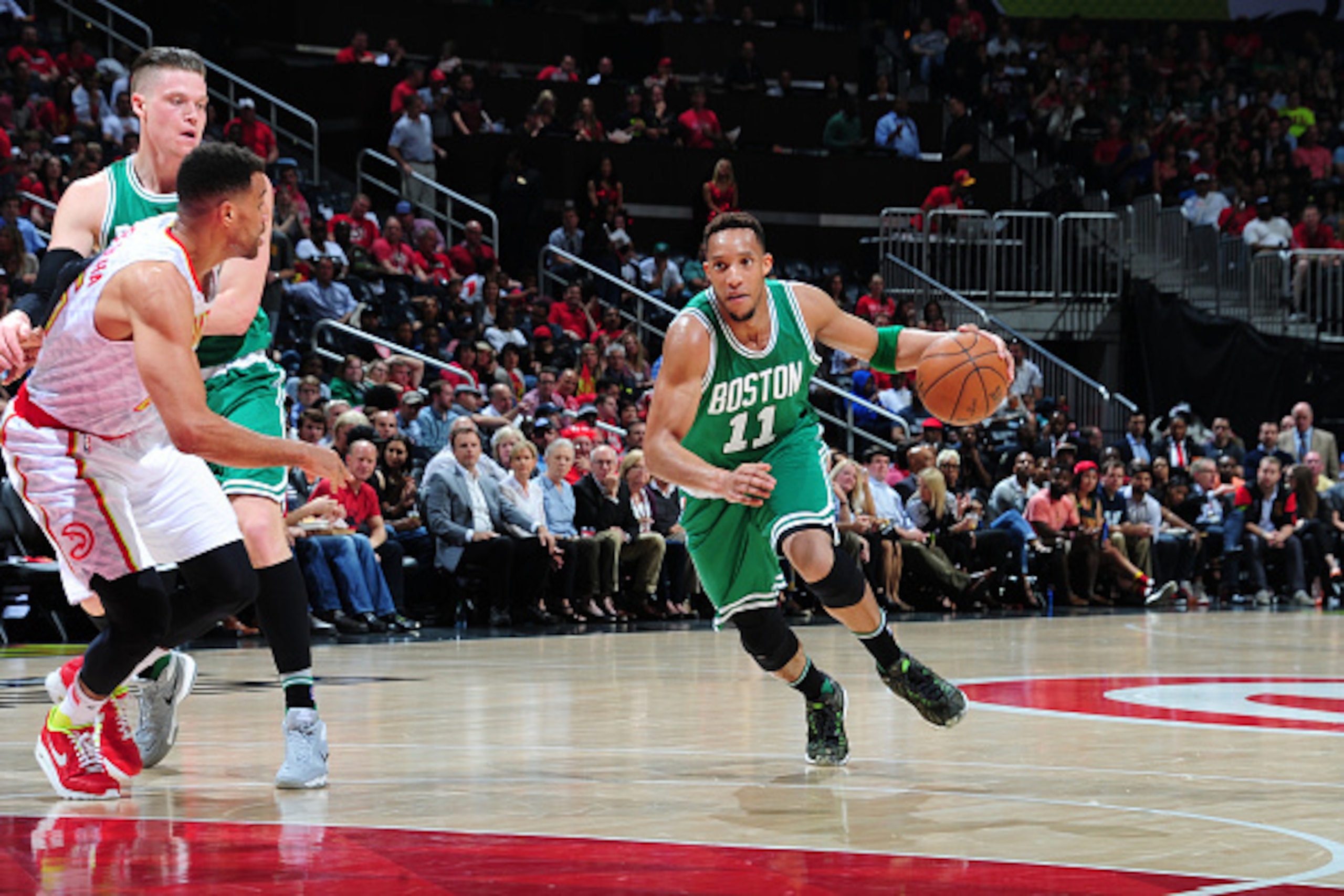
Avery Bradley's absence changes things for the Celtics. Their spacing was already iffy, and it only gets worse without the team's sweetest-shooting wing.
Boston's offense showed little resolve during its first stint with Marcus Smart starting in place of Bradley, mustering just seven first-quarter points and 5-of-28 shooting from long distance overall en route to a Game 2 letdown in Atlanta.
There's not much Celtics coach Brad Stevens, a strategical sage, can do differently—aside from relying even more on Evan Turner, as Zach Lowe explained for ESPN.com:
"Turner is miles better, and the Celtics might consider starting him over Smart -- if Stevens even continues to start both [Amir] Johnson and [Jared] Sullinger, which may be a losing proposition going forward. But starting Turner would imperil Boston's defense. They don't trust [Isaiah] Thomas to guard [Jeff] Teague or [Kyle] Korver, and when they briefly tried him on Korver in Game 2, Atlanta's sharp-shooter immediately roasted him and drained an open 3.
Turner is not quite fast enough to track Korver through the thicket of picks Atlanta sets for him, and he has no shot sticking with Teague and Dennis Schroder. If Boston tries to get away with Turner there, the Hawks might think about ditching their usual pick-and-roll orchestra and letting their point guards go one-on-one.
"
Using Turner as the primary ball-handler allows Isaiah Thomas and Jae Crowder, the closest thing to above-average shooters Boston now has, play off the rock. Turner can initiate pick-and-rolls and, hopefully, carve out just enough space to get into the paint and incite defensive rotations.
The Celtics inserted him into this role through plenty of regular-season possessions. He responded by posting the team's highest assist rate and emerging as one of the game's most versatile wings.
Just two other players matched Turner's rebound, assist, steal and block-percentage stats in comparable playing time: Draymond Green and LeBron James.
In the event Boston digs itself out—or almost out—of its 2-0 first-round hole, Turner will be a main reason why. And the zeroes in his next contract will pile up accordingly.
Hassan Whiteside, Miami Heat

Hassan Whiteside had himself a regular season.
His averages of 14.2 points, 11.8 rebounds and 3.7 blocks per game have only ever been matched by Kareem Abdul-Jabbar, Hakeem Olajuwon and David Robinson. And from Jan. 1 on, the Heat's defense couldn't properly function without him on the floor; he posted the team's second-highest on-off differential in that department:
"He is going to different levels that a lot of people haven't seen," Dwyane Wade said in March, per Bleacher Report's Zach Buckley. "That Defensive Player of the Year conversation needs to be had. His impact on the game is that big and that good."
Defensive Player of the Year designation has already been handed to Kawhi Leonard, so that's out of the question. But Whiteside finished third in voting; his value as a defender, rebounder and pick-and-roll devastator is firmly established.
The playoffs will be more about seeing if he can journey outside his comfort zone, against smaller lineups.
Can he close out on shooters when he drops back on screens? Is he able to crowd ball-handlers without getting nuked off the dribble? Can he stay in front of traditional-sized bigs with ridiculously quick footwork in the post and on the bounce?
Prove he can remain on the floor no matter what type of lineups rival offenses deploy, all while helping Miami make an extensive postseason trudge, and Whiteside goes from max-contract candidate to max-deal lock.
Marvin Williams, Charlotte Hornets
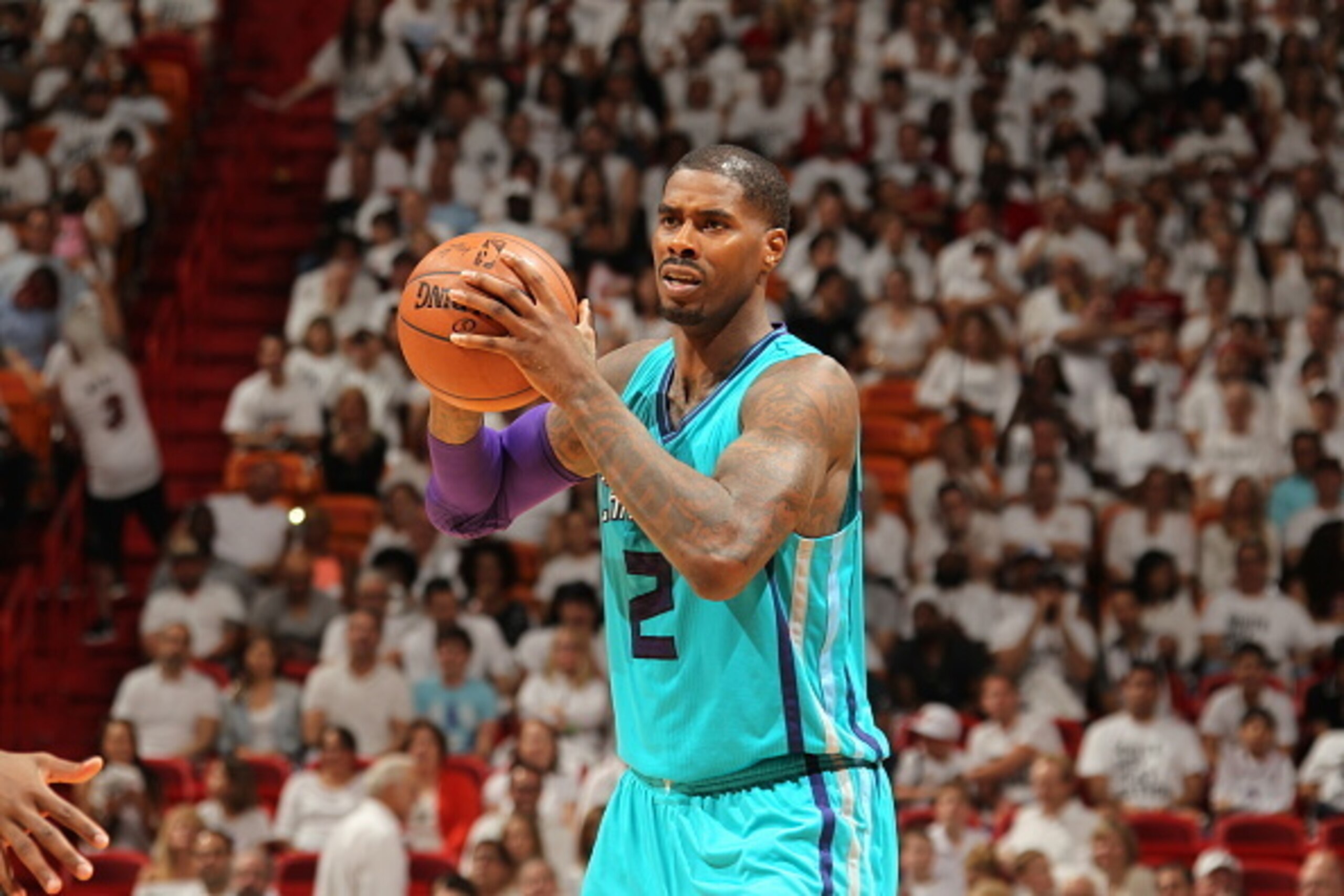
Marvin Williams did more than enough during the regular season to prop up his impending free agency. He ranked among the league's best rim protectors and put down more than 40 percent of his triples.
Only three other players, in fact, have ever totaled as many points (948), rebounds (521), blocks (77) and made three-pointers (152) in a single season: Kevin Durant, Paul Pierce and Rasheed Wallace.
For the Hornets to have any hope of surviving their first-round date with the Heat, they need that version of Williams—one of the most well-rounded forwards outside the superstar circle. But as Bleacher Report’s Adam Fromal relayed after Game 2, Williams' playoff efforts aren't measuring up to his regular-season showcase:
Some of Williams' struggles are beyond his control. Charlotte coach Steve Clifford has wisely stopped using him at small forward, but he's getting caught on Deng and Johnson at the 4—two players he is ill-fit to defend.
That isn't to say Williams' playoff offering is hopeless.
Knowing the Hornets cannot match Whiteside straight up with Al Jefferson or Cody Zeller, Clifford can toss out Williams at center alongside four other shooters. It's within these five-out lineups that he will leave his mark, pulling Whiteside out of the paint or, perhaps, the game entirely.
It's going to take some help from his coach, but Williams can be Charlotte's anecdote to what otherwise feels like a first-round death sentence.
Stats courtesy of Basketball-Reference.com and NBA.com and accurate leading into games on April 21, unless otherwise noted.
Dan Favale covers the NBA for Bleacher Report. Follow him on Twitter @danfavale.



.jpg?w=2560 "Latest Peyton-Colts Rumors")