


This year's NBA rookies won't revolutionize the league like the class of 1984, which featured Michael Jordan, Hakeem Olajuwon, Charles Barkley and John Stockton. Chances are, it won't upset basketball's cultural applecart like Allen Iverson and Kobe Bryant did in 1996. Nor can it be expected to usher in a new era of talent to an Association in transition, as LeBron James, Carmelo Anthony, Dwyane Wade and Chris Bosh did in 2003.
But when hoops historians pen the game's next tome, they may look back at the class of 2015 as the one that strengthened basketball's shift toward skill and versatility.
The current crop of rookies covers all the biggest bases that mark the modern game: bigs with range on both ends of the floor, guards who can create for themselves and their teammates and wings with the ability to attack the basket and defend multiple positions.
TOP NEWS

J-Dub Suffers Gruesome Leg Injury
Mazzulla on Tatum-Brown Drama

Blockbuster Trade Idea To Shake Up the East
Tall, Long and Skilled All Over
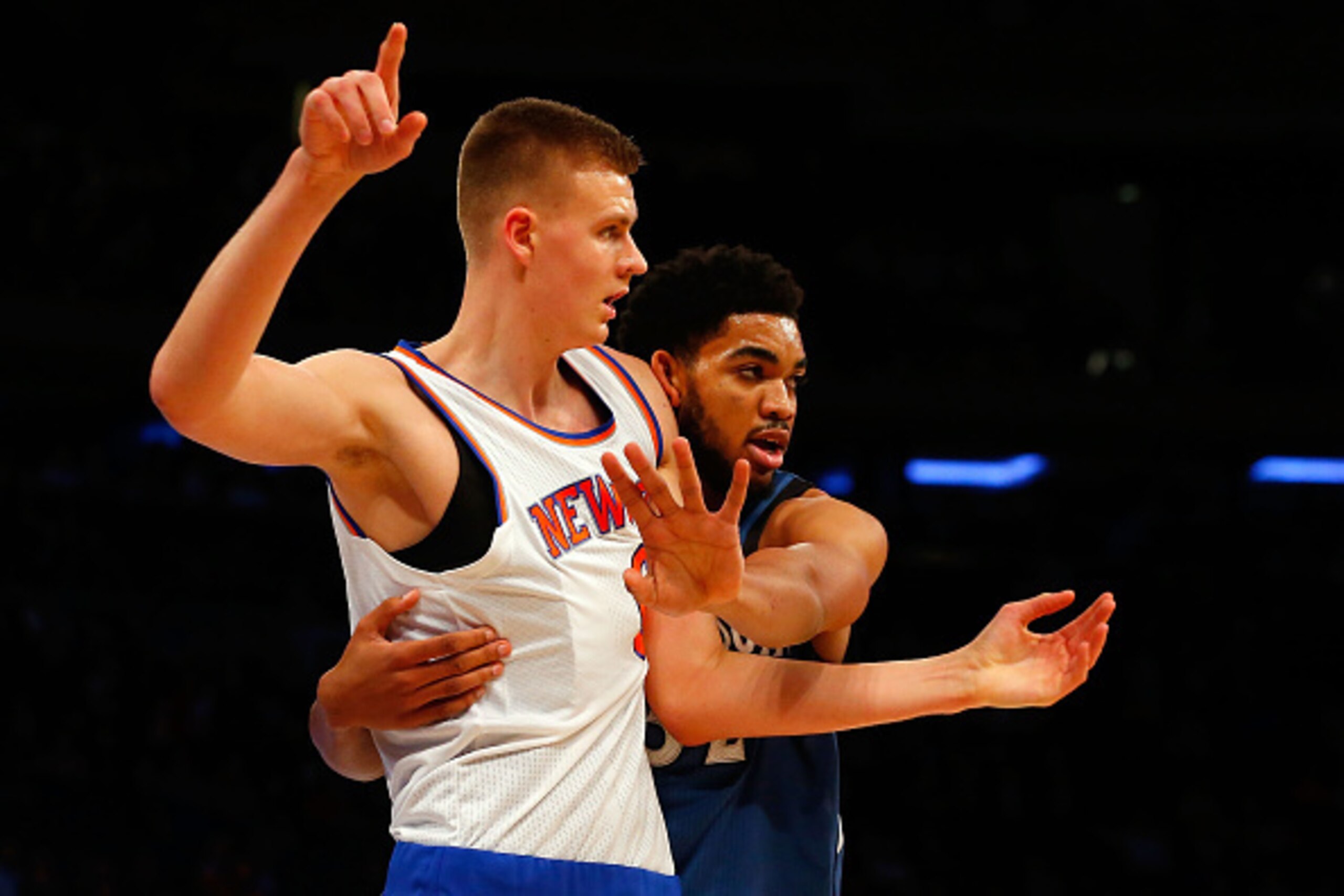
The headliners in this year's group, Karl-Anthony Towns of the Minnesota Timberwolves and Kristaps Porzingis of the New York Knicks, fit the first of those three archetypes to a tee.
Towns' impressive arsenal was on full display during the T-Wolves' 124-117 overtime win over the Golden State Warriors in Oakland Tuesday. The Kentucky product missed his only three-point shot of the night, but he knocked down a trio of long twos en route to a 20-point night—his 30th of the 2015-16 season.
On the other end, Towns lit up the Twittersphere with his fancy defensive footwork against Stephen Curry.
He did all that while still taking care of business on the interior, with 12 rebounds and a slew of clutch finishes at the hoop.
As Michael Pina pointed out for Fox Sports, Towns, who's hit 34.2 percent of his threes and tallied 49 double-doubles, already ranks among the elite when it comes to traditional big-man production and proficiency in the mid-range:
"It's a tad arbitrary, but only one other rookie in NBA history (Hall-of-Famer David Robinson) ever averaged that many points and rebounds with Towns' current true shooting percentage. Towns is already one of the best mid-range jump shooters in the entire league, with silky post moves and an intuitive understanding of complex NBA defensive rotations.
"
All told, Towns is the first player in NBA history to record at least 1,250 points, 750 rebounds, 125 blocks and 25 three-pointers in his first 75 pro games, per B/R Insights.
Porzingis has put up some unique numbers of his own. According to B/R Insights, he's one of two rookies in NBA history, along with the late Eddie Griffin, to average more than 1.5 made threes and one block a night and is the only Knicks rookie other than Patrick Ewing to put up at least 14 points, seven rebounds and 1.5 blocks per game.
The lanky Latvian isn't yet a great three-point shooter (33.3 percent), but he hasn't shied away from taking them in big moments.
The comparisons to Dirk Nowitzki are as lofty as they are lazy, given their European roots—but seem less so when watching Porzingis turn and shoot over his shoulder.
And while his 7'3" frame needs to fill out, Porzingis has still attacked the glass with reckless abandon.
Not bad for a 20-year-old who's far from a finished product, no matter what the early-season buzz out of Madison Square Garden suggested.
"[Porzingis] is 20 years old. His body is just naturally going to get stronger as he gets older, but for big guys as a general rule...their bodies are going to develop later," Knicks head coach Kurt Rambis, who saw Kevin Love undergo a full-blown transformation in Minnesota, told the New York Daily News' Stefan Bondy. "Their coordination is going to come in at a later stage because they’re growing so fast."
"Teams are paying a little bit more attention to my offensive rebounding. Another reason is that the level is higher just because teams are competing more," Porzingis told the New York Post's Marc Berman. "There are more guys going for offensive rebounds, so I'm worrying more about boxing my guy out and not just grabbing the rebound. The first part of the season I would rebound, I was wide open. Nobody was there. I'd just take it."
Porzingis and Towns have plenty of company among versatile bigs in their rookie class. Myles Turner, the No. 11 pick in 2015, and Trey Lyles, the No. 12 pick, have both flashed floor-stretching potential as starters and reserves alike, despite only recently turning 20. Frank Kaminsky, the ninth pick, and Bobby Portis, the 22nd pick, brought more collegiate experience to bear when shooting from range and putting the ball on the deck.
The real diamond in the rough, though, could be Nikola Jokic, who went from a second-round draft-and-stash in 2014 to a 21-year-old basketball wizard starting at center for the Denver Nuggets this season.
Two Spots, One Guard
Bigs aren't the only ones doing more in the modern NBA. The best guards in the game—from Curry and Damian Lillard to Russell Westbrook, James Harden and Jimmy Butler—are now those who use the threat of scoring to set up their teammates, rather than the other way around.
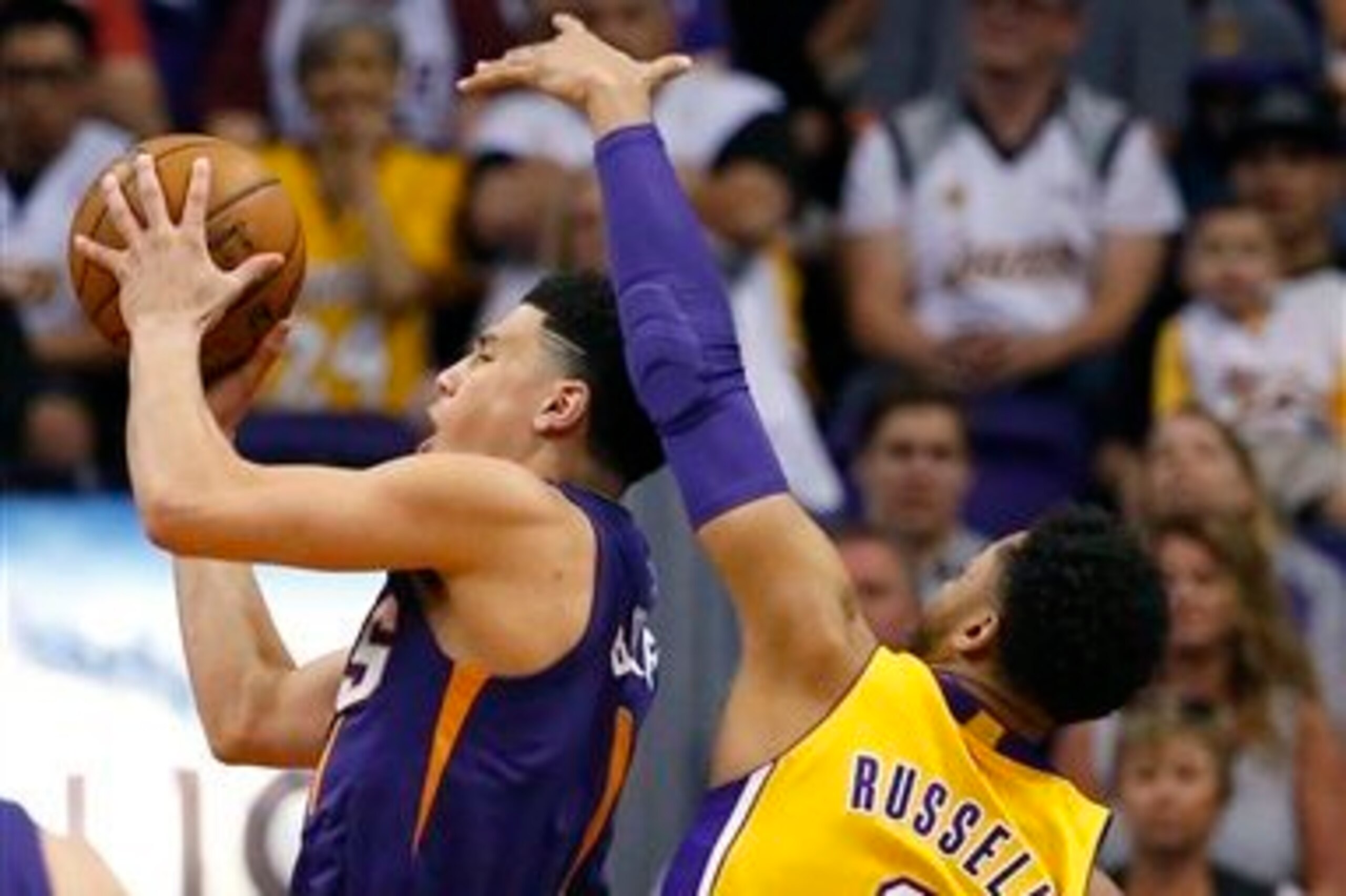
His off-court immaturity aside, D'Angelo Russell may turn out to be the best of this year's bunch in that regard. For a 20-year-old, the Louisville native is unusually adept at changing speeds to get where he wants on the court.
Like most young guards, Russell has struggled to hang onto the ball (2.4 turnovers per game) and stay in front of his man defensively. But the No. 2 pick in 2015 can stroke it from deep (35.2 percent from three). With his two triples against the Clippers on Wednesday, he became the owner of the Lakers rookie record for long balls, passing Nick Van Exel.
Like Nick the Quick, Russell isn't afraid to let it fly:
Neither is Devin Booker. According to B/R Insights, the sharpshooter out of Kentucky is five triples shy of becoming the first player in NBA history to hit 100 threes in a single season before his 20th birthday.
But Booker has proved to be much more than a long-range specialist. He's an adept scorer all over the floor, with five 30-plus-point games since the start of March.
With the Phoenix Suns losing Eric Bledsoe and Brandon Knight to injuries, Booker has been pressed into playmaking duty and responded with aplomb. He's notched a pair of point-assist double-doubles—both against Golden State, with 14 other games of at least five helpers.
Defense, on the other hand, hasn't come so naturally to Booker. According to ESPN, he ranks dead last among shooting guards in defensive real plus-minus.
Still, the NBA's youngest player has a bright future ahead of him, assuming he learns to defend well enough to stay on the court.
That same concern applies to Emmanuel Mudiay, Cameron Payne and Josh Richardson. All three have logged negative defensive plus-minus ratings, as well.
Mudiay, in particular, has his work cut out for him to improve as a shooter (35.5 percent from the field, 31 percent from three) and decision-maker (3.2 turnovers per game).
"We had a couple of very honest conversations, Emmanuel and I," Denver Nuggets coach Michael Malone told Christopher Dempsey of the Denver Post, adding:
"...And I told him, I didn't trust you necessarily to close those games. And he didn't want to hear that, and I'm sure it hurt him to a point and I get that. But it's not my job to have Emmanuel like me, my job is to make him the best player that he can be...
The fact that he has come back from that and really done a much better job of valuing the ball, making plays for his teammates, being aggressive, making open shots guarding his position, speaks to his desire to be a great player. He has said it from Day One since he got here, 'I want to be a great player, I want to be a champion.' The work that he's put in, the mind-set that he has, speaks to that. He really has made a concerted effort to improve in all of those areas, and his play shows that. It illustrates all of the improvements that he's made in every area.
"
Richardson's already come a long way with his shot. The second-round pick out of Tennessee has nailed 60.3 percent of his threes since the All-Star break. Payne, meanwhile, has slipped in that department, though he drained more than 40 percent of his long-range looks between Christmas and All-Star weekend, before Randy Foye nudged him down the Oklahoma City Thunder's pecking order.
Wing Warriors
With guards and big men doing so much of the heavy lifting nowadays, the prototypical wing-forward need no longer be a primary scorer or secondary creator.
Good thing, too; those types of players—led by LeBron James, Kevin Durant, Kawhi Leonard, Carmelo Anthony, Paul George and Gordon Hayward—are in short supply, especially in this year's rookie class.
Instead, the new kids are heavy on energetic athletes who can attack the rack and hound their opposite numbers.
Chief among them is Justise Winslow, the No. 10 pick in 2015. Winslow ranks among the top 10 in defensive real plus-minus at his position and has become an ace in the hole for Miami Heat head coach Erik Spoelstra to sic on perimeter scorers off his bench.
The Duke product's jump shot (42.5 percent from the field, 27 percent from three) remains a work in progress, but he's found other ways to contribute on offense, even if his teammates aren't always ready for what's coming.
The fact that Winslow's on-off gap in net rating is one of the widest in Miami speaks to how he can help a team without bloating the box score.
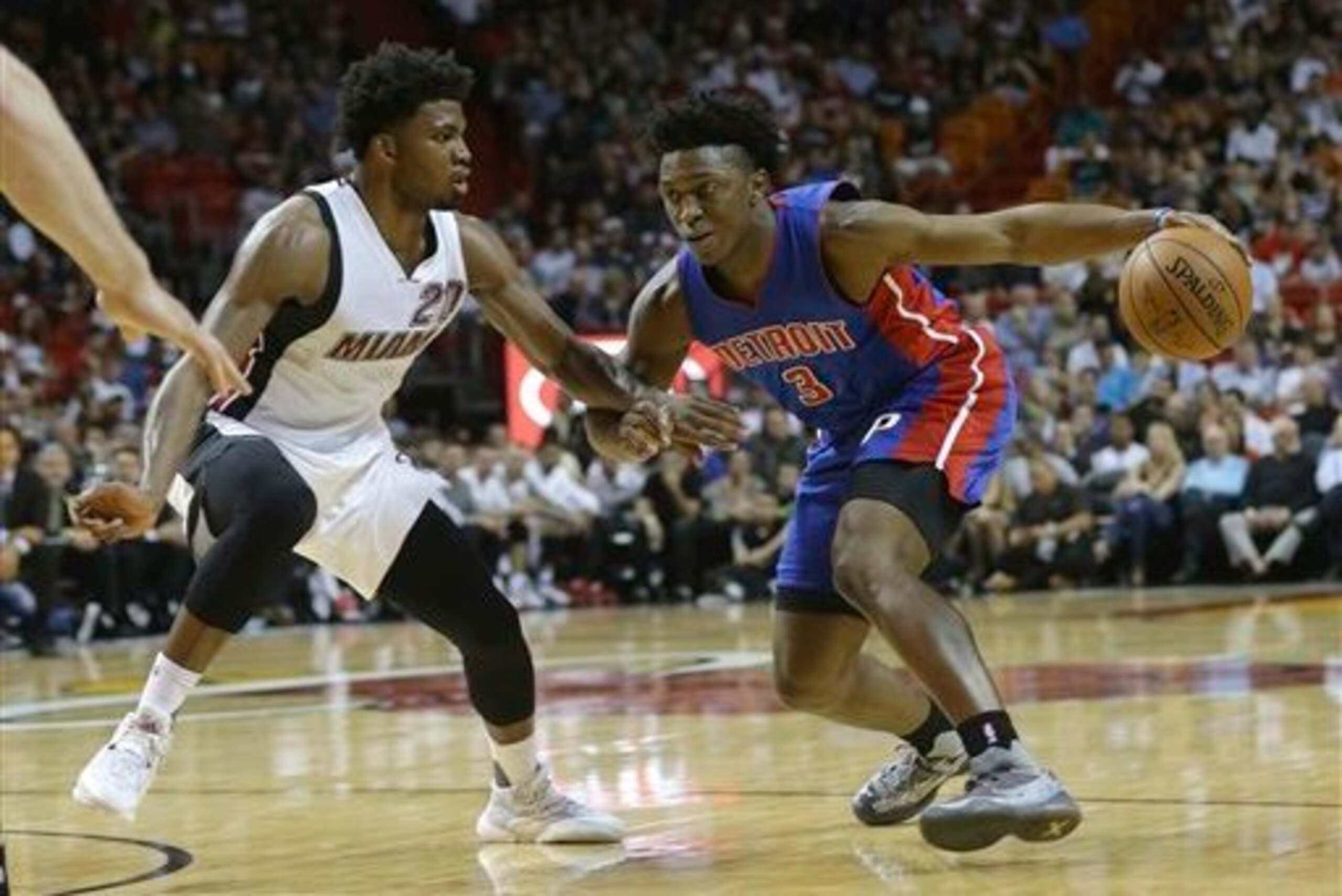
Stanley Johnson, the No. 8 pick in last year's draft, has had the opposite statistical effect on the Detroit Pistons, but he nonetheless fits a description similar to Winslow's. At 6'7" and 245 pounds, he can hold his own against power forwards and chase guards and wings all over the court.
The southern California native has shot poorly all season, particularly since returning from injury in mid-March (28.8 percent from the field, 25.8 percent from three). But with Tobias Harris ahead of him on the depth chart and nearly two months to go until he turns 20, Johnson is in no rush to reach his peak.
Fellow Arizona product Rondae Hollis-Jefferson has carved out a niche as a defensive specialist with the Brooklyn Nets. Up north, Norman Powell, a second-round pick from UCLA, has drained 41.2 percent of his threes and dropped a handful of nasty dunks since rising into the Toronto Raptors' starting lineup for good last month.
In time, Mario Hezonja, the fifth pick in 2015, could be the best of all the current rookie wings if he adapts to Scott Skiles' disciplinary style with the Orlando Magic.
The Best of the Rest
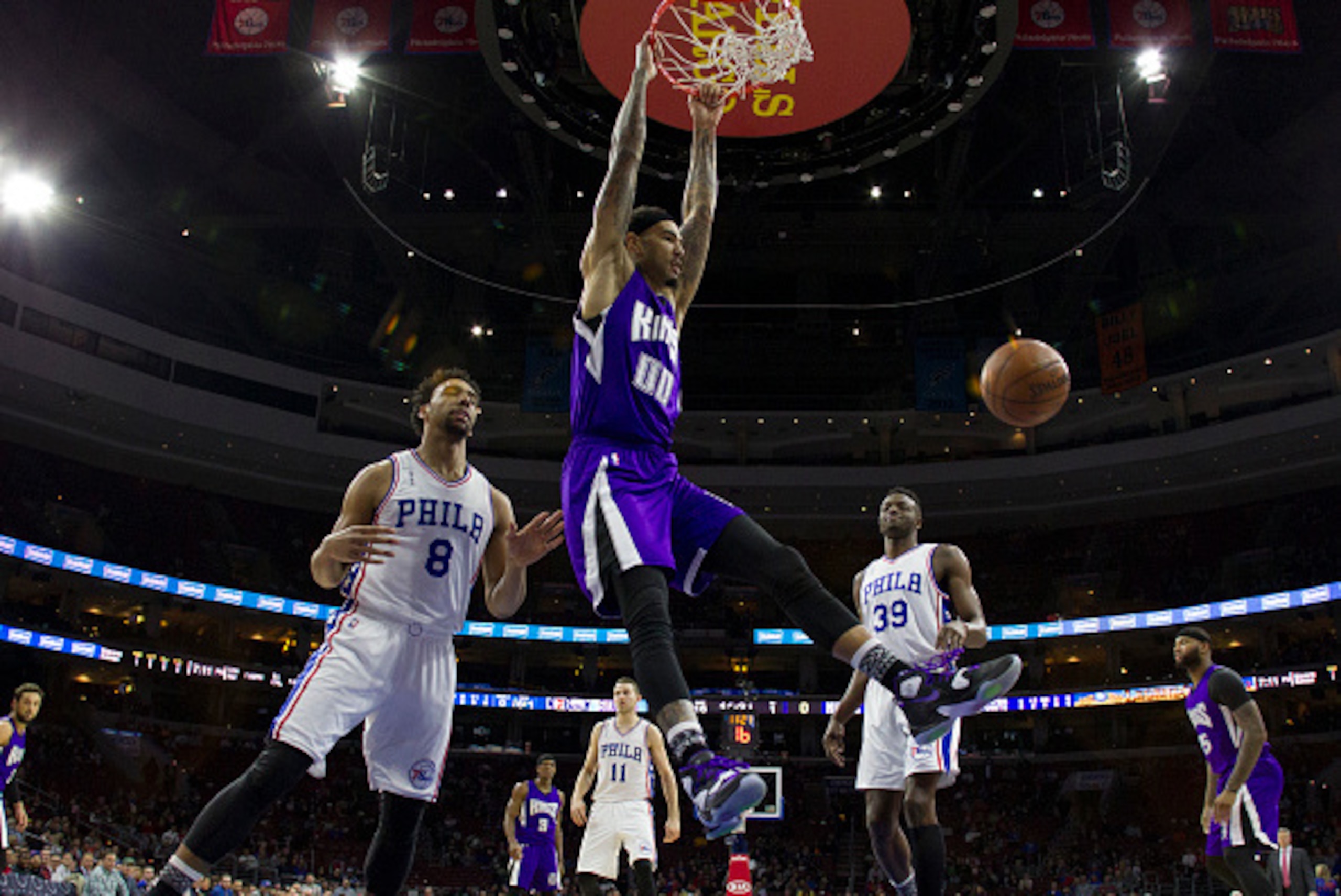
Not all of the NBA's top newbies play like they were raised in Mike D'Antoni's basketball laboratory.
Jahlil Okafor, No. 3 in the 2015 draft order and No. 2 in rookie scoring (17.5 points), looked like a low-post savant before succumbing to knee surgery. If you could combine his unusual skill with Willie Cauley-Stein's rim protection, rebounding and pick-and-roll finishing, you'd have a top-notch center, even without a reliable jump shot.
And if you tossed in Larry Nance Jr.'s hops and spark, you'd have a potential slam dunk champion.
In time, a grip of rookies who were buried on their respective depth charts this season (i.e. Kelly Oubre Jr., Delon Wright, Justin Anderson, Tyus Jones, Kevon Looney) could add to the lengthy list of 2015-16 newcomers who've already delivered on at least some of their draft-day promise.
It'll be years before this rookie class can be measured against the all-time best. But the early returns are encouraging and could portend greatness for the NBA's latest infusion of youth.
Josh Martin covers the NBA for Bleacher Report. Follow him on Twitter (@JoshMartinNBA), Instagram and Facebook.

.jpg?w=2560)


.jpg?w=2560 "Latest Peyton-Colts Rumors")

.jpg?w=2560 "Landing Spots for Trade Candidates 📍")
.jpg?w=2560 "Ugly Jets Scoring Stat 😳")