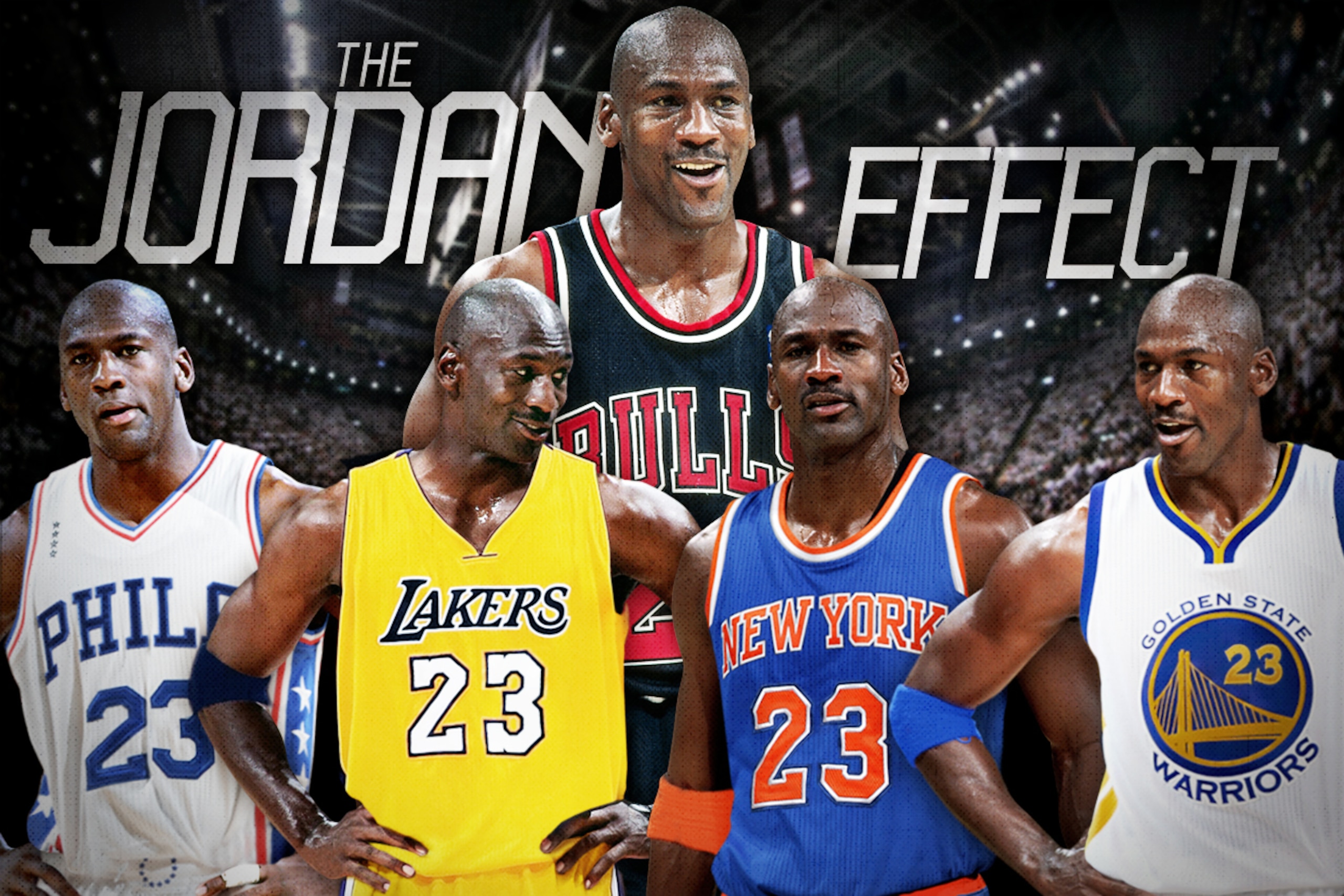

How Much Better Would Peak Michael Jordan Have Made Your Team This Season?
The Philadelphia 76ers are getting a free Michael Jordan. So too are the Golden State Warriors. The San Antonio Spurs and Miami Heat? They can have clones as well, since every team is getting a carbon copy of the man who torched the NBA for 32.5 points per game in 1988-89, putting together what's objectively the best individual season of the modern era.
Stephen Curry and the Warriors have drawn comparisons to the old-school Bulls during their quest for 73 wins, but let's not forget just how good the original was. We're bringing him back, just like the record-setting 1995-96 Chicago Bulls did, for that very reason.
To make things clear regarding our modern-day simulation: Each 2015-16 team is getting its own Jordan, and simulations will assume no other squad across the league is as fortunate. We'll do this for each franchise, assuming only one of 30 organizations has the former North Carolina Tar Heel on its roster.
Teams don't have to trade pieces to get their copy of Jordan. He's joining for a minimum salary, so they don't even need to get rid of key rotation members to bring him into the fold. He's just there, operating as if he's always been there and without any knowledge of the fact he's not the real Hall of Famer.
Methodology
1 of 31
Would every team, ordered here from worst to best with clone Jordan, be good enough to make the playoffs in the actual version of the NBA? How many would become historically great squads, capable of holding their own against the '96 Bulls? We're after the answers to those questions and so much more.
To determine the merits of every squad, we're replacing the starting shooting guard with the five-time MVP and allowing him to take over the minutes typically played by the incumbent starter. That now-former starter will become the primary backup, sending the actual backup (as determined by Rotoworld's depth charts) to the bench and subsequently taking his minutes.
Would Jordan play more in some situations? Sure, but this objective method is better than subjectively attempting to determine how a coach would redraw an entire rotation. At the very least, we know how many minutes a starting shooting guard typically gets.
The impact here is determined by looking at the total points added per 100 possessions—derived from total points added, a combination of offensive points added and defensive points saved, as explained at length here—of each involved player, scaled by how much time he typically spends on the court. The differences are then applied to actual teams' net ratings, and the Jordan effect determines how much that all-important number rises.
And trust us. It would rise for every team. Jordan single-handedly added 12.6 points per 100 possessions in 1988-89—the highest qualified score since 1973.
The only uncertainty is by how much.
We'll also show this impact in terms of win-loss records, using historical correlations between positive net ratings and actual wins to determine just how strong these clone-led squads would be.
Note: The methodology and intro are adapted from the similar exercise we did with Stephen Curry early in the 2015-16 season.
30. Philadelphia 76ers
2 of 31
Rotation Adjustment: Isaiah Canaan comes off the bench
Even though Isaiah Canaan has been fairly effective on offense and is leading the league in four-point plays, per NBAMiner.com, he's atrocious on defense. The Philadelphia 76ers are using the 6'0" guard at the 2 a little too often, and that's making him look even worse.
But with Nik Stauskas failing to make more than the tiniest modicum of progress during his sophomore season, it's not like they have any better options.
However, there's a far superior choice in our hypothetical world—Michael Jordan's clone.
During the 1988-89 season, Jordan scored a league-high 2,633 points for the Chicago Bulls. That's far more than Canaan and Stauskas combined to produce throughout 2015-16, and Jordan's total came in significantly more efficient fashion while he played with Defensive Player of the Year-caliber stopping power.
However, inserting him into the mix still wouldn't make these Sixers a good team. One player alone—even the one who produced arguably the best individual season in NBA history—can't drag a team into playoff contention when surrounded by sub-replacement-level talent.
Reality: 10-70, No. 15 in Eastern Conference (minus-10.2 net rating)
The Jordan Effect: 27 wins added ⇒ 37-45, No. 11 in Eastern Conference (minus-1.5 net rating)
29. Brooklyn Nets
3 of 31
Rotation Adjustment: Wayne Ellington comes off the bench
Injuries and overall ineptitude have forced the Brooklyn Nets into some inadequate starting lineups during the stretch run. None of Bojan Bogdanovic, Wayne Ellington, Shane Larkin, Chris McCullough and Thomas Robinson should be starters on a competitive NBA squad, much less all at the same time.
Michael Jordan, however, could salvage this situation, especially because the Nets did have some talented players suit up throughout the season. If you paired him with Thaddeus Young and Brook Lopez for part of the year, he'd be able to carry this squad to plenty of victories.
But the current straits are rather dire, and the overall product here would still barely finish in the red. If the Nets suffered the same injuries and shut down their key players early while Jordan was on the roster, they'd be on the outside of the playoff picture yet again.
Reality: 21-60, No. 14 in Eastern Conference (minus-7.7 net rating)
The Jordan Effect: 19 wins added ⇒ 40-42, No. 11 in Eastern Conference (minus-0.3 net rating)

28. Los Angeles Lakers
4 of 31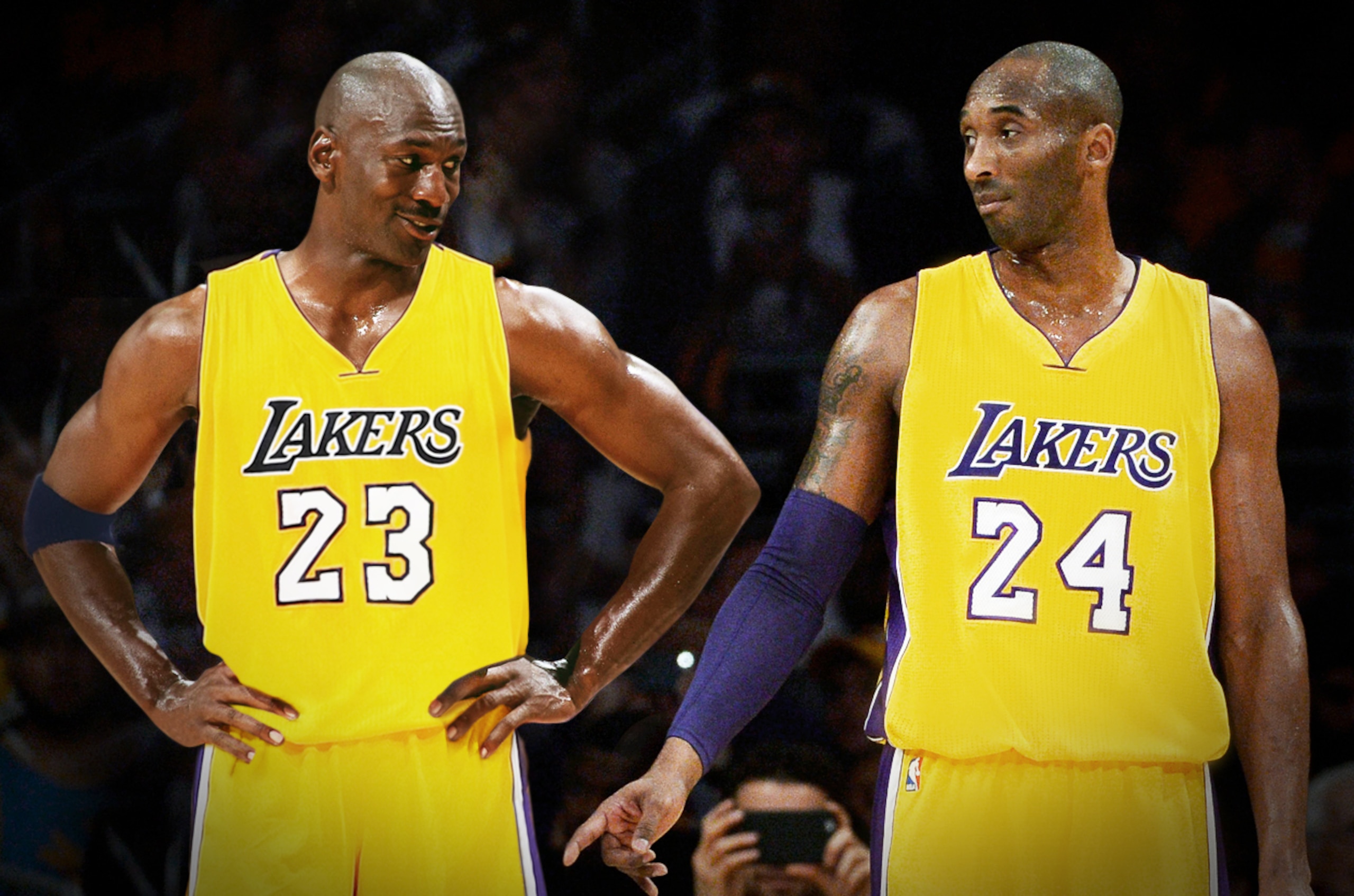
Rotation Adjustment: Jordan Clarkson comes off the bench
Michael Jordan and Kobe Bryant playing together? It's a dream come true—trainer and trainee, Jedi and Padawan, hero and hero worshipper, original and remix.
Unfortunately, it's not like we're pairing prime Jordan and prime Bryant. The 2015-16 version of the Los Angeles Lakers shooting guard is rather washed up, incapable of suiting up in every game and helpless on the defensive end when he does play.
Furthermore: It's not as if Jordan could make the rest of this roster that much better. Old-man Bryant still has to play plenty of minutes, and the Hall of Fame duo would remain surrounded by an inexperienced D'Angelo Russell, an ineffective Roy Hibbert and the rest of the mismatched pieces head coach Byron Scott was "working" with throughout the season.
There's enough young talent here that Los Angeles would make a playoff push, but you can't expect anything more than playing on the road in the opening round.
Reality: 16-66, No. 15 in Western Conference (minus-9.9 net rating)
The Jordan Effect: 29 wins added ⇒ 45-37, No. 5 in Western Conference (1.4 net rating)
27. Phoenix Suns
5 of 31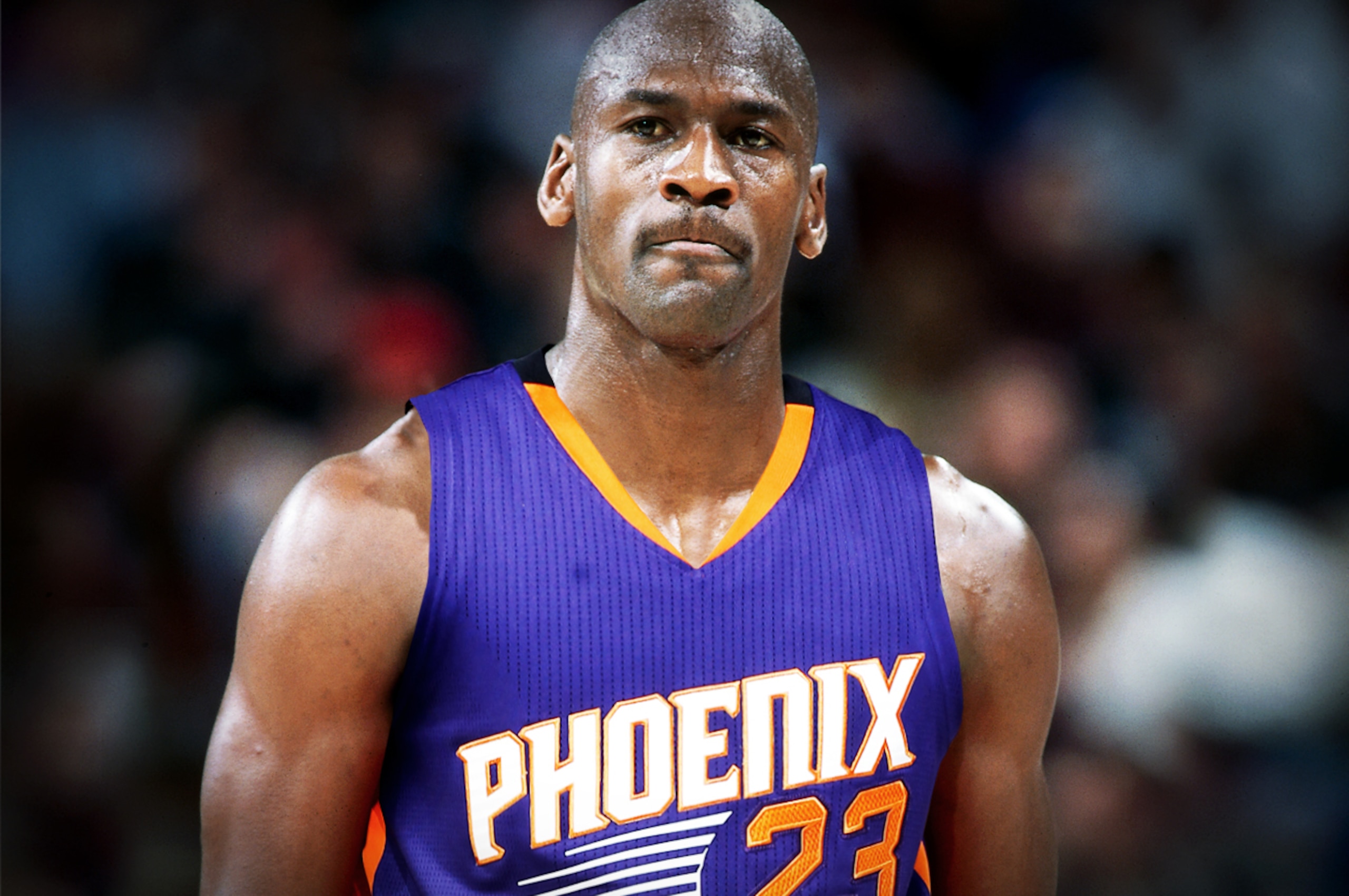
Rotation Adjustment: Brandon Knight comes off the bench
Brandon Knight's offensive contributions made him a feasible shooting guard for the Phoenix Suns, though his defensive porosity negated all of that value. The total product was merely average before Knight was shut down with a sports hernia.
Without the typical starter, Devin Booker was able to strut his stuff on the big stage, but don't mistake high-scoring exploits for value. Though the rookie improved throughout his first professional campaign, his early-season struggles depressed his shooting percentages, he didn't offer much outside of scoring, and he was entirely overmatched on defense.
Michael Jordan would be a massive upgrade over both young guards, to the point that the Suns would morph into a highly competitive squad. And that's without Eric Bledsoe staying healthy, though he and Jordan working together for a full year would make for an unstoppably athletic backcourt.
Even if the desert-dwelling franchise suffered myriad crippling injuries and chemistry concerns all over again, Jordan's presence would turn it into a fringe contender. He's just that much better than the young—but admittedly improving—pieces currently in place at the 2.
Reality: 22-59, No. 14 in Western Conference (minus-7.0 net rating)
The Jordan Effect: 31 wins added ⇒ 53-29, No. 5 in Western Conference (4.5 net rating)
26. Sacramento Kings
6 of 31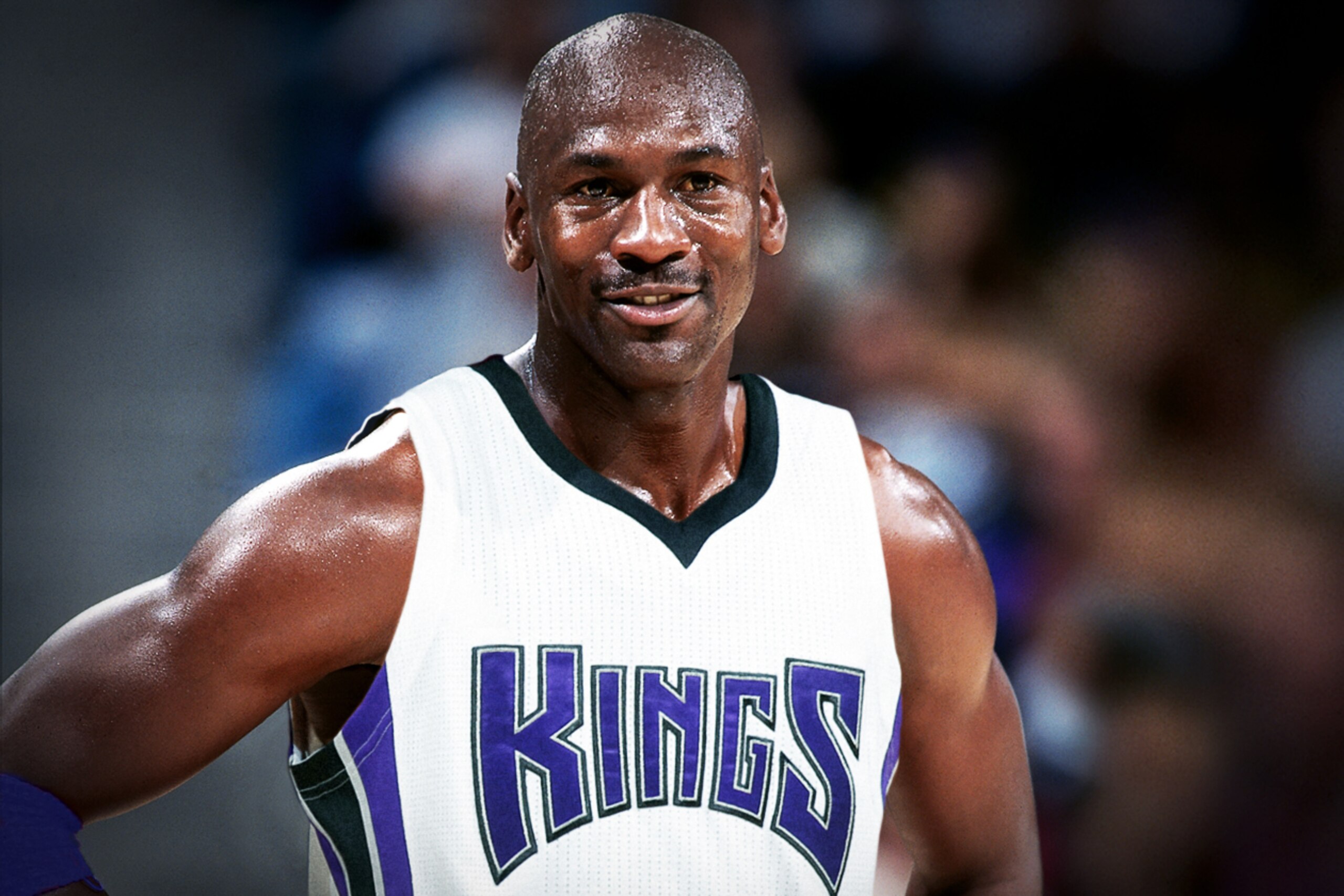
Rotation Adjustment: Ben McLemore comes off the bench
The Sacramento Kings were plagued by one of the NBA's worst rotations at shooting guard.
Ben McLemore hasn't come close to matching the lofty expectations that come with being the 2013 NBA draft's No. 7 pick, failing to assert himself as a positive force on either end of the floor. Marco Belinelli was even worse, forgetting how to shoot in 2015-16 while basically refusing to play quality defense.
Imagine replacing them with Michael Jordan and throwing out a starting five composed of Rajon Rondo, Jordan, Omri Casspi, Rudy Gay and DeMarcus Cousins.
All of a sudden, the Kings would look rather competitive. They still wouldn't be world-beaters in the Western Conference, plagued by their hole at the 3, the complete lack of perimeter shooting and the unfocused defense of the biggest players, but they'd overwhelm most opponents with sheer talent.
If Jordan adjusted to the modern NBA and became a three-point sniper, this team's ceiling would rise accordingly. But lest we forget, he made just 27 of his 98 triples during the 1988-89 season, preferring to throw in mid-range daggers while attacking the basket with unrelenting ferocity.
Reality: 33-48, No. 10 in Western Conference (minus-2.2 net rating)
The Jordan Effect: 22 wins added ⇒ 55-27, No. 4 in Western Conference (5.1 net rating)
25. Denver Nuggets
7 of 31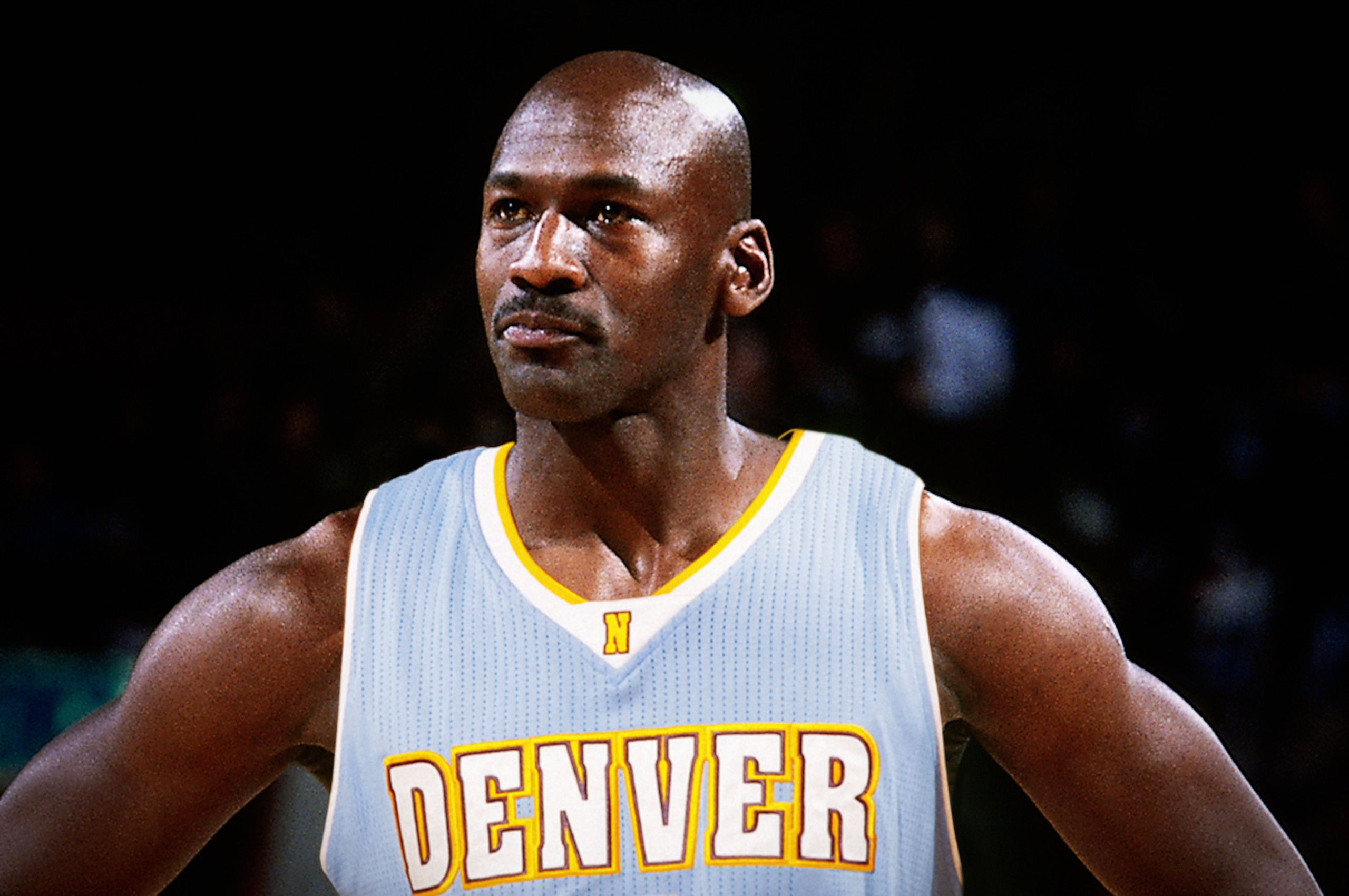
Rotation Adjustment: Gary Harris comes off the bench
Gary Harris and Will Barton were each among the league's most improved players during the 2015-16 season. The problem is: Neither of them pushed this team over the edge back into playoff territory.
Adding peak Michael Jordan, there's far less pressure on Emmanuel Mudiay to create offense for both himself and his teammates as a rookie point guard. Nikola Jokic will be able to rack up even more assists while passing to a cutting Jordan. Kenneth Faried can focus on rebounding and defense rather than trying to light up the scoreboard. Danilo Gallinari won't draw huge amounts of defensive attention now that he's a No. 2 option.
The implications are massive—they could make Denver even more competitive than these context-free numbers initially indicate. And the numbers are already strong, since they'd give Denver a 5.6 net rating that trails only four marks produced in 2015-16.
Reality: 33-48, No. 10 in Western Conference (minus-3.2 net rating)
The Jordan Effect: 23 wins added ⇒ 56-26, No. 3 in Western Conference (5.6 net rating)
24. New Orleans Pelicans
8 of 31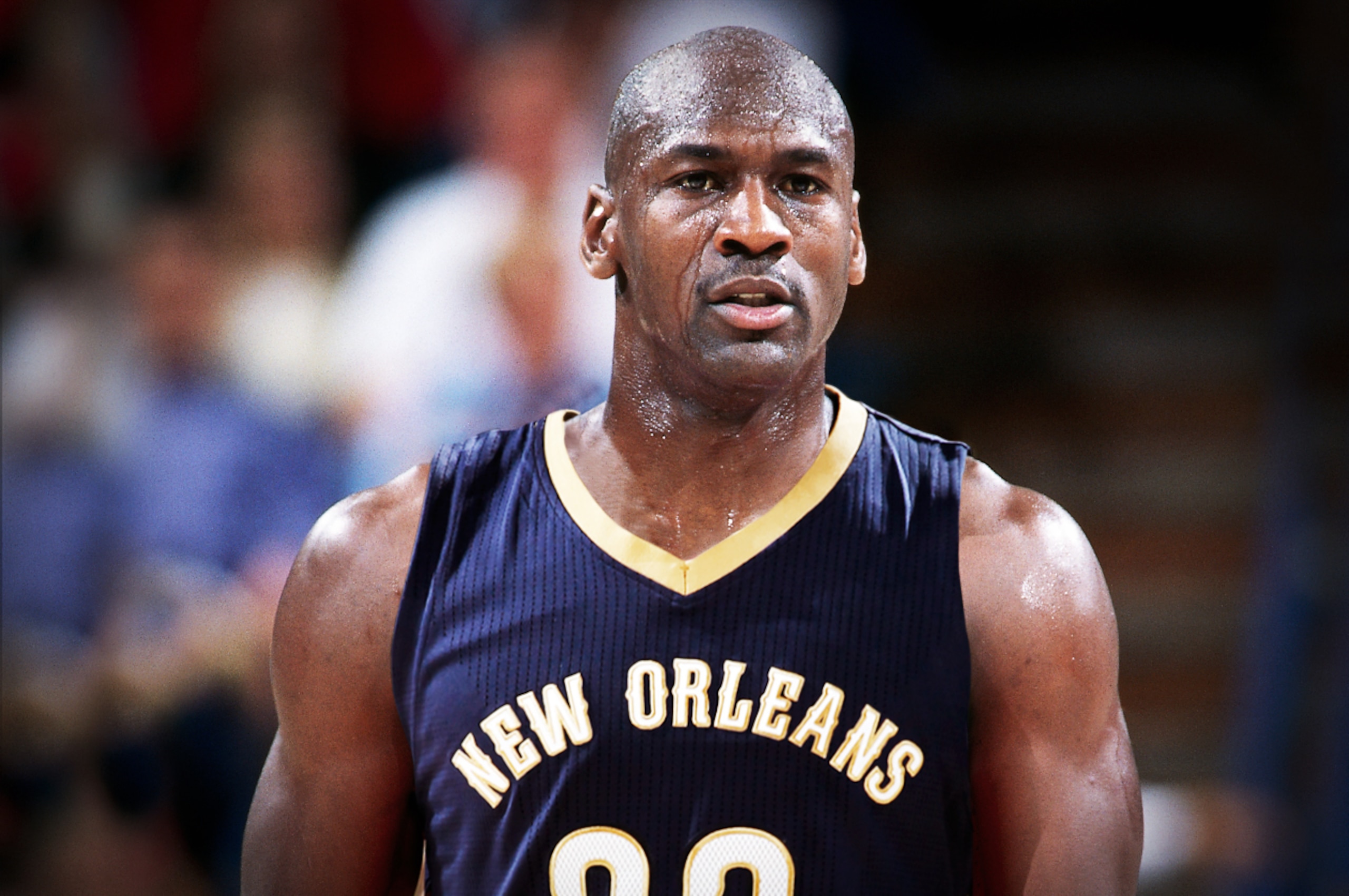
Rotation Adjustment: Eric Gordon comes off the bench
Think about the Cleveland Cavaliers. Picture the Oklahoma City Thunder.
That's the type of squad we're talking about if we add Michael Jordan to the New Orleans Pelicans, pushing Eric Gordon into a sixth-man role and forcing Bryce Dejean-Jones to the bench for good. Bad (and unlucky) as NOLA was throughout the 2015-16 season, there's no denying it has a significant amount of rostered talent.
The construction of this team would be terrifying if everyone were healthy.
Jrue Holiday remains a two-way force at point guard when he can actually play, and Jordan's ball-handling abilities could make it easier for him to stay close to 100 percent. Ryan Anderson would space out the floor for Jordan's slashing, and Anthony Davis is the all-around superstar who would help bring everyone together.
Stop salivating, Alvin Gentry. Intriguing as this squad may sound, it would still be one of the worst if every team had a Jordan of its own.
Reality: 30-51, No. 12 in Western Conference (minus-3.5 net rating)
The Jordan Effect: 28 wins added ⇒ 58-24, No. 3 in Western Conference (6.6 net rating)
23. Minnesota Timberwolves
9 of 31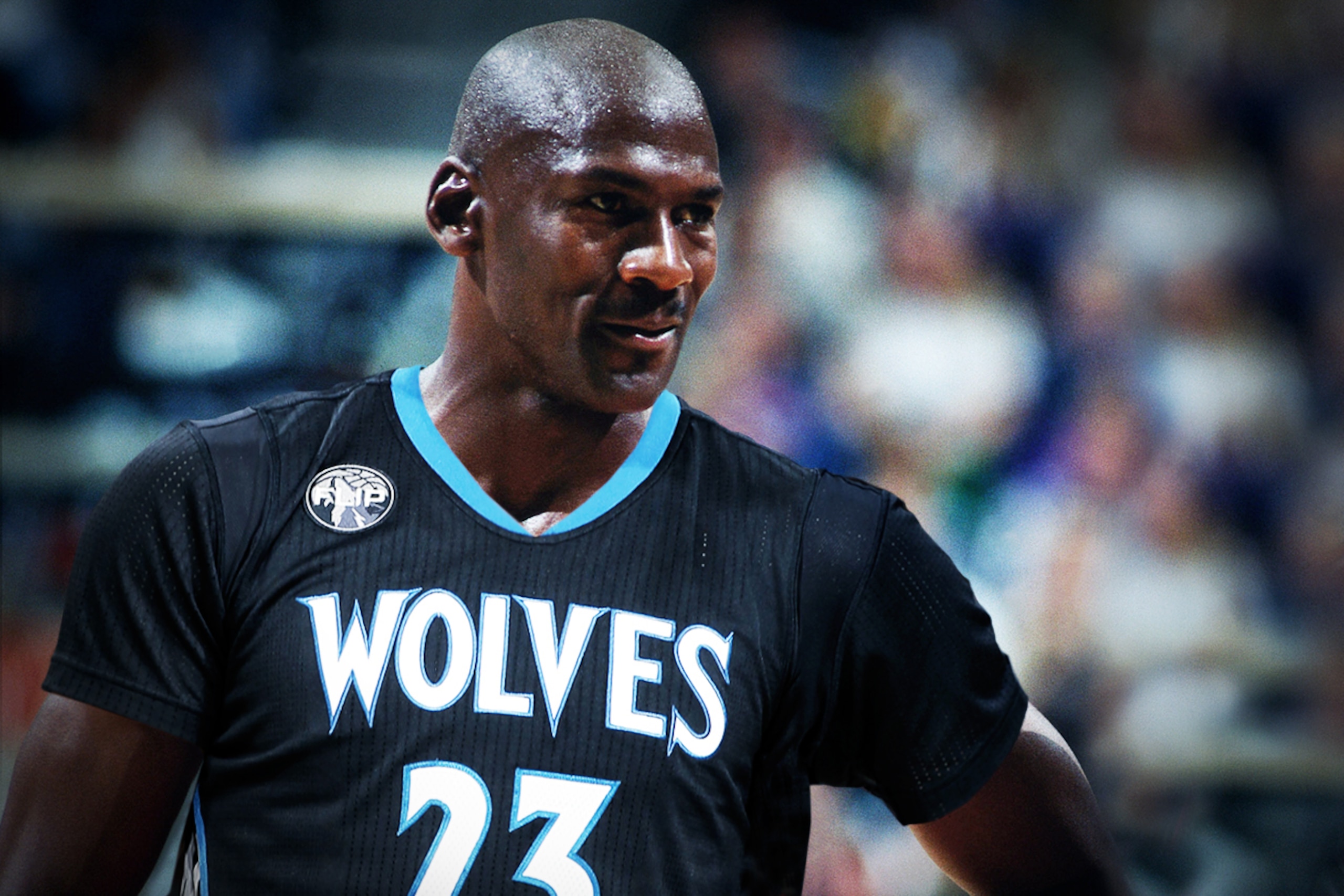
Rotation Adjustment: Andrew Wiggins comes off the bench
If it weren't for an out-of-order depth chart, the Minnesota Timberwolves would look even better.
Even though Andrew Wiggins provides the most glamorous type of statistical contributions (scoring), he's been less valuable than Zach LaVine on a per-possession basis. He's simply not an efficient scorer at this stage of his young career, he struggles to generate more assists than turnovers, he's a lackluster rebounder, and he's often overmatched on the defensive end.
In our analysis, Wiggins is pushing LaVine out of the rotation when Michael Jordan shoves the incumbent 2-guard to the bench, and that makes Minnesota a bit less impressive than it could be. Flip-flop the order to have LaVine taking on a larger backup role, and the 'Wolves see their net rating with Jordan rise to a staggering 7.3.
Regardless of which current shooting guard plays, it's not like this team is going to struggle with Jordan. He's still a terrific fit next to Karl-Anthony Towns, even if Minnesota doesn't have quite enough jump-shooting ability to complement either combination perfectly.
Reality: 28-53, No. 13 in Western Conference (minus-3.9 net rating)
The Jordan Effect: 31 wins added ⇒ 59-23, No. 3 in Western Conference (7.1 net rating)
22. Houston Rockets
10 of 31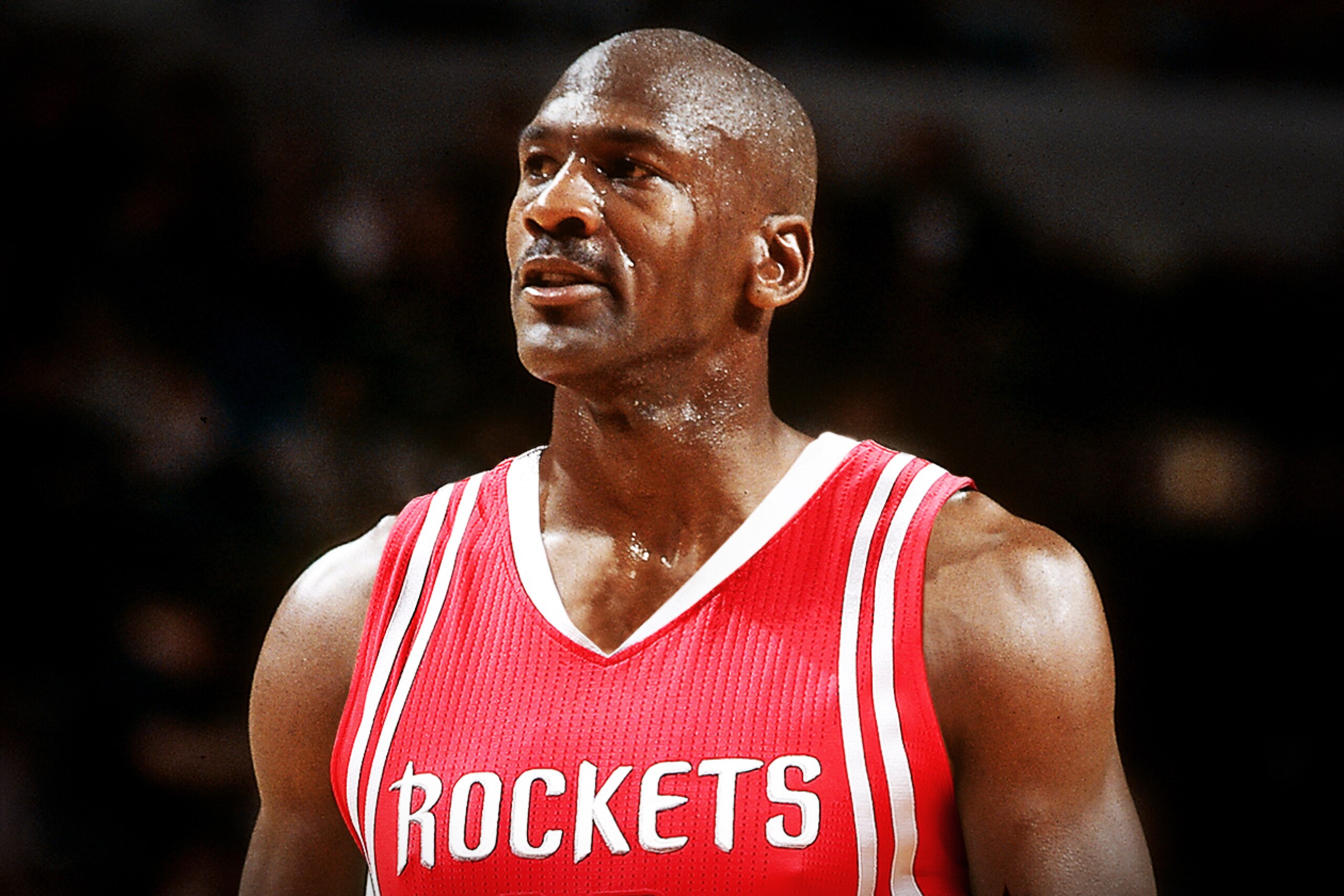
Rotation Adjustment: James Harden comes off the bench
If the Houston Rockets were able to replace Trevor Ariza or Patrick Beverley with Michael Jordan, they'd look even better.
But remember how the rules for this game work: We say sayonara to James Harden, letting him resume his Oklahoma City Thunder role as a dynamite sixth man while Jordan takes the helm in the starting five. That doesn't mean the Rockets won't still use him and Harden at the same time, creating an unstoppable offensive backcourt in which Jordan can take on the toughest guard assignment at the other end.
Plus, let's not pretend Jordan isn't a massive upgrade over Harden at the 2.
Talented as the bearded shooting guard may be, he's a one-way contributor who can't hope to touch Jordan's overall value. My databases show Harden has added more points per 100 possessions than any other qualified player at his position this year, and his rate is still only barely more than half of Jordan's.
Reality: 40-41, No. 8 in Western Conference (minus-0.6 net rating)
The Jordan Effect: 20 wins added ⇒ 60-22, No. 3 in Western Conference (7.8 net rating)
21. Chicago Bulls
11 of 31
Rotation Adjustment: Jimmy Butler comes off the bench
Now we're back in Michael Jordan's old stomping grounds, and there's only one reasonable question.
If we paired him with the post-injury version of Derrick Rose, Mike Dunleavy, Taj Gibson and Pau Gasol, how would his squad stack up next to the title-winning Chicago Bulls squads he led back in the 1990s?
| 1990-91 | 9.4 | 61-21 |
| 1991-92 | 11.0 | 67-15 |
| 1992-93 | 6.8 | 57-25 |
| 1995-96 | 13.4 | 72-10 |
| 1996-97 | 12.0 | 69-13 |
| 1997-98 | 7.9 | 62-20 |
| 2015-16 | 7.9 | 60-22 |
Throughout NBA history, net rating and wins have maintained a strong correlation (r^2=0.78, for the statistically inclined). Because of that, we can use the predicted net rating to calculate the expected record of 60-22 for this year's Bulls with Jordan, which puts them well within the range of actual contenders.
With the help of a time machine, maybe Jordan could add ring No. 7.
Reality: 41-40, No. 9 in Eastern Conference (minus-1.8 net rating)
The Jordan Effect: 19 wins added ⇒ 60-22, No. 1 in Eastern Conference (7.8 net rating)
20. Orlando Magic
12 of 31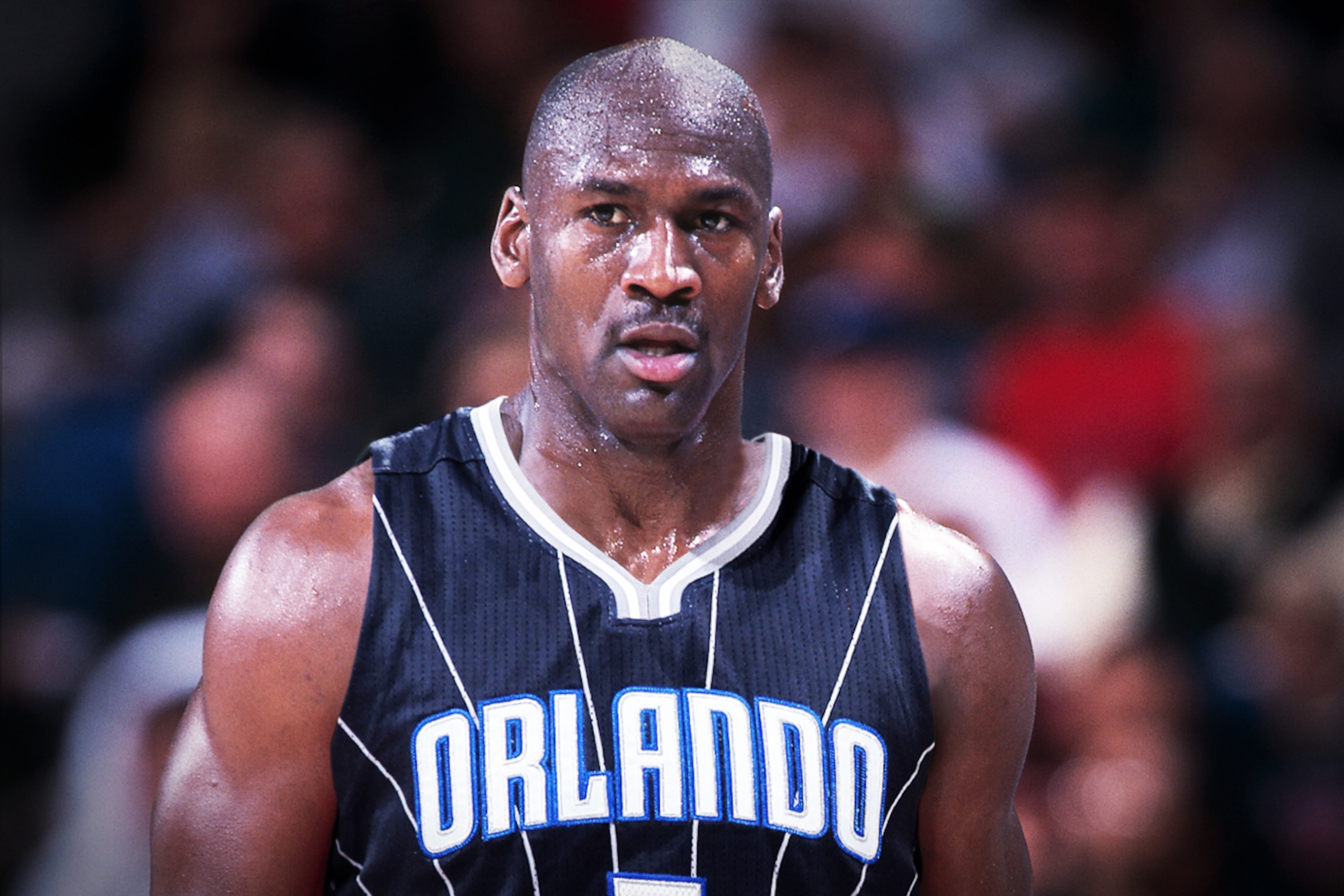
Rotation Adjustment: Victor Oladipo comes off the bench
Elfrid Payton, Victor Oladipo, Mario Hezonja, Aaron Gordon and Nikola Vucevic could one day develop into a fearsome starting five, but the team is still too offensively reliant on two players. It often forces the ball to the center and asks him to create his own looks, while Oladipo is subject to a bit too much defensive attention when he's attempting to take over games.
The Orlando Magic have been one of the 10 worst offensive teams in the NBA during the 2015-16 season, but that would quickly change with one of the greatest scorers ever leading the charge. All of a sudden, life gets a lot easier for all the players surrounding him, as he should generate a bit more gravitational pull than Oladipo.
Plus, it's not like Michael Jordan would be a negative on defense.
Reality: 35-46, No. 11 in Eastern Conference (minus-1.7 net rating)
The Jordan Effect: 26 wins added ⇒ 61-21, No. 1 in Eastern Conference (7.9 net rating)
19. New York Knicks
13 of 31
Rotation Adjustment: Arron Afflalo comes off the bench
Just imagine the media attention Michael Jordan would generate while playing in the Big Apple. Just imagine the reaction when New York Knicks head coach Kurt Rambis decides to bench him for Sasha Vujacic down the stretch of a close game.
Then again, Jordan already knows how to run the triangle offense, so he'd probably log roughly 48 minutes per game.
But even if he spent just 10 minutes per contest on the court, he'd provide a lot more value than the Knicks' current crop of shooting guards. Arron Afflalo and Vujacic have struggled immensely during the 2015-16 season, and their decisively negative impact is one of the primary reasons this team failed to maintain its early-season pace.
Jose Calderon can shoot, just like Steve Kerr and Jordan's other point guards back in the day. Carmelo Anthony would thrive next to him, and there's no telling how good Kristaps Porzingis could become while learning from the near-consensus greatest player of all time.
If you want New York basketball to excite its fans more than ever before, a Jordan clone could be a great strategy.
Reality: 32-49, No. 13 in Eastern Conference (minus-2.8 net rating)
The Jordan Effect: 29 wins added ⇒ 61-21, No. 1 in Eastern Conference (8.0 net rating)
18. Washington Wizards
14 of 31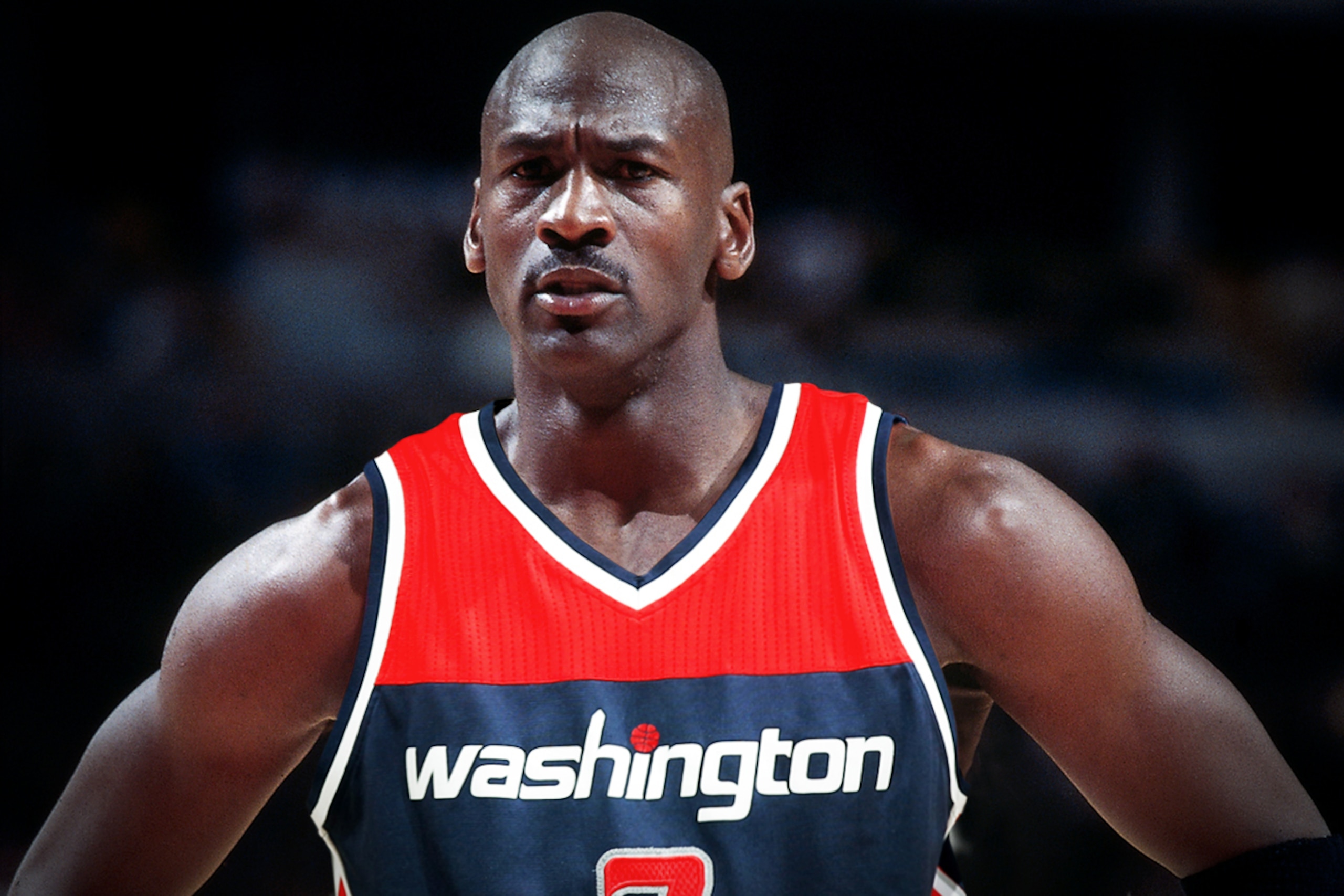
Rotation Adjustment: Bradley Beal comes off the bench
Picture the scene.
The Washington Wizards grab a defensive rebound and quickly find the outlet man. John Wall corrals the pass and goes darting through defenders while flying down the court. With just one man to beat, he decides not to call his own number and instead hits Michael Jordan, who's filling the lane perfectly and finishes the transition opportunity with a thunderous slam.
Instead of seeing Bradley Beal force the Wizards to worry about his lack of development, the young 2-guard would be allowed to come off the bench as a three-point sniper, complementing the attacking style of the starting guards perfectly.
Washington had plenty of trouble in 2015-16, sleeplessly searching for consistency and never finding it. But Jordan would serve as the ultimate panacea in the nation's capital, even if he'd be forced to handle the rock a bit less than he did in his prime years with the Chicago Bulls.
At least he'd actually be vintage Jordan while wearing the Washington uniform this time around.
Reality: 40-41, No. 10 in Eastern Conference (minus-0.8 net rating)
The Jordan Effect: 21 wins added ⇒ 61-21, No. 1 in Eastern Conference (8.1 net rating)
17. Memphis Grizzlies
15 of 31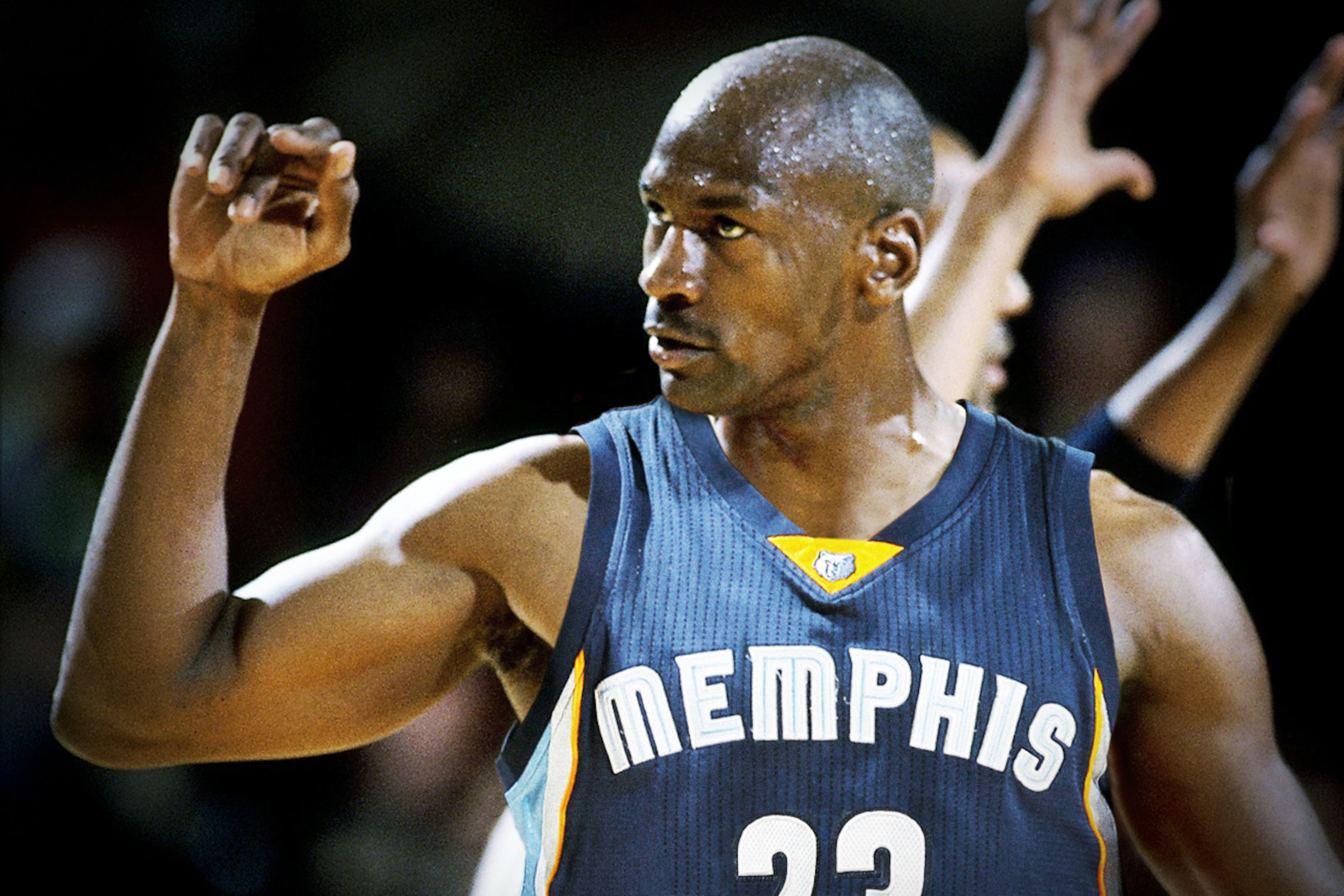
Rotation Adjustment: Tony Allen comes off the bench
Stunningly, Michael Jordan's perimeter shooting wouldn't look out of place to Memphis Grizzlies fans:
| Michael Jordan (1988-89) | 27 | 98 | 27.6 |
| Tony Allen (2015-16) | 15 | 42 | 35.7 |
| P.J. Hairston (2015-16) | 13 | 59 | 22.0 |
Jordan wouldn't help this team suddenly start firing away from beyond the arc, but he'd build upon a created identity. He is, after all, a grit-and-grind player of the highest caliber, given his ability to lock down on the defensive end and use his relentless physicality to score.
Throw him on this existing squad, and you're looking at one of the league's best teams with minimal adjustments necessary. That 8.2 net rating isn't anything to sniff at.
Reality: 42-38, No. 6 in Western Conference (minus-1.8 net rating)
The Jordan Effect: 19 wins added ⇒ 61-21, No. 3 in Western Conference (8.2 net rating)
16. Milwaukee Bucks
16 of 31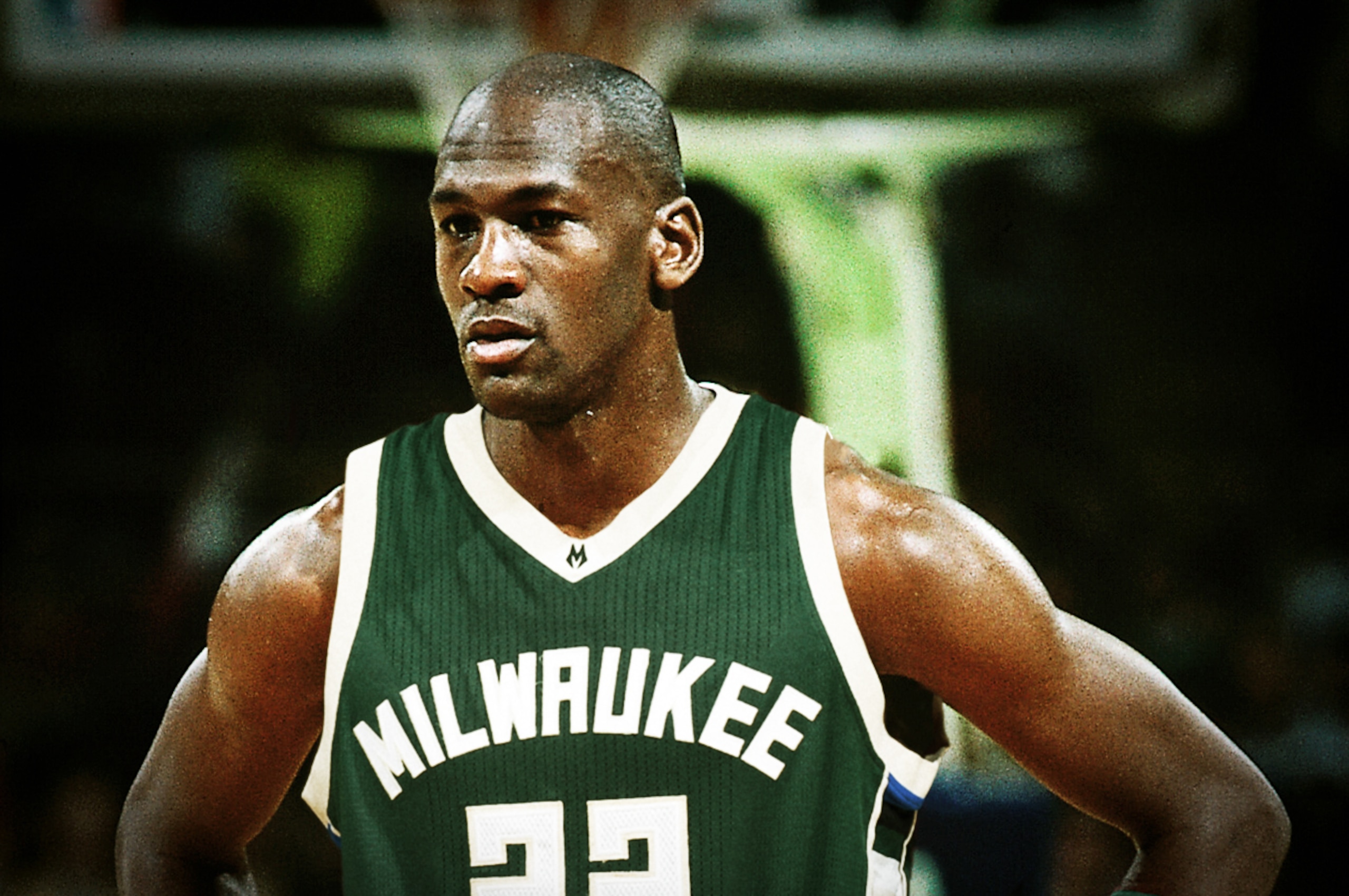
Rotation Adjustment: Khris Middleton comes off the bench
The Milwaukee Bucks struggled throughout the season, failing to prove their success in 2014-15 was anything more than a one-year aberration.
The defense took massive strides in the wrong direction. The offense lacked go-to players and floor-spacing presences. It wasn't until Giannis Antetokounmpo took over as a point guard that the Bucks found some level of upper-tier ability.
In reality, Milwaukee's net rating lingered around the worst marks in the league for much of the year, beating out only that of the Phoenix Suns, Brooklyn Nets, Los Angeles Lakers and Philadelphia 76ers. But one player could've made a world of difference, so long as he's talented enough to be a consensus Hall of Famer.
Throw Michael Jordan, who certainly meets that criterion, into the mix, and you're suddenly looking at an 8.7 net rating that would lag behind only the scores produced by the Golden State Warriors and San Antonio Spurs. Talk about a quick burst into title contention.
Reality: 33-48, No. 12 in Eastern Conference (minus-4.4 net rating)
The Jordan Effect: 29 wins added ⇒ 62-20, No. 1 in Eastern Conference (8.7 net rating)
15. Dallas Mavericks
17 of 31
Rotation Adjustment: Wesley Matthews comes off the bench
Given the hodgepodge nature of this team, as well as all the injuries suffered by the roster's veteran players, there's no way the Dallas Mavericks should've hung around in playoff contention for more than a few weeks. Relying on Raymond Felton, J.J. Barea and the other limited players on this Dallas squad should've been a recipe for disaster, but Rick Carlisle is a magician.
Now, what could he have done with Michael Jordan operating under his supervision?
Everything. The answer is everything.
Let's just say Dirk Nowitzki might actually have a shot at adding a second ring to his collection.
Reality: 42-39, No. 7 in Western Conference (minus-0.3 net rating)
The Jordan Effect: 22 wins added ⇒ 64-18, No. 3 in Western Conference (9.6 net rating)
14. Miami Heat
18 of 31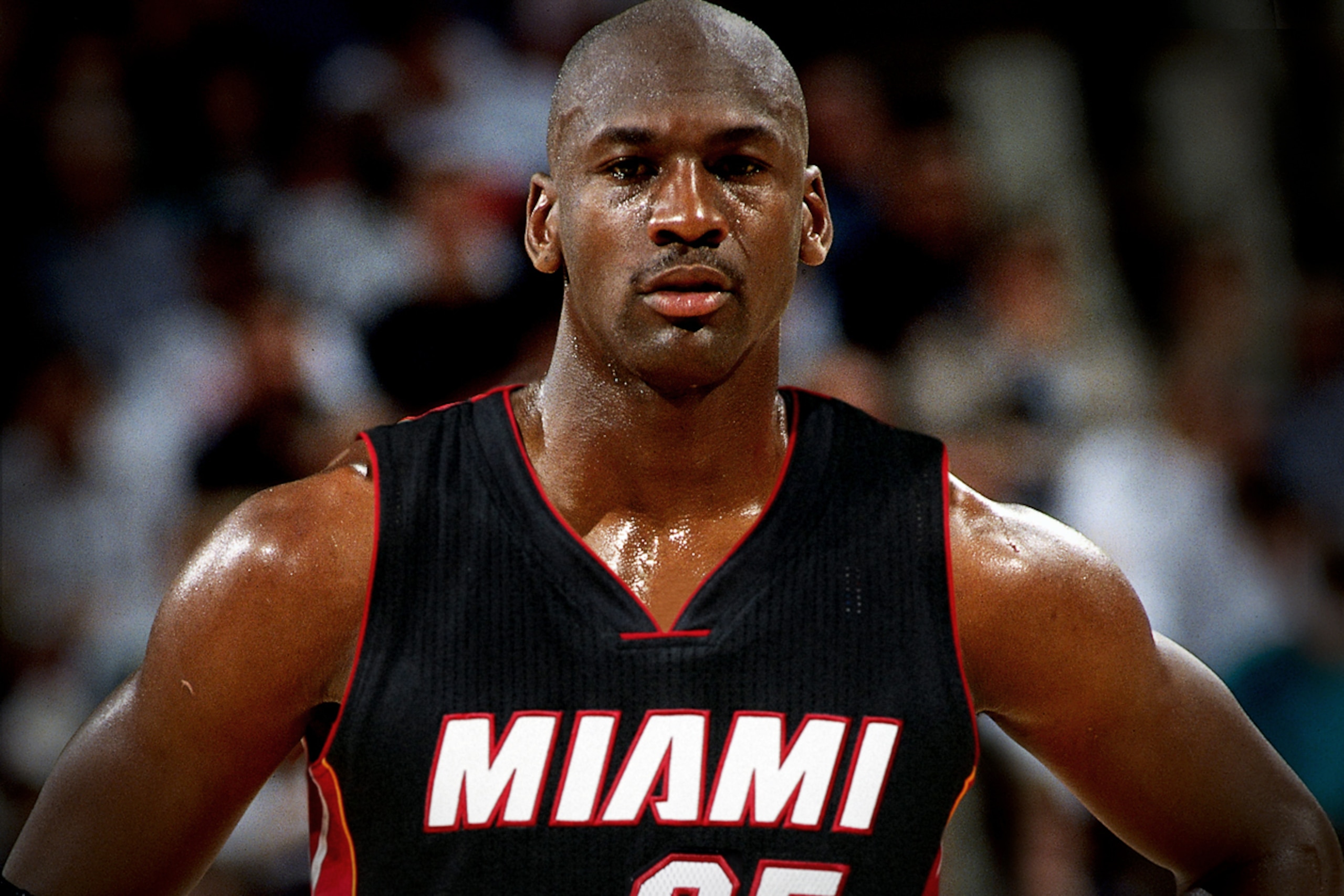
Rotation Adjustment: Dwyane Wade comes off the bench
During Dwyane Wade's prime, replacing him with Michael Jordan wouldn't have made too large a difference. According to my total points added database (TPA is explained in full throughout this article), Wade's 2008-09 campaign with the Miami Heat checks in as the No. 15 individual season since 1973.
But he is no longer that player.
A healthier version of Wade has indeed been an asset for the Heat in 2015-16, as he's relied on his veteran savvy and endless bag of offensive tricks. However, his defensive decline has stopped him from looking like a legitimate All-Star (though he still represented the Eastern Conference by virtue of fan votes).
Hassan Whiteside has cleaned up many of Wade's mistakes, but the possibility of Jordan playing elite perimeter defense while Whiteside patrols the paint is a tantalizing one. It still may not be enough to make Miami the unquestioned title favorite this year, but it would certainly become a true contender for the Larry O'Brien Trophy.
Reality: 47-33, No. 4 in Eastern Conference (1.9 net rating)
The Jordan Effect: 18 wins added ⇒ 65-17, No. 1 in Eastern Conference (10.0 net rating)
13. Detroit Pistons
19 of 31
Rotation Adjustment: Kentavious Caldwell-Pope comes off the bench
If you want to turn Detroit into a juggernaut, put Michael Jordan on the squad—sacrilegious as that may look after the perennial struggles against the Bad Boys early in his career.
Does Jordan fit with head coach Stan Van Gundy's four-out, one-in strategy? Not even a tiny bit.
Does it matter? See the previous answer.
Jordan isn't a perimeter sniper who's going to space out a defense, but he exhibits his own type of gravitational pull. Even in the modern NBA, the opposition will be forced to respect him, shifting to help the primary defender whenever the ball is in the superstar's hands. Paired with Andre Drummond's interior presence, that impact will still help give the Detroit Pistons a dominant offense.
Defensively, the Pistons have been an above-average squad. And we're now replacing a solid stopper in Kentavious Caldwell-Pope with one of the greatest perimeter defenders to ever suit up.
Reality: 43-37, No. 7 in Eastern Conference (0.7 net rating)
The Jordan Effect: 23 wins added ⇒ 66-16, No. 1 in Eastern Conference (10.8 net rating)
12. Charlotte Hornets
20 of 31
Rotation Adjustment: Courtney Lee comes off the bench
Now we're up in a historic realm.
The Charlotte Hornets won't be mistaken for true contenders this year, but their massive improvement during the season's second half still propelled them into the playoff mix with room to spare. Add Michael Jordan to a squad already featuring Kemba Walker, Nicolas Batum, Al Jefferson, Marvin Williams and many more usable assets, and you're suddenly looking at one of the better teams in NBA history.
Though Charlotte still finds itself outside the top 10 of this countdown, it's important to remember just how good it would be in a historical context. Per my databases, the expected net rating of 11.1 after bringing Jordan in would trail only three teams in NBA history (not including any from this campaign): the 1995-96 Chicago Bulls, the 1996-97 Bulls and the 2007-08 Boston Celtics.
For what it's worth, each member of that trio won a title.
Only one question remains: How would Jordan the front-office figure manage Jordan the player?
Reality: 47-34, No. 5 in Eastern Conference (2.5 net rating)
The Jordan Effect: 20 wins added ⇒ 67-15, No. 1 in Eastern Conference (11.1 net rating)
11. Portland Trail Blazers
21 of 31
Rotation Adjustment: C.J. McCollum comes off the bench
Talented as the Charlotte Hornets would be with Michael Jordan, the Portland Trail Blazers with a clone of their own would be even better, jumping past the 2007-08 Boston Celtics and posting the No. 3 net rating in NBA history (again, not including teams from the current season).
The Hornets were the superior bunch in reality, but letting Jordan fill C.J. McCollum's role and pushing Gerald Henderson out of the rotation makes an even bigger difference. Not only does the Greatest of All Time get to play more minutes, but his defensive ability would shore up one of Rip City's biggest weaknesses while allowing McCollum to serve as the third scorer the team so desperately needs.
Frankly, it's tough to think of a guard pairing more ideal than Jordan and Damian Lillard. The former would cover up for the latter's shortcomings on the defensive end, and it's not like Lillard struggles when asked to serve as a spot-up shooter.
Reality: 43-38, No. 5 in Western Conference (0.8 net rating)
The Jordan Effect: 24 wins added ⇒ 67-15, No. 2 in Western Conference (11.6 net rating)
10. Indiana Pacers
22 of 31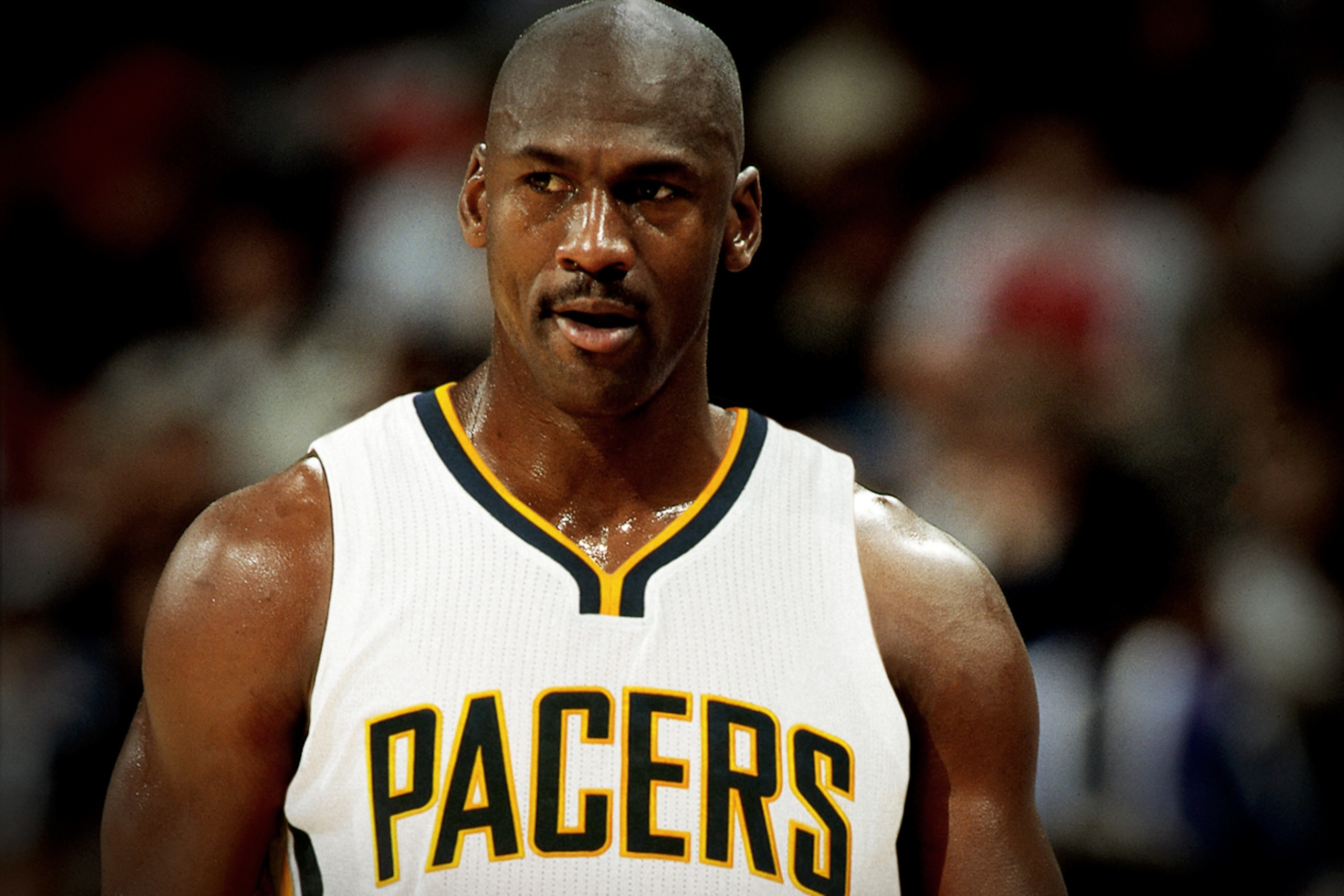
Rotation Adjustment: Monta Ellis comes off the bench
The Indiana Pacers are perfectly positioned for Michael Jordan.
Not only is the incumbent starter (Monta Ellis) an average contributor who struggles on one end of the court (offense, strangely enough), but he also plays a hefty number of minutes. Rather than having Jordan fill a smaller role, we get to leave him on the court for the majority of each game.
Plus, Ellis is still clearly superior to the listed backup (Rodney Stuckey), which gives Indiana a strong one-two punch at shooting guard.
Subjectively, Jordan is a great fit with the Pacers, as he'd take plenty of offensive pressure off Paul George while giving the team a dynamic scoring duo. Far too often, we've seen this team slip into mediocrity when George has struggled with his shot, but that wouldn't happen nearly as often if the small forward were the No. 2 option rather than the unquestioned No. 1.
Reality: 43-37, No. 7 in Eastern Conference (1.5 net rating)
The Jordan Effect: 25 wins added ⇒ 68-14 No. 1 in Eastern Conference (11.9 net rating)
9. Utah Jazz
23 of 31
Rotation Adjustment: Rodney Hood comes off the bench
Sorry, Rodney Hood.
Even though the Duke product has improved substantially, asserting himself as the Utah Jazz's shooting guard of the future while coming up clutch in plenty of situations, he's not Michael Jordan.
Jordan gives Utah a clear-cut No. 1 option, allowing the rest of the players to settle into their more natural roles. Imagine how good Gordon Hayward would look as a secondary scorer or how strong the Derrick Favors-Rudy Gobert frontcourt pairing would be if not needing to focus as much energy on the offensive end.
Utah's actual net rating doesn't truly reflect how impressive this team was at times in 2015-16. The up-and-coming squad was forced to overcome countless injuries that disrupted chemistry, but with Jordan, the Jazz can overcome all that...and then some.
Reality: 40-41, No. 8 in Western Conference (2.2 net rating)
The Jordan Effect: 29 wins added ⇒ 69-13, No. 2 in Western Conference (12.9 net rating)
8. Boston Celtics
24 of 31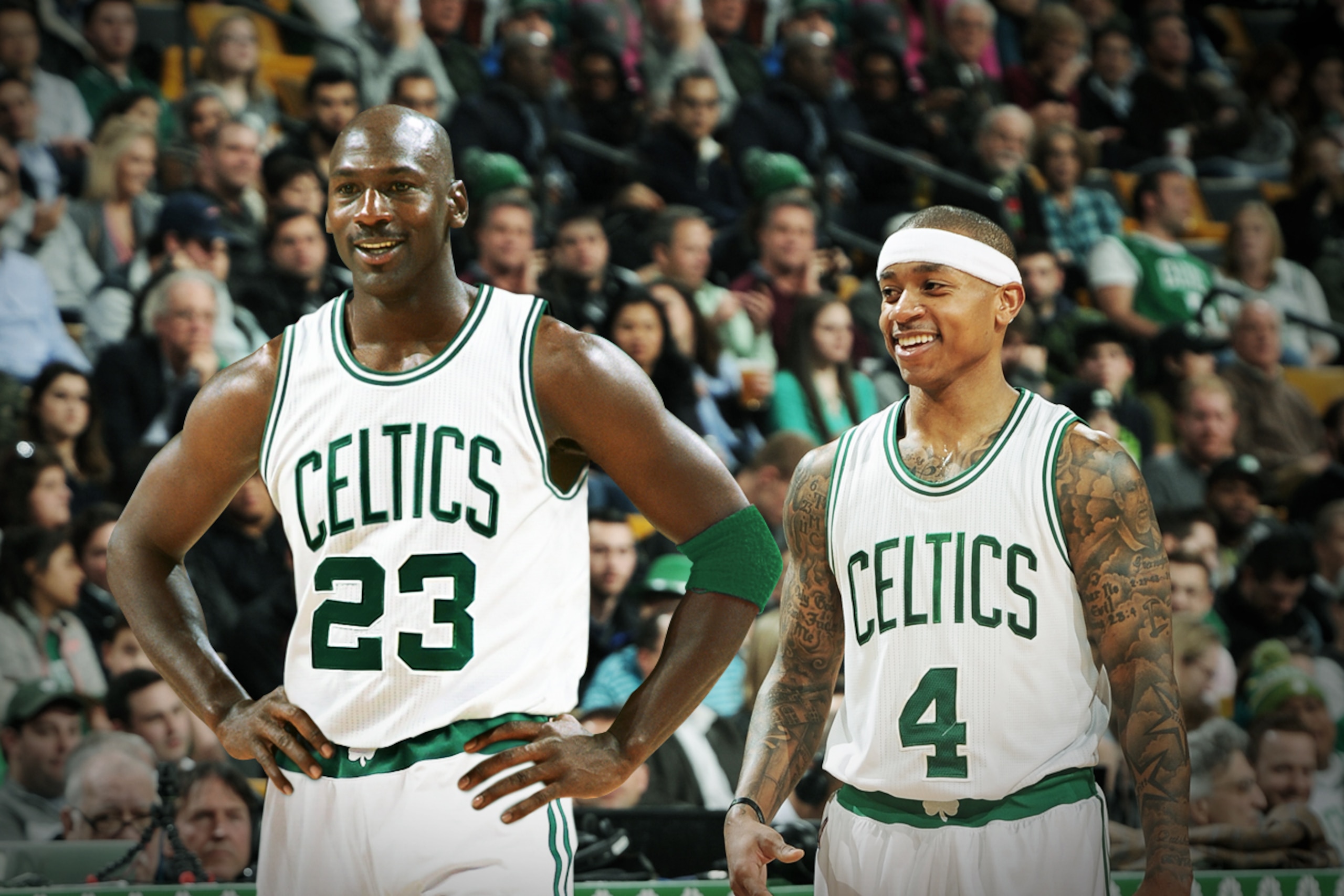
Rotation Adjustment: Avery Bradley comes off the bench
Competitive as they've been during the 2015-16 campaign, the Boston Celtics still need that one unquestioned stud who can thrive in any situation. Isaiah Thomas is close to becoming one, but his diminutive size (5'9") and struggles on defense make earning that status tough. Jae Crowder has the impact of a superstar, but that's more because of his versatility than his ability to impact the proceedings in any one area.
Jordan, however, could carry this team.
And for Boston, it's not just about slotting Jordan into the starting five and watching him thrive alongside whoever else suits up. Instead, it's about how head coach Brad Stevens would surely love the ability to add a little more depth at the 2.
Important as the upgrade from Bradley to Jordan might be in the starting lineup, having Bradley available off the pine (over rookie R.J. Hunter) is only slightly less impactful.
Reality: 47-34, No. 5 in Eastern Conference (3.4 net rating)
The Jordan Effect: 22 wins added ⇒ 69-13, No. 1 in Eastern Conference (13.0 net rating)
7. Atlanta Hawks
25 of 31
Rotation Adjustment: Kyle Korver comes off the bench
The Kyle Korver effect hasn't been nearly as significant in 2015-16 as it was during the Atlanta Hawks' 60-win season one year prior.
This go-round, the team's net rating has jumped by 5.4 points per 100 possessions when Korver is on the floor. In 2014-15, that increase stood at an astronomical 13.5—the product of Korver's historic shooting from beyond the arc and the defensive attention that focused on him at all times.
That makes replacing him with Michael Jordan much easier to swallow for the Hawks. Subbing Jordan for Korver in 2014-15 might not have held as large an effect because so much of what Atlanta did on the offensive end centered around the sniper's ability from downtown.
The Hawks' Jordan clone still doesn't have the same impact he does with other competitive squads, but at least this team is already starting at a respectable point. The ensuing net rating still lags behind only the 1995-96 Chicago Bulls throughout all of NBA history, and there's nothing shameful about that.
Reality: 48-33, No. 3 in Eastern Conference (4.2 net rating)
The Jordan Effect: 21 wins added ⇒ 69-13, No. 1 in Eastern Conference (13.0 net rating)
6. Los Angeles Clippers
26 of 31
Rotation Adjustment: J.J. Redick comes off the bench
J.J. Redick is awesome. Michael Jordan is better.
The Los Angeles Clippers' Big Three of Chris Paul, Blake Griffin and DeAndre Jordan is already a dominant force (even though the star power forward missed much of 2015-16 while the team somehow managed to improve). But if you replace Redick with Chicago Bulls-era Jordan, you're turning the terrific troika into a quintessential quartet.
It's tough enough to stop Paul from breaking down a defense and either doing the scoring or finding a teammate for an easy bucket. Throw (Michael) Jordan into the mix, and you're essentially drawing five defenders onto two offensive players, leaving easy opportunities around the hoop for (DeAndre) Jordan and plenty of space for any three-point marksmen on the roster.
Plus, think of how much fun announcers could have with Jordan-to-Jordan alley-oops.
Reality: 52-28, No. 4 in Western Conference (4.3 net rating)
The Jordan Effect: 18 wins added ⇒ 70-12, No. 2 in Western Conference (13.5 net rating)
5. Toronto Raptors
27 of 31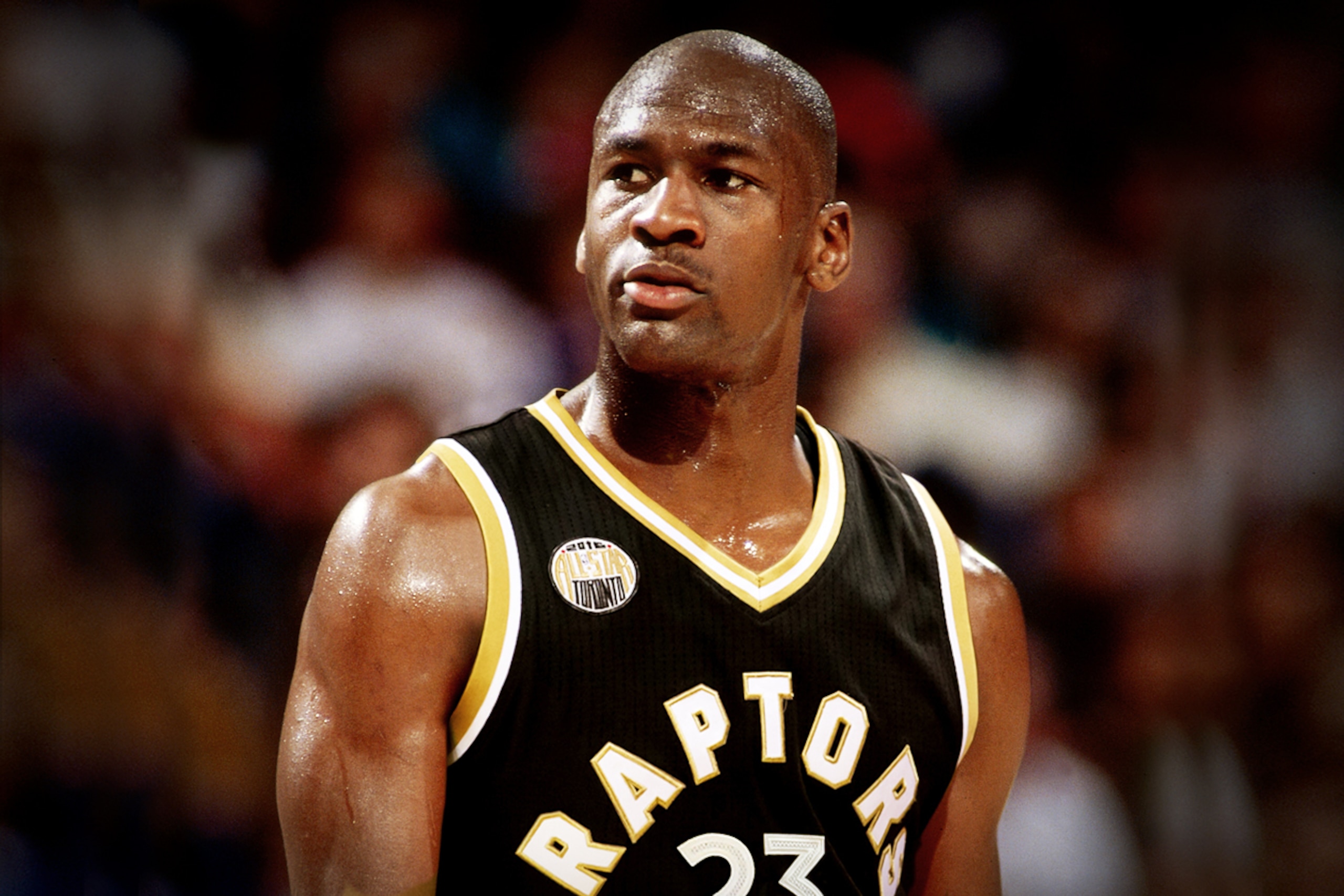
Rotation Adjustment: DeMar DeRozan comes off the bench
The Toronto Raptors have been one of the premier outfits in this year's Eastern Conference, but adding Michael Jordan without subtracting anything more than Terrence Ross would push them into untraveled territory.
Throughout NBA history, no team has outscored opponents by a wider margin than the 1995-96 Chicago Bulls, who managed to produce a net rating of 13.4 while winning 72 games. But these Raptors would top that historic mark with plenty of room to spare.
Remember, we're constructing teams in unique fashion, which is why Toronto stands as only the second of six current squads capable of breaking the seemingly untouchable record for net rating. Cap space no longer matters, as we're taking units that have already spent as much money as possible and then replacing a second-string shooting guard with the greatest basketball player ever.
Reality: 54-26, No. 2 in Eastern Conference (4.5 net rating)
The Jordan Effect: 17 wins added ⇒ 71-11, No. 1 in Eastern Conference (14.5 net rating)
4. Oklahoma City Thunder
28 of 31
Rotation Adjustment: Andre Roberson comes off the bench
The Oklahoma City Thunder have plenty of talent at shooting guard, but it's scattered throughout the roster in strange fashion.
Andre Roberson is perfectly capable of playing great defense and rebounding, but he's extremely limited on offense. The opposition can often forget he exists and use five men to cover the other four Thunder players. Dion Waiters is the exact opposite, always looking for his own shot and failing to do much else.
Michael Jordan can fill both roles while only taking up one roster spot. Even more positively, he'll almost always play better defense than Roberson and better offense than Waiters.
The Thunder are already a dominant outfit, boasting two of the NBA's top five players in Kevin Durant and Russell Westbrook. Jordan would surely make it three of the top six, and that's an unstoppable combination in any era.
Reality: 55-26, No. 3 in Western Conference (7.3 net rating)
The Jordan Effect: 17 wins added ⇒ 72-10, No. 2 in Western Conference (14.7 net rating)
3. Cleveland Cavaliers
29 of 31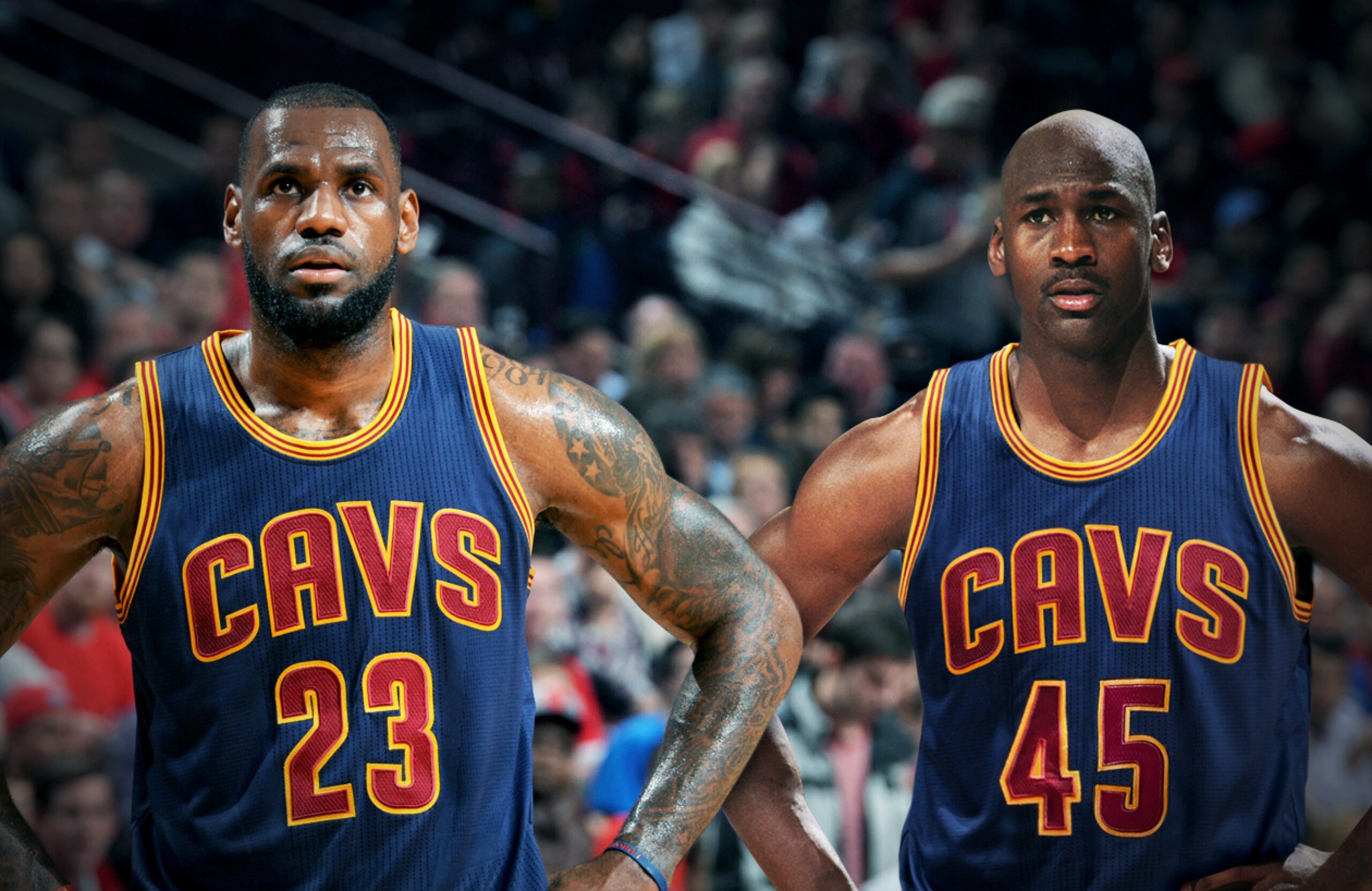
Rotation Adjustment: J.R. Smith comes off the bench
Somewhat sneakily, J.R. Smith has emerged as a strong complement to LeBron James. He's enough of a shooting and slashing threat that defenders must stay on their toes at all times, and he's a solid defensive presence when focused.
The catch, of course, is that Michael Jordan's presence probably wouldn't have too large an effect on how James would play. He would, however, force Kevin Love and Kyrie Irving to change. The former would be able to focus on his strengths, spacing out the court and crashing the boards with aplomb, and the latter would be able to go to work as an off-ball presence while occasionally breaking down a defense with his handles.
Talk about a dominant Big Four, so long as they can all figure out how to share the ball.
Reality: 57-24, No. 1 in Eastern Conference (6.4 net rating)
The Jordan Effect: 15 wins added ⇒ 72-10, No. 1 in Eastern Conference (14.9 net rating)
2. San Antonio Spurs
30 of 31
Rotation Adjustment: Danny Green comes off the bench
Let's just get this out of the way: The San Antonio Spurs are already one of the best teams in NBA history, and adding Michael Jordan would push them to a 16.9 net rating that shatters any mark ever earned by an actual squad.
But we're still selling them short.
Based on our methodology, we have to kick Danny Green out of the starting lineup in favor of Jordan, and Green subsequently replaces Manu Ginobili as the backup shooting guard. However, Ginobili has been fantastic in his typical role as a sixth man, and that second replacement hurts the Spurs far more than it helps them.
If we let Green take over as the backup small forward, kicking Kyle Anderson to the curb instead of Ginobili, the Spurs' net rating with Jordan would jump to 17.7 and trail our No. 1 team by a significantly smaller amount.
Reality: 65-15, No. 2 in Western Conference (11.5 net rating)
The Jordan Effect: Nine wins added ⇒ 74-8, No. 1 in Western Conference (16.9 net rating)
1. Golden State Warriors
31 of 31
Rotation Adjustment: Klay Thompson comes off the bench
Don't act too surprised.
The three-man combination of Stephen Curry, Draymond Green and Klay Thompson is a fantastic one. But replacing Thompson with Michael Jordan would surely be an upgrade, even if the current starter is one of the greatest shooters we've ever seen. Jordan just brings more to the proverbial table, and he'd be able to outperform Thompson on both ends of the floor.
As a sixth man, Thompson would still provide plenty of value, replacing Leandro Barbosa in the rotation and sometimes suiting up in the small-ball lineup of death. Imagine what would happen when the Dubs ran out Curry, Thompson, Andre Iguodala, Jordan and Green.
The Warriors are already the best team in the league, led by the player who's having the greatest offensive season since 1973, per my TPA databases. Throw Jordan into the mix, and the opposition may as well stay home each time Golden State shows up on the schedule.
Reality: 72-9, No. 1 in Western Conference (10.6 net rating)
The Jordan Effect: Five wins added ⇒ 77-5, No. 1 in Western Conference (19.9 net rating)
Adam Fromal covers the NBA for Bleacher Report. Follow him on Twitter: @fromal09.
All stats, unless otherwise indicated, are from Basketball-Reference.com or Adam's own databases and accurate heading into games on April 11.



.jpg?w=2560 "Chiefs, Steelers Eye WR Trades")



.jpg?w=2560 "Latest Peyton-Colts Rumors")