Names such as Shaq Thompson, Myles Jack and Jabrill Peppers have recently commanded attention because of their versatility.
But those unique talents are simply leading names in an era not focused on two-way college football players.
For decades, the sport was riddled with guys who starred on both sides of the ball. Many of the best suited up before 1960, claiming national awards and All-American honors.
And these aren't just receivers or cornerbacks who also returned kicks. Rather, they're players who held significant roles on offense and defense—and excelled at both while in college.
Missed the Cut
1 of 9
Players one person thinks are deserving might not be mentioned. Sports-related feelings will be unintentionally hurt. That doesn't mean Deion Sanders wasn't spectacular. He saved that two-way prowess for the pros.
Let's try to address likely questions.
Chris Gamble had one strong yet not amazing year. Devin Hester was a sensational punt returner but an average offensive and defensive player. Though Thompson and Jack were excellent, it's far too soon to declare them legendary.
George Gipp, Red Grange and Leroy Keyes arguably could have more prominent mentions. Guy Chamberlin, Tucker Frederickson and Gordie Lockbaum might also fall into that category.
Feel free to add other suggestions in the comments section.
Jim Thorpe, Carlisle
2 of 9
Do you remember that kid from the small town who simply out-athleted every opponent in every sport? That was Jim Thorpe.
While at Carlisle Indian School, Thorpe accumulated 53 touchdowns. According to the College Football Hall of Fame, his 29-game average was 8.4 yards per carry.
Additionally, Thorpe contributed as a defensive back—the position's premier individual national award is named after him—and even handled the kicking duties.
Thorpe won Olympic gold medals in the pentathlon and decathlon. He was a professional baseball and basketball player. That's quite a bit of talent, you can comfortably declare.
Bronko Nagurski, Minnesota
3 of 9
Agility apparently was not a strength of Bronko Nagurski. The Minnesota star adjusted properly.
"I was a straight downfield runner; I wouldn't, or rather couldn't, dodge anybody," Nagurski once said, per his obituary in the New York Times. "If somebody got in my way, I ran through them."
Nagurski was a consensus All-American in 1929 at both fullback and defensive tackle. He led the nation with 727 rushing yards.
Today, college football's best defensive player receives the Bronko Nagurski Trophy.
_1.jpg?w=2560)
Nile Kinnick, Iowa
4 of 9
In 1939, Nile Kinnick practically defined "never leaving the field."
According to Heisman.com, he participated in 402 of 420 possible game minutes. The Iowa legend threw for 638 yards and 11 touchdowns, and scampered for 374 yards and five scores. He even kicked 11 extra points and punted.
That year, Kinnick brought home the Maxwell Award, Walter Camp Award and Big Ten MVP, in addition to the Heisman. Additionally, he was a consensus All-American.
Kinnick left Iowa with 1,674 career rushing yards, 18 interceptions and a career 39.9-yard punt average.
Chuck Bednarik, Penn
5 of 9
Chuck Bednarik was an unbelievable player, they say. Seeing his accolades, it's hard to disagree.
The Pennsylvania product lined up at center as well as linebacker. Bednarik received three consecutive All-American mentions, including a pair of consensus honors.
Additionally, he claimed the seventh-most points in the 1947 Heisman Trophy voting and third-most in 1948—the year when Bednarik hoisted the Maxwell Award.
Bednarik continued his football career after the Philadelphia Eagles selected him No. 1 overall, and the vicious hitter earned a place in the Hall of Fame at both levels.
Leon Hart, Notre Dame
6 of 9
Quarterbacks and running backs have dominated the Heisman Trophy voting since the award's inception. Back in 1949, Leon Hart was a rare exception.
The Notre Dame defensive star snatched the Heisman after a season with 257 receiving yards and five touchdowns. Hart threw off eight USC defenders on "the most destructive run I've ever seen," head coach Frank Leahy said to Collier's magazine (via the New York Times).
Three times Hart was an All-American, twice as a consensus player. He received the Maxwell Award and was named the 1949 AP Male Athlete of the Year.
Hart ended his playing career in South Bend with 14 offensive touchdowns and eight fumble recoveries, undoubtedly complemented by a slew of unrecorded defensive numbers.
Dick Butkus, Illinois
7 of 9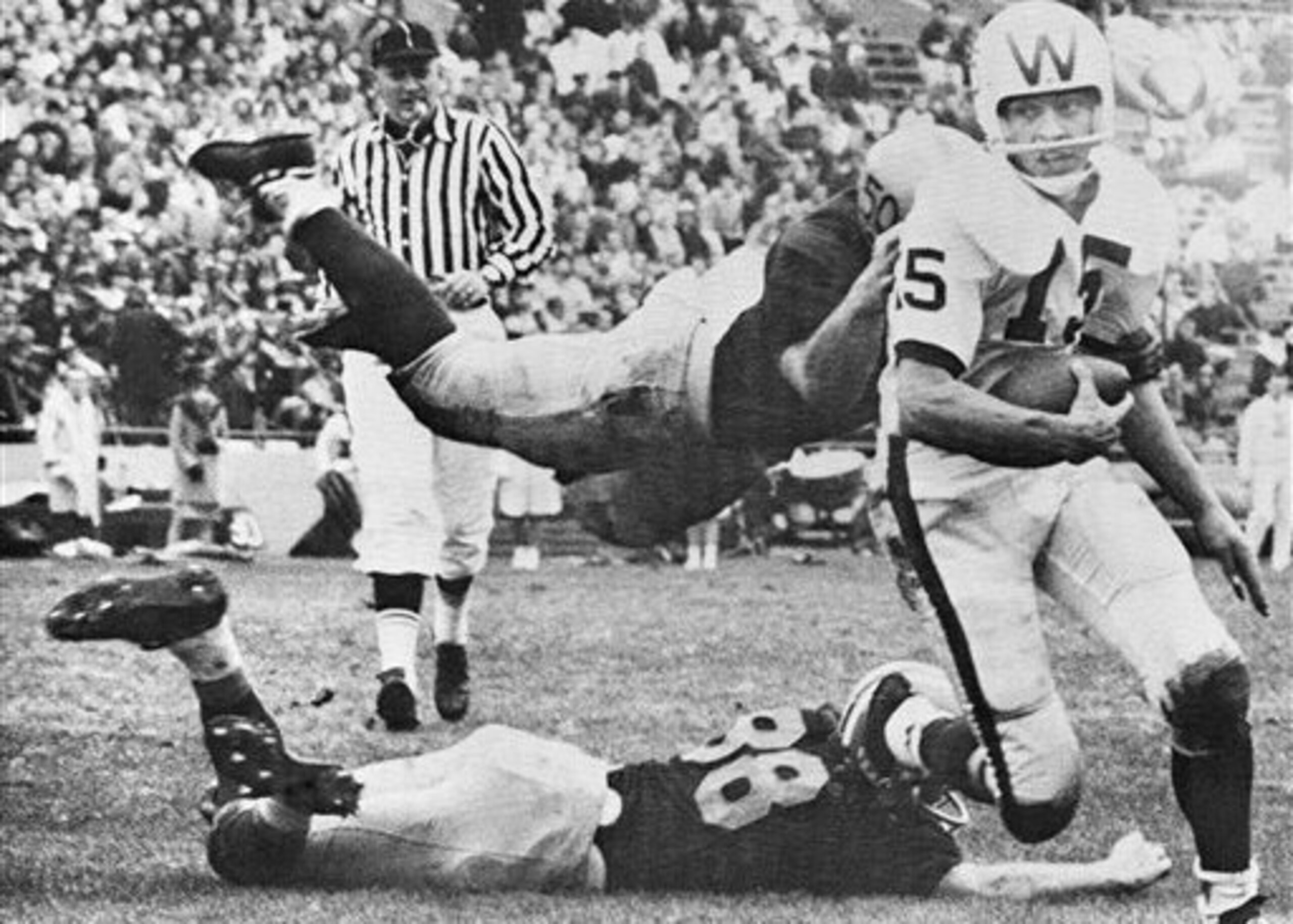
Similar to Bednarik, Dick Butkus is typically recognized for his NFL success. The linebacker's bust has a home in Canton, too.
Butkus' notoriety began at Illinois, where the fearless defender grabbed a couple of interceptions and amassed 374 career tackles.
"If I had a choice, I'd sooner go one-on-one with a grizzly bear," Green Bay Packers running back MacArthur Lane once said of Butkus, per ESPN.com. "I prayed that I could get up every time Butkus hit me."
A two-time consensus All-American, Butkus—who like the previous two players has a national award named after him—twice earned high finishes in Heisman voting. He was No. 6 in 1963 and No. 3 the following year.
Butkus contributed as a center and fullback, consistently making his presence known—and, more specifically, felt.
Champ Bailey, Georgia
8 of 9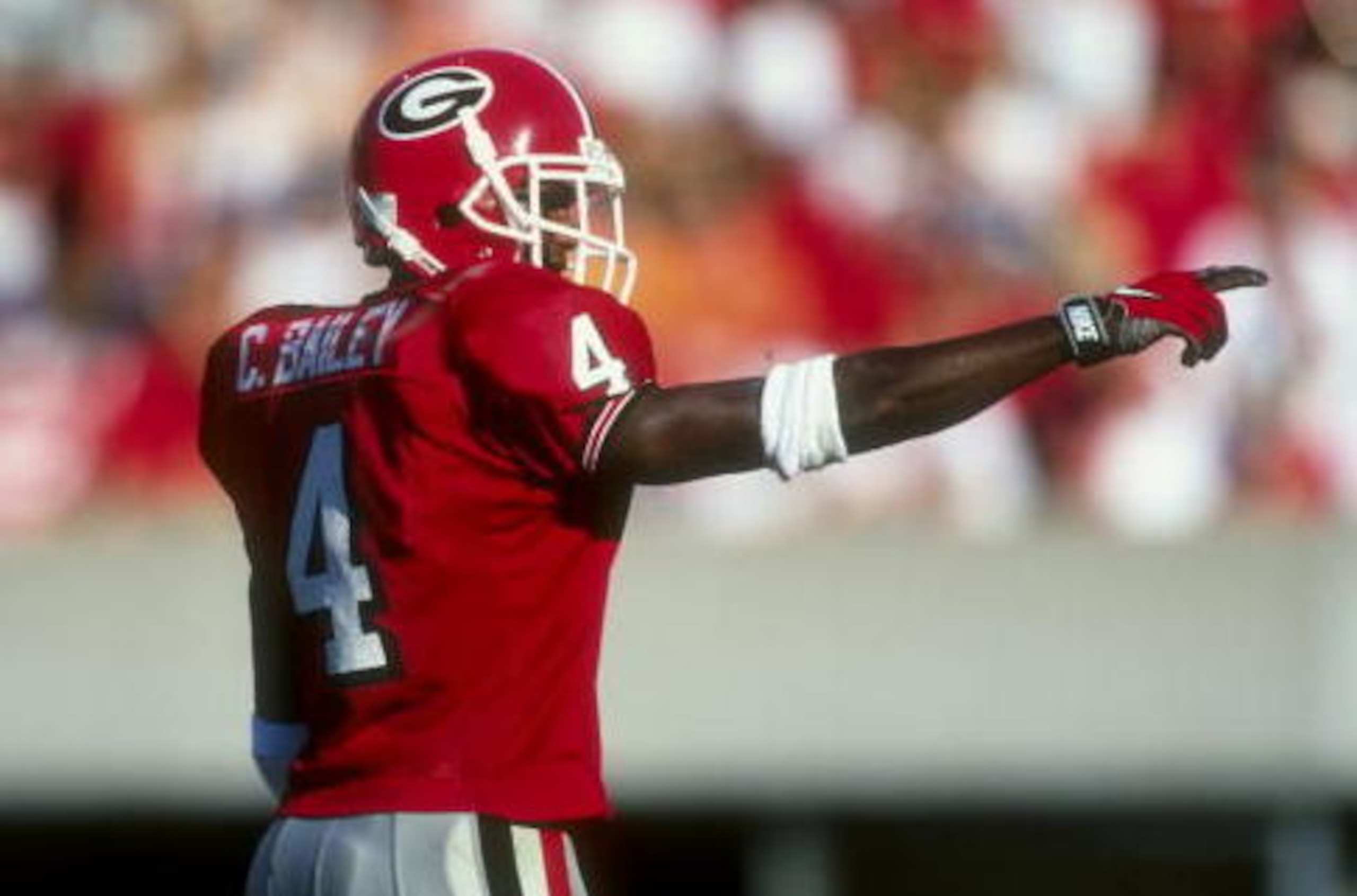
Champ Bailey is often remembered for his NFL days, but he assembled a wonderful college career.
As a senior at Georgia, the cornerback registered 52 tackles, 10 pass breakups and three interceptions. Bailey also reeled in 47 passes for team-best marks of 744 yards and five touchdowns.
"Bailey is the premier multipurpose threat in the nation," Tom Dienhart of Sporting News said at the time, per the school's official website. "His big-play ability on offense and defense makes him a threat to break open any game. He is a guy worth watching."
The future NFL star finished with 147 stops, 27 pass breakups, eight interceptions, 59 catches, 978 yards and five scores.
Charles Woodson, Michigan
9 of 9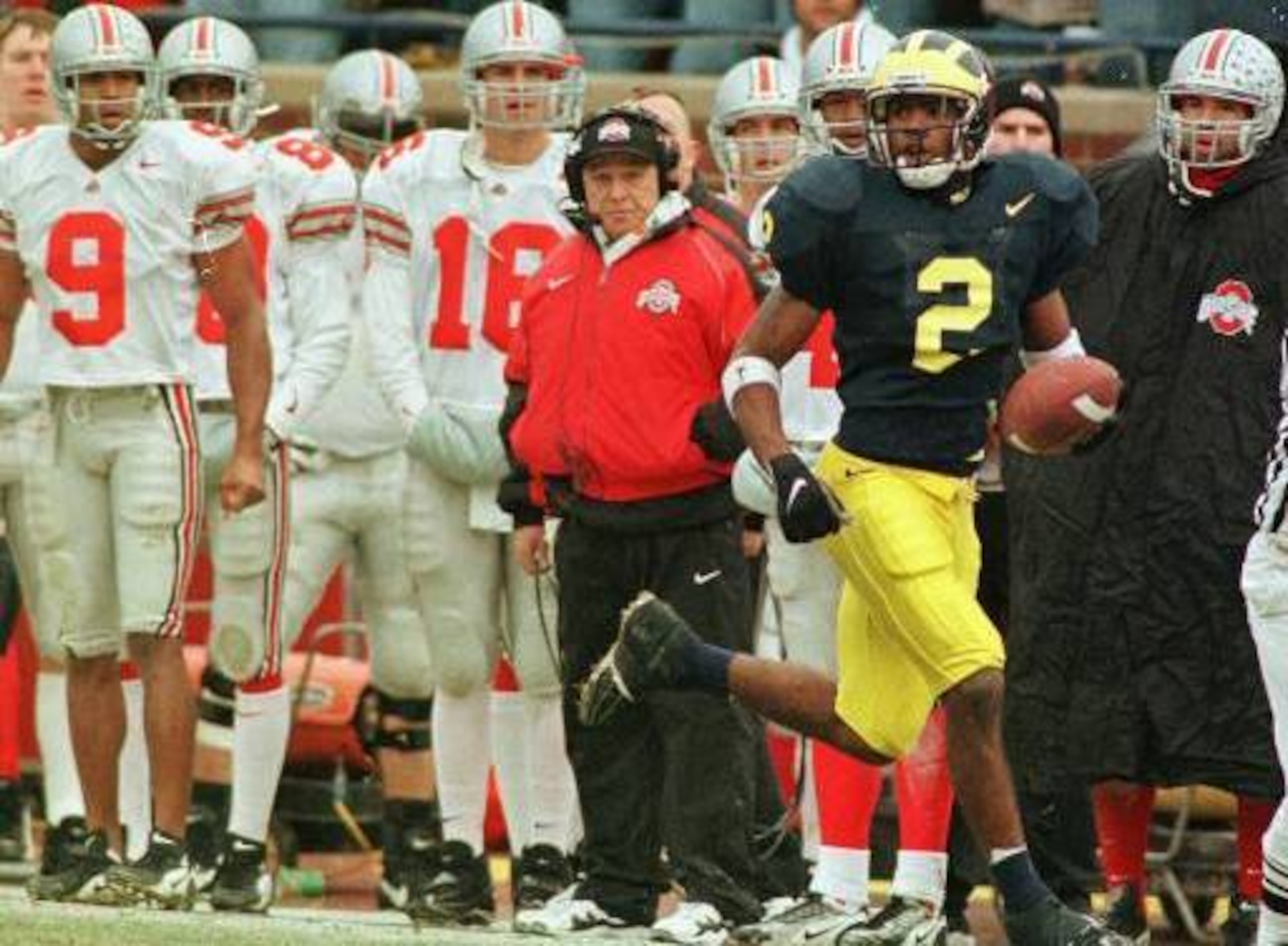
A punt-return touchdown sealed Charles Woodson's 1997 Heisman, but his defensive prowess and offensive contributions represented the foundation.
Woodson grabbed eight interceptions, also notching 44 tackles and nine pass breakups. As a receiver, he tallied a 21.0-yard average and scored two touchdowns. Woodson added another score on the ground.
He was a consensus All-American and swept the Thorpe, Nagurski and Bednarik Awards that season—a fitting tribute to the prior legendary two-way players.
Overall, Woodson racked up 162 total tackles, 25 pass breakups, 18 interceptions, 575 offensive yards and five touchdowns.