Power Ranking the Most Dangerous Offenses in Big Ten Football
College football's opening weekend is still more than six months away, but it's never too early to start looking ahead to the coming season.
That rings especially true in the Big Ten, where the conference will attempt to build on impressive 2014 and 2015 campaigns.
And while the league has traditionally been known for its defense and its overall more controlled approach to offense, the Big Ten has surprisingly featured some of the nation's most explosive offenses in recent years. In terms of yards per play, four of the league's teams ranked in the nation's top 55 in 2015 alone, and offense only appears to be on the upswing in the Big Ten entering 2016.
Of course, every new season brings a new set of challenges for each program and its personnel. Who will emerge as the conference's best at moving the ball in the coming year? That remains to be seen.
But for now, here's a ranking of the Big Ten's most dangerous offenses heading into 2016.
14. Northwestern
1 of 14
Taking a more conservative approach to offense, Northwestern ranked last in the Big Ten in several offensive categories in 2015, including points per game (19.5), touchdowns (29), yards per game (327.1) and yards per play (4.47).
And returning 68 percent of its offensive production from a year ago, per Bill Connelly of SBNation, the Wildcats' pace doesn't figure to change all that much in the coming year.
That's not necessarily a bad thing; despite its lackluster offense, Northwestern put together an impressive 10-2 regular season before falling to Tennessee in the Outback Bowl. The Wildcats could also realistically see a jump in production in the coming year as sophomore quarterback Clayton Thorson gains trust from head coach Pat Fitzgerald in his second season in as a starter.
Add in the return of running back Justin Jackson (1,418 rushing yards, five touchdowns in 2015) and the pieces are certainly there for Northwestern to take a step forward on offense in 2016. But ultimately, count on the Wildcats to continue to rely on their conservative approach and what was one of the conference's top defenses a year ago.
13. Purdue
2 of 14
While Purdue ranked ninth in the Big Ten in points per game (25.1) and 11th in yards per game (368.6), the Boilermakers were the second-worst offense in the Big Ten on a per-play basis. In that category, only Northwestern ranked lower in the conference than Purdue, which averaged a mere 4.80 yards per game in 2015.
Returning 68 percent of its offensive production, including sophomore quarterback David Blough and running back Markell Jones (875 yards, 10 touchdowns in 2015), the Boilermakers offense is still young and only figures to improve in the coming years. But some growing pains are still likely, with Terry Malone taking the reins as Purdue's new offensive coordinator following the firing of John Shoop.
According to Malone, don't expect many changes to his unit's scheme in 2016.
"To tear everything apart and start over again would be a waste of really good work and time that we've put into it," Malone said, per Mike Carmin of the Lafayette Journal & Courier. "There are going to be a lot of the same principles to what we've done, but there certainly will be some additions we feel as though maybe give us a better opportunity to put the ball in our playmakers hands."
And although the Boilermakers' former tight ends coach should be familiar with his personnel, there's a big difference between being a position coach and assisting head coach Darrell Hazell in calling the plays. The potential for Purdue is certainly there, but until the Boilermakers prove it on the field, it's hard to give them the benefit of the doubt.
12. Illinois
3 of 14
With Lovie Smith's arrival in Champaign along with an NFL-caliber staff, Illinois can expect to possess a pro-style offense in the near future.
Just how long it will take, however, for the Fighting Illini to meet their new head coach's standard remains to be seen.
Returning 74 percent of its production, including quarterback Wes Lunt, from an offense that ranked 12th in the Big Ten in both scoring (22.7 points per game) and yards per play (4.93), Illinois will possess an experienced, albeit ineffective offense in the coming year. Having hired Garrick McGee from Louisville as the new offensive coordinator, the Illini can expect to feature a new scheme, one that will likely feature Smith's pro-style ideals.
For whatever it's worth, the Cardinals offense was steady but unspectacular in 2015, ranking 55th in the nation in yards per game (416.1) and 65th in scoring (28.7). Replacing running back Josh Ferguson won't help matters either, as it may not be until 2017 that Illinois' offense resembles one of Smith's former units in the professional ranks.

11. Maryland
4 of 14
It may not have resulted in many wins, but Maryland's offense wasn't actually as bad as one would have thought it was in 2015.
Despite putting together a 3-9 regular season, the Terrapins ranked near the middle of the Big Ten in several offensive categories, including ninth in yards per game (375) and yards per play (5.43) and 10th in points per game (24.7). Furthermore, Maryland will return 93 percent of its production from a year ago in 2016—the second-highest return rate of any offensive unit in the entire conference.
Still, several questions in College Park persist entering the first year of the D.J. Durkin era, such as whether senior signal-caller Perry Hills is a viable option as a season-long starting quarterback. Despite splitting time with Caleb Rowe, the dual-threat quarterback threw the third-most interceptions in all the Big Ten last year with 13 in his junior campaign.
But if Hills can cut down on his turnovers, the Terrapins will be able to utilize their returning experience and steady production. In the jam-packed Big Ten East, that could prove to be a tall task, but there's no denying Maryland's overall offensive talent is better than its 3-9 record indicated a year ago.
10. Wisconsin
5 of 14
Never one to traditionally feature a high-powered attack, Wisconsin's status as one of the Big Ten's less impressive offenses in 2015 wasn't all that surprising.
How the Badgers arrived there—ranking seventh in yards per game (378.6) and 11th in yards per play (5.29)—however, did come as a bit of a shock.
Historically known for its high-caliber running game, Wisconsin struggled on the ground in 2015, ranking 10th in the Big Ten with an average of 150.31 rushing yards per game. Much of that was due to the absence of presumed starter Corey Clement, who missed all but just four games of his junior season because of injury and off-field issues.
Returning to Madison for his senior campaign, Clement could play a key role in once again making the Badgers not only one of the Big Ten's but the nation's top teams when it comes to carrying the ball.
"I feel a lot better," said Clement, per Jeff Potrykus of the Milwaukee Journal Sentinel. "Like I said [last] season, time wasn't on my side. Now I've got another chance to come back and redeem myself and come back for a stronger season."
But with the Badgers returning just 34 percent of their offensive production, Clement will need help. Wisconsin's running back stable is strong, but senior quarterback Bart Houston remains inexperienced entering his first full season as a starter in Madison.
9. Minnesota
6 of 14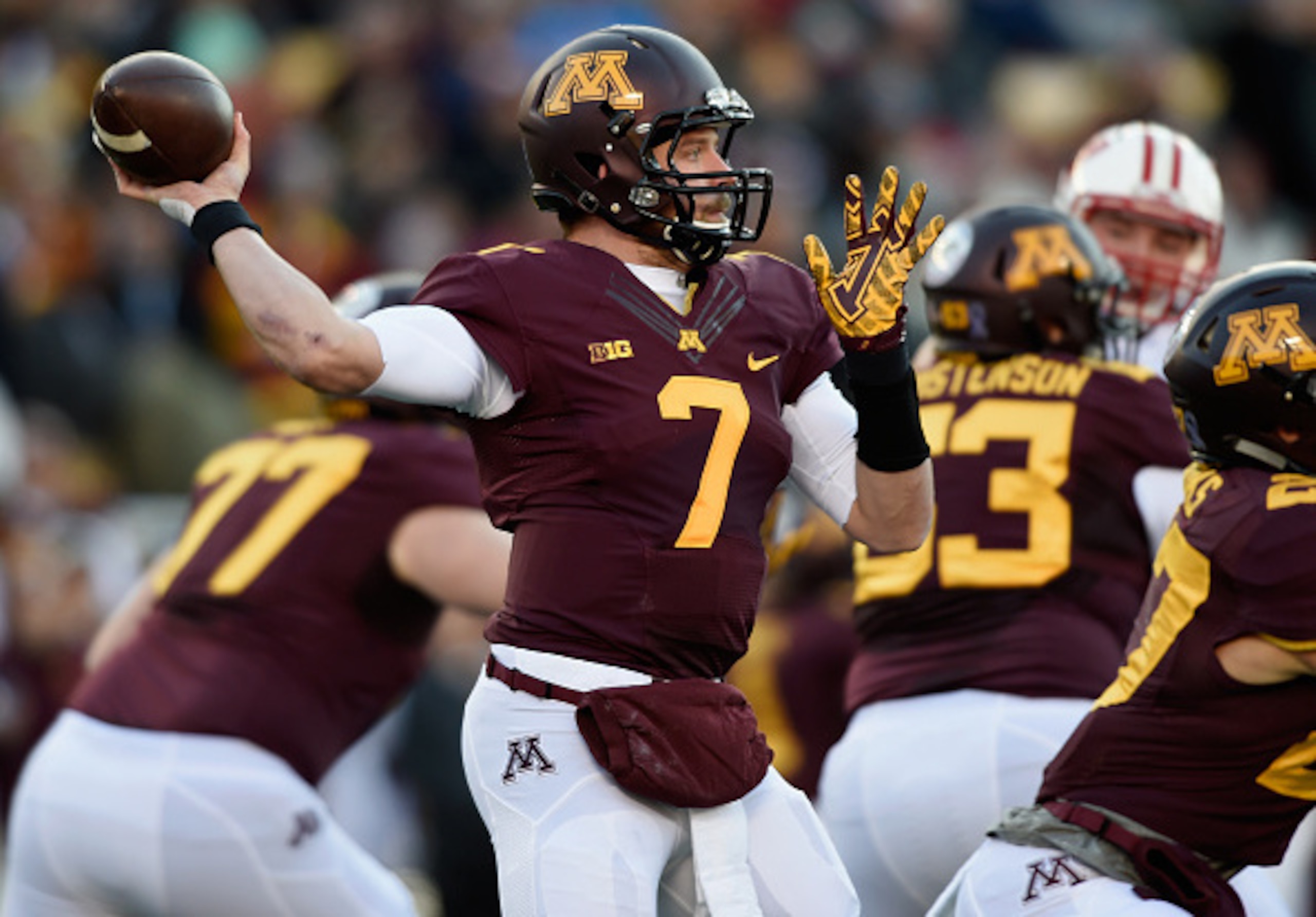
Returning 84 percent of its production from last season, you won't find many offenses with more experience in all of the Big Ten than Minnesota's.
But given how much the Golden Gophers struggled to move the ball in 2015, it remains to be seen just how valuable that returning experience actually will be.
Ranking 12th in the conference in yards per game (358.9) and second-to-last in scoring (22.5), Minnesota's offense that was largely to blame for its disappointing 5-7 regular-season campaign. The Gophers did, however, showcase a little more explosiveness than their overall numbers indicated, as they ranked 10th in the Big Ten in yards per play with an average of 5.34 yards.
Entering his third season as a starter, quarterback Mitch Leidner should provide a steady hand while directing new offensive coordinator Jay Johnson's unit. Minnesota has plenty of pieces—but also plenty to prove entering its first full season under head coach Tracy Claeys.
8. Michigan State
7 of 14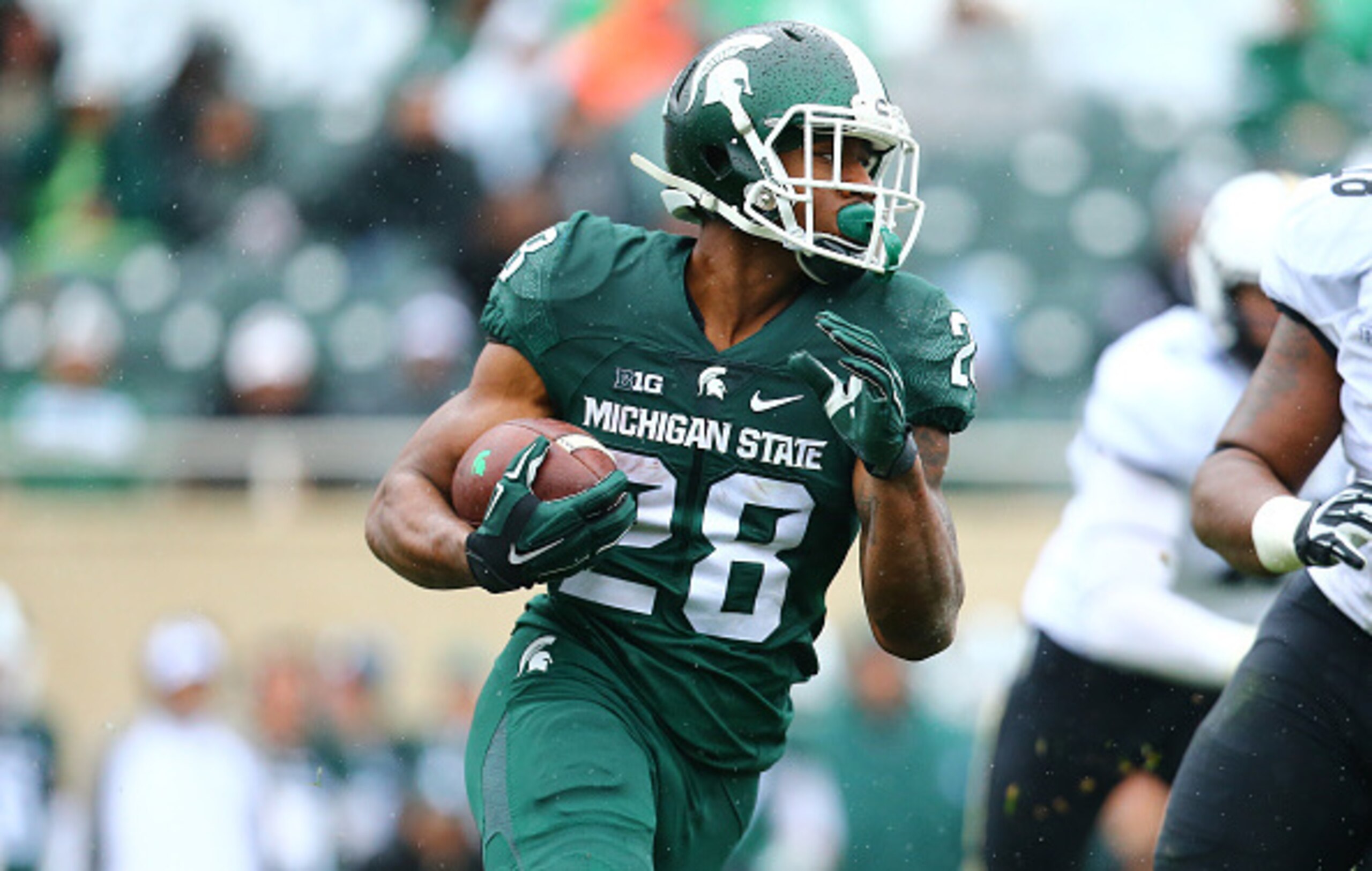
With just 26 percent of its production returning from last year's offense, Michigan State finds itself with no shortage of question marks entering 2016.
But even when the Spartans had the benefit of Connor Cook in their huddle and Aaron Burbridge catching balls, they failed to be one of the Big Ten's more dominant offenses throughout their run to the College Football Playoff. In 2015, Michigan State ranked sixth in the league in yards per game (385.5) and scoring (29.8 points per game) while measuring in at eighth in yards per play (5.44).
Now, the Spartans find themselves with not only an inexperienced quarterback behind center but also new starters at receiver and on the offensive line. Running backs Madre London and L.J. Scott will provide a nice one-two punch on the ground, but that may not be enough for MSU to keep pace with the upper echelon of the Big Ten's offenses.
From an explosiveness standpoint, Damion Terry and his dual-threat ability may provide the most intriguing option for Mark Dantonio when it comes to who will be the new starting quarterback. That, however, is just one of many questions the Spartans head coach will have to answer on his offensive unit in what is shaping up to be a rebuilding year on that side of the ball in East Lansing.
7. Penn State
8 of 14
On the surface, Penn State should be in for a step back offensively in 2015, as the Nittany Lions return just 53 percent of their offensive production from last year's team. Most notably, Penn State will be replacing quarterback Christian Hackenberg, who opted to forgo his senior season and enter the NFL draft.
But based on the numbers—and the eyeball test—Hackenberg never seemed to be a true fit in head coach James Franklin's offensive scheme. The Nittany Lions ranked 13th in the Big Ten in yards per game (348.6) and 11th in scoring (23.2 points per game) in 2015.
That resulted in Franklin ultimately firing offensive coordinator John Donovan, replacing the assistant with former Fordham head coach Joe Moorhead. The Nittany Lions new offensive coordinator is known for his uptempo system, which could help Penn State boost an offense that ranked seventh in the Big Ten in yards per play (5.47) a year ago.
"I didn't know it would be this fast," junior wideout DaeSean Hamilton said of his team's new pace, per Jourdan Roudrigue of the Centre Daily Times. "It has made practice harder than the games. Getting adjusted to the speed has surprised me the most."
With star running back Saquon Barkley not only returning but now paired with the nation's top running back prospect in 5-star talent Miles Sanders, the Nittany Lions could ultimately see a boost in their offensive production, despite Hackenberg's departure.
At the very least, the Nittany Lions will no longer have to wonder whether it was the player or the scheme that deserved the blame in the past few years, as they now find themselves replacing both.
6. Rutgers
9 of 14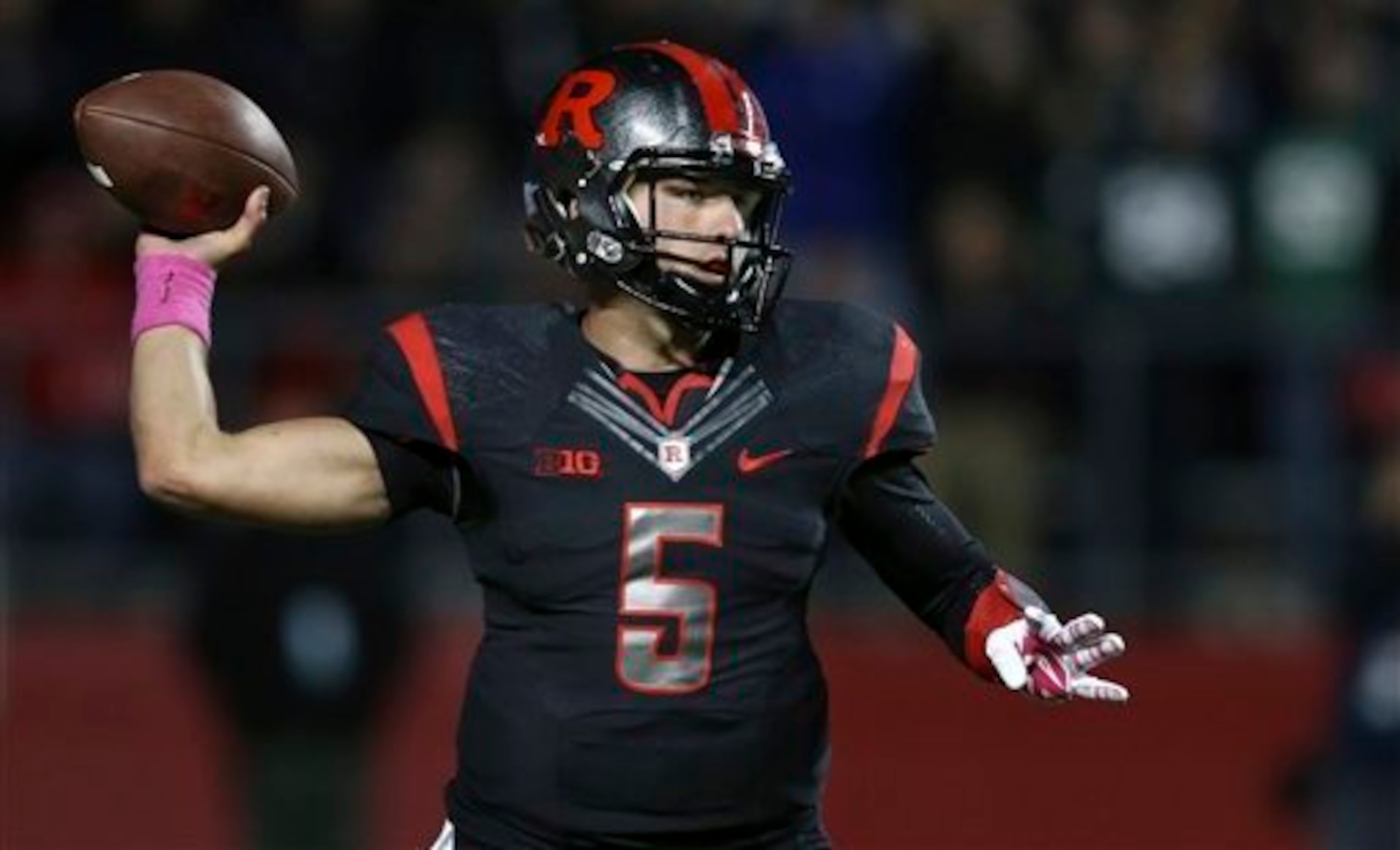
Believe it or not—and even if it didn't result in many wins—Rutgers actually had one of the better offenses in the Big Ten in 2015.
And with 81 percent of their production returning, the Scarlet Knights should only get better in the coming year under new head coach Chris Ash.
Ranking sixth in the league in yards per play with an average 5.61 yards, Rutgers showcased deceptive explosiveness while measuring in at seventh in the conference in scoring with 27.1 points per game. And while the loss of star wideout Leonte Carroo is a big one, the Scarlet Knights should benefit from the return of quarterback Chris Laviano, who is entering his second season as Rutgers starter.
Add in new offensive coordinator Drew Mehringer, a product of Tom Herman's uptempo system at Houston, and the Scarlet Knights possess all the pieces necessary for an even more explosive offense in 2016. Whether that will result in more wins in New Jersey remains to be seen, but Rutgers' returning experience has already proved to be a consistent threat to score when in possession of the ball.
5. Indiana
10 of 14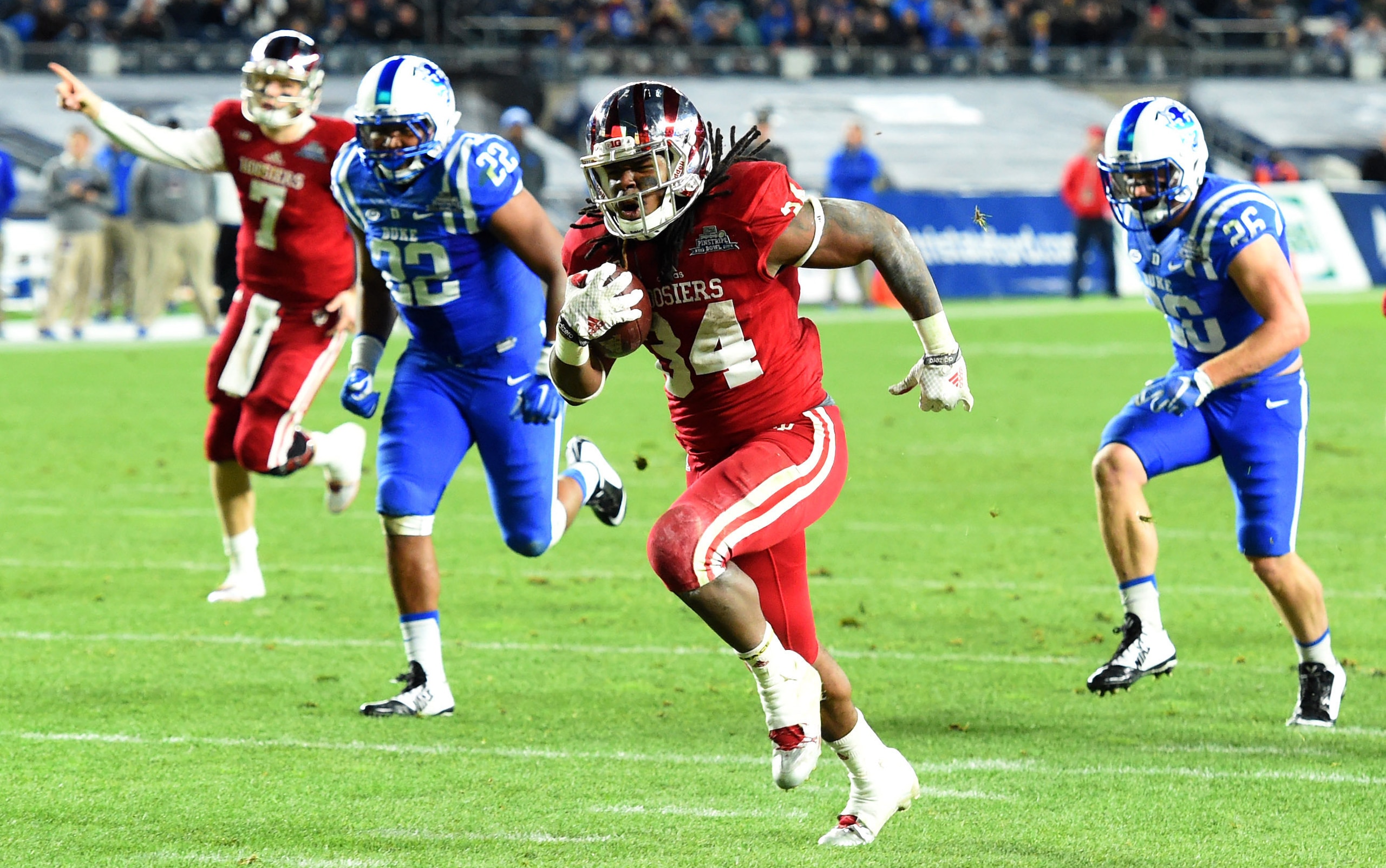
As far as offensive mysteries in the Big Ten are concerned, you're not going to find a bigger one than Indiana's outlook on the 2016 season.
On the one hand, the Hoosiers were arguably the top offense in the conference a year ago, ranking first in points per game (36.5), yards per game (504.3) and second in yards per play (6.23). Indiana rode its high-powered offense to a 6-6 regular season, before suffering a controversial defeat at the hands of Duke in the Pinstripe Bowl.
But while head coach Kevin Wilson's offensive system speaks for itself, the Hoosiers find themselves replacing 53 percent of their offensive production from a year ago, including star quarterback Nate Sudfeld and running back Jordan Howard.
Zander Diamont has experience and is the likely favorite to replace Sudfeld, but he's not quite the distributor that the third-team All-Big Ten selection was during his storied career. On the ground, however, Indiana should still find success, with Devine Redding (1,012 yards, nine touchdowns in 2015) replacing Howard as Indiana's top back.
Still, it's tough to figure out what Wilson can count on from his squad in the coming year. Expect a minor step back, but the Hoosiers' high-powered offense will still create problems for opposing defenses in 2016.
4. Michigan
11 of 14
Despite losing quarterback Jake Rudock, Michigan's offense should only improve in its second season under the direction of head coach Jim Harbaugh.
That's certainly saying something considering where the Wolverines stood a year ago, ranking fourth in the Big Ten in yards per game (395.9) and scoring (31.4 points per game) and fifth in yards per play (5.68).
And while Rudock played a big role in the conference's fourth-best passing offense (237.7 yards per game), Michigan's new starter will have plenty of weapons to play with, including tight end Jake Butt and wide receivers Jehu Chesson and Amara Darboh and a strong stable of running backs. Just who that new quarterback will be remains to be seen, but Houston transfer John O'Korn has drawn solid reviews and could ultimately be the man to beat in Ann Arbor exiting spring practice.
"We're looking for a quarterback who can move the team and not make the big mistake," Harbaugh said, per Max Cohen of the Detroit Free Press. "They're all in the mode of a big mistake a day, so we’re just going to keep plugging away and keep getting better, give them things they can improve on, things they can take and use."
Whether that will be O'Korn or Shane Morris, Wilton Speight or Brandon Peters remains to be seen. But the tools are in place for Michigan to not only keep pace but take a step forward offensively in 2016.
3. Iowa
12 of 14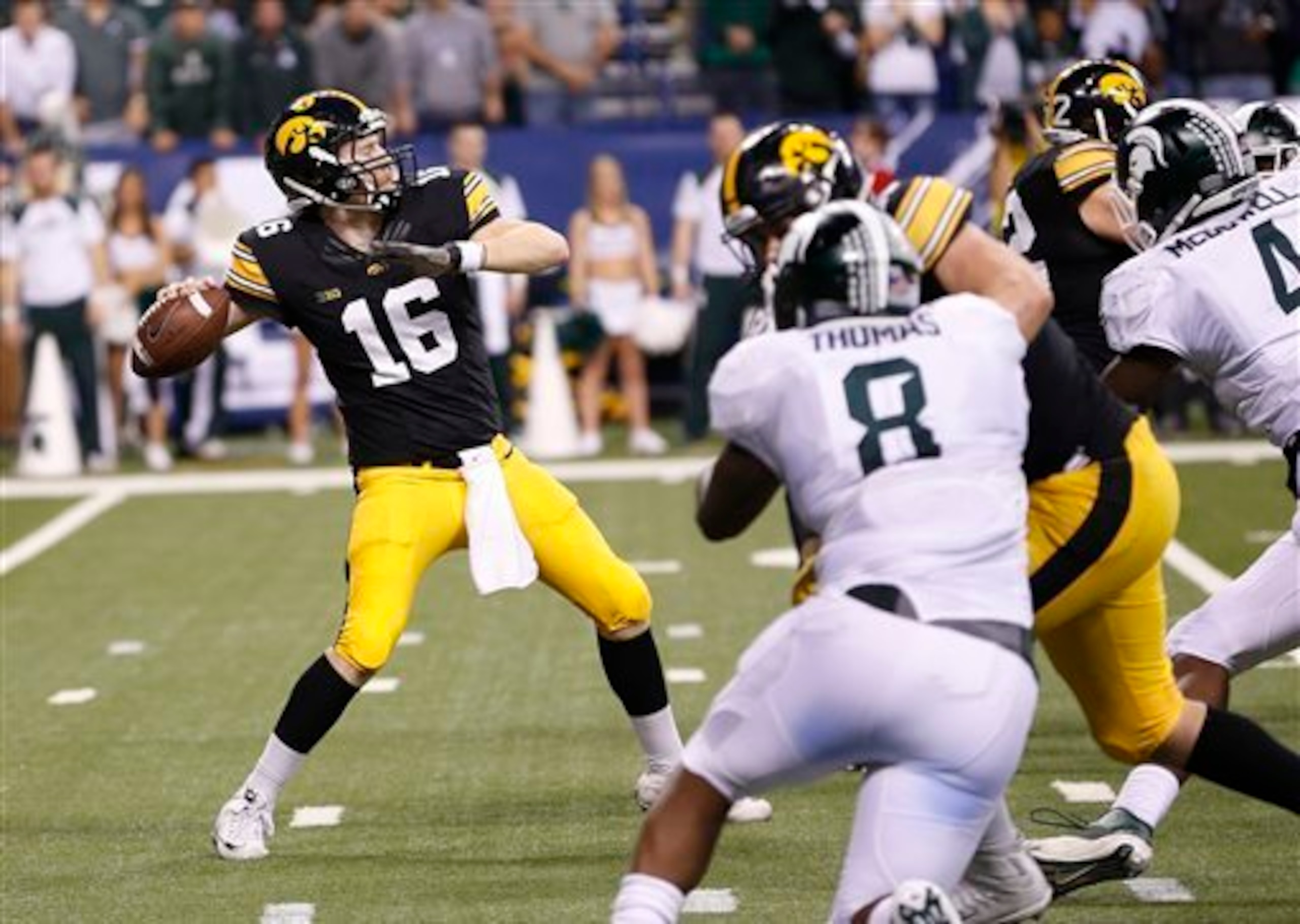
A year ago, Iowa rode the Big Ten's fifth-ranked offense (386.1 yards per game) to within one Big Ten Championship Game win of crashing the College Football Playoff.
Returning 72 percent of their production from last season, the Hawkeyes could be in store for similar success in the coming year.
Especially with quarterback C.J. Beathard returning to an offense that will still possess his top target in wideout Matt VandeBerg (65 receptions, 703 yards, four touchdowns in 2015). Running back Jordan Canzeri leaves a void in the Iowa backfield, but Kirk Ferentz's team will benefit from the returns of backups LeShun Daniels Jr. and Akrum Wadley, each of whom contributed in what was really a running back by committee in 2015.
The favorites to repeat in the Big Ten West, the Hawkeyes have plenty going for themselves in 2016. Much of that will come on the offensive side of the ball, as they look to take an additional step forward in their program's development by being playoff contenders for a second consecutive year.
2. Nebraska
13 of 14
Despite possessing a 5-7 regular season record, Nebraska's offense wasn't its problem in 2015. The Cornhuskers ranked second in the Big Ten in yards per game (446.9) and third in yards per play (6.09) and scoring (32.8 points per game) in their first year in Mike Riley's pro-style system.
And with a league-high 94 percent of the offensive production returning in 2016, Nebraska should only take a massive step forward in the coming year.
Some of that was already on display in the Foster Farms Bowl, where the Cornhuskers totaled 500 yards in their 37-29 win over UCLA. What was particularly promising was the play of quarterback Tommy Armstrong Jr., who ended an uneven junior campaign by completing 12 of his 19 pass attempts for 174 yards and a touchdown while adding 76 yards and a score on the ground.
With his top three wideouts also returning, Armstrong should be able to put together similarly efficient efforts throughout his senior season. Perhaps that would result in more wins in the coming season for Nebraska as well, as the Huskers already have the look of a Big Ten West dark horse after last season's disappointing debut in Lincoln for Riley.
1. Ohio State
14 of 14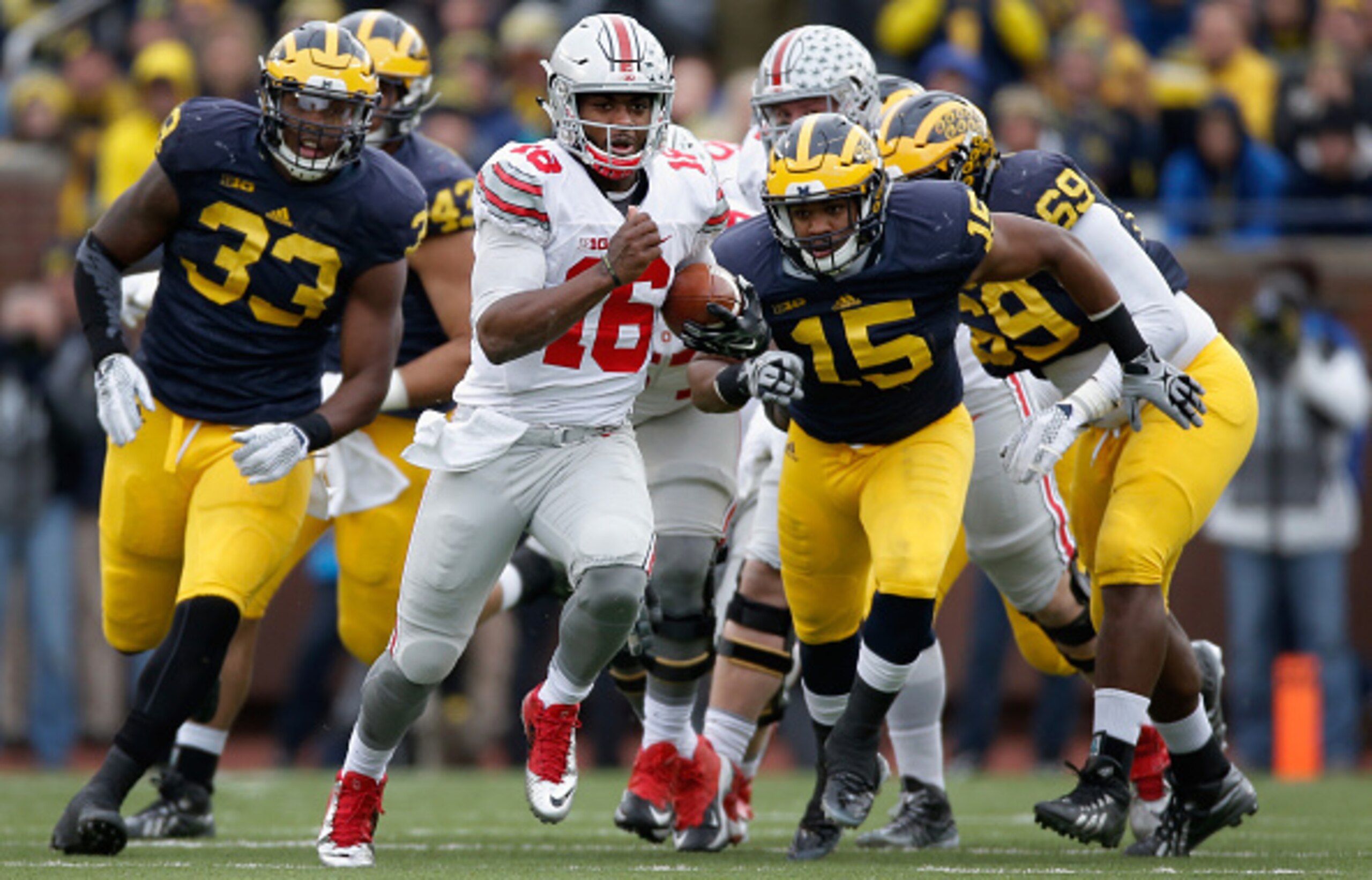
Despite a passing game that ranked 100th nationally, Ohio State still laid claim to one of the Big Ten's best offenses in 2015. The Buckeyes ranked second in the league in scoring (35.7 points per game), third in yards per game (434.1) and first in yards per play (6.33) en route to accumulating their 12-1 record, winning back-to-back games over Michigan and Notre Dame to close the season.
With just 21 percent of its offensive production returning from a year, however, Ohio State faces no shortage of questions heading into 2016.
But when you have Urban Meyer as your head coach, the reality is that at the very least your offense deserves the benefit of the doubt.
That rings especially true with quarterback J.T. Barrett returning behind center for the Buckeyes in the coming year. After being shifted in and out of the lineup with Cardale Jones throughout last season, the OSU offense is Barrett's—and perhaps Barrett's alone—to run, which is just fine with Meyer, considering all the 2014 Big Ten Quarterback of the Year has already accomplished in his college career.
"His value is more than running and throwing," Meyer said of Barrett. "His value is he's one of the best leaders we've ever had."
He may be surrounded by unknown quantities, but with as well as Meyer has recruited, Barrett should have no dearth of weapons to turn to in the coming year. Ohio State may have lost the most talent in the Big Ten, but the Buckeyes still might possess the most talent in the league as well, creating an interesting dynamic for Meyer's young squad—and the rest of the conference—entering 2016.
Ben Axelrod is Bleacher Report's Big Ten lead writer. You can follow him on Twitter @BenAxelrod. Unless noted otherwise, all quotes were obtained firsthand. All statistics courtesy of cfbstats.com. Recruiting rankings courtesy of 247Sports.


.jpg?w=2560 "Dak to Stroud: Get Some Wins 💯")

.jpg?w=2560 "5 NFL Players Getting Trade Buzz")