It's Time for the NFL to Allow Elite Sophomores a Shot at the Draft
It’s still a year away, but ESPN analyst Mel Kiper Jr. is already certain where Texas A&M defensive end Myles Garrett will end up on his big board of players for the 2017 NFL draft.
“He’s right up there at the top, right up there at one, two,” he said. “I mean he has a chance to be spectacular at the next level next year and be the clear-cut No. 1 guy.”
If this sounds familiar, that’s because it is. A few years ago, defensive end Jadeveon Clowney was in a similar situation at South Carolina, in which he almost certainly would have been a top selection in the draft after his sophomore year but due to an NFL rule had to wait another year.


_0.png?w=2560)
What happened that next season? Pretty much nothing.
While football fans are watching the combine this weekend, in the back of their minds, they know that possibly the best player out there as far as the NFL is considered is home watching as well.
So is LSU running back Leonard Fournette, who was pretty amazing last season and might be even better someday as a pro.
This isn’t to suggest that Garrett and Fournette should (or should not) be in the draft. The problem is that they don’t have the opportunity.
For those who don’t know, the NFL’s draft-eligibility rule stipulates that a prospect must be three years out of high school before he can take a shot at the league, as per the most recent collective bargaining agreement with the players’ union. Specifically:
"Article 6, Section 2(b) No player shall be permitted to apply for special eligibility for selection in the Draft, or otherwise be eligible for the Draft, until three NFL regular seasons have begun and ended following either his graduation from high school or graduation of the class with which he entered high school, whichever is earlier. For example, if a player graduated from high school in December 2011, he would not be permitted to apply for special eligibility, and would not otherwise be eligible for selection, until the 2015 Draft.
"
There are numerous issues with the controversial rule, including that there’s no age requirement. So while Alabama wide receiver Calvin Ridley just had a 1,000-yard season for the Crimson Tide as a freshman, he also turned 21 on December 20.
Defensive lineman A’Shawn Robinson, who is expected to be a first-round selection, won’t turn 21 until March 21.
He’s one of 96 underclassmen who were granted eligibility for this year’s draft, which will be held in Chicago on April 28-30.

That’s way too many. Last year, 84 underclassmen declared, and only 60 were selected. The good news is that the 28.6 percent of underclassmen who went undrafted was actually down from 2014, when 36.7 percent of the record 98 underclassmen in the draft didn’t hear their names called.
Although both the league and colleges are actively discouraging players from leaving school early unless they’re a first-round pick or can’t really improve their draft status (that especially applies to running backs), the number is expected to go back up this year.
You know the old saying: You can lead a horse to water…
Ask anyone on either side about the CBA rule, and they’ll claim that it’s there to protect college athletes who just aren’t physically or emotionally ready for the NFL. For the most part, they’re absolutely correct.
Probably 99.8 percent of all sophomores aren’t ready. Physically, few would even get through training camp, nevermind the preseason, 17-week regular season and then the playoffs.
But something needs to be done about the .2 percent.
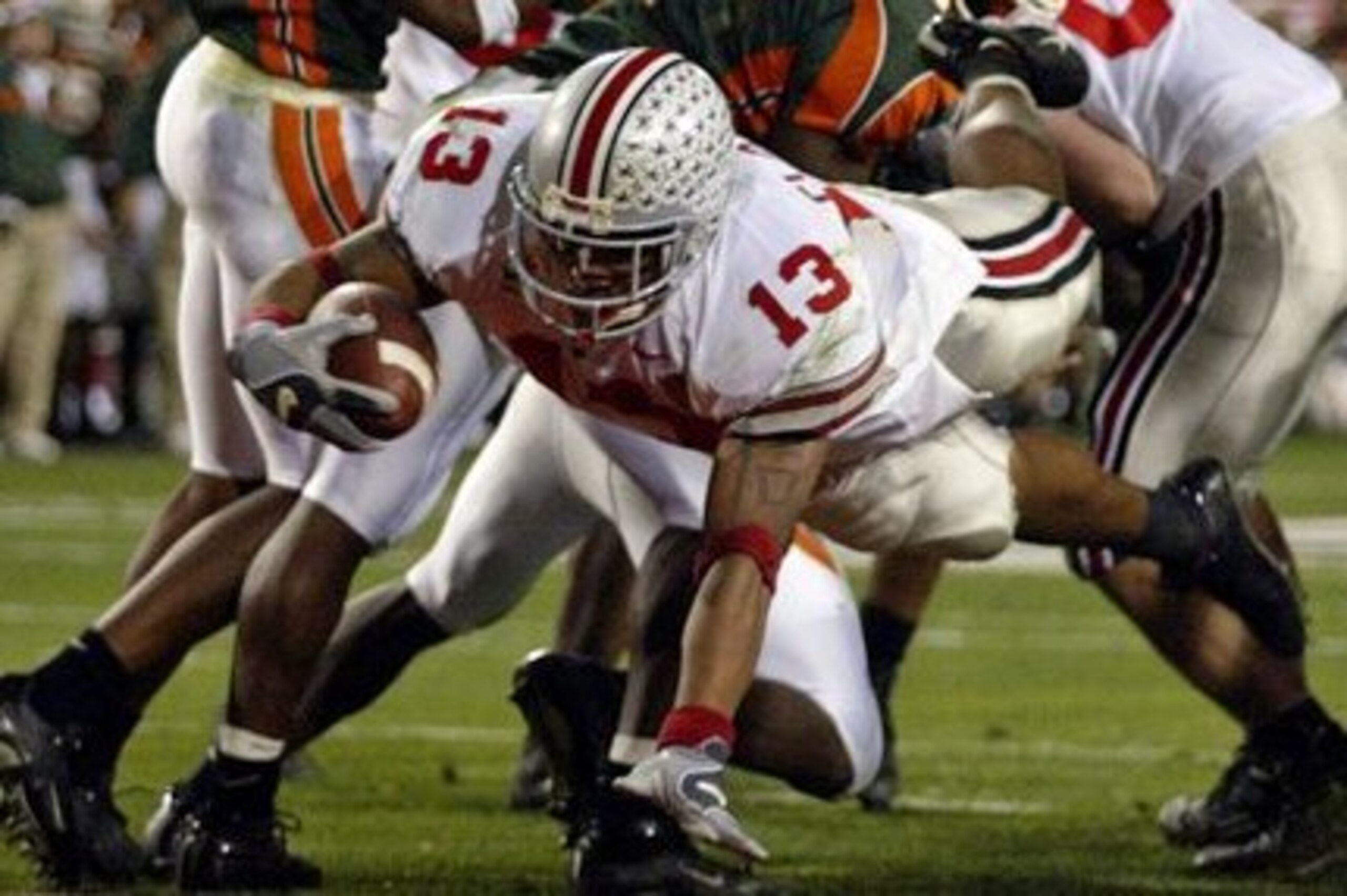
In 2004, Ohio State running back Maurice Clarett tried to do just that and challenged the system by filing an antitrust lawsuit, Clarett v. NFL.
He won in district court, but the Second Circuit Court of Appeals reversed the decision and ruled in favor of the league, saying it “was necessary to safeguard the NFL from harm.” That opinion was written by Sonia Sotomayor, now a Supreme Court Justice.
Clarett had a chance to challenge the ruling but didn’t, and after running into numerous off-field issues, his career fizzled out. The lawsuit ended up being the extent of his NFL legacy.
As for Clowney, whom every NFL team wanted after he drilled a Michigan running back in the backfield during the Outback Bowl, his final year was lackluster, and rumors started spreading about his work ethic and other issues.
| Season | Tackles | TFL | Sacks |
| 2011 | 36 | 12.9 | 8.0 |
| 2012 | 54 | 23.5 | 13.0 |
| 2013 | 39 | 11.5 | 3.0 |
He was still the No. 1 overall selection in the 2014 draft, but two years later, the Houston Texans are still waiting for sophomore-year Clowney to start meeting his potential.
Now its Garrett’s turn. In the middle of last season NFL.com’s Albert Breer quoted an area scout as claiming he was already the “best player in the country.” He went on to say:
"A very special first step, as good you'll see. He's elite. The guy is explosive, can turn and bend the corner, all of that. It's impressive. Pound for pound, he has good strength, too, but that's not his game. He's such a good athlete, he doesn't need much of a rush plan to create havoc. And if you watch, you'll see he gets a step or two before the tackle's even out of his stance. It looks like he's offsides.
"
Moreover, Breer said Texas A&M officials believed he would be a better pro prospect than linebacker Von Miller, the second overall selection in the 2011 draft who was just named the MVP of Super Bowl 50.
Yet everyone’s going to have to wait at least another year for him and Fournette, who should acquire extra insurance policies before participating in a single practice for the 2016 college season.
Maybe they have no interest in the NFL yet, but a small change to the CBA would at least give them the option and avoid future lawsuits. For example: If the NFL’s draft advisory committee was convinced that a second-year player would be in the top half of the first round of the draft, he could petition for entry.
Some players are simply ready sooner than others.
Quotes were obtained firsthand unless otherwise noted.
Christopher Walsh is a lead SEC college football writer. Follow Christopher on Twitter @WritingWalsh.

.jpg?w=2560 "NFL investigating 2 referees for separate viral exchanges")
.jpg?w=2560 "Report: Chiefs Contact Hill's Agent")
.jpg?w=2560 "OBJ Calls Out Giants 😳")
.jpg?w=2560 "Tyreek makes another cryptic post amid Chiefs rumors")