25 Best Heisman Trophy Winners of All Time
The Heisman Trophy has had a good offseason.
Cam Newton and Carson Palmer's battle in the NFC Championship Game drew headlines for featuring two former Heisman winners. Newton won't face another Heisman winner in the Super Bowl, but his opponent, Peyton Manning, is notable for not winning the controversial 1997 Heisman, and the person who beat him, defensive back Charles Woodson, enjoyed a fond farewell tour before retiring from the NFL.
How special was Woodson's season to prevent Manning from winning? Where does Cam's undefeated 2010 campaign rank among Heisman-winning quarterbacks?
Let's rank the best Heisman Trophy winners and find out.
But before you read on...a disclaimer. This is a really hard article to write. I've used quantitative data such as stats and records, but there's an obvious element of subjectivity. I also had to account for how "important" a player or season became. That's something you can't stick in a spreadsheet.
So on that note, my apologies for not including your favorite player. Especially with the older guys, whose numbers don't compare because of how the game has changed, I had to make a few tough snubs.
Sound off below and let me know where you disagree!
25. 1945: RB Doc Blanchard, Army
1 of 25
Stats
Rushing: 101 carries, 722 yards, 16 TD
Receiving: 4 catches, 166 yards, 1 TD
Breakdown
Of all the old-school winners—and there are many we couldn't squeeze on this list—former Army fullback Doc Blanchard stands out.
Despite his position and directive to run straight up the middle, he averaged more than seven yards per carry. Only three other Heisman winners have done that, and all hit that number after 1975. Blanchard got there more than 30 years earlier!
Army went undefeated and won the national title. Blanchard returned in 1945 but failed to win a second Heisman, losing to teammate and partner-in-crime Glenn Davis—the "Mr. Outside" to his "Mr. Inside." They remain among the best backfield tandems ever.
24. 1999: RB Ron Dayne, Wisconsin
2 of 25
Stats
Rushing: 337 carries, 2,034 yards, 20 TD
Receiving: 1 reception, 9 yards, 0 TD
Breakdown
The gestalt of Ron Dayne's college career was better than any one season.
He's the all-time leading rusher in FBS history, but that's because he played all four seasons as a lead back. In fact, the numbers from his Heisman campaign in 1999 are down across the board from his freshman campaign in 1996.
Regardless, his Heisman year was memorable. He still posted 2,000 yards and 20 touchdowns. Wisconsin rebounded from back-to-back early losses to win eight straight games, claim a Big Ten Championship and beat Stanford in the Rose Bowl.
Dayne was the biggest reason why.
23. 1963: QB Roger Staubach, Navy
3 of 25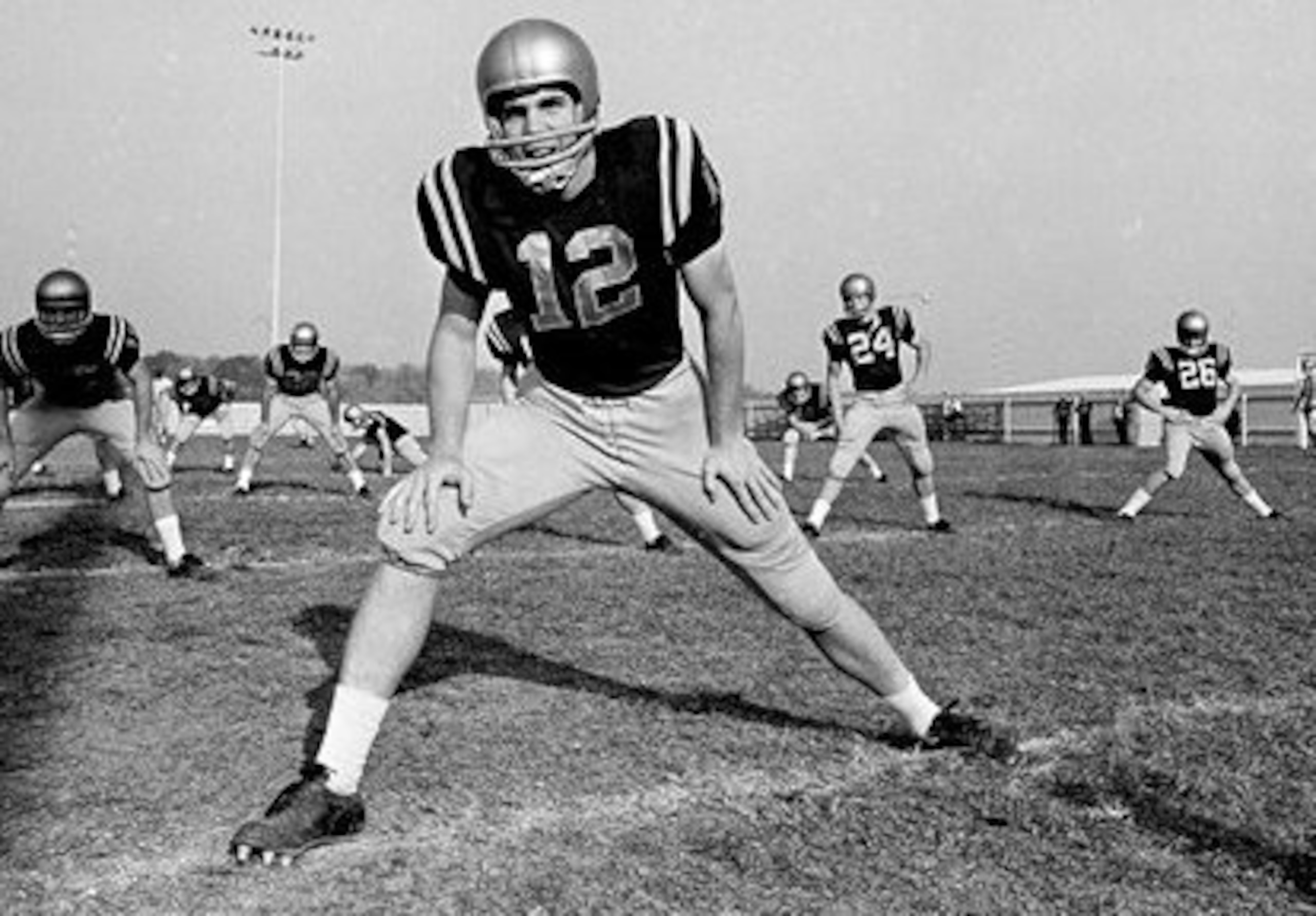
Stats
Passing: 128-of-192 (66.7%), 1,702 yards, 7 TD, 7 INT
Rushing: 168 carries, 371 yards, 9 TD
Breakdown
The numbers don't translate to modern times, but Roger Staubach redefined what it meant to play quarterback.
Known as "Roger the Dodger" for his scrambling abilities, he laid the foundation for a future generation of dual-threats.
His Heisman campaign was the pinnacle and occurred in a year in which Navy beat Notre Dame in South Bend—its last win over the Irish until 2007—and reached the national title game. The Midshipmen lost to Texas, but Staubach remained the story of the year.
.jpg?w=2560 "AP Poll Top Five Week 9")
.jpg?w=2560)
22. 1984: QB Doug Flutie, Boston College
4 of 25
Stats
Passing: 246-of-423 (58.2%), 3,634 yards, 30 TD, 13 INT
Rushing: 66 carries, 379 yards, 3 TD
Breakdown
Undersized and with a running back's number, Doug Flutie looked as interesting as he played. There was never a dull moment when he broke the pocket and improvised.
The most famous example was his Hail Mary to beat Miami—one of the greatest plays in college football history. But Flutie was no one-hit wonder; he made big plays each week and helped Boston College lead the nation in scoring offense (37.4 points per game).
Because of that, he overwhelmed a weak group of Heisman contenders (Jerry Rice notwithstanding). Flutie received 678 first-place votes and nearly doubled the second-place finisher, Ohio State running back Keith Byars, in overall points.
The Hail Mary made voters' jobs easy.
21. 1978: RB Billy Sims, Oklahoma
5 of 25
Stats
Rushing: 231 carries, 1,762 yards, 20 TD
Receiving: 1 catch, 35 yards, 0 TD
Breakdown
Injuries ruined his pro career and erased him from the short list of greatest running backs, but in college Billy Sims was a boss.
In 1978, he rushed for 1,762 yards, despite receiving just 231 carries—an average of 7.6 yards per attempt. That's tied with Barry Sanders for second-highest among Heisman-winning running backs.
He posted similar numbers as a senior and flirted with a second Heisman but finished runner-up to USC's Charles White. Despite that, the Detroit Lions made Sims the No. 1 overall pick in the NFL draft.
20. 2014: QB Marcus Mariota, Oregon
6 of 25
Stats
Passing: 304-of-445 (68.3%), 4,455 yards, 42 TD, 4 INT
Rushing: 135 carries, 770 yards, 15 TD
Breakdown
Because of its warp-speed offense, Oregon always submitted Heisman contenders. But it never pushed a player over the hump.
Then Marcus Mariota happened.
His emergence was slow and steady, progressing from his breakout freshman season, through his slightly improved sophomore season and into his dominant junior season, when he led the nation in passer rating and broke the Pac-12 record with 57 total touchdowns.
Oregon won the conference and beat defending national champion Florida State in the Rose Bowl. That game was the first semifinal in College Football Playoff history and moved the Ducks into the national title game. They couldn't finish the job against a peaking Ohio State team, but Mariota carried them as far as he possibly could have.
For that, he will always be remembered.
19. 1974: RB Archie Griffin, Ohio State
7 of 25
Stats
Rushing: 256 carries, 1,695 yards, 12 TD
Receiving: 5 catches, 77 yards, 0 TD
Breakdown
On their own, neither of Archie Griffin's Heisman campaigns were that spectacular.
Regardless, we can't omit the only two-time winner.
Griffin's first Heisman season was stronger than his repeat, which is why we chose to highlight it. The repeat was a product of a weak field, whereas the 1974 Heisman was special. He led the country with 1,772 yards from scrimmage and helped 10-2 Ohio State reach the Rose Bowl.
The team found more success in 1975, when it started 11-0 before dropping the Rose Bowl, but Archie was never better than he was in 1974.
18. 1991: WR Desmond Howard, Michigan
8 of 25
Stats
Receiving: 62 catches, 985 yards, 19 TD
Rushing: 13 carries, 180 yards, 2 TD
Breakdown
Desmond Howard had a rare nose for the end zone.
Nineteen of his 62 receptions—31 percent!—went for touchdowns in his Heisman-winning season. That's basically one in three. It's hard to comprehend the insanity of that number.
And lest we forget his kick returns and punt returns. Combined he took 35 attempts (15 kicks, 20 punts) for 694 yards and two scores. The receiving was enough to earn him strong Heisman consideration; the special teams pushed him over the top.
He quadrupled the rest of the finalists.
17. 2012: QB Johnny Manziel, Texas A&M
9 of 25
Stats
Passing: 295-of-434 (68.0%), 4,114 yards, 26 TD, 9 INT
Rushing: 201 carries, 1,401 yards, 21 TD
Breakdown
Johnny Manziel ushered Texas A&M into the big, bad SEC. The Aggies were supposed to be a pushover, but Manziel morphed into Johnny Football and led them to a 10-3 record with wins over eventual national champion Alabama (in Tuscaloosa!) and Oklahoma in the Cotton Bowl.
He also recorded more than 5,500 yards of total offense, 47 total touchdowns and more highlight-worthy scrambles than any player in recent memory. And did we mention he did it all as a redshirt freshman?
Before him, no freshman had ever won the Heisman.
16. 2007: QB Tim Tebow, Florida
10 of 25
Stats
Passing: 234-of-350 (66.9%), 3,286 yards, 32 TD, 6 INT
Rushing: 210 carries, 895 yards, 23 TD
Breakdown
As a freshman Tim Tebow helped Florida win the national title by supplementing starter Chris Leak. He entered his sophomore season with outsize expectations and Heisman hype.
And, yet, despite the impossible standard, he met and then exceeded those projections. His 9.4 yards per attempt and 55 total touchdowns both ranked No. 1 in the country. Even though Florida struggled (by its own high standard), voters recognized Tebow over Arkansas running back Darren McFadden in one of the decade's closest races.
Tebow became the first-ever sophomore Heisman winner.
15. 1990: QB Ty Detmer, BYU
11 of 25
Stats
Passing: 361-of-562 (64.2%), 5,188 yards, 41 TD, 28 INT
Rushing: 73 carries, -166 yards, 4 TD
Breakdown
If not for the interceptions, Ty Detmer's Heisman season would have cracked the top 10. Those yardage, touchdown and completion numbers are sick.
They also came for a team that badly needed them. BYU gave Detmer creative freedom and allowed him to carry the load. The Cougars started 10-1 and rose as high as No. 4 in the country before dropping their final two games to Hawaii and Texas A&M.
He could have made fewer mistakes, but sometimes turnovers are the price of aggressiveness. There's no way BYU could have beaten Miami, the defending national champion, without agreeing to push the limit.
Detmer was the right man for the job.
14. 1993: QB Charlie Ward, Florida State
12 of 25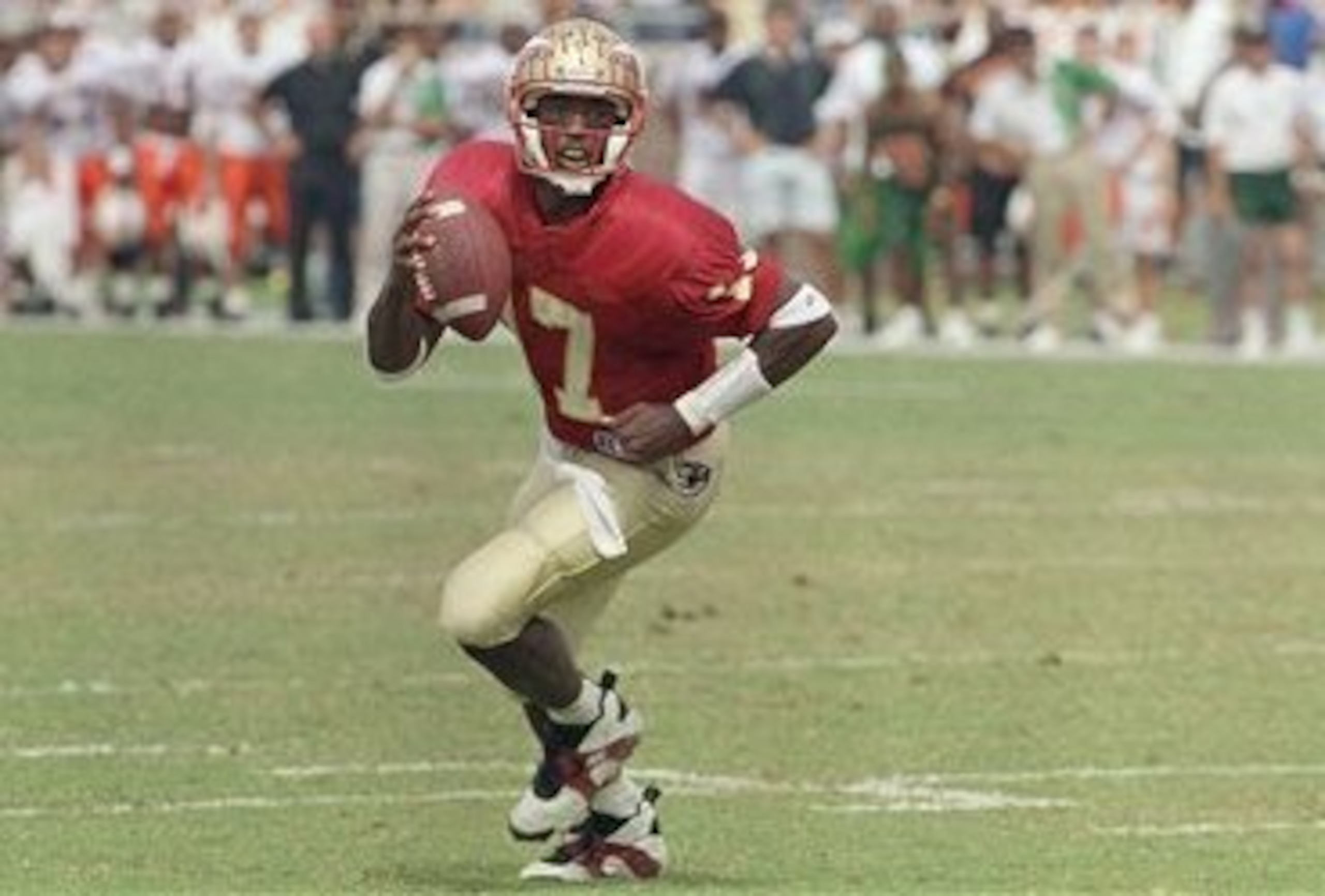
Stats
Passing: 264-of-380 (69.5%), 3,032 yards, 27 TD, 4 INT
Rushing: 65 carries, 339 yards, 4 TD
Breakdown
Strangely underrated in hindsight, Charlie Ward's 1993 season meets all the benchmarks for this list.
You want numbers? He led the country in completion percentage and only threw four interceptions.
You want team stuff? Florida State finished 12-1 and won the national title.
You want highlights? Watch him shift momentum against Florida by improvising a long touchdown to Warrick Dunn.
The controversial decision to rank Florida State ahead of Notre Dame, which beat it in November, and undefeated West Virginia will forever stick an asterisk on the season. One could argue the Noles won an undeserved national title. But even if you thought that, it has nothing to do with Ward, who did everything FSU asked of him and more.
13. 1995: RB Eddie George, Ohio State
13 of 25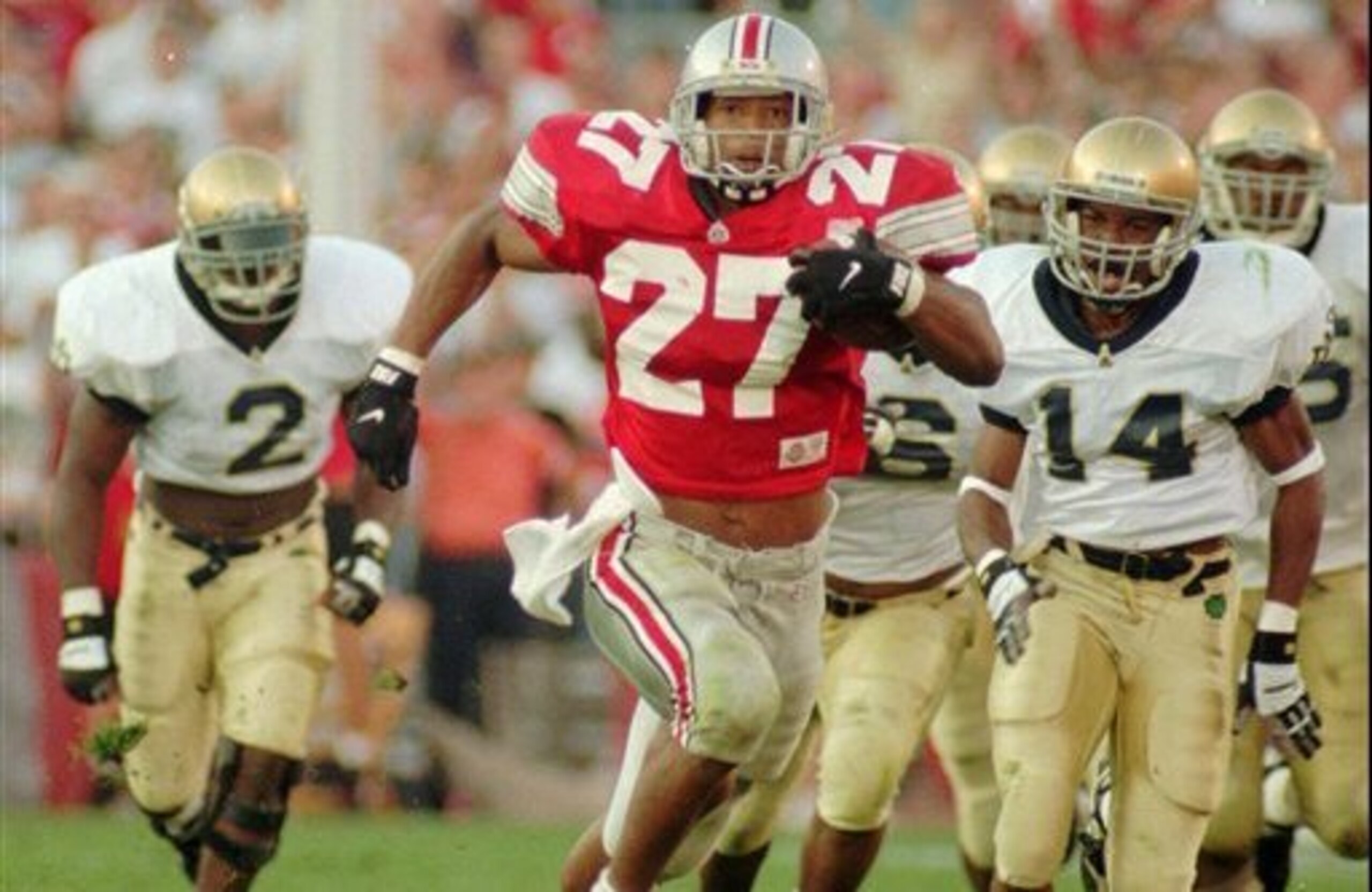
Stats
Rushing: 328 carries, 1,927 yards, 24 TD
Receiving: 47 catches, 417 yards, 1 TD
Breakdown
Eddie George broke out as a junior in 1994 but only really became a star as a senior, when Ohio State opened the season 11-0 and nearly reached the national title game.
George rushed for 100 yards in every game but the opener, when head coach John Cooper subbed him out at 99 yards in a 38-6 win over Boston College. Included in his 12 straight 100-yard games was a 207-yard game against Notre Dame, a 212-yard game against Washington and a 314-yard game against Illinois.
Ohio State lost "The Game" to Michigan, which rained on the Buckeyes' parade and kept them from playing for the title, but George had done enough to win the Heisman over Tommie Frazier and Danny Wuerffel—both deserving candidates in their own rights.
12. 2013: QB Jameis Winston, Florida State
14 of 25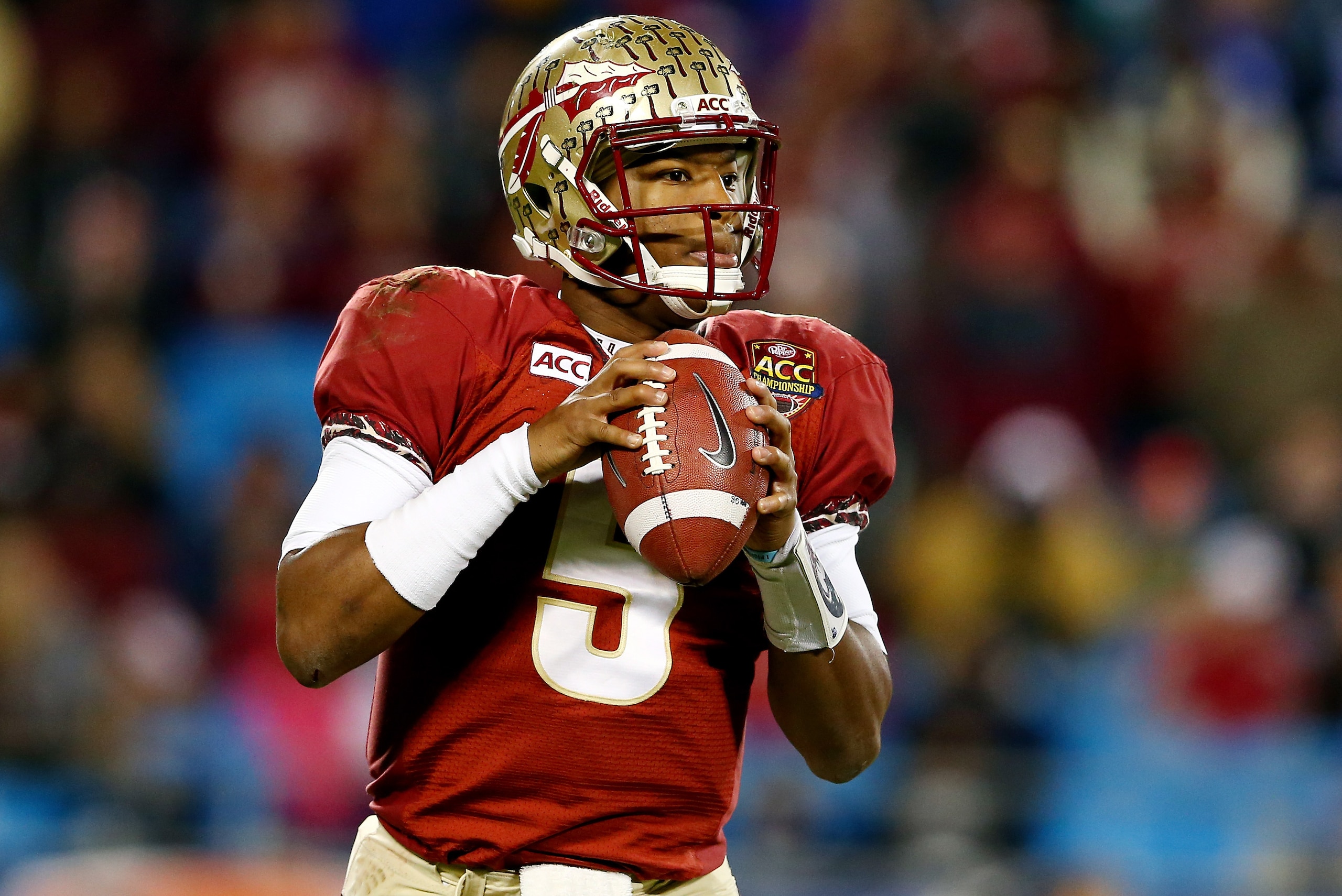
Stats
Passing: 257-of-385 (66.8%), 4,057 yards, 40 TD, 10 INT
Rushing: 88 carries, 219 yards, 4 TD
Breakdown
Jameis Winston learned for one year on the scout team before replacing EJ Manuel and boosting a Florida State team that ranks among the most dominant in modern college football.
The Noles steamrolled everyone until the BCS National Championship Game, where Auburn mounted a tough challenge. But Winston, who played the second half of the season under the pall of sexual-assault allegations, overcame early struggles to lead a comeback victory and finish the year 14-0.
His offense was loaded with playmakers—the only thing holding him down on this list—but so was the 2012 version Manuel failed to push over the hump. Winston was the difference and the biggest reason Florida State won the title.
11. 1982: RB Herschel Walker, Georgia
15 of 25
Stats
Rushing: 335 carries, 1,752 yards, 15 TD
Receiving: 5 catches, 89 yards, 1 TD
Breakdown
Herschel Walker had a huge year in 1981, rushing 385 times for 1,891 yards, but finished second behind the No. 3 player on this list.
With that player-to-be-named gone in 1982, Walker was the preseason favorite. And despite a broken thumb that could have slowed him to start the season, he came through and delivered.
Walker improved his yards per attempt while taking fewer carries, and his efficiency made Georgia a contender. The Bulldogs swept SEC play and went 11-0 before losing to Penn State in the Sugar Bowl.
Bu despite that non-storybook ending, Walker's season ranks among the best ever. Anything less would have failed to beat John Elway and Eric Dickerson, who finished second and third, respectively.
10. 2008: QB Sam Bradford, Oklahoma
16 of 25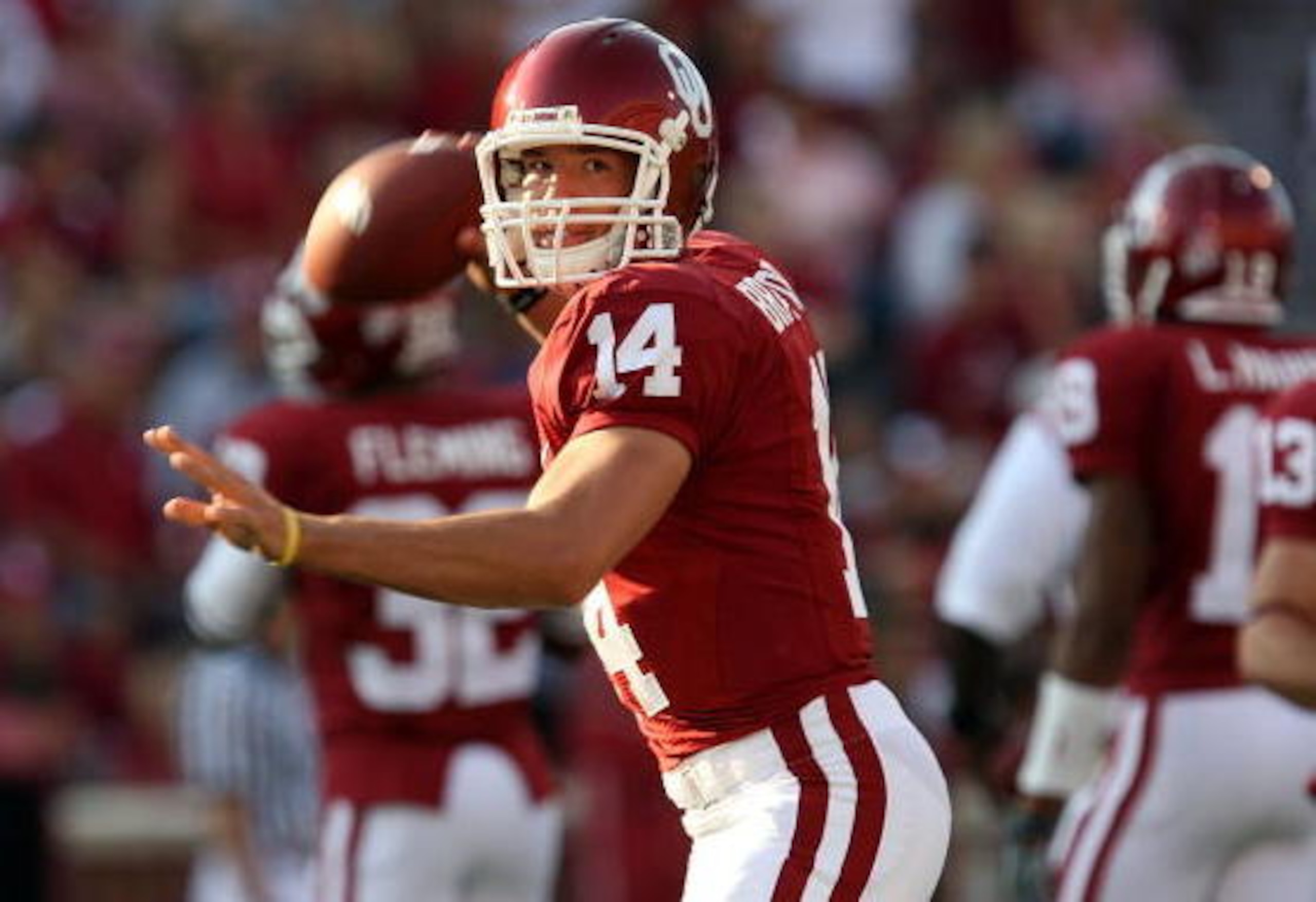
Stats
Passing: 328-of-483 (67.9%), 4,720 yards, 50 TD, 8 INT
Rushing: 42 carries, 47 yards, 5 TD
Breakdown
It's easy to forget after watching him become a NFL checkdown robot, but in college Sam Bradford was breathtaking.
His best year came in 2008, when he led the country in passer rating (180.8), passing touchdowns (50) and adjusted yards per attempt (11.1). Those first two numbers rank No. 10 and No. 4, respectively, in the single-season FBS record book.
Despite that, Bradford barely beat Texas quarterback Colt McCoy, whose Longhorns defeated the Sooners in the Red River Rivalry, and reigning Heisman winner Tim Tebow. All three QBs' cases held merit, but Bradford and Oklahoma's numbers—did we mention the Sooners averaged 51 points per game?—were rightfully too persuasive.
Tebow, however, exacted revenge in the BCS National Championship Game, where Florida beat Oklahoma 24-14.
9. 1997: DB/WR Charles Woodson, Michigan
17 of 25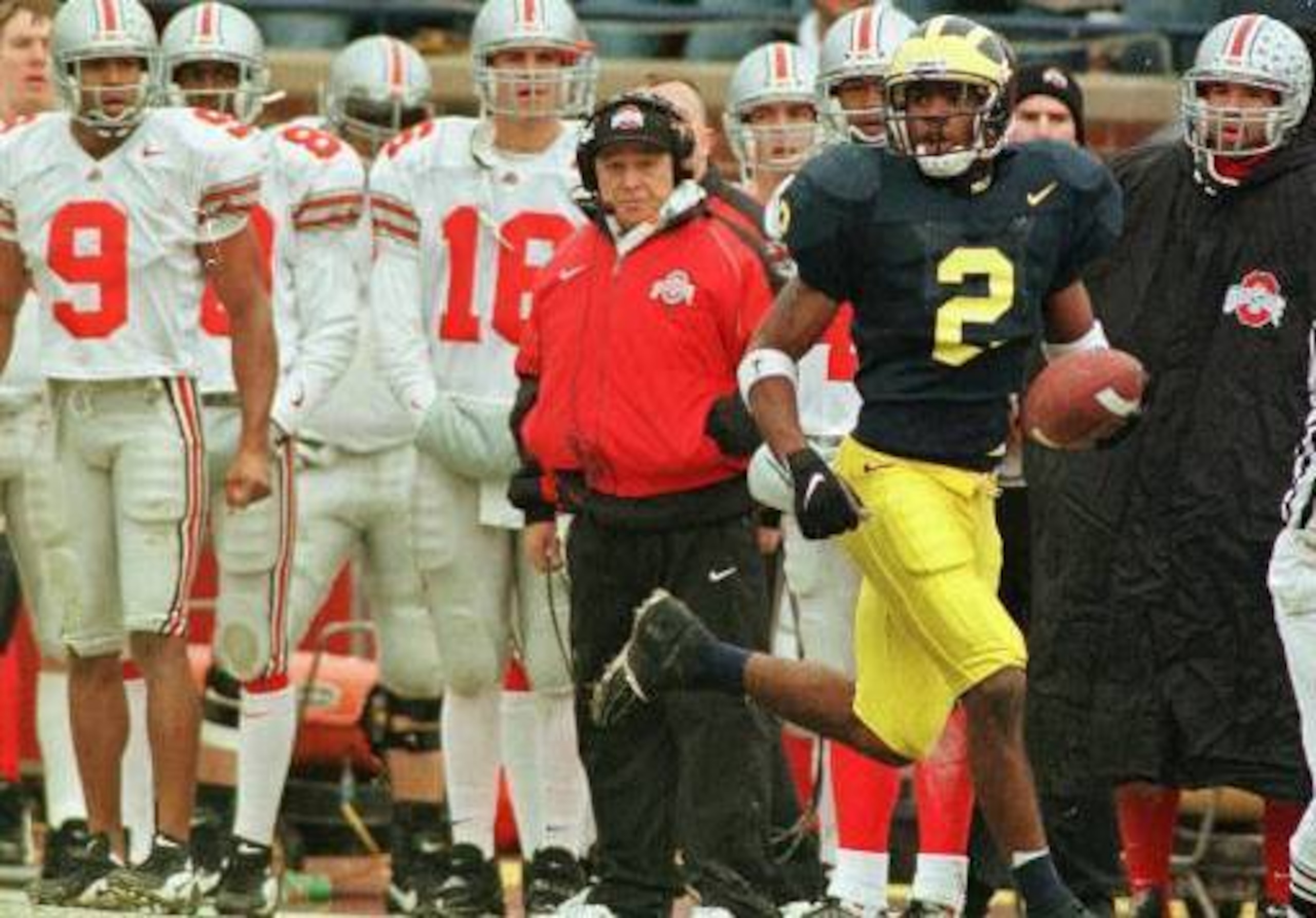
Stats
Receiving: 11 catches, 231 yards, 3 TD
Defense: 7 INT
Breakdown
Charles Woodson's Heisman ranks among the most contentious ever. His victory over Tennessee quarterback Peyton Manning, whom many think should have won, sparks debate nearly 20 years later.
Regardless, that Woodson beat Manning speaks well to his transcendent season. He is still the only defense-first player to win the award. His offense and return game contributed, but not so much as his seven interceptions and lockdown coverage.
Woodson cemented the Heisman in the regular-season finale against Ohio State. In a matchup of No. 1 vs. No. 4, before which he talked smack against Buckeyes receiver David Boston, he returned a punt for a touchdown and caught a 37-yard pass to set up Michigan's only offensive score. The Wolverines won 20-14 to remain undefeated.
"I think it's obvious he's the best player in America," Wolverines quarterback Brian Griese said of Woodson, per the Cleveland Plain Dealer. "What he did today was unbelievable."
8. 2005: RB Reggie Bush, USC*
18 of 25
Stats
Rushing: 200 carries, 1,740 yards, 16 TD
Receiving: 37 catches, 478 yards, 2 TD
Breakdown
Vacated but never forgotten, Reggie Bush's Heisman year remains one of the best of the new millennium.
He emerged from quarterback Matt Leinart's shadow and blossomed into a megastar with big play after big play after big play. Despite splitting carries with downhill back LenDale White, he rushed for 1,740 yards and led the country with 8.7 yards per attempt.
Throw in the 478 receiving yards, the 672 return yards and the legendary performance against Fresno State and it's hard not to call this a top-10 Heisman season. Even Leinart and Texas quarterback Vince Young, who both had Heisman-worthy resumes, couldn't stop Bush from receiving close to 800 first-place votes.
(Young, however, would get the last laugh after beating USC in the Rose Bowl.)
*Note: Vacated by the NCAA
7. 1998: RB Ricky Williams, Texas
19 of 25
Stats
Rushing: 361 carries, 2,124 yards, 27 TD
Receiving: 24 catches, 262 yards, 1 TD
Breakdown
Ricky Williams took the nation by storm in 1997 but faded behind a strong field of candidates (Charles Woodson, Peyton Manning, Ryan Leaf and Randy Moss). He was close but just barely not on their level.
In response, first-year head coach Mack Brown dialed Williams' number early and often. His usage grew from 279 carries to 361 carries, and although that meant a small drop in average (from 6.8 to 5.9), he still posted great efficiency for such a workhorse.
In the process of his 2,100-yard season, Williams broke the FBS career rushing record. His chase for 6,083 was the story of the season, and his record-breaking run met the hype. Eleven yards shy of the record, he steamrolled through the hole, bounced off a tackle and sprinted through the Texas A&M defense for a 60-yard celebratory touchdown.
Every great season needs a lasting image.
That was Ricky's.
6. 2010: QB Cam Newton, Auburn
20 of 25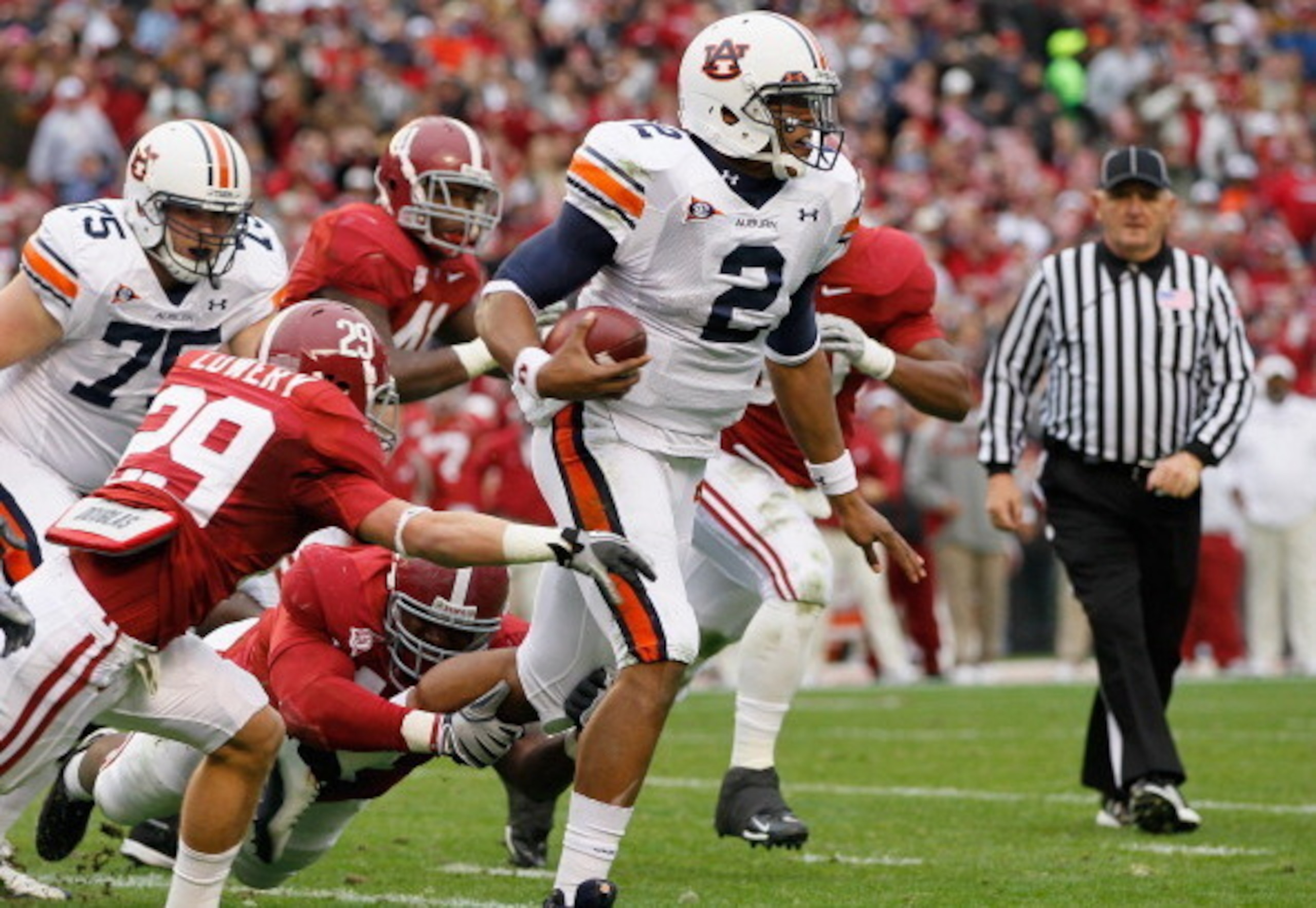
Stats
Passing: 185-of-280 (66.1%), 2,854 yards, 30 TD, 7 INT
Rushing: 264 carries, 1,473 yards, 20 TD
Breakdown
Cam Newton arrived at Auburn at the perfect time. With then-offensive coordinator Gus Malzahn calling the shots, he entered the perfect system for his creative, athletic, once-in-a-generation skill set.
The result was a dominant season and national championship. Newton made SEC defenders look like high schoolers, becoming the first player in conference history to rush for 1,000 yards and pass for 2,000 yards in a season. Despite allegations his father sold his recruitment, he made the story more about his game.
Never was that more true than in the Iron Bowl against Alabama. The Tide led 24-0 on their home field, but Newton hit a second gear and dragged Auburn back. The Tigers won 28-27 and left Bryant-Denny Stadium stunned and speechless.
Bleacher Report's Matt Miller called it one of the best single-game performances he's ever seen.
5. 1976: RB Tony Dorsett, Pittsburgh
21 of 25
Stats
Rushing: 370 carries, 2,150 yards, 22 TD
Receiving: 8 catches, 67 yards, 1 TD
Breakdown
Tony Dorsett had a strong year in 1975, but Pittsburgh's 8-4 record weighed him down. His numbers were nearly identical to those of Archie Griffin, but Griffin's Buckeyes spent the whole year in national title contention. Fair or not, that matters.
So what did Dorsett do the following season? He made Pitt a national title contender. And more than that—he made it the national champion.
Thanks to Dorsett's 370 carries and 2,150 yards, both of which led the country, Pittsburgh went undefeated and beat Georgia in the national title game. It started the year with a road win at Notre Dame, with Dorsett taking his first carry 61 yards and torching the Irish—his favorite opponent—for the second consecutive season.
He also set the FBS career rushing record, which stood for more than 20 years before Ricky Williams surpassed it.
4. 1983: RB Mike Rozier, Nebraska
22 of 25
Stats
Rushing: 275 carries, 2,148 yards, 29 TD
Receiving: 10 catches, 106 yards, 0 TD
Breakdown
Mike Rozier was the best player and most important figure on Nebraska's historically dominant 1983 offense.
Those Huskers averaged 50 points per game, in large part because of Rozier, who only needed 275 carries to reach 2,148 yards and 29 touchdowns—both of which led the country.
After starting 12-0, Nebraska drew Miami in the national title game. Rozier ran wild early but injured his ankle in the third quarter and had to exit. Nebraska mounted a comeback without him but failed to get over the hump and lost 31-30.
If he's healthy, Rozier probably makes the difference.
3. 1981: RB Marcus Allen, USC
23 of 25
Stats
Rushing: 443 carries, 2,427 yards, 22 TD
Receiving: 34 catches, 256 yards, 1 TD
Breakdown
There are bell cows, and then there's Marcus Allen.
USC fed him 477 times, and Allen rewarded it with Heisman production. His eight games with 200-plus rushing yards remain an FBS record, and his season average of 212.9 yards per game ranks No. 2 behind the top player on this list.
USC still lost against unranked Arizona and Washington before losing the Fiesta Bowl to Penn State. That's the only thing keeping Allen at No. 3. On paper, he could make a case for No. 1.
His season was that impressive.
2. 1968: RB O.J. Simpson, USC
24 of 25
Stats
Rushing: 383 carries, 1,880 yards, 23 TD
Receiving: 26 catches, 211 yards, 0 TD
Breakdown
O.J. Simpson was the first college football megastar who resonated the way stars do today. He was that good and that big of a deal.
Never was that clearer than in 1968, when he slashed through USC's schedule and made dominating look easy. He led the nation in carries and rushing yards for the second consecutive year and added another FBS best with 23 touchdowns.
Simpson then owned the Heisman voting and beat his closest challenger, Purdue running back Leroy Keyes, by 1,750 points. That remains the largest margin in Heisman Trophy history.
1. 1988: RB Barry Sanders, Oklahoma State
25 of 25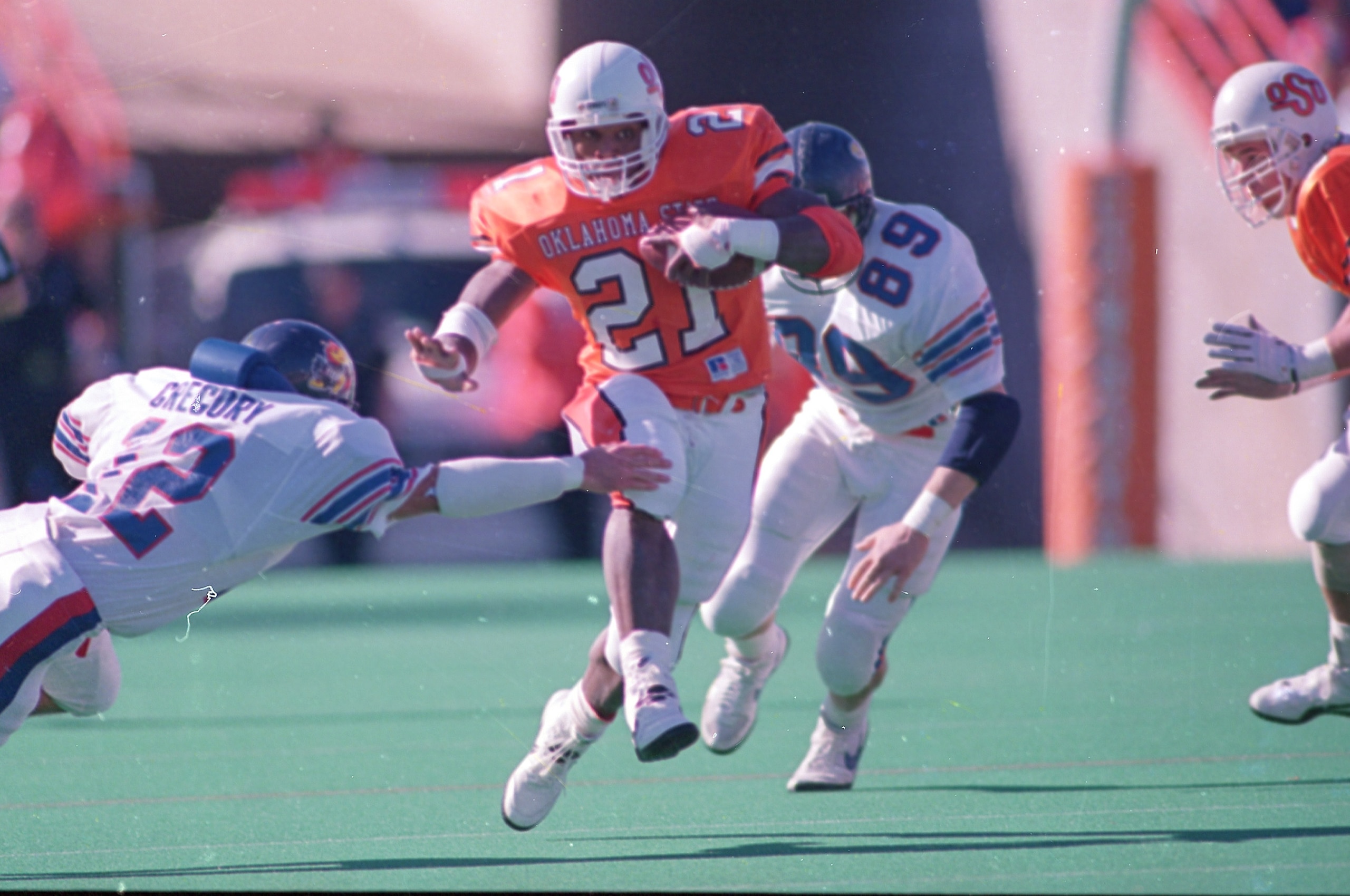
Stats
Rushing: 344 carries, 2,428 yards, 37 TD
Receiving: 19 catches, 106 yards, 0 TD
Breakdown
There's never been a player like Barry Sanders, and there's never been a season like his Heisman-winning 1988 campaign.
He set a FBS record with 2,428 rushing yards and led the nation with 37 touchdowns. If you add his stats from the Holiday Bowl, when he rushed for 222 yards and five scores against Wyoming, he actually finished with 2,850 rushing yards and 42 rushing touchdowns (44 total).
Nowadays bowl stats count, and teams play 12 to 15 games per season. Despite that, Sanders' 11-game totals have never been surpassed. Wisconsin's Melvin Gordon came close (on fewer carries) in 2014, but even MelGor couldn't clear Sanders' mark.
This is still the best Heisman season ever.
Note: Unless otherwise cited, all stats via Sports-Reference.com.



.jpg?w=2560 "Raiders Could Start Mendoza")

.jpg?w=2560 "Rodgers Iced Out on Plane 💎")

.jpg?w=2560 "Packers Safety Slams Refs 🤬")