Why Eligible CFB Players Should Know Their NFL Draft Grades Sooner
This week, more than 100 college football players made the biggest decisions of their lives in declaring early for the 2016 NFL draft.
Before going any further, marinate on that statement for a minute. Take a moment to consider the magnitude of what that means for real people making real choices for themselves and those closest to them.
When viewed through that lens, departing early for the pros isn't simply a matter of making a "right" or "wrong" decision. It's more human than that, and there are as many reasons to forgo eligibility as there are players. Some explanations are more individual in nature—if a player's draft stock is at an all-time high, for example—while others are more selfless (finances or health of a family member).
.jpg?w=2560 "AP Poll Top Five Week 9")
.jpg?w=2560)
No reason is "wrong," but each is personal.
If Alabama head coach Nick Saban and Clemson head coach Dabo Swinney had it their way, draft-eligible players wouldn't receive feedback until after their season is complete. That season could be over Dec. 5 or Jan. 12. Either way, those players would be in the dark on exactly where they stood until then.
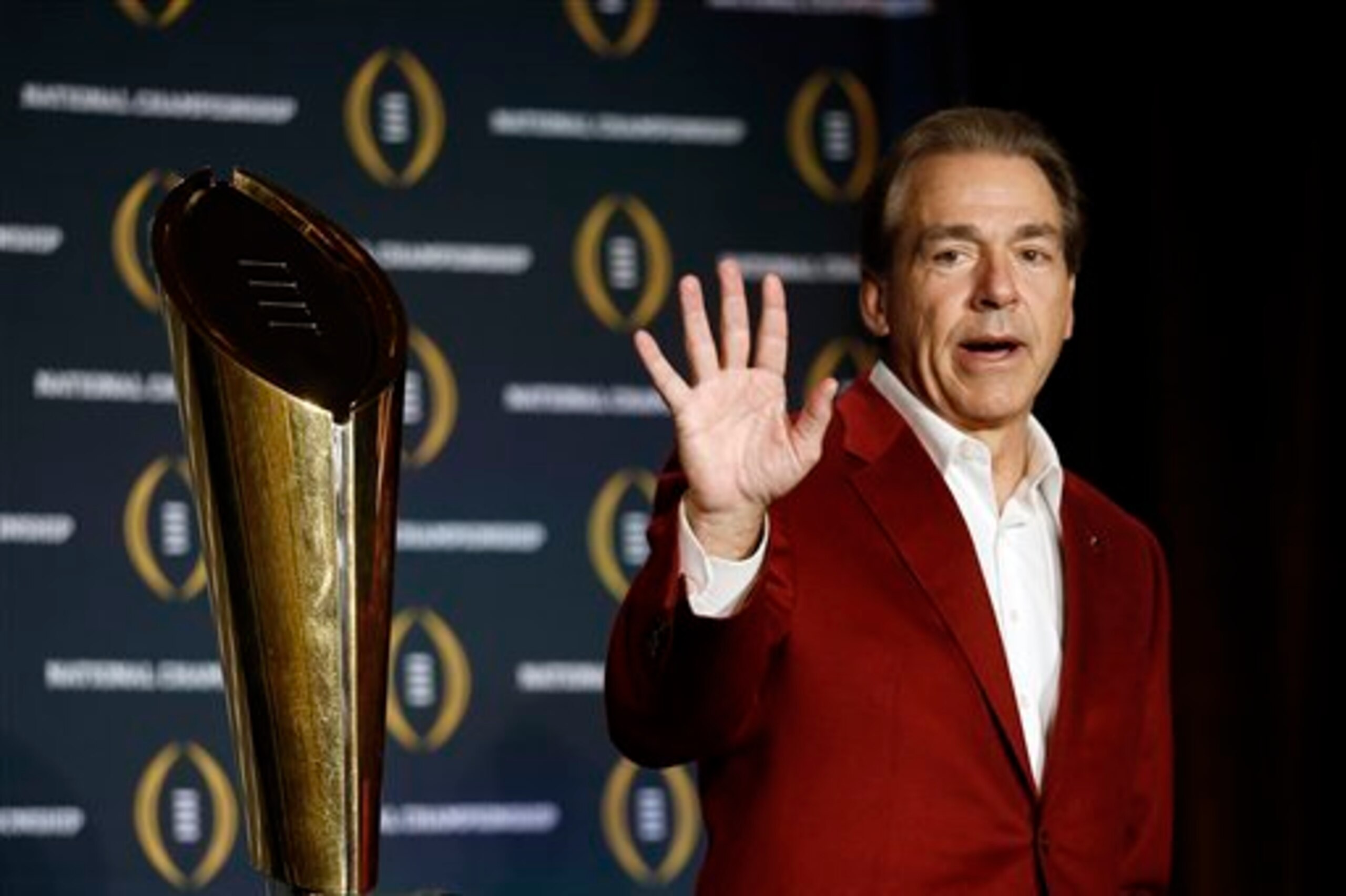
However, to put it simply, college football owes its players access to as much information as possible in a timely manner—and not delayed. That's not to say players need draft evaluations before their junior season, but putting it off until January only hurts them. This information is a right, not a privilege or something to be withheld.
According to Saban's explanation, timing in relation to the postseason was the biggest conflict.
“The NFL moved the draft back. I wish they'd move the declare date back,” Saban said prior to the 2016 College Football Playoff National Championship, via Dan Wolken of USA Today. “I wish they'd make a rule that says you can't even give a player what his draft status is until they've finished their competition as a college player, so that you don't put them and their family in this situation where there's a big timing issue relative to competition."
Saban's stance on draft feedback and when it should be available is nothing new. The common argument against this belief is that it sounds an awful lot like an excuse for losing (which it is). However, that's small-time stuff compared to the bigger issue at hand, which centers on the overwhelming decision-making process of going pro or returning to college.
As Wolken noted, changes to the draft-evaluation process were implemented in 2014 to encourage more players to return to school. He wrote, "Schools are now limited to five players requesting an evaluation (previously there was no limit), and feedback is only offered in three categories (as opposed to five): first round, second round and neither."
The desired outcome from these changes is noble on the surface. A high percentage of underclassmen who departed early were going undrafted—Dennis Dodd of CBS Sports noted a "failure rate of nearly 40 percent" in 2014—and alterations were made to better protect athletes.
However, it would be wrong to think the NFL and college games don't benefit from this. The league can keep its de facto developmental league for as long as possible with no additional cost, while college programs get another year of labor with no salaries attached. Meanwhile, the ones who actually play the game and have decisions to make are being denied information that affects their futures.
The policy of keeping a majority of players out of the loop can be spun in a variety of positive ways, but ultimately it's a self-serving move made by people already getting a big paycheck.
Keep in mind, too, that access to as much information as possible as soon as possible doesn't guarantee a player will leave early. Oftentimes, it can be a reminder of what one more year can do.
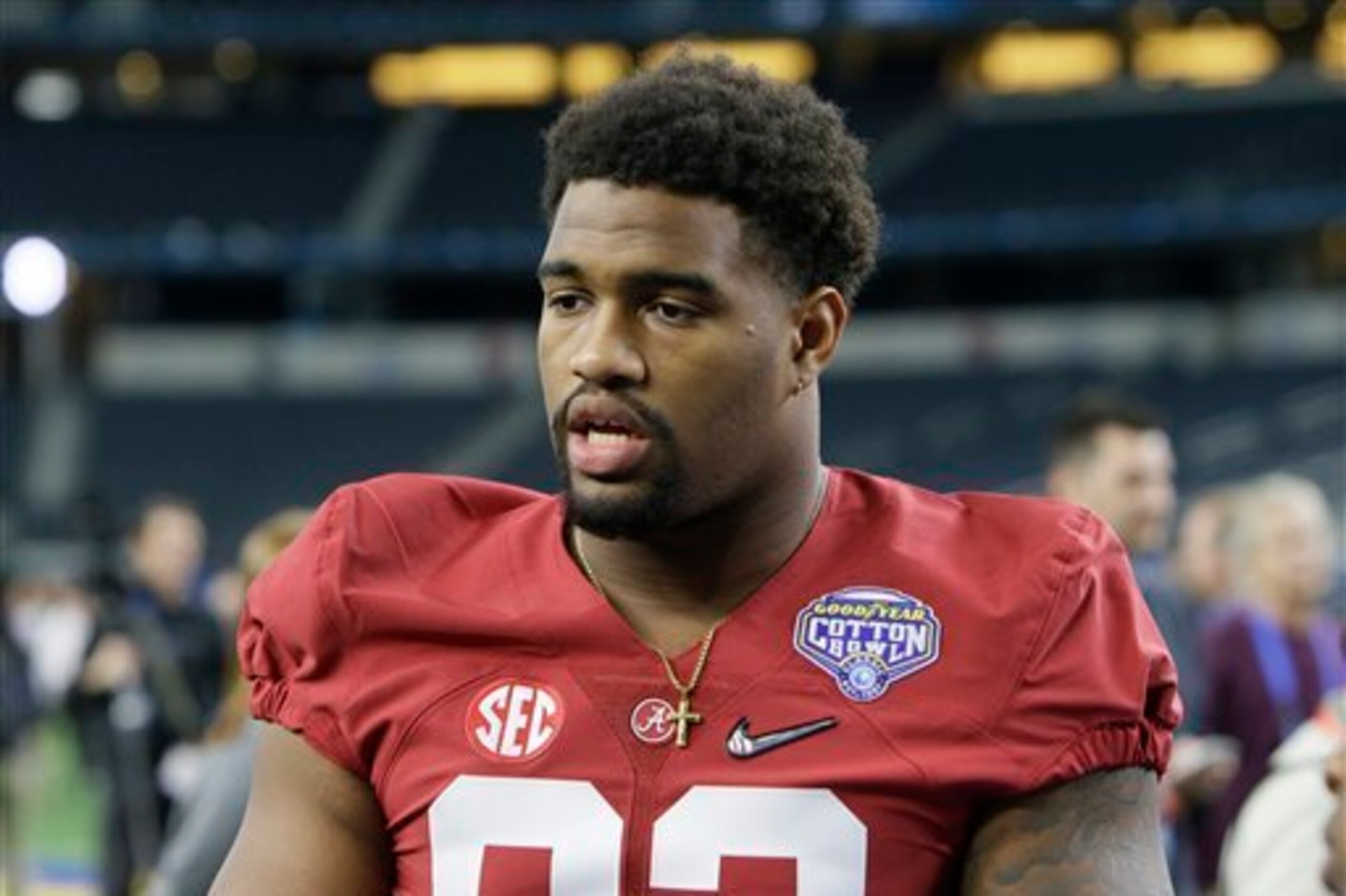
Just ask Alabama defensive lineman Jonathan Allen, who opted to skip the draft and return for his senior year. His rationale, which he explained to ESPN.com's Chris Low, made a ton of sense:
"I looked at it from every angle I possibly could and discussed it with all the people I trust. The smartest thing I could do was come back to Alabama and finish out my career. It’s not an easy decision. You think about all the what ifs and hear what everybody is saying on the outside. But at the end of day, it’s a business decision, and I feel like I made a good one.
"
That's not the voice of a player who needs to find out in January where he stands, even if the Alabama locker room felt otherwise. Allen didn't come to this conclusion overnight, but forcing him to essentially do just that is unfair to him.
The draft timeline is not about to change anytime soon, either.
But while several coaches, not just Saban and Swinney, want the early-declaration deadline to be pushed back, it's not their call. That's a league decision.
In any case, pushing the declaration date back only makes a smaller window.
Swinney echoed Saban's sentiments by noting in Wolken's piece that early draft feedback is a "distraction that all of us have to deal with." Technically, he's not wrong. By nature, college football players are easily distracted—but that's applicable to a wide variety of things, from family issues to academics to relationships. As it pertains to the draft, players can be distracted by that months in advance, regardless.
Tangible evidence of the "draft distraction" in bowl games can be hard to locate. Was former Florida State quarterback Jameis Winston, the eventual No. 1 overall pick for 2015, distracted when his team lost the Rose Bowl to Oregon? How about the No. 2 pick, Ducks quarterback Marcus Mariota?
Was Clemson cornerback Mackensie Alexander distracted heading into this year's championship game against the Tide? This piece from Sam Khan Jr. of ESPN.com certainly didn't indicate he was:
"“I'm focusing on getting this W,” Alexander said when asked about the draft. “We'll see after that. Maybe after the game. Or I'll talk to my parents and see what's up.”
Asked if he requested feedback from the NFL draft advisory board, he admitted that he did but said, “We're not focusing on that. I'm not focusing on that. I'm focusing on this game.”
He didn’t even think about it while on break before bowl season?
“No, no,” he said. “I don't have no time. All my time is devoted to winning and competing and helping my team win. ... I don’t think about it because I’m so busy. I need to get this done and out of the way before I even start thinking about it or doing something else. I'm a finisher. I've always been a finisher.”
"
Granted, players like Winston, Mariota and Alexander likely knew of their statuses and intentions (or at least had an idea) long before bowl season, but they still could have gone through the motions and didn't (note, too, that Alexander was injured before and during the national title game).
If college football isn't going to pay its labor source beyond a scholarship and cost of attendance money—meanwhile, the SEC is raking in hundreds of millions of dollars in television and playoff revenue—the least it can do is be an open book when it comes to a player's options. It can encourage not only more explicit draft feedback but more controlled interaction with agents than there already is.
These are important steps in the decision-making process.
The NCAA membership trumpets the phrase that most athletes will go pro in something other than sports. Statistically, this is absolutely true. However, college football also has a responsibility to set up its future pros for success by providing access to as much information as possible without delay. If a player still decides he wants to go pro, then college bigwigs can at least take comfort in knowing they did the most they could.
Besides, a college degree will be there later. A chance to pursue a lifelong dream won't.
Ben Kercheval is a lead writer for college football. All quotes cited unless obtained firsthand.



.jpg?w=2560 "Raiders Could Start Mendoza")

.jpg?w=2560 "Rodgers Iced Out on Plane 💎")

.jpg?w=2560 "Packers Safety Slams Refs 🤬")