

How Alabama's 2015 Title Team Compares to 2014 Champion Ohio State Buckeyes
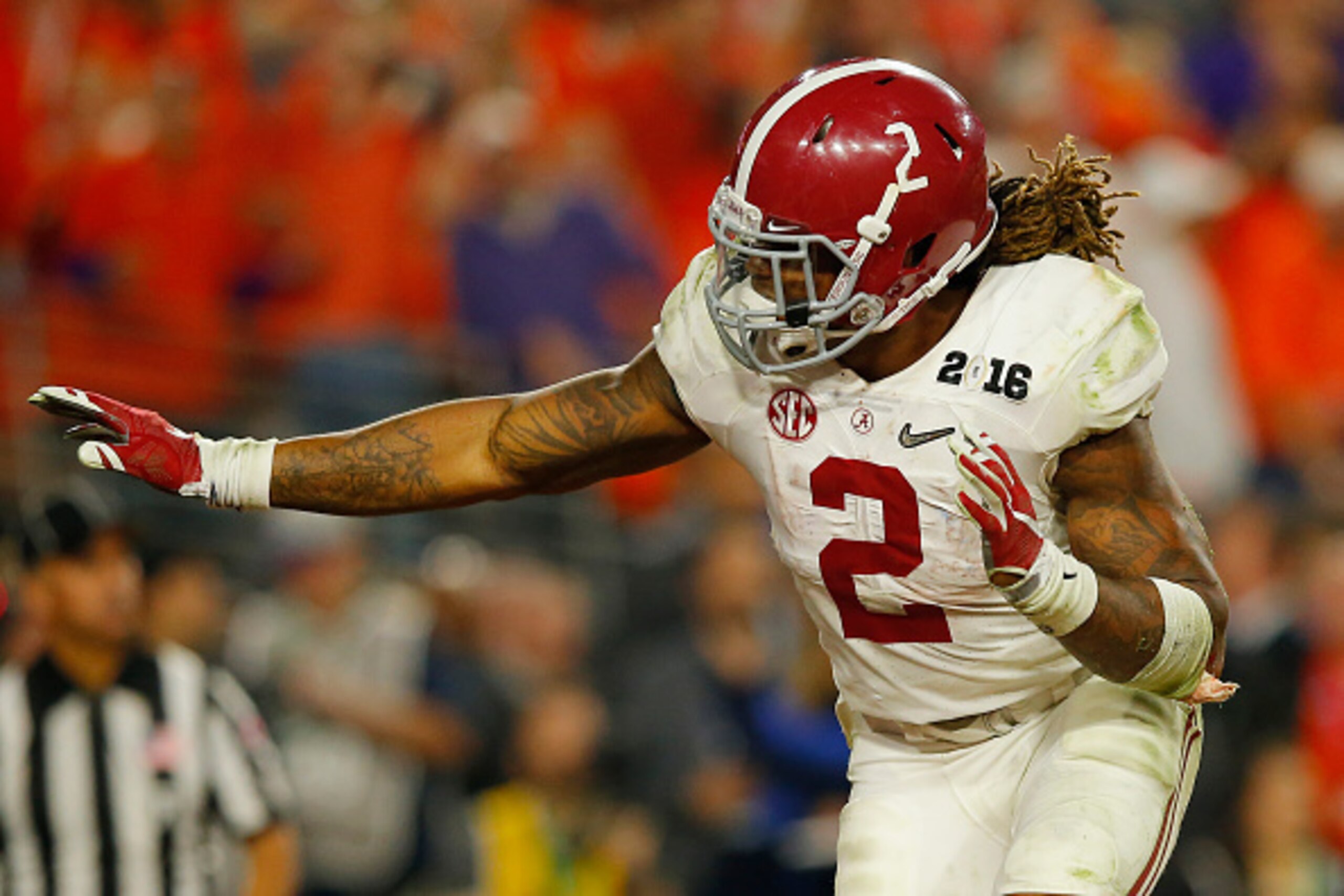
The Alabama Crimson Tide joined the most exclusive club in college football when they defeated the Clemson Tigers by a score of 45-40 on Monday night.
The Crimson Tide will stand in history as the second team to ever win a national championship in the College Football Playoff era, joining an Ohio State team that beat them last year en route to its own title.
On the surface, that's where the similarities seem to begin and end for the two powerhouses.
TOP NEWS

Updated CFP Bracket Projections 🔮

Week 5 AP Top 25 Poll 🔢
Top Overreactions after Week 5 of CFB Season 😧
Nick Saban's Alabama team primarily runs a powerful pro-style offense and wants to choke teams out with its elite defense. Urban Meyer's Ohio State team looks to hurt the opposition with blinding speed on both sides of the ball.
And there's the fact that the two coaches have been rivals for the title of best coach in college football, sharing a history that goes back for most of the last decade.
But the 2015 Crimson Tide and the 2014 Buckeyes have more in common than you may think. Here are five ways in which these two championship-winning blue bloods compare.
| Record | 14-1 | 14-1 |
| Head Coach | Nick Saban (5th title) | Urban Meyer (3rd title) |
| Strength of Schedule (Sagarin) | 1 | 29 |
| Offensive Yards per Play | 5.89 (49th in FBS) | 6.98 (6th in FBS) |
| Defensive Yards per Play | 4.30 (2nd in FBS) | 4.98 (25th in FBS) |
| Yards Differential per Play | +1.59 | +2.00 |
| Point Differential per Game | +19.93 | +22.80 |
| Yards Differential per Game | +150.73 | +169.20 |
| Average Recruiting Class Ranking* | 1.00 | 4.25 |
Rebounded from early defeats
Going undefeated and winning the national championship is becoming a rarity these days in college football.
Thankfully for both Alabama and Ohio State, the playoff system makes sure that losses aren't fatal to your title hopes.
However—as this year's Buckeyes squad learned—if you lose, you better lose early. Give yourself time to work out the kinks and impress the committee late in the season.
Ohio State lost on September 6, 2014, tossing three interceptions in a 35-21 loss to Virginia Tech at home. The next weekend, the Buckeyes shut out a Group of Five opponent in Kent State.
Sound familiar? Alabama threw three interceptions of its own (and fumbled twice) in a 43-37 home loss to Ole Miss on September 19. One week later, the Crimson Tide blanked UL-Monroe before starting a tough October slate.
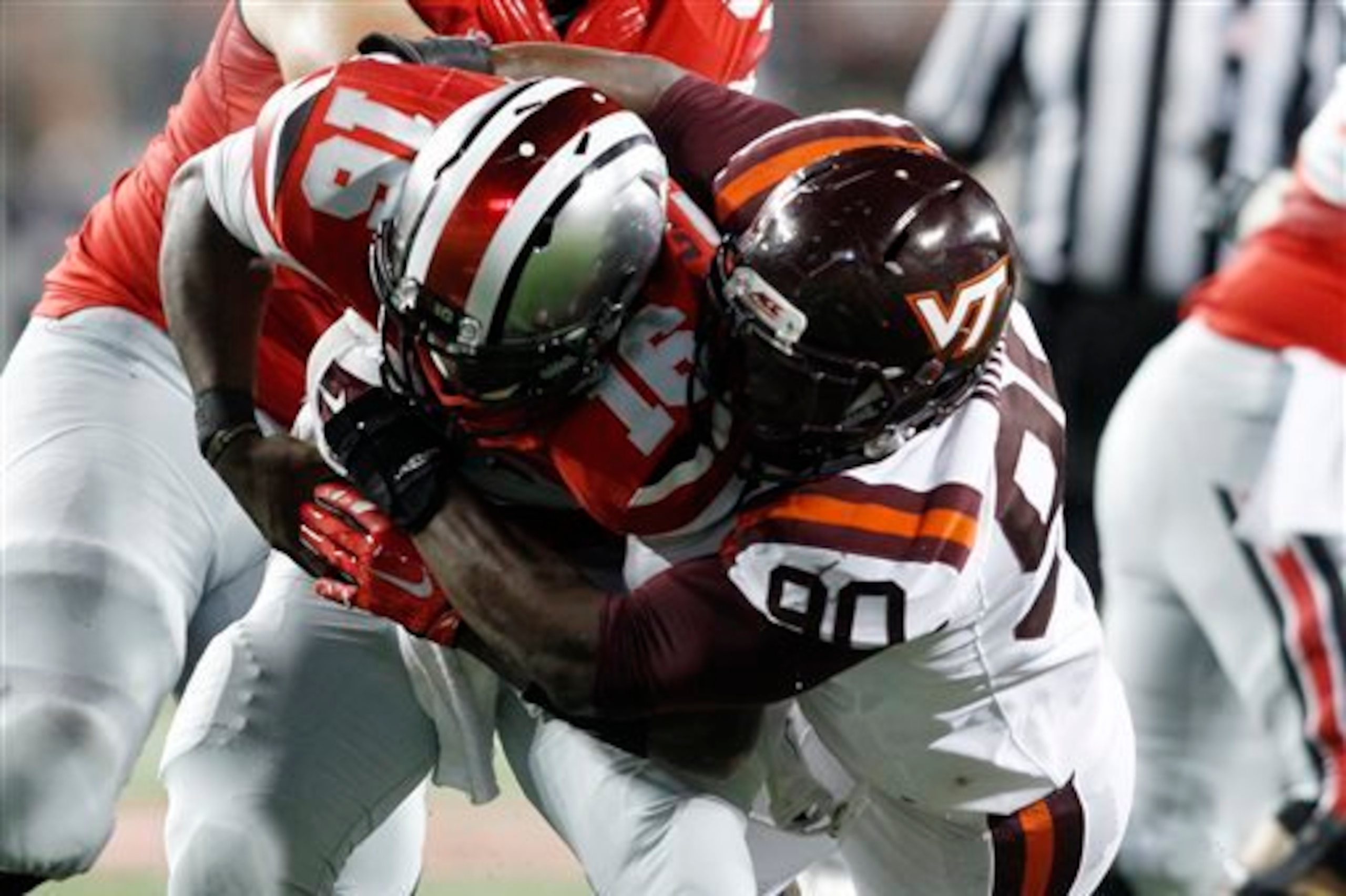
Of course, these comparisons aren't perfect. Ohio State lost to a nonconference team that finished 7-6 on the season, while Alabama lost to a divisional foe that eventually played in a New Year's Six bowl. Alabama needed some help from Ole Miss' later opponents in order to win the division.
More importantly, though, these two September letdowns became turning points in the paths to a national championship. Both Ohio State and Alabama looked sharper after those defeats and rode that motivation to the biggest stage of them all.
"We control our future," Alabama defensive back Eddie Jackson said after the Tide's SEC title win, per Alex Scarborough of ESPN.com. "The way we bounced back after Ole Miss, people didn’t expect that to happen. People didn’t expect us to be here."
Ohio State's players looked to the Virginia Tech defeat the same way in their own playoff push.
"What it has done is make everybody become more aggressive, on offense, on defense, the offense is scoring, the defense is playing better," Ohio State safety Tyvis Powell said in October 2014, per Doug Lesmerises of Cleveland.com. "Basically show the people who are going to pick the [playoff teams] that you deserve to be in that game."
By the end of their respective seasons, there was no doubt Alabama and Ohio State deserved to be in the title game—even after early disappointment.
Similar point and yardage differentials
Alabama and Ohio State both had great playmakers on both sides of the ball during their championship runs, but they were different in how they beat teams.
Ohio State was more of an offensive power than Alabama with Meyer's fast-paced spread system that made him such a high-rising star in the coaching world.
Alabama was stronger on defense than Ohio State, tending to win games in typical Saban-like fashion behind the strength of a star-studded defensive front and opportunistic secondary.
What was similar, though, is the overall dominance these champions had on their schedule outside of their previously mentioned losses and few close victories.
Both Alabama and Ohio State averaged beating their opponents by around three touchdowns.
The Buckeyes' point differential was boosted by a 66-0 rout of Kent State and a 59-0 beatdown of Wisconsin in the Big Ten title game. Alabama's biggest wins came against Charleston Southern (56-6) and Michigan State (38-0).
Yardage differentials were similar, with Ohio State edging Alabama by 0.4 yards per play and almost 19 yards per game.
It's also worth noting that Ohio State's slightly better numbers came against an easier schedule, according to final totals from Jeff Sagarin at USA Today.
But while the styles and competition differed, these two champions were similar in how much they dispatched their opponents by in victories.
Led by coaches with outstanding title game experience
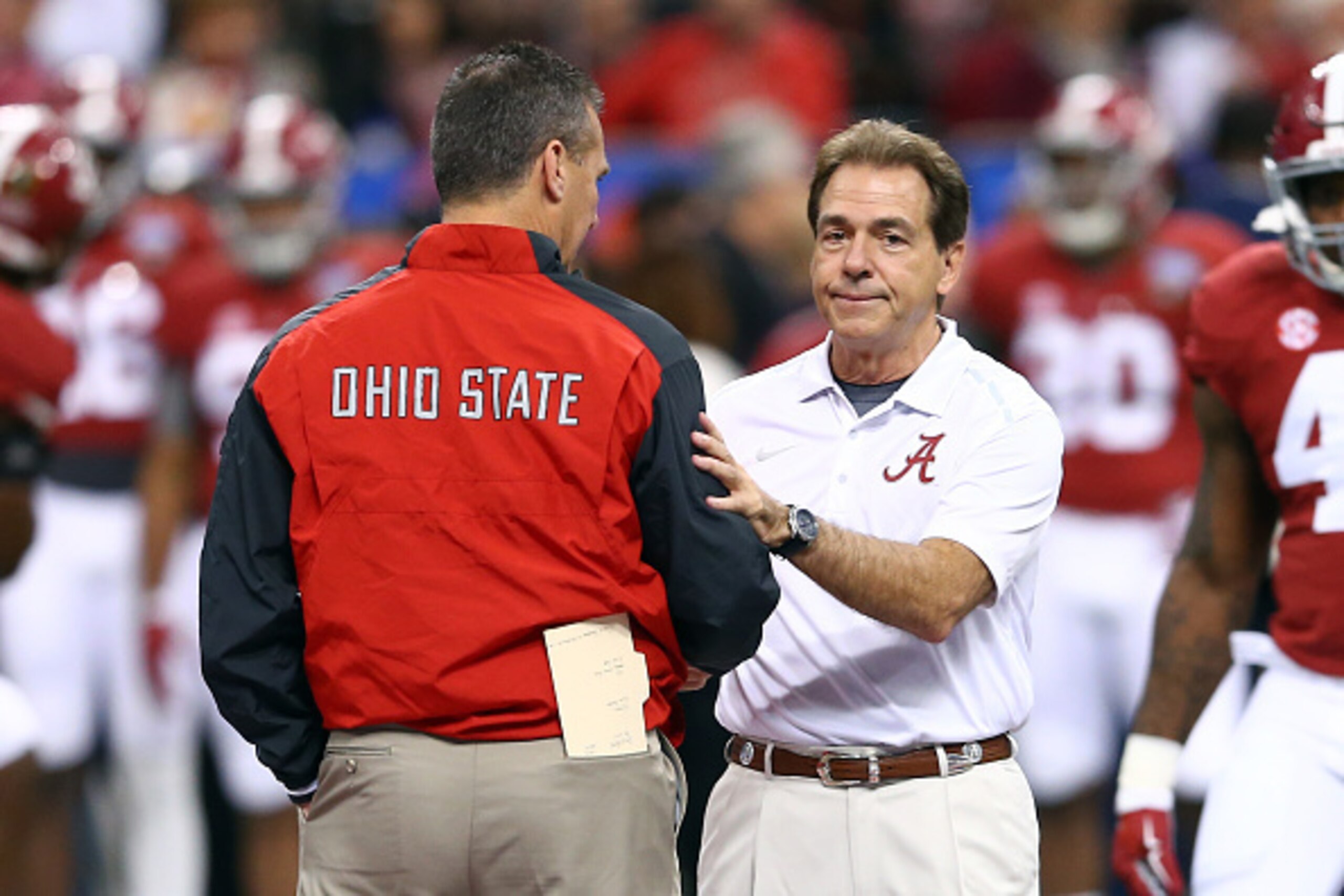
Meyer and Saban are the only head coaches who have held the oddly shaped CFP national championship trophy in victory, and they both had plenty of practice doing that with the old crystal football.
As Bleacher Report's lead Big Ten football writer, Ben Axelrod, noted on Twitter before the championship game, seven of the last 10 national championships have been won by either Meyer or Saban:
In the two title games of the College Football Playoff era, championship experience has won out.
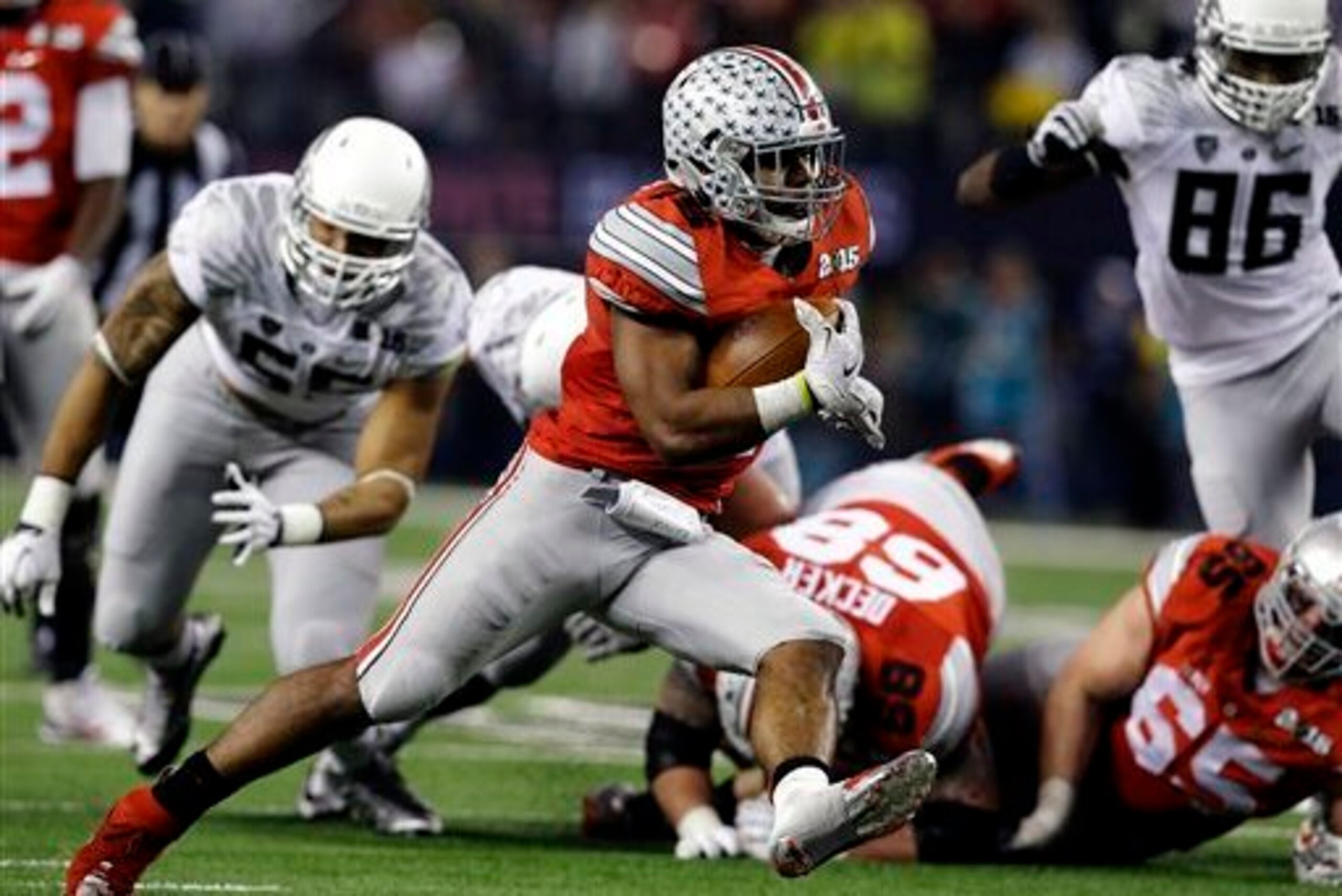
Meyer, who won two BCS championships with Florida before his arrival at Ohio State, led the Buckeyes to the title last year against Oregon and relatively new head coach Mark Helfrich.
Saban took special note of the Ohio State coach's experience in title games after the playoff semifinals last year.
"He's been here before," Saban said, per Chris Low of ESPN.com. "His experience in these types of games helps in making sure your players maintain that focus and don't get sidetracked by any of the other stuff going on, and you see that in the way his teams play."
On Monday night, Saban showed his experience against Clemson's Dabo Swinney and pulled out a few surprises.
When the game veered away from the typical Alabama affair of grind-it-out football, Saban's team made key adjustments on the fly. Alabama looked like your standard no-huddle offense at times. Saban even called an onside kick that changed the game.
"No matter how you slice it, the call was out of Saban's comfort zone in every way imaginable," Bleacher Report's Adam Kramer wrote. "From the personnel to the call itself, this was not part of the process. This was gunslingin' at its finest."
Even though their players had never been in national championship games before, they could lean on the experience of their head coaches. Meyer and Saban know what it takes to be the one standing on the stage as confetti rains down.
Built by recruiting dominance
For a sport that embraces upsets and underdogs, college football is ultimately won by those who have the best talent.
As Bud Elliott of SB Nation explains, every national championship since 2002 has been won by a team that signs more blue-chip (5- and 4-star) recruits than lower-rated ones—and Alabama and Ohio State are the best at doing just that:
"There are few surprises. Nick Saban's Alabama has signed the No. 1 class for five consecutive seasons. Alabama inks better players than anyone else. Its 78 blue chip signees in the last four classes is 11 more than any other school. ...
Ohio State has signed the second most elite players (67) over the last four years, and it has hit home runs at QB. And it's only getting better, as Ohio State is one of the favorites to stop Alabama's run of No. 1 recruiting classes.
"
In the four recruiting cycles leading up to its 2014 national championship season, Ohio State's worst recruiting class was ranked seventh nationally in 2011, per 247Sports. That was one year before Meyer arrived in Columbus.
Alabama's streak of "recruiting national titles" should end in the 2016 cycle, according to the latest standings from 247Sports' Composite Rankings. The Tide will be just fine, though, as more than half of their current commitments are blue chips.
Although teams such as Michigan State and Oregon climb into the national championship picture without consistent highly ranked classes, those who dominate recruiting are the ones who win it all in this current age of college football.
It's a mostly foolproof blueprint for success, and Alabama and Ohio State both followed it to a T in their title campaigns.

Won it all with inexperienced quarterbacks
Both this year's Alabama team and last year's Ohio State team won the national championship as part of a growing trend in college football—overwhelming success for new quarterbacks.
According to Brad Edwards of ESPN.com, Alabama's victory Monday night marked the sixth time in the last seven seasons that a team has won a national title with a first-year quarterback:
Alabama's Jake Coker lost his first position battle in Tuscaloosa after transferring from Florida State and looked shaky at times in his one and only season as a starter.
But when his team needed him the most, he had back-to-back career performances in the playoff semifinal and title game. He set a career high in yards (286) against Michigan State and broke it with his big-play day (335) against Clemson on Monday night.
"Five years ago, I never though I’d be here, that’s for sure," Coker said, per Bleacher Report's Christopher Walsh. "When you win a national championship with Alabama, that’s about all you can ask for. That’s the top for me. I couldn’t be more proud."
In a somewhat similar fashion, Ohio State got two wonderful performances from Cardale Jones in the playoff last season.
Jones, who had to replace another first-year quarterback in J.T. Barrett for Ohio State, had 280 yards of total offense in both wins over Alabama and Oregon. He became an overnight sensation, flirting with the possibility of entering the NFL early before deciding to stay at Ohio State.
Alabama and Ohio State both got legendary performances from rather unlikely sources in their respective title wins. They both proved you don't need a veteran quarterback to reach the mountain top.
Justin Ferguson is a college football writer at Bleacher Report. You can follow him on Twitter @JFergusonBR.
_0.png?w=2560)


.jpg?w=2560 "2 NFL Officials Suspended")


.jpg?w=2560 "Injury-stricken Seahawks signing veteran RB")
.jpg?w=2560 "Mahomes' Wife Trolls Kubiak 💀")

.jpg?w=2560 "Love's Body Already 'Tired'")