The Difficult Decision for Potential High Draft Picks to Play in Bowls
It wasn't supposed to end like this for Notre Dame linebacker Jaylon Smith. It's not supposed to end like this for anybody, really. But this is football, and injuries are an unfortunate part of the game.
It was, as they say, a "freak accident." Early in the Fiesta Bowl against Ohio State, a Buckeyes player hit Smith from behind. It wasn't a dirty hit, per se; more of a finishing move. It happened away from the ball and had little to do with the play at hand.
But as Smith attempted to stop his momentum, his left knee bent in a way no human knee is supposed to bend (For everyone's sake, we won't show the injury. However, here's a link to the video to view at your own discretion).
.jpg?w=2560 "AP Poll Top Five Week 9")
.jpg?w=2560)
Just like that, Smith's day was over. His season would have been over if it had happened a few months earlier. His college career could be done too if he declares for the NFL draft, which many believe he will. For what it's worth, B/R's Matt Miller still has Smith as the top linebacker and No. 2 overall player in his latest big board.
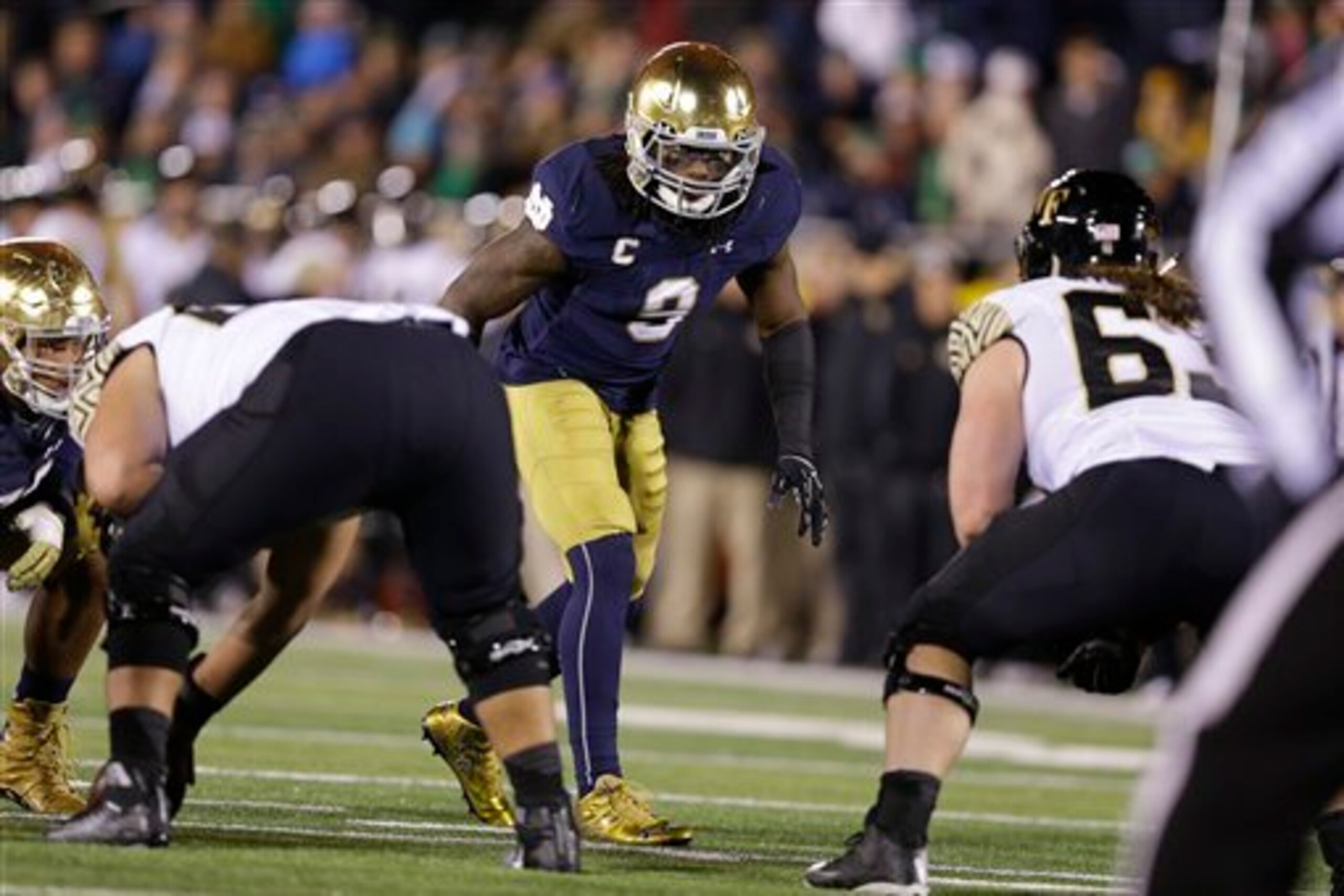
Following the game, head coach Brian Kelly called Smith's injury "significant," but even that almost didn't do it justice. ESPN's Chris Mortensen reported the junior linebacker had a torn ACL and MCL which requires surgery. NFL Media's Ian Rapoport added there could be nerve damage as well, which is the more serious concern. "That's potentially career-ending," said Miller in an interview.
As unimaginable as it sounds at face value, injuries to potential high draft picks beg the question: Are bowl games worth it?
For a player like Smith, whose draft status likely wouldn't have been affected by a bowl performance, it's a catch-22. If he plays, he risks serious injury just like he does in every regular-season game. Unfortunately, the worst-case scenario played out.
If he chooses not to play, however, it could reflect poorly on him during the scouting process.
"I don't think there's much of an incentive [not to play]," Miller said. "It's like the people who think [LSU running back] Leonard Fournette shouldn't play at all next year. That's something a lot of people sitting on couches say."
It's impossible to know exactly how NFL front offices would have reacted to a bowl no-show by someone like Smith, but it would be an interesting story to follow. "Anonymous Scout" season would have been brutal, that much we do know. But how far would Smith's stock actually plummet, if at all? Would it be worth the PR hit?
To take those questions a step further, would skipping a bowl still yield a higher draft outcome than a devastating injury? The answer, after all, could come down to millions of dollars.
How Smith's injury will affect his draft stock, should he declare, won't be known right away. Per ESPN's Darren Rovell, Smith does have a $5 million loss of value policy as protection, a fairly common move among players who project as high draft picks:
Still, even a slight drop in the first round could cost Smith millions according to draft analyst Scott Wright, who spoke to Eric Hansen of the South Bend Tribune:
"Wright said it’s not inconceivable that Smith could slide from No. 5 to No. 15. And based on the inflexible rookie salary scale and last year’s signing figures, that’s the difference between a $21.2 million, four-year contract at the fifth draft position and one of $10.7 million, 10 picks later.
The signing bonus differential is also significant—$13.7 million vs. $6 million, which is included in the total contract value.
"
Those are real dollars that affect Smith and his future. Imagine, through no fault of your own, losing out on that much money. Saying "tough break" doesn't quite cover it.
"That [money] is the one thing that comes into play," Miller said. "Being a top-five pick vs. simply a first-round pick—there's a big difference money-wise.
"From that perspective, being healthy might trump everything else."
The antiquated belief about college football is that players go out every Saturday and compete for the love of the game and the team. While these ideals are still true in some capacity, there are more and more examples in almost every facet of the sport in which players make business decisions.
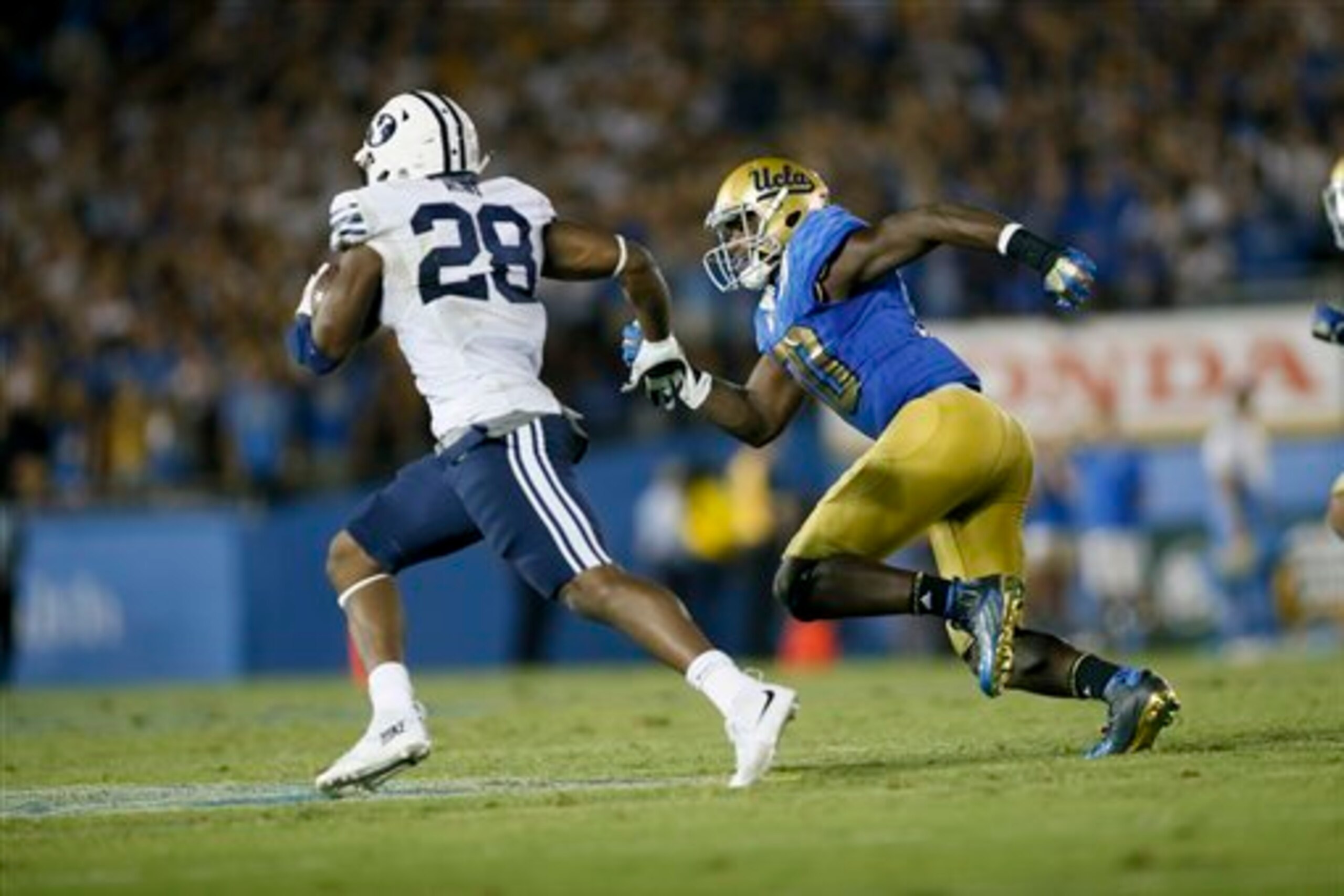
Following his season-ending knee injury in September, UCLA linebacker Myles Jack dropped out of school to focus on the draft. "He doesn't see any point in staying in school," Bruins coach Jim Mora said at the time, via Associated Press.
Casual observers may label such a move as selfish, but Jack's future is in the NFL. No reasonable person would dispute this. In Jack's mind, why delay the inevitable when he can no longer help his team win? His comments on ESPN's Mike & Mike in October reflected this (h/t Kevin Gemmell, ESPN.com):
"I felt like I had done enough at UCLA. I felt like I had done it. In regards to my injury, I wanted to have the best training possible and put myself in the best position to be ready for the combine. That's pretty much where I was at. I wanted to make the right decision. And it was definitely a tough one. If it was up to me, I'd be out there playing right now.
"
Furthermore, why continue to punish your body for free when there's money waiting for you? Football is a violent sport, and the career life cycle for those who play it is limited. The Peyton Mannings and Charles Woodsons of the NFL world are few and far between. Jack was ready to capitalize on what he's earned:
"When you see people making money off of your likeness and your name ... nobody else wears No. 30 at UCLA. That jersey is mine. I would like to receive compensation for what I've done. That's definitely something you're thinking about. I took all of that into consideration.
"
Granted, the situations for Jack and Smith are different. One suffered a season-ending injury and wanted to get a head start training for his next step. The other suffered a gruesome injury just before he was likely to make that jump. We're talking about the difference between missing one game vs. nine or 10.
Still, Jack's comments provide a clear idea of what high-profile athletes are thinking about as the next phase in their lives approaches. There's no easy, or even right, answer, either.
Smith's injury probably won't start a trend of other high-profile players skipping out on bowls. On a bigger scale, the debate about Fournette playing in 2016 is moot, as he will undoubtedly suit up next season. If nothing else, players want to play.
But just know this is an overwhelming time for players thinking about the draft. The temptation of fulfilling a life-long dream and the financial benefits that come with it are impossible to ignore. At the same time, competitors want to take the field with their teammates.
Whether it's Jack, Smith or another future draft pick, all anyone wants to do is make the right decision for their future. That's never easy.
Ben Kercheval is a lead writer for college football. All quotes obtained firsthand unless noted otherwise.



.jpg?w=2560 "Raiders Could Start Mendoza")


.jpg?w=2560 "Rodgers Iced Out on Plane 💎")

.jpg?w=2560 "Packers Safety Slams Refs 🤬")