
10 Stats That Will Have Biggest Effect on the College Football Playoffs
This is going to come as a surprise to some of you, but in the College Football Playoff semifinals, everybody is good. Yes, everyone. No one is overrated or about to lose to a "real" team. No team puts itself in a position to play win a national championship without doing something (oftentimes many things) right.
At this stage in the postseason, it's all about matchups. That's it.
With that in mind, we put aside the quotes about disrespect and motivation (Hint: No playoff team is actually disrespected by rationale people) and look at the numbers. Often, that's where you'll find the keys to the games.
There are a lot of numbers out there, though. Which ones are the most important? That's what the following slides will attempt to unveil with the playoff semifinals just a couple of days away on New Year's Eve. The 10 stats highlighted focus on either obvious strengths or weaknesses designed to give one team an edge over the other.
First, we'll start with the Cotton Bowl between Alabama and Michigan State before moving on to Clemson and Oklahoma in the Orange Bowl.
Stat: Alabama's Defense Allowed 74 Rushing Yards Per Game
1 of 10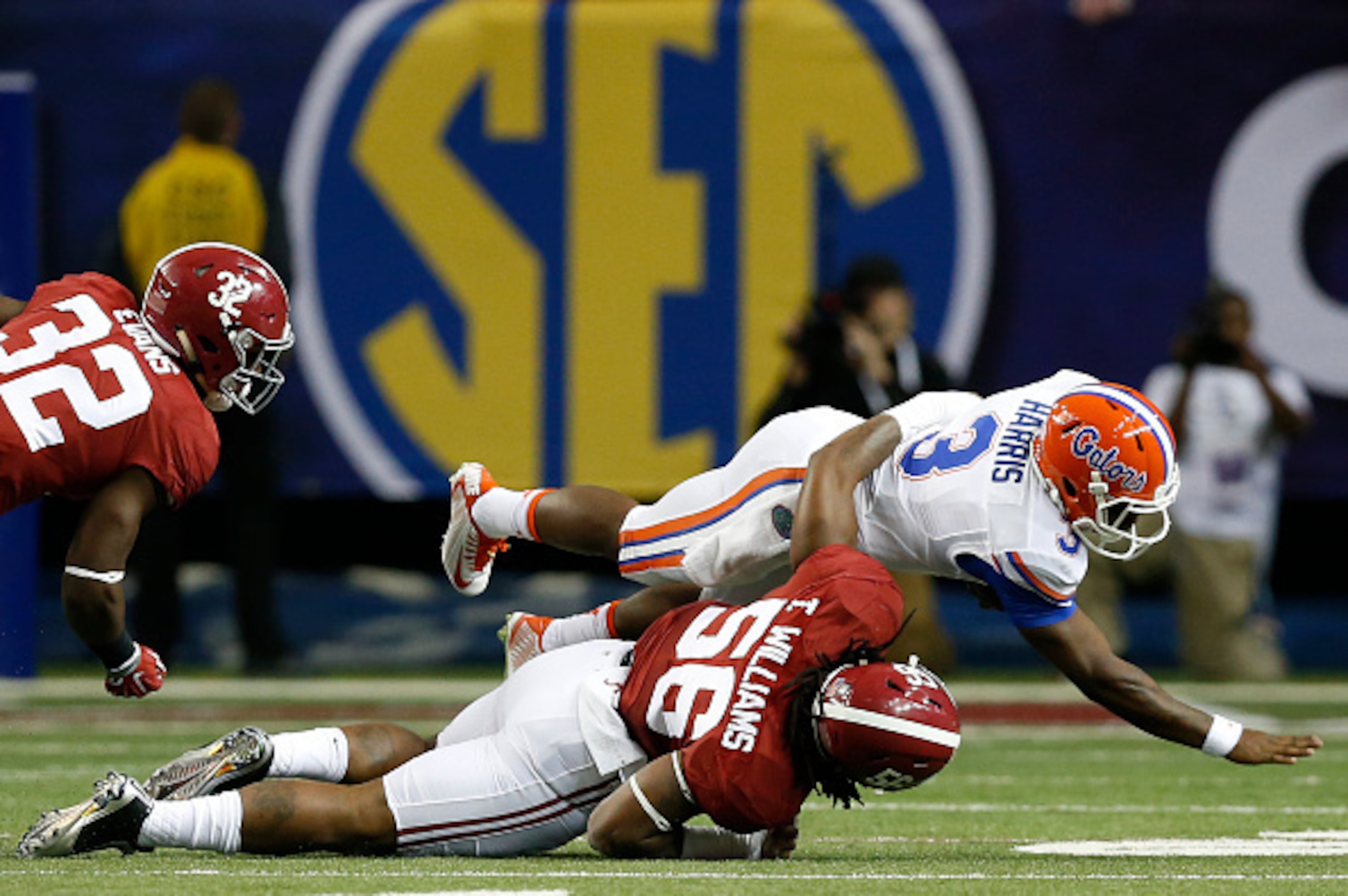
By now, you've likely heard (a lot) about Alabama's stout defensive front seven. All the praise is warranted. The Tide own major college football's best run defense, giving up a mere 74 rushing yards per game (2.38 yards per attempt) with six touchdowns allowed on the ground on the season.
That is, as the kids say these days, pretty good.
Keep in mind run-defense numbers incorporate sacks—more on that later—but this is the primary stat that has so many pundits worried about Michigan State's chances against Alabama. The Spartans aren't spreading defenses out sideline to sideline by running 80-85 plays per game with a scrambling quarterback. Rather, Michigan State is a run-first offense that wants to line up and punch defenses in the mouth.
The thing is, Alabama punches back. Harder. Ask Wisconsin and LSU how that went. Lining up and trying to beat the Tide in a phone booth is not the key to victory.
Fox Sports' Bruce Feldman was correct when he told ESPN's Paul Finebaum that Spartans quarterback Connor Cook needs to play the game of his career to beat Alabama, but Michigan State needs to be able to run the ball to achieve balance. To do this, Sparty needs to get creative. That could mean using Cook in some option and zone-read situations—something the team has done before this year—and utilizing some short passing attempts as an extension of the run.
Stat: Alabama Had a FBS-Best 46 Sacks
2 of 10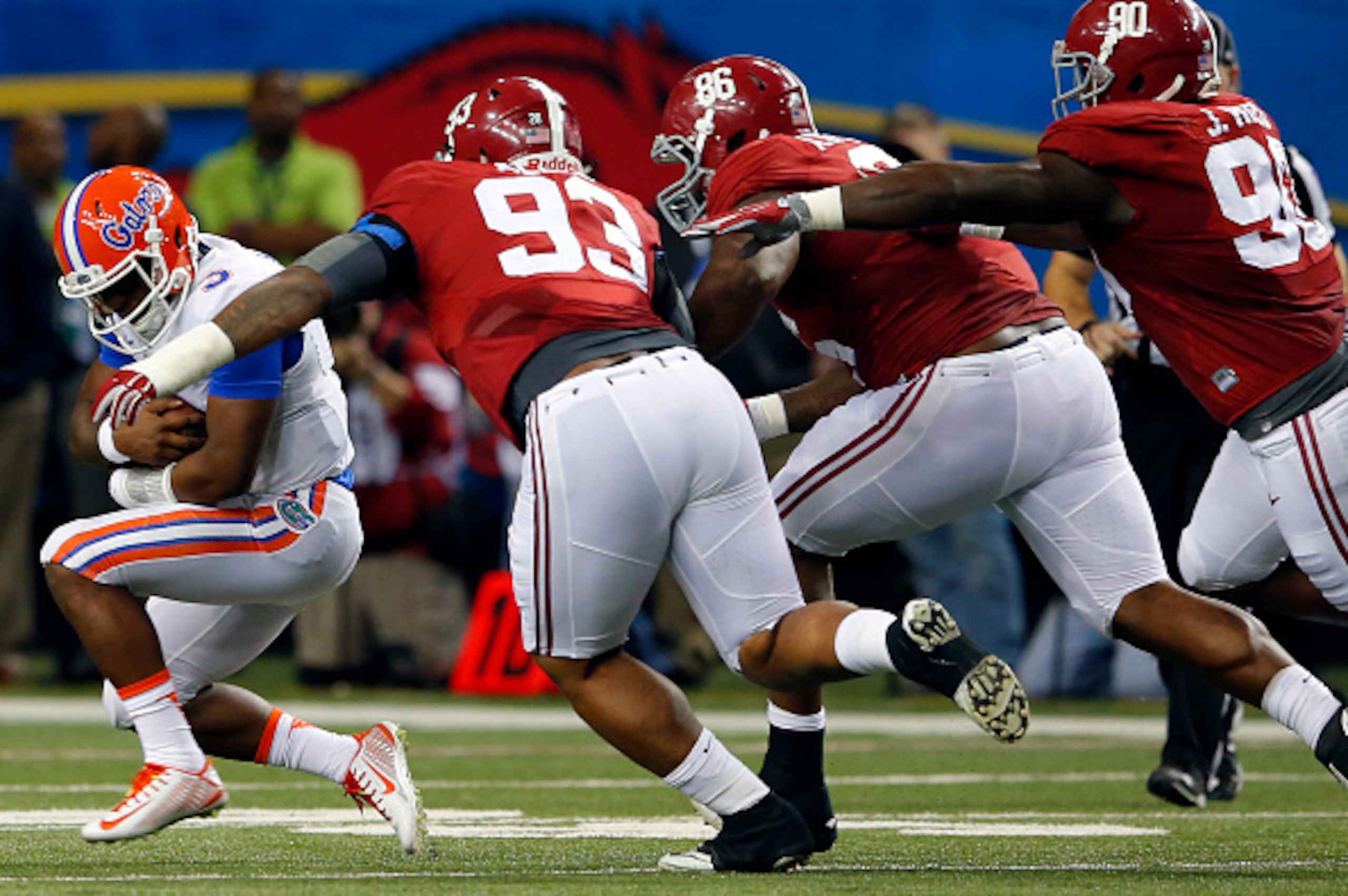
What's made Alabama's defensive front so formidable isn't just its run defense. It's the ability to get to the quarterback. Anyone who's followed the Tide closely under head coach Nick Saban knows sacks haven't always been in abundance, at least not like this.
Alabama is getting it done with its defensive front, too. Defensive end Jonathan Allen is first on the team with 10 sacks. That's impressive for a three-man front. The top six leaders in sacks recorded, in fact, come from either the defensive line or linebacker level.
Bleacher Report's Christopher Walsh took a deeper dive last month into how and why the Tide have been more successful of getting into the backfield. For this game, it's strength versus strength against Michigan State, which ranks just outside the top 25 nationally in sacks allowed.
It's as clear as day that the Cotton Bowl will be decided by which team wins in the trenches. Both teams have incredible D-lines, but on paper, Alabama wins this matchup.
Stat: Michigan State WR Aaron Burbridge Averaged 15.24 Yards Per Catch
3 of 10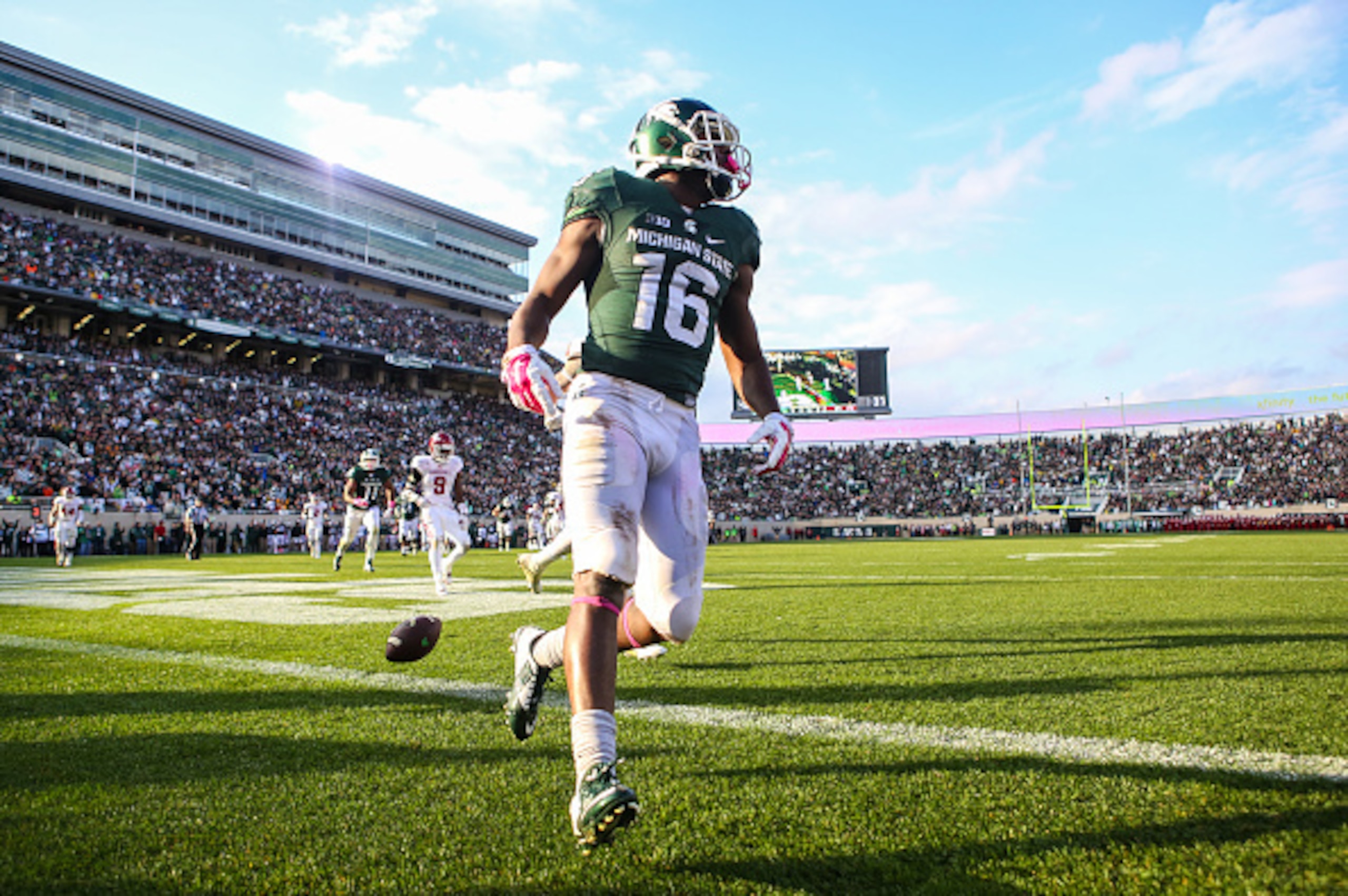
Much has been made already about Alabama's defensive front and how Michigan State plans to run the ball. Really, though, the Spartans should find most of their success offensively through the air. Quarterback Connor Cook isn't the most prolific passer in college football, mostly because the offense doesn't ask him to be, but he is efficient.
He also has an excellent rapport with leading receiver Aaron Burbridge, who has 80 catches for 1,219 yards and seven touchdowns. That's 15.24 yards per reception. That's among the best in the Big Ten, and Burbridge leads the league with 93.8 yards per game.
Cook's ability to push the ball downfield to Burbridge, as well as the receiver's ability to make circus catches, is critical to Michigan State moving the ball on Alabama. If there's a weakness to this defense, it's against the pass. The Tide secondary is improved but still vulnerable to the deep ball.
Cook has to have a huge game against Alabama, but so will Burbridge.
.jpg?w=2560 "AP Poll Top Five Week 9")
.png?w=2560)
Stat: Michigan State Had a Turnover Margin of Plus-16
4 of 10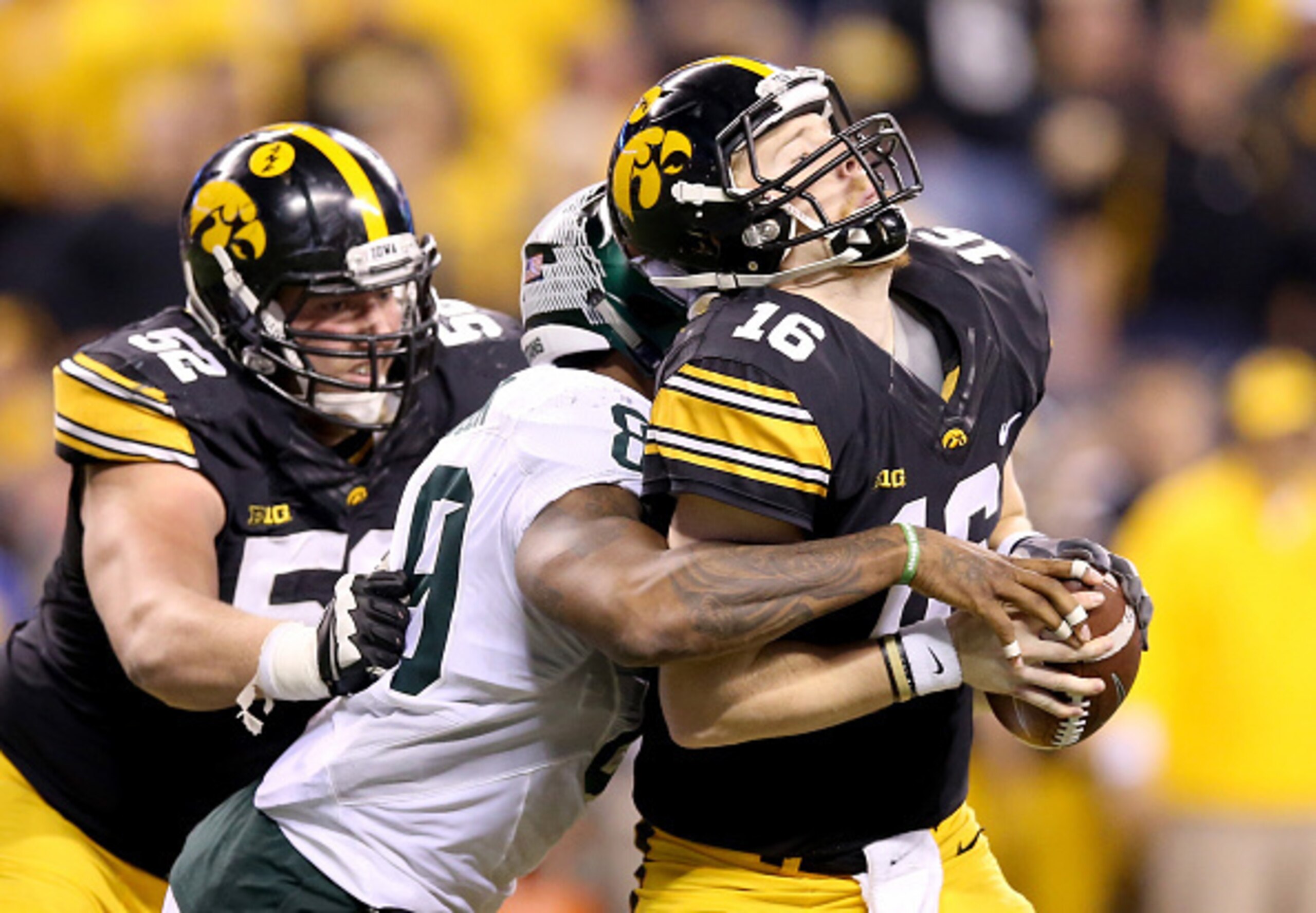
Winning the turnover battle is always a positive, and few teams in college football are better at this than the Spartans. Michigan State is plus-16 in turnover margin with 28 takeaways to just 12 turnovers. (For the record, Alabama is plus-seven in the same category.)
In their lone loss to Ole Miss, the Tide turned the ball over five times and dug themselves into a hole too deep to escape. The Rebels, in fact, scored 24 of their 43 points off turnovers. In hindsight, it's possible Alabama would have gone undefeated if it had committed even one or two fewer turnovers in the game.
The only other time Alabama fell behind in the turnover margin was against Arkansas, but Nick Saban's team won 27-14.
Ironically, Michigan State won its biggest game of the year (17-14 over Ohio State) despite losing the turnover battle. But the Buckeyes also didn't have a plan offensively. Alabama knows exactly what it will do if it gets the ball. Heisman-winning running back Derrick Henry is being fed regularly, and offensive coordinator Lane Kiffin is never afraid to take the deep shot and go for the jugular.
The point being: Michigan State likely needs to win the turnover battle to get a win.
Stat: Michigan State Allowed Seven Kick Returns of at Least 30 Yards
5 of 10
Michigan State's special teams have been, shall we say, an adventure in 2015. The signs were there right out of the gate when Western Michigan's Darius Phillips scored on a 100-yard kickoff return in Week 1. In all, the Spartans have allowed seven kickoff returns of at least 30 yards—that puts them 12th in the Big Ten—four of at least 40 yards and two of at least 50 yards.
Michigan State's punt coverage has been slightly better, but Alabama has an explosive return man in Cyrus Jones, who's taken three punts to the house. That's tops in the Football Bowl Subdivision.
Just be careful, Michigan State. That's all we're saying. If the Cotton Bowl is a defensive battle and/or a close game, special teams can make a difference. Even if Alabama doesn't get a special teams touchdown, it can put its offense in a good situation by flipping the field.
Stat: Clemson QB Deshaun Watson Averaged 338.4 Yards Per Game
6 of 10
Clemson quarterback Deshaun Watson was a Heisman finalist, so it's only natural that he gets extra attention from a stats perspective.
Watson's 338.4 yards per game was best in the ACC by a good 50 yards over the No. 2 guy, Duke quarterback Thomas Sirk. That breaks down to 270.2 passing yards per game and 68.2 rushing yards per game. Additionally, Watson has accounted for two-thirds (41) of Clemson's 62 touchdowns.
Watson's development as a passer has been evident over the second half of the season. Against Boston College, which boasts arguably college football's best defense, Watson threw for 420 yards. In his final six games, he threw for no less than 279 yards and eclipsed 300 yards three times. Twice, he recorded at least 10 yards per passing attempt.
Where Watson has really exploded, however, is in the run game. He had four 100-yard rushing efforts in his final five games, as Clemson's coaching staff put more emphasis on his legs. Watson can scramble and is a good athlete, but his running style is more deliberate and less improvisational.
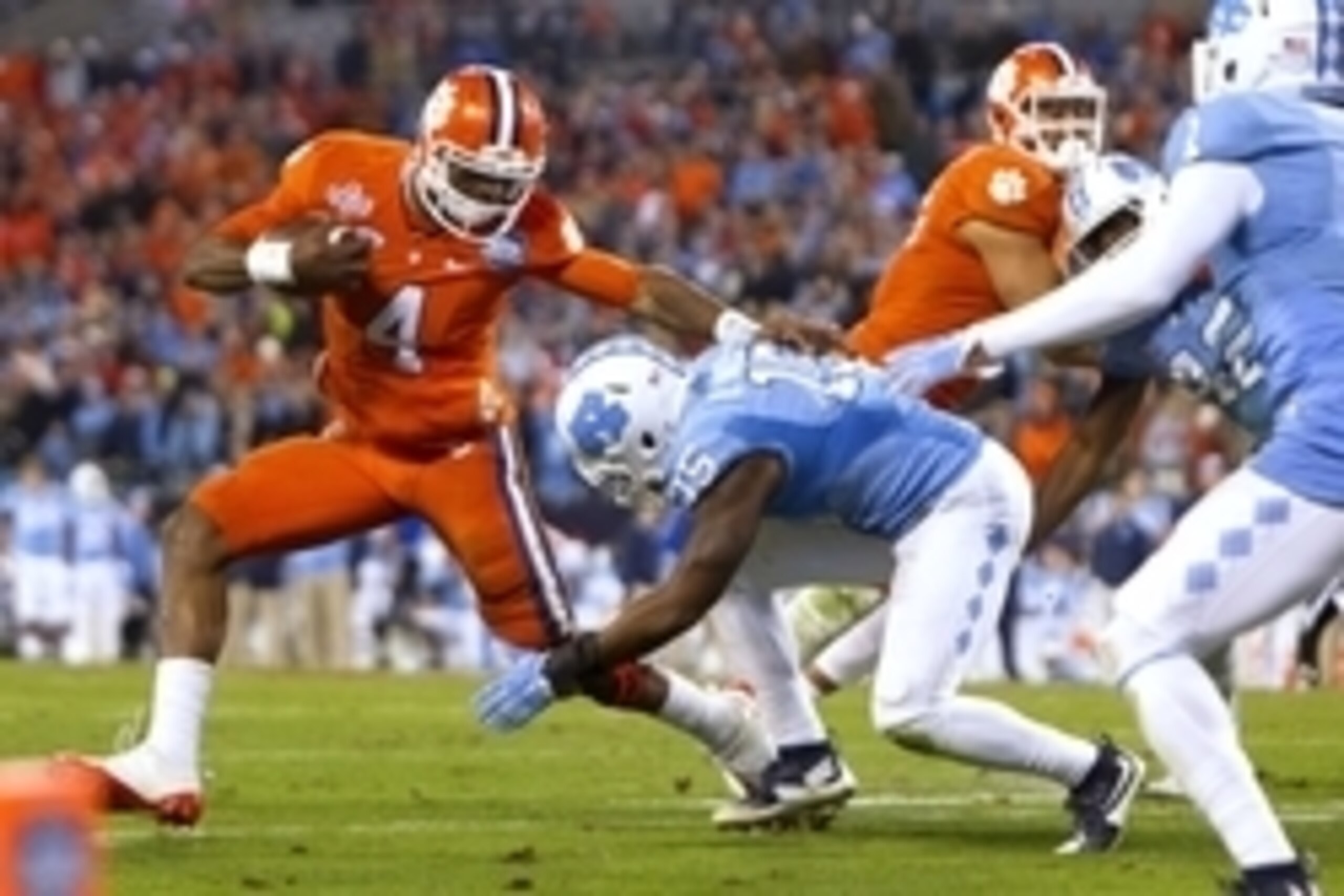
Clemson does many things well. It can go vertical in the passing game, run with power and spread out athletes to make plays in space. But almost all of what the Tigers do goes through Watson. Slowing him down and knocking him off balance is key for the Sooners.
Stat: Clemson CB Mackensie Alexander Gave Up a 31 Percent Reception Rate
7 of 10
Prior to the start of the 2015 season, Clemson cornerback Mackensie Alexander anointed himself college football's best cornerback, adding "it's not even close," per Robert MacRae of the Clemson Insider.
First of all, I admire the confidence, and Alexander has backed it up. ESPN.com's Andrea Adelson noted that "Alexander gave up the fewest completions per target in the ACC, at 31 percent. He also was one of just six ACC defensive backs to face at least 40 targets and allow no more than one touchdown."
The best example of Alexander's magnificence came against Notre Dame when he was matched up against Will Fuller, arguably the best deep threat in college football. In that game, he held Fuller to just two receptions for 37 yards.
Alexander will likely line up against Oklahoma's Sterling Shepard, who is healthy now as opposed to last year's Russell Athletic Bowl when he was still recovering from a groin injury. When asked about Shepard this year, Alexander didn't have much to say. Still, this should be among the better matchups in the Orange Bowl. Shepard had a case to be a Biletnikoff finalist, and Alexander is a true shutdown corner. The success of the Sooners' passing attack may rest on who wins this matchup.
Stat: Oklahoma's Rushing Attack Averaged 6.2 Yards Per Carry After Texas Loss
8 of 10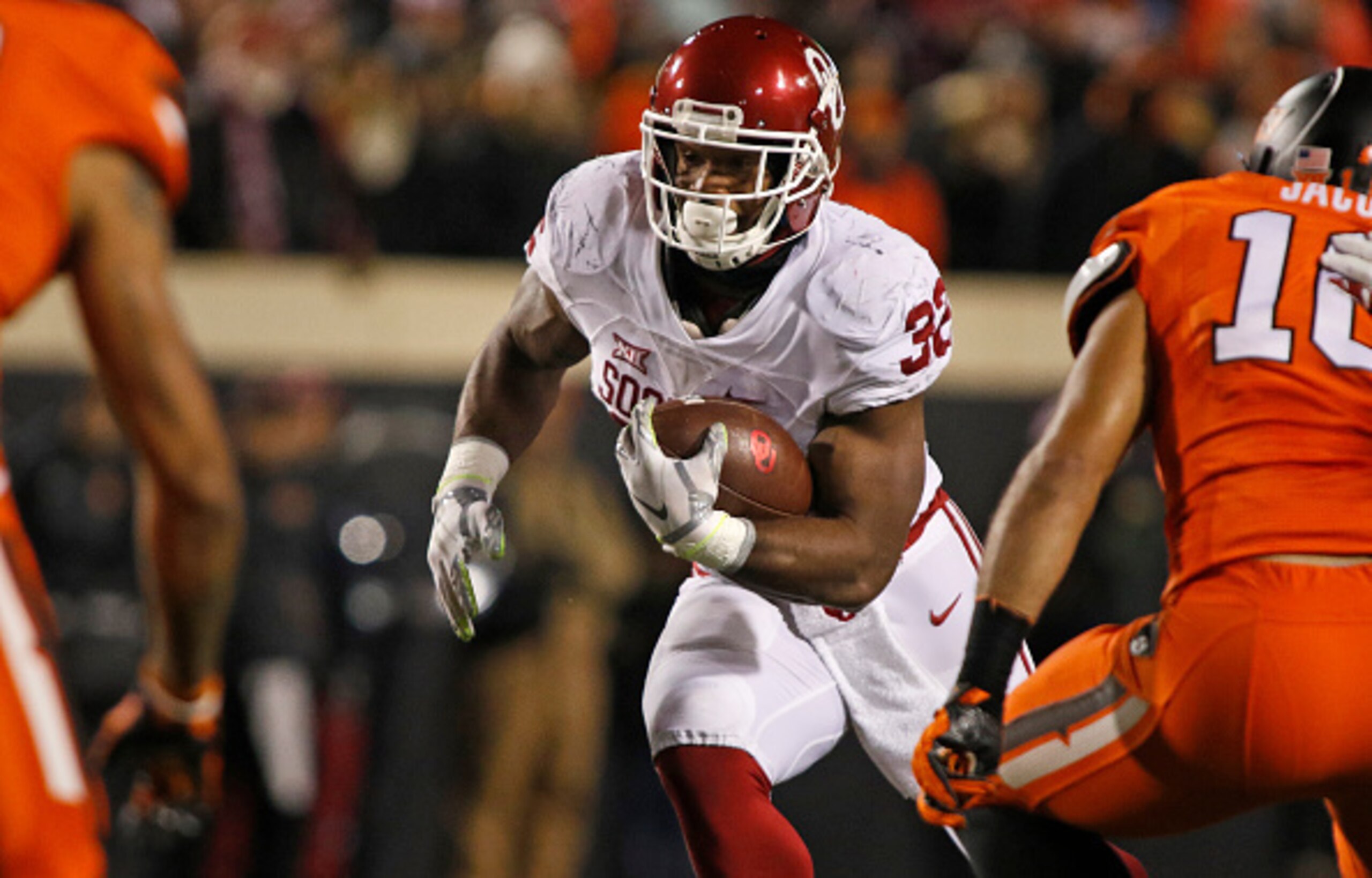
The Red River Shootout loss to Texas is the lone blemish on Oklahoma's season, and boy is it a bad one. Forget the 24-17 score at face value—the Sooners were manhandled up front. They couldn't defend the Longhorns blitz and certainly couldn't run the ball.
That latter part has changed in a big way since then, however. In the last seven games, Oklahoma's rushing attack has averaged just north of six yards per carry. Twice, against Texas Tech and Iowa State, the Sooners eclipsed seven yards per carry. Against Oklahoma State, Oklahoma had 8.2 yards per carry.
Granted, even you (yes, you!) could average five yards per carry against some of those defenses, but nevertheless, Oklahoma did a better job of blocking up front and running back Samaje Perine finally started to break loose.
Even though offensive coordinator Lincoln Riley runs the Air Raid, Oklahoma became a 60-40 run-to-pass offense in October and November. Not coincidentally, the Sooners began rolling. Once you establish the run, so much more opens up.
Clemson's run defense isn't as stout as it was a year ago when it topped the ACC, but it's still more than serviceable. Oklahoma needs to win up front with its power run.
Stat: Oklahoma CB Zack Sanchez Led the Big 12 with Six Interceptions
9 of 10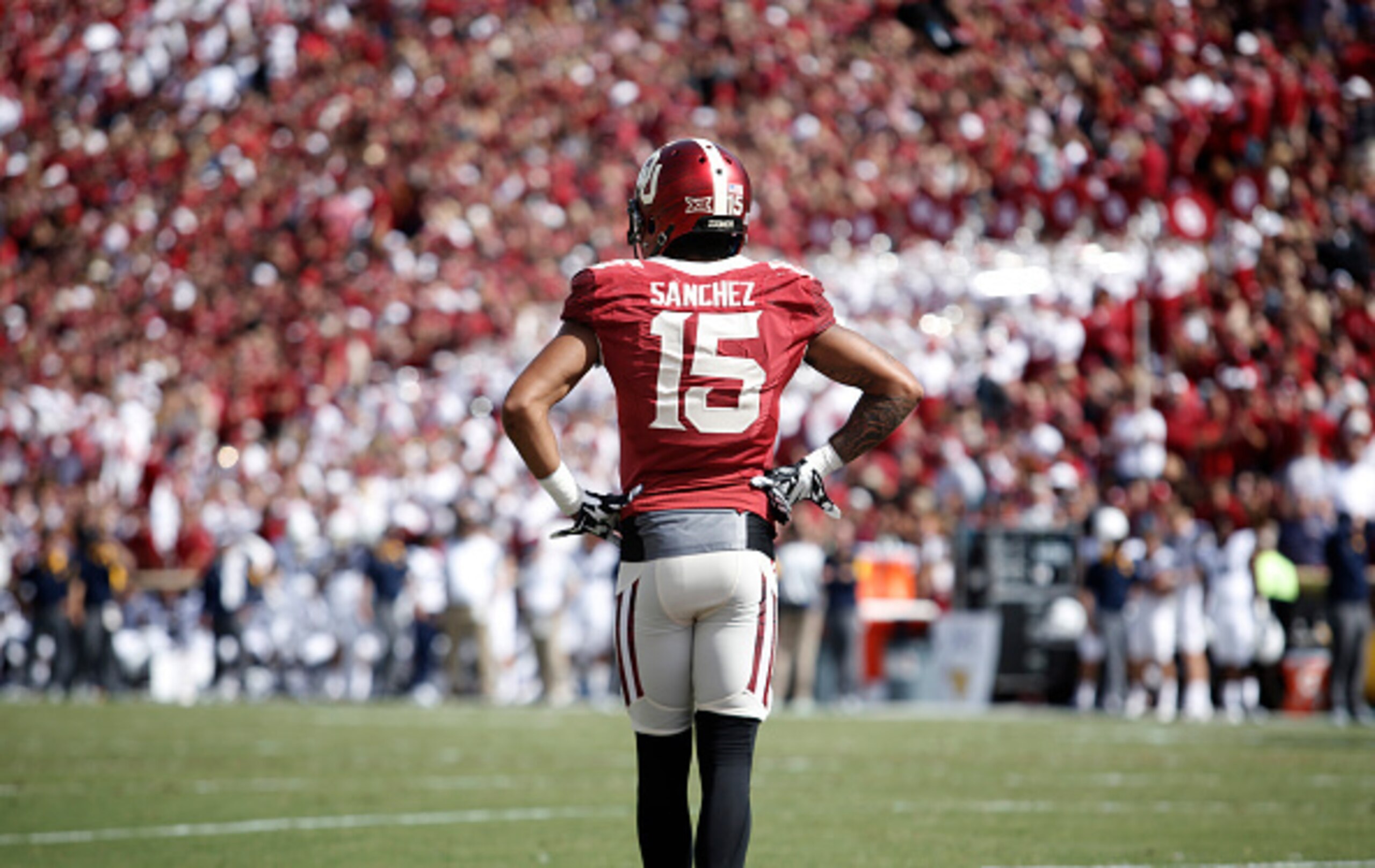
In 2014, Oklahoma's pass defense was a major liability, giving up 23 touchdowns and seven yards per attempt. What a transformation '15 has brought. The Sooners lead the Big 12 in pass defense and have given up one fewer yard per attempt.
Additionally, only West Virginia has more interceptions in the Big 12. Cornerback Zack Sanchez is tied for first in the conference with six picks.
“All levels of our defense have been productive, and that’s when you have something that’s really good,” defensive coordinator Mike Stoops told Nancy Armour of USA Today. “I don’t know if we overwhelm you any particular place, but we’re awfully good at all three levels of our defense.”
Stoops is right. Football Outsiders has Oklahoma as the No. 3 defense nationally. And who says the Big 12 doesn't play defense?
If the Orange Bowl is a high-scoring game, though, great defense could be defined differently. It may not be about one team holding the other offense to less than 300 yards or 14 points. It may be about tightening up in the red zone or coming up with a big turnover at the right time. This is where Sanchez could shine.
Stat: Clemson & Oklahoma Were No. 6 and No. 8, Respectively, in Sacks
10 of 10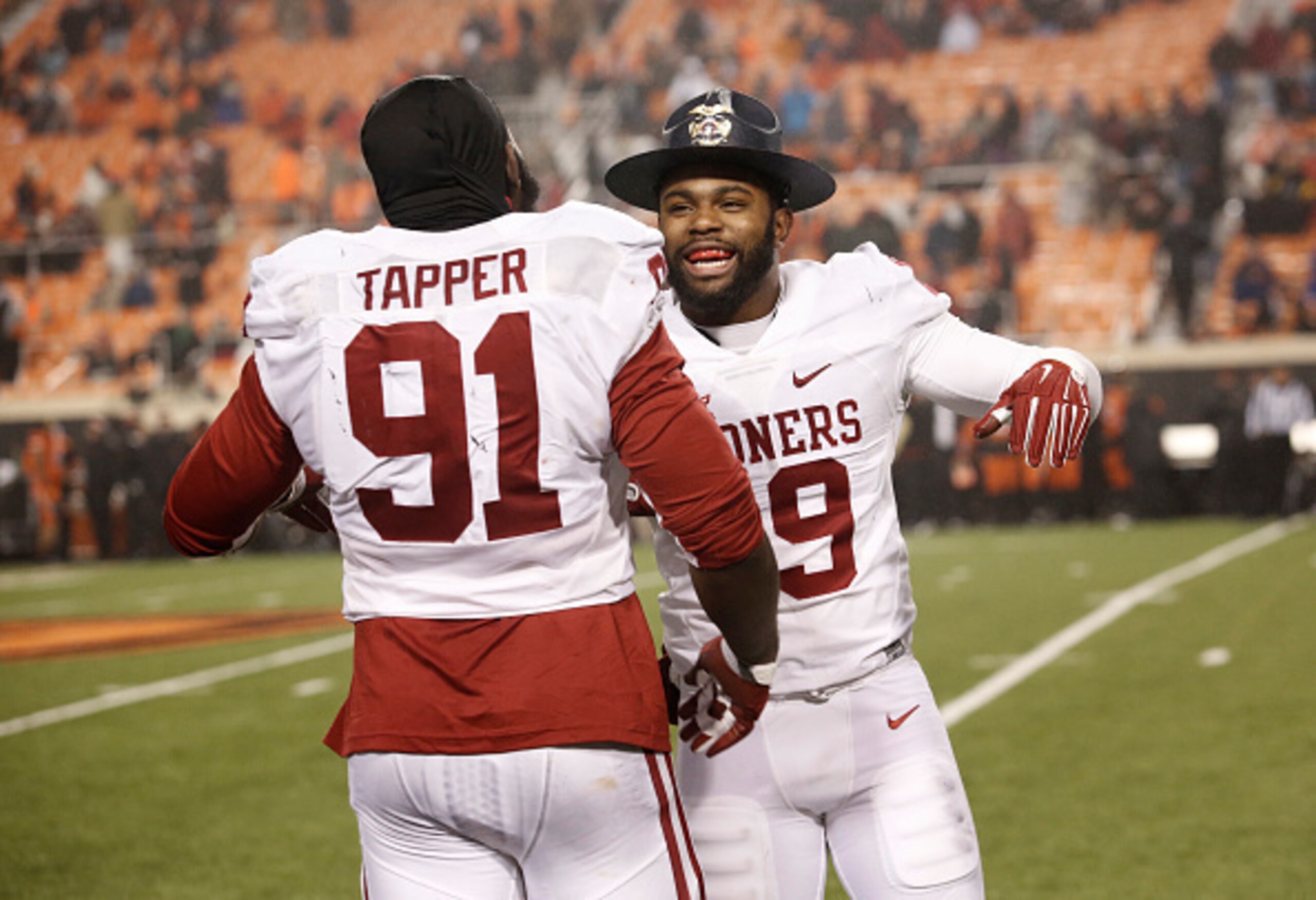
The fun part about Clemson and Oklahoma is how similar both teams are. They have great quarterbacks—arguably the two best in college football—powerful running games, skill players for days and playmakers at every level of their defenses.
Specifically, though, the Orange Bowl pairs outstanding quarterbacks with equally impressive pass-rushers. There's Clemson's Shaq Lawson, who leads the team with 9.5 sacks and, per position coach Marion Hobby, has as high a football IQ as you'll find. Then there's Oklahoma speed-rusher Eric Striker, who has been tormenting quarterbacks around the Big 12 for years.
Oklahoma's defense is a touch undersized, which means it could be susceptible to Clemson running back Wayne Gallman's game between the tackles. But make no mistake, the Sooners can blitz the hell out of an offense. So, too, can Clemson. It's a good thing quarterbacks Deshaun Watson and Baker Mayfield are mobile guys. Both players could be running for their lives often.
The difference, however, is Clemson is much better at protecting the quarterback and not taking unnecessary sacks.
Ben Kercheval is a lead writer for college football. All quotes cited unless obtained firsthand. All stats courtesy of cfbstats.com unless noted otherwise.
.jpg?w=2560)
.png?w=2560)


.jpg?w=2560 "Raiders Could Start Mendoza")
.jpg?w=2560 "Rodgers Iced Out on Plane 💎")


.jpg?w=2560 "Blockbuster Trade Idea To Shake Up the Eastern Conference 🎇")