

How North Dakota State and Mount Union Became Football's Heartland Dynasties
So Brian Schaetz was milking a cow…
That isn't a setup for a punch line. It's an explanation for the greatest current dynasty in college football. Schaetz was working on his family dairy farm with his dad, and that's when he made up his mind, called the football coaches at North Dakota State and told them he was coming.
Welcome to Midwest football.
TOP NEWS

Report Card for Top 20 CFB QBs 📝
B/R's 2026 Heisman Trophy Rankings after Week 5 🔢
Top Overreactions after Week 5 of CFB Season 😧
Schaetz didn't have a scholarship offer or dream of being a star. But he was strong and had huge hands, and anyone in the Midwest could have told you what was going to happen: He would become a defining piece of a North Dakota State football dynasty.
Now a senior, Schaetz and North Dakota State play Richmond in the semifinals at the FCS level Friday. The Bison are shooting for their fifth straight national title.
"He literally called from the farm," Jeremy Jorgenson—who basically built the North Dakota State radio network and still serves as a TV and radio host—said of the team's star defensive end. "We developed a culture of toughness, and we're getting that same type of kid."
Drive across the northern part of America's heartland—from Fargo, North Dakota, around the Great Lakes and into Alliance, Ohio—and you find another of the great Midwest dynasties, Division III's Mount Union.
Mount Union didn't reach the mountaintop by landing farm kids from remote lands. It got there with kids from Ohio's rich high school market—but ones who were a little too small or half a step too slow for the big time, for the Big Ten. Its legendary coach, Larry Kehres, found a better way to measure them.
Mount Union will play St. Thomas (Minn.), another Midwest team, in the Stagg Bowl for the D-III national championship Friday. Now coached by Kehres' son, Vince, Mount Union could win its 12th national title since 1993.
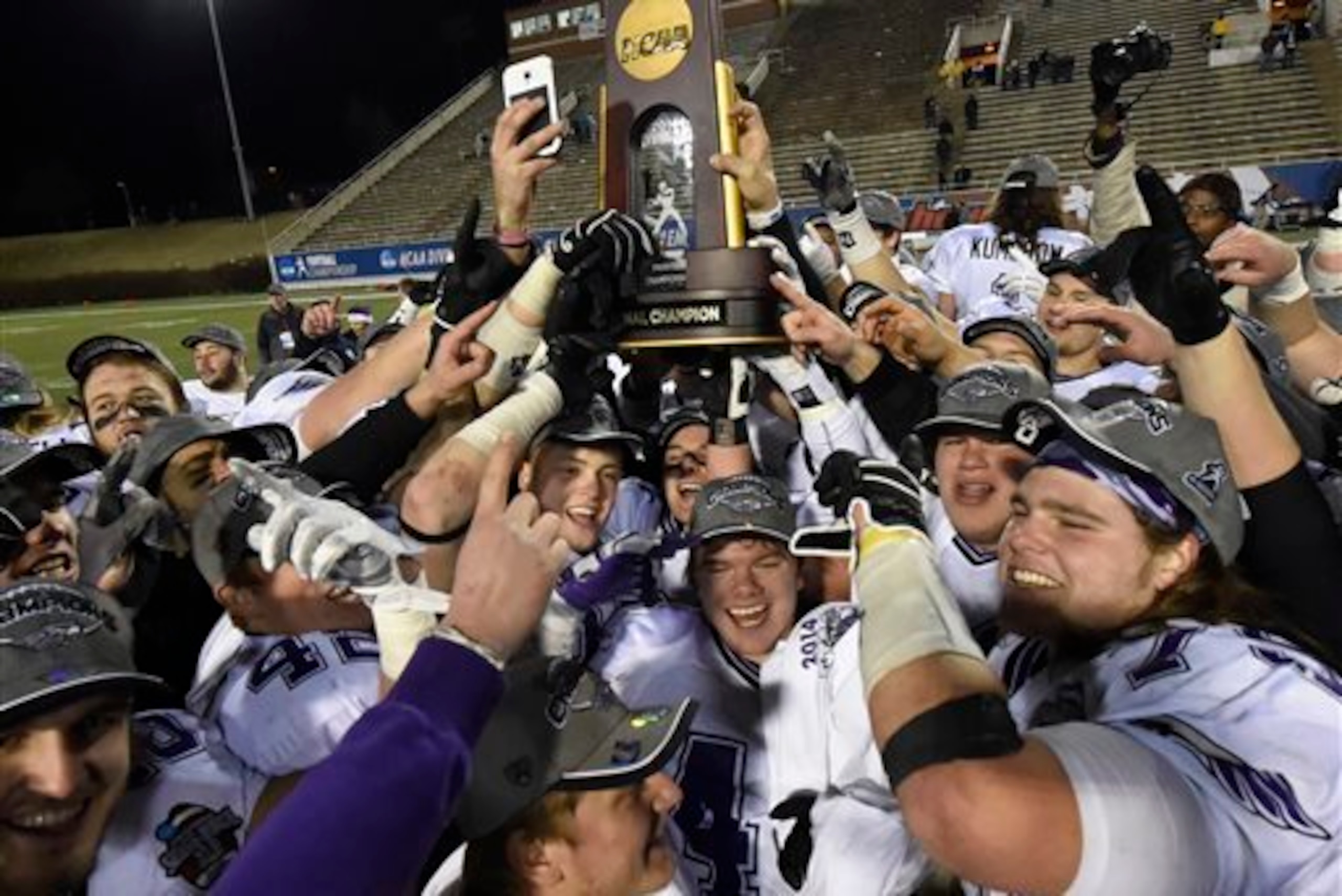
These Midwestern dynasties are 1,000 miles apart and the result of really different stories. But they are connected by shared Midwestern values. By trust and toughness, teamwork and togetherness. They aren't on national TV every week, and they don't get a lot of national attention other than a quick nod and pat on the head. They aren't Ohio State or Notre Dame or Michigan or Michigan State. But in some ways, that makes them even more symbolic of where they are from.
"It's part of the aura of what has become Mount Union," said Iowa State head coach Matt Campbell, who was a national champion player and assistant coach at Mount Union. "Under Coach [Larry] Kehres, it was always done the right way: with great player ownership. Nobody wants to let the tradition of that program down.
"I learned how to be a great leader through my teammates. How you work, how you lead every day. It's never about you, but always about the program. As a player and coach, I didn't want to let the program down."
This calendar year, starting with the bowl games in January, has been a turning moment for Midwestern football—and a reinforcement of values. At the highest level, the Big Ten had become a joke, seen as farm boys who were too slow and too outdated to win in the modern era. Then came a highly successful bowl season, topped with Ohio State's defeat of ultra-modern Oregon to win the national championship and show that the wide-open spread offenses don't surprise or fool top teams anymore.
This year, Michigan State is in the College Football Playoff. Ohio State and Iowa just missed out. At the next tiers down, missing out hasn't been an issue for the Midwest. The dynasties and best teams mostly come from the northern part of the country, whereas the heart of the sport is supposedly in the South. That's partly because top recruits from a place like North Dakota can go overlooked.
"A lot of the programs in the North, in the Midwest, have not given into the new world of college football where they're throwing it 60 times," Jorgenson said. "This is old school: Run the football, stop on defense. We're kind of back into the '60s and '70s. Where the rest of the country gravitates toward high-powered, fast-paced offenses, we pound and pound and pound until other teams want to get on the bus."
You would not think the base of a national football dynasty would come from the state of North Dakota. There are roughly 115,000 people in Fargo and just 740,000 in the entire state. The big industry is agriculture, though North Dakota is now one of the richest oil states, too, which bodes well for bigger, better facilities—read: indoor practice facility—than you'll usually find at the FCS level.
Nationally, there is anonymity to the entire state, which might as well be 10 minutes from the North Pole. Fargo has two national images: cold and Steve Buscemi being shoved into a wood chipper in Fargo.
When North Dakota State won the national championship a few years ago, even the NCAA sent the banner to its rival, North Dakota.
"I don't think the NCAA would have trouble knowing the difference between Alabama and Auburn or Arizona and Arizona State," said former North Dakota State athletic director Gene Taylor, who now is a deputy athletic director at Iowa. "But who knows?"
But there's no lack of identity for the football program within the state. There aren't major league sports teams to follow in North Dakota, so North Dakota State football and North Dakota hockey are the sports identities. They are the thing to do. At Bison games, you see people from North Dakota go crazy and fill the 19,000-seat Fargodome.
The team had a decadeslong history of success at the Division II level, but Taylor took it to Division I under heavy criticism. It required more money for scholarships and facilities. And it took roughly a game or two to find out that pounding on Division I players can be just as effective as pounding on Division II players. Two years ago, the Bison beat Kansas State, defending Big 12 champs, on the day K-State was unveiling a statue of coach Bill Snyder.
North Dakota State won with a late, long bruising drive.
"There's no question: They were built on inside runs, tight ends and fullbacks," Taylor said. "By the fourth quarter, I've seen a lot of these teams that are used to facing spread offenses just tap out. Sometimes, in the playoffs.
"I think it's the type of kids they get, Northern kids are used to hard work on farms. And it's cold. We saw that last year in the championship game: Ohio State just physically beat up Oregon."
That was a little Midwestern bragging. But you get why. These Midwestern successes have been validating as evidence of the value of the lifestyle.
Jorgenson said people listen to the games while working on their tractors.
New athletic director Matt Larsen went as far as to say that while North Dakota State does have some Southern players on the roster now, they find a way to assimilate.
Even with a new coach, Chris Klieman, and Larsen, the dynasty just seems to continue.
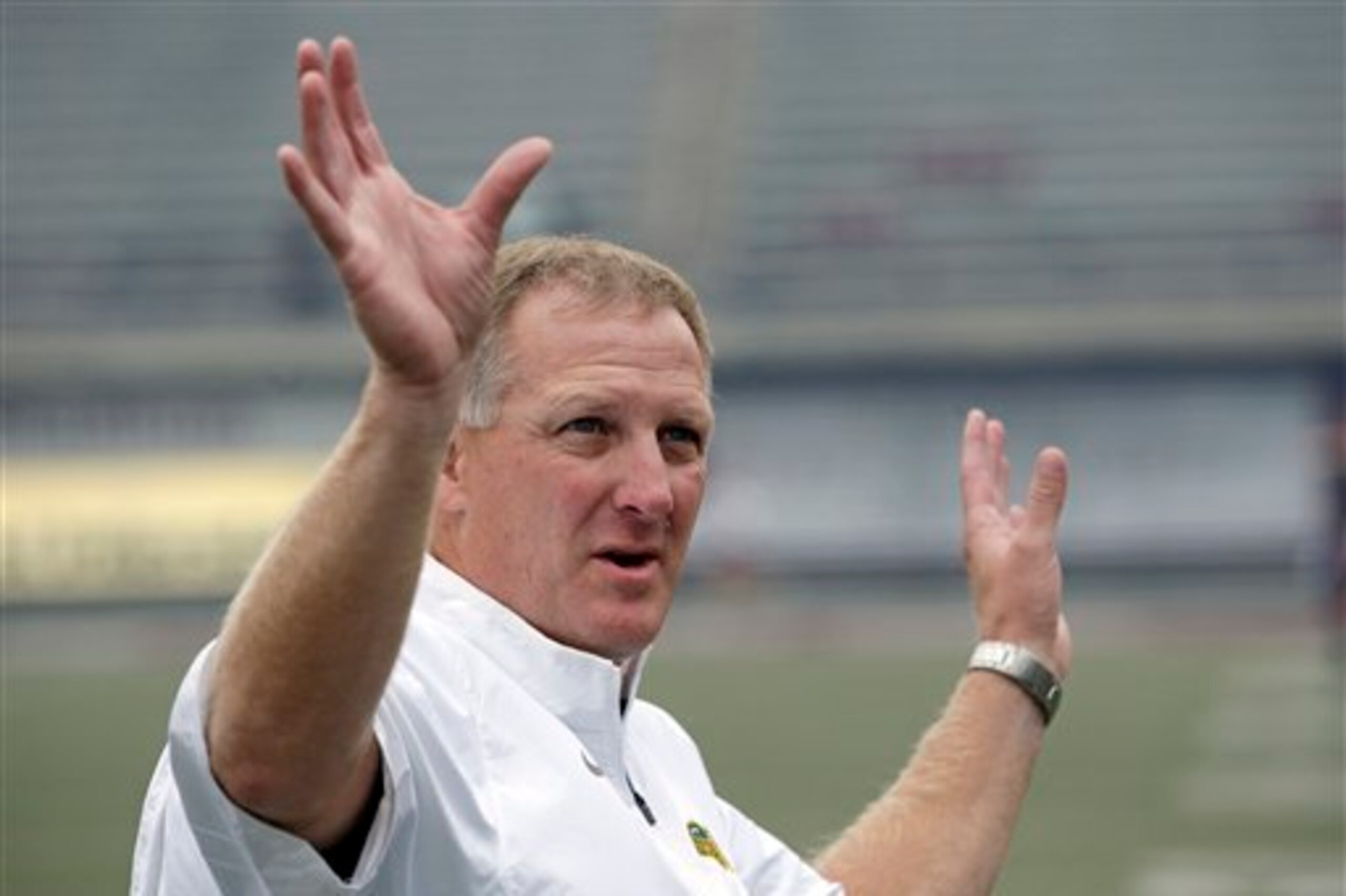
Mount Union has had its own turnover. Sort of. Larry Kehres, who built the dynasty, retired as coach three years ago and turned the team over to his defensive coordinator: his son. Vince lost in the national title game to Wisconsin-Whitewater two years in a row. Until this season, Whitewater had been getting the better end of the rivalry the past six years. They seem to play each other in the national title game every year. But in this year's semis, Mount Union won 36-6.
It was a big moment for Vince Kehres, showing that the program isn't slipping under him.
"There is a little bit of that sometimes; I am nervous," Larry Kehres said about the experience of watching his son run the family business.
"But it's been enjoyable, too," he said. "I think it's hard for a coach to take over at a place that's winning games. Of course, it's hard to take over a team that has been a doormat, too. But when you take over a team near the top, sometimes you don't get recognition for maintaining that. You just did what your predecessor did. And if you drop just a little bit, it's easy to get criticized."
Campbell said Vince Kehres has the most difficult job in America, following his dad at a dynasty. He said that the most amazing thing is how Mount Union never seems to really drop off, not even temporarily.
One reason that is so amazing, Campbell said, is that Mount Union used to be the obvious choice for the best players not recruited by the big boys. Now, he said, several Division II teams have emerged in the state of Ohio, and they can give scholarships. Mount Union, as a Division III school, does not.
So some Ohio kids are heading for the D-II schools, while Mount Union has been forced to look for players at other places. But a psyche has remained, Campbell said. It's a belief and a desire to never let the program down.
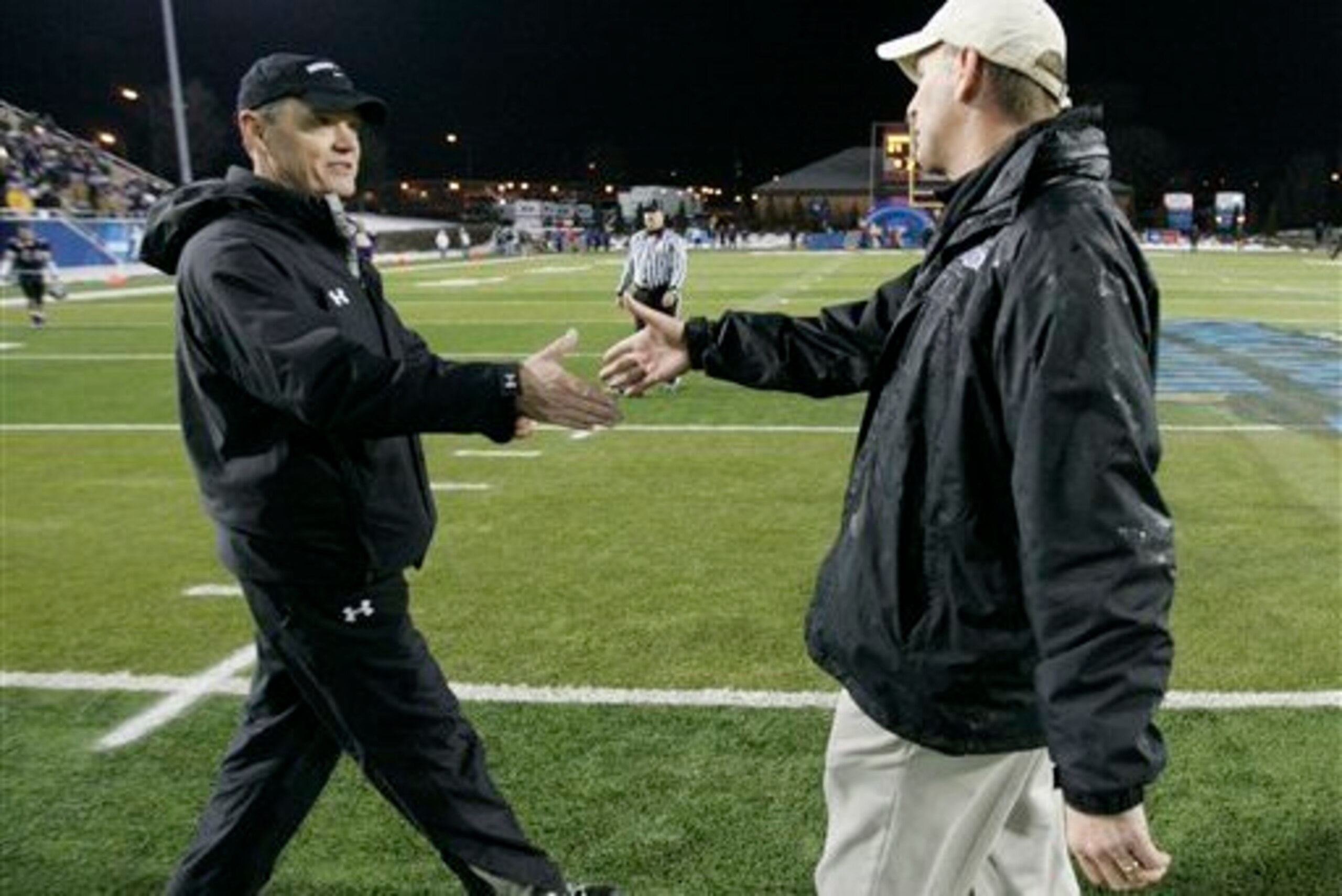
It's also a family feel, though. Larry Kehres spent 12 years as an assistant and then 27 as the head coach, winning 11 national titles. Vince was an assistant for 13 years under his dad before becoming the head coach. Larry said it was easy to pass on other job opportunities because he loved Mount Union and the lifestyle there. Campbell has already tried to hire Vince as an assistant once.
It's a good bet that Mount Union's next head coach will be one of Vince's sons, Evan or Bo.
"Not unless they start studying film more than they are now," Larry Kehres said. "They're both in the pool now doing cannonballs. They're six and 10. I've got to talk to them soon about film."
It's already in their blood.
Greg Couch covers the NFL for Bleacher Report.







.jpg?w=2560 "Grading WWE Raw 🔠")
.jpg?w=2560 "Viral Rams Coach Vid 🖕")