

Despite Its Irregularities, College Football Is Ideal with a 4-Team Playoff
The four-team College Football Playoff as we know it is on bided time. It might change in three years. It might change in 10. But it will change.
College football's postseason format has been an evolving one. The old bowl system turned into the BCS. The BCS turned into the four-team playoff. And, at some point, the playoff will expand again.
How do we know this? Because the four-team playoff never stood a chance to exist on its own merit.
TOP NEWS

Updated CFP Bracket Projections 🔮

Latest CFB AP poll rankings
Top Overreactions after Week 5 of CFB Season 😧
Go back to Nov. 19, 2014, when ACC commissioner John Swofford explained that an eight-team playoff "would probably be ideal."
"I don't think all the controversy's going to go away," Swofford said at the time (via Shawn Krest, the Durham Herald-Sun). "You have four teams that get a chance to play for the national championship, which is twice as many as before, but whoever's fifth or sixth is not going to be happy. There will be some conferences that won't have a team in the playoff."
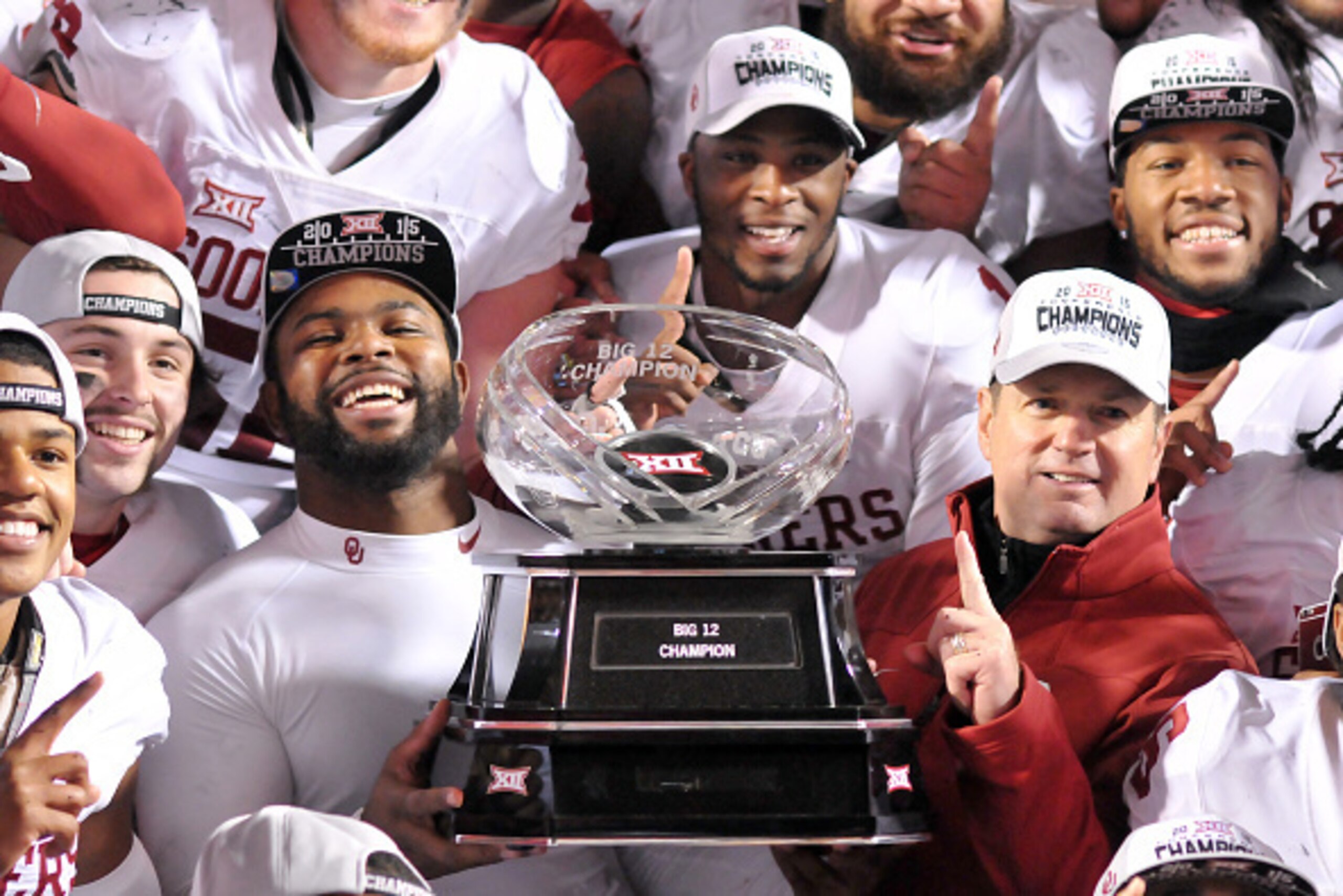
Swofford was 100 percent correct, by the way. Just a few weeks later, Ohio State slipped into the No. 4 spot in the playoff field after beating Wisconsin 59-0 in the Big Ten championship. Meanwhile, TCU dropped from third to sixth and the Big 12 as a conference was left out of the playoff field altogether.
So, yes, there was controversy. But it was the timing of Swofford's comments that proved most interesting. Without actually having gone through a four-team playoff at least once to gauge the results—and with Ohio State winning it all, no one can say the committee didn't get it right—Swofford determined expanding the field was already a better idea.
In other words, college football didn't even get to try out its new championship before it was deemed antiquated.
The cries for an expanded playoff haven't gone away in 2015. TCU coach Gary Patterson expressed his support (via Travis L. Brown of the Star-Telegram) for a six-or-eight-team playoff back in November. The group of like-minded thinkers is long.
What many of these supporters have in common, though, is a desire for continuity. While it's not the only idea being tossed around, a popular model for an eight-team playoff includes conference champions from each of the Power Five conferences as automatic qualifiers.
Everyone gets in—at least, everyone in college football's country club. No one is left out who "shouldn't be." Otherwise, you get wandering eyes peaking over fences. In July, then-Missouri head coach Gary Pinkel said Notre Dame, an Independent, needed to join a conference. That sentiment was echoed by Clemson head coach Dabo Swinney:
Just this week, Pac-12 commissioner Larry Scott, whose conference did not make the four-team playoff this year, said the Big 12 needed to add a conference championship—an ironic statement considering the Big 12 missed last year's playoff for the very lack of a title game.
Here's Scott's statement via Jon Solomon of CBS Sports:
"I'd like to see more consistency (between conferences) rather than less. I'd like to see the Big 12 go to a championship game. I don't think it's good or fair to see a conference not have to win that extra game and have that extra opportunity both for a win and a loss. I don't like the idea that a champion can be in the clubhouse and not put it on the line when, in this case, there are strong teams in other conferences that if they lose can be out of the playoff.
"
What Scott and Pinkel want is for college football to be more like the NFL without actually being the NFL. But what makes college football compelling is that it's very much not the NFL. It feels like a pro farm system at times—that's a conversation for another day—but the lack of continuity across the board is what makes this version of America's most popular sport unique.
The NFL has salary caps. It has a draft in which the worst team gets the best player. It has a commissioner that works for the owners and a player's association representing the employees. And it's all in the name of making sure there's as much equality throughout the league as possible.
College football is the opposite by nature. The margin of error is larger. The gap in talent is bigger. We have #collegekickers who can't make a 25-yard field goal and officials with no idea of what targeting is or isn't.
Nothing about college football screams equality. Some teams will play 13 games. Some will play 12. Not every team is in a conference. Scheduling is different. The best programs get their pick of the most talented recruits annually. Money and resources are not spread equally from conference to conference. Neither is exposure and coverage. Texas, for instance, is free to explore and reap the financial benefits of its own television network with ESPN. There are haves and there are have mores.
All of this gives college football its personality. For all the criticism the playoff selection committee receives for how it goes about things, it fits the subjective nature of the sport.
The process is fascinating, too. Not only did the playoff not kill the regular season like critics thought it would, it has enhanced it. The month of November in the Big 12 had meaning from beginning to end. Conference championship weekend could have completely disrupted the playoff race if the results hadn't gone chalk. Many of the most important games this year happened at the end of the season.
Would an eight-team playoff destroy that? Maybe. It depends on the format. The possibility of automatic qualifiers takes away from the intrigue and controversy, but that's a large chunk of the fun. We'll find out for sure at some point down the road.
In the meantime, enjoy the present. We never do that enough, anyway. College football is an irregular sport for irregular people. You can always point out a college football fan. They're the ones watching the Hawaii Bowl on Christmas Eve by themselves at a family gathering, muttering something about SEC bias.
Ben Kercheval is a lead writer for college football. All quotes cited unless obtained firsthand.
_0.png?w=2560)


.jpg?w=2560 "Grading WWE Raw 🔠")


.jpg?w=2560 "2 NFL Officials Suspended")


.jpg?w=2560 "Viral Rams Coach Vid 🖕")