
College Football's All-2015 Season Team: Top Performers at Every Position
With the regular season officially drawn to a close, the postseason matchups all but locked into the holiday calendar and the college football award shows just right around the corner, it's time to take stock of the best of the best in this 2015 season.
Each Sunday this season, I've picked a position-by-position team of the top performers from the weekend's action. The selections were based on statistical performances compared to the rest of the country, with bonuses handed out to players who played in bigger games.
Now that the regular season is over, let's apply that to the thrilling 14 weeks we just witnessed in college football.
The following all-2015 season team isn't necessarily a team of the "best" players in the country but rather a look at who put up the best numbers in the biggest games. It's based on a combination of the season-ending statistical leaderboards and previous All-Week selections I made this season.
Each team had a lot of potential for heated debate, so an all-season team should be ripe for tough cuts and near misses. Plenty of outstanding players couldn't even make the second team this go-around. Pick your top performers of the season in the comments below.
Quarterback: Baker Mayfield (Oklahoma)
1 of 14
243-of-354 passing for 3,389 yards, 35 TDs and five INTs; 131 carries for 420 yards and seven TDs
A former Texas Tech transfer helped improve the Oklahoma offense this season, and now the Sooners are in the College Football Playoff.
Baker Mayfield excelled in first-year offensive coordinator Lincoln Riley's system, throwing seven more touchdowns than he did interceptions for the outright Big 12 champions. His quarterback rating ranks third among FBS quarterbacks, and he's second in average yards per attempt this season.
As a rusher, Mayfield added seven scores for the Sooners, and he averaged well over five yards per attempt during the season-defining stretch of games against Baylor, TCU and Oklahoma State. Statistically, no other passer was at Mayfield's level of efficiency and explosion this season.
Second Team: Deshaun Watson (Clemson)
287-of-413 passing for 3,512 yards, 30 TDs and 11 INTs; 163 carries for 887 yards and 11 TDs
Dual-threat Heisman contender Deshaun Watson showed the entire country what he could do in an injury-free season, leading Clemson to the only undefeated record in the FBS with 41 touchdowns and the nation's third-best completion percentage.
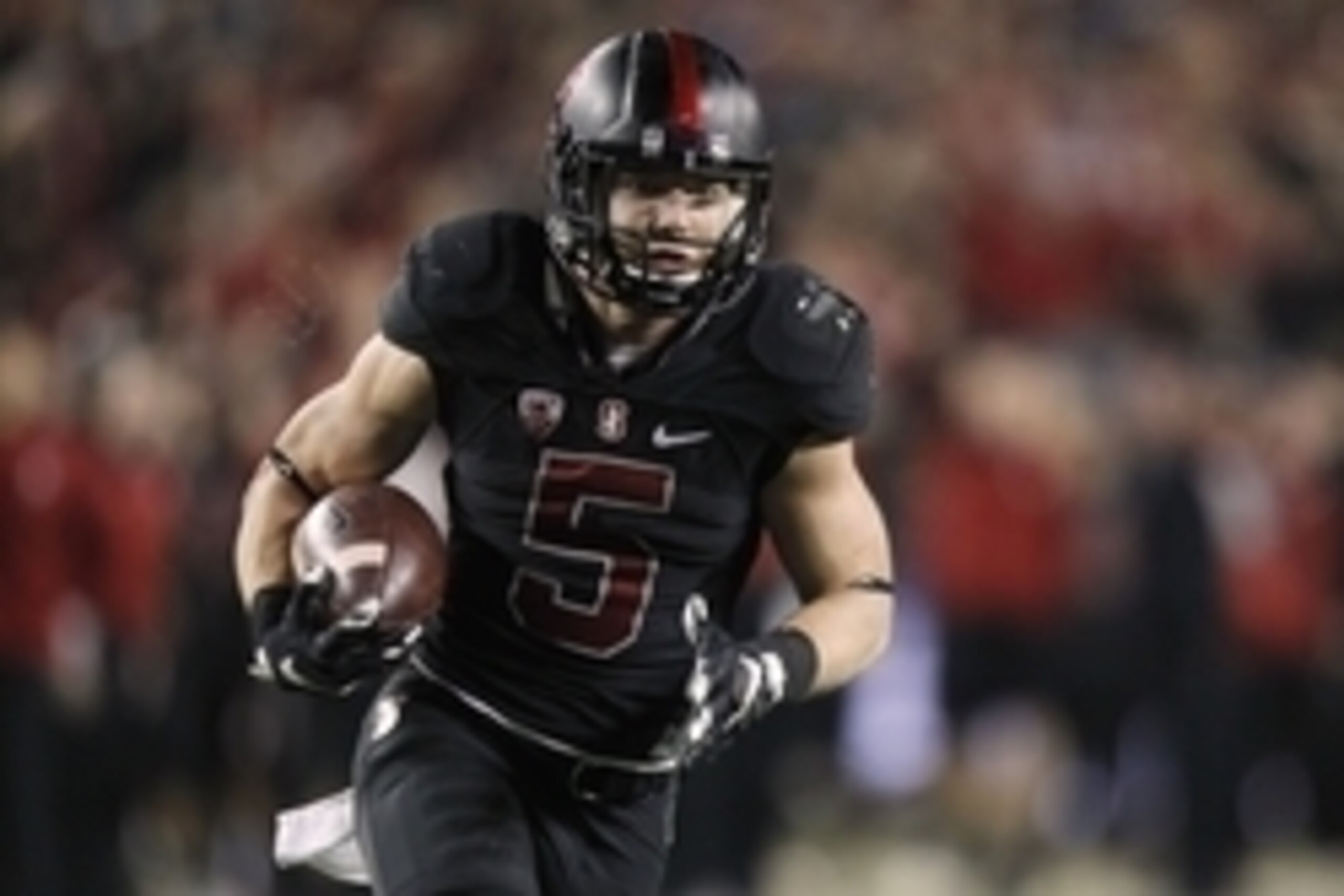
Running Backs: Derrick Henry (Alabama) and Christian McCaffrey (Stanford)
2 of 14
Henry: 339 carries for 1,986 yards and 23 TDs
Derrick Henry was a man among boys for most of the season, and his physical nature led to plenty of touchdowns, an SEC all-time record and a strong Heisman Trophy campaign.
Henry rushed for more than 100 yards in nine of his 13 games this season and scored multiple touchdowns in more than half of Alabama's contests. He broke the 200-yard mark four different times and had an absurd 90 carries in the final two games of the regular season.
The Alabama star was a constant in these all-week teams, finishing as a first-teamer five times. He has broken Herschel Walker's SEC record for most rushing yards in one season and has scored a touchdown in 18 straight games dating back to last year. He's literally carried Alabama's offense to a playoff berth.
McCaffrey: 319 carries for 1,847 yards and eight TDs; 41 receptions for 540 yards and four TDs; two passing TDs
Christian McCaffrey didn't find the end zone as much as these other top running backs this season. But when it came to racking up the most yards for his team, no one in college football history has done more than McCaffrey.
According to college football writer Matt Hinton, when McCaffrey broke Barry Sanders' all-time NCAA record for all-purpose yardage Saturday night in Stanford's Pac-12 title game win over USC, he did it on fewer touches (388) than the legendary Sanders (394).
If you take away his return numbers and focus solely on his offense, McCaffrey had 304 more yards from scrimmage in the regular season than the next-best player. He had four games of 200 or more offensive yards and put up 312 on just 36 plays in the rematch against USC.
Second Team: Ezekiel Elliott (Ohio State) and Leonard Fournette (LSU)
Elliott: 262 carries for 1,672 yards and 19 TDs
Fournette: 271 carries for 1,741 yards and 18 TDs
When he was getting consistent touches, Ezekiel Elliott was nearly unstoppable this season for Ohio State, cracking the 100-yard mark in all but one game and scoring in all but another game for a fantastic junior season.
Leonard Fournette had the Heisman race well in hand until his eighth game of the season, and he still led the nation in rushing yards per game after a two-week stumble.
Wide Receivers: Corey Coleman (Baylor) and Josh Doctson (TCU)
3 of 14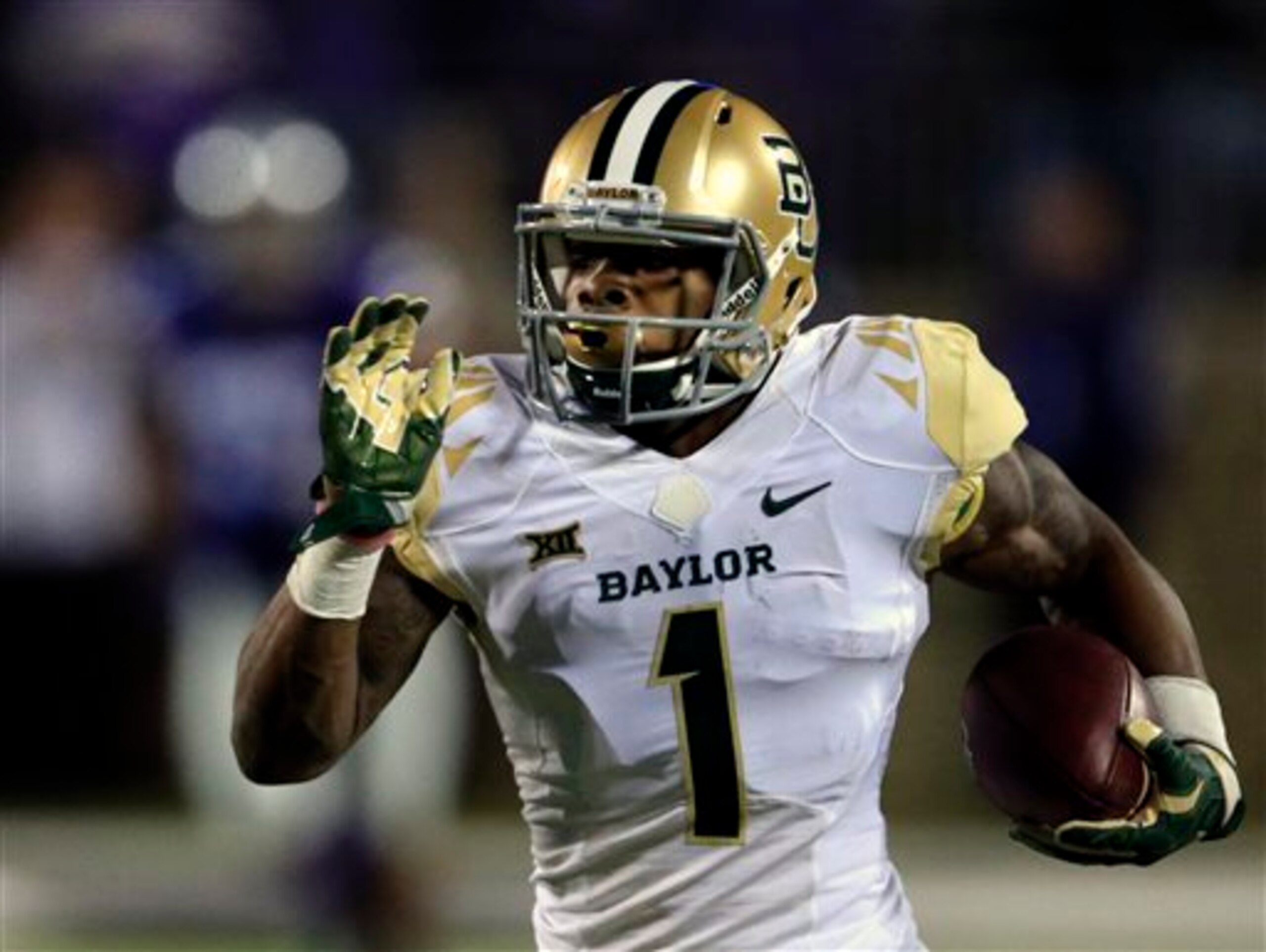
Coleman: 67 receptions for 1,314 yards and 20 TDs
His potentially record-breaking pace took a nose dive toward the end of the season after Baylor went through its health issues at quarterback, but it's impossible to knock what Corey Coleman did for most of the season for the Baylor Bears.
Through his first eight games, Coleman had all 20 of his receiving touchdowns and only recorded one performance that finished below the 100-yard mark. And even with his low production toward the end of the year, he still finished the regular season with a good-sized national lead in scores through the air and a third-place spot in yards per game.
He was a first-team all-week performer four different times this season, coming in as a second-teamer two additional times. And at 18.42 yards per catch, it's safe to say Coleman had one of the best all-around receiving seasons in recent memory.
Doctson: 79 receptions for 1,327 yards and 14 TDs
Josh Doctson didn't even play the final two games of the season for TCU, yet the Horned Frogs receiver is going to finish in the top seven of most major receiving categories.
Doctson averaged a nation-leading 132.7 receiving yards per game when he was healthy, and his 7.9 receptions per game ranked sixth among all FBS wideouts. He went on a ridiculous six-game tear in which he recorded at least 155 receiving yards and multiple touchdowns in each contest.
The TCU star's 2015 season was cut short, but he was right up there with Big 12 rival Coleman as the best game-changing receivers in college football. He was a nightmare to cover for everyone he came in contact with this fall.
Second Team: Will Fuller (Notre Dame) and Sterling Shepard (Oklahoma)
Fuller: 56 receptions for 1,145 yards and 13 TDs
Shepard: 79 receptions for 1,201 yards and 11 TDs
It didn't matter who was throwing the ball to Will Fuller this season—he was most likely breaking it for a huge gain (second in yards per catch among receivers with 50-plus catches) and fighting for the end zone (tied for sixth in receiving touchdowns among all FBS players).
Sterling Shepard ranked highly in almost every major receiving category this season and completely took over a few games, most notably OU's comeback road win at Tennessee.


Tight End: Hunter Henry (Arkansas)
4 of 14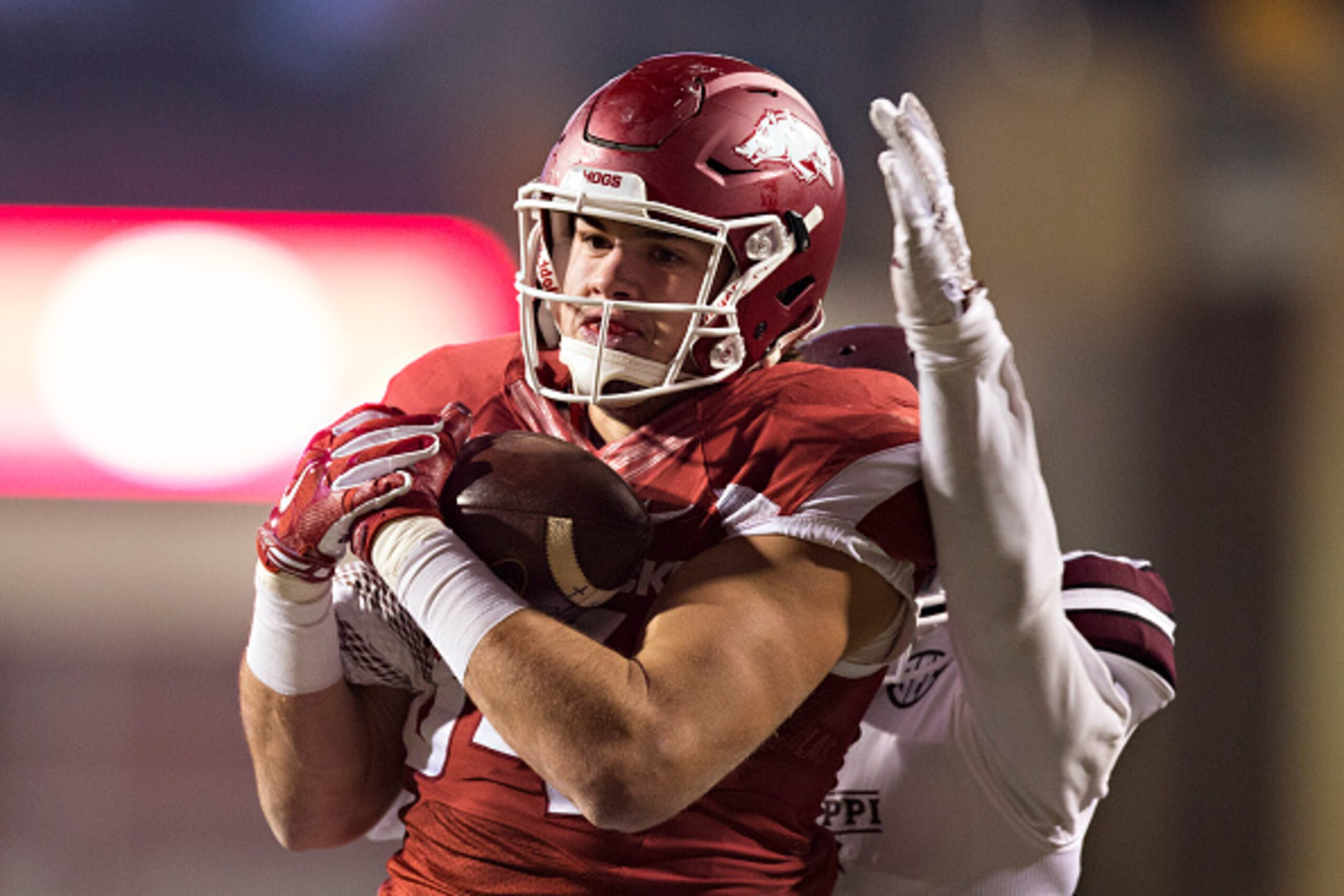
46 receptions for 647 yards and three TDs
A ultra-reliable target during Arkansas quarterback Brandon Allen's late-season explosion, Hunter Henry was the second-leading receiver for the Razorbacks this season and had the most receiving yards of any tight end in FBS.
While some of his statistically best games of the season were tough losses for Arkansas, Henry came up with clutch catches time and time again for the Razorbacks offense. He averaged more than 14 yards per reception and had multiple grabs in all but one game in 2015.
Henry also made the play of the year for Arkansas—a desperation lateral on 4th-and-long in overtime against Ole Miss. His toss bounced into the hands of running back Alex Collins, who converted the first down that led to the game-winning score. Henry was simply a top-notch playmaker for the Razorbacks in 2015.
Second Team: Tyler Higbee (WKU)
38 receptions for 563 yards and eight TDs
Tyler Higbee didn't play in four games this season, but that didn't keep the Western Kentucky tight end from leading the nation at his position in touchdowns as the Hilltoppers clinched the C-USA Championship and their first AP Top 25 ranking.
Offensive Line: Stanford
5 of 14
Averaged 6.49 yards per play (5.08 yards per carry) and allowed 1.46 sacks per game
The Stanford offense underwent a tremendous revival this season on the team's way to a Pac-12 title, and its demolition crew of a front five played a huge role in the success of players such as Christian McCaffrey and Kevin Hogan.
"Stanford navigated one of the toughest schedules in the country to make their way into the CFP conversation," reads Stanford's finalist notes for the Joe Moore Award, which is given to the nation's top offensive line. "Despite seeing predominantly seven- and eight-man boxes from defenses. The O-line unit has paved the way for its backs to average three yards per carry before contact (among the best in the nation for a pro style offense)."
The Cardinal's powerful offensive line did a great job in keeping Hogan upright and dominated several Pac-12 matchups en route to a late push for a College Football Playoff spot. In a season that featured plenty of great offensive lines, Stanford excelled at everything up front.
Second Team: Notre Dame
Averaged 7.13 yards per play (5.76 yards per carry) and allowed 1.83 sacks per game
Through several key injuries to star players and a couple of heartbreaking losses, Notre Dame still managed to have one of the nation's best offenses—especially on the ground—thanks to the fantastic work of its front five all season long.
Defensive Ends: Shaq Lawson (Clemson) and Carl Nassib (Penn State)
6 of 14
Lawson: 55 tackles (22.5 for loss), 9.5 sacks and one forced fumble
Shaq Lawson finished the season with three more tackles for loss than any other defensive player in college football.
He tallied two more in Clemson's ACC Championship Game win over North Carolina and forced his first fumble of the season—a clutch turnover in the big victory. He had a tackle for loss in all but one game this season, and he recorded multiple takedowns behind the line of scrimmage in eight of 13 matchups.
Clemson lost most of the talent from its excellent defense last season, but the Tigers haven't dropped off at all thanks to the outstanding play of stars such as Lawson. He was the best in the country at getting after opponents, and it showed all year long.
Nassib: 46 tackles (19.5 for loss), 15.5 sacks, six forced fumbles and one INT
While Lawson led the nation in tackles for loss, Penn State's Carl Nassib took over the sacks chart as part of a crazy-good defensive front from the Nittany Lions.
Nassib, a former walk-on, was a tremendous story to follow in 2015. He didn't record a single sack in the last two games, but he still had enough to finish the regular season with the nation's lead in that category. The Big Ten Defensive Player of the Year also forced more fumbles than anyone else in the FBS, a testament to his hard work on the practice field.
"A lot of people dread practice and just want to go through it," Nassib said, per Shelly Stallsmith of the PennLive.com. "I love practice. Everything I do in practice translates to the game. If I get a chance to hit someone, I'm going to take it."
Second Team: Emmanuel Ogbah (Oklahoma State) and Ejuan Price (Pittsburgh)
Ogbah: 61 tackles (17.5 for loss), 13 sacks, three forced fumbles and three pass breakups
Price: 43 tackles (19.5 for loss), 11.5 sacks, one forced fumble and one pass breakup
Emmanuel Ogbah posted 17 tackles for loss for the second straight season, and he added two more sacks to his mark from last year to lead the fast-starting Oklahoma State Cowboys.
Ejuan Price tied Nassib and another member of this all-season team in tackles for loss, highlighted by his ridiculous six-TFL effort against Louisville.
Defensive Tackles: Sheldon Day (Notre Dame) and Andrew Billings (Baylor)
7 of 14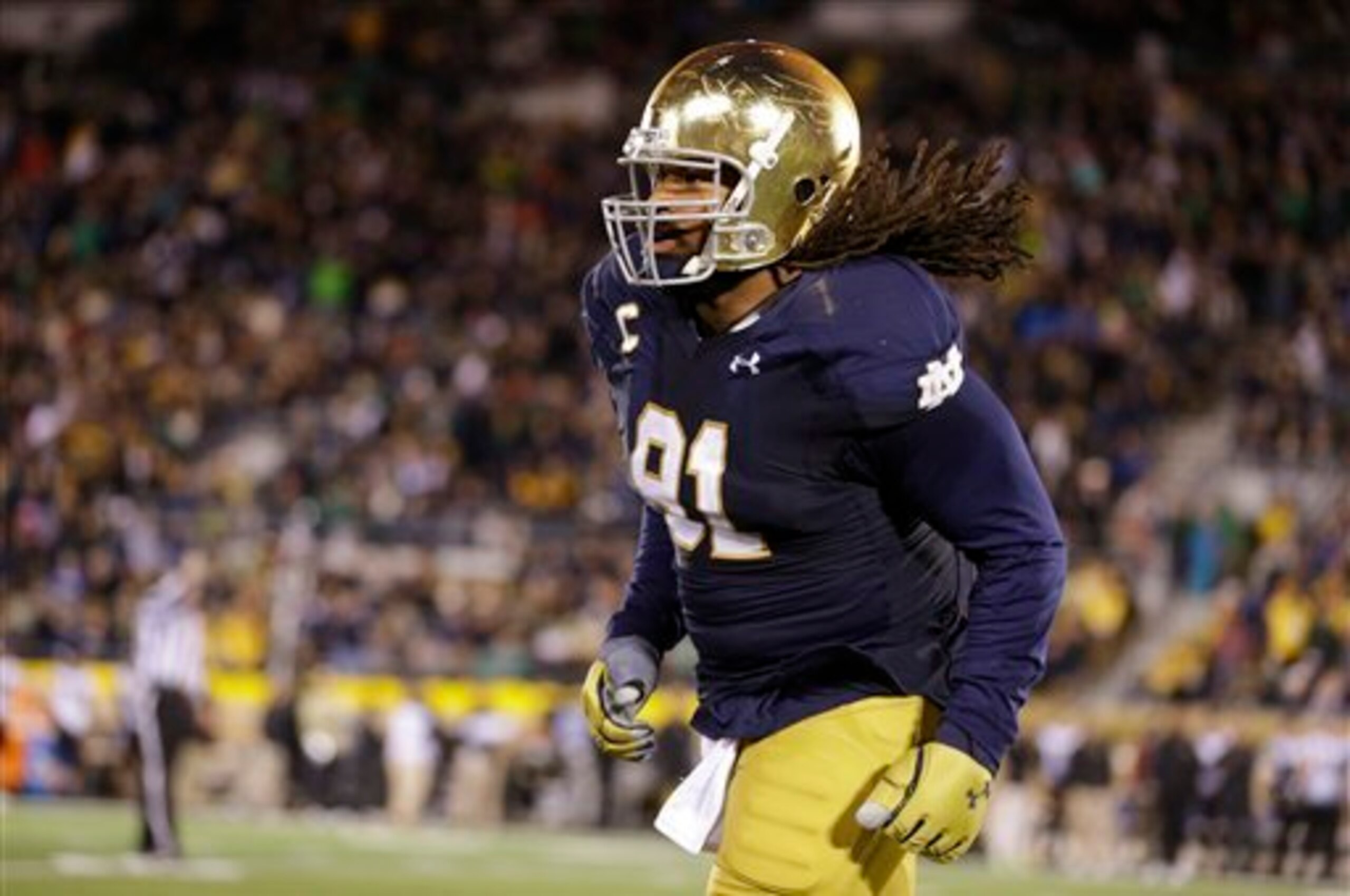
Day: 41 tackles (14.5 for loss), four sacks, one forced fumble and two pass breakups
From beginning to end this season, Sheldon Day played like every bit of the top NFL draft prospect he's supposed to be on the interior of the defensive line.
Day was a sure tackler and one of the best interior linemen in the nation at dragging down backs behind the line of scrimmage. Even in games when he didn't rack up multiple tackles for loss, Day affected offenses by his constant pressure up the middle of the line.
The top defensive tackle had one of the best seasons for a Notre Dame defensive lineman in quite some time, and his play was part of the reason why the Irish stayed in the College Football Playoff hunt.
Billings: 37 tackles (14 for loss), 5.5 sacks and one forced fumble
Baylor is known for its video game-like offense, but its defense continued to make great strides in 2015 behind a fantastic defensive front.
Anchoring that front was Andrew Billings, who took advantage of the extra attention placed on star defensive end Shawn Oakman to put up 14 tackles for loss and 5.5 sacks this season. He had one of his best games of the year at an important time for the Bears—a 45-35 bounceback victory over Oklahoma State.
"Strongest man I ever met," Baylor linebacker Grant Campbell said, per Brice Cherry of the Waco Tribune. "I’ve never seen anyone squat as much as him, or [power] clean. He’s a freak."
Second Team: A'Shawn Robinson (Alabama) and Willie Henry (Michigan)
Robinson: 42 tackles (7.5 for loss), 3.5 sacks, one blocked kick and two pass breakups
Henry: 34 tackles (10 for loss) and 6.5 sacks
A'Shawn Robinson spearheaded Alabama's dominant defense this season, making freakish athletic plays and helping shut down some of the SEC's best running backs.
Willie Henry took over several games from the middle of the line for Michigan, which had one of the nation's best defenses under Jim Harbaugh and D.J. Durkin.
Outside Linebackers: Tyler Matakevich (Temple) and Devonte Fields (Louisville)
8 of 14
Matakevich: 126 tackles (15 for loss), 4.5 sacks, five INTs and five pass breakups
If you want to see what an all-around defensive playmaker looks like, check out what Tyler Matakevich did for yet another season at Temple.
The tackle machine posted triple digits in takedowns for the fourth straight year and increased his numbers in tackles for loss. The Owls, in turn, were able to compete for an American Athletic Conference title and a New Year's Six bowl berth all the way down to the final day of the regular season behind Matakevich.
He also picked off five passes this season, leading the nation's linebackers in that category. It's safe to say one of Temple's best-ever campaigns wouldn't have been made possible without the consistent production of its veteran linebacker.
Fields: 56 tackles (19.5 for loss), eight sacks, two forced fumbles and one pass breakup
A pass-rushing specialist in Todd Grantham's Louisville defense, Devonte Fields excelled in his first year with the Cardinals. He tied a few star names, including Carl Nassib and Ejuan Price, for the second-most tackles for loss in the FBS.
His production for Louisville was outstanding this season as he played a number of key roles on the defensive side of the ball. He'll undoubtedly be a name to watch in the upcoming NFL draft after such an excellent campaign at getting into the backfield.
"As the regular season comes to a close, one name to file away to remember once the predraft events warm up is DeVonte Fields (6'4", 250 lbs) at Louisville," Bleacher Report's Matt Miller wrote. "The former TCU defensive end was a star in the Big 12 before being dismissed from school. He's landed on his feet at Louisville and has stayed out of trouble while producing for the Cardinals."
Second Team: Jaylon Smith (Notre Dame) and Eric Striker (Oklahoma)
Smith: 113 tackles (nine for loss), one sack, one forced fumble and five pass breakups
Striker: 61 tackles (16 for loss), 7.5 sacks, one INT, one forced fumble and three pass breakups
Speaking of tackle machines, one cannot help but mention Notre Dame star Jaylon Smith in a team of 2015's best statistical producers. Eric Striker was another superstar pass-rusher, improving the Oklahoma defense with his penchant for big plays all over the field.
Inside Linebacker: Anthony Walker (Northwestern)
9 of 14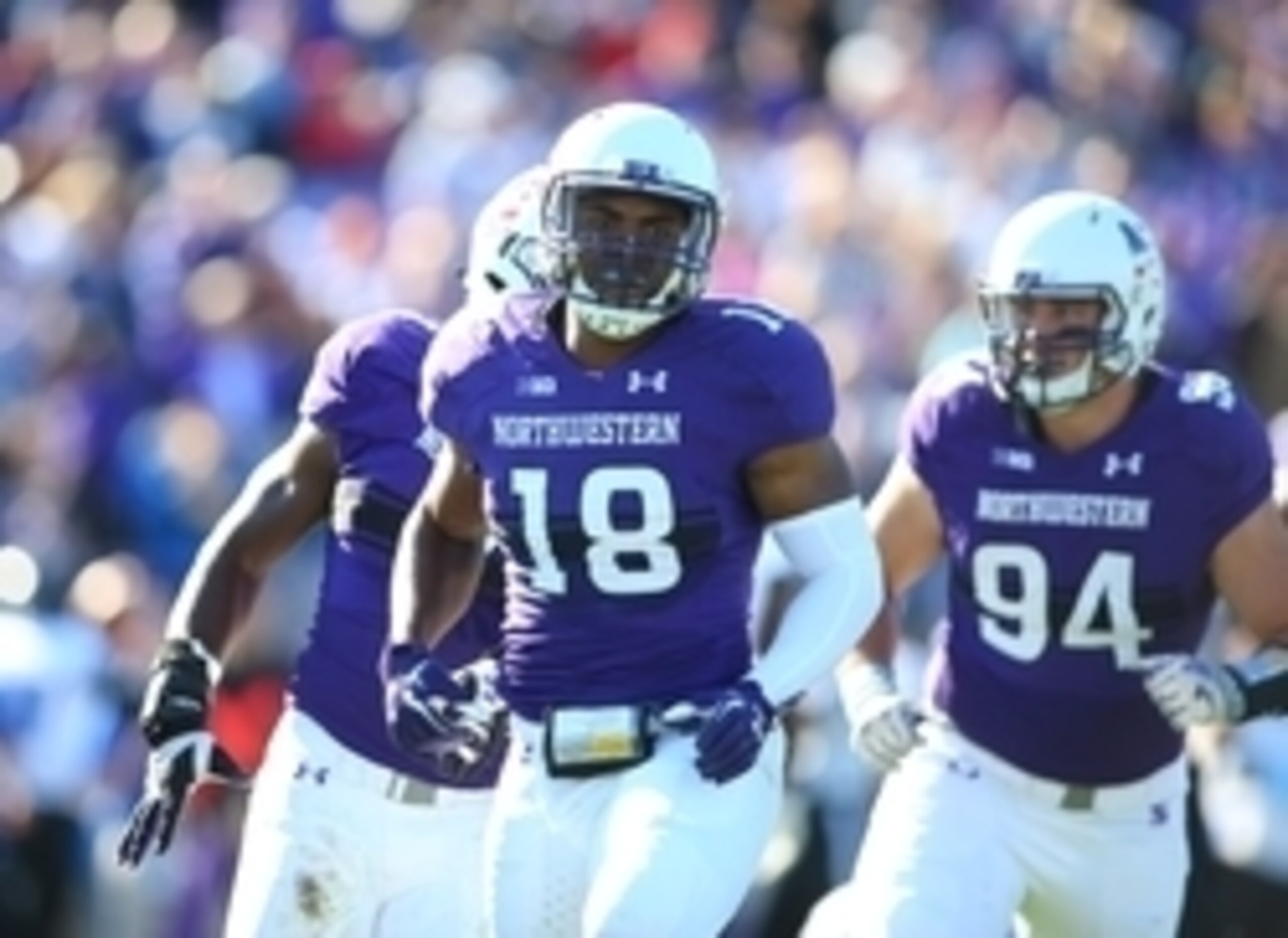
113 tackles (19.5 for loss), three sacks, one forced fumble, one INT, one TD, four pass breakups
Another top-notch player who cracked the mark of 19.5 tackles for loss in the regular season, Anthony Walker was incredible all season long for a Northwestern team that only lost two games.
Walker, a sophomore, recorded double-digit tackles in half of the Wildcats' contests this season, including an incredible 19-tackle day in a road victory over Duke. Look at some of Northwestern's best wins of the year—including Stanford, Penn State and Illinois—and you'll find that Walker stuffed the stat sheets more often than not.
He scooped up a couple of fumbles this season, returning one for a touchdown, and he also picked off a pass in a tight 13-7 victory over Wisconsin. Walker was the heart and soul of a Northwestern defense that finished seventh nationally in yards allowed per play this year.
Second Team: Elandon Roberts (Houston)
132 tackles (17 for loss), six sacks, two forced fumbles, one INT and four pass breakups
Quarterback Greg Ward Jr. got most of the spotlight on Tom Herman's 12-1 Houston team this season, but Elandon Roberts was arguably the more impressive player on a national level, finishing in the top 10 nationally in tackles and the top 20 in tackles for loss.
Cornerbacks: Desmond King (Iowa) and Zack Sanchez (Oklahoma)
10 of 14
King: 67 tackles (one for loss), eight INTs, one TD and 12 pass breakups
It took them a while, but opposing quarterbacks finally stopped throwing the ball in the direction of star Iowa cornerback Desmond King during the Hawkeyes' undefeated run to the Big Ten title game.
King recorded all eight of his interceptions this season, which rank second among all players in college football, in a span of eight weeks. He returned one 88 yards for a touchdown against Maryland and continued to be a top-notch pass-breakup specialist throughout the season.
The Big Ten's Defensive Back of the Year is a finalist for the prestigious Jim Thorpe Award this season, and for good reason. He had the ability to change games in a heartbeat for Kirk Ferentz's Hawkeyes.
Sanchez: 44 tackles (3.5 for loss), 0.5 sacks, six INTs, one TD and seven pass breakups
Both Oklahoma's Zack Sanchez and Jordan Thomas would have a strong argument for this first-team cornerback spot—and Sanchez would probably give it to Thomas.
But using the stats and the big games this season as our guides, let's give the nod to Sanchez, who produced six interceptions and pitched in more big tackles for the Sooners. Sanchez had a pair of two-interception games this year, and he added a big-time pick in Oklahoma's win over high-powered Baylor.
It seemed like whenever Oklahoma needed an important play on the defensive side of the ball, Sanchez was there to make it happen for the Sooners. Now they're headed to the College Football Playoff, where Sanchez will be a great matchup against any receiver who comes his way.
Second Team: Shawun Lurry (Northern Illinois) and Jalen Tabor (Florida)
Lurry: 39 tackles (0.5 for loss), nine INTs, one TD and 14 pass breakups
Tabor: 33 tackles (three for loss), one sack, four INTs, two TDs and 14 pass breakups
The nation's leader in both interceptions and interception-return yardage, Shawun Lurry made a name for himself with a big day against Ohio State and continued his solid work all the way through NIU's run to the MAC Championship Game.
Jalen Tabor excelled opposite the fantastic Vernon Hargreaves III and made plenty of big plays, including two pick-sixes, for the Florida secondary this fall.
Safeties: Tanner McEvoy (Wisconsin) and Eddie Jackson (Alabama)
11 of 14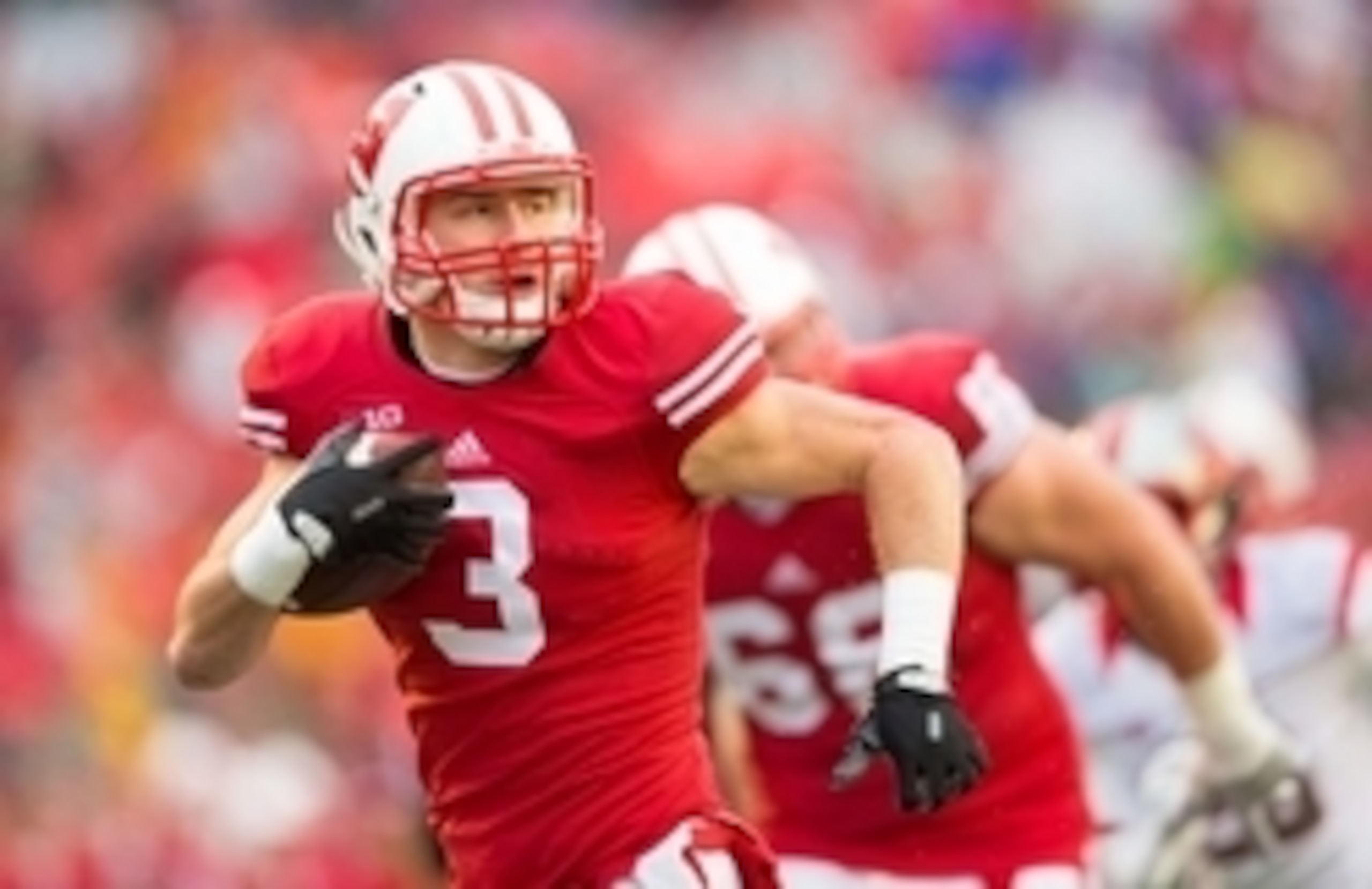
McEvoy: 39 tackles (two for loss), one sack, six INTs and six pass breakups
In his first full season at defensive back, Tanner McEvoy was by far one of the most impactful safeties in all of college football.
The 6'6" former quarterback tied for the fifth-most interceptions at the FBS level with six, recording five of them in Wisconsin's final four games of the season. He patrolled the middle of a secondary that finished third nationally in fewest passing yards allowed per game.
McEvoy still got some work as a playmaker from time to time on the offensive side of the ball, but his very best came on defense. He was quite a productive star for coordinator Dave Aranda.
Jackson: 40 tackles (three for loss), five INTs, two TDs, one forced fumble and two pass breakups
Alabama's secondary went through an overhaul after falling short of its usual best in that unit last season. Part of that overhaul was the move of Eddie Jackson from cornerback to safety.
The move was picture-perfect for both the Crimson Tide and Jackson, who pitched in five interceptions for the improved defensive back corps in Tuscaloosa. With Jackson leading the way, Alabama's defensive backs picked off more passes in the regular season than they allowed passing touchdowns—a total flip from 2015.
Whenever Jackson got his hands on the ball with an interception, he had a good chance of breaking it for a touchdown, too. He finished second nationally in interception-return yardage and was one of 15 players this season who had multiple pick-sixes.
Second Team: Jeremy Cash (Duke) and Kai Nacua (BYU)
Cash: 101 tackles (18 for loss), 2.5 sacks, three forced fumbles and four pass breakups
Nacua: 58 tackles (one for loss), six INTs, two TDs and six pass breakups
Duke ran out of steam toward the end of the season, but Thorpe Award finalist Jeremy Cash had a tremendous year for the Blue Devils by leading the entire nation's defensive backs in tackles for loss by a huge margin.
Kai Nacua had five of his interceptions and both pick-sixes in just two games, showing his ability to take over contests for BYU.
Kicker: Ka'imi Fairbairn (UCLA)
12 of 14
20-of-23 on field goals (long of 60) and 44-of-44 on extra points
Not only did Ka'imi Fairbairn knock down the longest field goal of the FBS season—by three whole yards—but he was one of the best kickers in the country from long range.
Fairbairn's only three misses this season were from longer than 40 yards out, and he was 2-of-3 on kicks that traveled 50-plus yards. The Pac-12's new all-time leading scorer was perfect on extra points, too, in addition to his strong work in power kicking.
Fairbairn is one of three finalists for this year's Groza Award, where he'll be looking to become the second UCLA Bruin to ever take home the trophy. Although UCLA fell short of its lofty goals heading into the season, its kicks rarely did thanks to Fairbairn.
Second Team: Jake Elliott (Memphis)
22-of-26 on field goals (long of 52) and 62-of-62 on extra points
His tough miss against Houston aside, Jake Elliott still led the nation in points scored during the regular season. He was perfect on PATs and didn't miss a kick in Memphis' big-time upset of Ole Miss.
Punter: Tom Hackett (Utah)
13 of 14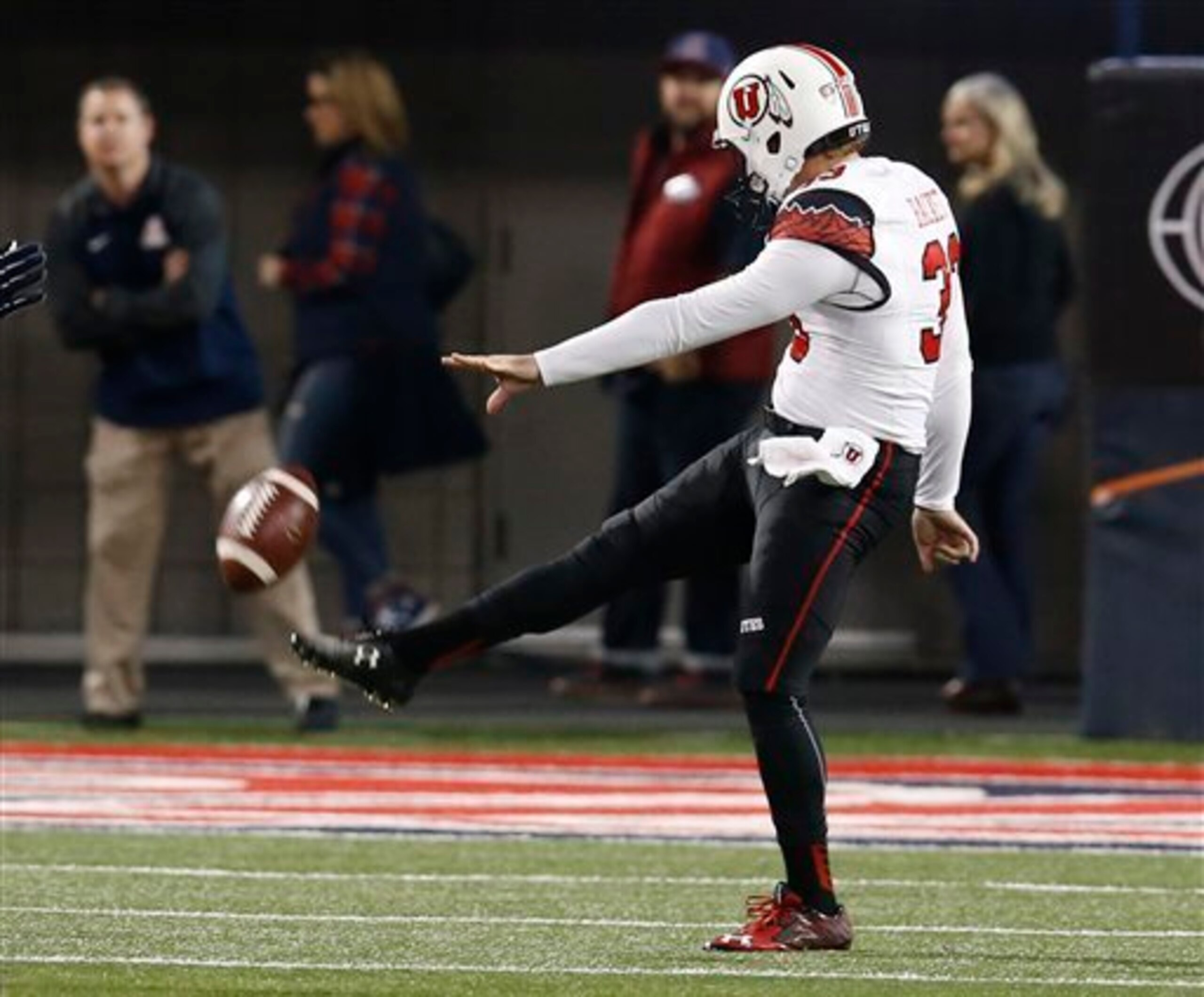
Hackett: 55 punts for average of 47.78 yards (long of 76)
No real surprise here. Hackett was a familiar name on these all-week teams, especially toward the end of the season, for his ability to both boom long punts and pin opponents inside the 20 on a consistent basis.
The Utah senior and defending Ray Guy Award winner has a strong chance of repeating this season. He had one of the longest punts of the season—a 76-yarder—that didn't go into the end zone for a touchback. Hackett also ranked third nationally in average yards per punt.
This Aussie mastered the art of flipping field position and could break a big fourth-down conversion on a fake every now and then. Hackett was the model of consistency as one of the nation's best punters.
Second Team: Drew Kaser (Texas A&M)
53 punts for average of 47.96 yards (long of 71)
The #Kaser4Heisman campaign continued into another strong year as Drew Kaser led all Power Five punters in average yards per punt, giving John Chavis' improved Texas A&M defense good field position time and time again.
Returner: Morgan Burns (Kansas State)
14 of 14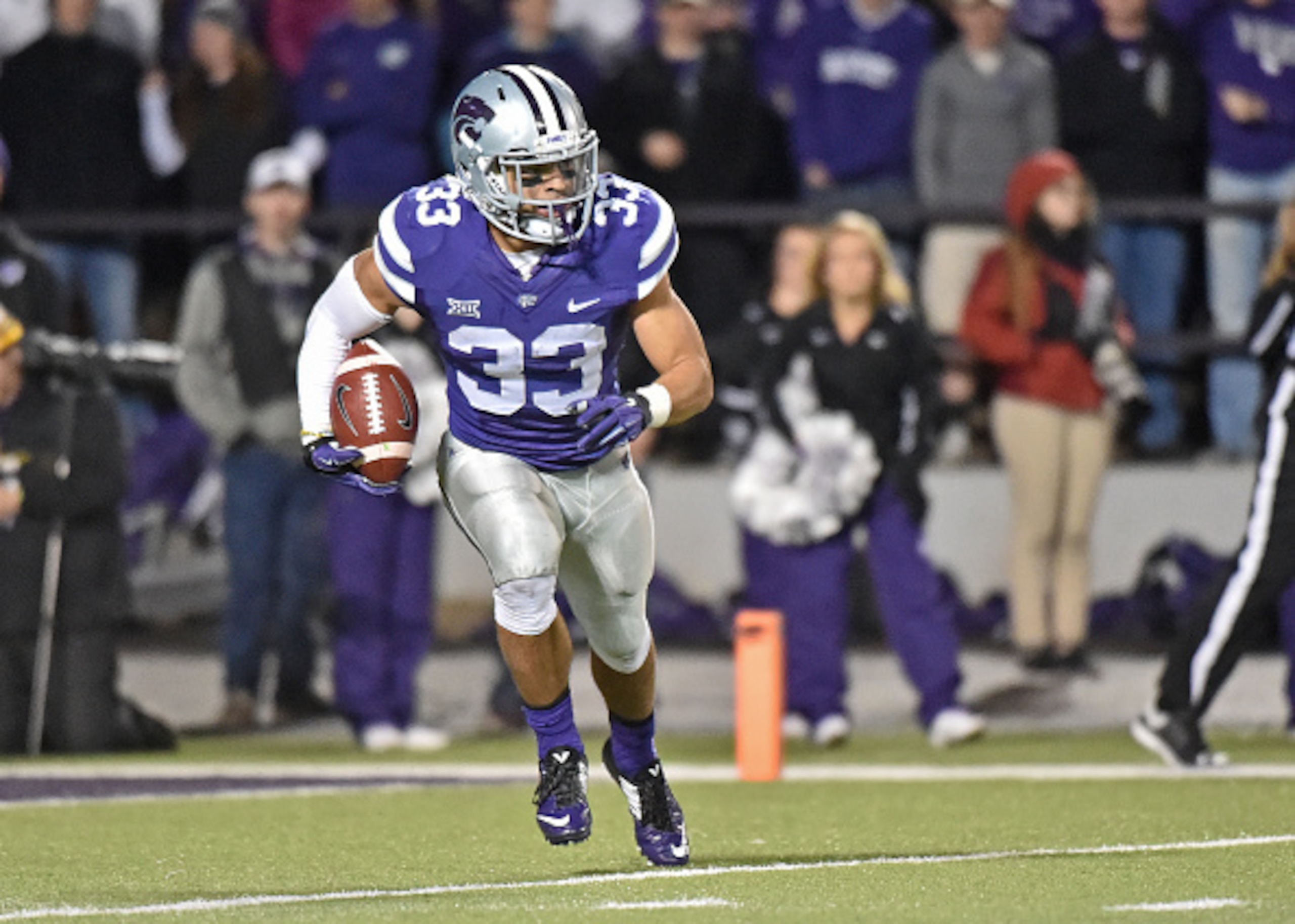
31 kick returns for 1,047 yards (average of 33.77) and four TDs
The only player in college football this season to record four kick returns for touchdowns, Morgan Burns was the essence of clutch from a special teams standpoint this season.
Kansas State won three of its four games that featured kick-return touchdowns from Burns, including its season finale, when the return man went 97 yards for what would be the game-winning score over West Virginia. That victory ensured the Wildcats would finish 6-6 on the regular season and head to another bowl.
Burns also had a 100-yard kick-return touchdown in a 38-35 victory over Iowa State, and he landed on a blocked punt for a touchdown against rival Kansas the next weekend. He finished second in average yards per kick return this season and first in kick-return yards per game.
Second Team: Cameron Sutton and Evan Berry (Tennessee)
Sutton: 25 punt returns for 467 yards (average of 18.68) and two TDs
Berry: 21 kick returns for 804 yards (average of 38.29) and three TDs
It's hard to separate these two, as Cameron Sutton and Evan Berry made Tennessee's return game one of the most feared in all of college football. Berry led the nation in kick-return average for touchdowns, while Sutton was first in punt-return yards per game.
Unless otherwise noted, statistics courtesy of cfbstats.com.
Justin Ferguson is a college football writer at Bleacher Report. You can follow him on Twitter @JFergusonBR.
_0.png?w=2560)


.jpg?w=2560 "Grading WWE Raw 🔠")


.jpg?w=2560 "2 NFL Officials Suspended")


.jpg?w=2560 "Viral Rams Coach Vid 🖕")