Hiring First-Time Head Coaches Has Proved Valuable in College Football
A quick look around this season's coaching carousel will reveal one surreal fact: The two best jobs in college football—Georgia and USC—went to coordinators named to head coaching positions for the first time.
Georgia will, barring an 11th-hour fallout, announce Alabama defensive coordinator Kirby Smart as its new coach sometime next week after the SEC Championship Game, according to Mark Schlabach of ESPN.com.
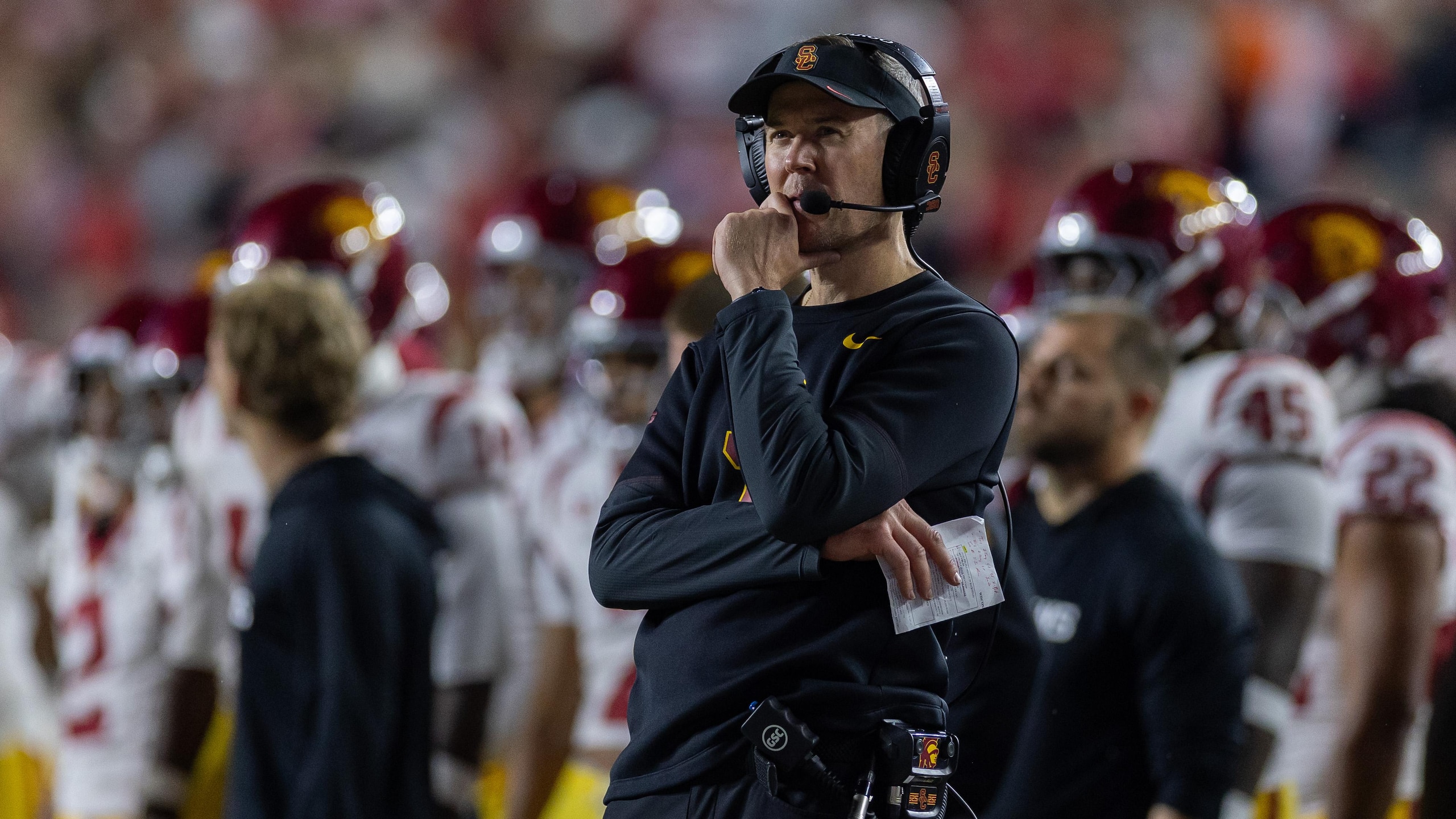
The Trojans, meanwhile, have already officially removed the interim coach tag from Clay Helton's title. The offensive coordinator from 2015 received a five-year contract, per Gary Klein of the Los Angeles Times, but the details weren't disclosed.
TOP NEWS
.jpg?w=2560 "AP Poll Top Five Week 9")
🚨 Week 8 AP Top 25 Poll
Overreactions After Week 8 of 2026 College Football Season
.png?w=2560)
CFB Week 8 Winners & Losers 📊
The reaction to each hire has been mixed, to say the least. B/R colleague Bryan Fischer called Helton's promotion "uninspiring," noting the lasting narrative it could push on athletic director Pat Haden's time at USC:
"Sometimes the right choice is not always the easy choice," Helton said at his press conference, via Klein. "I understand I'm not a flashy name.
"I apologize for not being glitzy, but I believe that blue-collar toughness is what wins championships."
As for Smart, B/R's Barrett Sallee called it a high-risk, high-reward hire. Replacing longtime coach Mark Richt, who won an average of just under 10 games a year at Georgia for 15 seasons, is no easy task. Like USC, Georgia has the resources and is attractive enough to lure a lot of high-profile candidates. Instead, it's putting its faith into Smart, an alum.

That hasn't been universally well received. Stewart Mandel of Fox Sports likened Georgia's attitude toward Smart to Michigan's plan to bring head coach Jim Harbaugh back to Ann Arbor, but not in a good way:
Mandel's point is a fair one. Harbaugh had won at high levels at Stanford and with the San Francisco 49ers before Michigan convinced him to come home. Smart has orchestrated some of the best defenses in college football at Alabama, this year included; no team, in fact, is better at stopping the run than the Tide. Whether that will translate into success as a head coach is a different story. Therein lies the risk.
However, the track record of first-time head coaches in today's game is anything but bad. Take a look at the latest playoff rankings and you'll find relevant examples of exactly what Georgia and USC did. Bob Stoops, now in his 17th year at Oklahoma, was the defensive coordinator at Florida before he became a first-time head coach in 1999. All Stoops has done is become the winningest coach in program history.
Dabo Swinney, who has Clemson undefeated and ranked No. 1 in the country, had his interim tag removed after the 2008 season. So far, he's won nearly 74 percent of his games, beaten teams like LSU, Florida State and Ohio State, and killed the "Clemsoning" meme for good.
Look outside the immediate Top Four and there are other examples. Stanford coach David Shaw? Promoted as a first-time head coach after Harbaugh left. Jimbo Fisher? Succeeded Bobby Bowden at Florida State as a first-time head coach. Gary Patterson became a first-time head coach in 2000 at TCU. Pat Fitzgerald took over Northwestern in 2006 due to the tragic death of Wildcats coach Randy Walker. This year, Northwestern is 10-2 with a win over Stanford.
The list goes on and on: Mark Helfrich (Oregon), Mike Gundy (Oklahoma State), Tom Herman (Houston), Matt Rhule (Temple) and Kyle Whittingham (Utah). That's a solid group.
Are there examples of first-time head coaches not working out? Sure. Will Muschamp (Florida) and Lane Kiffin (Oakland Raiders) come to mind. There will always be instances of both. And, to be clear, the positive track record doesn't imply anything. Just because Stoops has thrived at Oklahoma by reinventing himself over and over doesn't mean Smart will do the same at Georgia. Swinney's success at Clemson doesn't directly mean Helton will compete for national championships at USC.
There's no way to know for sure how Helton and Smart will do; we can only judge hires based on the circumstances in which they were made. So, yes, USC's hiring Helton is uninspiring, and Georgia's reported hire of Smart is risky. Those things can be true, but that doesn't mean they'll turn out to be bad hires.
What matters moving forward are the things Helton and Smart do to establish themselves. Do they command respect in the locker room? Helton is known as a players' coach, and all you need to know is how star linebacker Su'a Cravens feels about him:
Do they come from great coaching trees? The Nick Saban tree is a good place to start. Do these coaches hire good assistants who go on to get their own promotions? Can they recruit at a high level (which doesn't always mean landing 4- and 5-star players; it means knowing talent when they see it and developing it)? Do they have identities on offense and defense while showing the ability to adjust when needed?
Those are the characteristics that make a great coach. Until Helton and Smart get the opportunities to show whether they possess them, we can't call their hires "bad" or "good." We can only hope they work out for everyone.
But there are enough examples to believe they will.
Ben Kercheval is a lead writer for college football. All quotes cited unless obtained firsthand.
_0.png?w=2560 "CFB Top 25")
.jpg?w=2560)


.jpg?w=2560 "Raiders Could Start Mendoza")
.jpg?w=2560 "Rodgers Iced Out on Plane 💎")