

Cleveland Browns Must Re-Sign Numerous in-House Free Agents
The Cleveland Browns failed in free agency during this offseason in one major way: They failed to retain any of their own players.
Tight end Jordan Cameron left for the Miami Dolphins, though the Browns did engage in a bidding war in the hope of retaining him. Ahtyba Rubin landed with the Seattle Seahawks. Jabaal Sheard joined the New England Patriots and is having a career year as a pass-rushing defensive end. Buster Skrine is now serving as a cornerback for the New York Jets.
While none of these players' departures left a lasting void in Cleveland, 2016's impending free agents include numerous starters the Browns must make sure they can keep. While the Browns are not the most attractive franchise to play for, given the constant losing and the almost inevitable turnover in the coaching and front-office staff, doesn't mean they must resign themselves to not being able to re-sign their own.
TOP NEWS

New NFL Power Rankings 📊
The Robinsons POUND the Rock 🪨
Takeaways from Falcons' dominant MNF win
The Browns must concern themselves first and foremost with building around their own players. This has been a struggle for the team in recent years because of the constant changes with those who determine personnel and scheme and those constant changes not lending themselves to players wanting to stay with a franchise in constant flux.

But among the eight players set to be unrestricted free agents in 2016 are starters and key role players whom the Browns will miss if they cannot retain them. With Cleveland approaching over $170 million in cash they can spend next year—assuming a $150 million team salary cap plus nearly $24 million in rollover cap space from 2015—there's no financial reason why the Browns should not extend contract offers to nearly all of them.
These high-priority free agents are Travis Benjamin, currently the Browns' leading receiver as well as punt returner; tight end Gary Barnidge, who leads the team with seven touchdowns scored this season; right tackle Mitchell Schwartz, who is improving every season; inside linebacker Craig Robertson, who has recently morphed into a starter; defensive end and tackle Jamie Meder; kicker Travis Coons; coach-favorite Johnson Bademosi; and, of course, safety Tashaun Gipson.
Meder and Coons are exclusive-rights free agents but still need a "minimum qualifying offer" from the Browns to remain with the team.
Gipson may be the most pressing case given he and the Browns have been trying to get a long-term deal done for some time. He is currently working on a one-year restricted free-agent tender worth $2.356 million.
This season hasn't been his most productive, with just 32 combined tackles and two interceptions through Week 11, but he has picked off 14 passes in his four-year career and established himself as a top safety in the NFL, even though the rest of Cleveland's secondary has not been as good as it has been in the past.
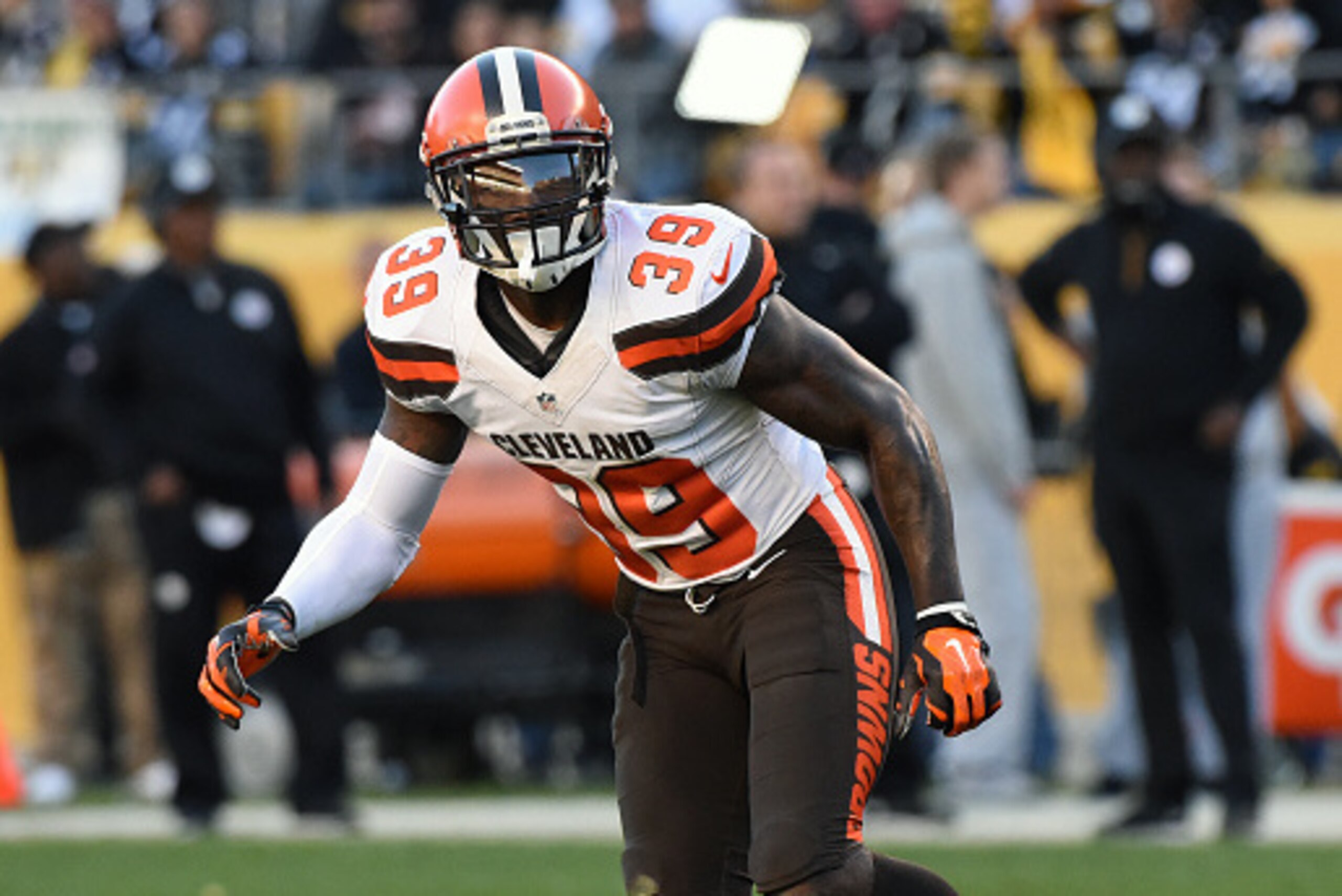
That decline in the stats department could ultimately cost Gipson a few million—or, conversely, save the Browns a few—but that doesn't mean he's somehow not the player he once was or in any way less valuable to the team. The problem, though, is that should Gipson hit the free-agent market, another team—one that could quickly be in Super Bowl contention—could lure him away from the Browns regardless of the price Cleveland is willing to pay to retain him.
But the Browns cannot let Gipson go without a fight. A Cameron-style approach—i.e., matching any and all offers he gets from other teams and letting Gipson make the final call—may be the only right way to handle any would-be deal with Gipson. Having him simply walk away should not be an option.
Benjamin should be an easier player to retain, though determining his contract value is trickier given he's the top receiver but not in a way that compares to other teams' No. 1 wideouts. His value as a returner must also be factored in, as well as what role he'll play moving forward.
There's no doubt the Browns should be targeting a bigger wideout in free agency or the draft, and Josh Gordon could also return for 2016. But it's not likely any other team will give Benjamin a bigger payday than the Browns, and he's crucial in the after-catch yardage game the Browns like to play when passing.
Barnidge's return should be considered a foregone conclusion unless the unrest he's experienced drives him to greener pastures. But his payday, too, is a complicated one; while essentially only Tyler Eifert and Rob Gronkowski are doing more for their respective teams at tight end, Barnidge is 30 years old. A blockbuster payday isn't on the cards, but he still is worth more than the $1.2 million he's making presently.
Still, complications should not deter Cleveland from pursuing the re-signings of Barnidge and Benjamin. And the Browns' other free agents are less complicated.
There's no better NFL right tackle walking through the door, and even if the Browns draft one, he won't have the readiness and experience of Schwartz. Bademosi, though he's struggled this year, has proved himself to be a useful piece on both defense and special teams. Meder has taken on an ever-expanding role this season that warrants his sticking around. And Coons is one of the league's most reliable kickers.
Stability has been a problem for the Browns in many areas, but the roster can gain more of it if the team signs these players to new deals. There are uphill battles, of course, in the form of trying to convince talented players to stick around in Cleveland when other, more promising teams are likely to come calling.
But the Browns cannot be passive spectators while their free agents are picked up elsewhere. This offseason needs to feature concerted efforts to re-sign their own in order to keep the roster strong, experienced and unified. Playing musical chairs with the roster is no way for the Browns to claw their way to improvement.

.jpg?w=2560 "Commanders Eagles Football")
.jpg?w=2560 "Grading WWE Raw 🔠")



.jpg?w=2560 "Viral Rams Coach Vid 🖕")