

NBA's Young Bigs Are Here to Destroy the 'No Centers' Myth
MIAMI — Just three years back, the center spot was wiped off the NBA All-Star ballot and publicly laid to rest.
Well, those obituaries overlooked one critical piece of information: The position is alive and well, prospering even.
Remember the whispers about teams mimicking the Golden State Warriors' small-ball style after watching their 6'8"-or-shorter starting five close out the 2015 Finals? The draft that came less than two weeks later debunked that myth, as four of the first six selections stood 6'11" or taller.
TOP NEWS

LeBron's Special Helicopter Deal

MJ Makes Record-Setting Donation 🙌
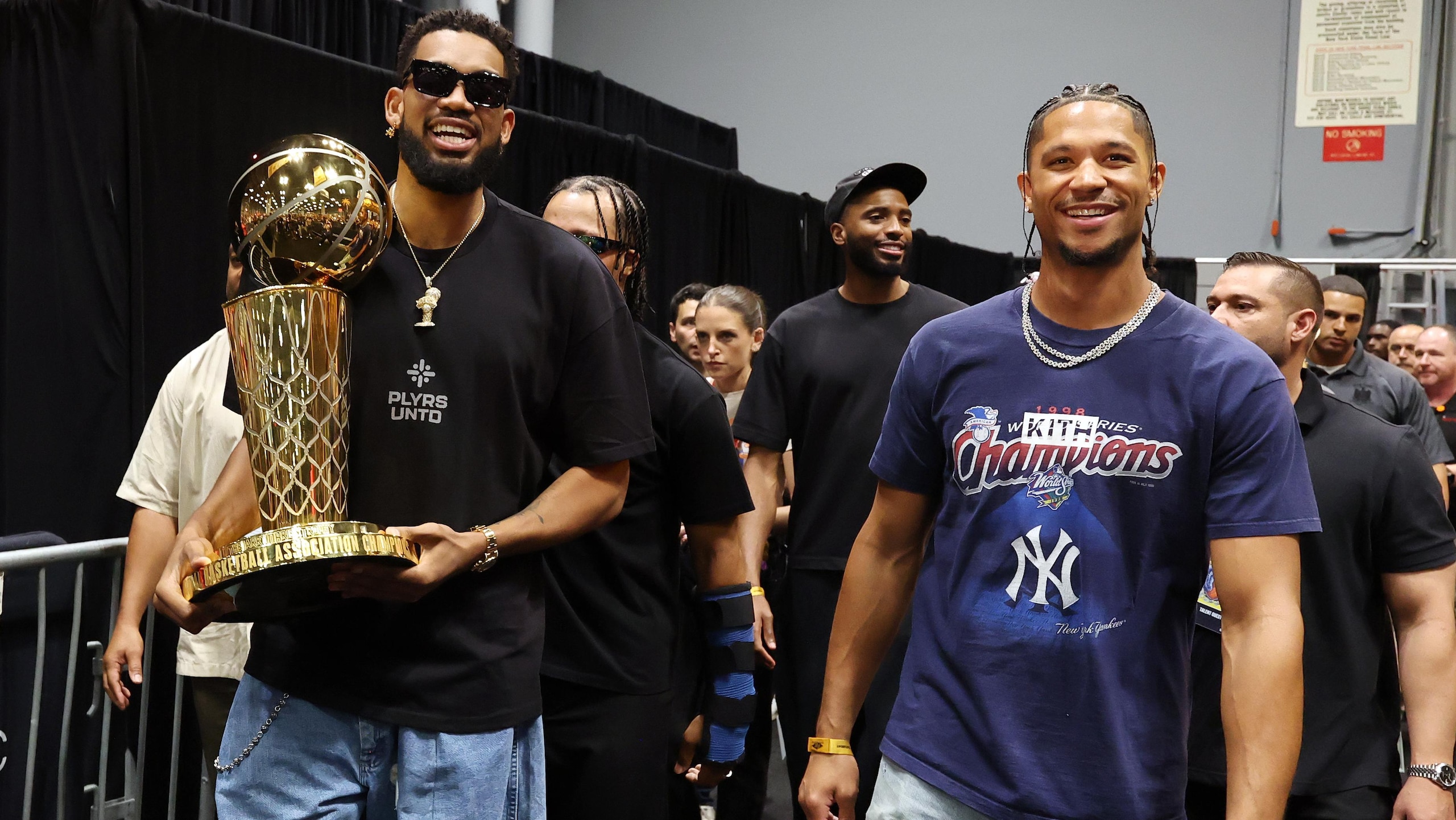
Shams: KAT, Hart Could Be Trade Names
| 1 | MIN | Karl-Anthony Towns | 7'0" | 244 lbs | C |
| 2 | LAL | D'Angelo Russell | 6'5" | 195 lbs | PG |
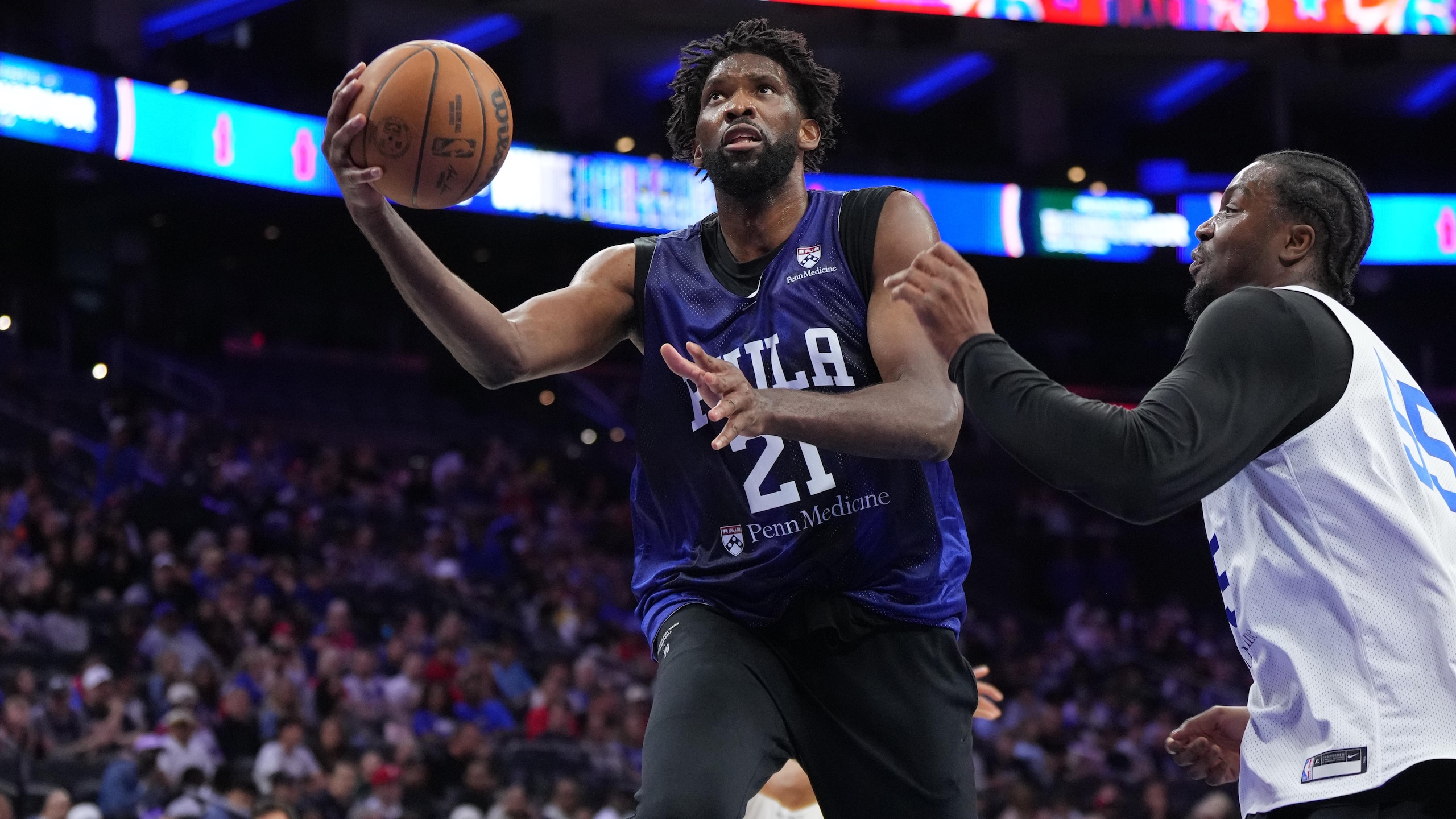
| 3 | PHI | Jahlil Okafor | 6'11" | 275 lbs | C |
| 4 | NYK | Kristaps Porzingis | 7'3" | 240 lbs | PF |
| 5 | ORL | Mario Hezonja | 6'8" | 218 lbs | SG |
| 6 | SAC | Willie Cauley-Stein | 7'0" | 240 lbs | C |
"A lot of people underestimate [the importance of size]," 7'0", 265-pound Miami Heat center Hassan Whiteside told Bleacher Report. "I know the Warriors won a championship with a smaller guy in the middle, but all through the season they played with a big man. You still gotta go back to that tradition."
Though he's right, in some ways there is no going back to traditional ways.
The league has evolved. The majority of today's offenses are built around pick plays, penetration and perimeter shots, not the plodding post scorers of yesteryear.
This game is faster and more three-point-oriented, a pace-and-space style in which size and strength are no longer enough on their own.
But this game doesn't diminish the importance of bulky bigs. Rather, it simply requires a higher level of skill for players of all sizes.
Centers haven't stubbornly retraced the paths of their predecessors; they have adapted along with the rest of those at the spot. A new batch of bigs has accelerated that process.
"We're more versatile than ever," said Minnesota Timberwolves freshman 7-footer Karl-Anthony Towns, whose skill set includes deft shooting, guard handles and highlight dimes.
It's hard lumping modern centers together, because their games are so different.
There are jack-of-all-trades types like Towns and DeMarcus Cousins who can handle any hardwood assignment. When Blake Griffin and Draymond Green line up as undersized 5s, they can clear the boards and run the break before finishing with a setup or a score.
There are mobile rim-runners who protect the paint at one end and crush dunks at the other. Tyson Chandler and Dwight Howard paved this path, one that has since been adopted by DeAndre Jordan, Andre Drummond and Rudy Gobert.
There's still a smattering of skilled low-post scorers like Al Jefferson and Jahlil Okafor. Some, such as Frank Kaminsky and Nikola Vucevic, can spread the floor with shooting.
The only thing these bigs don't do is light the lamp as frequently as the old ones. There's only one center among this season's top 20 scorers (Cousins, 27.5 points per game). In 1995-96, there were five among the league's top-10 point producers.
It's impossible to quantify how much the decrease in scoring has perpetuated the "centers are extinct" narrative, but it has almost assuredly played a part.
"All the fans prefer a guy who scores 20 over a guy who does [the little things] that help his team win," said Gobert, the Utah Jazz's 7'1" center. "People watch highlights, they look at stats. ... Most of the time, you gotta look deeper than just the stats."
Or know which stats to look at.
Move outside the scoring column, and the box scores rarely miss the colossal impact of these young giants. Not only are these players producing, but many are doing so in historic fashion:
- Andre Drummond's 208 rebounds are the second-most through the first 11 games of a season since 1985-86.
- Whiteside's current rate of 5.5 blocks per 36 minutes is fourth-highest in NBA history (minimum 24 minutes per game).
- Okafor is on pace to become only the ninth rookie in league history (and first since 1999-00) to average at least 18 points, seven rebounds and 1.5 blocks.
- Towns has eight double-doubles through 12 career games; since 1985-86, only three freshmen have had more: Shaquille O'Neal, Dikembe Mutombo and David Robinson.
- Gobert is the 17th player since 1985-86 to record at least 1,000 rebounds and 250 blocks over his first 136 games and first to do it in fewer than 3,700 minutes (he's played 2,903).
- Last season, Cousins became just the seventh player to average at least 24 points, 12 rebounds, 3.5 assists and 1.5 blocks.
Impressive stuff, right? It gets better: No one mentioned above is over the age of 26.
While everyone else scribbled the NBA center's autopsy report, these youngsters were busy sparking a positional revolution.
"I don't know why people keep thinking centers are done," Whiteside said. "As long as there's a need for shot-blocking, rim protection and rebounding, [there's a need for centers]. The creators of the game, there's a reason they made it that way."
These young behemoths are walking reminders of a center's massive importance.
Cousins, Drummond, Okafor and Towns are leading their respective clubs through rebuilding efforts. Gobert is the top defender on a Utah Jazz team built to win on that side of the ball. Whiteside might be the most important piece of the Miami Heat's present and future.
"It's a lot of great centers in the NBA, especially young centers," Whiteside said. "I don't know why people keep thinking it's not."
At some point, the narrative will quiet to a whisper before silencing altogether.
It can only survive so many 20-20 outbursts from Drummond, double-digit block efforts by Whiteside, triple-doubles from Cousins, stifling swats by Gobert, low-block buckets from Okafor and delectable dimes by Towns before the theory runs out of subscribers. If this group isn't convincing enough, there's another on the way—eight of the first 12 picks on NBADraft.net's 2016 mock draft are 6'10" or taller.
In other words, even if fans haven't fully grasped the modern big man's significance, teams still treat them as highly coveted commodities.
"[The center position] has never diminished in how valuable it is to the team," Towns said. "I think that every team notices how important a center is to them."
It'd be hard not to, given the eye tests they've aced and statistical imprints they've made, some three years after the hoops world left them for dead.
All quotes obtained firsthand. Statistics used courtesy of Basketball-Reference.com and NBA.com and current through games played Nov. 18.

.jpg?w=2560 "Grading WWE Raw 🔠")

.jpg?w=2560 "Viral Rams Coach Vid 🖕")
.jpg?w=2560 "Bijan's INSANE 1st Half 🤩")
.jpg?w=2560 "Injury-stricken Seahawks signing veteran RB")

.jpg?w=2560 "2 NFL Officials Suspended")