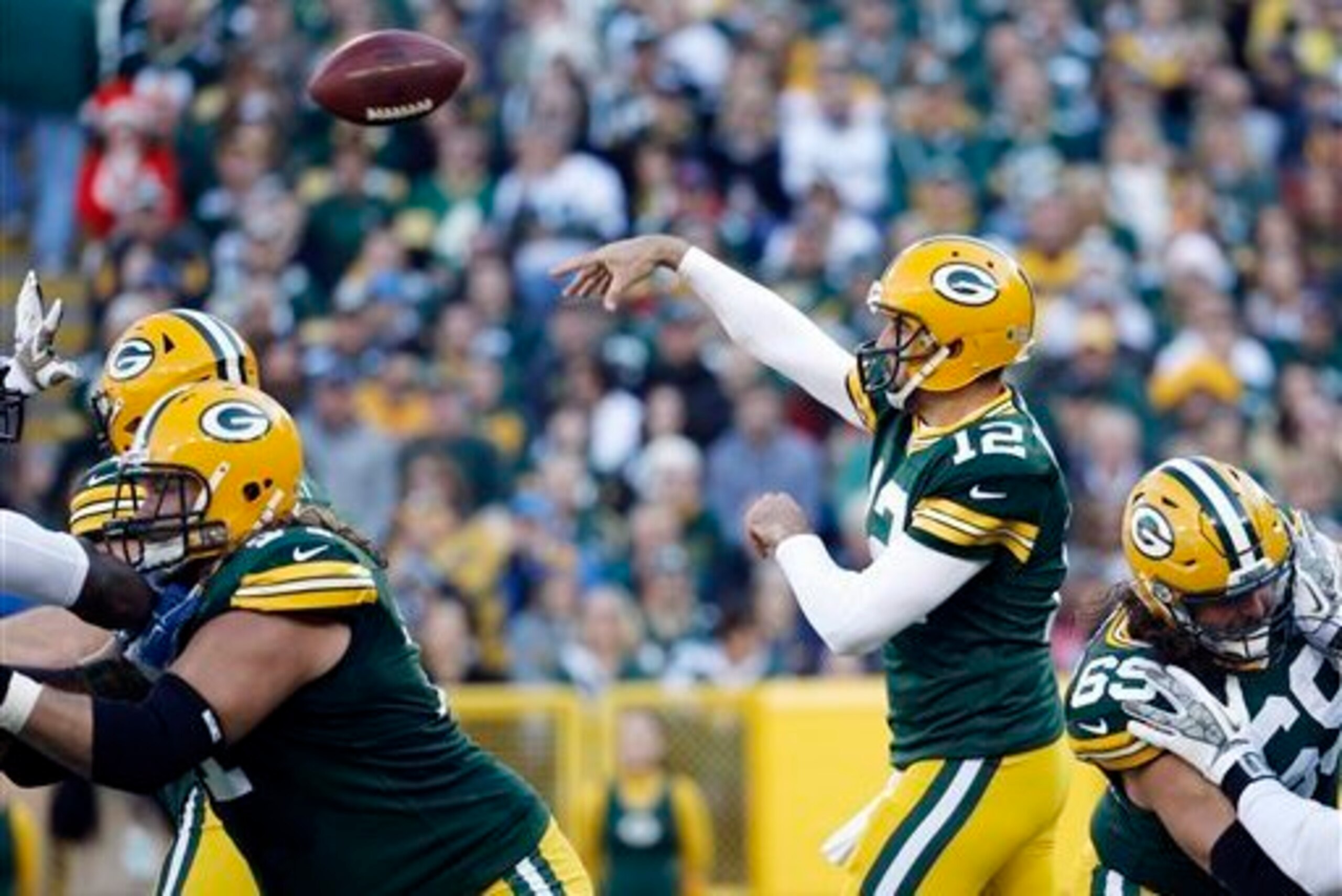

Biggest Takeaways from Green Bay Packers' Week 10 Loss
The Green Bay Packers are starting to form some troublesome new streaks while breaking old ones.
Until Sunday, the Detroit Lions had not won a game at Lambeau Field in 24 years.
That's right. Years.
That streak was broken on Sunday, as the Packers failed to get anything going against Detroit until, frustratingly, it was too late.
The Packers also continued an ugly streak: It's now been three games since the defense sacked an opposing quarterback. Also for the the third straight week, the team rushed for less than 100 yards.
This Packers offense is clearly in trouble, and there does not seem to be an obvious solution. Falling to the Lions, who featured the league's 23rd defense heading into Week 10, is beyond worrisome.
Let's break down some big takeaways from Sunday's action and look forward to Week 11 against the Minnesota Vikings.
Mike McCarthy Needs to Reconsider Play-Calling
1 of 5
Head coach Mike McCarthy has indicated he won't be relieving associate head coach Tom Clements of his play-calling duties, but there's no denying after multiple "off" weeks on offense that the change in duties this season is having an undesirable effect.
"I'm as involved in the offense and defense and special teams as I can be," McCarthy said before the game against Detroit, per ESPN's Rob Demovsky. "I watch more film and keep doing what I’m doing. My job responsibility, job descriptions have been defined. And that’s not going to change."
Though poor execution on the players' part has also hurt the offense, the play selection has been ineffective and, at times, bizarre this season.
For many weeks, screens did not seem to be part of the playbook. The Packers continue to use isolation routes, even though this group has receivers who have struggled to gain separation in man coverage.
Another option is to give Aaron Rodgers the freedom to call more plays from the line of scrimmage. That seems to be what spurred the late comeback against Carolina, in what Rodgers himself called "school-yard ball," per Demovsky, and it happened again late against Detroit.
While a midseason change in duties may cause additional harm, the current play-calling is not getting the job done. If the league's No. 26 defense can diagnose plays and shut down the Packers, something needs to change.
Packers Offense Can't Afford to Make These Mistakes
2 of 5
Given the problems stemming from the top on the Packers offense, including poor play-calling and in-game adjustments, the players can't afford to make game-changing mistakes.
Head coach Mike McCarthy told Fox sideline reporter Erin Andrews during halftime that "mistakes" were to blame for the poor offense in the first half. While that lets the coaching staff off a little too easy, he was right.
There was Randall Cobb's costly drop on the Packers' third series on 3rd-and-9 at Green Bay's own 41-yard line. Given the coverage on that play, Cobb could have had a huge gain on that play, and that drive could have ended with points rather than a punt.
Then there was Davante Adams' drop when he was targeted downfield that also could have given the offense a much-needed boost.
Rodgers was also uncharacteristically inaccurate on the day, completing just 57 percent of his passes.
The late-game comeback and back-to-back touchdown drives were not enough to make up for the unit's sloppy play early on. Ultimately, this offense has no one to blame but itself for its continued poor play, though the play-calling, as established, has certainly not helped.
Ha Ha Clinton-Dix Makes Up for Last Week
3 of 5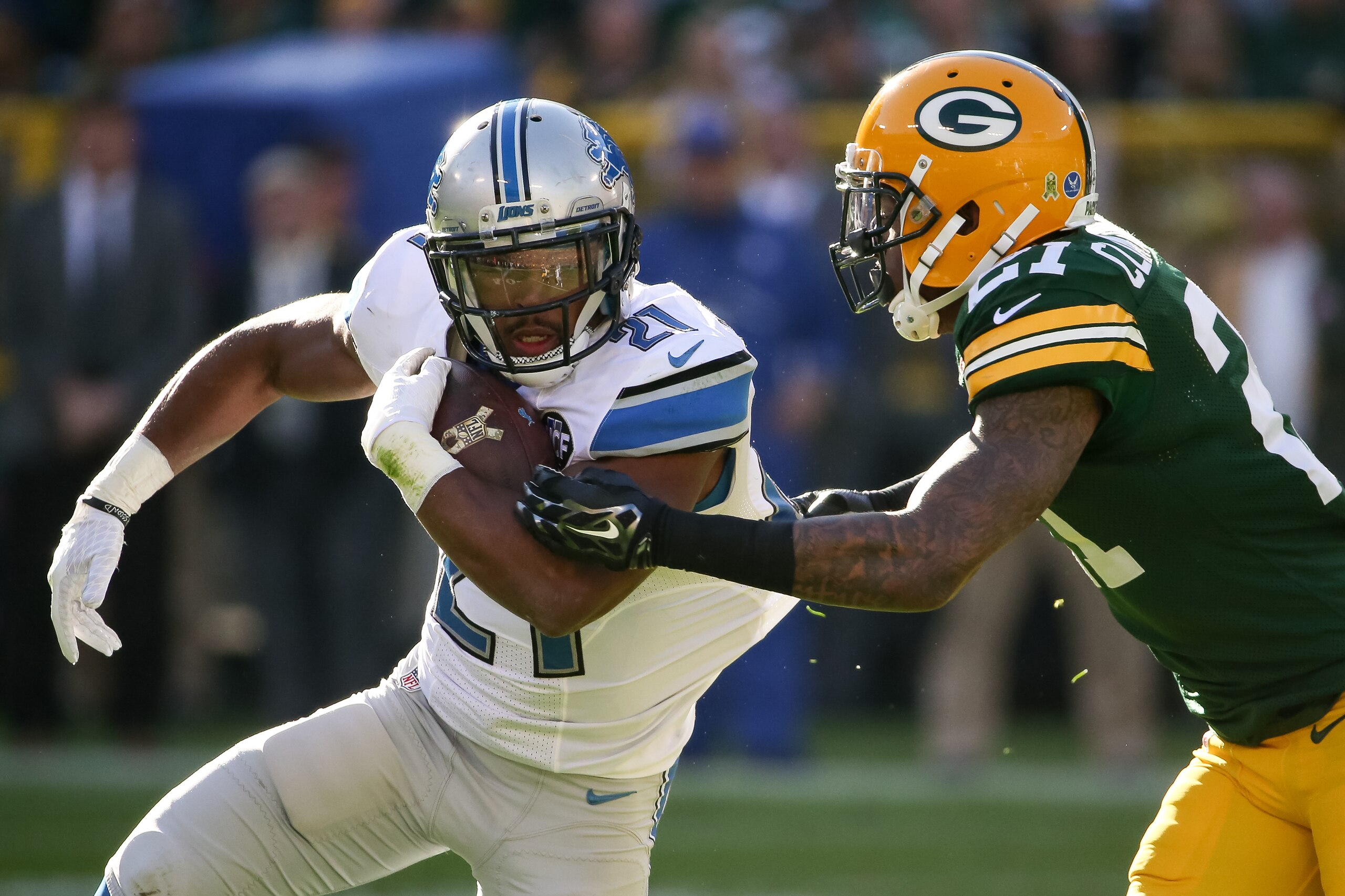
Last week, safety Ha Ha Clinton-Dix was shown on camera getting in veteran Julius Peppers' face, at which point nose tackle B.J. Raji came over and shoved Clinton-Dix.
This week, Clinton-Dix had a huge interception in the red zone and Raji was one of the first players to give his teammate props for the big play.
There's no question that the players are frustrated. No one, least of all them, expected the team to be struggling so much by midseason. Those frustrations took the form of scuffling against Carolina.
But good play begets more good play; it's why the saying "sacks come in bunches" rings so true. Clinton-Dix's example reinvigorated the defense. The Lions only managed a field goal on their next drive, though they would go on to score a touchdown in the fourth quarter.
And the safety himself finished with 11 total tackles on the day, a team high, as well as a tackle for loss and a pass defended.
Unfortunately, Clinton-Dix left the game and was being evaluated for a concussion, Jason Wilde of ESPN Wisconsin reported.
There's no question Clinton-Dix's interception kept the Packers in the game, and the rookie redeemed himself after his poor play and sideline debacle last week.

Packers Pass Rush Is an Endangered Species
4 of 5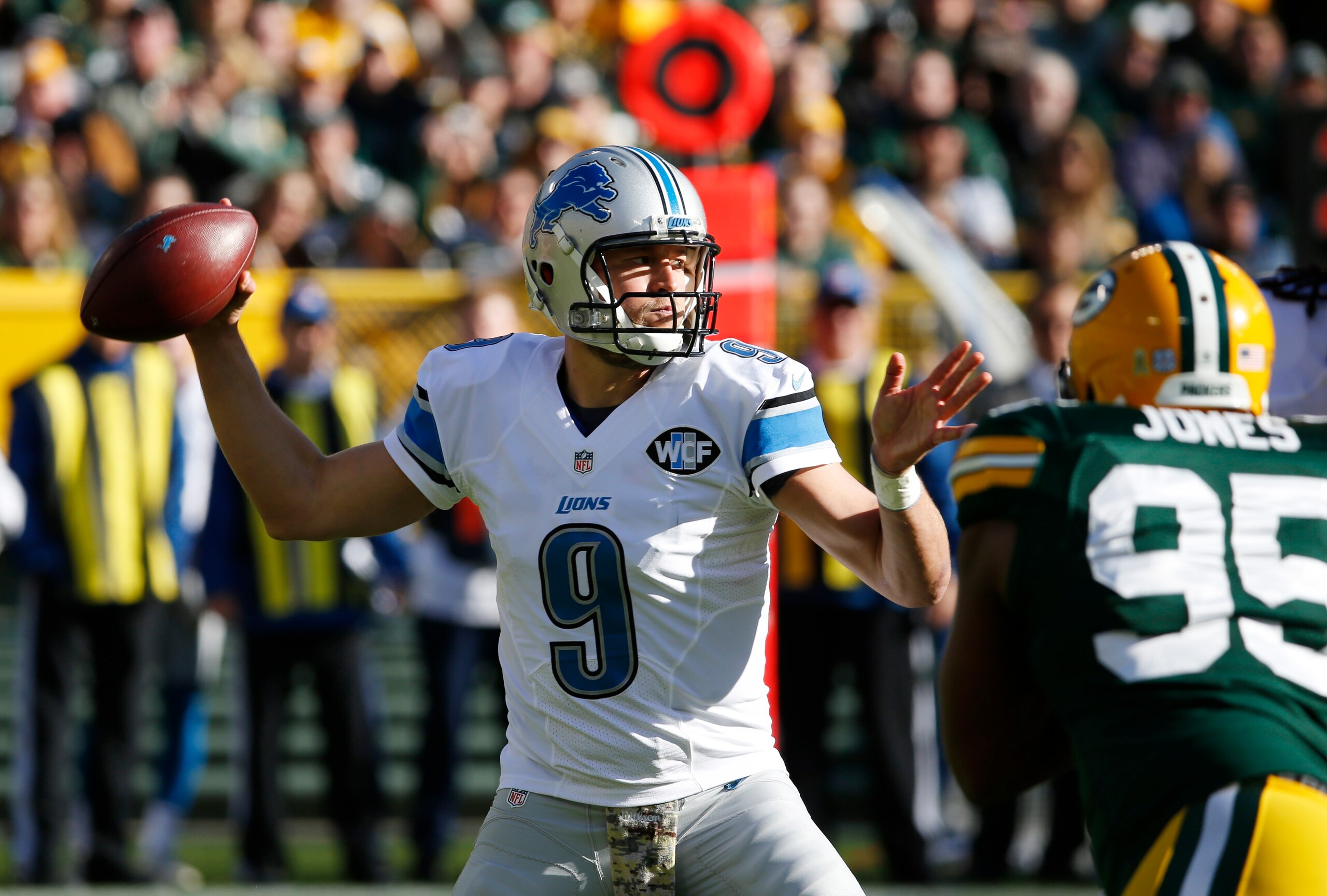
Sure, the Denver Broncos' and Carolina Panthers' game plans were designed specifically to neutralize the Packers' pass rush. Denver stretched Green Bay's defense sideline-to-sideline, while Carolina used max protection.
But then what's the excuse for Sunday, when the Packers had zero sacks on Matthew Stafford?
Now, pressure is about far more than the number of sacks on the stat sheet, and the Packers did have seven hits on Stafford. But nevertheless, it's now been 12 quarters of football since the Packers were able to bring an opposing quarterback down, and the Packers have lost all three of those games.
Offenses can game-plan to neutralize the pass rush, and they certainly have been against Green Bay. But whether it's Peyton Manning getting the ball out lightning-fast or the Panthers keeping in extra blockers for Cam Newton, the Packers have to make adjustments on the defensive side of the ball to exploit those offensive game plans.
Let's be clear: Stafford and the Lions offense did not beat the Packers on Sunday. The Packers offense beat itself, and the defense, all things considered, did its job.
But the Packers and defensive coordinator Dom Capers have been accused of failing to make necessary in-game adjustments, and the sack drought reinforces that opposing offenses can out-scheme them.
James Starks Needs Some Help in the Backfield
5 of 5
Given the way he's played this season in contrast to Eddie Lacy, James Starks deserved to be named the Packers' starting running back.
But no man is an island, and Starks is going to need a one-two punch to be successful out of the backfield.
Lacy sat out Sunday's game with the groin injury he suffered against the Carolina Panthers in Week 9. And while Starks was a big contributor in the passing game, catching six passes for 54 yards, he wasn't able to have the kind of success the team needs from a feature back on the field.
Starks had 42 yards on 15 carries, averaging just 2.8 yards per attempt, much lower than his season average of 4.3. He had a nice nine-yard run on a 2nd-and-17 in the second quarter that put the Packers in position to earn a first down and a couple of five-yard runs.
But there were also runs in which Starks gained only one yard or no yards at all. He left yards on the field in many instances.
The Packers need Starks, especially in the passing game. But they also need a bruiser who can fight for yards after contact. Hopefully, Lacy can get healthy, and the two can work in tandem, even if Starks keeps the starting job.

.jpg?w=2560 "Rams Eagles Football")
.jpg?w=2560 "Grading WWE Raw 🔠")


.jpg?w=2560 "Injury-stricken Seahawks signing veteran RB")
