

Former LSU Players Reveal the Origins of Les Miles' 'Lesticles' Nickname
I jumped into this piece expecting to craft a story about a madman with a magic football formula. I expected to pass along stories of improvisation, outlandish sideline charades, peculiar play-calling vernacular and moments of accidental genius. That was the genesis of the idea.
However, after speaking to those who executed Les Miles’ wizardry over the years, it became increasingly apparent these preconceived notions were certifiably false.
Still, along the way, I unearthed the Mad Hatter’s top-secret formula for executing the unthinkable calls—the fake field goals, the fake punts, the fourth downs. All of them.
TOP NEWS

Week 5 AP Top 25 Poll 🔢

Updated CFP Bracket Projections 🔮
Top Overreactions after Week 5 of CFB Season 😧
It’s all so clear now. This reveal will change everything.
Miles’ Mad Hatter recipe calls for the following mystery ingredients: endless repetitions, meticulous planning, incredible patience and just the right players to execute just the right plays against just the right opponents in just the right moments.
There is no magic here. Well, perhaps there is still a bit of sorcery.
“You still got to have the cojones to call it,” former LSU running back Jacob Hester told Bleacher Report. “But when he calls it, he has faith in it.”
One more time, because this part is important…
“It’s Les. They call him Lesticles,” former LSU kicker Colt David said. “Just to have the balls to call some of those plays, it keeps teams on their toes.”
It happened again, just a few short weeks ago.
All squared up at 28-28 with undefeated Florida in the fourth quarter, Miles dug into his bag of goodies.
Instead of settling for a three-point lead, Miles and his staff decided on something different. They decided that, in this particular moment, 170-pound kicker Trent Domingue was a threat to score.
So they made the call. And it worked.
From a distance, the play calls—the elaborate moments of deception, even the ones that fall fantastically flat—appear as though they were drawn up on a cocktail napkin late at night in a back-roads Louisiana bar. Oh, what a glorious midnight concoction.
That’s a fun working theory. It’ll push that Mad Hatter nickname and narrative forward. Stick with it if you’d like.
The reality, however, is that it’s far more science than it is magic. There’s a fair amount of instinct involved to make it function—trust, too—but this is much more calculated than he gets credit for. There is a method behind the madness.
The Art of the Perfect Flip
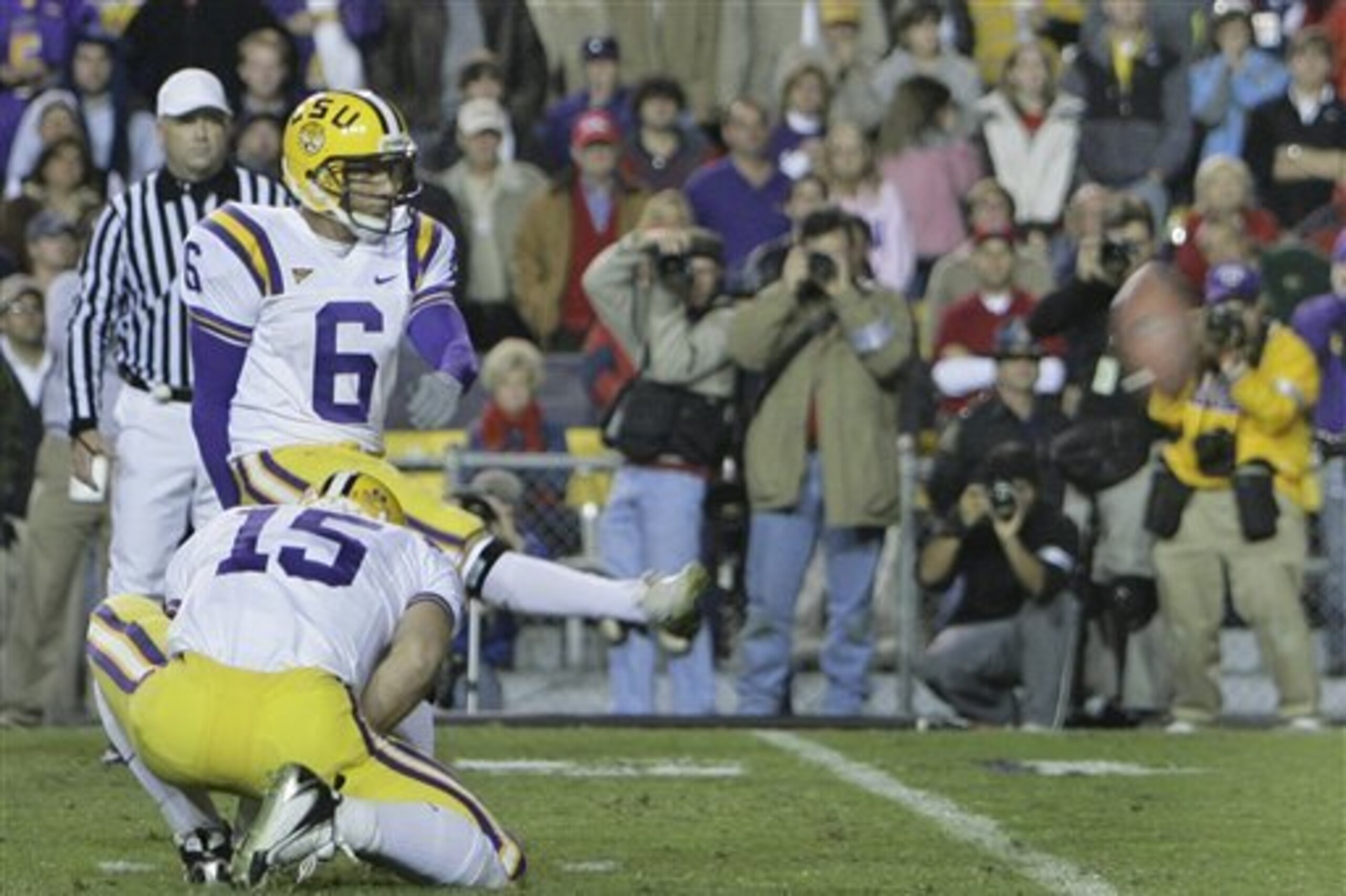
It was September 22, 2007.
Up a touchdown over Steve Spurrier’s South Carolina Gamecocks approaching halftime, LSU lined up to kick a 32-yard field goal.
Push the lead to 10, head into halftime up two scores—it seemed like a foregone conclusion. Plus, in the midst of one of the most successful kicking seasons in SEC history, Colt David was close to a guarantee from this distance.
Then the call came in from the sideline just before the ball was snapped: Roxie.
“To be honest, I was over in the kicking net,” David said. “I had no idea we were running a fake until seconds before. Matt Flynn made the call, and I had about one second to realize that, holy s--t, we’re not kicking it. I didn’t have time to get nervous. It’s second nature, because we practiced it so many times.”
This, according to David, was one of the fakes the team had planned. They typically had three to five special teams calls for each team, depending on the film.
It wasn’t drawn up in a week, practiced over the course of a few days and then put into action. It was carefully manicured, perfected and then, when the coaches felt like they had an opening, executed.
“I can’t tell you the amount of times we worked on that,” Hester said on the fake. “Not only that year, but the year before. Matt had never messed up the flip in practice, but Les still wanted to make sure it was the right play and right call. He kept it in his back pocket.”
Miles loved David’s speed. Rolling back the footage, it’s easy to see why.
Identifying the players with the appropriate attributes necessary to carry out these plays is a significant part of the process. By the time the play is called, the details have been worked out.
Then it’s simply a matter of piecing it together with all of the knowledge acquired.
“You’re running to make it, because you know that if you don’t make it you’re probably going off in a stretcher,” David said, breaking into laughter. “Being a kicker, you dream of kicking a game-winner. Miles gives you an opportunity to kick that winner or score a touchdown and then go in and kick the extra point.”
The Bounce Pass

The entire sequence smelled of failure. On the verge of a delay of game penalty, LSU called a timeout with 35 seconds remaining as the field-goal unit lined up for a 52-yard attempt. It was October 9, 2010, and the Tigers trailed Urban Meyer’s Florida Gators 29-26.
During the timeout, however, Miles had a change of heart. As kicker Josh Jasper loosened up in the kicking net, weighing the significance of the kick to come, his head coach approached him before he jogged out to the field.
“He told me we were running a fake right before,” Jasper said. “That’s how quick it happened. When you get the call, it’s such an adrenaline rush. Everyone on the team loved him for this. It was one of the best memories I had as a Tiger.”
Instead of kicking the field goal, holder Derek Helton tossed the ball over his head—a familiar motion—in Jasper’s direction. Only the kicker did not catch the wayward toss on the fly.
Jasper, having to improvise, gathered the favorable bounce quickly off the turf and somehow rumbled for the first down.
Not only did the pitch hit the ground, but it was also almost a forward pass. Almost didn’t matter. The play was upheld, which gave LSU a few more plays to do more than tie. After a long completion, quarterback Jarrett Lee hit Terrence Toliver on the game-winning touchdown.
It was all set up by the fake. No, it wasn’t perfect. But it did work.
“A lot of coaches don’t have the nerve or want to do anything like that,” Jasper said. “But I don’t think he thinks twice about it to pull those plays off because he has such confidence in us. We put a lot of work into it. The time put into it makes us so much more confident.”
Over the course of his kicking career, Jasper recalled at least three separate occasions when the fake was called and they had to opt out of it at the last second. The opposition might have lined up differently.
The situation they studied and planned for just wasn’t right. They didn't push for it. Timing was key.
“People think we just draw this stuff up on the sidelines,” Jasper said. “It doesn’t happen like that. Everybody thinks he’s crazy for all the trick plays and the fourth downs, but to me it comes down to trust. Les has more trust in his players than any coach I’ve been around.”
The Aussie Runs Wild
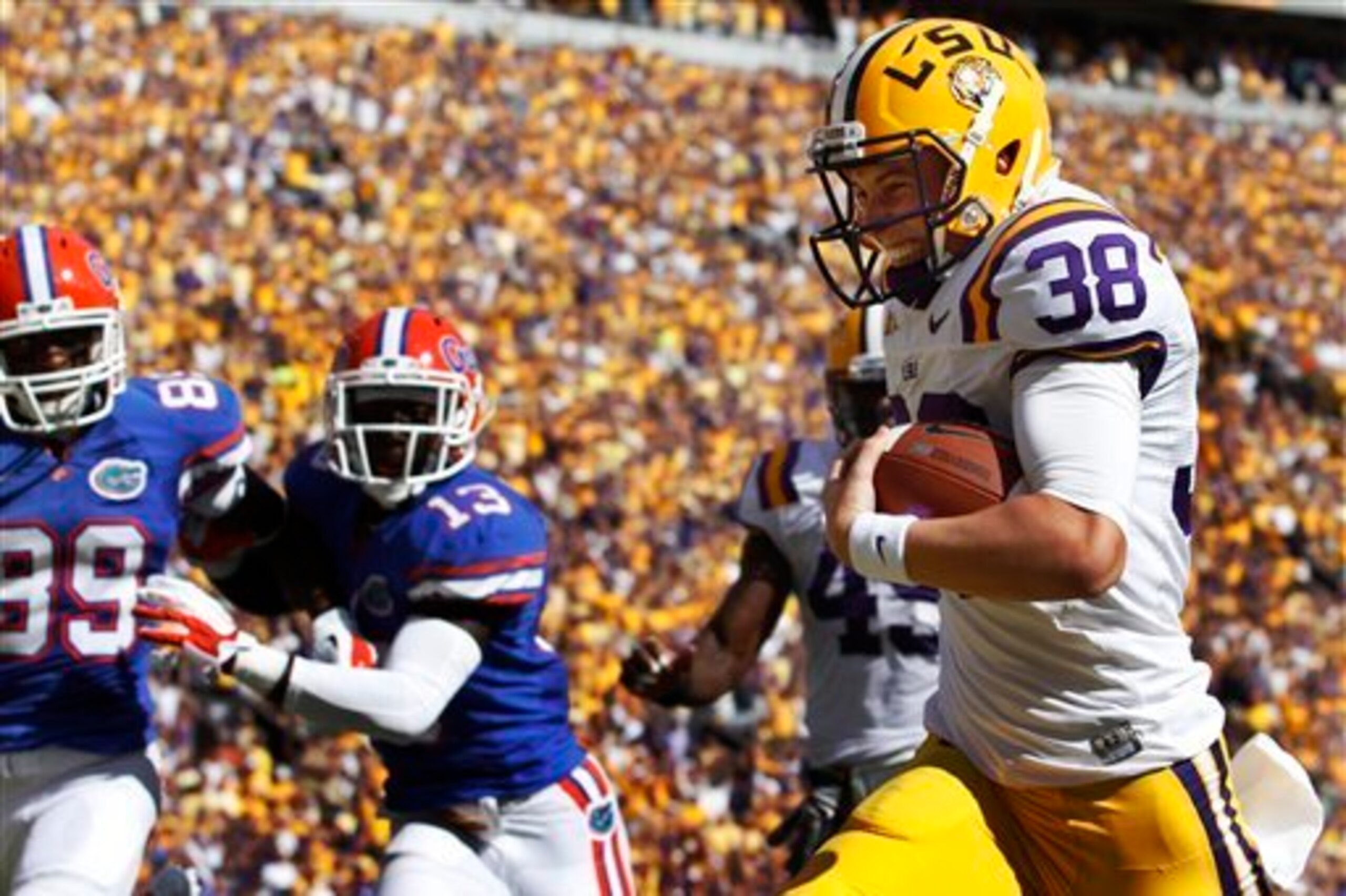
Having made the journey from Melbourne, Australia, to Baton Rouge, Louisiana, seemingly overnight, Brad Wing, LSU’s former rock star punter, exchanged numbers with his new head coach.
“I told him [Miles] that I would give him a bell,” Wing said, laughing over Miles' confusion with the statement at the time. “I had to then tell him that this meant I would give him a call.”
Miles gave his young punter an in-game bell on October 8, 2011. With his team up 14-0 against Florida—a permanent fixture of the fake-ology—LSU sent out the punt team on fourth down at the end of the first quarter. The Tigers were then flagged for illegal formation, which pushed them back five yards.
On the next play, an assumed punt, Wing pulled off one of the most memorable plays of the 2011 season—a moment in time that will live on for an assortment of reasons.
“I caught the ball, looked up, and we just started running down the sideline,” Wing said. “Les, unlike many other coaches, always gave me the option to fake it. We didn’t have the fake punt called on that play. It was more of him having the trust in me to take an opening if it was there.”
Yes, a taunting penalty—remember that ridiculous rule?—nullified Wing’s score. As a result, LSU ultimately had to settle for a field goal. But the play, a brilliant bit of calculated improv, was yet another bit of Miles magic.
The penalty prior to Wing’s long scamper was a freebie of sorts—like a kicker getting off a practice field-goal attempt before being iced in a key moment. It was an unexpected glimpse into the future. When Wing saw that one side of the field would be open, he altered the script.
“It might not be valuable for every week, but we still practiced it so when the moment came we could execute,” Wing said. “The guys knew what to do, and they felt comfortable doing it. He was never afraid to take some risks, which the players really liked.”
So Is He Truly Mad?
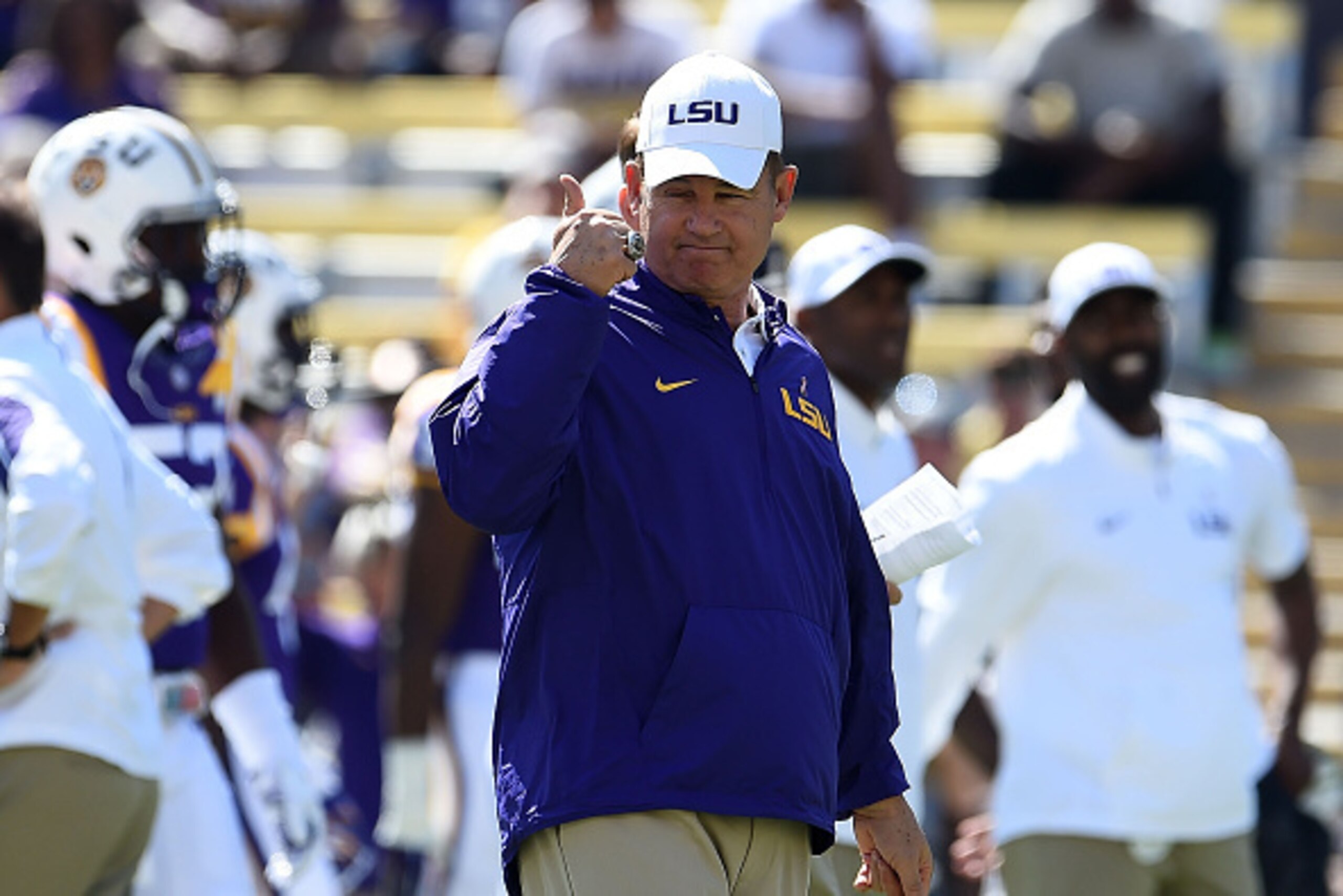
Miles’ cartoonish reputation, headlined by his affinity for meaty sound bites and his propensity to eat morsels of grass on live television, have painted him as something he is not.
Oh, he’s unconventional and wildly entertaining. He’s the perfect combination of odd and original. But he’s also brilliant and industrious. The robust salary and job title is not the product of his eccentricities; it's all out of repeat success.
And yes, his ability to push his opponent in unassuming situations has shaped his legacy. More importantly, it has won his program more than just a handful of games.
The next time Miles successfully executes a fake—perhaps as soon as Saturday against Alabama, or perhaps not until next fall—keep in mind how it came together.
This isn’t your crazy uncle drawing up some sort of grand master plan at Thanksgiving dinner; this is a professional and his team of professionals, after countless hours of gathering intel, executing a well-designed plan based on meticulous timing and alignment. There’s nothing mad about it.
Sure, there’s a great deal of risk. That’s something that should be celebrated. It’s also the part that’s most difficult to duplicate. But it’s calculated risk.
The whole thing is thought out weeks, months and sometimes years in advance. That’s what makes him mad. It’s finding an edge in areas that others have not mastered and showing a willingness to pull the trigger—if that moment calls for it.
“The stage is never too big. There’s no nervousness,” Hester said. “That’s what makes him the Mad Hatter. He’s willing to do anything at any time.”
Unless noted otherwise, all quotes obtained firsthand.
_0.png?w=2560)


.jpg?w=2560 "Grading WWE Raw 🔠")

.jpg?w=2560 "Viral Rams Coach Vid 🖕")


.jpg?w=2560 "Injury-stricken Seahawks signing veteran RB")
