Why Seattle's Legion of Boom Is No Longer Scaring Opponents
The Seattle Seahawks secondary is struggling.
It's not evident in their raw numbers. The defense as a whole ranks ninth in points allowed per game with 19.6 and fifth in yards per game with 306.8. Against the run, the Seahawks are giving up just 92.6 yards per game, seventh in the league, while the pass defense ranks 11th, giving up 214.2 yards per game.
Where the Seahawks' struggles can be reflected is in advanced analytics. Football Outsiders' DVOA metric, which measures snap-by-snap efficiency, ranks the Seahawks defense 12th overall and 17th against the pass. Out of 28 teams last week, they ranked 17th in pass defense DVOA.
TOP NEWS
.jpg?w=2560 "Colts Football")
Jonathan Taylor Landing Spots
.jpg?w=2560 "NFL Paris Football")
NFL House in Paris Closes for Protests (AP)
.jpg?w=2560 "Seahawks Chiefs Football")
Trevon Diggs Cut by Seahawks
A lot of reasons can be put forward to explain their struggles so far.
Before the season even began, both Richard Sherman and Earl Thomas were dealing with lingering effects from last season. Neither player missed a game, but the same couldn't be said for Tharold Simon and Jeremy Lane, two cornerbacks who have barely featured this year because of injuries. Lane hasn't played at all.
To compound the team's injury issues, All-Pro strong safety Kam Chancellor held out through training camp and the first two games of the season. Chancellor wanted a new contract that never came. He ultimately returned to the team and started immediately but has naturally shown rust.
When you add in that Cary Williams has replaced Byron Maxwell as the team's starter across from Sherman, it shouldn't be surprising the unit has looked a little disjointed.
Against the Cincinnati Bengals in Week 5, the Seahawks held the Bengals to one score until the fourth quarter. However, that one score came easily when the secondary blew multiple assignments on one drive.
Furthermore, they only held the Bengals to one score because the defensive line drew a holding penalty that negated a 72-yard touchdown reception by A.J. Green in the first quarter.
In the Seahawks defense, it's important for every piece to be in tune with each other. They need to understand and react to routes in concert to properly execute their Cover 3 foundation. The more this unit plays, the better they should be as players move further away from injuries and absences while (re)building their chemistry with one another.
The biggest concern for the Seahawks is the play of Williams.
As the second cornerback in a defense that typically isn't blitz-heavy and has dominant coverage players at every level, Williams' job is easier than that of most starting cornerbacks in the NFL. Maxwell highlighted that last season when he excelled to the point that the Philadelphia Eagles gave him a huge contract.
Maxwell is discovering it is tougher to play in more space for longer periods, but Williams is yet to take advantage of his new situation.
Williams hadn't played well during the first four weeks of the season, but he also hadn't been badly exposed. Against the Bengals, that all changed, as the opposition was able to take advantage of the mismatches his presence on the field created.
By the measure of Pro Football Focus, Williams gave up four receptions on six targets into his coverage for 63 yards. He was also the player at fault for Green's negated 72-yard touchdown reception, so those numbers don't do his display justice.
Even though Maxwell wasn't/isn't an exceptional talent, he played to his assignments in the coverage schemes and executed effectively.
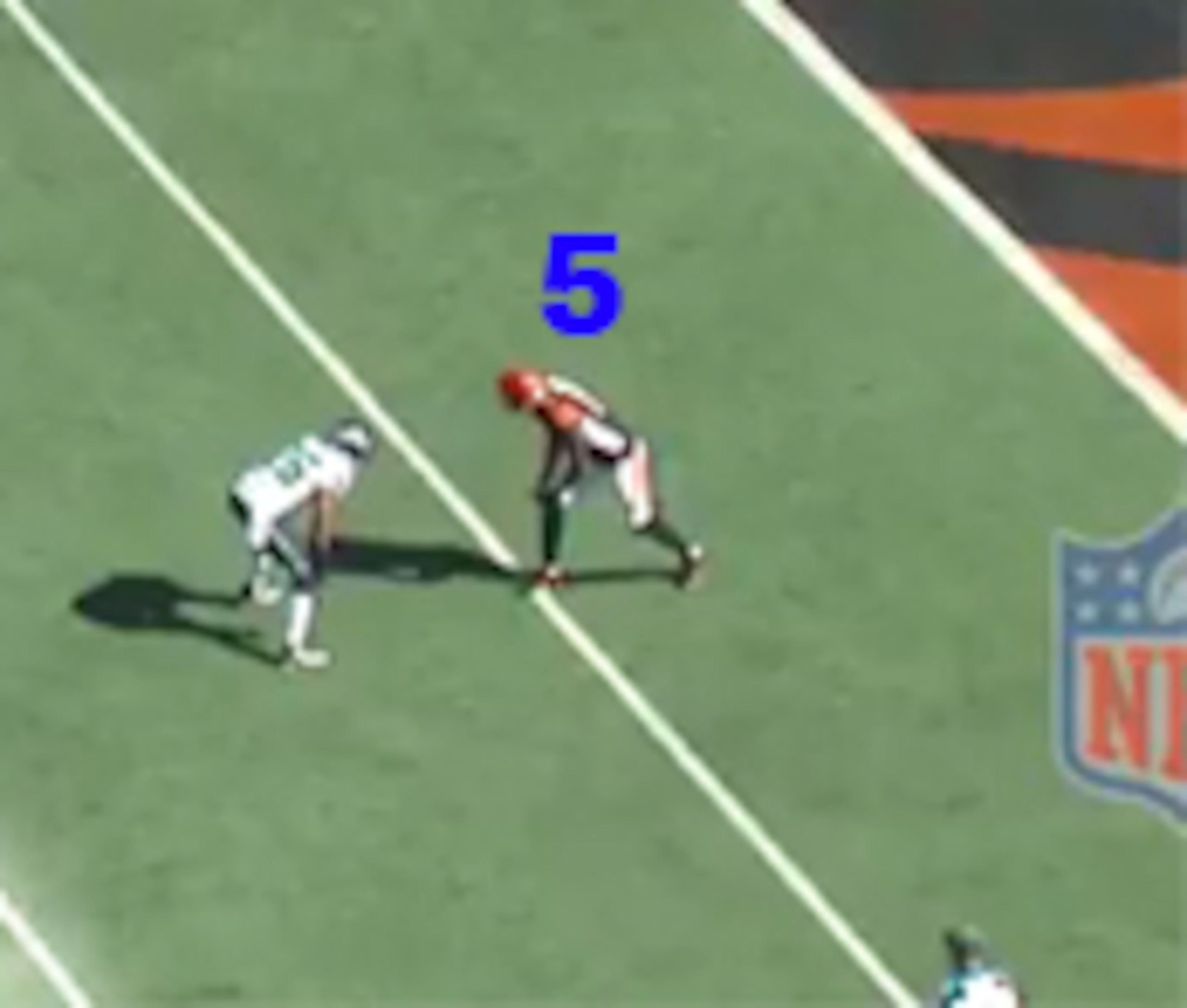
Hue Jackson did a good job of getting preferable matchups by alignment throughout this game. On this play, Green is lined up to the left with every other skill position player on the opposite side of the quarterback. Williams is covering Green as the right cornerback.
Because the tighter side of the field is to Green's side, Thomas has aligned offset to the opposite side to help account for the four other receiving options on the field.
The Seahawks essentially line up in a 3-4 look with defensive end/linebacker Cliff Avril in a two-point stance to Williams' side of the field. Before the snap, Williams should understand Avril is going to drop into coverage underneath him at the snap.
As such, he doesn't need to be aggressive against Green at the snap despite lining up in press coverage.

Despite the alignment of the offense and the play call from the defense, Williams attempts to punch Green at the snap. He aims for the receiver's inside shoulder and leans forward with both hands. Green is too quick and fluid for this.
Williams' attempt to jam Green at the line was easily knocked away by the receiver.
He was able to release toward the sideline with ease while Williams' momentum sent him in the wrong direction. Losing at the line of scrimmage isn't something Williams can afford to do against any level of receiver, but especially not against someone of Green's caliber.

On the opposite side of the field, Sherman bailed out of his press alignment. Had Williams done this, he would have been in position to cover Green's sideline route. Instead, Williams stumbles as he attempts to recover the space he initially lost.
If Andy Dalton's pass had been better placed and flighted, Green likely would have continued downfield unopposed for a huge gain.
Because Dalton's pass floated and arrived above the receiver's head instead of in front of his face, the receiver had to slow down to adjust to the ball. This gave Williams enough time to recover, but the receiver had gained 22 yards by that point.
Williams couldn't even point to the game situation to justify his aggressiveness. It was 1st-and-15 deep in Bengals territory.

Immediately after that 22-yard gain, Jackson came out in a similar formation with three receivers to the wide side of the field, and Green matched up with Williams alone to the opposite side. Williams is once again in position to jam Green at the line of scrimmage.
The Seahawks came out in a similar alignment, with Thomas offset to the far side, but Bruce Irvin is the linebacker to Williams' side instead of Avril.
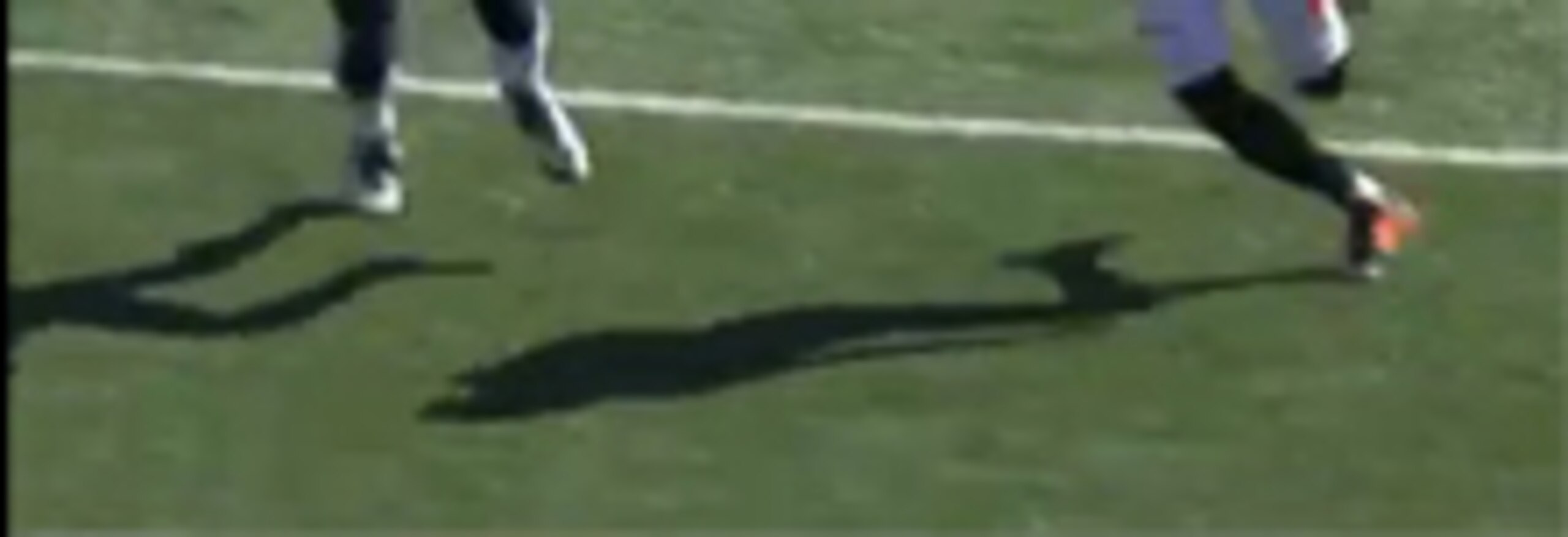
Williams doesn't look to engage Green at the snap at all. Instead, he attempts to mirror Green's release as he angles toward the sideline. The cornerback shows off heavy feet that prevent him from turning with the receiver.
To mirror Green in this situation, Williams needed to make short, quick movements with his feet so he could gradually turn his shoulders with Green.
Because he was incapable of doing that, Williams attempted to shift all of his weight at once to turn with Green. This led to both of his feet leaving the air and a laborious overall movement. By the time Williams was in position to run down the sideline, Green had already begun to pull away.
Green's gain was limited the last time by Dalton's ball placement, but that wasn't the case on this occasion.

Green beat Williams on both plays. He got in behind him and had clear space in front of him down the sideline. One play resulted in 22 yards, and the other went for 72 yards. The only thing preventing Williams from giving up more than 80 yards on the first play was Dalton's ball placement.
The Seahawks kept Williams away from Green after that, following him around the field with Sherman.
Even though he wasn't covering the Bengals' best receiver, Williams was reliant on poor ball placement from Dalton once again. Before the first quarter had come to a close, the veteran cornerback attempted to cover Mohamed Sanu in the slot. This resulted in another big gain.

Williams' heavy feet were again the issue. He lined up square to Sanu close to the line of scrimmage. He didn't look to engage him at the snap, instead allowing the receiver space to release inside. The cornerback's feet were so slow that it looked like he was playing outside technique.
There was no safety waiting for the receiver, though. Williams wasn't funneling him toward anything but space.

Given a head start, Sanu is able to pull away from Williams in a hurry. He is streaking across the field to wide-open space, as Thomas had moved to the other side of the field at the snap. Had Dalton led Sanu across the field by throwing to the green spot, Sanu would have continued downfield.
He would have had a chance at running in a 75-yard touchdown, but instead he had to slow down and reach backward to catch the ball.
This poor ball placement should have given Williams a chance to break the pass up, but he was too slow to do that. His lack of speed limited him to making a tackle after the reception—a reception that still went for 21 yards.
Each of these plays came during the first quarter, but there were many more throughout the rest of the game to point to also.

On this play, Marvin Jones beats Williams on a double move downfield. The pressure up front prevents Dalton from locating his receiver, though. The Seahawks had a safety deep, but he began the play playing the middle of the field.

On this play, Williams attempts to be aggressive against Jones early in his route. That gives Jones an opportunity to get in behind him. Had Dalton not overthrown his pass, Jones would have had a positioning advantage against the cornerback as he focused on catching up to his opponent.
Williams had multiple pass-interference penalties against the Bengals. The first came when he used an outstretched arm to slow Jones in his route down the sideline, and the second came when he was too early and aggressive with his attempts to disrupt the receiver at the catch point.

Sanu was able to beat Williams from the slot again late in the game. This time he ran a shallower crossing route, but Dalton pushed the ball downfield to Tyler Eifert instead. Eifert would get an opportunity to beat Williams also, though.

The tight end was isolated against Williams on the outside. He ran a crisp slant route and got inside of the cornerback. Williams couldn't impact the ball because of Eifert's size. He should have at least made the tackle; instead, he let Eifert continue downfield.
It's easy to compare Maxwell to Williams in this scenario, as Maxwell was better at using his length to disrupt bigger receivers and was a more assured tackler in these situations.
Although the Seahawks secondary has some issues to address, more than just Williams, they don't have any real reason to be concerned over the long term outside of his play. The cornerback doesn't have a track record of success in the NFL; he has proven to be a limited player for a long time.
Williams is 30 years old and has been in the NFL for eight seasons. Over those eight seasons, he has had four teams.
He signed a relatively large contract with the Philadelphia Eagles in 2013, but he proved to be one of the worst starting cornerbacks in the NFL for two years before he was released. That was why it was such a surprise when the Seahawks gave him such a big contract in the offseason.
It's unlikely Williams plays through the life of his current contract. Lane and Simon will presumably return in 2016, and both should be better options to start ahead of him. However, for 2015, the Seahawks are seemingly stuck with Williams as their full-time starter across from Sherman.
They should still be able to excel with just one weakness in the secondary, but their days of intimidating the best quarterbacks in the NFL may be over for now.
.jpg?w=2560)