

College Football Assistants Making Strong Cases for Head Coaching Jobs
We just started October, but it’s never too early for the college football coaching carousel to start spinning.
Before the 2015 season even began, Illinois fired coach Tim Beckman following an external investigation regarding his treatment of players. On Thursday, Jeff Ermann of Inside Maryland Sports reported that Maryland coach Randy Edsall is expected to be fired soon, perhaps as early as next week, following the Terrapins’ visit to No. 1 Ohio State.
And that’s likely only the beginning. Last winter, high-profile programs like Florida and Michigan replaced their coaches.
Who will ride the carousel as 2015 flips to 2016? More than two programs, to be certain. Those programs will need new leaders, and looking at their coordinators is an excellent place to start a search (Athlon Sports' Steven Lassan wrote a great piece about coordinators on the rise for 2015).
Which coordinators have earned a look at a head coaching position? Let’s examine the field of coordinators who are making differences on the field early on this season and will be strong candidates when athletic directors start making moves later this fall.
Wisconsin Defensive Coordinator Dave Aranda
1 of 8
Change defined Wisconsin’s 2014 offseason, with Gary Andersen bolting for Oregon State and Madison native, Wisconsin alum and former Badger assistant Paul Chryst coming home to take over the program.
But one of the biggest moves Chryst made was one rooted in stability: Keeping Dave Aranda as defensive coordinator was absolutely crucial.
Last fall, Wisconsin’s defense played a huge role in the run to a Big Ten West title, allowing 20.8 points per game (No. 17 nationally) and 294.1 yards per game (No. 4). A defense that returned seven starters has held up its end of the bargain so far this season.
Wisconsin is allowing just 9.6 points per game (No. 4 nationally) and 278 yards per game (No. 11). While the Badgers are 3-2 following a 10-6 home loss to Iowa, that certainly can’t be placed at the defense’s feet. Aranda knows how to run a defense and could get a chance to run a program of his own before long.
Oregon Offensive Coordinator Scott Frost
2 of 8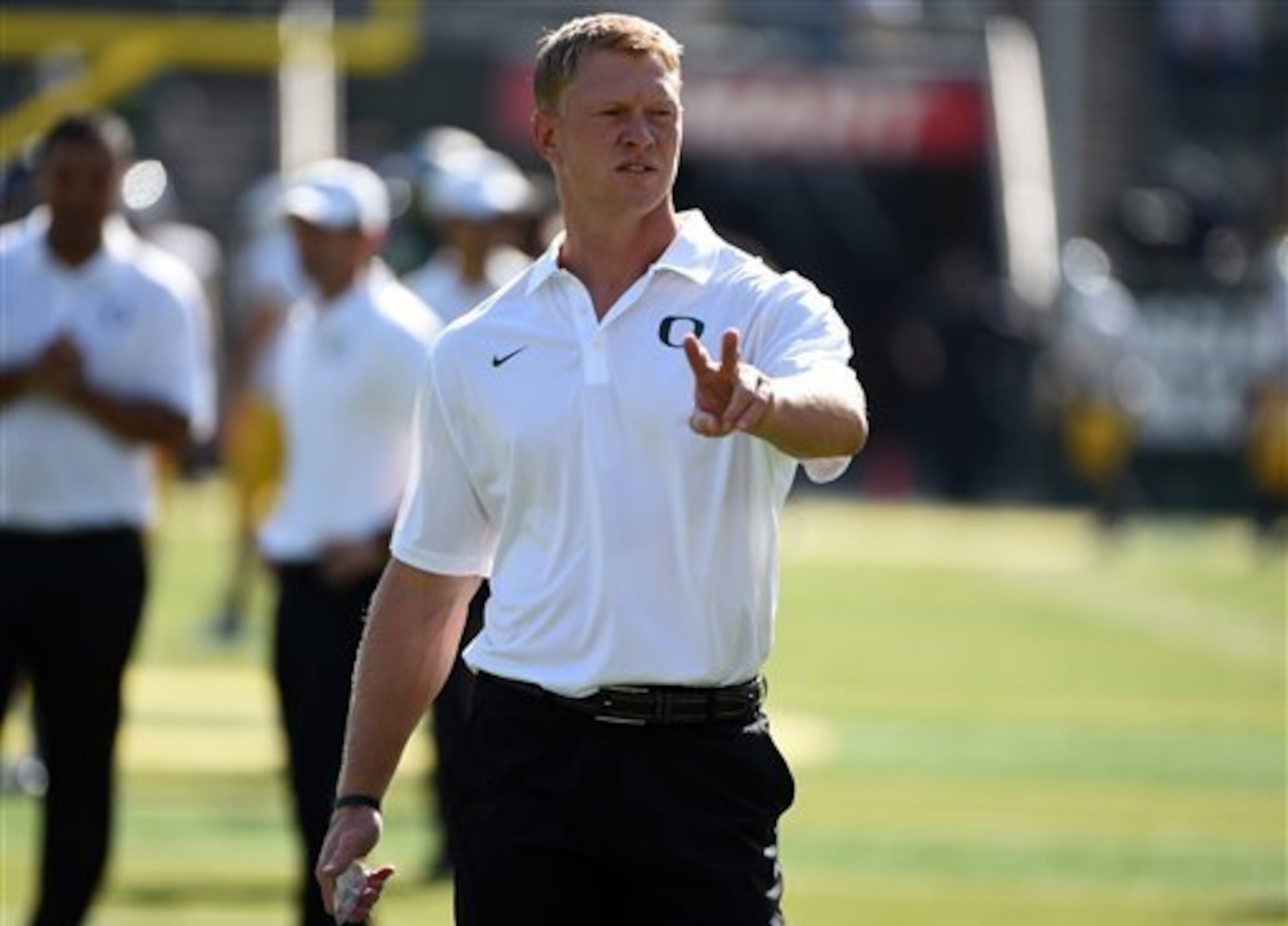
Let’s face it: This wasn’t the best month for Oregon’s program.
The 2014 national runners-up endured a turbulent month that saw them go 3-2 with a narrow road loss at Michigan State and an embarrassing 62-20 thrashing at Utah’s hands inside the not-so-comfortable confines of Autzen Stadium.
That said, it shouldn’t dampen offensive coordinator Scott Frost’s star much. Frost was a major factor in Marcus Mariota’s Heisman Trophy campaign, and Oregon’s talent under center has taken an understandable dip with Vernon Adams and Jeff Lockie at the helm. The Ducks average 227.4 passing yards per game (No. 66 nationally).
However, offense hasn’t been the biggest issue in Eugene. Oregon averages 42.2 points per game (No. 9 nationally), and its ground game is churning out 300.4 yards per game (No. 8), with sophomore Royce Freeman leading the way.
If Oregon can maintain these numbers, its fortunes will change, and Frost’s head coaching stock will rise, too.
TCU Co-Offensive Coordinator Doug Meacham
3 of 8
Last year, TCU was one of college football’s best stories.
Following a 4-8 record in 2013, coach Gary Patterson completely flipped the Horned Frogs' fortunes by moving to an Air Raid offense run by co-offensive coordinators Sonny Cumbie and Doug Meacham. TCU finished 12-1 and just out of the College Football Playoff, averaging 46.5 points per game with a potent scheme keyed by quarterback Trevone Boykin.
The Frogs haven’t missed a beat this season, averaging 50.8 points per game. Boykin and wideout Josh Doctson form one of the nation’s best passing combinations. Boykin has thrown for 1,802 yards with 19 touchdowns against three interceptions, and Doctson has 42 receptions for 722 yards and eight scores.
If TCU makes another run at a playoff berth, Meacham, who also had success as Houston’s offensive coordinator, could see his name rise up athletic directors’ wish lists.
With Tom Herman, Chad Morris and Philip Montgomery taking the step from running high-powered offenses to their own programs this year, Meacham could be the next such prospect to make the move upward.

Arizona State Offensive Coordinator Mike Norvell
4 of 8
Any list of FBS coordinators destined to become head coaches is incomplete without Arizona State’s Mike Norvell. The Sun Devils have consecutive 10-win seasons under Todd Graham’s watch, but Norvell’s offense has been a huge factor in their success.
A year ago, ASU averaged 36.9 points per game, which ranked No. 16 nationally. The Sun Devils have struggled a bit this season at 3-2, although their upset of then-No. 7 UCLA was impressive.
Through five games, ASU averages 268.8 passing yards per game, No. 34 nationally, and 27.6 points per game with new quarterback Mike Bercovici. Norvell is in his fifth season as an offensive coordinator (one at Pitt and four at Arizona State), and his systems have been consistently prolific and balanced.
An athletic director looking for an uptempo upgrade to his program could do much worse than Norvell.
Georgia Defensive Coordinator Jeremy Pruitt
5 of 8
Georgia’s 38-10 loss to Alabama was ugly, without question. But one game shouldn’t take the focus off the job that second-year defensive coordinator Jeremy Pruitt has done with the Bulldog defense. In less than two years, Pruitt has turned UGA’s defense from something of a liability into a strength.
Last year, the Bulldogs allowed 20.7 points per game (No. 16 nationally), and held foes to 337.2 total yards per game (No. 17) with the nation’s No. 5 pass defense, allowing 170.4 points per game.
This fall, UGA is holding foes to 294.4 yards per game (No. 17), and 18.4 points per game (No. 28).
Despite the defeat, Georgia can still challenge for an SEC title and College Football Playoff berth, and Pruitt’s defense will play a major role. He already won a national title as Florida State’s defensive coordinator in 2013, and his stock appears to be on the rise.
Oklahoma Offensive Coordinator Lincoln Riley
6 of 8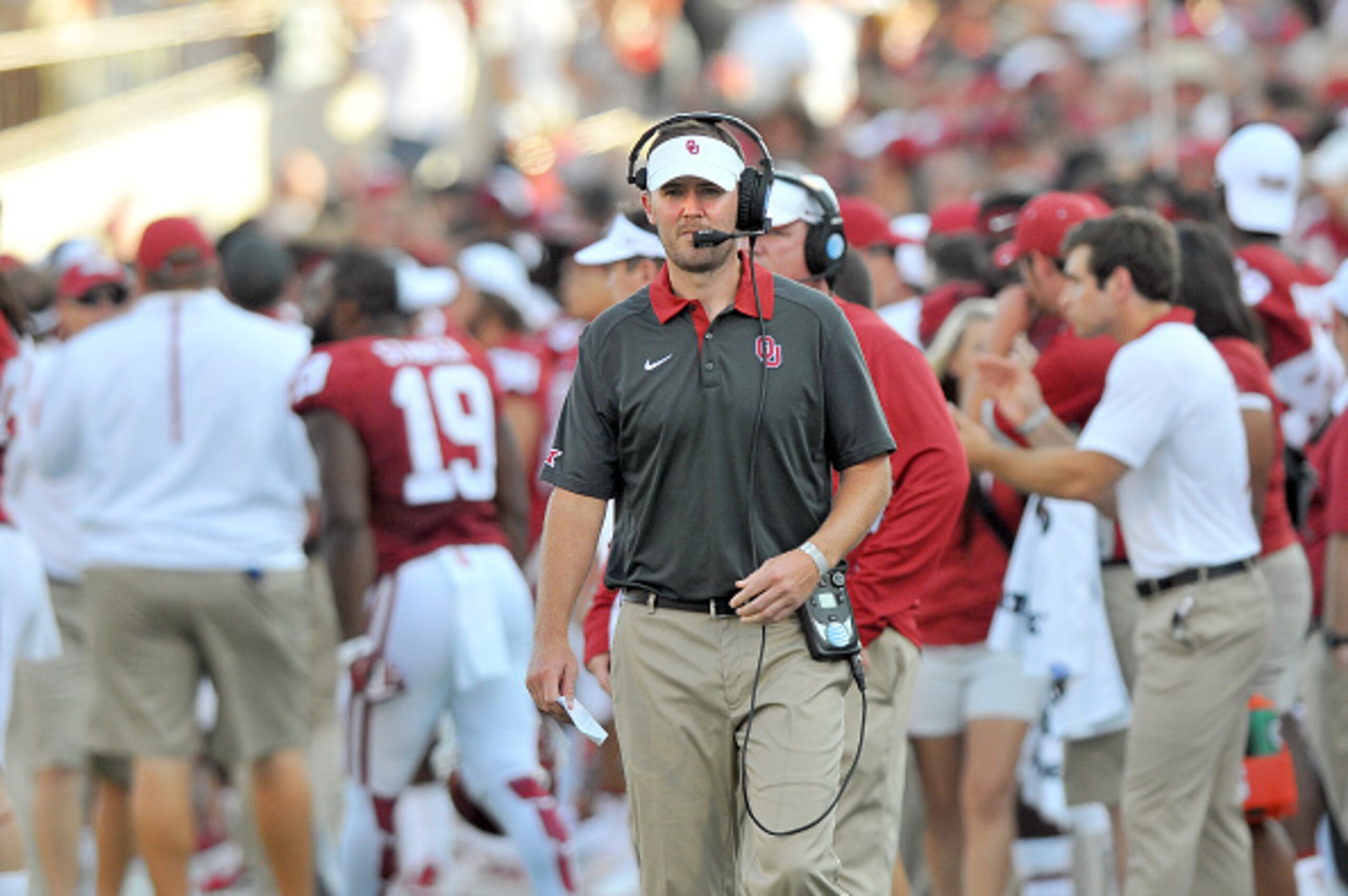
Following a highly disappointing 8-5 2014 season, Oklahoma coach Bob Stoops needed to give his program a jump-start. He found the perfect candidate in East Carolina offensive coordinator Lincoln Riley, who excelled running the pass-happy Air Raid system.
Last fall, ECU averaged 371.9 yards passing per game (No. 3 nationally) and 35.8 points per game (No. 22), and Riley’s scheme, with new starting quarterback Baker Mayfield at the helm, has rejuvenated the unbeaten Sooners. OU averages 42 points and 358.3 passing yards per game (both 10th nationally) and once again looks like a Big 12 contender with Baylor and TCU.
Riley is only 32 years old but already has a solid resume, and his stay in Norman could be a short one if the right opportunity presents itself.
Texas A&M Offensive Coordinator Jake Spavital
7 of 8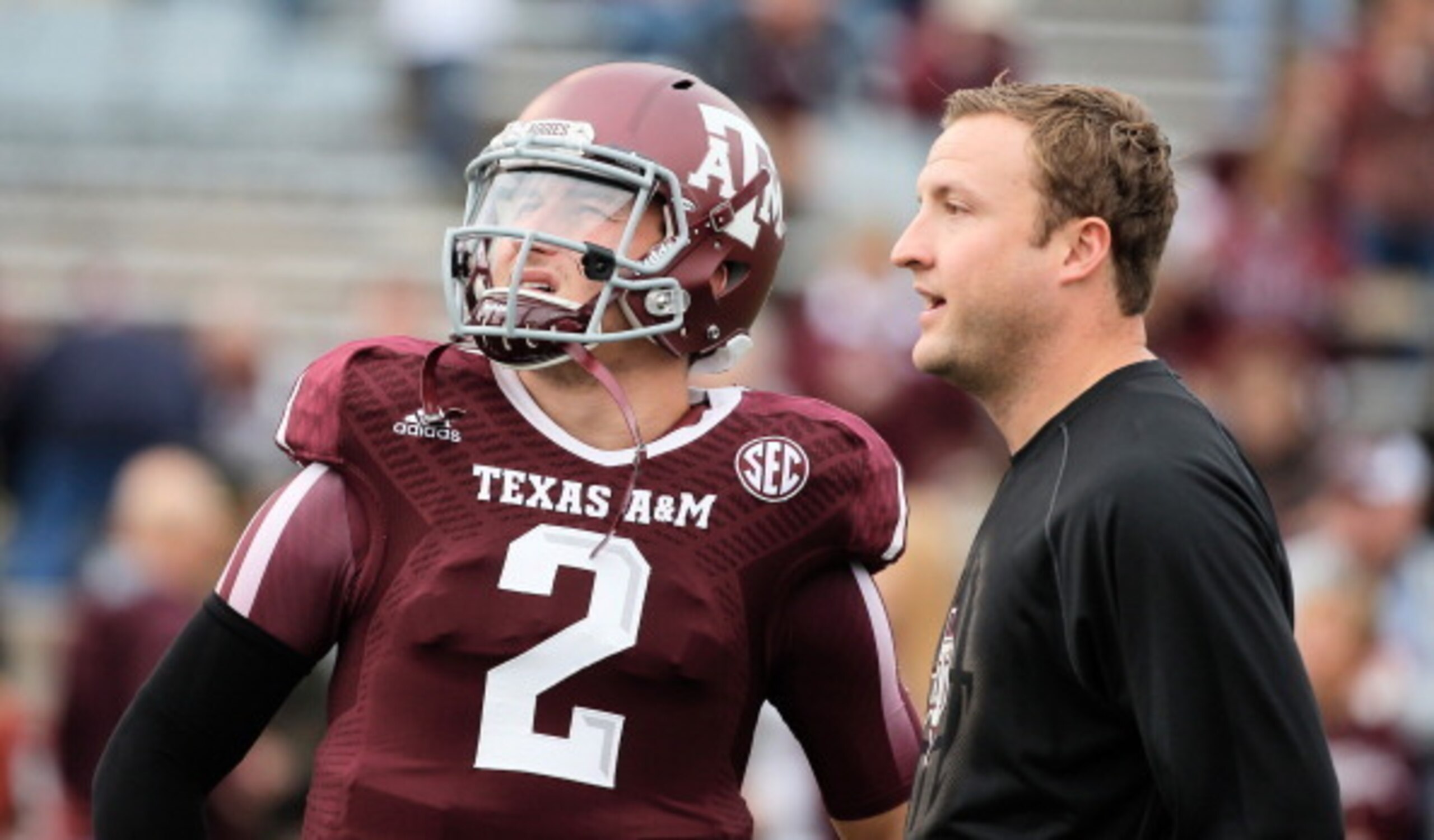
Much of the buzz surrounding Texas A&M’s 5-0 start has centered on new defensive coordinator John Chavis, and with good reason: Chavis is quickly turning around a woeful defense.
But the Aggies offense is as strong as ever, and plenty of credit has to be pointed toward offensive coordinator Jake Spavital.
Spavital is in his third season at A&M but is only 30 years old, which makes him one of the nation’s youngest coordinators. However, it’s hard to argue with his success. Last fall, A&M used a pair of quarterbacks, Kenny Hill and Kyle Allen, but still finished first in the SEC and No. 12 nationally in passing, averaging 305.5 yards per game, and they also scored 35.2 points per game, No. 26 nationally.
A&M is even better this fall with Allen as the unquestioned No. 1, averaging 39.2 points per game (No. 17) and 292.4 passing yards per game (No. 22).
Spavital’s youth might scare some athletic directors off, but his pedigree working with strong offensive minds like Kevin Sumlin, Gus Malzahn and Dana Holgorsen will be a plus for anyone looking to give their program a spark.
Clemson Defensive Coordinator Brent Venables
8 of 8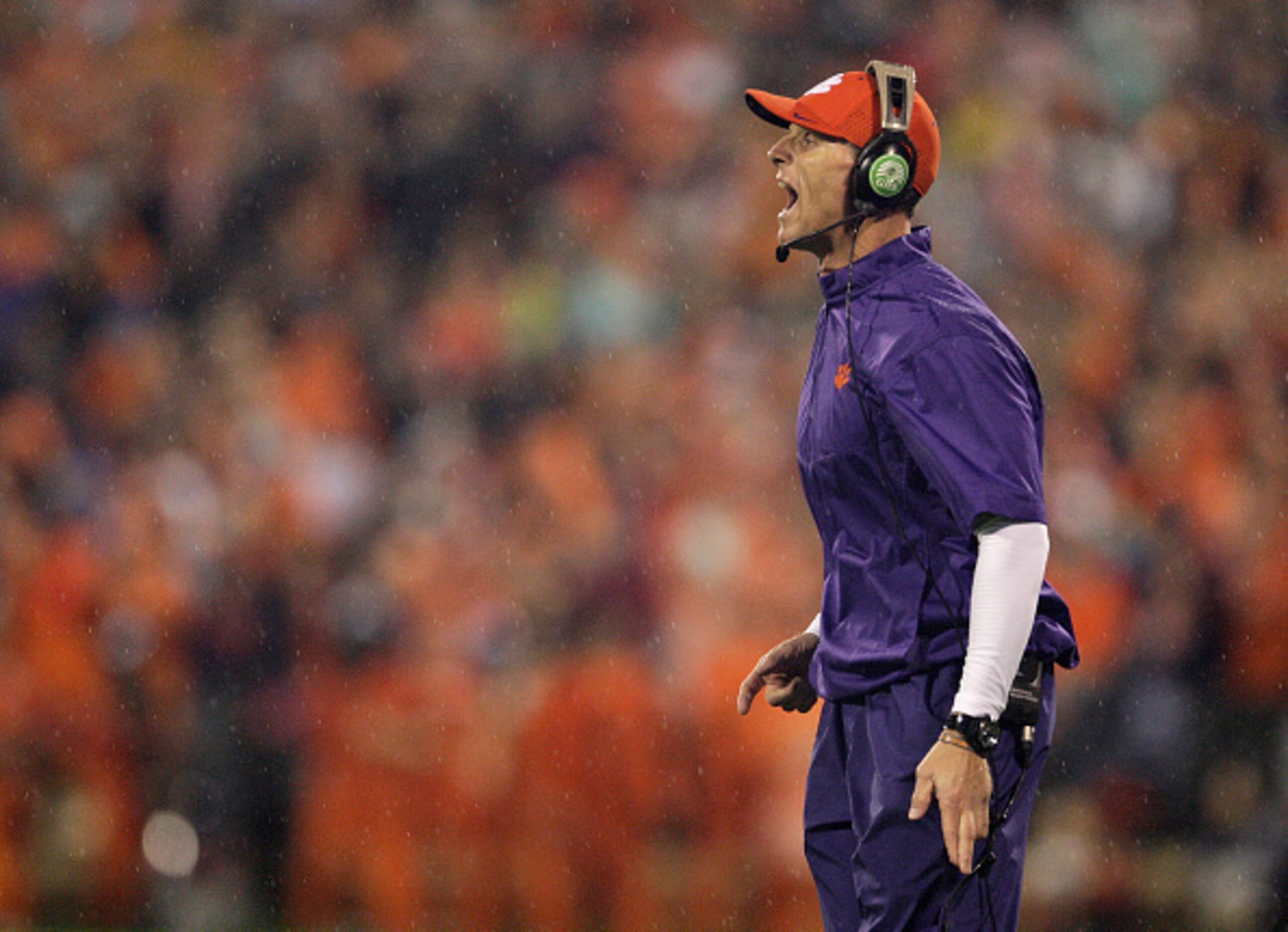
Seven years ago, Clemson needed a head coach following Tommy Bowden’s midseason resignation. Then-CU athletic director Terry Don Phillips conducted a national search, interviewing candidates including Oklahoma defensive coordinator Brent Venables while then-interim coach Dabo Swinney made his case for the job.
No one can argue that Phillips made the right choice with Swinney, who has led Clemson to four consecutive seasons with at least 10 wins and has the No. 6 Tigers in the thick of the College Football Playoff chase. But it’s time to accept that Venables might be ready to make the leap for a head coaching job of his own.
A year ago, the Tigers had the nation’s No. 1 overall defense, but that unit was gutted by graduation, including that of Clemson’s all-time sack leader, defensive end Vic Beasley, a first-round pick of the NFL’s Atlanta Falcons. But even with a young, inexperienced defense, Clemson hasn’t taken a huge step backward this fall.
The Tigers rank No. 23 nationally in total defense, allowing 304.8 yards per game, and are No. 12 nationally in scoring defense, allowing 14.8 points per game. In other words, they’ve reloaded rather than rebuilt.
Venables has done a remarkable job building a defense left in tatters by Kevin Steele’s tenure, and he’s an intriguing candidate for a program hoping to improve its toughness and defense.
It is fair to note that Venables received a hefty raise of nearly $500,000 last winter, pushing his salary to $1.35 million. He appears content at Clemson. He won't leave for just any job, as he said last fall, via Aaron Brenner of the Charleston Post and Courier:
"I'm not going to be defined by a title or any kind of stature or pay. I just want to make sure I'm somewhere successful and got a quality family life. Trust me now: I want to be somewhere where you can win at the highest level, recruit the best players and be at a place where football's important and expectations are high. I've been real fortunate to have that in my career. That's important for me and my happiness.
"
_0.png?w=2560)
.jpg?w=2560 "OBJ Calls Out Giants After Release")

.jpg?w=2560 "Rap: Lions, LaPorta End Contract Talks")

.jpg?w=2560 "Report: Baker May Miss Up to 6 Weeks")