
Adjustments New England Patriots Must Make After Bye Week
The New England Patriots are 3-0. Quarterback Tom Brady is on an MVP pace once again, leading the NFL in passing completions, attempts and yards.
Things could not be going much better for head coach Bill Belichick and his team, or could they?
There are always adjustments each team has to make over the course of the season, and the Patriots are no different. Their record may be unblemished, but that does not mean they are perfect.
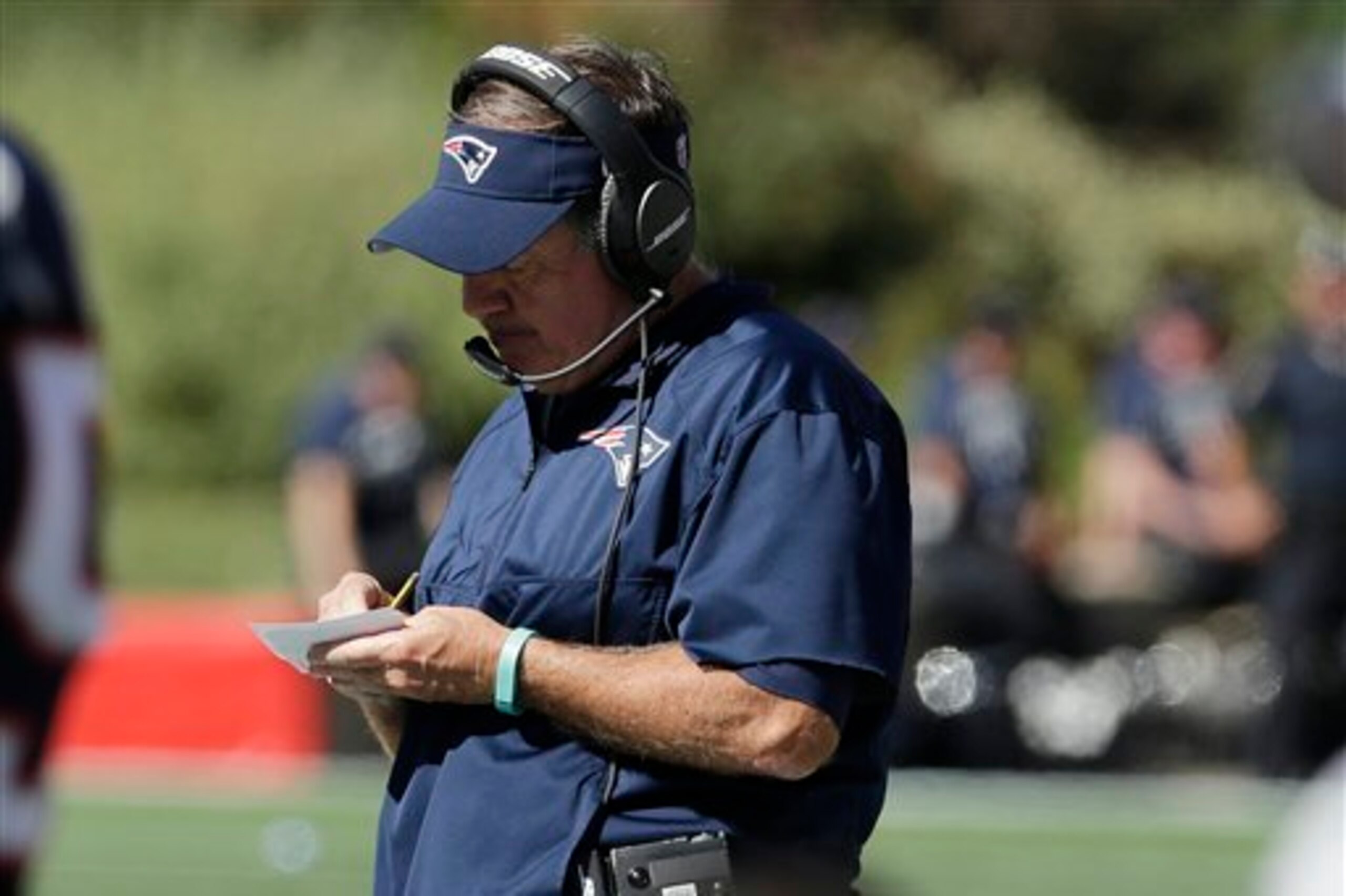
"Today's a day really to focus more on the Patriots than anything else," Belichick said at his Wednesday bye-week press conference, "just to work on things that we need to work on based on the first three games, practice situations, just things that have come up along the way that we need to clean up, go back, talk about a little bit, do a better job of coaching, do a better job of executing on the field, understanding the situations and in a way taking care of some problems behind us, but also trying to move forward into things that we think can benefit us in the future."
The first three weeks have been spent game-planning for opponents. The bye week can be spent game-planning for themselves. So, here's a few things the Patriots can focus on improving during the bye.
Find a Balance of Run and Pass
1 of 3
Balance is a different concept for every team. Some teams want to balance the quantity of their play calls, while others would prefer to simply have the quality of the running and passing game balance each other out.
Brady is playing some of the best football of his career, but the Patriots offense would be much better off if it had a consistent, reliable running game to fall back on.
Thus far, the Patriots are averaging 87 rushing yards per game and 3.7 yards per attempt against 359 passing yards per game and 7.8 net yards per attempt. The Patriots ran the ball 24 times in Week 1, 15 times in Week 2 and 32 times in Week 3, although most of those carries and most of their production was in the second half.
By that point, the Patriots had built a 20-3 lead on the Jaguars and were just trying to bleed the clock.
Why should a team with a future Hall of Fame quarterback base its strategy on some antiquated belief in establishing the run? That's not the point. New England survived the 2014 postseason despite two games in which it rushed for fewer than 60 yards, but any time the Patriots have been bounced from the playoffs in recent years, it's been due to their lack of a running game.
Settle on a Starting Offensive Line
2 of 3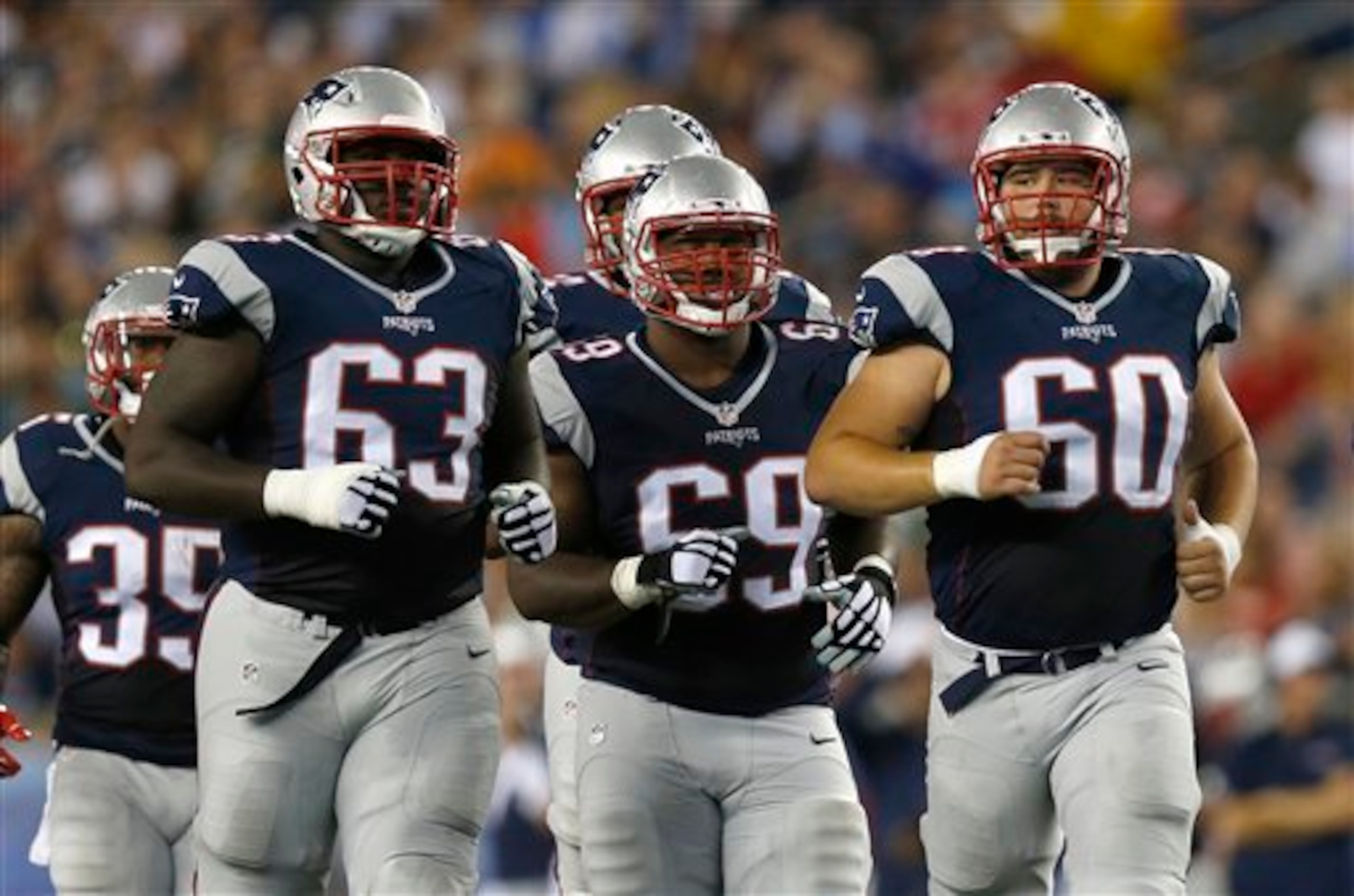
Through three games, the Patriots have yet to settle on a starting offensive line. It remains unclear whether that tactic is because of injuries or a product of a larger, unique strategy up front.
Conventional wisdom says the Patriots' best bet would be to roll with their five best linemen on an every-snap basis and let those players gel as a unit and get acclimated to each other's tendencies. But if history has told us anything about Belichick, it's that he is far from conventional.
The Patriots observed a similar approach at the beginning of the 2014 season, but the shuffling was seen as a statement on the team being dissatisfied with its performance. As outlined by Jeff Howe of the Boston Herald, the different combinations not only allow the Patriots to build depth up front, but they also cause problems for opposing defenses that have to identify the linemen each time they step onto the field.
It's hard to imagine the Patriots offense performing better than it has through three games, but when the coaches finally settled on a starting five on the offensive line last year, it was one of many factors in a huge turnaround on the Patriots' path to their fourth Super Bowl win.
Fix the Problems in Run Defense
3 of 3
Belichick is so great at finding the weaknesses with his team and making the right adjustments, he didn't even need to hit the early bye week to discover that the run defense was an issue and to begin taking measures to fixing it.
In Week 1, the Pittsburgh Steelers ran the ball 25 times for 134 yards (5.4 yards per attempt) and a touchdown. In Week 2, the Buffalo Bills rushed 27 times for 160 yards (5.9 YPA) and two touchdowns. They were among the bottom 10 teams in the league in each category headed into Week 3.
By inserting a defensive line of Alan Branch, Malcom Brown and Sealver Siliga during the course of the Week 2 matchup with the Bills, Belichick had already set the wheels in motion to make some improvements.
The Patriots did a great job in Week 3, holding the Jaguars to just 57 rush yards on 20 carries.
The return of Dominique Easley in Week 3 only helped the cause. Easley is so quick off the line—at times, too quick to where he loses his lane and creates cutback opportunities for the running back. If he learns to play a more controlled, tempered style of play (in much the same manner that linebacker Jamie Collins had to learn to control himself), Easley could be one of the Patriots' best interior run defenders.
It's also up to the linebackers to take good angles and make the sure tackle. Dont'a Hightower has done his part with 10 tackles and six stops in run defense, but Collins has already missed six tackles this year, according to Pro Football Focus.
It'll have to be a team effort if the Patriots' run defense is going to improve, but making the right adjustments is just what the bye week is for.
Unless otherwise noted, all quotes obtained firsthand.
.jpg?w=2560 "Colts Football")
.jpg?w=2560 "NFL Paris Football")
.jpg?w=2560 "Seahawks Chiefs Football")
.jpg?w=2560)