

Biggest Takeaways from Philadelphia Eagles' Week 3 Win
It wasn't pretty, but the important thing is the Philadelphia Eagles picked up their first win of the season on Sunday. That in itself was huge, because the NFC East is still wide open.
There are no style points in the NFL. Every victory counts the same in the standings. Besides, there was plenty to build on for an Eagles squad that was struggling to do much of anything entering its Week 3 matchup with the New York Jets.
Philadelphia's defense has been keeping the team in games all season, but there were finally some encouraging signs from the offense for the first time since the second half of the opening game.
Some would say it was only the Jets. However, the Jets were unbeaten heading into the game with the league's most opportunistic defense, while the Eagles were missing several key players on the road due to injuries. As head coach Chip Kelly said afterward, it was a "gritty" win.
And with the Dallas Cowboys losing, that opened the door for the Eagles to crawl back into the division race. Let's examine what went well, what needs to improve and what needs to continue to get this season back on track.
The Eagles Can Run the Football
1 of 5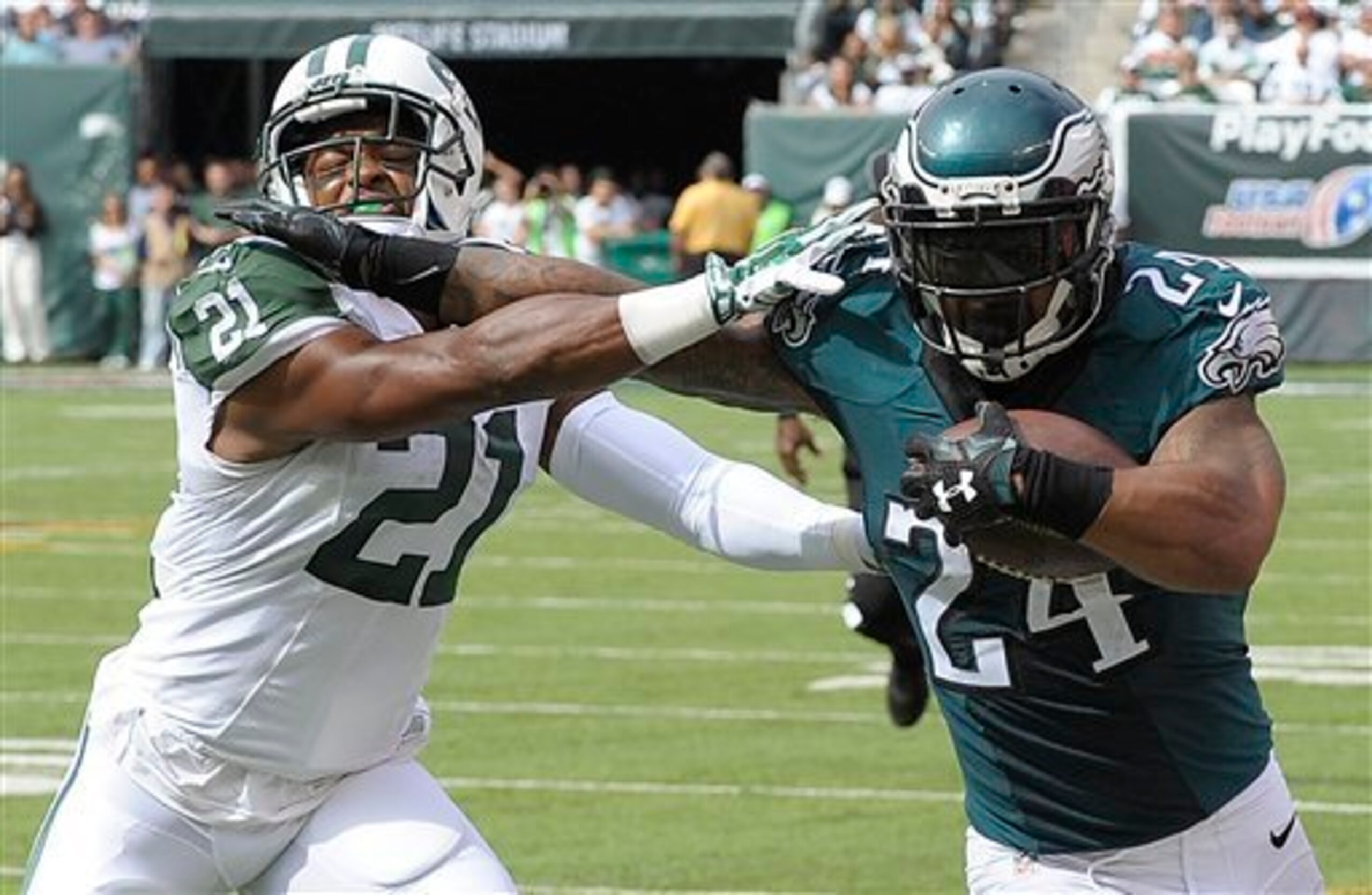
Eagles running backs entered Week 3 averaging just south of two yards per carry, which is half of what is considered acceptable. On Sunday, that figure rose to 3.5, which is still subpar, but definitely a step in the right direction—especially against a stingy New York defense that was allowing 3.8.
Ryan Mathews, in particular, had success on the ground, gaining 108 yards on 25 carries, while Darren Sproles was able to punch one into the end zone from a yard out. However, more important than individual stats is the fact that the running game helped the Eagles keep the chains moving.
Eight of the Eagles' 18 first downs against the Jets came on handoffs, compared to seven in the first two games. There were also four carries of at least 10 yards, compared to three in Weeks 1 and 2.
There were still too many negative plays, though, as 11 rushing attempts against the Jets either went for a loss or no gain, compared to 12 total the first two games. Of course, the Eagles also handed the ball off 39 times compared to a combined total of 33 times over the first two weeks. Plus, the Jets knew what was coming because Philly had taken a 24-0 first-half lead.
So not only did the Eagles ground attack improve, it was probably better than it looked. The same could be said for another facet of the offense as well.
Drops Making Sam Bradford Look Bad
2 of 5
Sam Bradford has made his share of mistakes. He hasn't been super accurate, particularly downfield, and he's made some questionable judgments with regard to where he delivers the football. In general, he hasn't looked like he fully grasps the Eagles offense.
And yet he was a lot better than his passing line made him look on Sunday. Bradford finished the game with 14 completions on 28 attempts for 118 yards and a touchdown—a 4.2 yard average and 73.2 rating that would be considered pedestrian by any standard. Then again, when you start adding up all of the drops from his receivers, you see how dramatically different the numbers might've been.
Let's just take Sproles' mishandling of what would have gone for a 78-yard catch-and-run on a wheel route. The throw was impeccably placed, and there was nothing but open field ahead of the running back. If Bradford completes that, suddenly he's thrown for 196 yards and two touchdowns with a solid seven-yard average and an efficient 99.7 rating.
That's just one example. There were other drops during the game and over the course of the season. Heck, two of Bradford's four interceptions on the season hit his intended receiver in the hands. The quarterback has been far from perfect, but he's also been a lot better than it often seems.
Defense Getting the Job Done
3 of 5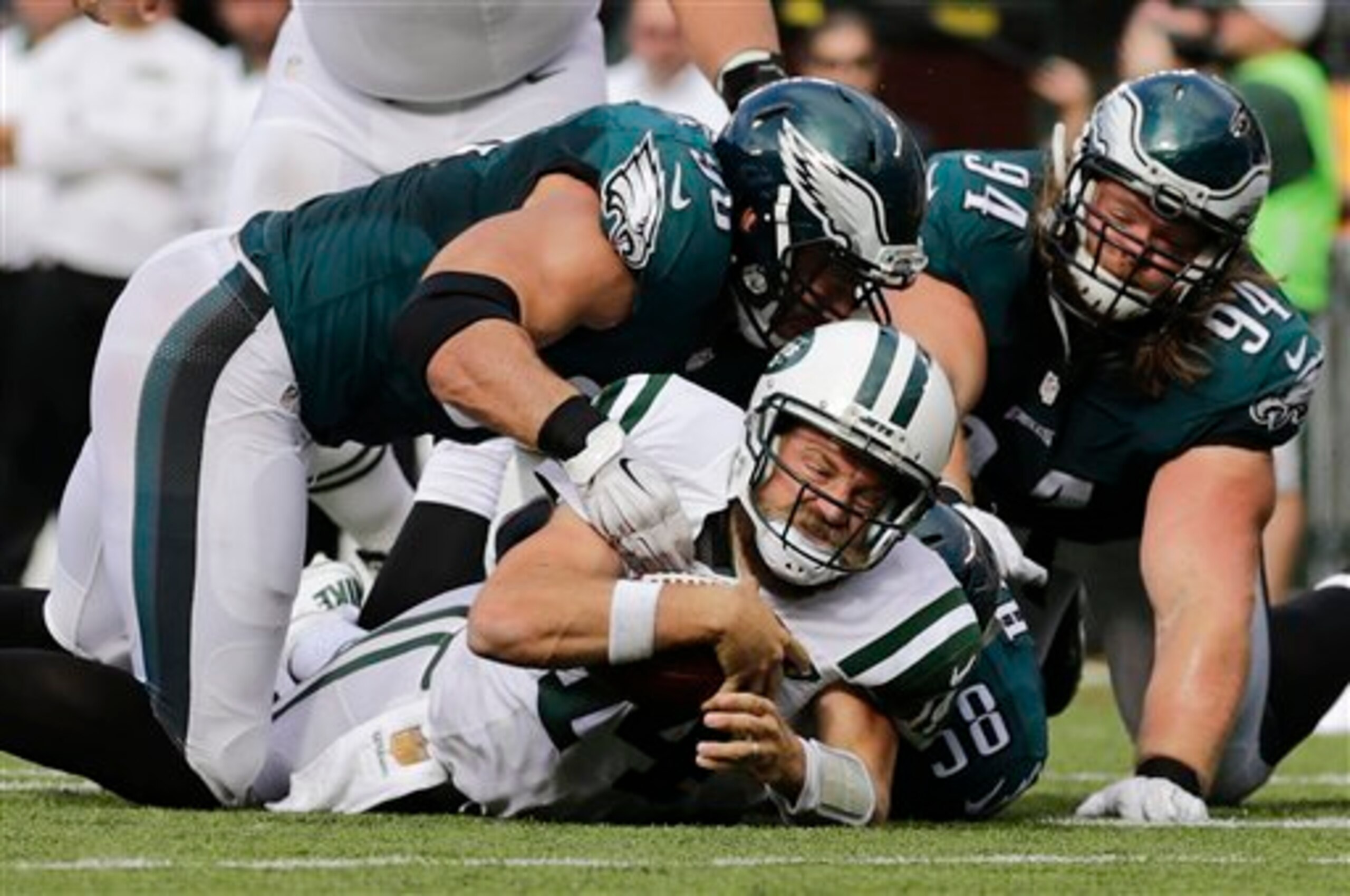
Yes, the Jets knew the Eagles wanted to run the football in the second half. Yes, Bradford hasn't been getting any help from his receivers. But any way you look at it, Philadelphia only gained 52 yards of offense in the second half on Sunday, and that's a big reason why a 24-0 lead slowly devolved into a hard-fought 24-17 victory.
Give the Eagles defense a ton of credit, though. All season long, they've had their backs against the wall as a result of inconsistent or downright inept offensive performances, yet—at least in terms of the scoreboard—this team has been in every game.
The Eagles gave up 26 points to the prolific Atlanta Falcons offense in Week 1, and it would've been worse if the D didn't come up big. Atlanta was held to four field goals and had two drives end in turnovers, one to keep points off the board, and another to set up a Philadelphia touchdown.
In Week 2, the Cowboys managed to score 20, but seven of those were the result of a blocked punt. That means the Eagles defense actually held their NFC East rivals to 13, and a touchdown with just over four minutes remaining in the fourth quarter could be attributed to being on the field for too long.
And while the Jets were able to chip away at the lead on Sunday, the Eagles came up with big plays time and time again, forcing four turnovers, including three second-half interceptions. New York was only able to complete one pass over 20 yards the entire game despite multiple attempts.
Simply put, defensive coordinator Bill Davis' unit is getting the job done.

Rookies Come Up Big
4 of 5
Eric Rowe and Jordan Hicks, welcome to the NFL.
The Eagles' second- and third-round picks are already paying dividends, as both players came up with huge plays to ensure victory over the Jets.
Seeing his most extensive action of the season, Rowe wound up making two tackles, defending two passes and recording his first career interception. The rookie cornerback out of Utah had Devin Smith covered perfectly on the play, reading the receiver's eyes, turning to find the football and reaching out to make the grab in the end zone.
Hicks was making his first start of the season in place of the injured Mychal Kendricks and Kiko Alonso at interior linebacker, and the Eagles did not miss a beat. The Texas product picked up right where he left off last week against the Cowboys, when he racked up seven tackles and a strip-sack, this time piling up a team-high 10 tackles, one pass breakup and an interception.
You never know what you're going to get from first-year players in the NFL. Heading into the season, Rowe didn't look like he was ready to make an impact, and Hicks appeared to be buried on the depth chart. Yet both stepped up and made huge plays for the Eagles, making them major reasons why the team pulled out its first victory of the season.
Darren Sproles for MVP?
5 of 5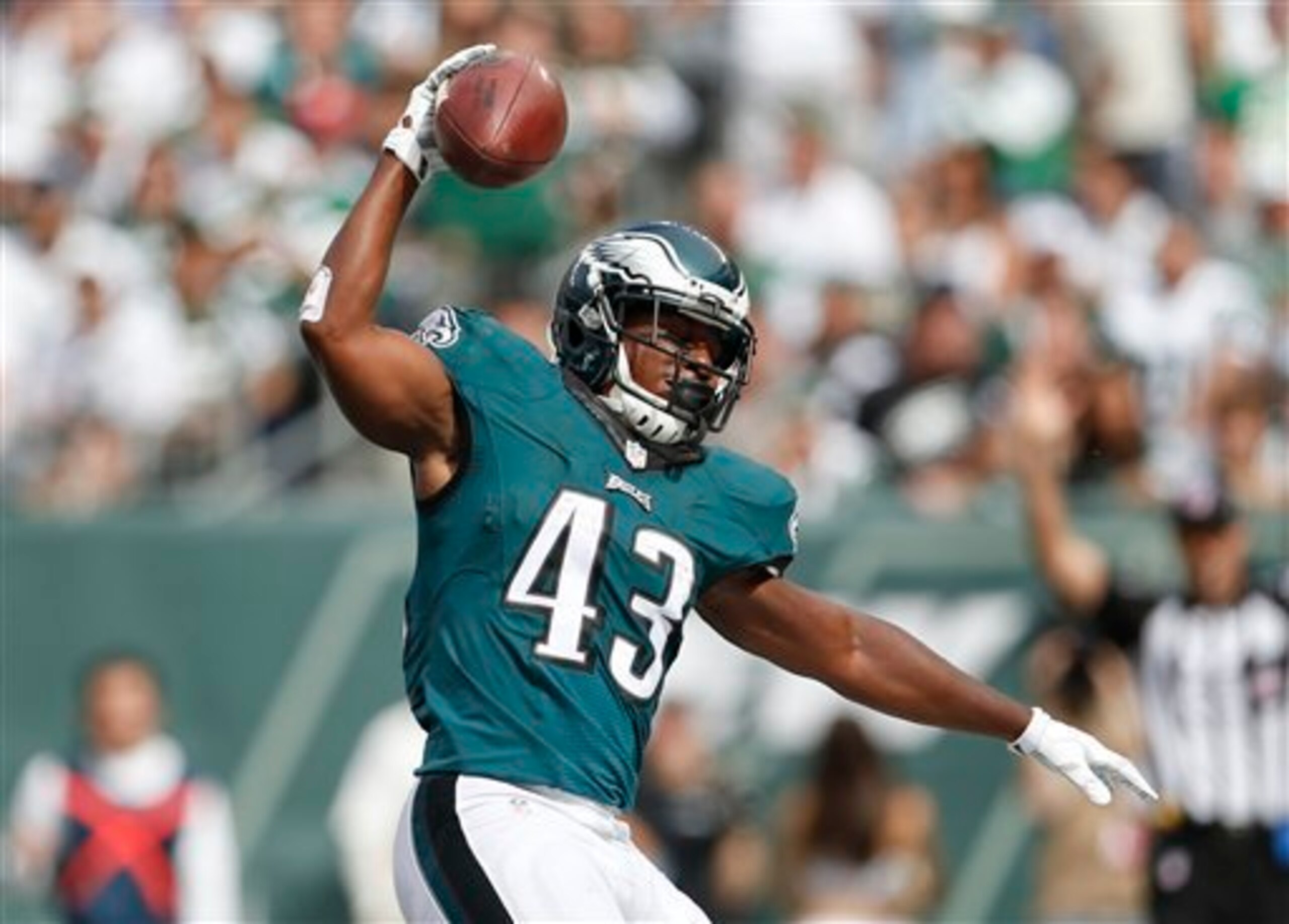
Can a role player also be a team's most valuable player? In the case of Darren Sproles and the Eagles, that may just be the case.
Sproles is a backup running back/offensive cog. He's also a Pro Bowl return man. These things won't garner much consideration for NFL MVP or make a player one of the highest paid in the league—but maybe they should.
In 2014, Sproles scored eight total touchdowns. Six of those scores came in Eagles victories. He also tallied 586 yards from scrimmage in 10 victories—58.6 per game—as opposed to only 130 in five losses—26 per game, or half the amount of production.
When Sproles has the ball in his hands and is making plays, the Eagles are winning. When he's a non-factor, well...you know.
That was the case once again on Sunday against the Jets. Sproles' 89-yard punt return for a touchdown seemed to energize an offense that was slogging through another poor start, and before you knew it, the Eagles were leading 24-0 and coasting to their first victory of the season.
There are a lot of ways to measure value in a player, but Sproles always seems to be the guy sparking this team when they need it the most.

.jpg?w=2560 "Rams Eagles Football")

.jpg?w=2560 "Grading WWE Raw 🔠")


