

Plenty to Blame for Sam Bradford's Slow Start with Philadelphia Eagles
This is not the start head coach Chip Kelly could've hoped for when the Philadelphia Eagles traded for Sam Bradford. This is not the start most people imagined after Bradford's blazing-hot preseason this summer either.
Yet three games into his tenure, Bradford has not looked anything like the franchise quarterback Kelly believed he was acquiring when he swapped Nick Foles and draft picks with the St. Louis Rams in March. Quite the contrary, too often the sixth-year signal-caller's performance has resembled the caliber of play that caused him to fall out of favor with his original team—when he was on the field, that is.

| Preseason | 13/15 | 86.7 | 10.4 | 3 | 0 | 149.6 |
| Regular Season | 73/117 | 62.4 | 5.8 | 3 | 4 | 72.5 |
But while Bradford has struggled, he's been far from solely to blame. The lack of any semblance of a ground attack has frequently put the offense in unmanageable down-and-distance situations. Receivers are dropping passes left and right when they bother to get open.
There's even some question as to whether Kelly's conservative approach with Bradford during training camp has led to some of the issues in the passing attack.

After all, while Bradford played a similar style of offense at the University of Oklahoma, that was college—this is the NFL. Expecting him to come in and make a seamless transition to Kelly's system—especially while playing just four series of live action during the preseason—was probably setting the bar too high in the first place.
That goes double when you add in the fact Bradford hadn't even played meaningful, competitive football in nearly two full years. ACL injuries in back-to-back seasons caused the former Rookie of the Year to go nearly 23 full months without an appearance in a regular-season game.
Maybe Kelly should've given his quarterback more work in exhibition games. Maybe the expectations were a little out of control and needed to be dialed back in the first place.
| Wk 1 @ ATL | 36/52 | 69.2 | 6.5 | 1 | 2 | 77.1 |
| Wk 2 v. DAL | 23/37 | 62.2 | 6.1 | 1 | 2 | 65.6 |
| Wk 3 @ NYJ | 14/28 | 50.0 | 4.2 | 1 | 0 | 73.2 |
Still, that doesn't change the fact that Bradford has been erratic and on occasion looked straight up uncomfortable in the Eagles offense. His accuracy comes and goes, while his decision-making has been questionable. He doesn't always appear go through his progressions and often seems unwilling to push the ball down the field and outside the numbers.
The numbers don't paint a pretty picture either. Through two games, Bradford was averaging a pedestrian 6.3 yards per pass attempt with two touchdowns to four interceptions. The offense had managed to find the end zone just four times on 25 possessions—zero in the first half—and the Eagles' record was 0-2.
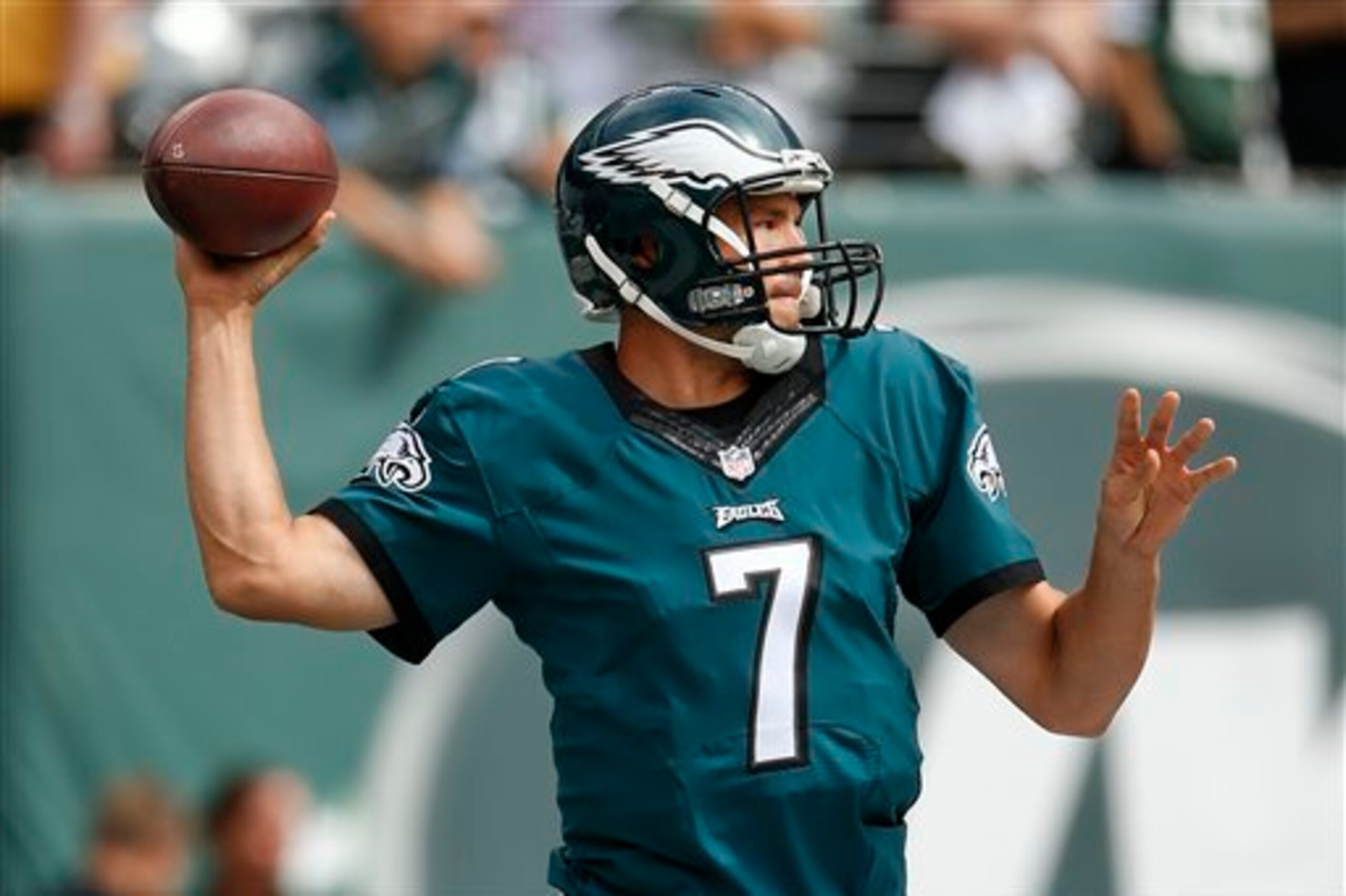
Things weren't much better in Sunday's 24-17 victory over the New York Jets. While the Eagles will gratefully take the win, Bradford only completed 14 of 28 passes for 118 yards—a 50.0 completion percentage and miserable 4.2 average—although he threw a first-half touchdown at least.
Of course, Bradford hasn't exactly been getting a ton of help from his teammates.
Entering Sunday's game, Eagles running backs were averaging just a fraction south of 2.0 yards per carry—half of what is considered a reasonable average. Penalties were taking their toll as well, constantly conspiring to put the offense in 2nd- or 3rd-and-long. It doesn't matter who your quarterback is; the percentages favor the defense there.
The ground attack improved against the Jets but still only averaged 3.2 per carry.
The numbers look a lot worse than they probably should as well because of the epidemic that is dropped passes.
The Eagles entered the week with six dropped passes, according to Sporting Charts, two of which went for interceptions against Bradford. They reared their ugly head again against the Jets, including a would-be 78-yard catch-and-run by running back Darren Sproles. Those types of plays tend to swing stat lines as much as they do momentum.
Plus, wide receivers haven't been winning many battles on the outside, and thanks to the lack of production on the ground, going deep has been nearly impossible.
| 2013 | 7 | 60.7 | 6.4 | 14 | 4 | 90.9 |
| 2012 | 16 | 59.5 | 6.7 | 21 | 13 | 82.6 |
| 2011 | 10 | 53.5 | 6.1 | 6 | 6 | 70.5 |
| 2010 | 16 | 60.0 | 6.0 | 18 | 15 | 76.5 |
Keep in mind, many of the same excuses were made for Bradford in St. Louis—the lack of any sort of supporting cast with the Rams, which was supposed to be to blame for his stats and record as a starter. That wasn't supposed to be the case in Philadelphia, but so far, it has.
Bradford is at fault for plenty of the offensive issues, but as the drumbeat of support grows louder for understudy Mark Sanchez, it's time to be fair about this. Sanchez would not fare much, if any, better under the same circumstances, meaning the running game and dropped passes.
Furthermore, Bradford needs to have a chance to play through this if the Eagles are going to get a true evaluation of his ability. Keep in mind, he has one year remaining on his contract. Pulling him now—when he's still familiarizing himself with the offense, when he's still relearning the speed of the game—is tantamount to pulling the plug on this entire experiment.
After Kelly gave up Foles and picks to land Bradford, there's almost no chance of that happening unless improvement never comes. When we can expect it to arrive, nobody can be certain, but three games—particularly three games that have gone the way these have—are not enough to reach any sweeping conclusions.




.jpg?w=2560 "Weather Channel Trolls Texans-Titans 💀")
.jpg?w=2560 "Grading WWE Raw 🔠")