

The College Football Upset That Never Was
For 59 minutes and 21 seconds, Jacksonville State had it all. You could feel it. Auburn could feel it, too. The greatest upset the sport had ever seen was firmly in its grasp. And like that, without an ounce of warning or care for the history in the works, it was gone.
When Gamecocks head coach John Grass hopped off the team bus Saturday night, he tried to process what had just transpired. He tried to find the middle ground of emotion—something between overpowering pride and punishing disappointment.
As he took his family out for dinner following the 27-20 overtime loss to the Tigers, his phone exploded. Text messages flooded his inbox. His social media accounts were overcome with praise and congratulations. He still hasn’t responded to them all, and he probably never will. There are simply too many.
TOP NEWS

Updated CFP Bracket Projections 🔮
Top Overreactions after Week 5 of CFB Season 😧

Latest CFB AP poll rankings
Grass was grateful for it all—for the opportunity, the spotlight and most of all for the appreciation of his players’ efforts. But it still didn’t change one point he will ponder for the rest of his coaching life: They still lost.
“As a coach and player, you don’t want to hear how proud people are of you after a loss,” Grass told Bleacher Report this week. “We’re not into moral victories, and we’re still very upset. I still think we should have won.”
Playing the nation’s No. 6 in its own building—during the debut of the nation’s largest videoboard, a nine-story-tall flat-screen that ran up a tab of $13.9 million—li’l ol’ Jacksonville State, led by a man who was the coach of Alabama’s Oxford High School just three short years ago, nearly pulled off the unthinkable.
The point spread last Saturday, for those interested in those things, was nearly seven touchdowns, per OddsShark.
We assumed Auburn would bounce back after looking sluggish against Louisville in its opener. We assumed the Tigers would get fat on touchdowns against an FCS opponent—albeit one that won 10 games last season. We assumed Jacksonville State would take its $525,000 "thanks for participating" check and simply head home.
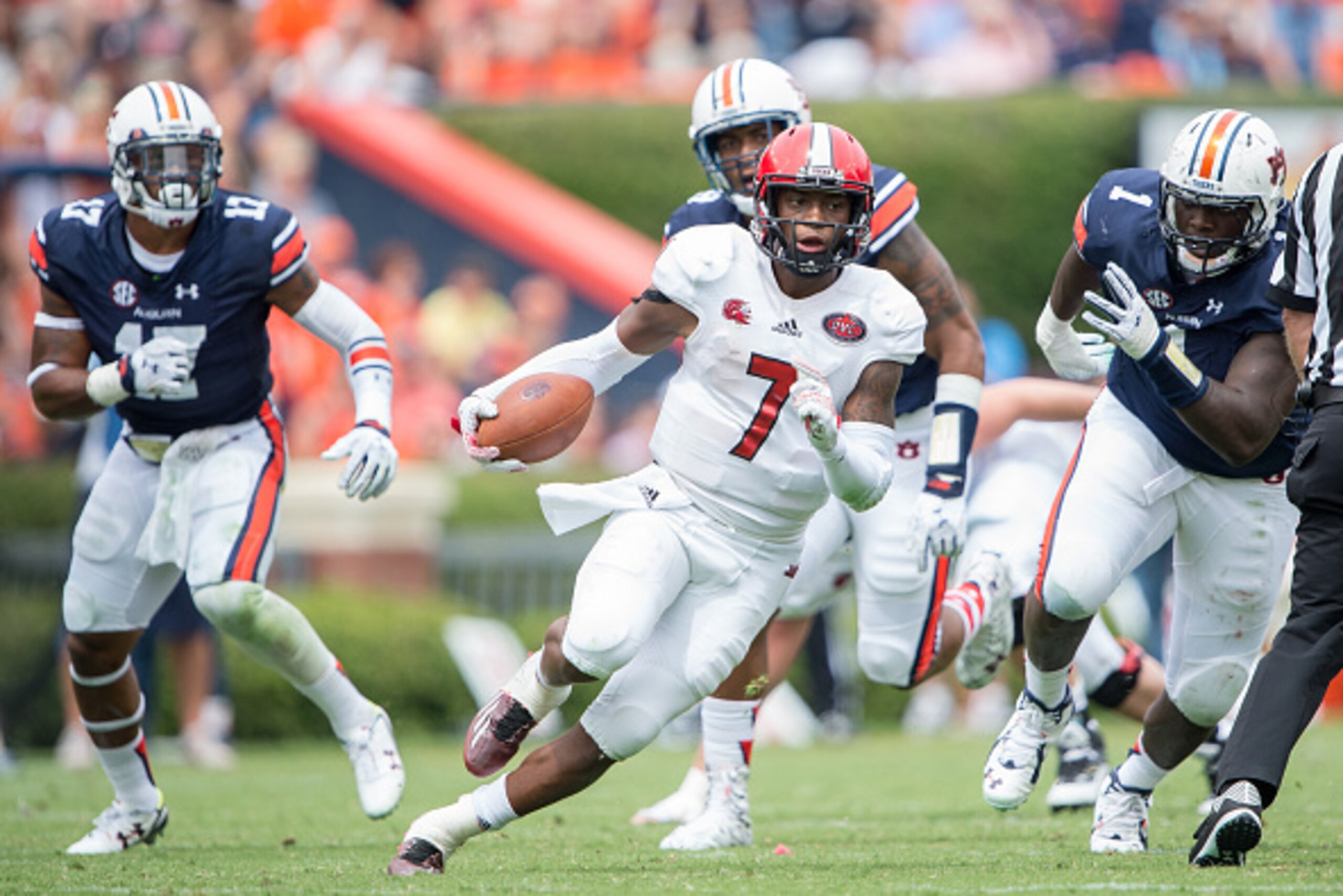
“We talked all last week about this being Game 2,” Grass said. “We don’t want to prepare like we’re playing the New York Giants one week and the next week prepare like we’re getting ready for a high school team. We don’t build our program that way. We’re about being who you are every day. It’s not who we play; it’s how we play.”
It became abundantly clear minutes into the game that this was not going to go as planned for the Tigers. Jacksonville State, led by quarterback Eli Jenkins, looked like it belonged.
Despite what the point spread might have said, the Gamecocks grabbed the lead on an 11-yard touchdown pass from Jenkins deep into the second quarter. Unfazed by it all—the team on the other sideline, the sea of fans and the videoboard the size of a neighborhood—Jacksonville State went to the locker room at halftime with a 10-6 lead.
“I was very impressed with how we handled the game,” Grass said. “We didn’t worry about playing Auburn, which is why you didn’t see us play with any nervousness or hesitation. Our guys were really relaxed.”
Midway through the third quarter, Gus Malzahn’s offense finally broke through with a long touchdown and a three-point lead. It felt like the moment that would break Jacksonville State's back.
The first half was a wonderful tale—the FCS team showed some heart. Good for them. Now, however, it was time for the SEC Goliath to do Goliath-like things and swallow the little guy whole.
Only that didn’t happen. The little guy pushed back.
“I see the work that they put in. This has been a driven team since last January, so it’s no surprise to see them play that way,” Grass said of his squad. “I’m just glad that everyone else finally got to see it.”
After the third-quarter Auburn touchdown, Jacksonville State’s offense struggled, but the defense didn't give in. Instead of waving the white flag, the Gamecocks kicked a field goal to tie the game. Five minutes later, with chaos sitting back down in its seat at the 50-yard line, Jacksonville State scored a touchdown to put itself ahead.
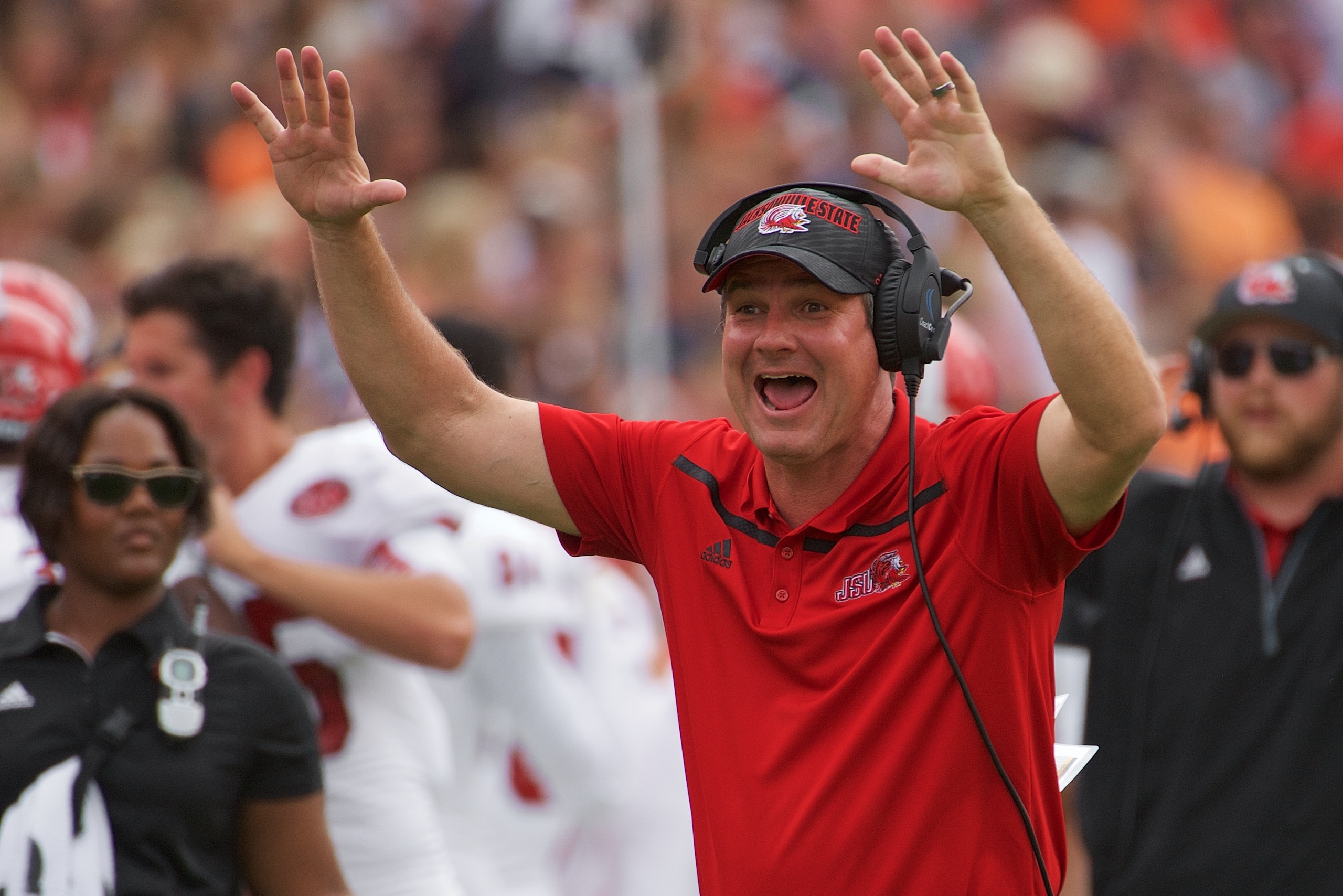
“Boy, it was really fun to hear 87,000 get real quiet,” Grass said. “It really was. You get a lot of satisfaction out of watching people grow. You get a lot of satisfaction as a coach to watch guys perform like that. We have a veteran team, and they played like a veteran team on Saturday.”
But with the chance to seal one of the greatest upsets in history, the underdog simply couldn’t bring it home. With less than three minutes remaining, Grass’ team took the field with a chance to secure the upset—the kind of upset that didn’t feel real, no matter how many times you tried to process the score.
Unable to net a first down deep in its own territory, Jacksonville State's punt traveled 17 yards. Five plays later, Auburn tied the game with less than a minute remaining.
In overtime, it all started to slip away. You could feel it. Jacksonville State, despite its enormous efforts, could probably sense it, too. After Auburn scored a touchdown with relative ease on the first possession, pushing the score to 27-20 in favor of the Tigers following the extra point, it was on the underdog to answer.
After bringing the ball within 15 feet of the end zone thanks largely to a pass interference call, the Gamecocks moved no closer. A sack on third down pushed Jacksonville State’s offense back to the 21-yard line.
With one play remaining—one final opportunity to take back the upset that was once theirs—Jenkins’ pass fell to the turf. The upset bid ended there—below the gigantic new videoboard and the 87,000 fans trying to find the middle ground of emotion—something between unspeakable relief and spectacular concern.
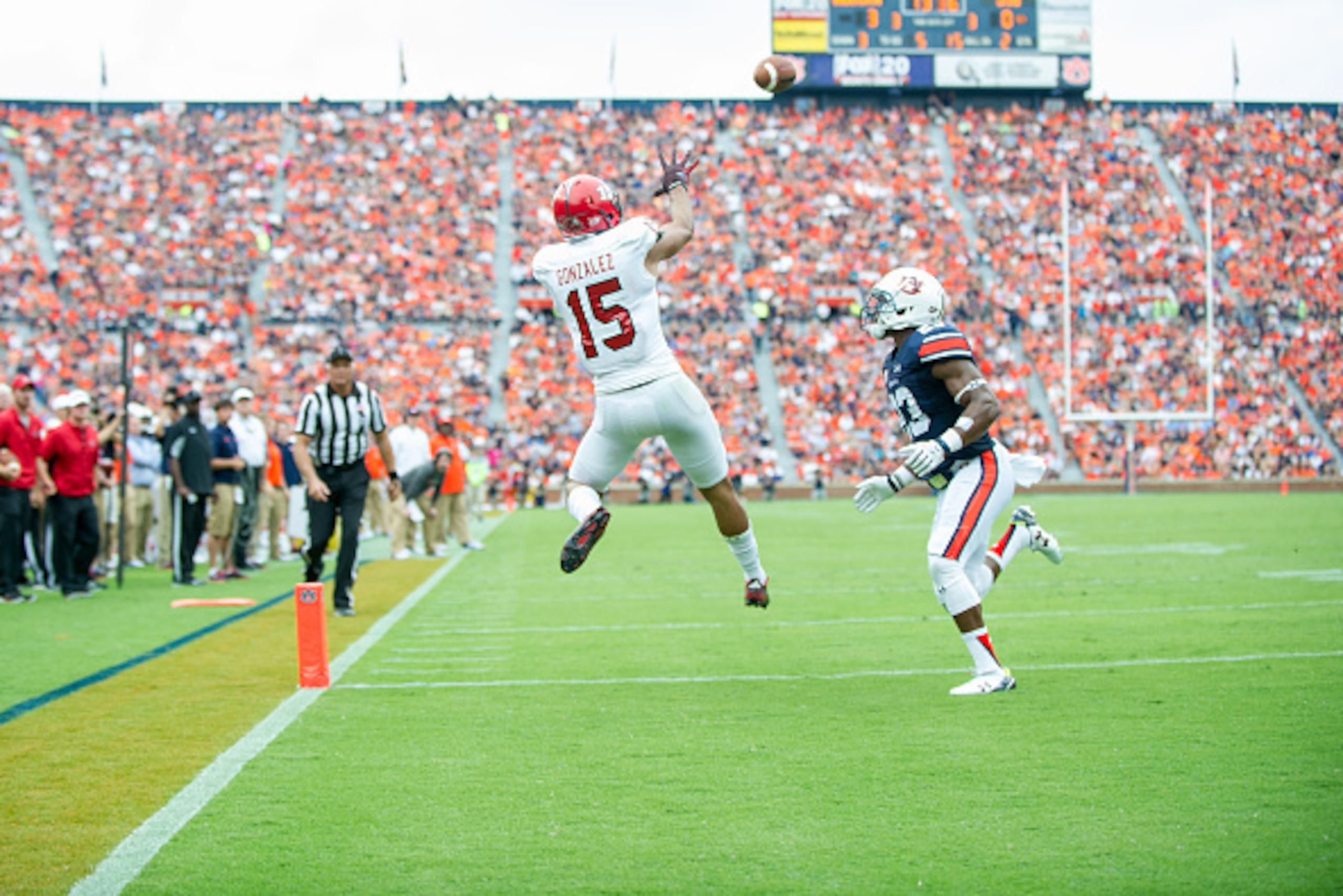
Grass and his team retreated to the locker room, unsure how to handle the unfamiliar disappointment.
“I hurt for our players. That was a hard dressing room to walk into,” Grass said. “I told them before we left the hotel that day that I wouldn’t trade them. I told them that same thing after the game—that there was nobody on the other team I would trade them for. I meant it before the game, and I meant it after.”
The next day, Grass’ phone buzzed, just like it had for the last 24 hours. This particular call he simply had to take. It was Malzahn.
Having nearly seen his College Football Playoff hopes obliterated, Auburn’s head coach reached out to compliment Grass on his team and its tremendous effort. With the game still fresh in both of their minds, the two coaches talked football.
When they hung up, it was time to get back to work. It was time to turn the focus to the team’s home opener against Tennessee State.
For the rest of his life, Grass will think about what could have been. Regardless of what the future holds—and it’s clearly bright for both the university and the coach—there will always be that one Saturday afternoon in September.

It will be a topic of conversation in living rooms and front porches throughout the state of Alabama for years to come—that one time mighty Auburn nearly lost to Jacksonville State in its own building as a colossal favorite.
It will be a regular topic on recruiting visits. At opposing stadiums. At banquets. At restaurants. Even though the upset of a lifetime was not to be, this loss will be historic. Perhaps that’s not something the coach and his team can celebrate right now, but they will be celebrated. They should be celebrated. This moment will carry value beyond their wildest imaginations.
“Everybody knows where Jacksonville State is now. They know it’s in Alabama and not Jacksonville, Florida,” Grass said. “You can’t put a price tag on what it did for our university. It was good to play as well as we did on that stage, even though we’re disappointed we didn’t win.”
Unless noted otherwise, all quotes obtained firsthand.
_0.png?w=2560)


.jpg?w=2560 "Grading WWE Raw 🔠")



.jpg?w=2560 "Viral Rams Coach Vid 🖕")

.jpg?w=2560 "2 NFL Officials Suspended")