
Resetting Expectations for College Football's Struggling Blue-Blood Programs
Two games into the 2015 season, several of college football's traditional powerhouses aren't off to the start for which they were hoping. For some, like Texas and Florida, the slow start is part of the rebuilding process. For others—like Auburn, which had its sights set on a playoff run—poor showings are coming as a surprise.
Two weeks may not define a season, but they do offer a snapshot into where these teams stand and what their respective seasons might look like. We've taken seven college football blue bloods who have been struggling and reset expectations by taking a broad-picture look into what's ailing them and whether it can be fixed long-term.
Records or even rankings for the following teams matter little. This is all about taking glaring weaknesses and projecting whether they can be corrected or improved upon and whether previous expectations need to be reset based on that.
Auburn Tigers
1 of 7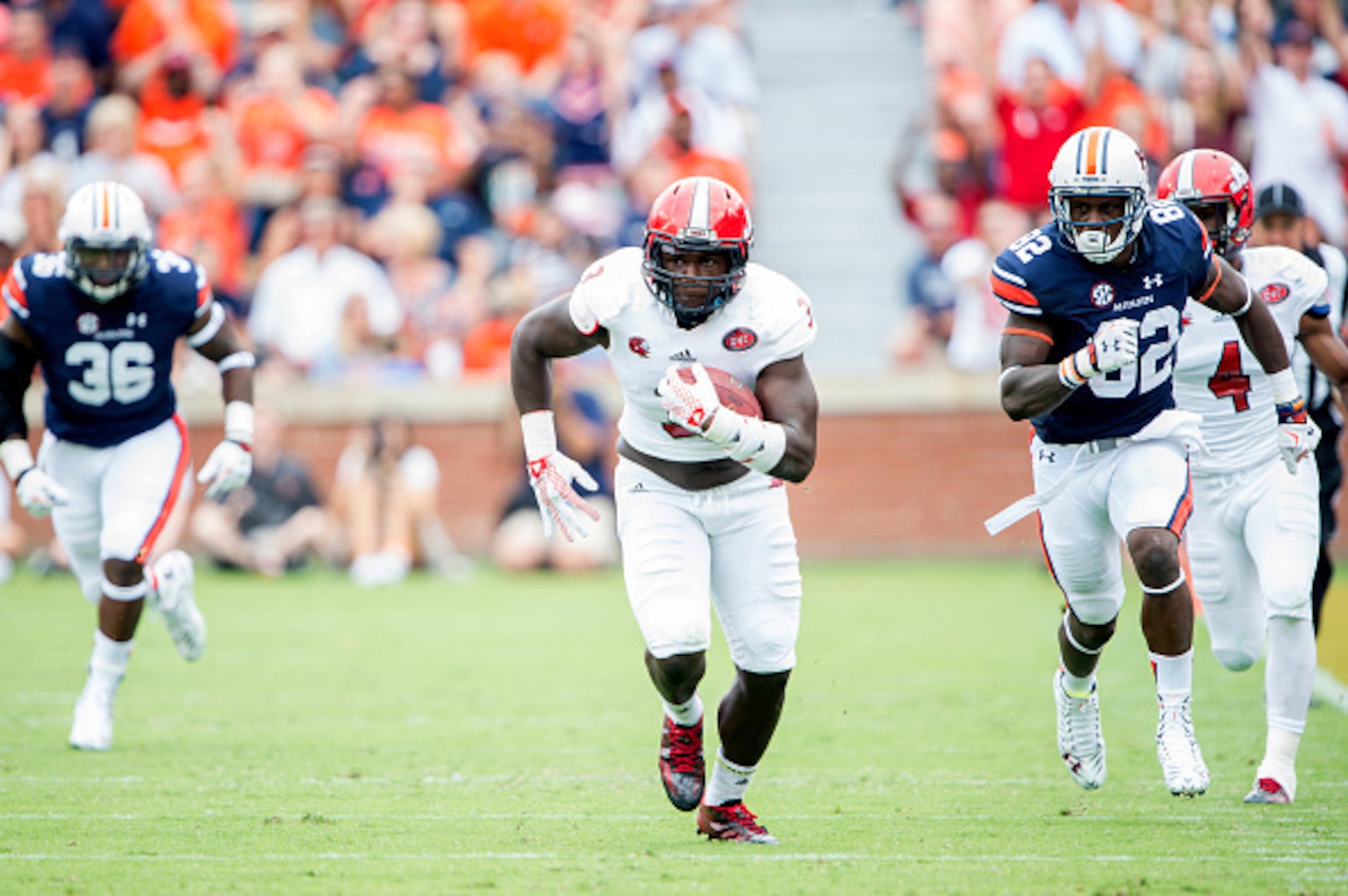
What's Happened so Far?
Jacksonville State, that's what. The Tigers may be 2-0, but they had trouble finding any offensive consistency for the second week in a row. Auburn needed a late rally to come from behind and beat the Gamecocks 27-20 in overtime. It was the polar opposite of the 31-24 Week 1 victory over Louisville in which Auburn jumped out to a quick lead and had to hold on.
What's the Problem?
A couple of things. First-year defensive coordinator Will Muschamp should be the right solution long-term, but Auburn has allowed at least 400 yards (and been outgained) in both games. The pass rush is better, but run defense still leaves something to be desired.
However, that's a big turnaround, and it's incredibly difficult to overlook the more immediate problem: offense. Quarterback Jeremy Johnson has thrown five interceptions in two games—five bad interceptions. Additionally, the Tigers offense simply isn't explosive like it normally is, ranking 12th in the SEC in long scrimmage plays.
Behind Vanderbilt. Oof.
Can It Be Fixed?
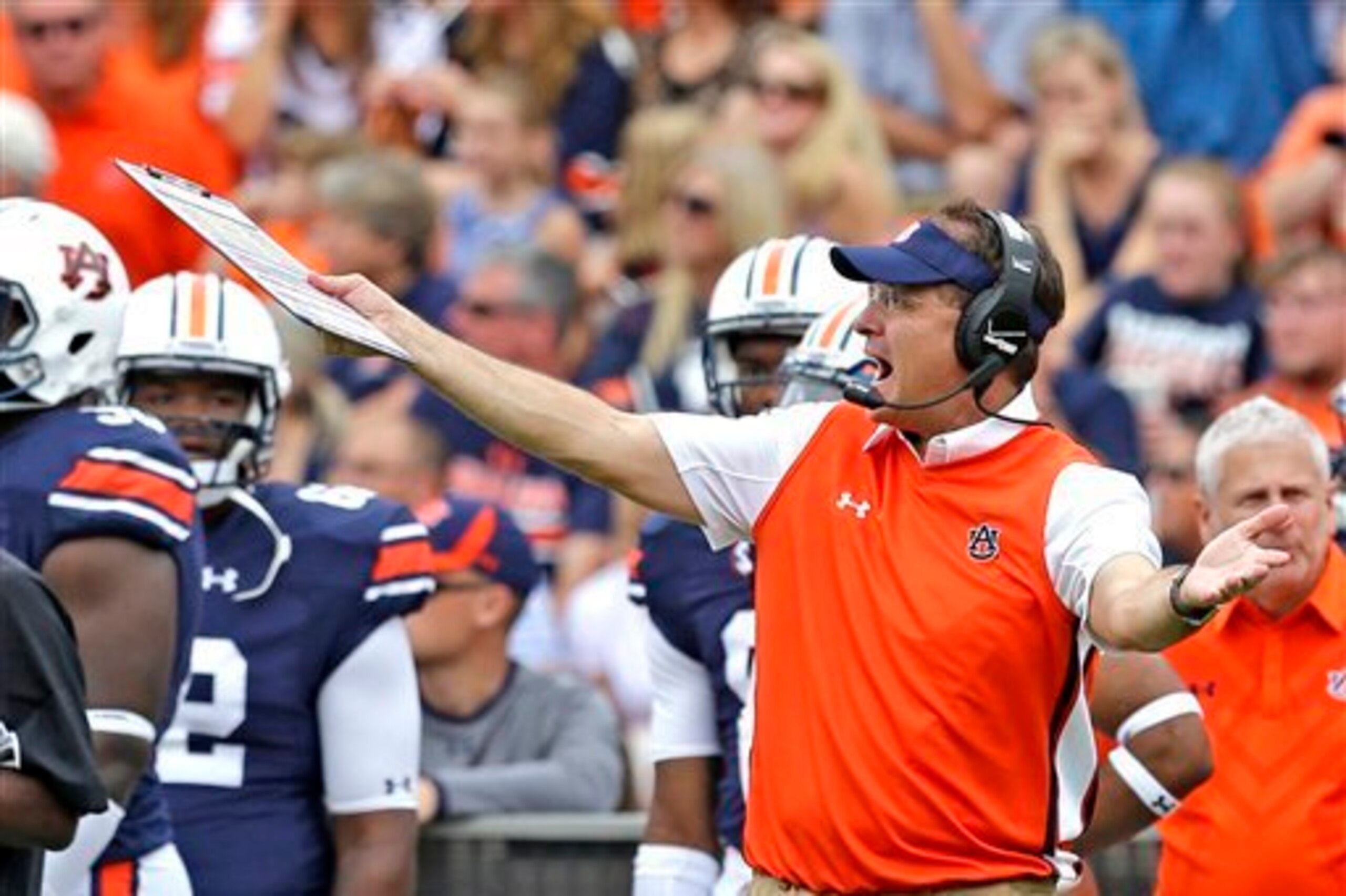
You'd think if anyone can get Auburn's offense on track it's head coach Gus Malzahn and offensive coordinator Rhett Lashlee. What's concerning is the utter lack of field vision from Johnson. These interceptions aren't a matter of misfortune—a missed blocking assignment, wrong route or tipped ball. These are telegraphed reads on which any defender could make a break.
Is Johnson in any immediate danger of losing his job? Not according to Malzahn. "Jeremy Johnson is our quarterback," Malzahn reiterated after the Jacksonville State game, per Brandon Marcello of AL.com. Then it's going to be up to Malzahn and Lashlee to keep developing him.
Projected Record: 8-4. This is a stark difference from preseason expectations, in which SEC media picked the Tigers to finish second in the West Division (but win the SEC of all things). But if Johnson continues to be a turnover machine and the defense doesn't take a dramatic step forward, this looks more like a middle-of-the-pack West team.
Florida Gators
2 of 7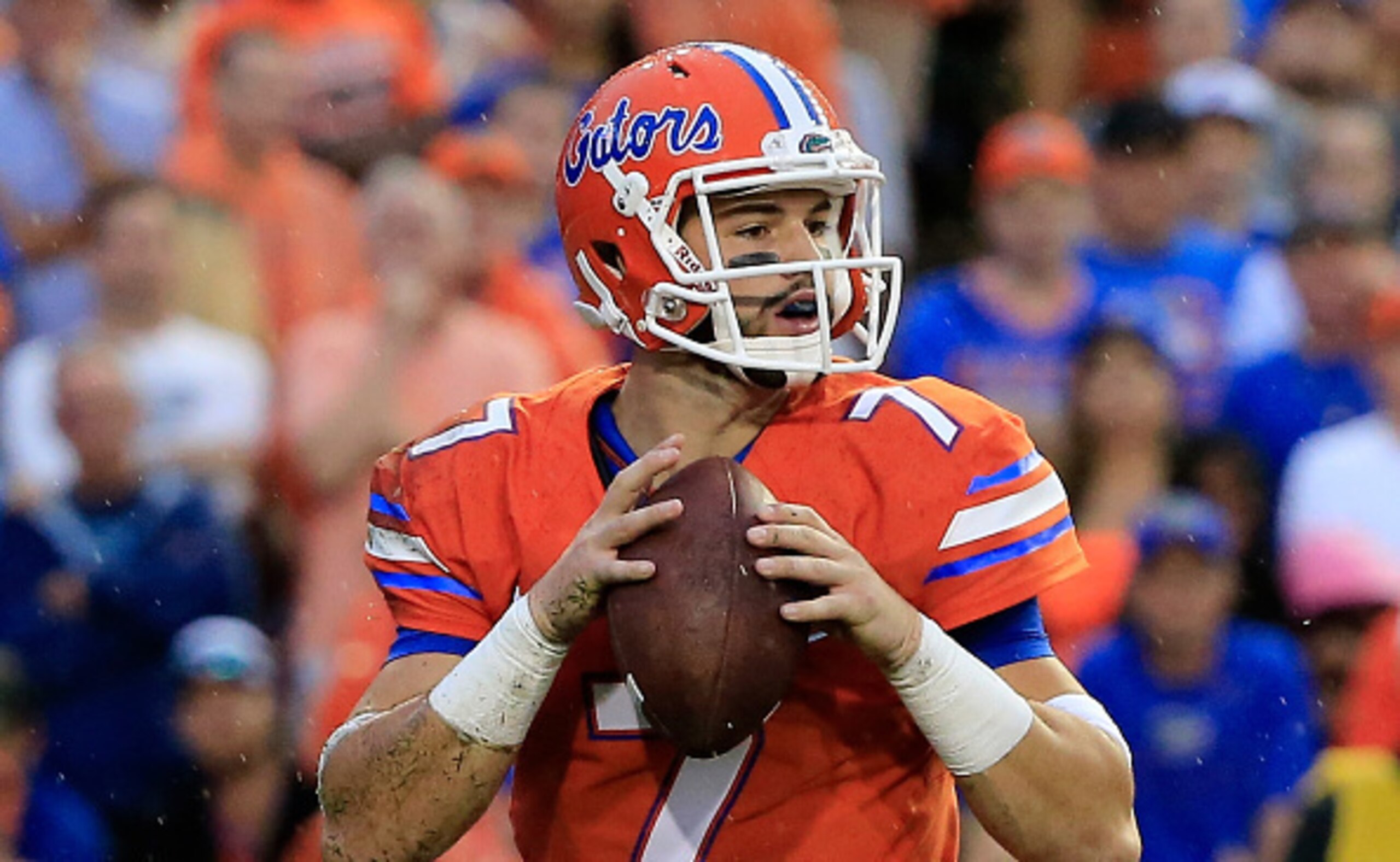
What's Happened so Far?
Head coach Jim McElwain's first year in Gainesville is proving to be of the rebuilding nature. The Gators took care of New Mexico State to start the year but found themselves in a battle with East Carolina in Week 2. It certainly wasn't a comfortable enough win to merit a throat-slashing gesture from running back Kelvin Taylor. In the opinion of McElwain, that is.
What's the Problem?
The offensive line was going to be a major issue. This was known all the way back in the spring. Unfortunately for McElwain, there's not much he can do about it. Depth and inexperience are what they are, and the only way out is through.
Pass protection has generally been passable, but run blocking remains an issue. As Mark Miller of Gator Country wrote, "Martez Ivey cannot get back fast enough and the fact that a true freshman is desperately needed tells you all you need to know about this group."
Can It Be Fixed?
Not really, at least not overnight. Getting Ivey back from a leg injury—whenever that will be—will help some. But this is a much-maligned group, and there's not much Florida can do about it other than continue to play inexperienced guys, keep recruiting and try to stay healthy.
Projected Record: 6-6. If anything, this would be a positive reset given how the program performed under former head coach Will Muschamp. A winning record and the chance for extra bowl practices would go a long way for McElwain, who's already proving he can recruit at a championship level.
Florida State Seminoles
3 of 7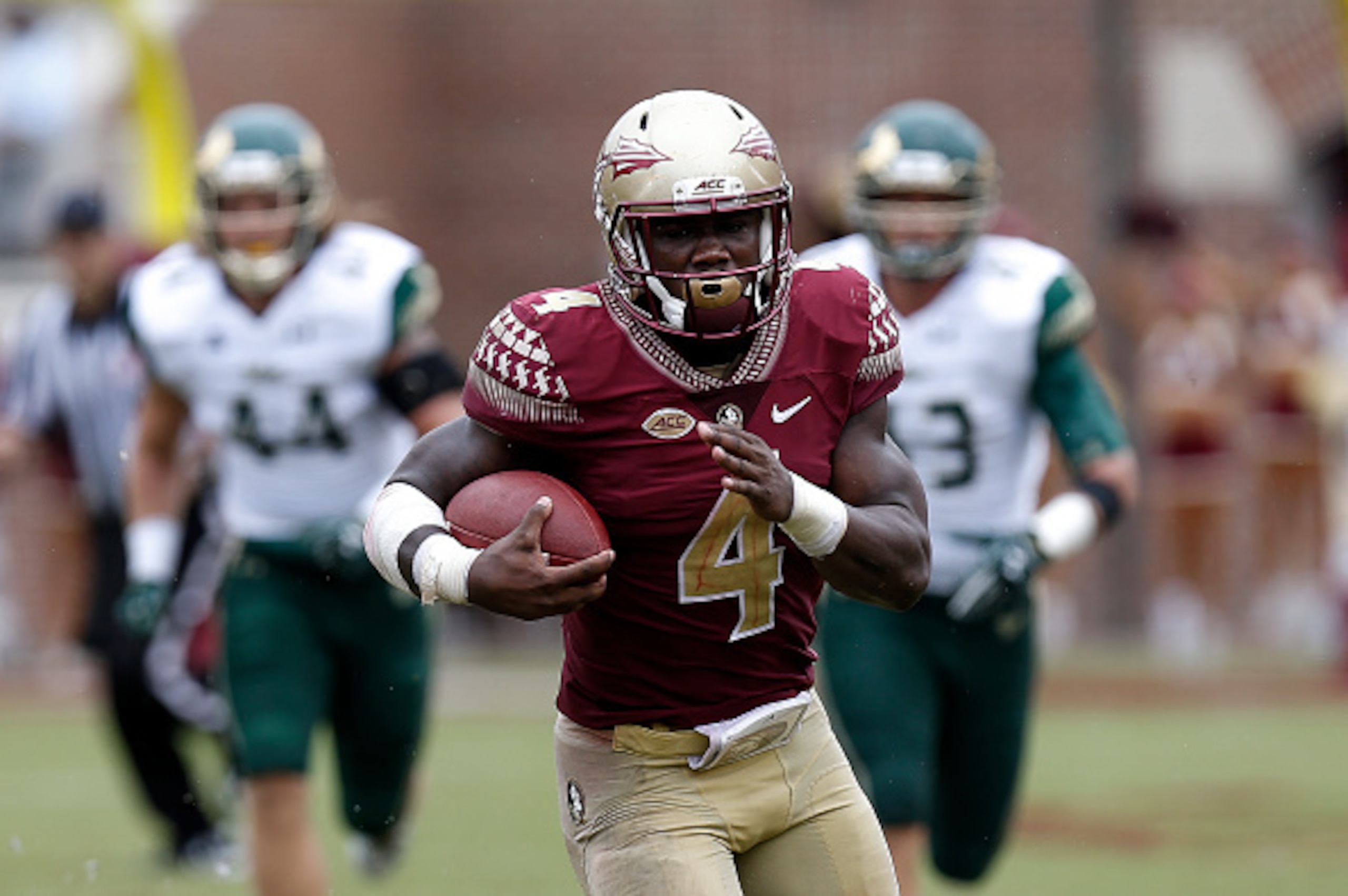
What's Happened so Far?
It's been a tale of two games for Florida State. The Seminoles looked fine in a 59-16 win over Texas State in Week 1. However, the passing game was putrid in a 34-14 win over South Florida.
What's the Problem?
Head coach Jimbo Fisher deserves a lot of credit for the caliber of players he's recruited. In the long run, Florida State will be just fine. In 2015, there are proving to be setbacks on both sides of the ball. Namely, the passing game has been hot and cold. Notre Dame transfer quarterback Everett Golson threw for 302 yards against Texas State but barely completed passes beyond the line of scrimmage against South Florida.
It's not all Golson's fault; receivers have been dropping passes and struggling to get open. This is a group that's frustrated Fisher all offseason. There just isn't any consistency, and there have been some blocking issues to boot.
As Bud Elliott of TomahawkNation.com tweeted, Florida State's best chance to win rests on the shoulders of running back Dalvin Cook and a solid defense. Old-school football is going to be the formula this year.
Can It Be Fixed?
In time, yes, but building chemistry and rapport takes reps. Golson isn't a four-year guy for Florida State, and neither are many of the skill players on the field. It's not like the Seminoles can keep practicing against cupcakes either.
The road trip to Boston College on Friday is tricky, and the three toughest games on paper—Georgia Tech, Clemson and Florida—are on the road. This seems like a team destined to take its lumps this year only to come back as strong as ever in 2016.
Projected Record: 8-4. Given how successful Florida State has been over the past two years, going under the double-digit-win mark requires resetting expectations. Perhaps some saw the writing on the wall and prepared themselves accordingly. But the "rebuilding year" notion appears to be coming to fruition. The good news is "rebuilding" still means a bowl game.


Michigan Wolverines
4 of 7
What's Happened so Far?
The start of the Jim Harbaugh era has started about as expected. Michigan put up a valiant fight against a solid Utah team but wasn't able to complete the comeback. However, the Wolverines took care of business in Week 2 against Oregon State. That's something we haven't been able to say about this program in a while.
What's the Problem?
Quarterback play is still iffy. Iowa transfer Jake Rudock is averaging about 6.7 yards per pass attempt and has thrown twice as many picks (four) as touchdowns. The deep ball isn't there, and ball security is an issue, as observed by Mark Snyder of the Detroit Free Press:
"But once again, Rudock couldn't complete the deep ball on a couple shots and had a pair of turnovers. After three interceptions in the loss to Utah, he was sacked once and fumbled and threw an interception against Oregon State.
After the first game, Harbaugh covered for Rudock's mistakes, spreading around the blame. He put more of it on Rudock after Saturday's win.
"
If the running game doesn't take off like it did against the Beavers, Michigan's offense is in trouble.
Can It Be Fixed?
Yes, and it does fall on Rudock to a degree. The offensive line has been much-maligned over the past couple of years, but it played especially well in run blocking against Oregon State. If the run game can stay on this path, it takes a lot of pressure off Rudock and perhaps makes some of the downfield throws easier.
But Michigan overpowered Oregon State, and that's probably not going to happen against teams like Northwestern, Michigan State, Minnesota, Penn State and Ohio State.
Projected Record: 7-5. Getting the bare-minimum six wins would be a start for Harbaugh's Wolverines. The extra practices would be a welcome addition as this program really gets underway in 2016. However, as good as Harbaugh is, Michigan doesn't look capable of upsetting a team it's not supposed to.
Penn State
5 of 7
What's Happened so Far?
Penn State is 1-1, and goodness, it has not been pretty. The Nittany Lions were flat-out beaten up against Temple in Week 1. Granted, the Owls are a fringe Top 25 team and could be on their way to a special season, but getting knocked around 27-10 was a bad-looking loss. Then, Penn State followed that up with a sluggish 27-14 win over Buffalo.
What's the Problem?
Quarterback Christian Hackenberg has absolutely no pocket from which to throw. Again.
Penn State gave up 10—10!—sacks against Temple. One came on a two-man—a two-man!—rush. The Nittany Lions offense looks a lot like where it left off last year, and that's not a good thing.
If there's a silver lining, it's the run blocking. Though Penn State's 4.18 yards per rush rank near the bottom of the Big Ten, that can be attributed to sacks. But having 4.18 yards per rush is still respectable, and running back Akeel Lynch has played well.
Can It Be Fixed?
Can it? It's safe to wonder if 2015 will be a mirror image of last year if Hackenberg is already getting beat up like he is. Hackenberg has all the tools in the world but has regressed so much over the past season. It's part protection, part scheme, part confidence, part coaching. The conversation about him as a first-round draft pick has become harder to defend.
Focusing on the here and now, though, Penn State's offense will go quarters at a time without showing life. That may get a pass against Buffalo, but it won't against teams like Michigan State and Ohio State.
Projected Record: 6-6. Year 2 under head coach James Franklin should have been an improvement. Penn State went 6-6 in Franklin's first regular season in '14. The second half of the Nittany Lions' schedule this year features some brutal games.
Tennessee
6 of 7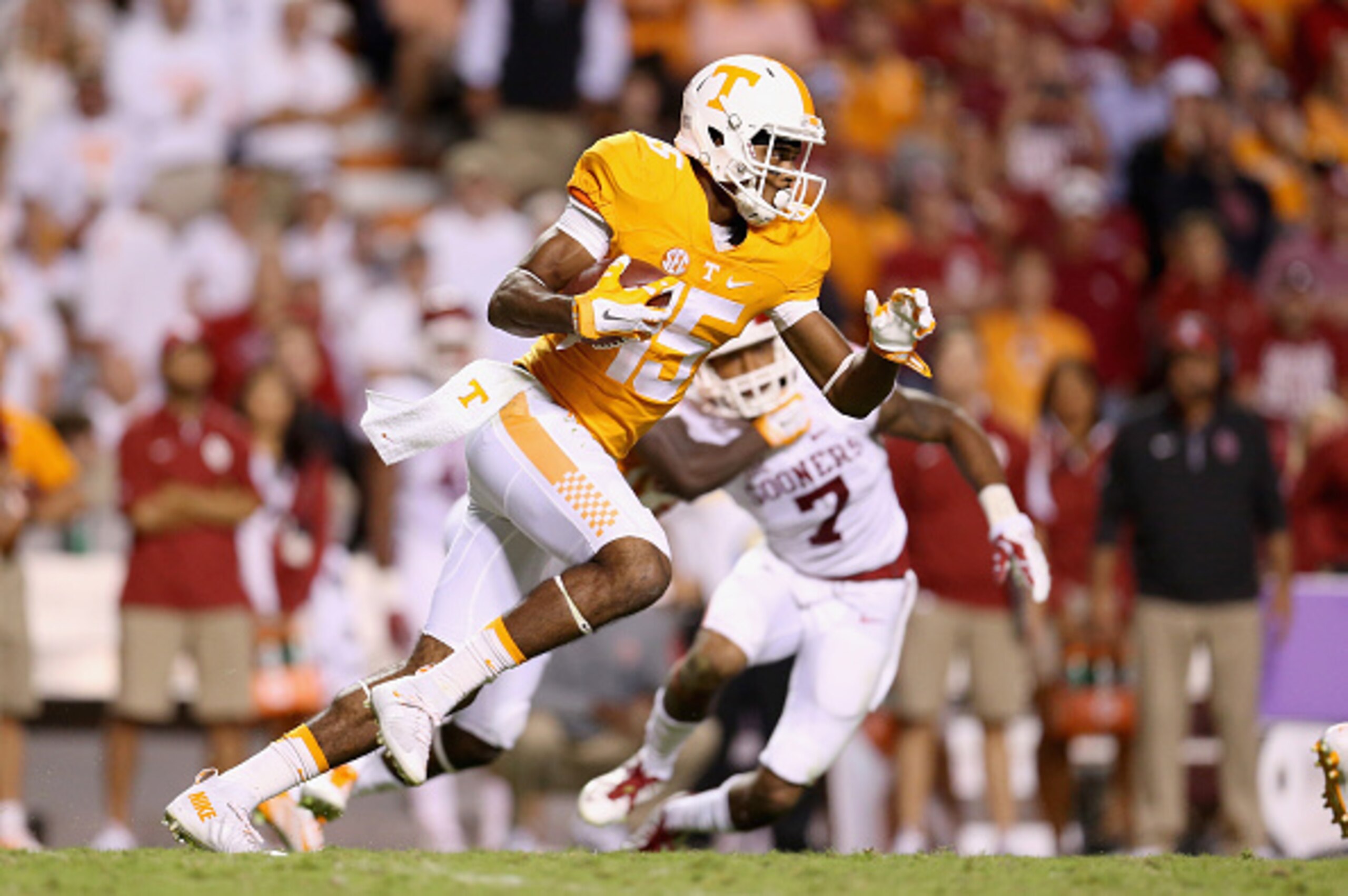
What's Happened so Far?
Was there a more crushing defeat in Week 2 than Tennessee's blown lead against Oklahoma? (OK, maybe Arkansas has something to say about that, but still.) The Vols' SEC East title hopes are still intact, and Georgia's sleepy performance against Vanderbilt provides some hope. But that loss to the Sooners was a huge blow.
What's the Problem?
Offensive line was a problem area last year for Tennessee, and it's still a work in progress now. Despite jumping out to an early lead against Oklahoma, the Vols were never able to put the game away. A decision by head coach Butch Jones to kick a field goal instead of going for it on 4th-and-goal looms large now. When Tennessee really needed a push up front, it didn't get it.
Give Oklahoma defensive coordinator Mike Stoops credit. Stoops has taken his fair share of criticism over the years, but he drew up a brilliant game plan for Tennessee. According to Vols offensive coordinator Mike DeBord, the Sooners utilized around as many different blitzes in one game as he's ever seen, per Wes Rucker of 247Sports.
Can It Be Fixed?
Sure, but it could take some time. There's also the whole narrative about Tennessee's lack of success in big games. The key takeaway from the Oklahoma loss was that the Vols played not to lose rather than to win. Tennessee will have some more big games this year to rectify that, but as of Week 3, this is still a program on the rise looking for that statement victory.
As a young team, learning how to win those types of games takes time.
Projected Record: 8-4. Depending on how much stock you were buying in Rocky Top, this may be underwhelming or right where you thought this program would be.
Texas Longhorns
7 of 7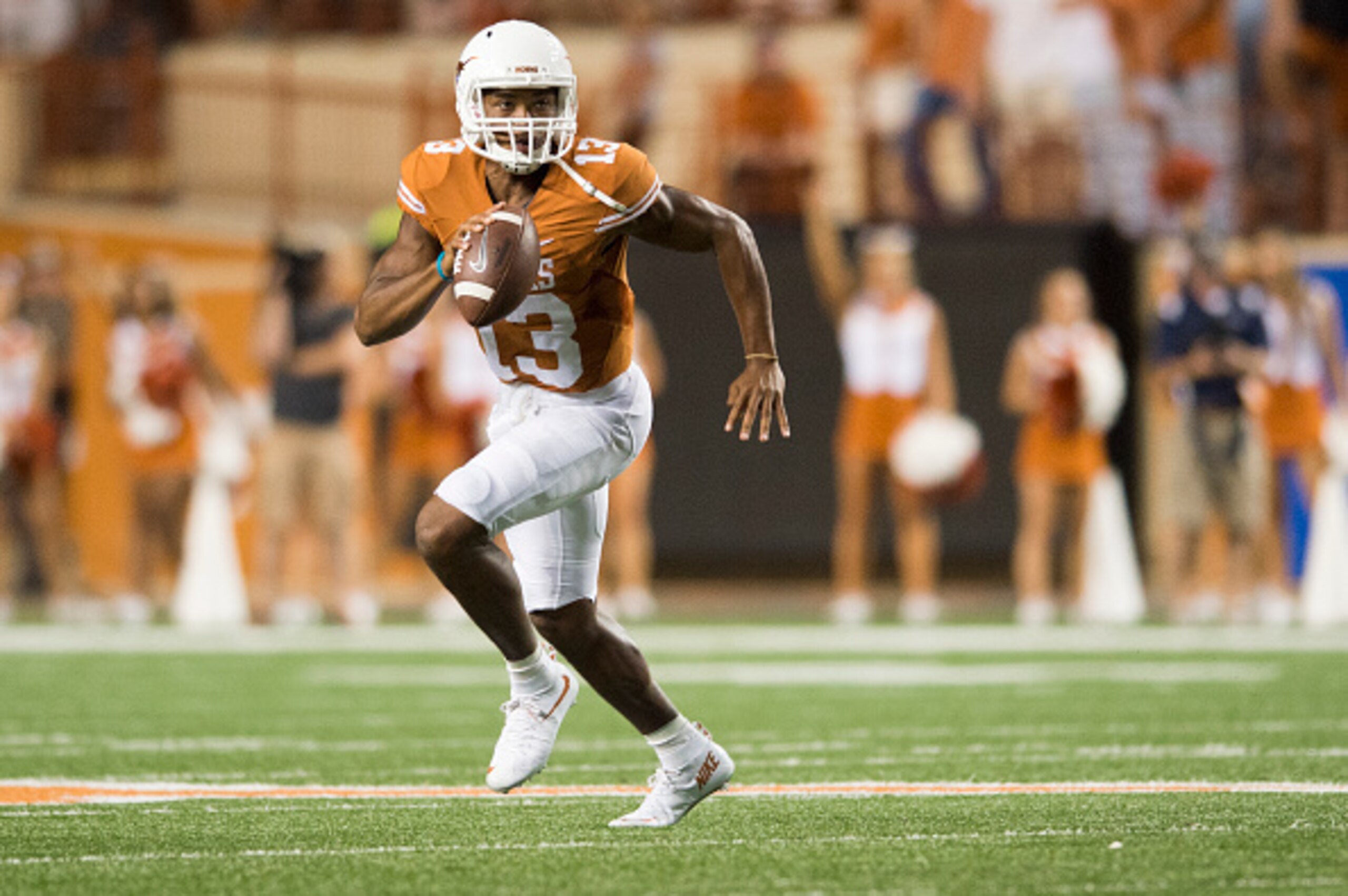
What's Happened so Far?
There's been some good and some, um, not so good. The season-opening 38-3 loss to Notre Dame was a slaughter that would make Game of Thrones blush. A 42-28 win over Rice the following week was a nice bounce-back—the Longhorns need something to go their way for a change—but the next month on the schedule is daunting.
What's the Problem?
It's pretty much the same thing from 2014: offensive efficiency. Texas' offense against Notre Dame looked similar to how it did in the Texas Bowl against Arkansas. That was bordering on nine months ago. Where's the development? Head coach Charlie Strong said it himself, per Nick Castillo of the Dallas Morning News: "(Offensive struggles) cannot happen."
While the Longhorns were having way more fun against the Owls last Saturday, they still ran only 38 plays (at about 7.3 yards per play). That's not going to come close to happening again this year. There are plenty of players who need to step up.
Can It Be Fixed?
In a way, it sort of has been. Coach Strong demoted Shawn Watson from play-caller after Week 1, with wide receivers coach Jay Norvell assuming those duties. Is it a long-term fix? We'll have to wait and see, but whether Strong likes it or not, the Big 12 is an offensive league.
As Paul Myerberg of USA Today tweeted, Big 12 teams averaging fewer than 27 points per game over the last five years have finished with a losing record. This smells of Strong needing a complete overhaul of the offense a la a Sonny Cumbie-Doug Meacham combo at TCU.
For now, it appears Texas is going with Jerrod Heard at quarterback. Given the O-line is still shaky at best, Heard's mobility gives the offense the best chance to move the chains—even if that means Heard is running for his life.
Projected Record: 6-6. This is about on par with what you could have realistically expected before the season began. Texas is just so young. The record doesn't need to be reset, but the offensive philosophy going forward absolutely does.
Ben Kercheval is a lead writer for college football. All quotes cited unless obtained firsthand. All stats courtesy of cfbstats.com.


.jpg?w=2560 "Grading WWE Raw 🔠")

.jpg?w=2560 "Viral Rams Coach Vid 🖕")