

Power Ranking College Football's Best Rushing Attacks After Week 2
Fifteen FBS schools averaged at least 250 rushing yards per game last season, and through two weeks of the 2015 college football season we're headed for another year of potent ground attacks.
Currently there are 22 schools averaging 250-plus, with nine topping 300 yards per game on the ground, though for most the early numbers have been boosted by facing weak competition including many teams from the FCS ranks.
Regardless of the opponents, being able to churn out big yards with the run is often a recipe for success. Seven of the top nine rushing teams from 2014 had winning records, including national champion Ohio State.
To put these early numbers in perspective, we've ranked the top 20 rushing offenses from 2015 based on their performance against FBS opponents, their average yards per carry, the diversity of their production and their effectiveness in key situations such as on third and fourth down and in the red zone.
Honorable Mention
1 of 21
Arizona Wildcats
Sophomore Nick Wilson's 6.77 yards-per-carry average leads an attack that is coming off a 301-yard performance in a win at Arizona. The Wildcats have one of the more balanced offenses in the country thanks to quarterback Anu Solomon, but Wilson has accounted for 12 first downs on 43 carries so far.
Arkansas Razorbacks
The loss of Jonathan Williams during the preseason to a foot injury seems to have had a major impact on Arkansas' stout run game, which through two weeks is averaging only 142.5 yards per game and 4.38 yards per carry. Alex Collins is averaging 5.66 yards per carry, but without a second option to go with the Razorbacks have turned to the pass far more than in 2014.
Notre Dame Fighting Irish
Greg Bryant was ruled ineligible during the summer and Tarean Folston has been lost for the season because of injury, but Notre Dame is still getting its yards on the ground thanks to C.J. Prosise. The junior, who spent most of the previous two years as a receiver, has 253 yards and a touchdown through two games. The loss of quarterback Malik Zaire to a broken ankle could change the rushing aspect, though, as he'd run for 103 yards on 19 carries.
Temple Owls
Temple has been among the biggest surprises of 2015 so far, and the run game has been a key part of that. The Owls averaged only 107.75 yards per game last season, but after two weeks they are at 182 thanks to workhorse Jahad Thomas. The junior has 328 yards and three touchdowns on 55 carries, nearly matching his 2014 total of 384 yards already.
Tulsa Golden Hurricane
Under new coach Phillip Montgomery, the Golden Hurricane has already matched last season's win total thanks to a very prolific offense that can do it through the air as well as on the ground. And the run game is a two-headed monster, with senior Zack Langer and sophomore D'Angelo Brewer both over 220 yards so far.
20. Oregon Ducks
2 of 21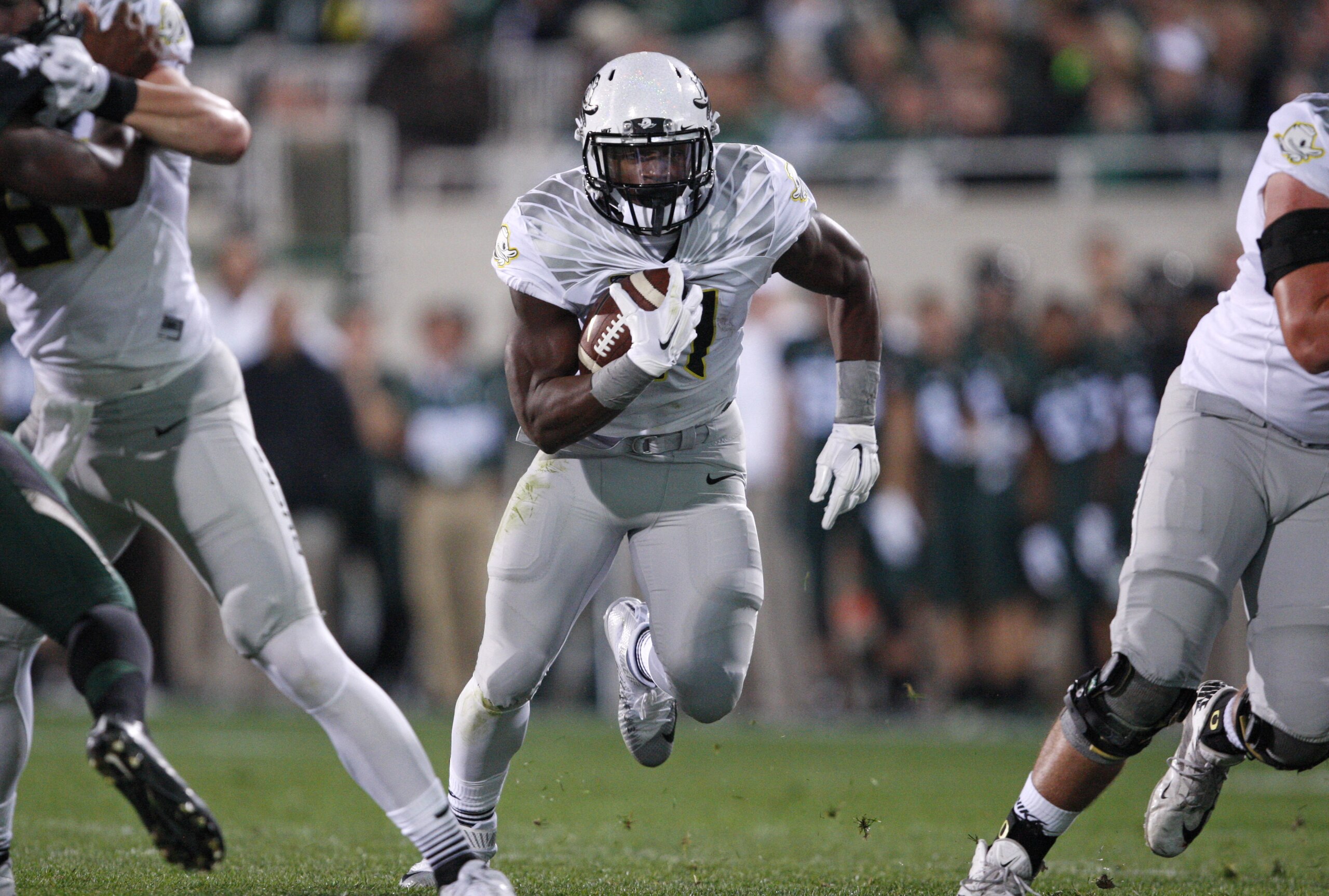
Oregon's run game is coming off a very rough performance last week, which is why it sits so low on this ranking. Don't expect this to remain this way for long, since the Ducks won't be going up against a run defense like what Michigan State had anytime soon.
Against MSU, Oregon ran for only 123 yards on 43 carries (including four sacks of Vernon Adams), marking its lowest output since November 2013 against Stanford. It had 485 yards and six rushing scores the week before against Eastern Washington.
Expect something close to that on Saturday against Georgia State, when Royce Freeman figures to have a big game early and then defer to his backups to keep churning out the yards. In Oregon's opener, Freeman had 180 yards and three TDs but saw his teammates add another 305 yards on 36 carries.
19. Florida State Seminoles
3 of 21
Because of how impressive Florida State has been via the pass for so long, not just in 2013-14 with Jameis Winston but long before that, the Seminoles' ground game hasn't gotten much attention. It hasn't been particularly productive, either, and last year ranked 98th in 2014.
But with Dalvin Cook having firmly established himself as the Seminoles' best offensive weapon this season, the ground attack is far more a part of this offense. Cook is coming off a 266-yard, three-touchdown performance against South Florida last week and has 422 yards in two games, second-best in FBS.
Overall, FSU is gaining 272 rushing yards per game, and that's with quarterback Everett Golson yet to break off any runs like he did while at Notre Dame in 2014. Golson will need to get more involved in that respect, as well as with his passing, since the 'Noles don't want to become too dependent on Cook.
"We have a rotation to get Mario (Pender) in there," FSU coach Jimbo Fisher told Tom D'Angelo of the Palm Beach Post. "The last game we didn't."
.jpg?w=2560 "AP Poll Top Five Week 9")
.png?w=2560)
18. Northwestern Wildcats
4 of 21
Northwestern's 2-0 start has been mostly fueled by its defense, which has allowed a mere six points and 378 yards. But the run game is also putting up strong numbers, thus controlling the clock and giving that defense an opportunity to rest and stay fresh.
The Wildcats are averaging 284.5 rushing yards per game, including 225 yards in the opening 16-6 upset win against Stanford. They're only gaining 4.63 yards per carry, which ranks 66th nationally (and worst among teams gaining more than 250 yards per game), but they're able to extend drives by converting 55 percent of their third and fourth downs when running the ball.
Northwestern has averaged nine yards on third down runs, fueled by quarterback Clayton Thorson's 42-yard touchdown in the Stanford victory.
Along with Justin Jackson's 212 yards, Northwestern is 11th in FBS in time of possession.
17. Old Dominion Monarchs
5 of 21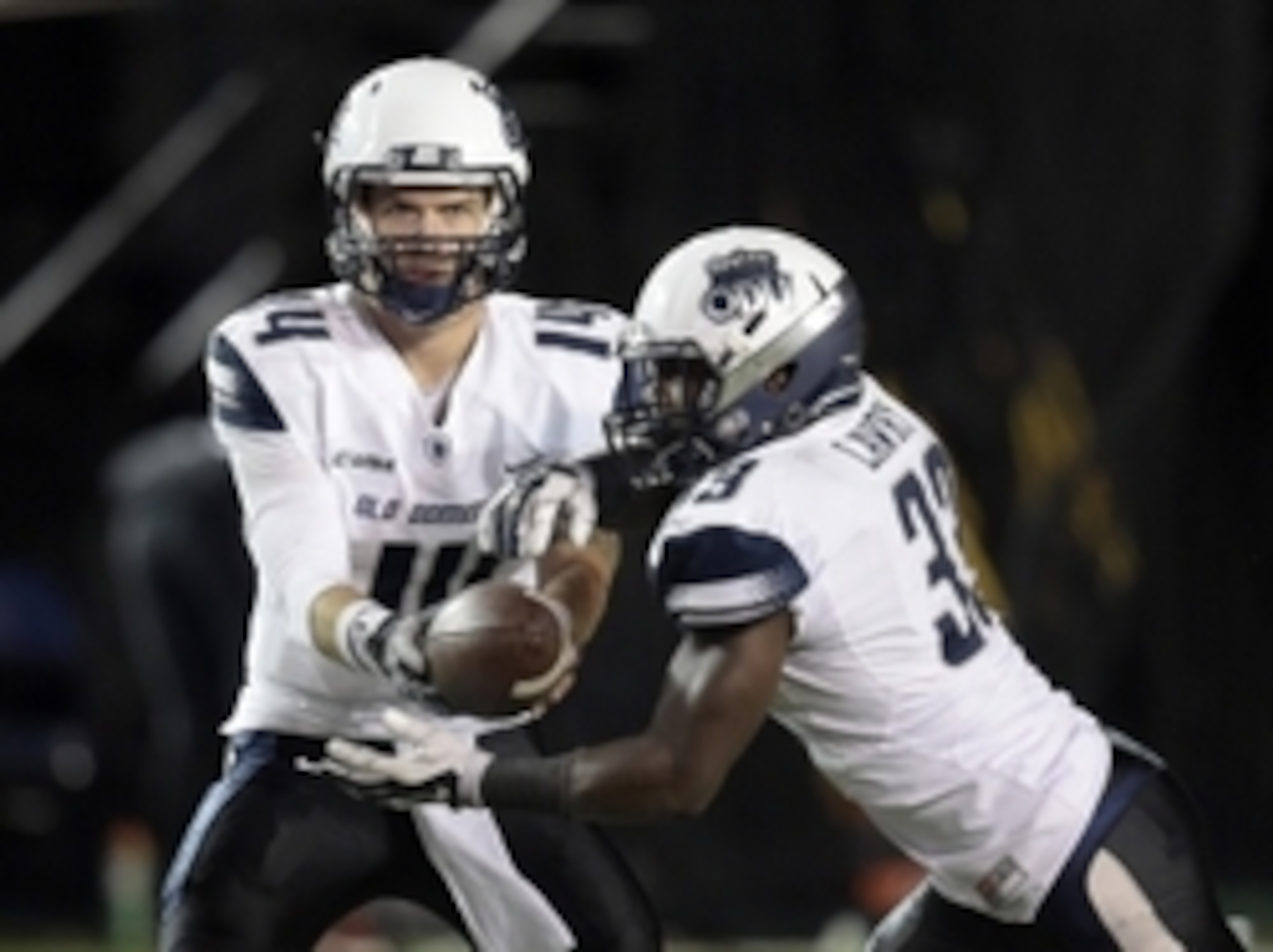
As Old Dominion made the transition from FCS to FBS, it did so with an all-out passing attack that produced more than 15,000 yards from Taylor Heinicke. He's now in the NFL, and with the Monarchs in their first season as full FBS members (complete with postseason eligibility), the offense has gone through a major change.
Now it's a run-first attack headed by the most-used rusher in the country through two weeks. Junior Ray Lawry has carried it 59 times for 438 yards and six touchdowns so far, leading FBS in yardage and attempts. This has enabled Old Dominion to start 2-0 with a road win over Eastern Michigan and a home victory against Norfolk State.
Now comes a visit from North Carolina State, the first power-conference opponent to visit the Monarchs in Norfolk. Lawry, as a sophomore, ran for 71 yards and three TDs against the Wolfpack in a road loss last season.
16. Florida Atlantic Owls
6 of 21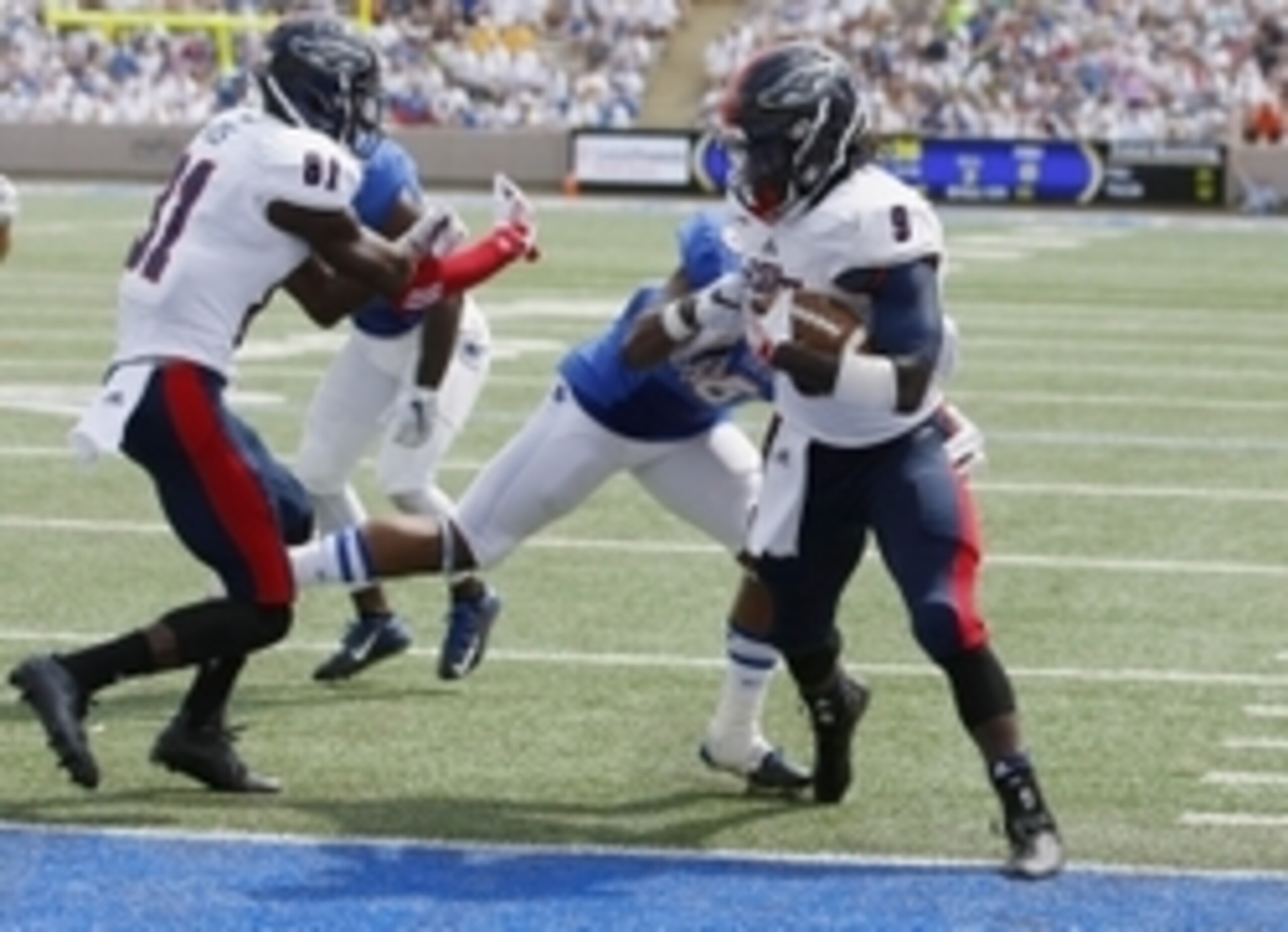
Now in his second year, Florida Atlantic coach Charlie Partridge is hoping to turn around the Owls with an offensive approach that stresses the run as much as the pass, if not more so. He's getting the results on the stat sheet, but not on the scoreboard yet.
Despite averaging 261.5 rushing yards per game, 22nd-best in FBS, FAU is 0-2. It lost in overtime at Tulsa to start the season, despite scoring 44 points, then fell 44-20 at home to Miami (Florida) last week.
In that second game, senior quarterback Jaquez Johnson injured his ankle and was replaced by Jason Driskel, a redshirt freshman. Johnson has run for 1,383 yards in his career, while Driskel is strictly a pocket passer.
Along with Johnson, FAU has also gotten solid run production from sophomore Greg Howell and junior Jay Warren, who together have run for 415 yards with four touchdowns.
15. Georgia Southern Eagles
7 of 21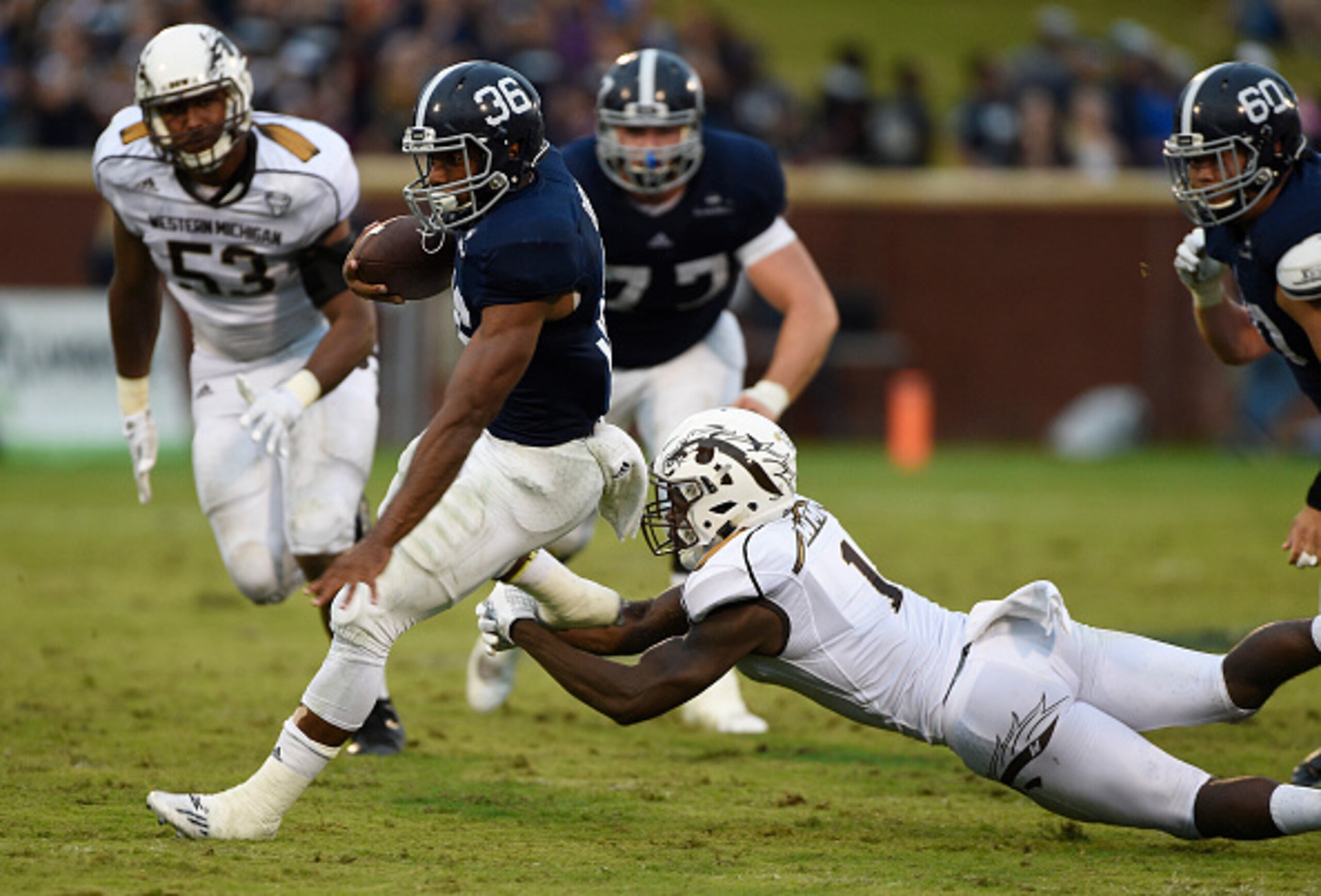
As good as Georgia Southern's run numbers (304 yards per game, 5.58 yards per carry) have been so far this season, they're actually down from a year ago when the Eagles were tops in FBS at 379.9 per game and 7.11 per carry.
Expect those figures to rise as the season goes on, especially now that quarterback Kevin Ellison is back after sitting out the first two games because of academic issues.
Ellison ran for 1,082 yards and 12 touchdowns last season, one of three Eagles backs to score at least 12 times. He and leading rusher Matt Breida combined for 2,567 yards in 2014, and so far in 2015 Breida has 246 yards and four TDs while averaging 8.79 yards per carry.
14. Louisiana-Lafayette Ragin' Cajuns
8 of 21
Louisiana-Lafayette's run game has steadily improved throughout the course of coach Mark Hudspeth's four-plus seasons. From 125.15 yards per game in 2011 to 225.92 per contest last season, the Ragin' Cajuns have made sure the ground attack has been a vital part of their game plan.
And that's continued this fall, with a 303.5 yards-per-game average that includes 247 yards and four touchdowns in the season-opening loss at Kentucky. Not included in those numbers: a successful Statue of Liberty run play for a two-point conversion that tied the game at 33 in the fourth quarter.
Junior Elijah McGuire has 248 yards and five touchdowns, all five coming in last week's win over Northwestern State, while senior Torrey Pierce has 162 yards and three TDs.
13. Memphis Tigers
9 of 21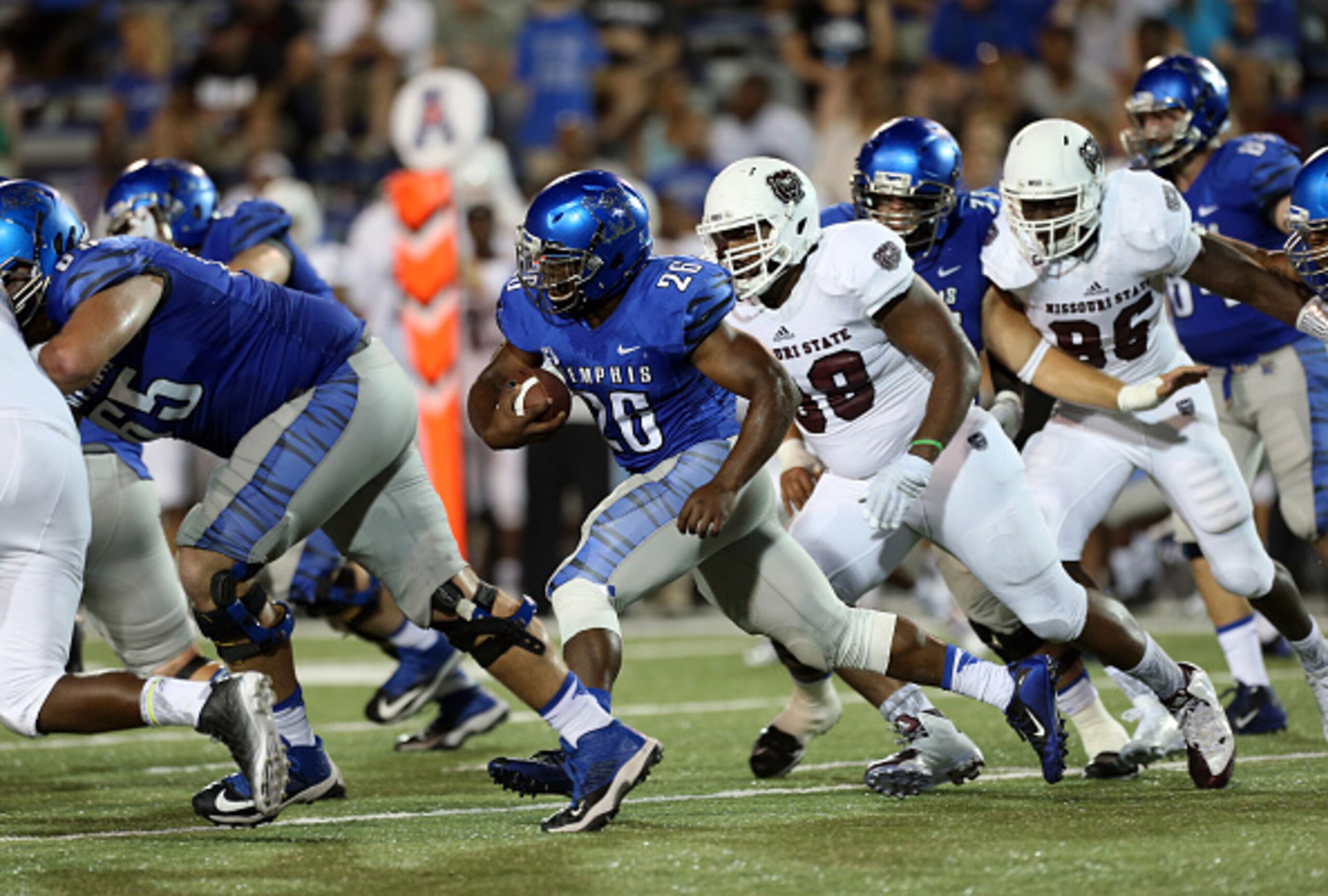
The rise of Memphis football began with strong defense but has morphed into an all-around approach that is just as much about production as it's been geared toward stopping opponents. And while quarterback Paxton Lynch is the Tigers' unquestioned leader, this season he's getting huge contributions from a very inexperienced backfield.
Sophomore Jarvis Cooper had 159 yards and three touchdowns through two games, while freshman Jamarius Henderson has added 150 yards and two scores. That pair combined for 134 yards and two TDs on 20 carries in Memphis' 55-23 win at Kansas last week, their first victory over a power-conference opponent since 2004.
Memphis is averaging 299 rushing yards per game, and during its nine-game win streak it has put up 211 yards per game on the ground.
12. USC Trojans
10 of 21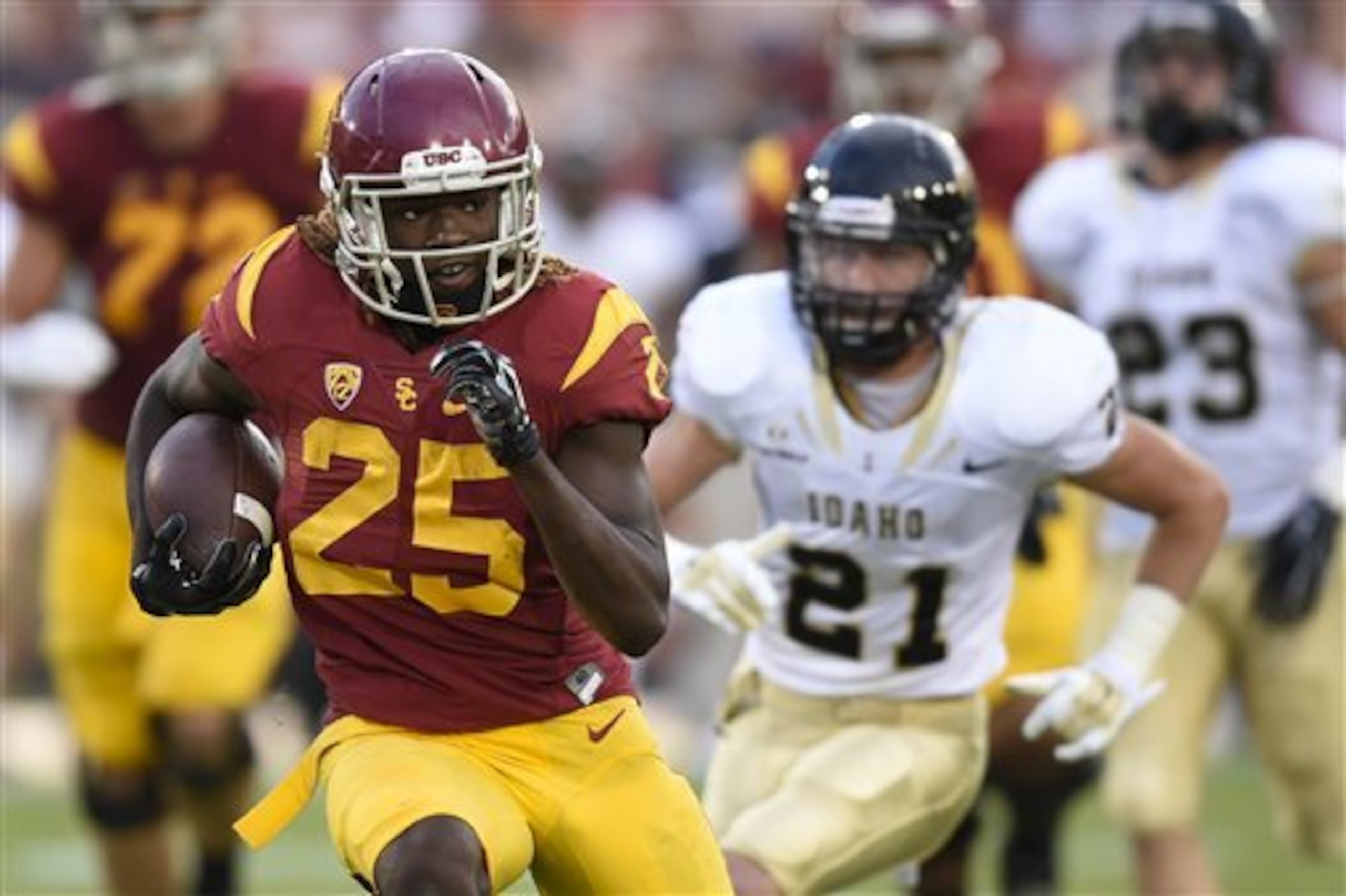
USC has had its way with a pair of Sun Belt teams to start the 2015 season, dominating both through the air and on the ground. The passing prowess isn't very surprising, since senior quarterback Cody Kessler is one of the most efficient players in the game at his position.
It is a surprise, though, that the Trojans are running the ball so well after 1,489-yard rusher Javorius Allen turned pro following last year. His departure left the team without much experience in the backfield beyond Justin Davis and Tre Madden, the latter having missed the 2014 campaign because of injury.
Davis and Madden have been strong, combining for 216 yards and five touchdowns, but the top back so far is true freshman Ronald Jones II. He had 169 yards and two TDs on 14 carries, while fellow freshmen Aca'Cedric Ware and Dominic Davis have averaged more than five yards per rush between them.
11. Colorado Buffaloes
11 of 21
Colorado has a long way to go before getting to the point where it can be considered a competitive team, but so far this season the Buffaloes are showing the ability to do something they've struggled with quite a bit over the past few seasons: run the ball.
From 2008-14 the Buffs averaged 120.3 rushing yards per game, with last year's 154.6 per-game rate by far the best in that run. Through two games this year, Colorado has netted 302.5 yards per game, including 390 yards in last week's win over Massachusetts.
It was the program's first 300-yard rushing performance since 2007.
Three different backs have gained more than 100 yards so far, as has quarterback Sefo Liufau, whose 117 yards nearly match the 136 he had all of last season.
10. Ohio State Buckeyes
12 of 21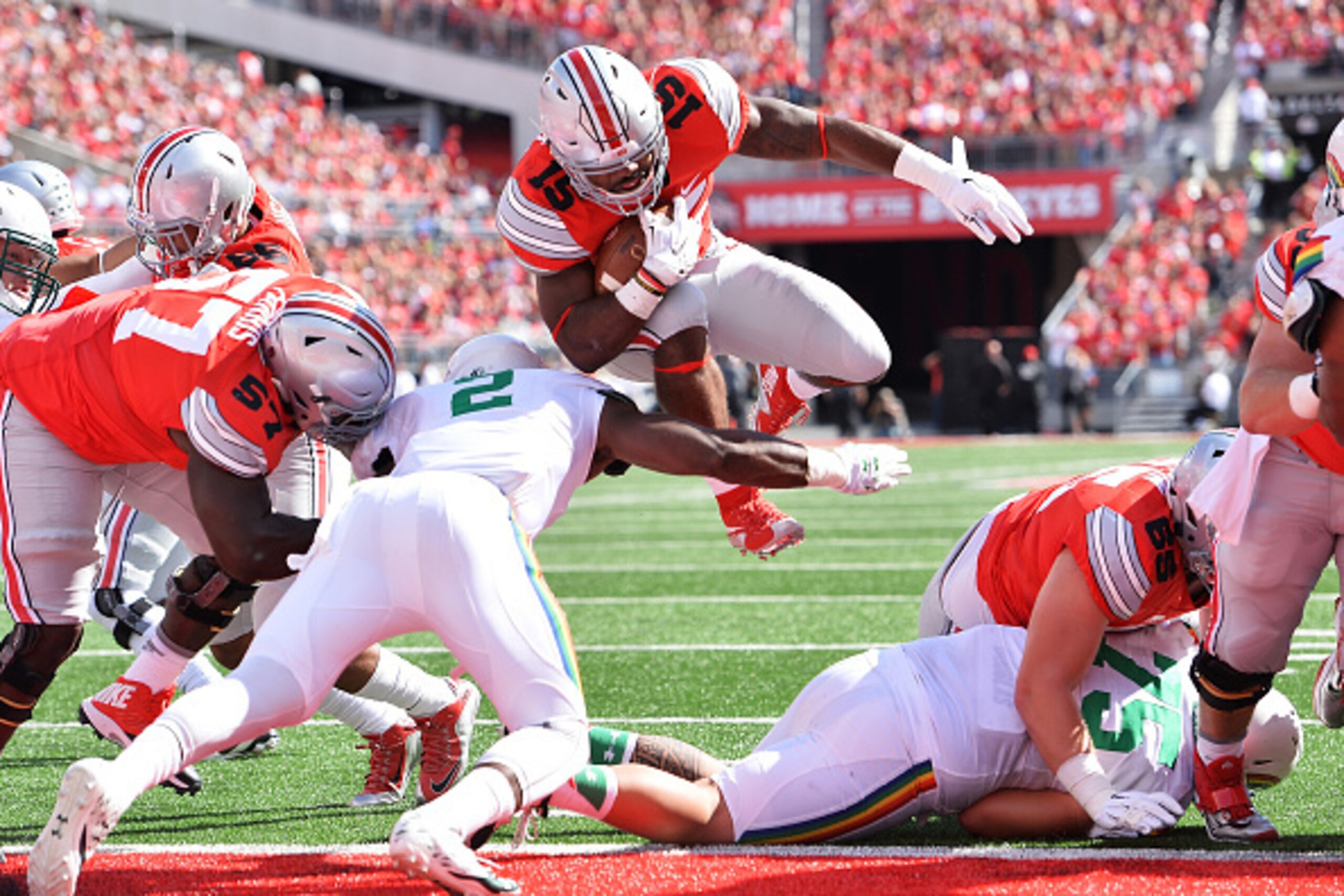
Ohio State's run to a national title last year was paved by the workhorse-type running of Ezekiel Elliott, who in the three postseason games had 696 yards and eight touchdowns on 76 carries. It's a luxury the Buckeyes know they can turn to if needed, but so far in 2015 Elliott hasn't had to do much since there are so many other options available on offense.
Elliott has 223 yards and four touchdowns on 38 carries, accounting for only 41 percent of OSU's running tally.
He hardly touched the ball in the opening win at Virginia Tech because starting quarterback Cardale Jones was able to keep it himself and bulldoze defenders, while when the Buckeyes wanted to get creative they'd hand it off to quarterback-turned-receiver Braxton Miller and watch him show off the skills that enabled him to rush for more than 3,000 yards from 2011-13.
OSU has so many options on the ground that J.T. Barrett, who started all 12 regular-season games at quarterback last season and ran for 938 yards, has just two carries (for 47 yards).
9. Ole Miss Rebels
13 of 21
Ole Miss is off to a blistering offensive start to 2015, scoring 149 points in its first two games. And it hasn't just been the result of a potent passing attack, which has produced at least 3,200 yards in each of Hugh Freeze's first three seasons and is averaging 358 yards per game through the air this year.
The Rebels might actually have a run game this season, something that hasn't been the case of late. Putting aside the competition (UT-Martin and Fresno State), the raw numbers of 553 rushing yards, nine touchdowns and an impressive 7.79 per-carry average bode well for the future.
"Ole Miss hadn't averaged more than six yards per carry in back-to-back games since 2007," Bleacher Report's Justin Ferguson wrote.
The Rebels have been bolstered by plenty of big runs to help their average. Seven of their 71 carries have gone for at least 20 yards, including a 60-yard TD run by Jaylen Walton on his first carry in the opener against UT-Martin.
8. LSU Tigers
14 of 21
Unlike the rest of the teams on this list, LSU has only played one game since its opener against McNeese State was canceled because of weather. That matchup against an FCS team likely would have helped the Tigers pad their rushing numbers, but they did just fine against a quality opponent last week.
LSU ran for 266 yards in its 21-19 win at Mississippi State, averaging 5.66 yards per carry. Leonard Fournette did most of the damage, with a career-high 159 yards and three touchdowns on 28 carries, but quarterback Brandon Harris had 48 yards on five touches as well.
Most impressive was how the Tigers ran the ball in the red zone. They had four snaps inside Mississippi State's 20-yard line and ran it each time, generating 33 rushing yards and two TDs.
With Harris getting eased into his role, the run game is by far the most important part of LSU's offense, and through one game it looked quite effective.
7. Tennessee Volunteers
15 of 21
With the addition of junior college transfer Alvin Kamara, who began his career at Alabama, Tennessee has a legitimate "thunder and lightning" combination in the backfield with the 5'10", 215-pound Kamara serving as the small-but-speedy half of that pairing next to 6'4", 240-pound sophomore Jalen Hurd.
That duo has run for 378 yards and six touchdowns through two games.
The Volunteers also have the added benefit of a very mobile quarterback, Joshua Dobbs, who has 101 yards and two scores already this year. Dobbs was stifled by Oklahoma last week in a home loss, with just 12 yards on 14 carries, but in 2014 he had at least 48 rushing yards in five of six appearances.
6. New Mexico Lobos
16 of 21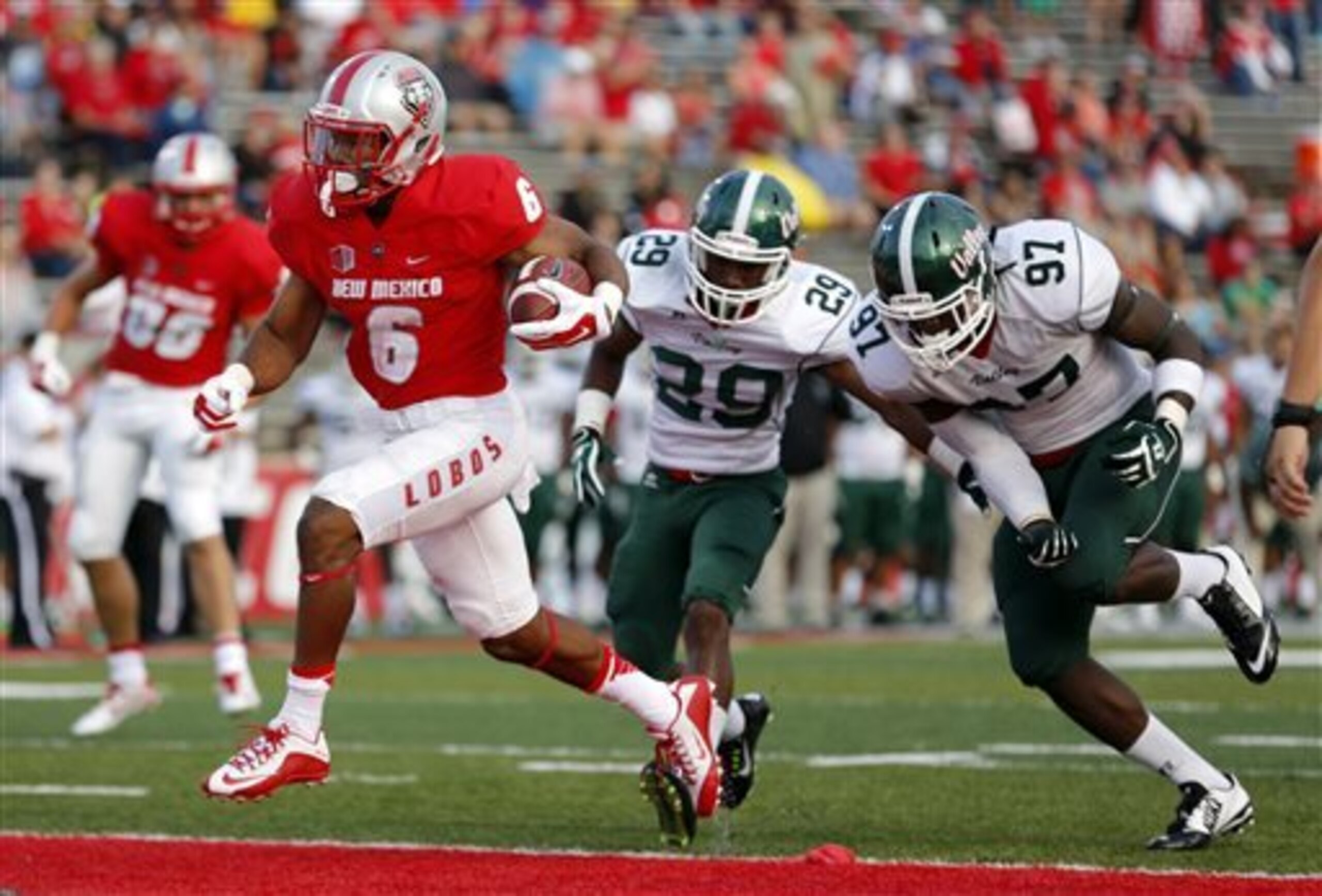
New Mexico is an exception to the rule when it comes to the correlation between a strong rushing offense and overall team success. Since Bob Davie took over the Lobos in 2012, they've finished in the top five in rushing yards per game each season yet are just 12-27 in his tenure including a 1-1 start to this year.
The Lobos sit 14th in rushing this season, at 281.5 yards per game, after gaining 224 yards on the ground in a 40-21 home loss to Tulsa last week. That's their 10th-lowest output in Davie's 39 games at the helm, and without a passing attack to make up for a rough game they struggled to win without ground production.
When it's working, though, New Mexico is tough to defend because it turns to so many different players in the option. Besides quarterback Lamar Jordan, five other players have gained at least 50 yards in two games this season, and in 2014 their top three ball-carriers combined for more than 2,500 yards.
5. Alabama Crimson Tide
17 of 21
Alabama has the capability to run up the score and overwhelm the stat sheet with its punishing ground game, but the desire to get its quarterback situation figured out has to this point held down the rushing numbers. Not completely, though, since not even Nick Saban can keep Derrick Henry and company from getting their yards.
Henry, Kenyan Drake and freshman Damien Harris have combined for 438 yards and seven touchdowns on 64 carries against Wisconsin and Middle Tennessee, with Henry (243 yards, six TDs) doing the bulk of the damage. If the Crimson Tide were to devote more snaps to the run, they'd be doing far better than their 229 yards-per-game average, but so far the play-calling has been almost 50/50 with 72 pass attempts and 76 rushes (including sacks).
If needed, Alabama could run the ball every play and still dominate, but it has traditionally tried to stay balanced and spread out the handoffs to avoid overworking one player. Dating back to 2012, no Tide rusher has run it more than 207 times in one season yet the team has averaged better than 200 rushing yards per game each year.
4. Georgia Bulldogs
18 of 21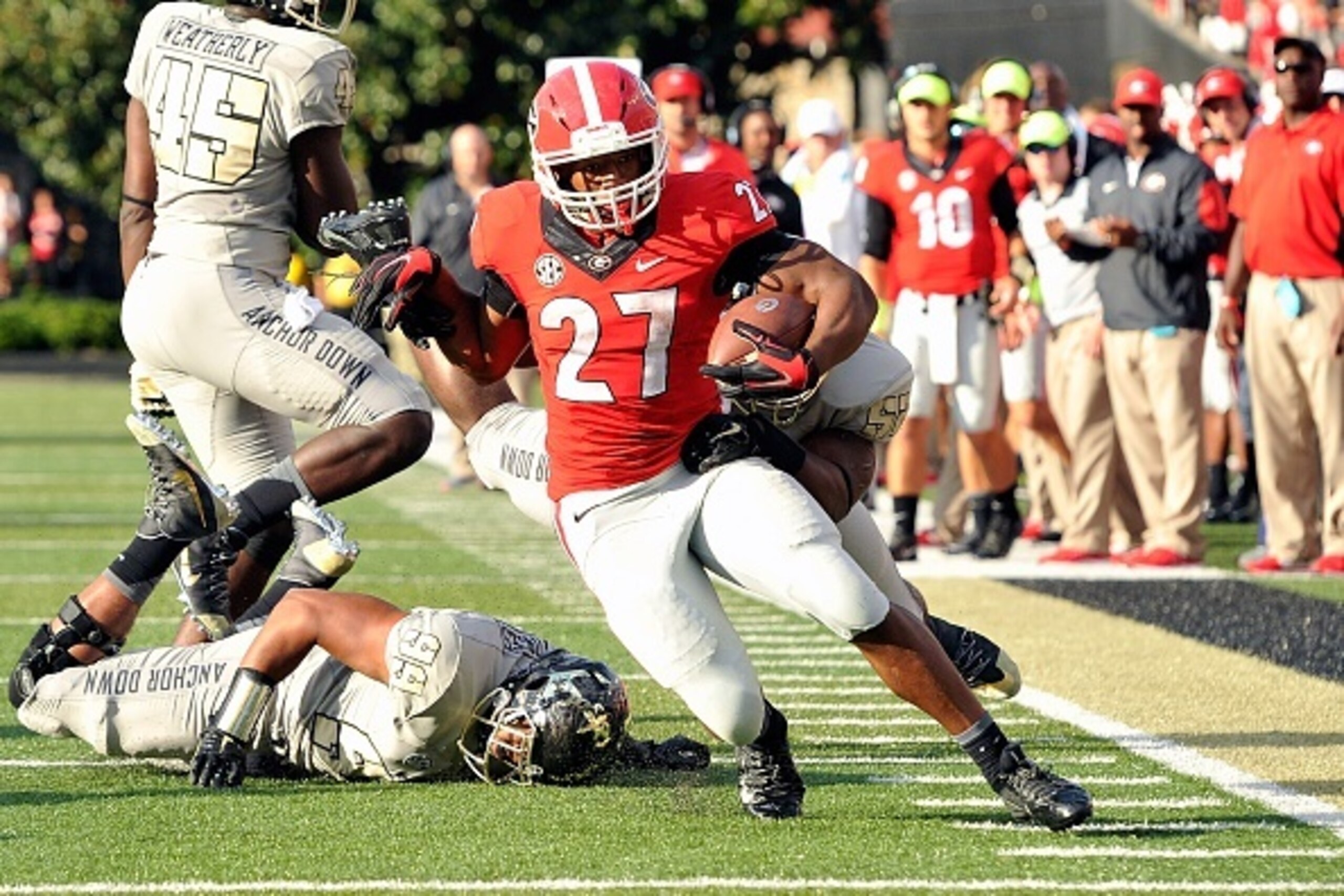
It might seem like Georgia's rushing attack is simple and straightforward, just give it to Nick Chubb and watch him dazzle, but that would be unfair. Sure, Chubb has extended his streak of 100-yard games to 10 with 309 yards and two touchdowns this season, but he's only accounted for 59 percent of the Bulldogs' yards on the ground.
We can't forget about Sony Michel and Keith Marshall, who have combined for 181 yards and three scores on 33 carries. If that duo comprised a team's entire rushing attack they'd still exceed 10 other FBS teams after two weeks.
Georgia has made sure to spread the carries out—Chubb has only 35 of the 79 touches so far—just in case something were to happen similar to 2014. Last year Chubb got a little bit of work in the first five games before having to step in when Todd Gurley was suspended by the NCAA for getting paid to sign autographs, then in his first game back he injured his knee and was lost for the year.
If something were to happen to Chubb, the Bulldogs look to still be in good hands with the run game.
3. Air Force Falcons
19 of 21
At 411 rushing yards per game to this point in 2015, Air Force ranks second in FBS. Those numbers have been aided by facing an FCS team to start the season, but in last week's 37-16 win over San Jose State to open their Mountain West Conference schedule the Falcons ran for more yards (428) than they did the week before against Morgan State (398).
Air Force has gone to the ground more often than any other team this season, with 132 of its 150 offensive snaps resulting in a rush. Four players are over 100 yards already, though one of those is quarterback Nate Romine, who is done for the season after tearing two knee ligaments against San Jose.
This injury, combined with a tough game coming up against Michigan State—which shut down Oregon's run game last week—likely means the Falcons' rushing numbers will take a significant dip this weekend. For now, though, they're among the best at running the ball.
2. Georgia Tech Yellow Jackets
20 of 21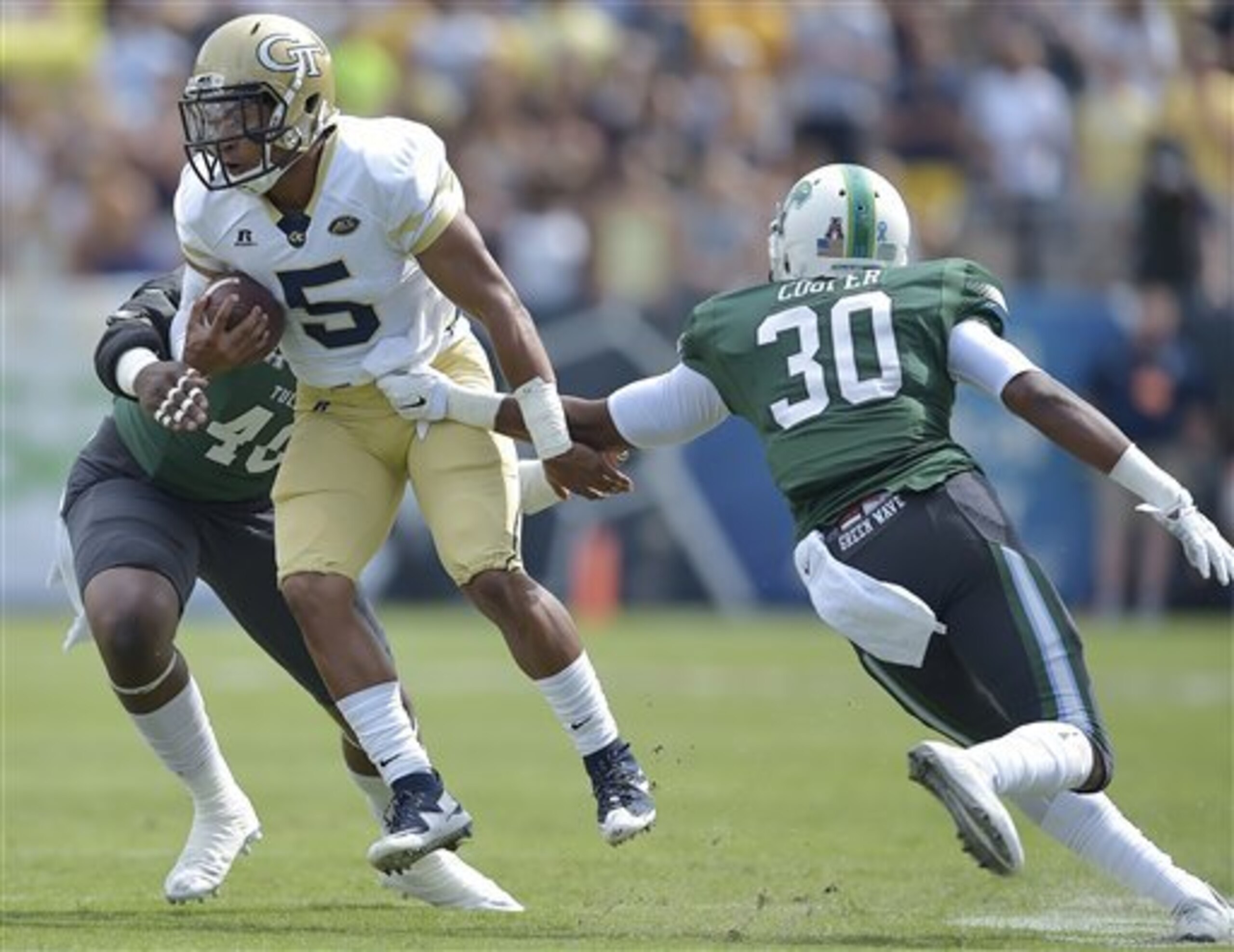
Georgia Tech's official nickname is the Yellow Jackets, but for years it's also been referred to as the Ramblin' Wreck. That's quite fitting for a team that just continues to churn out big rushing numbers on a weekly and annual basis using a style that is often associated with less talented teams and those from service academies.
Coach Paul Johnson has come from those programs, but he's still using the triple option that worked at those stops and making it successful at the highest level. Tech was second in FBS last season at 342.07 rushing yards per game and through two games in 2015 it's well on the way to being up there again.
"Tech is so counter-narrative to what you know about big-boy football," Bleacher Report's Ray Glier wrote.
The Yellow Jackets have run for 915 yards in two games, with 439 coming against their lone FBS opponent, Tulane. Altogether, they're gaining 8.47 yards per carry and have had 10 different players score touchdowns on the ground.
1. Baylor Bears
21 of 21
The first thing most people think of when Baylor comes to mind is an all-out air assault that fuels video game-like scoring numbers. And while that's true, as the Bears again are among the most prolific passing teams in the country so far at 398 yards per game, their ground attack is just as deadly if not more so.
Through two games, Baylor is averaging 356 yards per game. In its lone contest against an FBS school, SMU, it ran for 300 yards and gained more than 8.1 yards per carry, and so far this season it has four players who have topped 100 yards.
There's so much diversity with this run attack that junior Shock Linwood, who had 1,252 yards and 16 touchdowns in 2014 and currently sits fifth on the school's career rushing chart, has taken only 26 of the Bears' 93 carries so far this year. Three other backs are over 100 yards, and four different players have combined to score six TDs on the 11 times the Bears have run the ball in the red zone.
Statistics provided by CFBStats.com.
Follow Brian J. Pedersen on Twitter at @realBJP.
.png?w=2560)
.jpg?w=2560)

.jpg?w=2560 "Raiders Could Start Mendoza")


.jpg?w=2560 "Rodgers Iced Out on Plane 💎")

.jpg?w=2560 "Big Trade to Shake Up East 💡")