Why Traditional Big Men Are Still Vital in Today's NBA
"Small ball only works on centers that can't score #factsonly I wish you would put Someone that 6'6 on me #careerhigh #highschooldays
— Hassan Whiteside (@youngwhiteside) August 26, 2015"
Traditional big men will always have a place in the NBA.
It's just that their place, and the things they must do to get there, is changing.
.png?w=3840)
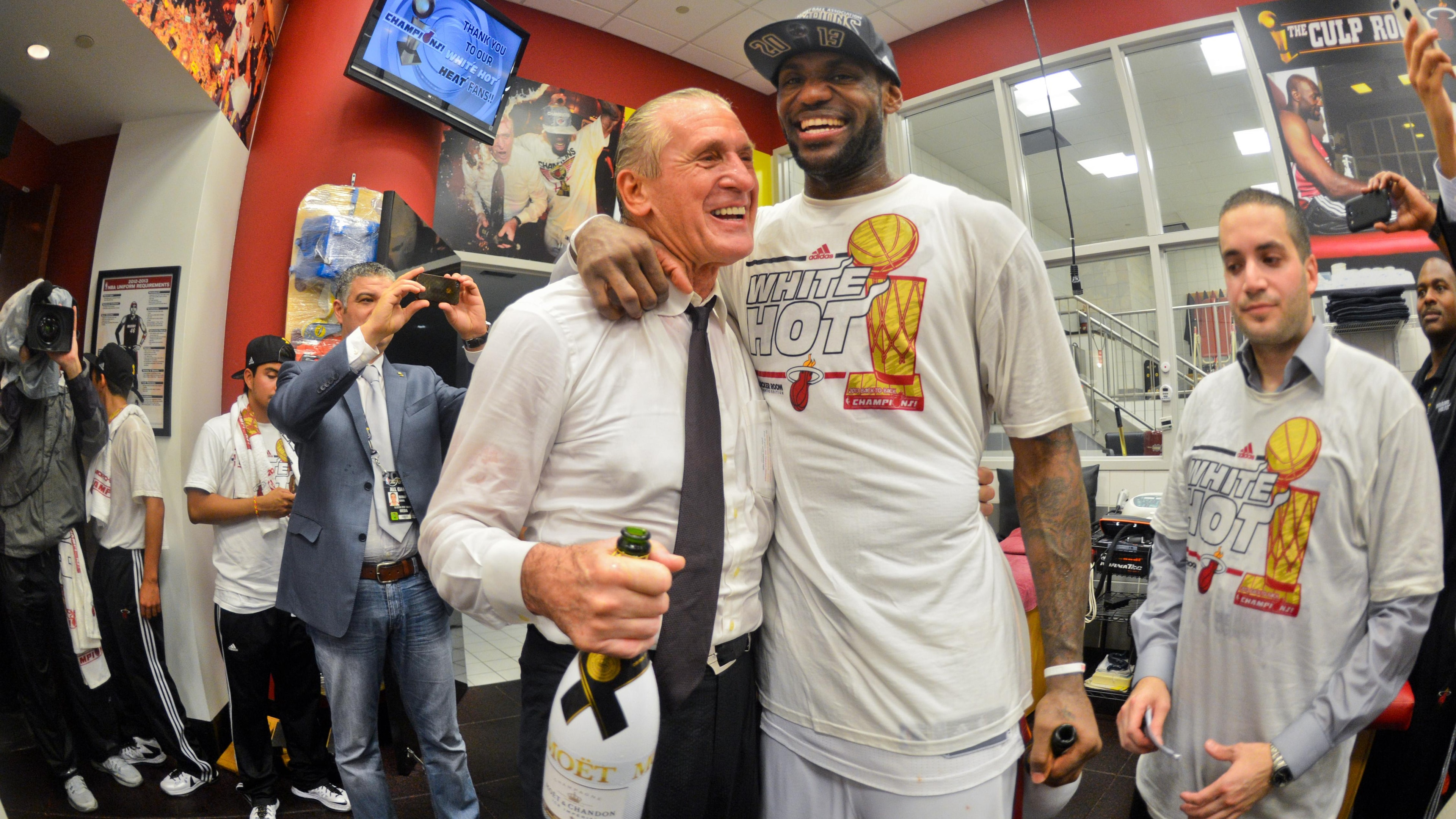
But because ample time is spent lauding the league's deceptively coined "small-ball" movement, the survival of these player types is often glossed over, their eventual extinction sometimes assumed. And that's something to which Miami Heat center Hassan Whiteside takes offense:
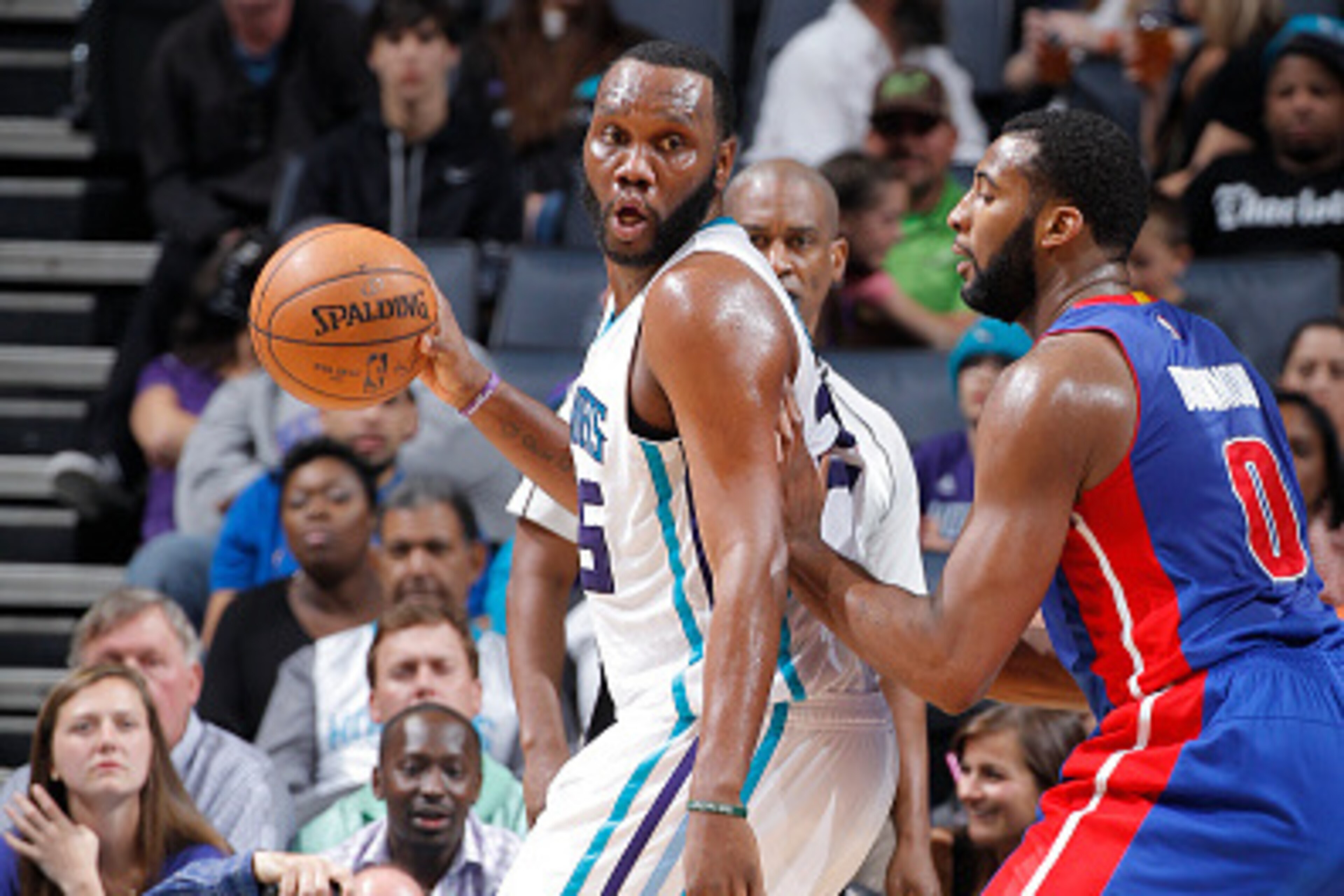
Oversimplified? Yes. Inaccurate? Not entirely.
Conventional bigs, these champions of interior offense, are not doomed. Their playing style is alive, and there's evidence to suggest it won't ever disappear.
Dwindling, Not Dead
To be sure, the decline in popularity of post-ups is not imagined.
Grantland's Zach Lowe summed up this shifting landscape nicely:
"There is no debate that post-ups make up a shrinking portion of the scoring pie, though there is some debate about why that is. Only eight teams this season finished even 10 percent of their possessions with a post-up, per Synergy Sports. A decade ago, 22 teams hit that mark, and every team ended at least 7.5 percent of its trips with some kind of post-up. One-third of teams finished with a lower post-up share than that this season.
"
Post-ups actually yielded more points per shot than various other play types last season, including spot-ups, handoffs and screens. But relative to other shot categories, the volume with which post-ups were run in 2014-15 borders on insignificant (note that the data below does not equal the total number of shots from last season):
Teams attempted almost three times as many spot-ups compared to post-up opportunities. Transition looks outnumbered back-to-the-basket sets by more than 1.5-to-1.
Pacing and spacing is of the utmost importance, and every second has become more precious as a result. Offensive schemes aren't as likely to waste time force-feeding big men on the block.
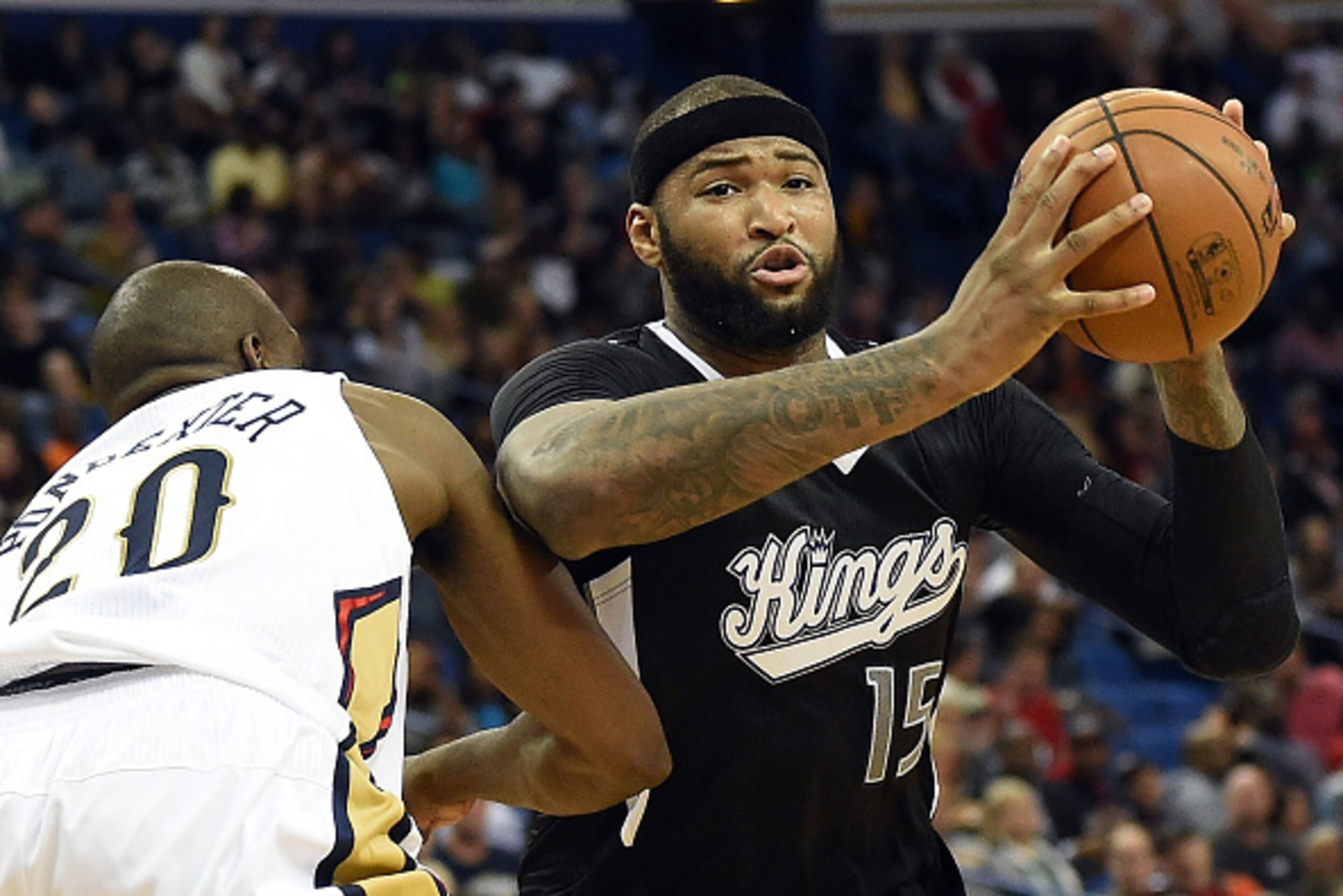
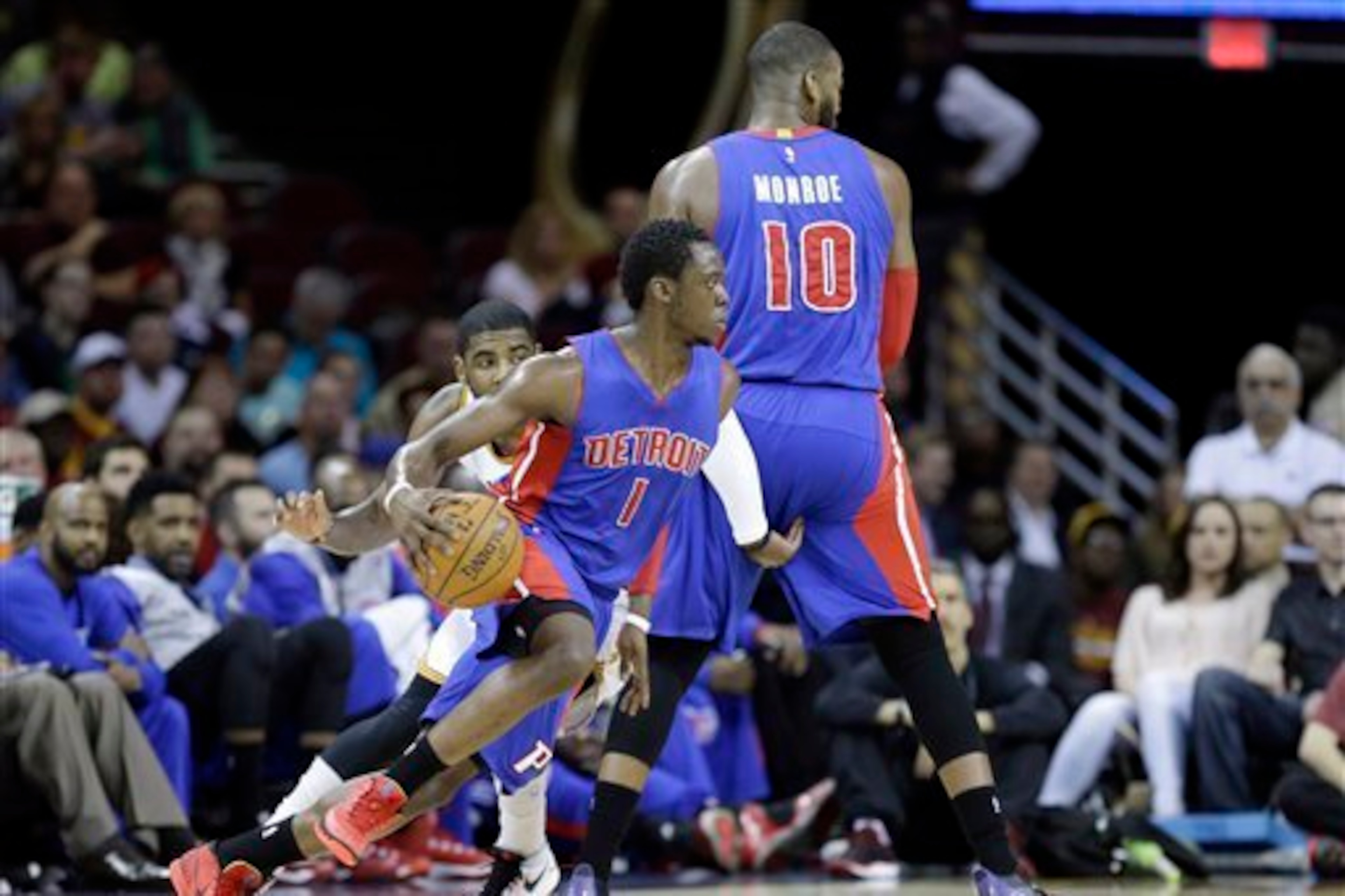
Still, post-ups (17,347) accounted for 8.4 percent of all shot attempts (205,570) last season. High-profile bigs (players 6'10" or taller) such as Greg Monroe, Tim Duncan, Marc Gasol, Dwight Howard, DeMarcus Cousins and Blake Griffin posted up at least 25 percent of the time.
That's not insignificant.
Pass or Perish
While wings and guards have picked up the scoring slack from today's bigs, post players have, ironically, evolved into better facilitators than ever before.
Defenses have become more adept at thwarting post-ups with double-teams and zones, so behemoths have been forced to adapt.
If you're an accomplished interior scorer, defenses react accordingly, sending double-teams and sometimes triple-teams while abandoning other assignments. The most polished bigs are smart enough to capitalize on those adjustments by flinging passes to slashing wings or, as Cousins did below, orbiting shooters:
Not surprisingly, the average assist percentage for bigs who qualified for the minutes-per-game leaderboard has gradually improved over the last decade:
Last season, the average big posted a 9.2 percent assist rate. That's 0.7 points higher than in 2005-06 (8.5), which equates to an 8.2 percent increase.
Every offense, post-packed or otherwise, must acknowledge the value of the three-pointer and have a way of getting the ball outside the paint. And that's why bigs are, on average, passing better than ever.
Screen, Shoot, Thrive
Perfectly placed screens will never go out of style at the NBA level. They are, as ESPN.com's Amin Elhassan wrote, forever imperative:
"Ask any coach of the value of having players (particularly bigs) who are good screen setters, and they will sing praises. These guys do all the dirty work, setting screens to create space and force favorable matchups, which take a toll on defenders. Screens are the lifeblood of most NBA offenses, so it should come as no surprise that bigs who set good screens are coveted commodities.
"
Twelve teams relied on pick-and-rolls, handoffs and general screens for at least one-third of all plays last season. The average offense went to those sets more than 30 percent of the time.
These plays can be run with any two players, but coaches depend on burlier bodies to create space for ball-handlers, who more often than not finish the set, by derailing defenders.
Take this pick Gasol set for Mike Conley:
Defenders won't always see a need to come past the free-throw line when Gasol sets high screens. He has more range than most bigs, but less than 7 percent of his total shot attempts came from outside 19 feet of the basket last season.
The above play instead rested on Gasol's ability to pick off Rajon Rondo and force Dirk Nowitzki onto Conley. That's a matchup Conley can and does exploit off the dribble.
Well-placed screens can also improve spacing, regardless of the pick-setter's range.
Defenders naturally gravitate toward ball-handlers. On average, ball-handlers use up nearly 70 percent of all pick-and-rolls, making it more likely that they're able to draw double-teams off that initial separation.
Two things happen for the screen-setter in those situations. He can be gifted with an open path to the basket, as was the case for Marcin Gortat below:
Or his beeline toward the rim will compel help defenders to collapse, allowing him to find a completely unattended teammate, as Greg Monroe did here:

A lion's share of these contributions are taking place off the ball, away from the action—even on the plays big men finish.
Where they were once that gravitational pull on offense, bigs can still help create the rotation. And it doesn't take a jump-shooter or even an exceptional passer to do that.
Handling the Defense with Handles
Face-ups and off-the-dribble attacks all help to find that offensive sweet spot, wherever it may be.
No one employs this vast array of offensive tools better than Tim Duncan. His familiarity with handling the rock makes it so he doesn't have to rely exclusively on his jumper or—more to the point of traditional bigs—a back-to-the-basket approach:
There are traces of this in other traditional bigs, many of them less established on offense.
Just look at what Rudy Gobert, who attempted 97.4 percent of his shots from inside the paint and restricted area last season, did here:
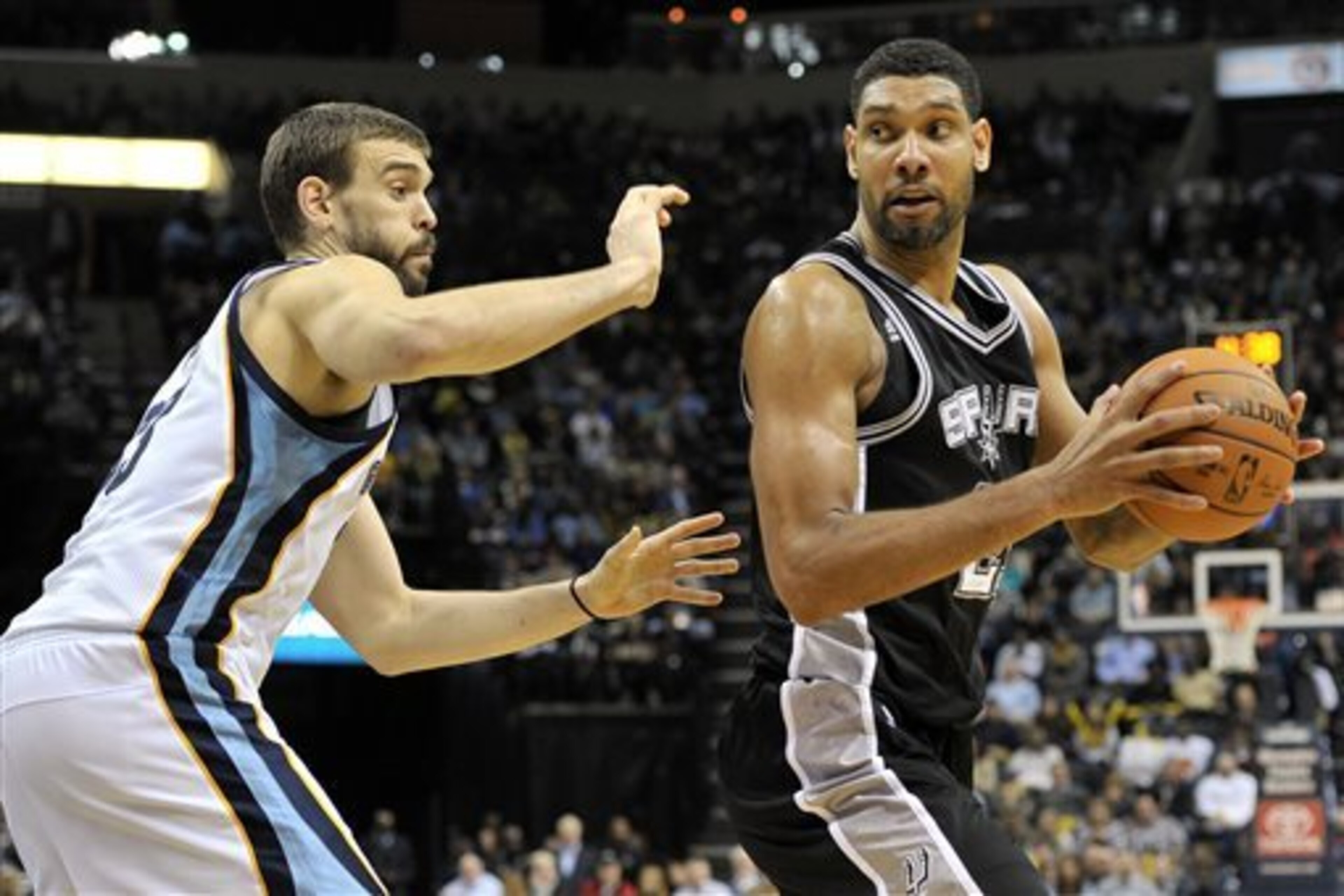
Putting the ball on the floor got him closer to the basket, his comfort zone, and collapsed an elite Golden State Warriors defense in a way that set up Derrick Favors for an easy make.
A Complicated Game
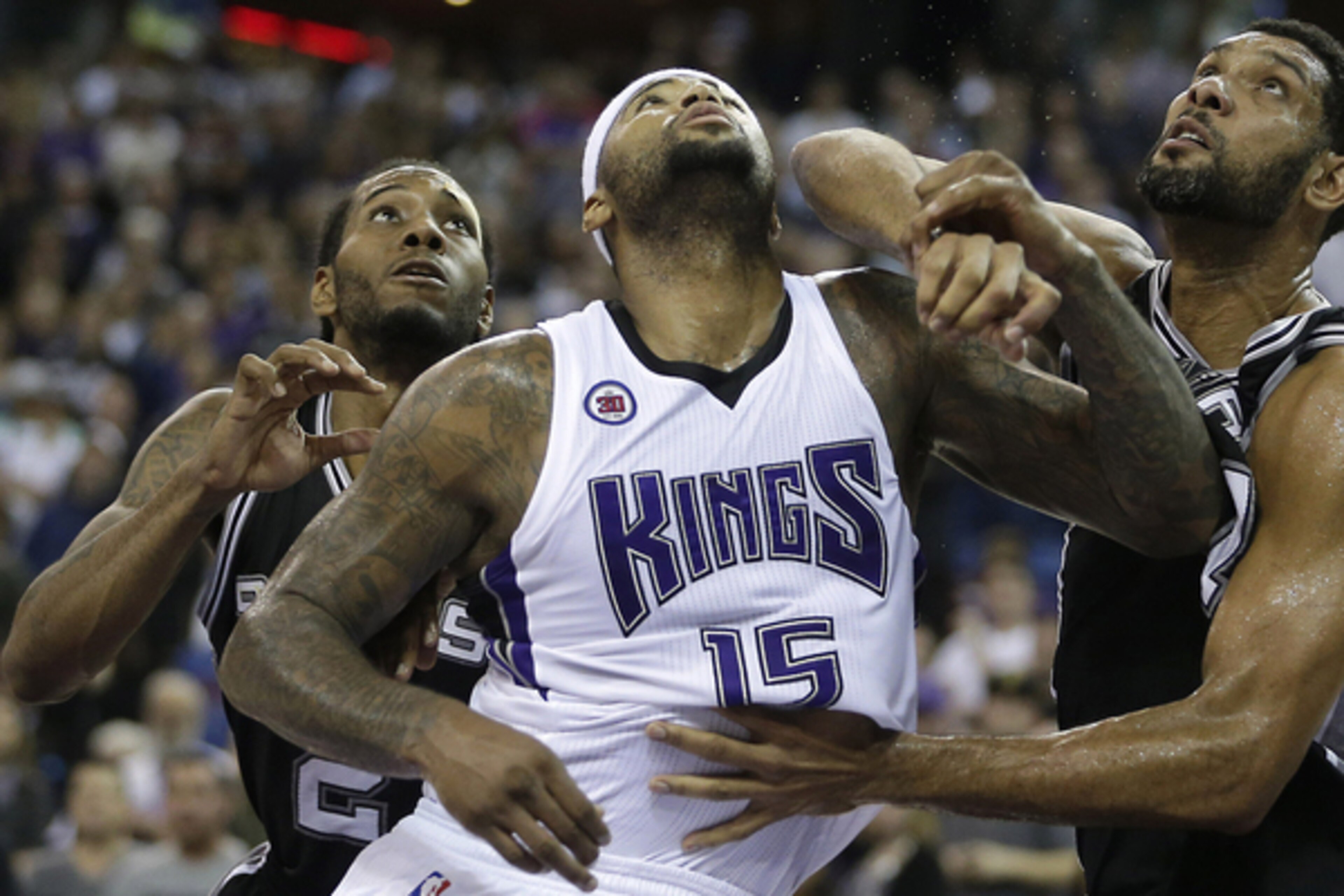
There is an obvious de-emphasis on post play that cannot be ignored—especially at the most fundamental levels. High schoolers and college players simply aren't committed to developing inside games.
"Go to any AAU game, and no one wants to play in the post," Kiki Vandeweghe, the NBA's senior vice president for basketball operations, told Lowe. "Everyone wants to dribble and shoot jumpers."
Prospects having little experience in the post is an obstacle that won't soon go away and will noticeably affect the NBA's future product. But traveling too far in one direction isn't the right answer for bigs, either.
"If you're just a fade-to-the-basket, outside spread-shooter as a big, teams can switch, they can change their matchup, they can do a number of things," former NBA big man Jack Sikma told Bleacher Report. "So the mix between having an established post game and being effective down there and still being able to space the floor and face up was a little bit more effective if the idea was to pull the (opposing) big away from the basket."
Translation: Every big man must be good at more than one thing. It can't just be outside shooting, or just defense, or just rebounding.
Hammering away in the post was once a fundamental tool, the mastery of which could, on its own, carry bigs into prominence. And as fewer players opt to perfect that craft, back-to-the-basket chops will invariably become more valuable the rarer they get.
Unlike decades past, though, post-ups and ground-and-pound styles cannot be the only weapons in the offensive arsenal.
"The game is going where it goes," Sikma said. "Tim Duncan in the post impacts the game. Zach Randolph in the post affects the game. If you can draw a double-team, it affects the game. But those post moves can't just be one-dimensional. You have to develop facing up, back to the basket, all those types of things, because you have to react to how the other team is playing and the situation.
Narrowed skill sets, whatever they may be, are limitations. Truly elite towers are the ones who incorporate as many devices as possible, including post-ups, into an ever-expanding tool belt. And as long as the NBA necessitates that versatility, anyone willing to conform in some way can survive.
Even the traditional big man.
Stats courtesy of Basketball-Reference.com and NBA.com unless otherwise cited.
Dan Favale covers the NBA for Bleacher Report. Follow him on Twitter, @danfavale.
.png?w=3840 "Cleveland Cavaliers v Los Angeles Lakers")
.jpg?w=3840 "Watch: Jerry Rice Chases After Heckler")