

Can a 2-Quarterback System Really Work in College Football?
This month, a dominant theme has emerged across college football. From Alabama to Oregon, Ohio State to Oklahoma, it has pervaded numerous prominent Power Five programs.
“Who’s going to be the quarterback?”
Fans and reporters have asked that question plenty over the past few months, no matter which program they’re following. Consider this: With two weeks left before the 2015 season begins, Alabama, Florida, Florida State, Georgia, LSU, Michigan, Ohio State, Oklahoma, Ole Miss, Oregon, South Carolina and UCLA are all looking for new starting quarterbacks, and none have true clarity (at least not that coaches are willing to speak about).
TOP NEWS

Week 5 AP Top 25 Poll 🔢

Updated CFP Bracket Projections 🔮
Top Overreactions after Week 5 of CFB Season 😧
In case you’re counting, that’s all four of 2014’s College Football Playoff teams and six programs (Alabama, Florida, Florida State, LSU, Ohio State and Oklahoma) with national titles since 2000. In other words, these aren’t bottom-of-the-barrel programs. They’re the creme de la creme of college football, and even they’re facing uncertainty.
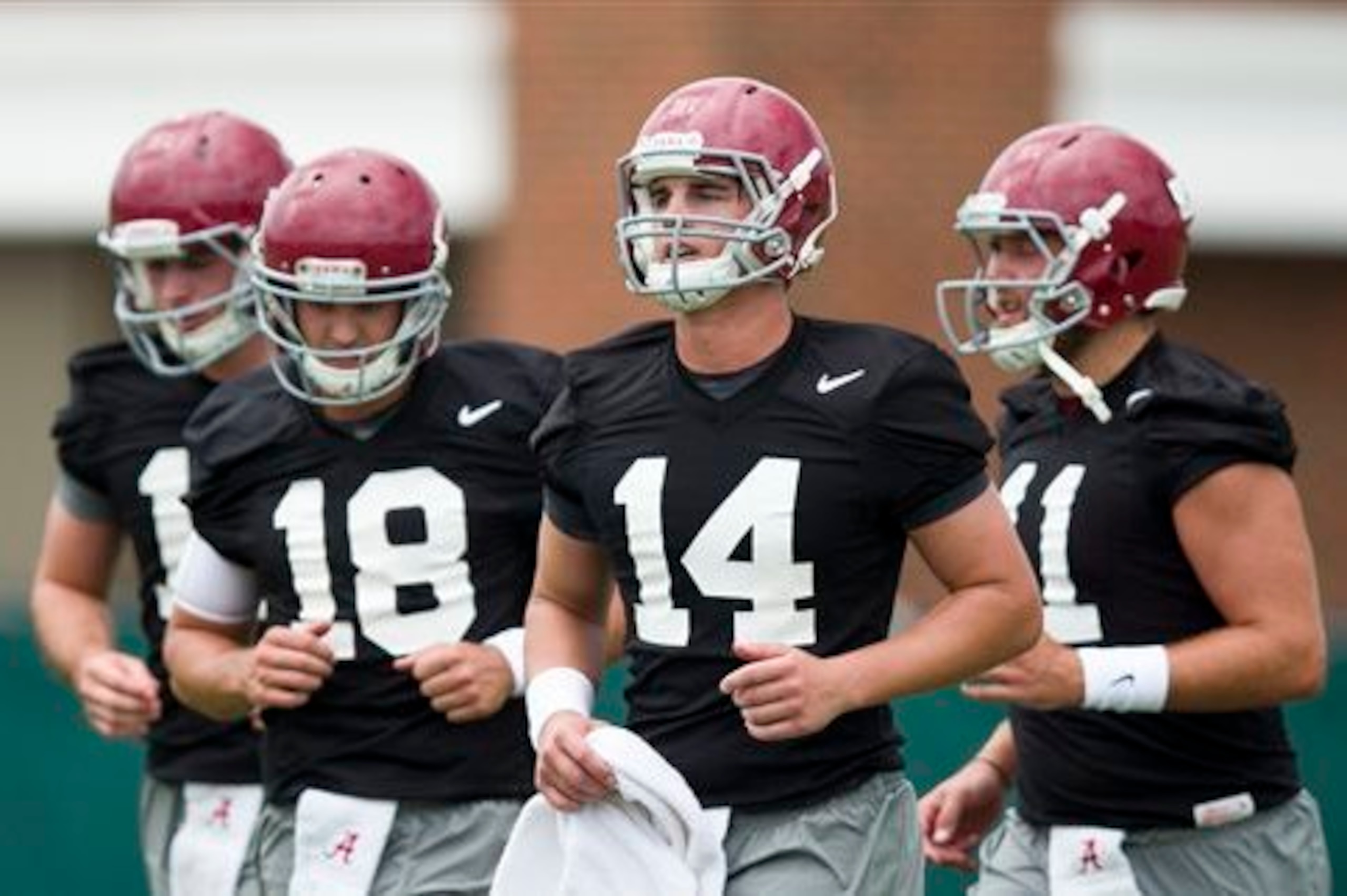
Some programs will resolve their quarterback scenarios before the season begins, but others will let it play out. Which begs the question: Will we see a true two-quarterback system this fall, and can it work?
While an old, hoary football cliche states, “If you have two quarterbacks, you have no quarterback,” it isn’t necessarily true. In recent years, Steve Spurrier and Urban Meyer have found success with a dual-quarterback system.
Can it work in college football? Let’s examine.
Let’s make one thing clear: The ideal situation for any college football team is having one quarterback take the reins and prove himself a capable leader. Iowa’s season fell apart last year largely because that didn’t happen.
Coach Kirk Ferentz favored Jake Rudock, a steady but unspectacular leader. Meanwhile C.J. Beathard and his big arm caught fans’ eyes by leading the Hawkeyes to a comeback win at Pitt when Rudock went down with an injury, and a road win at Purdue with Rudock sidelined.

Discontent bubbled under the surface until Beathard’s father was quoted before the TaxSlayer Bowl saying his son would consider a transfer if he didn’t start the game. He did, and although Iowa lost to Tennessee, Rudock left the program shortly afterward and wound up at Michigan as a graduate transfer (where he is battling Shane Morris for a starting role).
Ideally, you’d have a situation like the one Alabama faced a year ago. Senior Blake Sims and junior Jake Coker battled throughout preseason, and after Sims started the opener against West Virginia, he steadily separated himself from Coker. He earned the job for good with a 445-yard, four-touchdown effort against Florida and led the Crimson Tide to an SEC title and College Football Playoff berth.
That said, two-quarterback systems can and do work. Spurrier is famous for shuttling quarterbacks in game by game, series by series and even down by down throughout his career at Florida and South Carolina.
Two years ago, starter Connor Shaw played in every game, while backup Dylan Thompson completed at least one pass in eight games. Shaw was the clear No. 1, but Thompson saw time when necessary. And South Carolina won 11 games.
During Florida’s 2006 national title season, senior Chris Leak was the starter, but then-freshman Tim Tebow played a significant role with packages designed for him to run and make things happen. The arrangement worked fine: The Gators won the BCS national title.
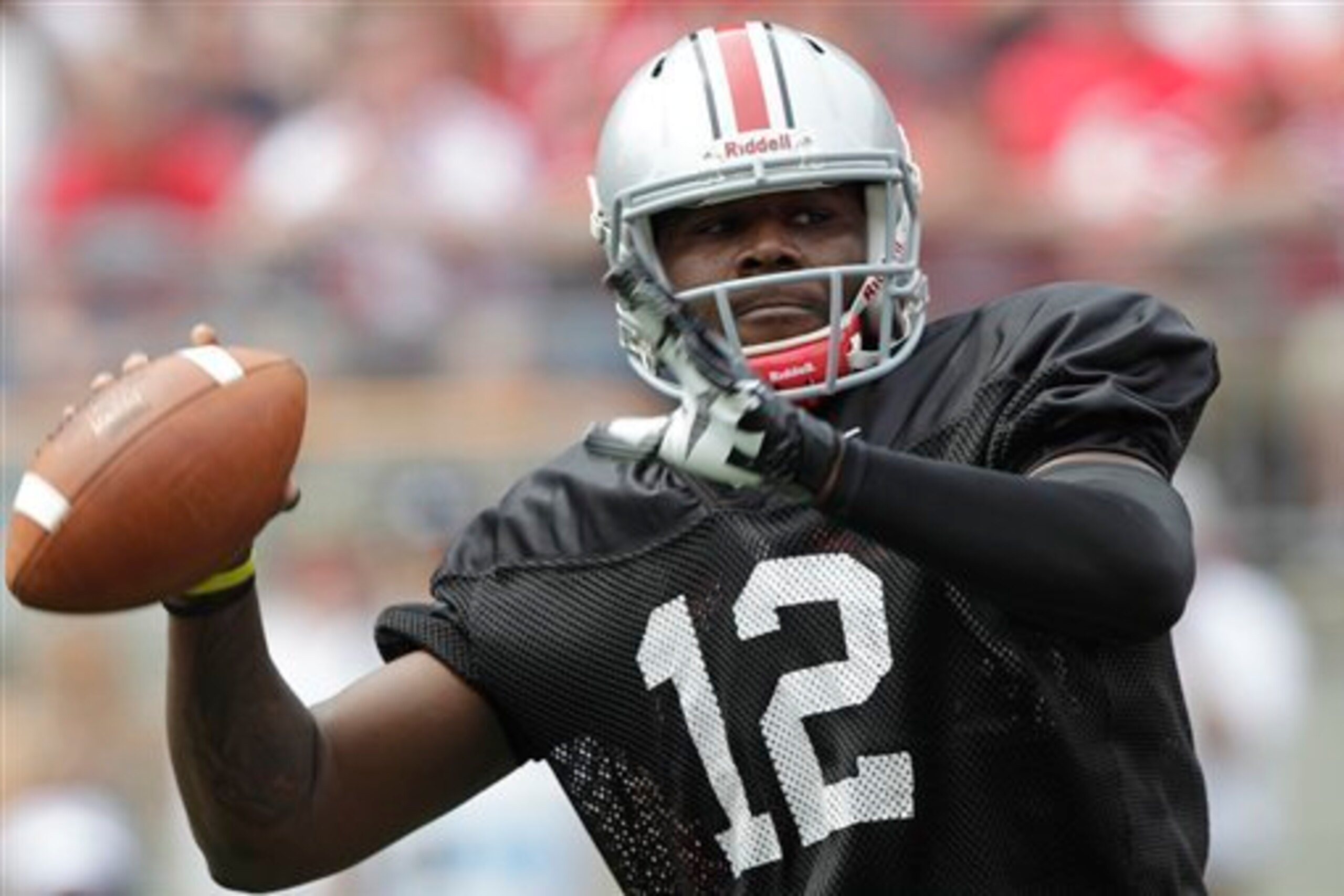
However, two-quarterback systems aren’t always palatable to those involved. This month, sophomore J.T. Barrett and junior Cardale Jones are battling in one of the most fascinating quarterback competitions in recent memory.
Last fall, Barrett stepped in for an injured Braxton Miller and led the Buckeyes to the brink of the College Football Playoff before suffering a season-ending broken ankle against Michigan. Jones took over and won the Big Ten title game and a pair of playoff games to clinch Ohio State’s first national title since 2002.
Miller has moved to H-back, leaving the two younger players to fight it out. There has been no publicized separation as of yet, and while their situation is different than the one faced by Leak and Tebow nine years ago, Barrett and Jones were asked about a two-quarterback system.
Unsurprisingly, they didn’t care for it.
Barrett told Eric Seger of ElevenWarriors.com that the offense's efficiency would suffer, and he said he had experience with the concept in high school:
"We would switch every series. As a quarterback, it's kind of rough to do being that you can't get a real vibe off the defense and how they're trying to play us. They're not playing a quarterback as an individual, they're playing the offense. With that, it was hard at times, or more difficult at times, so I don't think it would be the best idea.
"
Jones agreed, telling Seger, “A two-quarterback system, I run three plays and run off the field, and he runs a drive or something like that. I don't know how well that would work as far as rhythm."
A two-quarterback system isn’t for everyone. If you have two players who have similar skills, it might prevent them from building a rhythm and create unhappiness in the locker room. If the season isn’t successful, pressure could build on the coach to pick a quarterback and stay with him, which could foment further discord (especially from the unlucky quarterback).
Former Ohio State quarterback Stanley Jackson, who was part of a two-QB system in 1996, told Ari Wasserman of Cleveland.com that the system "can bite you."
In that case, it’s better to hope a quarterback emerges and stick with him until he gives you reason to think otherwise.
However, if you have a pair of quarterbacks whose skills complement each other (much like the Leak and Tebow case), they can create matchup issues for defenses and give an offense life, sparking success.
Two-quarterback systems won’t take college football by storm overnight. But in the right situation, they can carry a team higher than it might have risen with one player under center.
Just remember that when the next prominent coach embraces the two-headed monster. It’s not as bad as you think.
_0.png?w=2560)



.jpg?w=2560 "Viral Rams Coach Vid 🖕")
.jpg?w=2560 "Grading WWE Raw 🔠")
.jpg?w=2560 "Injury-stricken Seahawks signing veteran RB")

.jpg?w=2560 "2 NFL Officials Suspended")
.jpg?w=2560 "Mahomes' Wife Trolls Kubiak 💀")

