

How Just 1 Year Can Change How We Watch the NBA
Last summer, LeBron James was deciding whether he wanted to remain with the Miami Heat or move back to Northeast Ohio and rejoin his hometown Cleveland Cavaliers. The Charlotte Hornets added Lance Stephenson in an attempt to push themselves further up the Eastern Conference standings, and Isaiah Thomas gave the Phoenix Suns a three-headed backcourt monster.
Seems like a long time ago, right?
In the world of professional basketball, 12 months can be an eternity.
TOP NEWS

LeBron's Special Helicopter Deal

MJ Makes Record-Setting Donation 🙌
Report: Embiid Down to Rookie Weight
Perceptions change dramatically as we learn new information about players, teams and the league as a whole. Thanks to the influx of analytics, the availability of League Pass and the 24/7 nature of the sport, we know quite a bit about the Association. With social media only gaining importance, and considering this overall wealth of information, the lens through which we analyze basketball is constantly changing.
But our knowledge is by no means perfect.
As quickly as Stephen Curry can release a contested three-point attempt from the corner, everything can shift.
Between 2014 and 2015, that's exactly what happened.
The Golden State Warriors
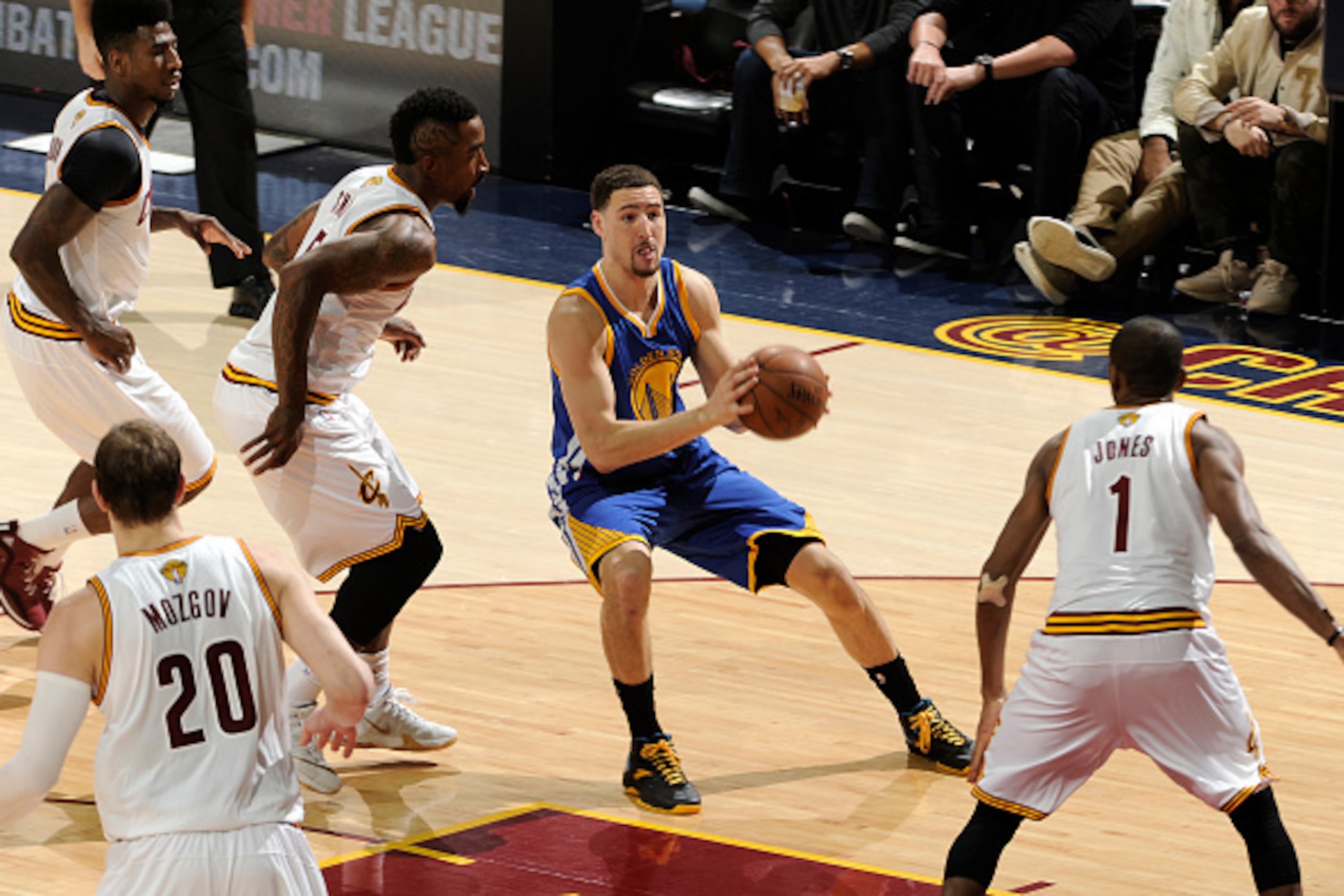
Last offseason, who would have predicted the Golden State Warriors would go on to put together a record-setting campaign punctuated by an NBA Finals victory over James and the Cavaliers?
Curry hadn't yet ascended to his MVP-caliber level. Klay Thompson by no means seemed like a superstar capable of scoring 37 points in a single quarter. Mark Jackson had left behind a vacancy at head coach, and Steve Kerr, who had zero games of coaching experience at any level, filled it.
The team itself? It was coming off a 51-31 season that left it with the No. 6 seed in the Western Conference, as well as a first-round exit in the playoffs at the hands of the presumably still-superior Los Angeles Clippers.
Heading into 2014-15, the biggest stories dealt with the change on the sidelines, as well as the management's decision to hold on to Thompson instead of offering him in a deal for Kevin Love. Grantland's Zach Lowe, one of the most reliable analysts in the business, seemed a bit confused at the hesitance, simply because such a move might prevent the Dubs from turning into title contenders:
"Thompson is a really good player. Losing him will hurt. But it’s not worth losing out on Love, a legitimate star whose skills mesh well with Curry. They could stay together for years, bridging the gap between this Golden State team and the contender the Warriors could build around them once contracts to Bogut, Iguodala, and others expire. Love can survive in a sound defensive system; Minnesota played a style similar to Golden State's, and it ranked as a league-average defense despite playing most of its minutes without a rim protector.
It's not an easy decision, in basketball terms or even emotionally. Sometimes you have to make tough choices to build a title contender.
"
Lo(we) and behold, the Warriors morphed into more than a title contender. They became actual champions.
While Love struggled to find his footing with the Cleveland Cavaliers and succumbed to a Kelly Olynyk-induced shoulder injury during the first round of the playoffs, Thompson helped key both the regular-season success and the ability to hoist up the Larry O'Brien Trophy.
In 2014, Love-for-Thompson was a legitimate debate. In 2015, we can look back and laugh.

But that's true of more than the trade that never happened. Until they were midway through their historic run to 67 wins, precious few prophetically predicted that the Warriors would emerge as the creme de la creme of the brutally tough Western Conference.
Yours truly had them emerging victoriously from 51 contests for the second season in a row, earning the No. 4 seed in the league's more difficult half. Of Yahoo Sports' five-man panel, only Marc J. Spears forecasted the Warriors would win a championship. ProBasketballTalk had four writers make predictions, and none had Golden State as anything more than a No. 3 seed; each of them had them falling short of the Western Conference Finals.
The Warriors weren't a juggernaut in the summer of 2014. They hadn't yet become a squad that, according to my adjusted team ratings, ranks among the top 10 of all time. Fast forward 12 months, and they're in the midst of a post-championship offseason that has seen continuity, not further roster-building endeavors, become the priority.
This time around, you'll likely have trouble finding predictions that see them falling short of the playoffs' penultimate round.
Contract Incentives
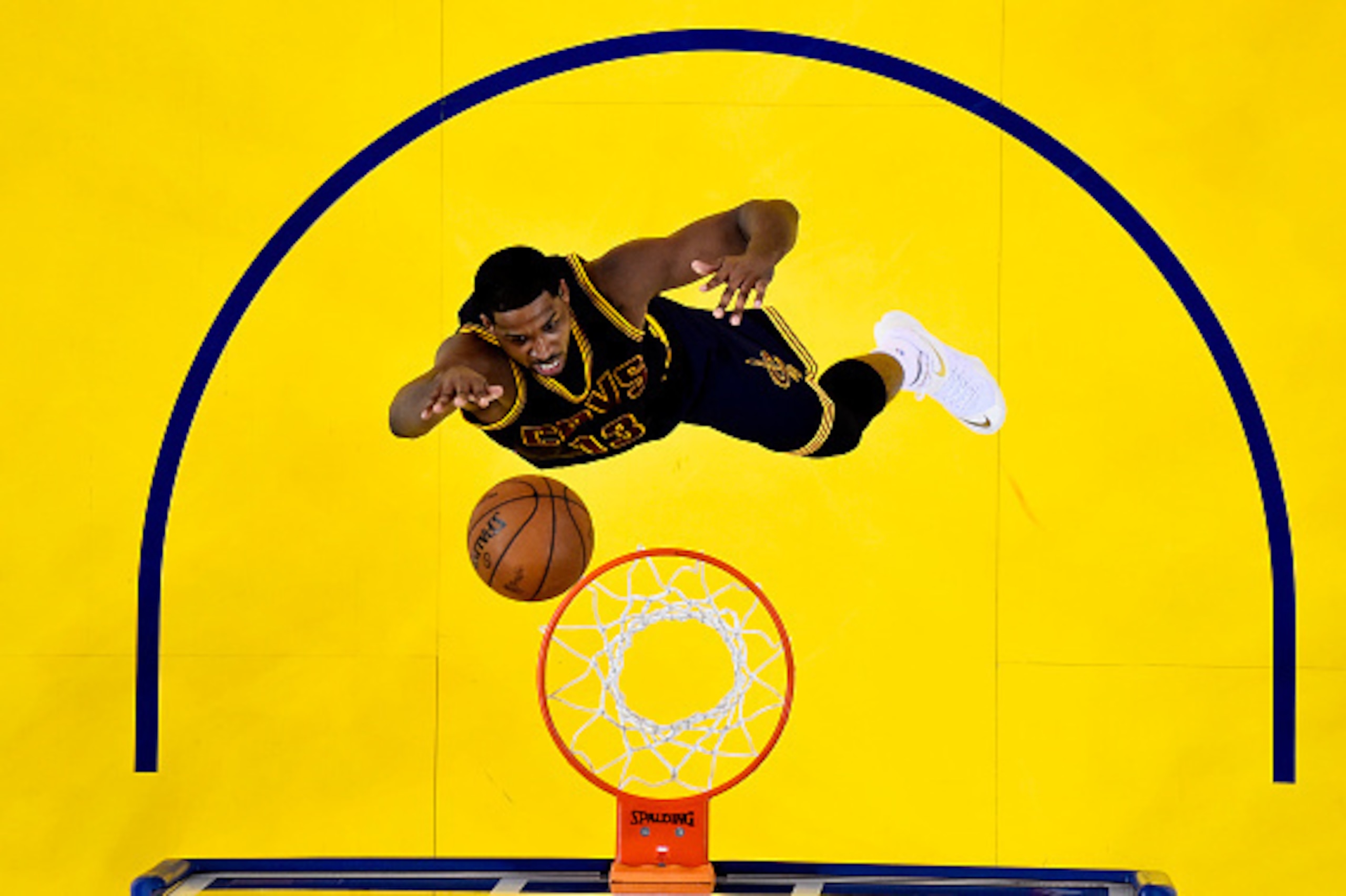
Last September, Tristan Thompson was looking to get paid before the Oct. 31 deadline for extensions came and went. According to the Akron Beacon Journal's Jason Lloyd, the big man was seeking something around $11 million per season on a four-year deal:
"He will ask for the type of money previously given to Derrick Favors (four years, $49 million) and Larry Sanders (four years, $44 million). What will hurt Thompson's case, however, is the Greg Monroe saga. Monroe, by all accounts a better player than Thompson, was forced to sign a one-year qualifying offer with the Pistons after failing to reach agreement on a long-term contract with anyone this summer. He will now be an unrestricted free agent next summer.
"
Try to imagine what would happen now if Thompson were handed a four-year deal for $44 million. He'd probably laugh and then try not to act offended. After all, we learned in January that he'd already turned down four years and $52 million from Cleveland general manager David Griffin.
It was a move that Yahoo Sports' Adrian Wojnarowski could only describe as risky:
"Thompson's a rebounder, a defender, an energy guy. He isn't a starter on a playoff team, but he has a good attitude, a good motor and could be a role player anywhere in the NBA. [Rick] Paul isn't the first agent to leverage a more prominent client's extension against another, nor the last.
Even so, at what price? Within the NBA, officials expected maybe $10 million a year, perhaps $12 million if Klutch [Sports] wanted to push it. Well, they kept pushing it. Thompson turned down a $13 million-a-year extension offer – four-years, $52 million, league sources told Yahoo Sports.
For a player of Thompson's stature, this is an incredible risk. An injury could cost him lifetime security. Nothing close to that money exists on the restricted free-agent market this summer, but with James on a one-year deal, Klutch can try to leverage the Cavaliers all over again to get the deal they want – or simply take the one that was already offered.
"
As it turns out, the risk should end up paying off.
Thompson did become a starter on a playoff team, and he thrived as Love's replacement while the Cleveland Cavaliers advanced through the Eastern Conference portion of the postseason.
After moving into the starting five in the second round against Chicago, the big man from Texas averaged 10.6 points, 12.1 rebounds and 1.3 blocks per game while shooting 54.9 percent from the field. He was a game-changing presence, thanks to his relentless ability to create second-chance opportunities on the offensive glass.
Even though he didn't make Love expendable—valuing Thompson over the 26-year-old three-time All-Star is still nonsensical—he proved that he was so much more than the conventional thinking dictated he was during his original negotiations.
"In terms of contract, I'm not worried about that at all," Thompson told Chris Haynes of the Northeast Ohio Media Group before the start of the 2014-15 campaign. "My mindset is solely on how I can help this team win and help us grow as a franchise. As long as we win, that's all that matters and everything else will take care of itself."
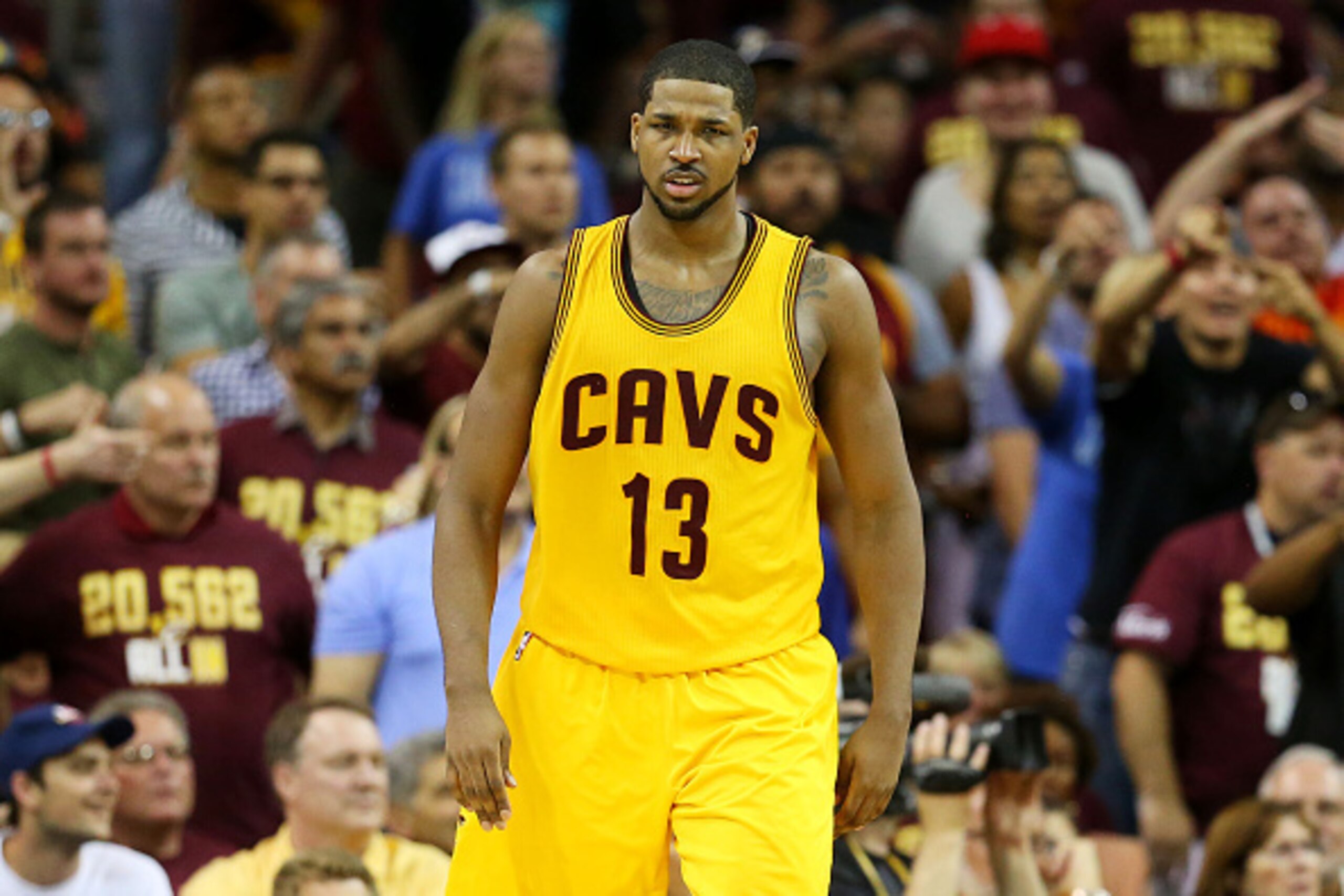
It hasn't quite taken care of itself yet, as he may end up signing a qualifying offer and then hitting the market as an unrestricted free agent next summer. But even without a deal inked, it's incredible that he's gone from inexplicably turning down a big extension to being able to float the idea of a max contract without getting laughed out of the building.
And it's not too dissimilar to what happened with a few other players who recently experienced financial windfalls.
Greg Monroe went through a contentious bargaining period with the Detroit Pistons throughout the summer of 2014, and he did end up playing for the qualifying offer. It was a risky move for a player who seemed to be a declining fit in the modern pace-and-space NBA, especially because he was subjecting himself to a year of potentially poor chemistry next to Andre Drummond and Josh Smith.
But the Pistons waived Smith via the stretch provision early in the campaign, and Monroe excelled during his final season in the Motor City. One year after taking an unorthodox route, he signed a maximum contract with the Milwaukee Bucks.
How about Jimmy Butler?
"According to a source, Butler turned down a four-year, $40 million-plus offer from the Bulls," Joe Cowley reported in November for the Chicago Sun-Times. "After watching Klay Thompson get the max four-year, $70 million contract from the Warriors, Butler was willing to test the market as a restricted free agent and force the Bulls to make the tough decision."
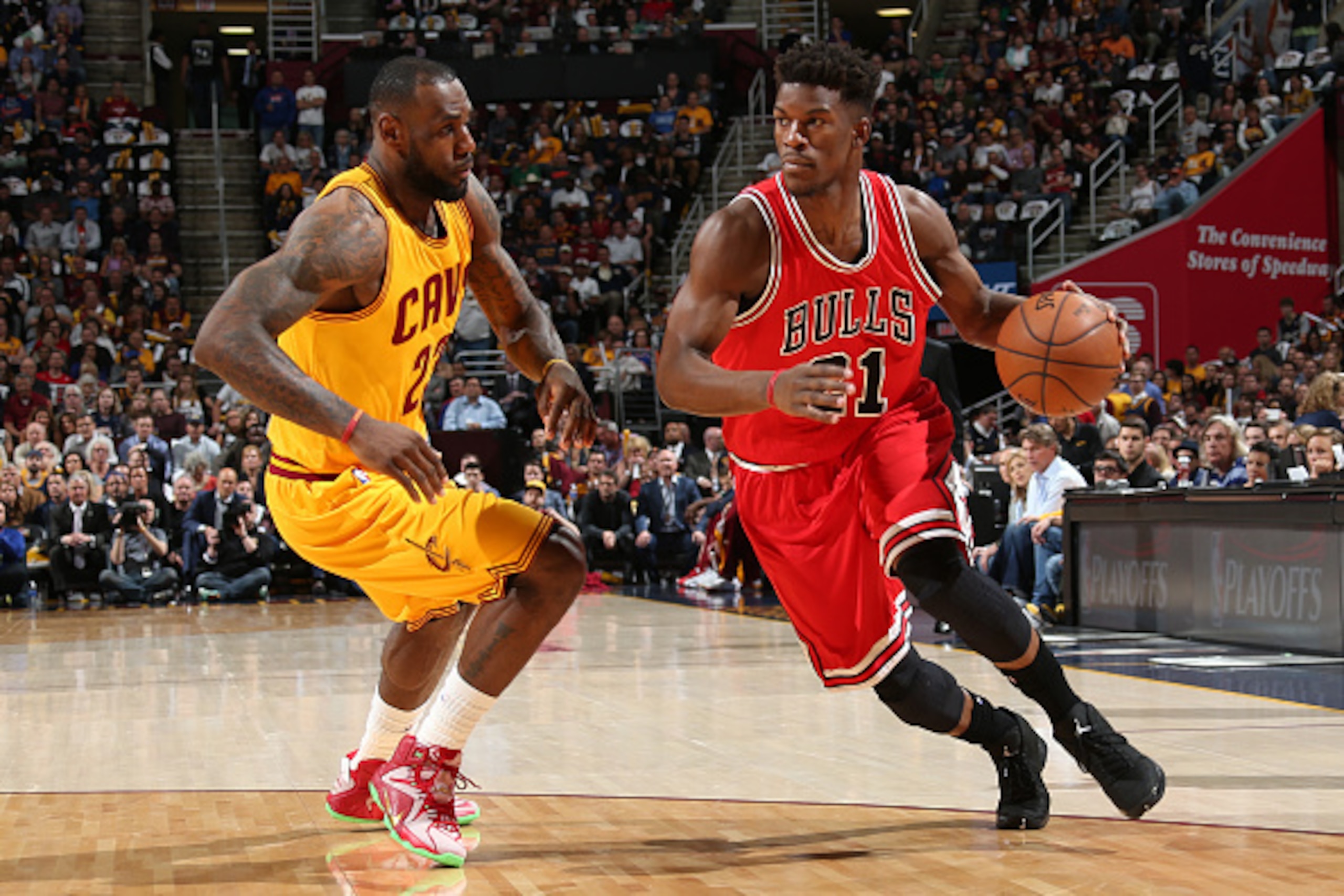
In his own words, he was betting on himself.
"It came down to me deciding that I want to bet on myself," the rising 2-guard texted to Yahoo Sports' Adrian Wojnarowski. "It was about me believing that I put the work in this summer to become a better player with the hope that my improvement will give the Bulls a better chance to win a championship."
That was no bluff. Butler emerged as the clear-cut best player on the Chicago Bulls, averaging 20.0 points, 5.8 rebounds, 3.3 assists and 1.8 steals while shooting 46.2 percent from the field and 37.8 percent from beyond the arc.
Now, he's the beneficiary of a five-year max contract worth $95 million.
It's almost as if the perception—and value—of players can change dramatically over a 365-day stretch.
Perception of a Draft Class

Dating back to before many of the freshmen who would later be selected had suited up in their first collegiate games, the 2014 draft class was quite heralded. Andrew Wiggins and Jabari Parker were going to be transcendent prospects, and the astronomical rise of players such as Joel Embiid only fed the fervor.
"The 2014 NBA draft is going to be epic," ESPN Insider Chad Ford explained. "Our initial 2014 Big Board is one of the most talent-laden I've ever seen. There are as many as five to eight future All-Stars in this group. A number of teams deliberately gutted their rosters this summer to try to get as high as possible in the 2014 lottery. It's going to be big."
But, that didn't exactly happen.
Excitement waned in the months leading up to the actual selection process. Prospects had significant weaknesses exposed throughout their time on campus, and the mentality shifted from "This could be the best class ever!" to "Is this really that much better than 2013?" in relatively quick fashion. Then, the season began, and the disappointment continued, as Yannis Koutroupis made clear for Basketball Insiders:
"They say it takes three years to truly grade a draft, but the 2014 class had as much as hype as any since the star studded 2003 class that included LeBron James, Carmelo Anthony, Dwyane Wade and Chris Bosh among other high-level players. That created expectations that, 20+ games into the season, they are falling drastically short of meeting. They’re far closer to going down as one of the most disappointing classes, rather than one of the best ever, if they continue on their current pace
"
There are plenty of legitimate excuses here—Parker tore his ACL 25 games into his potential Rookie of the Year campaign; heralded prospects such as Embiid and Dario Saric never got a chance to play; and several others were severely affected by significant maladies throughout the season. But this was still a massively disappointing draft class, one that fell well short of the initially lofty expectations.
Taking that one step further, it was arguably this millennium's weakest crop of first-year players, wresting that undesirable title away from the infamous 2000 rookie class (not pictured, but accumulated 35.5 win shares):
There's still hope for salvation, though. Not just because the members of the 2014 class can improve, but because not all of them have debuted. That total of just 21.1 win shares will surely go up once Embiid, Saric, Bogdan Bogdanovic, Josh Huestis and the 14 second-round picks who have yet to appear in an NBA contest play out their rookie seasons.
But will they shine enough to do away with the overall disappointment? That's more unlikely.
Then again, do we really know?
A lot can change in a year.
That's particularly true for incoming prospects, as the passage of time reveals that some debates really shouldn't have existed in the first place. Remember when there was a group that legitimately thought Greg Oden should've been taken ahead of Kevin Durant with the No. 1 pick of the 2007 NBA draft?
Think back to the concerns about Curry's size and ability to bang bodies in the NBA when he was leaving Davidson. Can you recall which side of the spectrum you fell on when Adam Morrison was being compared to Larry Bird?
The history of the Association is brimming over with stories that change dramatically over the course of 52 weeks, and that's not going to change anytime soon.
Heading into the 2014-15 season, it seemed as if we were watching the swan songs of Kevin Garnett and Tim Duncan. Now, they're back for more, and there's no telling when they'll hang up their sneakers for the final time.
We could expect them, along with Kobe Bryant, to be done after this year—but may be folly. In the NBA, we can make educated guesses about the future.
Don't forget they're still not guaranteed to unfold.
All stats, unless otherwise indicated, come from Basketball-Reference.com.
Adam Fromal covers the NBA for Bleacher Report. Follow him on Twitter: @fromal09.



.jpg?w=2560 "Viral Rams Coach Vid 🖕")
.jpg?w=2560 "Injury-stricken Seahawks signing veteran RB")
.jpg?w=2560 "2 NFL Officials Suspended")

.jpg?w=2560 "Mahomes' Wife Trolls Kubiak 💀")
.jpg?w=2560 "Grading WWE Raw 🔠")