Washington Redskins: What We've Learned Through Week 1 of Training Camp
When you've won just seven games in two years, you want a building block to start with, something to hang your hat on and say this is how we'll get back to relevance. For the Washington Redskins, that something might just be a revamped defensive line, a group that's impressed those inside and outside the franchise.
Yet while the defensive front is currently worth writing home about, the offensive line still leaves a lot to be desired. Top pick Brandon Scherff has endured more than his share of teething problems, issues that have led to an early position switch.
Improvements along the O-line aren't just desired, they are absolutely essential to the development of quarterback Robert Griffin III. No. 10 won't become more confident from the pocket until he's given more time in it.
Yet at least Griffin is learning that he may have a particularly dynamic new weapon to help him out of trouble this season. Fourth-round rookie Jamison Crowder has made a strong impression on coaches and players.
Read on for a more in-depth breakdown of the main lessons learned from Washington's first week of training camp.
Draft Punidts May Have Been Right About Brandon Scherff
1 of 5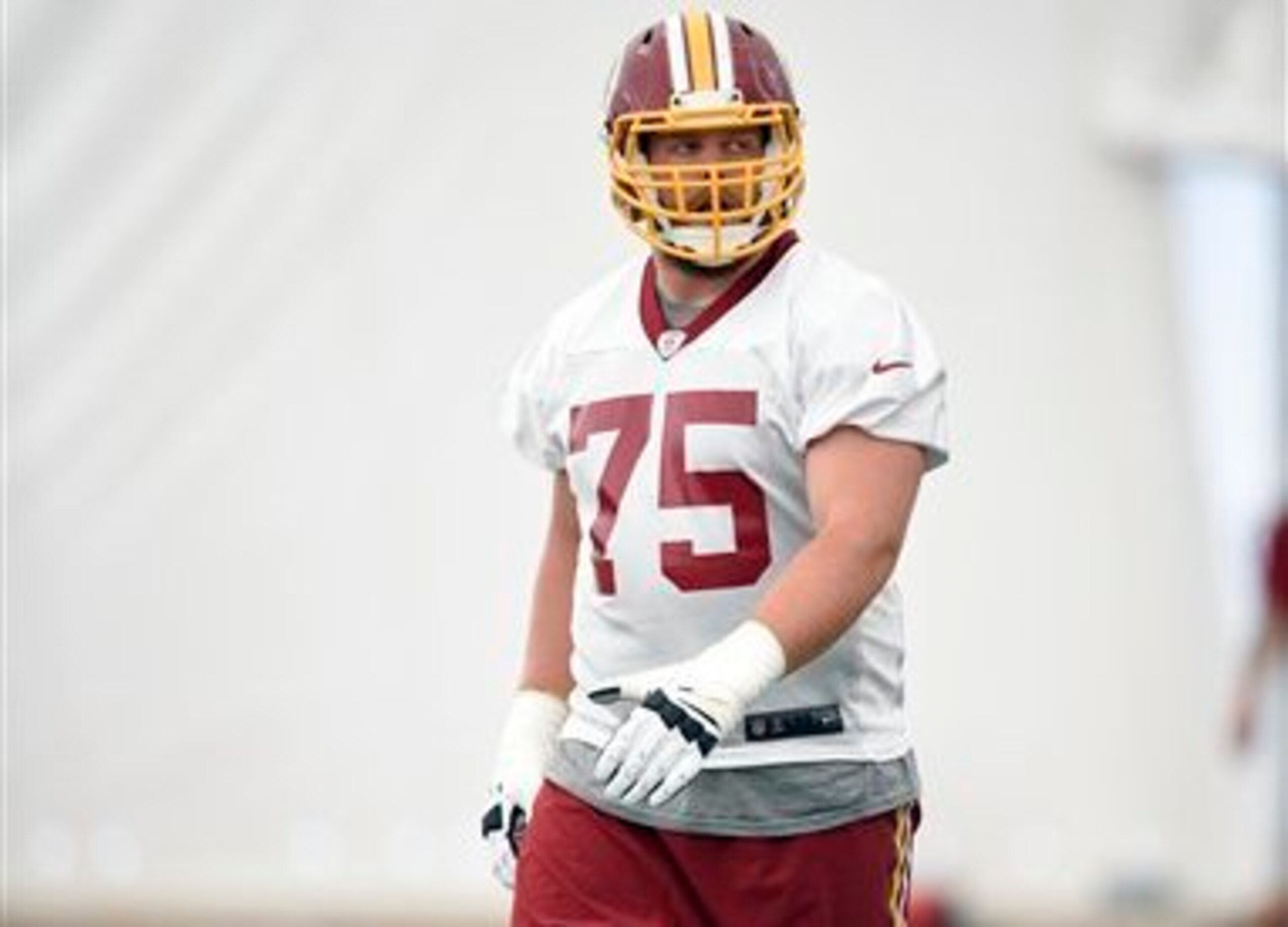
Prior to the draft, almost any analyst who was able proclaimed Scherff a better fit at guard than tackle in the pros. NFL Network's Mike Mayock (h/t Dan Parr of the league's official site) made the comparison with Zack Martin, the Dallas Cowboys rookie who switched from collegiate left tackle to pro right guard and went to a Pro Bowl.
Yet when the Redskins used the fifth-overall pick on Iowa left tackle Scherff, they almost immediately declared him their prospective starter at right tackle. A few months on, the plan is already being changed.
Scherff has had a very tough time on the edge during camp, particularly in pass protection. That's prompted a move inside during the last few days, according to CSN Washington's Rich Tandler.
Shifting Scherff so early in his pro career naturally raises questions about his readiness to thrive right away, something the Redskins and their dire offensive front need him to do.
Liz Clarke of the Washington Post noted how the switch puts the spotlight back on whether Washington reached for Scherff at No. 5: "If Scherff is recast as a guard, it raises the question of overpayment anew, given that guards typically are taken lower in the draft than right tackles."
This one is a little tricky to answer. During the pre-draft process, any suggestion of taking Scherff at that spot was met with comments like, "you don't take a guard with a top-five pick," to paraphrase.
While the debate concerning a more impact player vs. a blocker is a legitimate one, it also downgrades the impact a quality lineman can make. This is especially true for Washington where a top-notch O-lineman would have to be considered an impact player after the team gave up 58 sacks a year ago and the running game fell to 19th in the league rankings.
The flip side to the coin reveals one troubling question, though. Should the Redskins be worried about recasting their primary pick so early?
Recently, a regular reader and visitor to the comments section asked me what was the point of referencing Week 15 before Week 1? I had stated that while Scherff's initial struggles are mildly concerning at this stage of the preseason process, they wouldn't be if he was still having a hard time in the later stages of his debut year.
The point is how far along do you go before conceding teething problems are more than that? How long before Scherff's issues hint at deeper problems over his ability to make the grade?
Moving him now raises the question of just how bad is Scherff in pass protection on the edge? It's pointless having a rookie starter who is only effective until he faces a good player.
That's the doomsday scenario new general manager Scot McCloughan doesn't want for his feature pick. Yet the solution may be more obvious than you think.
Putting Scherff back on the left side but tucking him into the interior might just be the ideal way to ease the pressure on him and accelerate his development. As the team's starting left guard, Scherff would be paired next to Pro Bowl left tackle Trent Williams, the Redskins' best offensive lineman.
On his other side would be center Kory Lichtensteiger, Washington's next-most dependable lineman. Aside from being bracketed by a pair of skilled and savvy performers, Scherff could help create a formidable left side.
He and Williams would then become the focal point of attack for the running game. Yes, there would still be issues on the right side, but Rome wasn't built in a day. Those problems could be eased somewhat by regularly aligning a tight end or two on that side or using plenty of offset I-formation looks that tilt fullback Darrel Young that way.
At least with a powerful left flank, new line foreman Bill Callahan would have a solid foundation in place.
They may have guessed wrong early, but if the Redskins make a blue chip guard out of Scherff, picking him where they did will still look like a very smart decision.
Defensive Line Is Making Noise
2 of 5
McCloughan scored high points this offseason when he signed Terrance Knighton. The move instantly upgraded the entire defensive front seven.
It also put the finishing touches on the remake of a line that was pushed around often during the last two seasons. Knighton joined fellow new boys Stephen Paea and Ricky Jean Francois to give the Burgundy and Gold more options and greater talent up front.
The results are already showing, at least according to Houston Texans running back Alfred Blue. After facing Knighton and his mates during an organized scrimmage, the second-year ball-carrier was left impressed, per Gene Wang of the Washington Post: “They have a lot of presence up there, their front four. You’ve just got to read those keys and just be patient and let it come to you. Don’t force it.”
While Blue didn't exactly go overboard, it's still great to read an offensive player reacting to problems caused by Washington's defense. It's been the other way around for far too long.
Even though ESPN's John Keim called the defense's success against the Texans "mixed," he did single out the line for some positive reviews: "They definitely had moments where they looked good and clogged the middle; nose tackle Terrance Knighton drew double teams and on one run, he clogged the middle and end Stephen Paea penetrated to stop the run."
As with any defense, the line is the key to the success of this unit in the new season. Thankfully, new defensive coordinator Joe Barry seems to have plenty of the pieces he needs to make things work.
His one-gap, attack-first version of the 3-4 demands strong interior pass-rushers. In Jason Hatcher and Paea he certainly has a pair of those.
But any 3-4, be it single-gap or traditional in guise, needs a force in the middle that can snuff out the run and make offenses one-dimensional. That description sums up Knighton's career.
"Pot Roast" wasn't bashful when he dubbed this line "Capital Punishment" before a competitive game has even been played, during an interview on ESPN's Sports Nation (h/t Jake Kring-Schreifels of the team's official site).
Based on the early reviews from camp, Knighton's boast may not be so premature.
Jamison Crowder Can Add a Lot to This Passing Game
3 of 5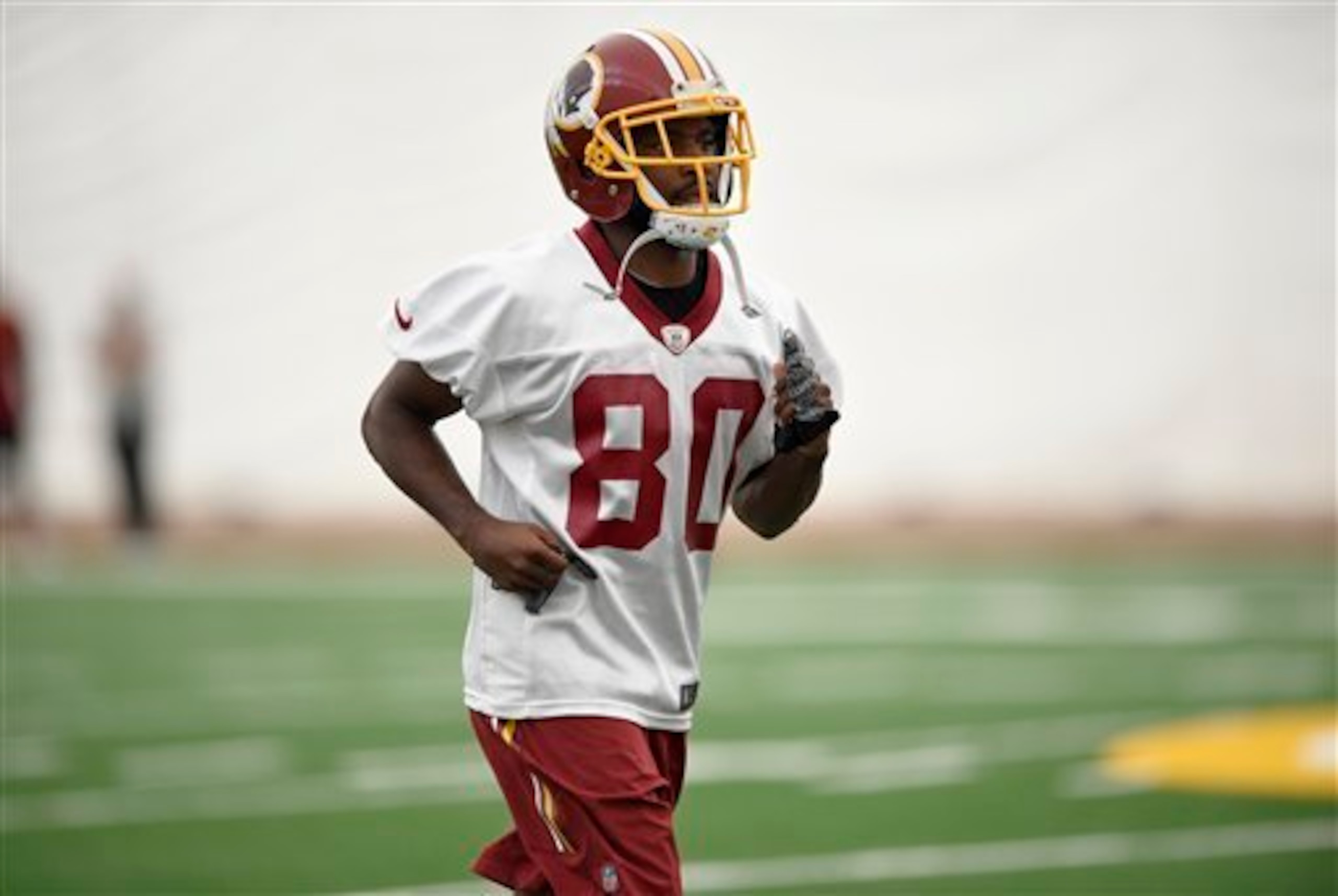
If there's one player who is not wasting his opportunities during training camp, it's Jamison Crowder. The young slot receiver is showing just how much he can add to Washington's passing game as a rookie.
Writing for the Post, Mike Jones noted how Crowder is showing excellent qualities for the underneath passing game: "His speed is hard for anybody to match, and Crowder also runs good routes and finds holes in the coverage."
Each of these qualities were on display against the Texans. Rich Tandler of Real Redskins dubbed him "one of the offensive stars of the session": "He caught several passes working against the Texans’ first-team defense and he drew a flag when a defender had to grab him on a deep pass."
Meanwhile, ESPN's Keim was effusive in his praise for how Crowder loses defenders in tight spaces: "He smoothly incorporates his head and shoulders and fakes -- like a point guard might. That fake is what corner Kareem Jackson fell for as Crowder turned back inside after a head/shoulder fake -- and Jackson ended up on the ground."
The great thing about Crowder's ability to outwit coverage and get open is how it will let him present Griffin with an easy target. When watching the exceptional cut Keim referenced against Kareem Jackson, I immediately thought about option routes.
Putting Crowder in the slot, either flexed or in bunch looks, and letting him choose his break based on the covering defender's first move will prove a nightmare for defenses. It will also get Crowder open and in space underneath on a regular basis.
It's the same formula the New England Patriots used to turn Wes Welker and then initially Julian Edelman into stars. A receiver with Crowder's quickness and moves can have a similar impact for a quarterback who needs plenty of short and easy throws but only to receivers who can make more of them.
Crowder spent the early part of the opening week impressing head coach Jay Gruden with his knowledge and feel of "route concepts," according to 247Sports.com's Jamie Oakes. He's finished the week making a very strong case to make the vital slot role his own this season.

.jpg?w=2560 "Texans-Mixon Released Football")
.jpg?w=2560 "Rams Eagles Football")
Chris Thompson Is Playing His Way into Third-Down Role
4 of 5
As much as a prolific slot receiver will be a boost for Griffin, a credible backfield receiver would also be a major help. Chris Thompson has been playing his way into becoming just that this week.
Earlier in the week, Gruden declared the brittle third-year pocket-edition speedster "is really starting to emerge as a third-down back," according to Aaron Dodson of the Washington Post.
Thompson deflected the praise, but he left many impressed by how he ran the ball against the Texans: "Washington offense ran the same play twice in a row and both times he took the ball 10 yards before a member of Houston’s defense could get a hand on him."
Tandler echoed Dodson's sentiments: "But he was impressive running the ball today, showing great burst on a few runs. If he can keep that going he could get some carries on first and second downs, too."
As Tandler noted, the tag "third-down back" usually implies chops as a receiver. Thompson has those but they won't be the only focus of his remit if he becomes a regular feature on football's money down.
He'll also need to offer genuine change-of-pace qualities to Washington's ground attack. That's a relevant point considering both starter Alfred Morris and rookie deputy Matt Jones are bruisers, better known for their power than quicks.
Running a few sprint draws from spread sets on third-and-manageable is a great way to catch a defense off guard. So is showing some read-option, pistol-style looks with Thompson next to Griffin on 3rd-and-4 or more.
Thompson is staying ahead of rookie free agent Trey Williams in the race to be the half-sized hare in Washington's backfield this season.
If both Thompson and Crowder make the grade, Griffin will benefit from a pair of particular matchup weapons he hasn't had in the past.
Small Steps Are the Only Starting Point on Griffin's Road to Progress
5 of 5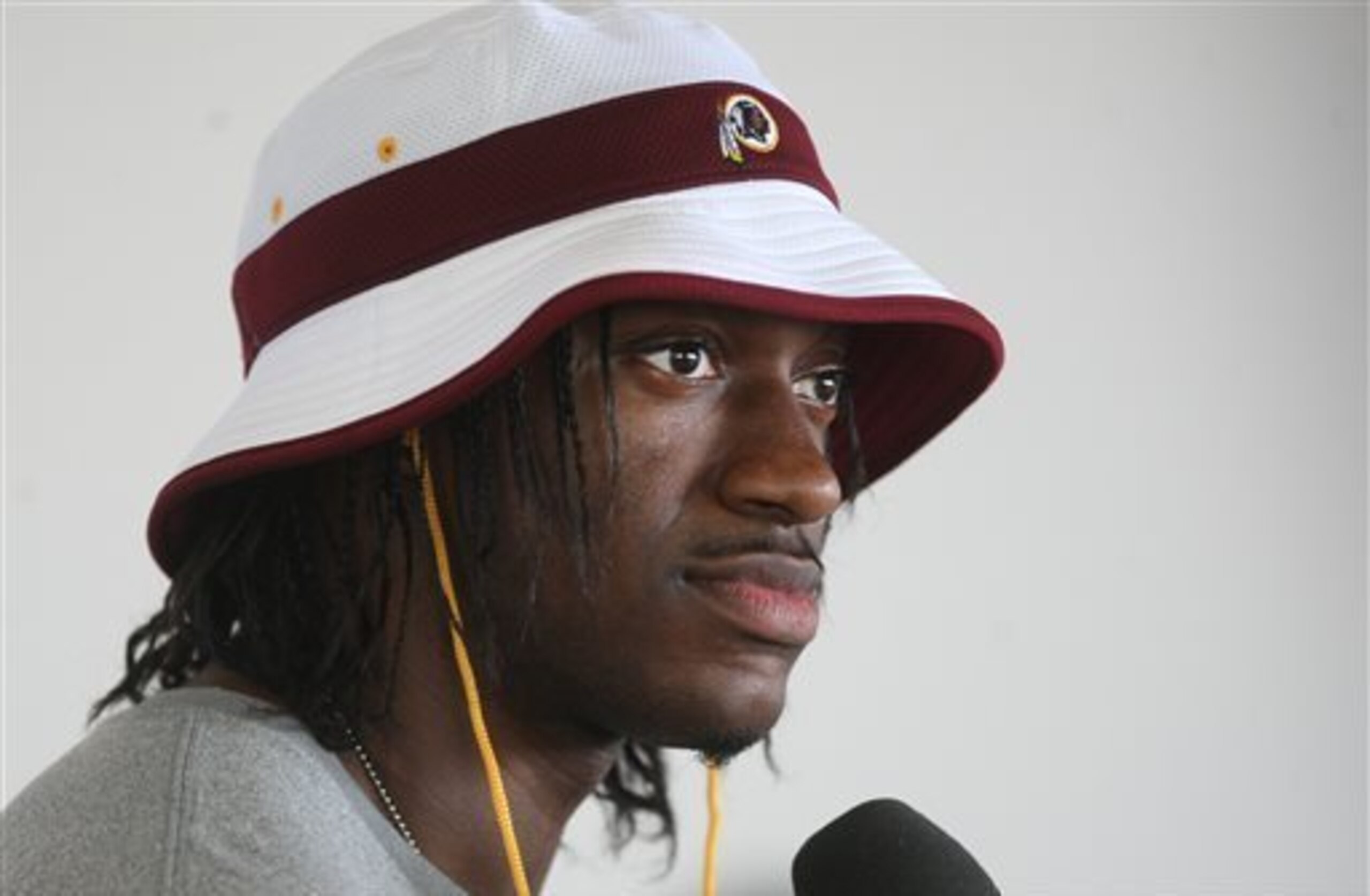
If there's one lesson from this week that stands out, it's that Griffin's progress is going to be a process, a long one.
As with any process, there have been rough and smooth moments. Griffin encapsulated both in an 11-on-11 series against the Texans, according to ESPN.com's Keim:
"In the 11-on-11 portion, Griffin and the offense got off to a tough start when end J.J. Watt did what he does best. He batted a pass down after pushing guard Brandon Scherff back. The same thing happened the next play when end Jared Crick moved guard Shawn Lauvao back and batted down a pass.
But Griffin completed an out pass to Andre Roberts on the next play. Later, Griffin was short on a pass to receiver Ryan Grant.
"
It was a day Keim dubbed "mixed" for the Griff' and his offense. That's the best way to describe his learning curve this offseason.
Griffin has endured tough moments at camp. He "misfired on several passes" during Day 7, per Tandler. But earlier in the week, he operated the two-minute drill with calmness, authority and smooth execution, according to another report from Keim.
The contrast in these two reports is where it should be for a young, oft-injured player still needing to learn the nuances of his position. Griffin's going to have his moments, good and bad.
If they were all good or at least the majority of them were, the quarterback position wouldn't be such a question mark heading into the new season. But it will remain that way until RG3 shows he can keep his progress pointing the right way more often.
Jones said it best in his latest assessment for the Post: "Improved consistency is the biggest thing Redskins coaches and officials want and need to see out of Griffin. While he’s making progress and delivering some positives, shortcomings remain."
Gruden himself was clear when he called Griffin's development "a steady climb," five days into camp, per CSN Washington. Steady is just what it says on the tin, steady. It's not spectacular, nor is it disastrous. Griffin isn't sprinting to the top of the mountain and he isn't stumbling and bumbling his way to the bottom, if I absolutely must continue the climbing theme.
It says a lot that these types of assessments of No. 10 are often viewed as negative by so many fans. Yet the sensitivity concerning this subject is perhaps understandable.
There's just so much riding on Griffin's development. Make no mistake, if he can't get it right this year, the Redskins will be forced to write off the player who was supposed to be their franchise quarterback.
That will open the organization up to ridicule and accusations of dysfunction. It will be a charge the franchise has to accept.
So far at least, Griffin is doing just enough to keep the jury waiting.
.jpg?w=2560 "Commanders Eagles Football")



.jpg?w=2560 "Mahomes' Wife Trolls Kubiak 💀")