
Philadelphia 76ers Making Real Progress at Their Own Pace
Everybody calm down. The Philadelphia 76ers are fine.
They're better than fine, actually, because they're getting better.
That concept is hard to swallow if you're only looking at the win-loss records of the past two seasons, in which the Sixers amassed a combined mark of 37-127. That's good for a winning percentage of 22.6, dead last in the NBA during that span.
TOP NEWS
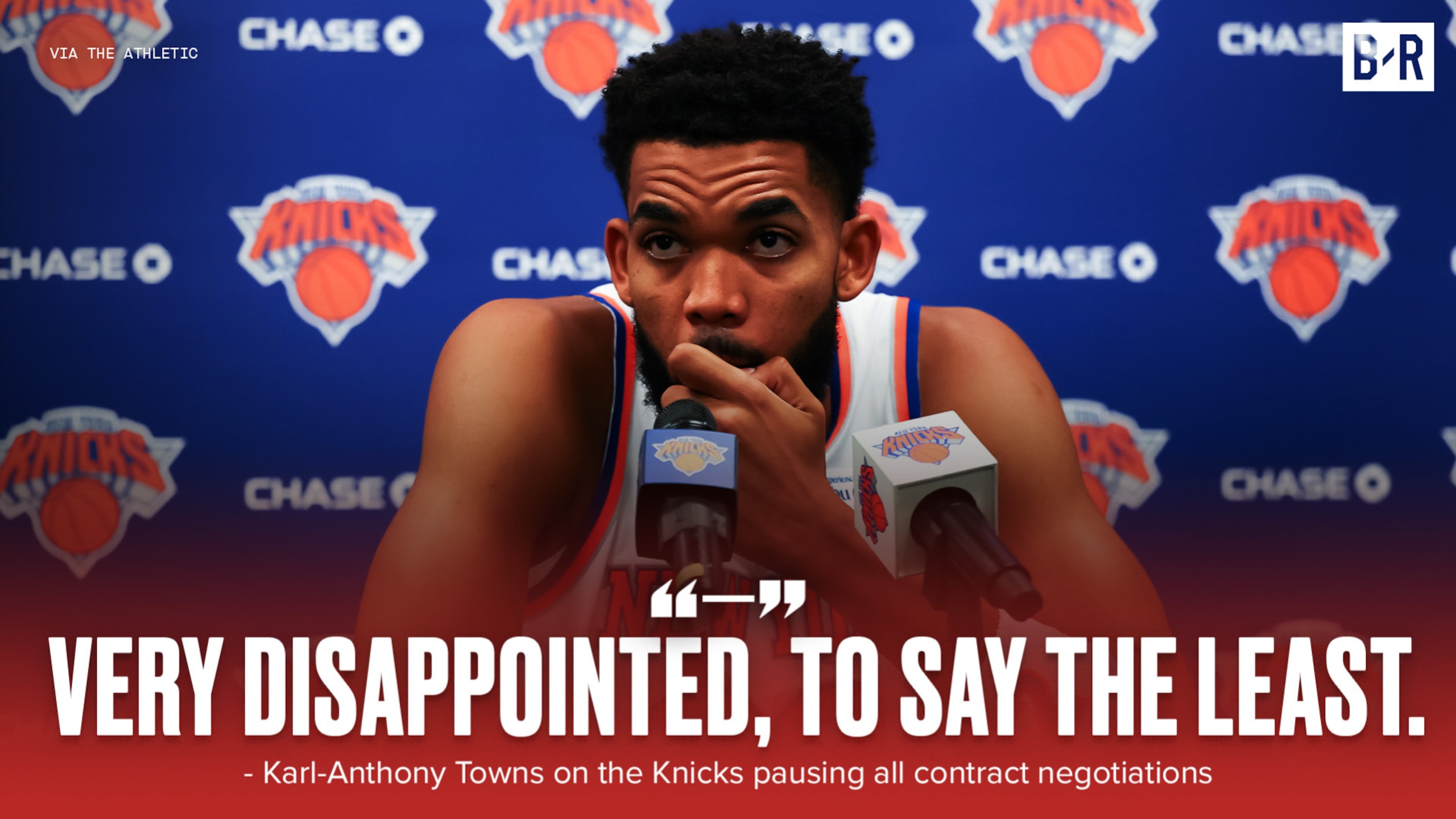
KAT's Contract News Quote 😬

1 Player Every Team Should Trade 🔀
Most Fascinating Players This Season 😲
And maybe it's even harder to believe there's been positive progress when purported franchise cornerstone Joel Embiid is likely to miss his second straight season with a foot injury.
But step back a second and compare the Sixers as they existed when general manager Sam Hinkie took over in May 2013 to the version that exists now.
Here's the 2012-13 roster compared to the current one:
| Lavoy Allen | Furkan Aldemir |
| Kwame Brown | Isaiah Canaan |
| Spencer Hawes | Robert Covington |
| Jrue Holiday | Joel Embiid |
| Justin Holiday | Jerami Grant |
| Royal Ivey | Pierre Jackson |
| Charles Jenkins | Carl Landry |
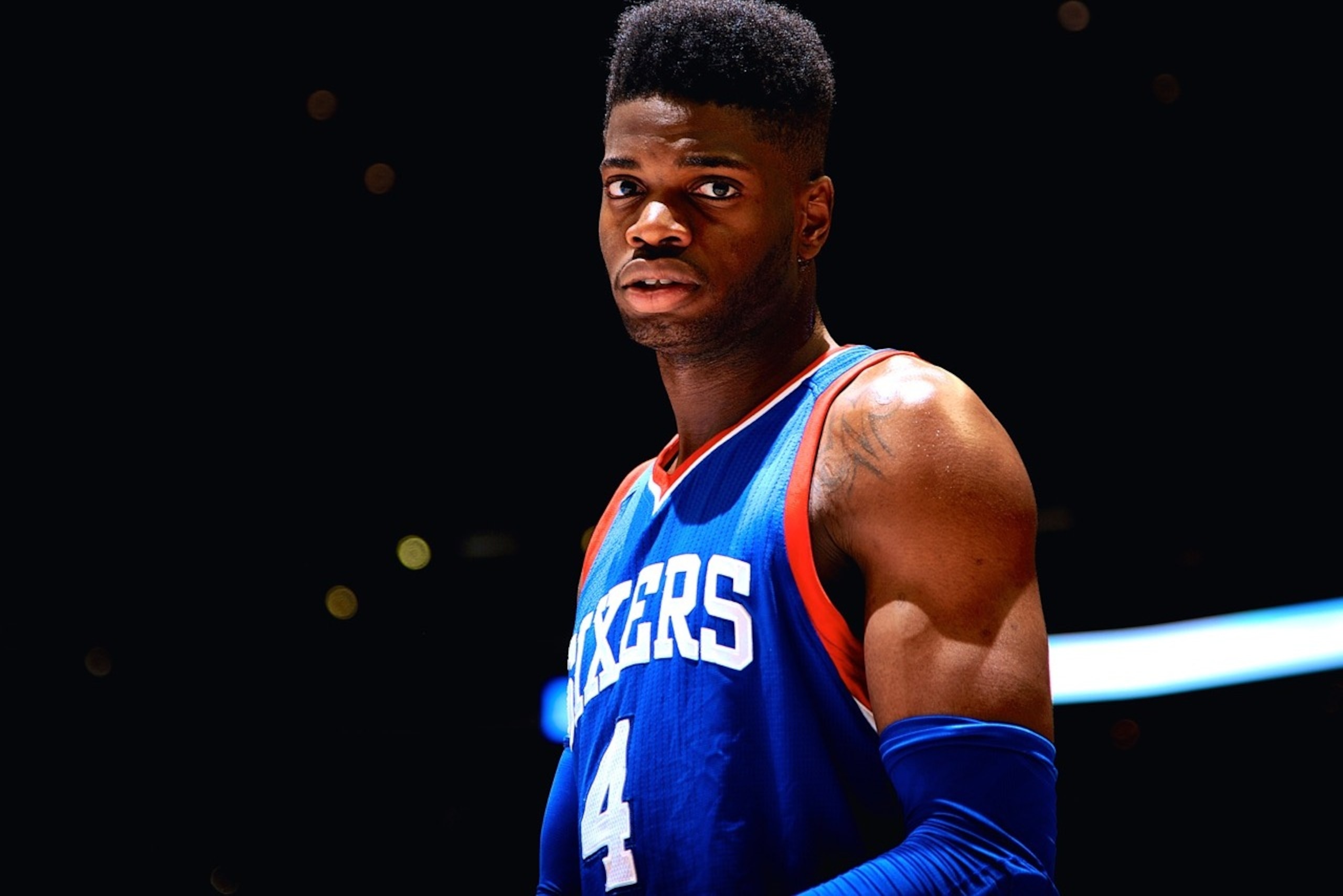
| Shelvin Mack | Nerlens Noel |
| Arnett Moultrie | Jahlil Okafor |
| Jeremy Pargo | JaKarr Sampson |
| Jason Richardson | Nik Stauskas |
| Evan Turner | Hollis Thompson |
| Maalik Wayns | Jason Thompson |
| Damien Wilkins | Scottie Wilbekin |
| Dorell Wright | Tony Wroten |
| Nick Young | |
| Thaddeus Young |
Sure, there are more recognizable names on the left side of that chart, but many of them are familiar for all the wrong reasons. Draft busts, chuckers, guys who've fallen out of rotations and/or the league—they're all there.
What's even more damning is what's not there. Andrew Bynum was technically on the Sixers roster in 2012-13, but he didn't play a single game that season. To get him, Hinkie's predecessor, Tony DiLeo, surrendered Andre Iguodala, 2011 first-rounder Nikola Vucevic, 2012 first-rounder Moe Harkless and a 2017 first-round pick.

The roster on the left had just spent three years finishing between seventh and ninth in the East, locked on the mediocrity treadmill with no obvious escape. And that same roster had just surrendered its best player in Iguodala and virtually all of its useful future assets.
That mess on the left is an unmitigated disaster.
The roster on the right is rife with flexibility and young, inexpensive talent that should improve.
And let's not forget the picks Hinkie has hoarded in his two years since taking control. In addition to owning all of its own first-rounders (the only outgoing pick the team owes is a 2016 second-rounder to the Boston Celtics), Philadelphia has a war chest of incoming picks no other team could even dream of matching.
| Lakers | 2016 1st | Protected 1-3 in 2016, 1-3 in 2017, unprotected in 2018 |
| Heat | 2016 1st | Protected 1-10 in 2016, unprotected in 2017 |
| Thunder | 2016 1st | Protected 1-15 in 2016, 1-15 in 2017 |
| Kings | 2016 1st | Swap, protected 11-30 |
| Kings | 2017 1st | Swap, protected 11-30 |
| Kings | 2018 1st | Protected 1-10 in 2018, unprotected in 2019 |
And that doesn't even include the 11 second-rounders owed to the Sixers between now and 2021.
Those picks are particularly valuable to the 76ers because Hinkie has shown a knack for getting maximum value out of the draft. He nabbed Michael Carter-Williams at No. 11 in 2013, then flipped the Rookie of the Year for a shot at an even higher future selection last season.
Harsh? Maybe, but Carter-Williams doesn't profile as a star, and what the Sixers got in return gives them a shot at someone who might in the future. At the time of the trade, Hinkie told reporters, "I believe a lot in optionality—a lot. I believe a lot in flexible. I believe a lot in making a decision as late as you possibly can to gain as much information as you can."
Hinkie also traded Jrue Holiday in 2013, who hasn't had a healthy season since, along with Pierre Jackson for Nerlens Noel and a 2014 first-round pick (became Elfrid Payton). Though Noel missed his first season, no one taken ahead of him in that 2013 draft class played better than he did last year.

Embiid represented the downside of Hinkie's approach. Regarded as potentially the most franchise-altering talent in the 2014 draft, injury concerns caused Embiid to slip to Philly at No. 3. Those concerns materialized in the ugliest way, and the Sixers won't get to see him play for at least another year. But in terms of upside, potential and value relative to draft slot, Embiid was still the right selection—especially for a team committed to maximizing its odds of finding a superstar.
It's too early to judge the Sixers on their selection of Jahlil Okafor, but he remained a possible No. 1 pick throughout the predraft process. That can't be said of anyone taken after him, so we'll call that another value optimization by Philadelphia.
The Sixers are going about their rebuild the right way. Maybe not the old way or the comfortable way, but in a way that makes the most logical sense.
When he was hired, Hinkie didn't make bold proclamations. He was measured. Deliberate. Unconcerned with convention.
"I'm just trying to use information to make decisions," he told reporters. "I think some people move along quickly and others don't. That's OK."

And here's some information that explains the 76ers' dogged pursuit of high draft picks and any asset that might bring them...you guessed it: more high draft picks.
The overwhelming majority of recent NBA champions had a homegrown All-Star on the roster. If you count Kobe Bryant and Dirk Nowitzki (draft-day acquisitions who never played for another team), the only title-winner in the last 35 years without an internally developed All-Star was the 2004 Detroit Pistons.
Finding a star in the draft is basically a prerequisite to ultimate NBA success.
It makes sense. Drafted players are inexpensive compared to free agents, and they're easier to trade because their salaries are suppressed by the collective bargaining agreement.
"We're clearly building through the draft," Hinkie said at the lottery last June. "We're clearly trying to find star players we can move forward with."
That beats the alternative of chasing marquee names on the free-agent market.
By way of comparison, consider the Los Angeles Lakers and New York Knicks. In the same two-year time frame that defines the current Sixers rebuild, they've won 29.3 and 32.9 percent of their games, respectively. Both, like the Sixers, have missed the playoffs in each of the last two years.
And both have repeatedly failed to sign big names in free agency during that span. Both pivoted this past summer and made some middling moves, hoping to return to respectability at a moderate cost.

Neither has anything close to the Sixers' stash of future picks or roster flexibility.
Judged by that standard, the 76ers' rebuilding efforts over the past two years have been better than either the Lakers' or the Knicks'.
"Considering how many teams have stunk for long periods of time while doing the same-old, I can't believe someone hasn't gone this far down this road before," Billy Connelly wrote for SB Nation.
The 76ers have rejected conventional methods, and based on the state of the franchise now versus the way it looked two years ago when Hinkie inherited it, it's difficult to view that rejection as anything but a complete success.
The 76ers' approach rubs many the wrong way because it seems like they don't care about winning, but that's only true in a shortsighted sense. Viewed with some perspective, the Sixers actually care more about winning than any other rebuilding team, and we know that because they've demonstrated a bolder willingness to sacrifice in pursuit of that goal.

They're not building toward mediocrity. They want to construct greatness, and they have a specific idea about how to do that. They remain focused on their plan despite criticism for short-term failures and the lack of immediately obvious results.
It would take a masochistic streak of epic proportions to invite what Hinkie and the Sixers have endured if they didn't truly believe their approach was best.
The 76ers are making progress—clear, steady progress that allows them a chance to make a major leap when the time is right. The same can't be said for the teams embracing conventional rebuilds.
So let's cut Hinkie and the Sixers some slack.
Grant Hughes covers the NBA for Bleacher Report. Follow him on Twitter @gt_hughes.

.jpg?w=2560 "Cam Ward Says He's Not A Loser")
.jpg?w=2560 "🚨 Texans Trade for MHJ")
.jpg?w=2560 "Grading MHJ Trade 📝")
.jpg?w=2560 "Chargers Fall to 0-5 🤢")
.jpg?w=2560 "MHJ Bought Own Jugs Machine")