

San Francisco 49ers: Most Dominant Fantasy Players in Franchise History
Had fantasy football been a thing back in the 1980s, the San Francisco 49ers would have been at or near the tops of everyone’s draft boards. With the West Coast Offense grinding out short yardage gain after short yardage gain, Bill Walsh’s offenses would have been ideal for fantasy football fans. Had it been around in the early ‘90s, Steve Young to Jerry Rice would have held as high of a place in fantasy football fans’ hearts as Peyton Manning to Marvin Harrison does.
While fantasy football technically started in 1963, the first free public websites didn’t start appearing until the late 1990s and it didn’t become a massive industry until the 2000s, corresponding with the end of the 49ers’ golden era. So, while players can have fond memories of the time LaDainian Tomlinson led them to fantasy gold or tricking someone into picking the wrong Adrian Peterson, no one can have that same visceral feeling of what it was like to have John Taylor at receiver.
.jpg?w=2560 "Texans Titans Football")
.jpg?w=2560 "Broncos Chargers Football")
.jpg?w=2560)

When looking back at what would have historically been solid fantasy seasons, it’s easy to fall into the trap of just plugging the numbers into a basic fantasy football scoring system and seeing who comes out on top. But that ignores historical context.
For example, Joe Namath led the NFL in passing yards in 1972 with 2,816, which would have been good for 25th last season, just between Blake Bortles and Geno Smith. Having ’72 Joe Namath last season would have been terrible, but he would have helped you win your league in 1972. Context is everything.
Fantasy dominance is measured “not by the number of points he scores[, but] by how much he outscores his peers at his particular position.” You want your players to be dominant in the era in which they play—it’s not informative to compare them in an apples-to-apples comparison with modern day players. To find out which 49ers would have had the best fantasy seasons of all time, we’d have to calculate how much a player outscored his peers at his particular position in his particular season and adjust it for games played and number of teams in the league.
That’s a lot of work, but Chase Stuart over at the phenomenal Football Perspective blog has done just that. With his work, we can look at the most dominant fantasy players since 1950—coincidentally, the first year the 49ers played in the NFL.
With fantasy draft season picking up, I thought it would be interesting to look at the best individual seasons and careers for 49ers, fantasy-wise. Here they are, by position.

Based on Stuart's analysis, only two quarterbacks have five or more seasons in the top 100 all-time, and they both wore the red and gold. Joe Montana and Steve Young outdo everyone else in NFL history, consistently hitting the top of the rankings. That’s more appearances than Dan Marino, more than Randall Cunningham, more than Peyton Manning—you name it, and Young and Montana beat it.
But while Montana had five top-100 seasons and ends up as the 10th-best career fantasy quarterback ever, Young managed an incredible six seasons in the top 65. He tops the individual chart with his tremendous 1998 season, when he threw for 4,170 yards and 36 touchdowns with only 12 interceptions, running for 454 yards and six more scores in just 15 games. His 36 touchdowns led the league and were a career-high. No one could match his 278 yards per game, either.
Young was a duel-threat quarterback in an era when such a thing was even rarer than it is today; only Steve McNair and Kordell Stewart also ran for at least 400 yards in 1998, and neither came within 1,000 yards of Young’s passing yards. Young ends up with a VBD of 201, meaning he out-scored the baseline ’98 quarterback by 13.4 points per game, just trumping Dan Marino’s record-setting 1984 season for best fantasy season ever.

Montana’s best season, by comparison, was the strike-shortened 1987 season. On the most talented 49ers team of all time—just on the offensive skill positions alone, Montana could choose between Jerry Rice, John Taylor, Dwight Clark, Brent Jones, Roger Craig and Tom Rathman—Montana put up 3,054 passing yards and 31 touchdowns in just 13 games. Not only was he the All-Pro QB that season, he also led the league in touchdowns, completion percentage and quarterback rating.
That’s good for a VBD of 131.8—impressive, but leagues behind Young’s best. In fact, Young has four seasons ahead of Montana’s best, including the impressive 1992-94 run. Young simply would have been the better quarterback to own in fantasy circles.
Two other 49ers’ quarterbacks show up in the top 100. Jeff Garcia’s 2000 season actually trumps anything Montana did, as he rode Jerry Rice and Terrell Owens to a 4,278-yard season with 31 touchdowns. A poor defense, leading to a lot of games where the 49ers had to catch up, boosted Garcia’s numbers, but he was good enough to earn a Pro Bowl nod that year. That’s recent enough that you might have actually had that Garcia on your fantasy team, though the former CFL star likely would have been a waiver-wire pickup.
John Brodie also cracks the top 100 with his 1970 season, throwing for an NFL-leading 2,941 yards and 24 touchdowns. Y.A. Tittle also had a season to remember in 1957.
However, if you had the chance to go back and take just one player, you’d want to grab Steve Young for your dynasty team starting in 1991 or so. No quarterback in NFL history has had as many great fantasy seasons as Young did, and it’s only his relatively short time as a starter that puts his career value behind Peyton Manning, Dan Marino, Brett Favre and Fran Tarkenton.
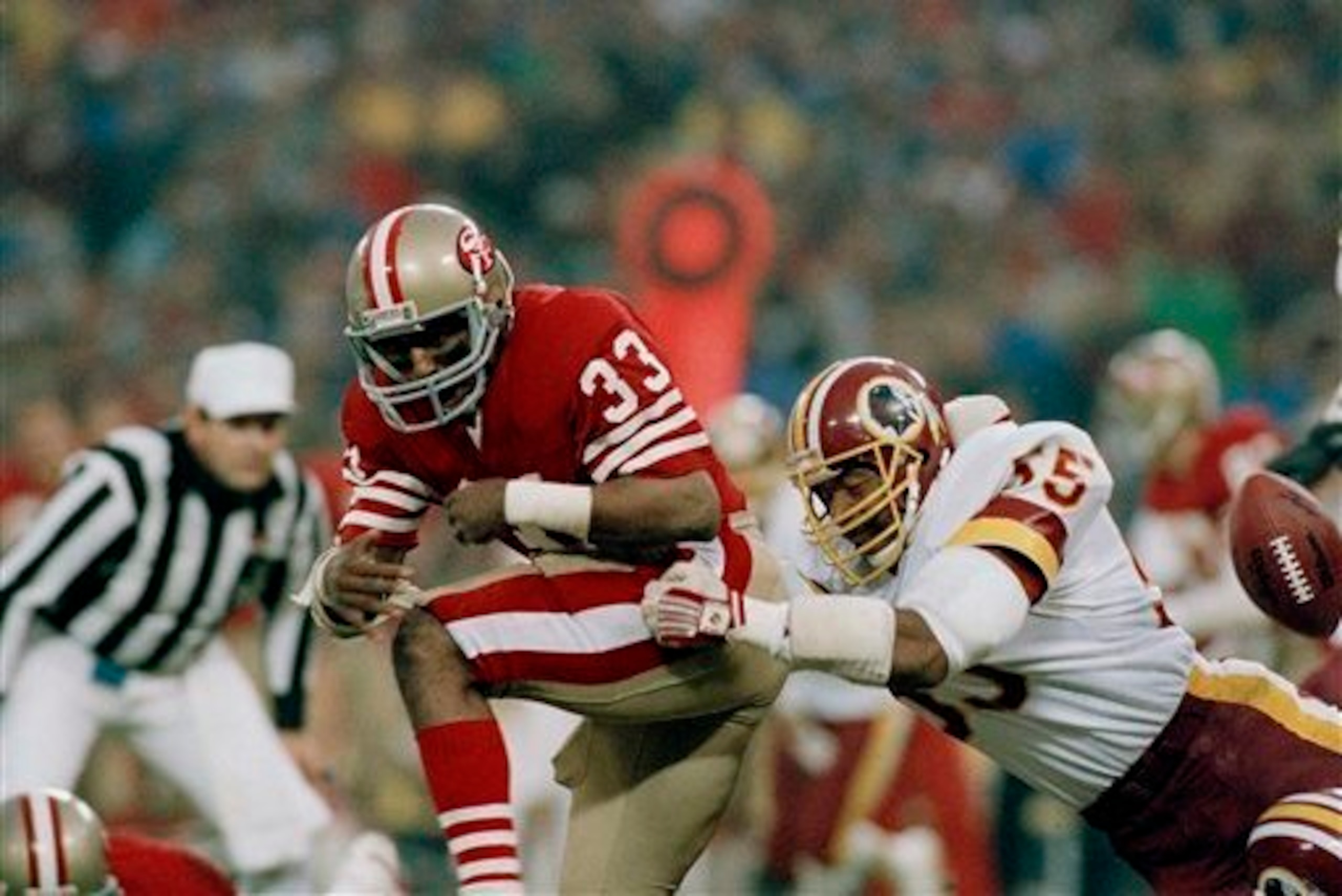
The stat system that Stuart uses to rank fantasy points includes 0.5 points per reception. With that rule in place, it’s perhaps unsurprising that the top 49ers running back season of all time belongs not to franchise rushing yards leader Frank Gore but to all-around threat Roger Craig.
The 49ers have just one season in the top 100, and its Craig’s 1985 season. He only ran for 1,050 yards and 9 touchdowns that year, which is hardly noteworthy. That was only the 13th-highest rushing total for the ’85 season, and he split a lot of carries with Wendell Tyler. He was more than 700 yards off of Marcus Allen’s league-leading total, so how could Craig’s season stand out so much?
Well, there’s the little fact that Craig led the NFL with 92 receptions that year for 1,016 yards and six touchdowns. He was the first player in NFL history to run for 1,000 yards and receive for 1,000 yards in the same season, a feat only Marshall Faulk has duplicated. The season ends up not being quite as valuable as Marcus Allen’s ’85 season—he had 555 receiving yards himself—but ends up with a VBD of 181.5, good for top-50 all-time. Craig’s 1988 season is the second-best season in 49ers fantasy history as well.
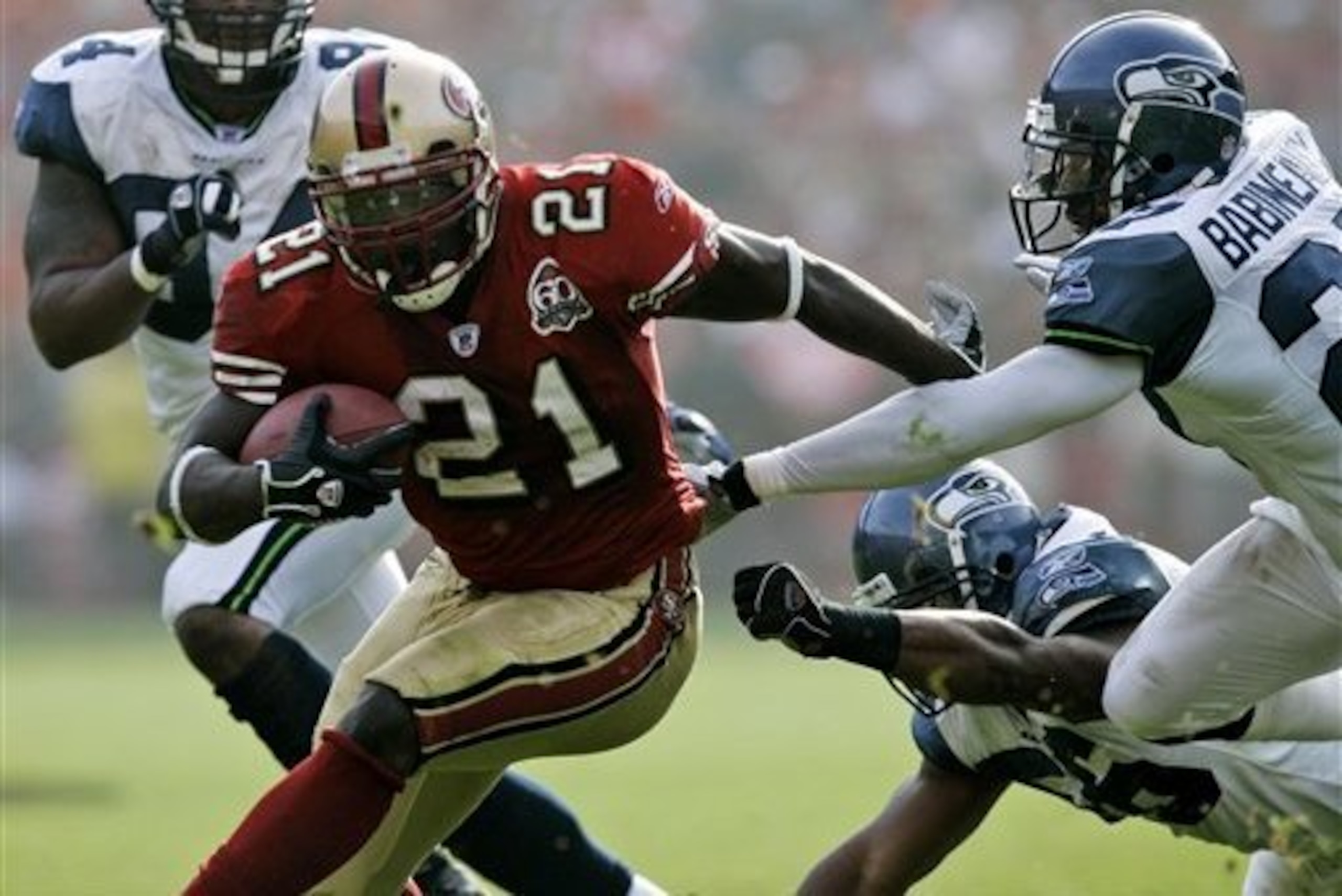
That doesn’t mean Frank Gore doesn’t show up. Gore’s the only other 49ers running back with two seasons in the top 200, with solid seasons in both 2006 and 2009. Gore has just never put up as much receiving value as Craig has, has played for most of his career on losing teams and has had the misfortune of playing in a league with players like LaDainian Tomlinson, Chris Johnson, Steven Jackson and Adrian Peterson, who have been shattering records.
While Gore’s 2006 line of 2,180 yards from scrimmage, 61 receptions and nine touchdowns is great, it’s only the sixth-best line of 2006. Gore was good for his time, Craig was ahead of his time.
Garrison Hearst also has a solid season in 1998 and might have shown up more on these lists had he not shattered his ankle at the end of that season. Surprisingly, none of San Francisco’s Hall of Famers—Joe Perry, John Henry Johnson or Hugh McElhenny—show up on the list.
One name that does show up on the list, and beats out Craig and Gore when it comes to career value, is Ricky Watters. Watters 1992 season—his first in the NFL after missing the ’91 season—was a Pro Bowl year, rushing for 1,013 yards and nine touchdowns, with 43 receptions for 405 yards and two touchdowns besides.
That’s only the 188th-best fantasy season ever, but Watters followed it up with consistently solid seasons, first in San Francisco and then in Philadelphia and Seattle. As a result, Watters’ career VBD was 949, ahead of Craig’s 680 and Gore’s 635, making Watters the best 49er to have from a long-term perspective, if you were willing to keep him when he changed jerseys.
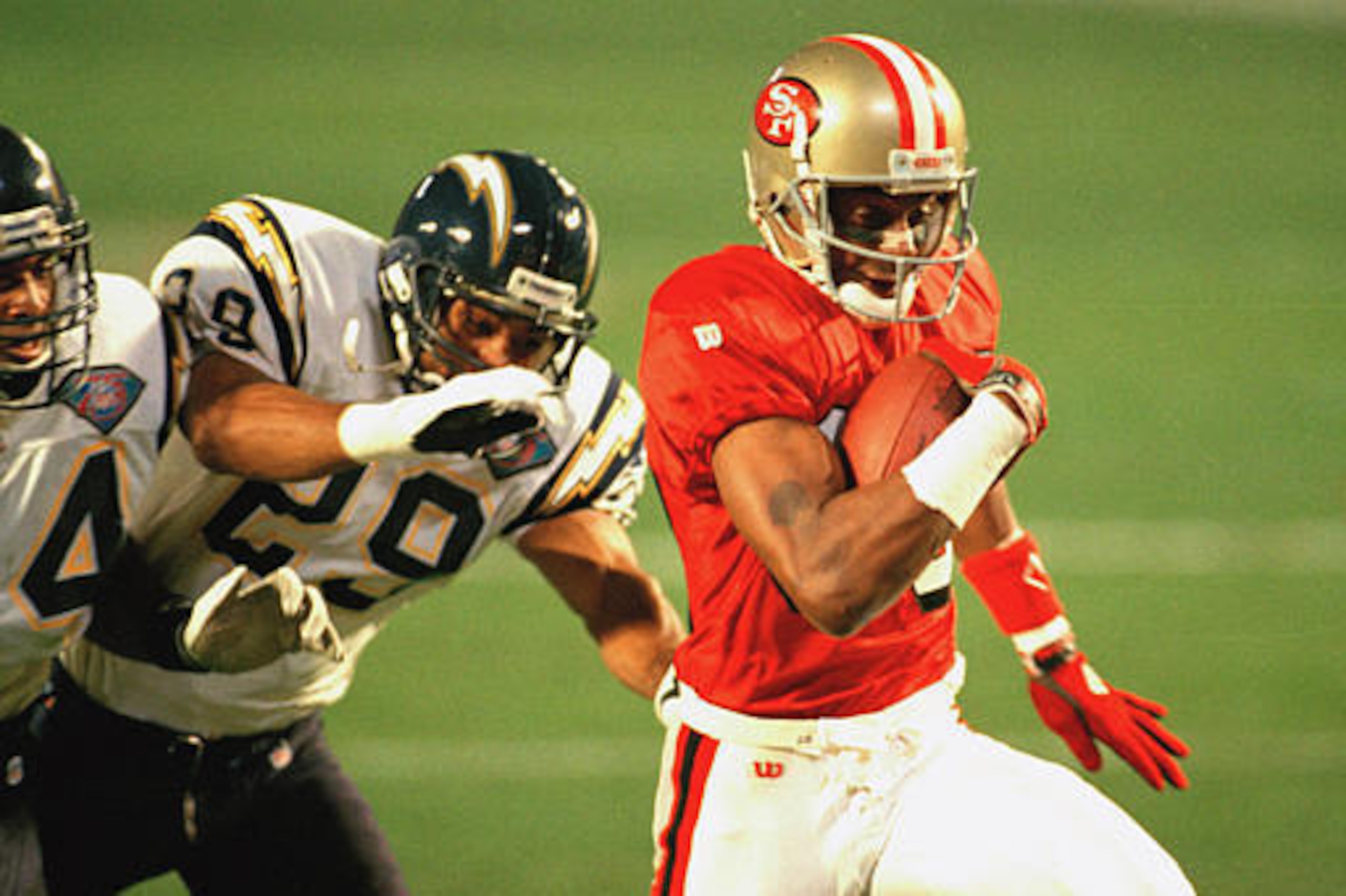
Stop me if you’ve heard this one before, but Jerry Rice was pretty good.
Only four players have topped 200 VBD at the receiver position. Elroy “Crazy Legs” Hirsch did it in 1951 for the Rams, setting an unapproachable record of 261.9. Wes Chandler did it for San Diego in the strike-shortened 1982 season, putting up a score of 229.5
That leaves Jerry Rice with the other two seasons, putting him in third and fourth place. He also holds the 9th-, 13th-, 14th-, 24th-, 50th-, 123rd-, 132nd- and 193rd-best seasons of all time. That’s just insane.
What’s arguably more impressive is the range of years those seasons cover. Plenty of receivers have had a few great seasons, and you can even argue that players like Michael Irvin were a little better than Rice at Irvin’s peak. The thing is, though, that Rice’s peak lasted from the last half of the 1985 season all the way through the early 2000s, which is incredible.
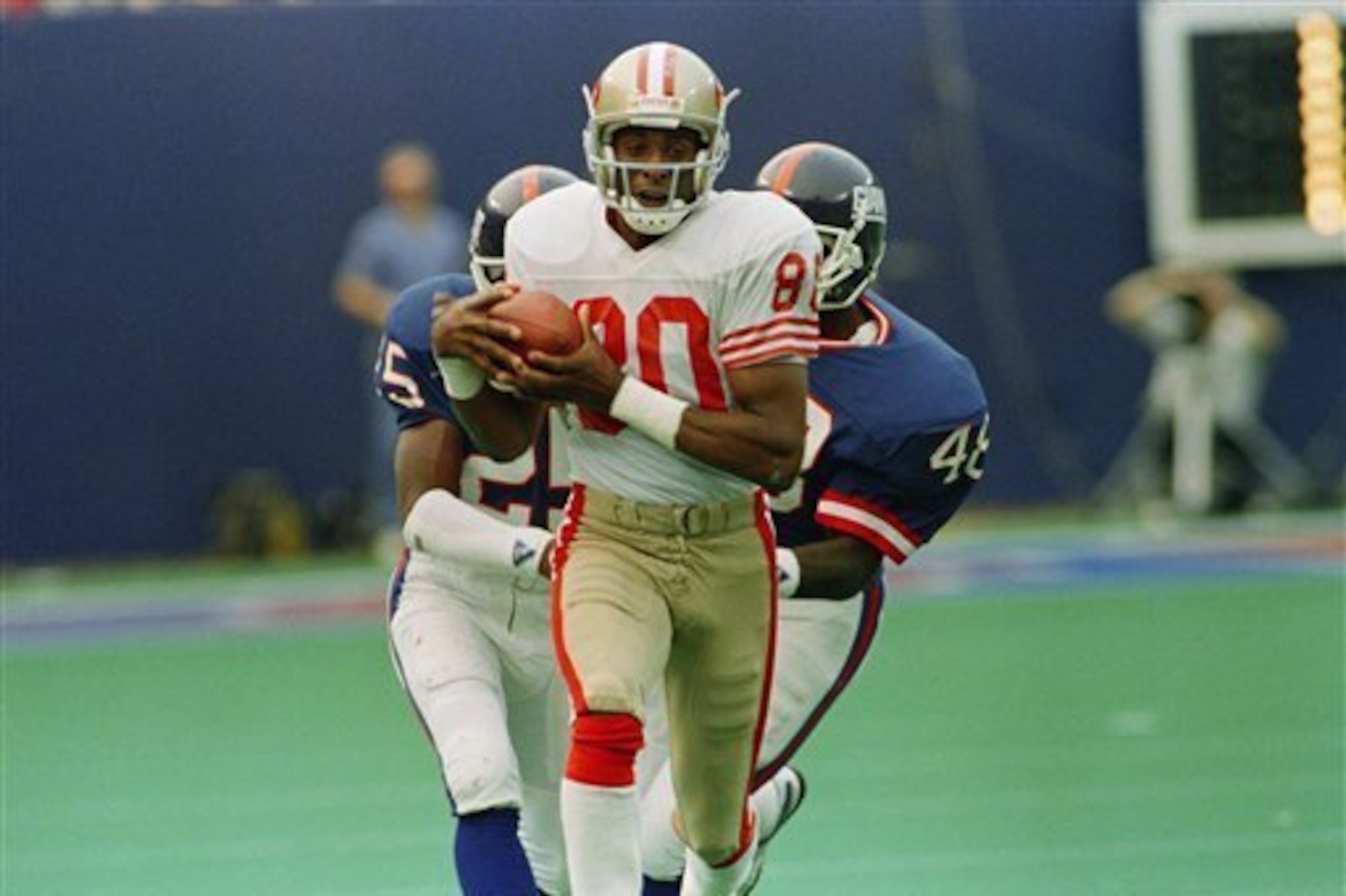
Rice’s top season was the 1987 strike-shortened season, when he put up 65 receptions for 1,078 yards and an impressive 22 touchdowns. That 22-touchdown number not only was the most in the league, it held the record for most receiving touchdowns in a season ever until Randy Moss broke it in 2007. Even more amazing was the fact that Rice only played 12 games that season, while Moss needed 16 to catch one more touchdown.
The 29 receptions Rice was on pace to catch in a 16-game season would be six more than anyone else has ever done in NFL history. That season gave him a VBD number of 212.5.
Moss’ 2007 season is actually the second-highest raw fantasy score of all time, behind…Jerry Rice’s second-best season in 1995. That year, Rice led the NFL with 1,848 yards receiving on 122 receptions with 15 touchdowns. Whether you prefer Rice’s more per-game efficient 1987 season or his larger gross numbers in 1995 is a matter of personal choice as much as anything else.
And those two seasons were seven years apart! Most players are lucky to have a seven-year prime, much less have two great seasons that far apart. Rice finished with seven top-100 seasons in a ten-year stretch.
It’s no surprise, then, that Rice is the best volume receiver of all time, with a career VBD of 1,923. The gap between him and number two, Terrell Owens, is as large as the gap between Owens and the 65th-best receiver, Lionel Taylor.
That’s right, the 49ers also have the second-greatest fantasy receiver of all time in Owens. Owens had three top-100 seasons in San Francisco, with his best coming in 2000—his 97-reception, 1,451-yard, 13-touchdown season while Jerry Rice was still drawing the top coverage, good for the 32nd-best season of all time. Add that to his career in Philadelphia and Dallas, and you have the second-greatest fantasy receiver of all time.
But he doesn’t have the 49ers’ best non-Rice season.
Dave Parks was the 49ers’ No. 1 pick in the 1964 draft, and he made the Pro Bowl in his first three seasons with the club. His 1965 season saw him lead the NFL in receptions with 80, in yards with 1,344 and in touchdowns with 12. That’s the 38th-best season of all time. But he doesn’t have the 49ers’ best non-Rice season.
Gene Washington is the best deep threat the 49ers have ever had, averaging 18.0 yards per reception in his 49ers’ career. His best season, both in real life and in fantasy, was 1970, when he led the NFL with 1,100 receiving yards. He had 53 receptions and 12 touchdowns as well. That’s the 30th-best season of all time, and he also boasts the 104th-best. But he doesn’t have the 49ers’ best non-Rice season.

That goes to Dwight Clark in the strike-shortened 1982 season. Fresh off of making The Catch, Clark made his second Pro Bowl and only first-team All-Pro nod in 1982, leading the NFL with 60 receptions—with 913 yards and five touchdowns—in only 9 games. That’s the 29th-best season of all time, just squeaking ahead of Washington’s best.
While Clark’s significance to the 49ers is sometimes overstated thanks to being on one end of the most significant play in franchise history, he was legitimately a top wideout from about 1980 through 1984 and put up one season worth remembering in fantasy circles.

When talking about 49ers’ tight ends, two names probably spring to mind for most fans.
One is Brent Jones, who won three Super Bowls with the 49ers. He’s well-represented on the all-time fantasy season list with four seasons in the top 200. His best season came on the Super Bowl-winning team in 1994, when Jones had 49 receptions for 670 yards and nine touchdowns. He’s the 49ers all-time leader and the 20th-best tight end of all time with 310 career VBD points, but he doesn’t have the top season.
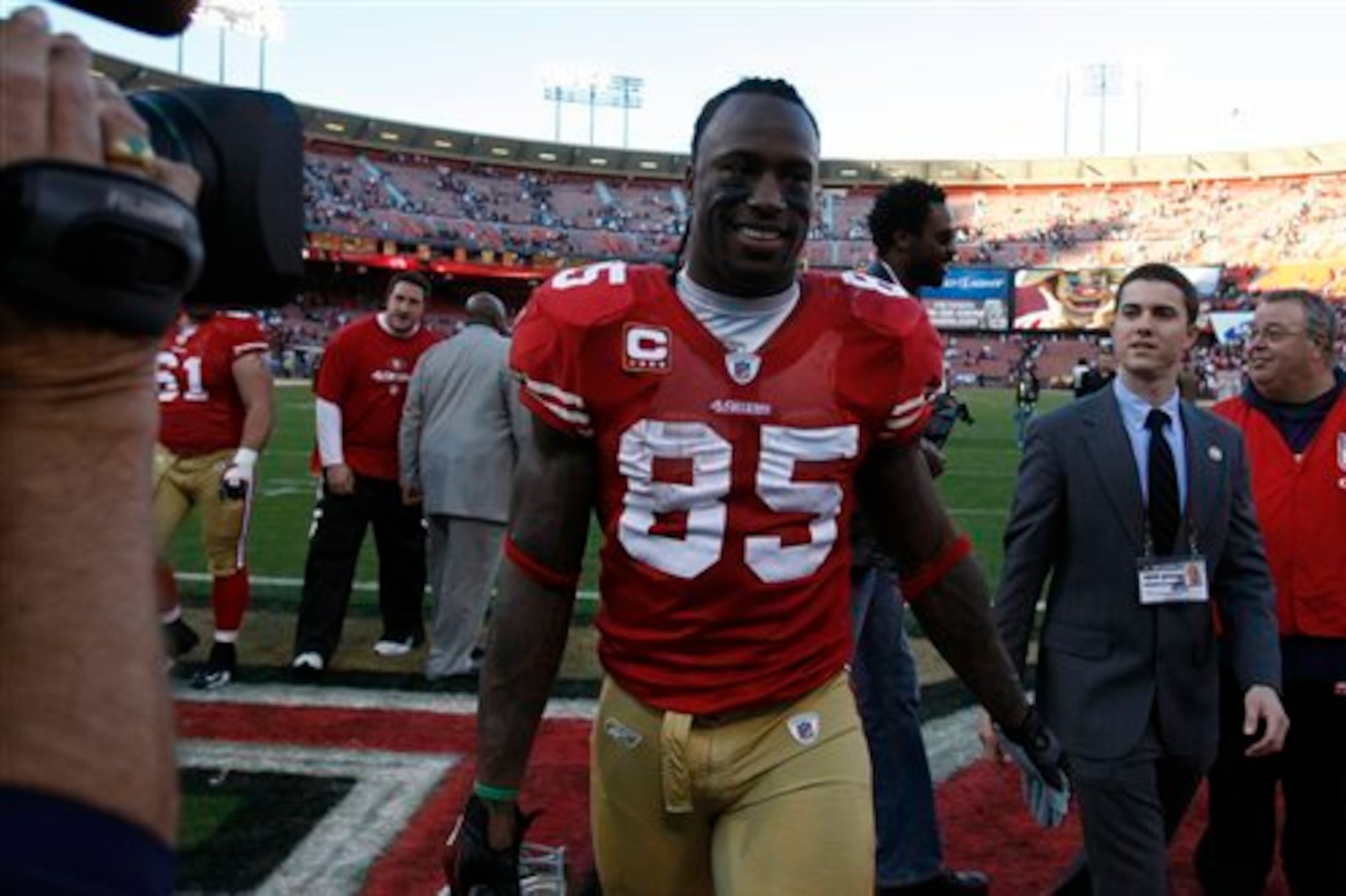
The other is Vernon Davis, the highest-drafted tight end in franchise history. Davis has two seasons in the top 100, with his top year being 2009, when he caught 78 passes for 965 yards and 13 touchdowns. That’s the 49th-best season in NFL history, crushing Jones’ best, though Jones wins on the longevity front.
However, that’s not the top season in franchise history. If not Jones or Davis, then, who has it?
Monty Stickles might be San Francisco’s greatest forgotten tight end. Starting 92 games for the 49ers over eight seasons, Stickles’ 2,993 yards from scrimmage is third all-time for 49ers tight ends, behind Jones and Davis. His top fantasy season was 1961, when he had 43 receptions for 794 yards and five touchdowns. That’s only good for 175th-best, though, nowhere close to the top.
The most unlikely name in the top-200 is probably Eric Johnson. While I mentioned the 1987 team as being the 49ers’ most talent-rich squad, the 2004 team is probably the exact opposite. Terrell Owens, Jeff Garcia, Derrick Deese and Garrison Hearst had all left the team the year before, and Frank Gore wasn't drafted until 2005.
That leaves Bryant Young and a whole lot of nothing on the roster.
However, despite having Tim Rattay and Ken Dorsey throwing it to him, Johnson still put up 82 receptions for 825 yards and two touchdowns. That’s only the 186th-best season ever, but it might be worth a little more consideration given the talent black hole that was that team.
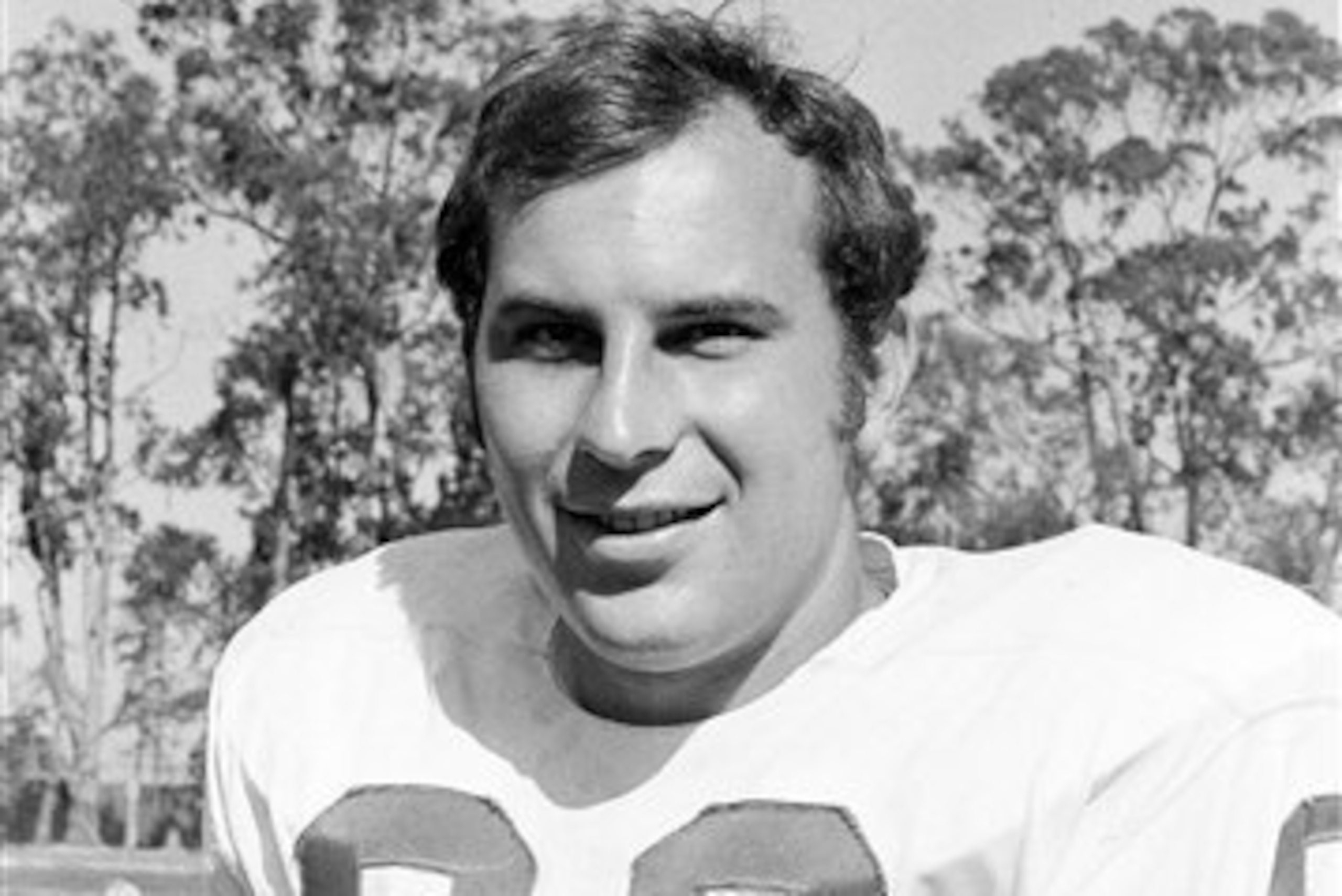
However, the winner, with three seasons in the top 100, is Ted Kwalick. Kwalick made the Pro Bowl from 1971 through 1973, and each season is in the top 100 of all time. His top season was 1972 when, catching passes from Steve Spurrier and John Brodie, Kwalick was named the All-Pro. He had 40 receptions for 751 yards and nine touchdowns that season. Only 40 receptions may not feel like a lot, but the NFL leader in receptions for tight ends that season had just 55. Kwalick’s 93.6 VBD is the 38th-best fantasy tight end season of all time.
Summary
So, if you’re counting—and assuming you can’t just take three copies of Jerry Rice and be done with it—here’s the best all-time fantasy offense you can put together from the 49ers:
QB: 1998 Steve Young
RB: 1985 Roger Craig
RB: 1998 Garrison Hearst
WR: 1987 Jerry Rice
WR: 1982 Dwight Clark
TE: 1972 Ted Kwalick
FLEX: 2006 Frank Gore
It’s too bad fantasy football wasn’t a widespread thing in the ‘80s and ‘90s—it would have been a great time to be a 49ers homer.
Bryan Knowles is a featured columnist for Bleacher Report, covering the San Francisco 49ers. Follow him @BryKno on twitter.
.jpg?w=2560 "Cardinals Giants Football")

.jpg?w=2560 "MHJ Bought Own Jugs Machine")