

Sir Nick Faldo Says Farewell to the Open with One Final Moment of Magic
ST ANDREWS, Scotland — At the start of the day, Sir Nick Faldo was unsure whether he would even bother to tee it up for his second round of the Open. By the end of it, he had fashioned a finish that eventually fitted his own particular sense of theatre—one so good that it became the right moment to call time on his illustrious professional career.
The six-time major champion went out on his own terms, making a birdie at the brutally difficult 17th (on Thursday it yielded not a single such score) to end his Open story with a one-under-par round of 71. He still missed the cut—Thursday’s 83 could not just be erased from the books. But it at least allowed the three-time Open champion to bid farewell with his head held high, even donning the yellow jumper in which he won his first Claret Jug for his final walk up to the clubhouse.
.jpg?w=2560 "49ers Giants Football")

“Seventeen made it for me,” Faldo said, reflecting on a rollercoaster 40-foot putt from the front of the green that climbed the slope and, with an appropriate sense of occasion, died in the cup. “That was one of the great moments of my career, making a three there and then walking the walk.”
When Faldo woke up that morning, greeted like the rest of the players by high winds and heavy rain around East Fife, a combination of that spectacle, his Thursday score and a reopened cut to his finger (earlier this week he had an unfortunate run-in with a wall-mounted deer antler while getting dressed) had him thinking seriously about withdrawing.
“I’m not even a part-time golfer anymore,” Faldo moaned as he walked off the course Thursday. “It’s not any fun.”
Confronted by that misery—which had only multiplied by the morning—Faldo’s children persuaded him that quitting was no way for a champion to go out. Then the weather cleared up, although not before a three-hour delay that gave Faldo just enough time to get his troublesome injury strapped up.
“I got here at 12:15 p.m. [from the hospital],” Faldo revealed. “I was on the tee at 12:58. Without the delay, yeah, maybe I [wouldn’t have played].”

It turned out to be a stroke of fortune. Three hours later he was making birdie at the Road Hole (No. 17), for what he reckoned was just the second time in his career. At the peak of his powers he would famously play the treacherous hole as a par five, laying up short of the green and relying on his short game to save as many pars as possible over the four rounds.
That strategy helped him win at the Home of Golf in 1990, yet here he was 25 years later delighting the crowd by going even better than that.
When his putt dropped, Faldo looked to the heavens, tears seemingly pricking at his eyes as the biggest grandstand on the course went wild.
“I looked up at the gods, the St Andrews golfing gods,” Faldo said. “I thought, ‘Thank you very much for that.’”
Then he put on his 1987 Muirfield jumper in a move quintessentially Faldo: hokey, self-indulgent, yet hard to begrudge all the same. If playing this week was an example of the underlying hubris the 57-year-old has always possessed (he never plays any other tournaments these days yet still expects to turn up in the biggest of them all and be the main attraction) then his triumphant finish was also a reminder of the ability he possessed at his peak—an ability to back up his talk and decisions with actions and results.
When you win as many majors as that, you pretty much earn the right to act however you please.
His compatriots could do well to learn similar bloody-mindedness. For many years the Englishman to beat at any Open, Faldo has long since left that title vacant for another player to take on. No one has managed to do so yet, with Justin Rose (Faldo’s playing partner this week, who finished five-under par after a round of 68) and Danny Willett (nine-under) leading the latest English charge this week.
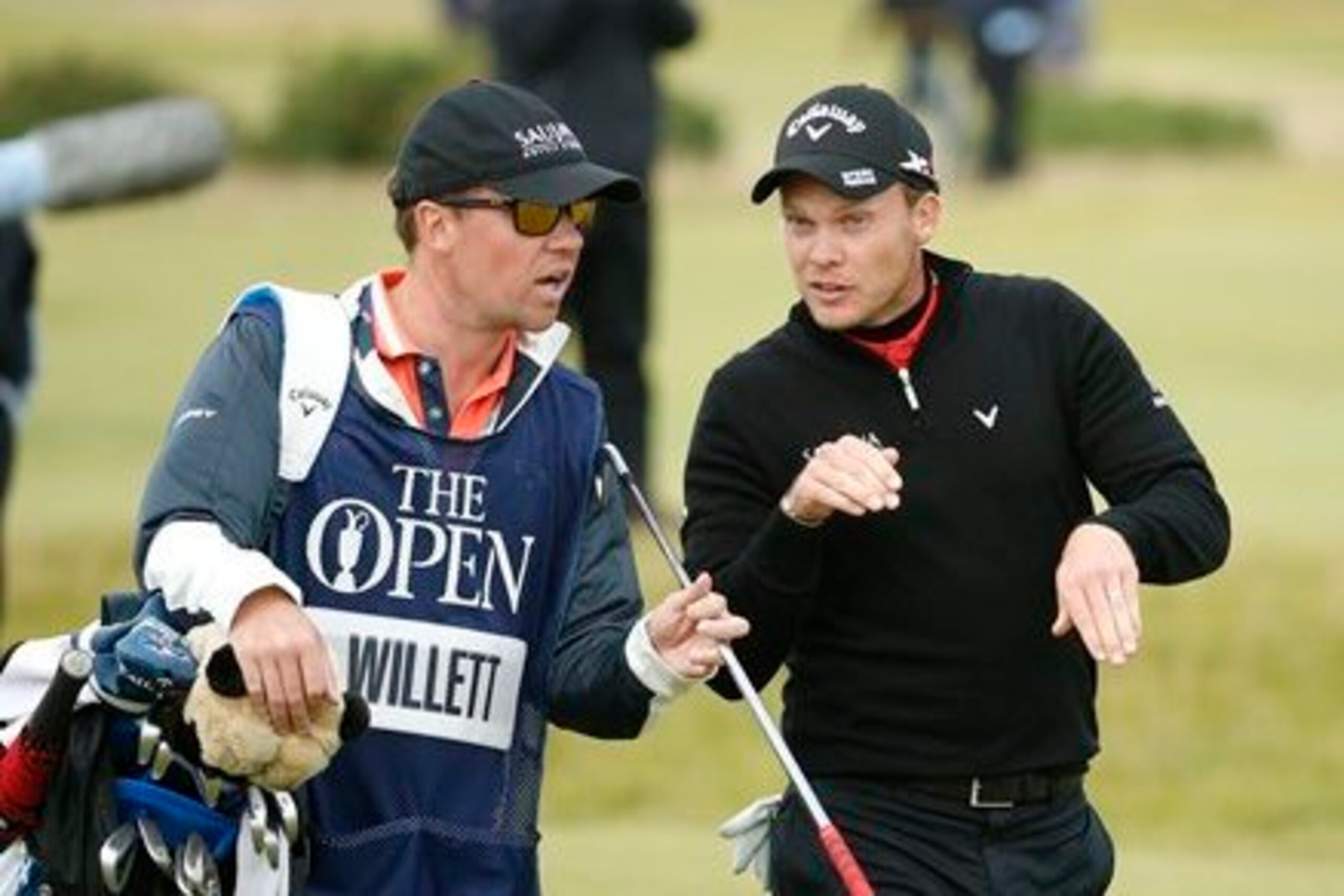
With the morning delay meaning most of the marquee names in the field remained in the clubhouse well into the afternoon, it was Willett who provided much of Friday’s excitement. Along with Zach Johnson, he was the first player to surpass first-round leader Dustin Johnson and reach eight-under par, before kicking away from both Johnsons and the rest of the field as back-to-back birdies at Nos. 9 and 10 put him 10-under for the tournament.
Then the nerves started to hit, as the 27-year-old frittered away a couple of shots with three putts down the stretch. Nevertheless, a birdie at the last put him the clubhouse at nine-under, two clear of his nearest challenger (albeit with most of the heavyweights still to start their second rounds).
Nevertheless, the delay meant Willett had a good chance of sleeping on the clubhouse advantage, not something all players enjoy. After signing for his score, Willett just had time to check his phone before moving on to speak with the media. His phone was lighting up with messages, among them one from his mum. “Well done,” it read. “You’ve made the cut.”
“I haven’t read all of them yet,’ Willett grinned. “That was the one that sprung to mind.”
The 27-year-old, formerly ranked the best amateur in the world, has taken his time to reach a similar level in the professional game. But his third-placed finish at this year’s WGC World Match Play seems to have imbued him with a new belief in his ability to challenge at highest levels and in the biggest tournaments.
Nevertheless, he does not have that much experience in this position, something that was perhaps in evidence during his nervy finish.
“Leading is always difficult, whether or not to press or hold where you are,” he noted. “I’ve been up and in around it a few times…[but] I’d much rather be joint leader or somewhere near the lead than just making the cut. You’re probably going to have a better chance [of winning].”
Rose, with a major already to his name, would appear less likely to succumb to the magnitude of the occasion over the weekend. His second round was a study in experience, with the three early shots he picked up given away through some sloppy execution around the turn. Yet the 34-year-old bounced back with another trio of red numbers to card a round of 68, putting himself nicely on the fringes of the top 10 heading into the weekend.
“Rosey’s played nicely,” Faldo said. “He’s cruised along hasn’t he…now it’s pressure time. Now you’re trying to win the Open Championship. It’s a different ballgame.”
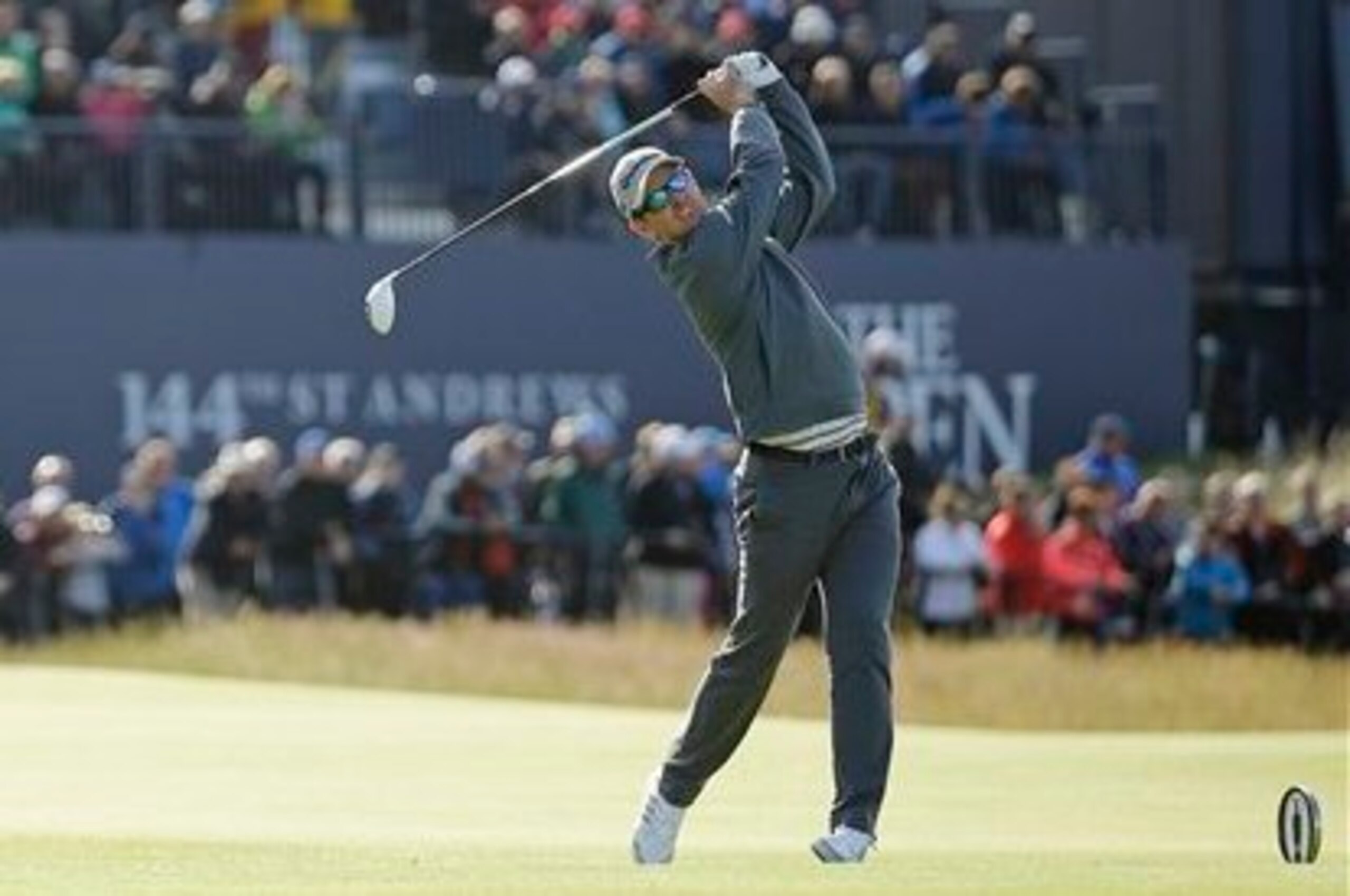
Faldo knows all too well that the pressure and energy changes once the weekend arrives, something he used to revel in. The occasion may have been different on Friday, but he still found a way to rise to it.
Growing into his round slowly and steadily, a first birdie of the day came at the ninth hole, while a follow-up three at the 10th injected some real energy into the proceedings.
Soon came Faldo’s crowning moment, putting him under par for his round for the first time in the event. At the 18th, after negotiating the ceremonial photo opportunity at the Swilcan Bridge in his famous old jumper, Faldo stalked his three-foot par putt as if the Claret Jug itself were on the line—determined to go out at the Home of Golf with an under-par effort.
The putt sneaked in, sealing a finish that Faldo found to his liking. He had spoken in the buildup of this not being his final ever Open, merely his last at St Andrews, but that may have changed when his putt dropped on the penultimate hole.
“That was special,” Faldo reiterated. “I think I’ve done that twice [in my career]. If I’m sensible, that is it. I will do my best to be sensible.”
He has not always had such resolve, so perhaps we will yet see him on the fairways again. For now, though, he turns over the stage to someone else. Can Rose and Willett show a similar taste for the occasion?
All quotes obtained firsthand unless otherwise stated.
.jpg?w=2560 "Commanders Vikings Football")
.jpg?w=2560 "WWE Raw Live Grades 🔠")
.jpg?w=2560 "Dak Addresses 'Dumb' Old Romo Tweet 🤣")

.jpg?w=2560 "Follow Raw As It Happens 👊")