
Most Impactful X-Factors for the 2025 College Football Season
While the biggest names in college football will always draw the most attention, key storylines are not limited to players and coaches.
Last season, for example, the introduction of a two-minute warning made a real impact in late-game situations. Extended travel due to conference realignment played a part in some chaotic results as well.
And then, that whole "expanded College Football Playoff" thing tripled the size of the field competing for a national championship.
So, yes, players matter. Coaching does, too.
But a group of X-factors is not limited to the players buckling a chinstrap or the coaches throwing on a headset.
Injury Timeouts
1 of 5
One of the ugliest parts of college football in recent years is the trend of players who—read between the lines—were allegedly faking injuries.
Honestly, it was a horrible trend.
To combat the possibility of those moments, the NCAA introduced new rules. If a player "presents as injured after the ball is spotted by the officiating crew for the next play, that player's team will be charged a timeout. If the team does not have any timeouts remaining, a five-yard delay-of-game penalty will be assessed."
Sure, it's possible that coaches might get more creative about theoretically using a quicker signal for a player to fake an injury for an extra stoppage of play.
But those egregious, controversial moments? Hopefully, those are gone.
The Jumbled Big 12
2 of 5
If you're confident in what to expect from the Big 12 this season, I would love to borrow the crystal ball you are using.
What a mess. What a wonderful mess.
The betting market is never perfect, but DraftKings has six teams—Kansas State, Arizona State, Utah, Texas Tech, Baylor and TCU—with +800 odds or shorter to claim the conference title. For reference, only four programs in each of the ACC, Big Ten and SEC fall within that range.
So, does that suggest a bunch of parity in the Big 12, resulting in a second straight year with a lone representative in the CFP?
Or, will the conference see a pair of highly ranked teams take control of the league and demand a couple (or more) playoff invitations?
After seeing the other Power Four leagues all land multiple spots in the first edition of the 12-team tournament, this beautifully messy Big 12 is aiming to shake up the playoff party in 2025.
Schedule Luck
3 of 5
If you'll permit some nuance in your life, the 2024 campaign offered an important reminder of how schedule luck matters.
Indiana was a strong, surprising team. Also, it helped that IU avoided four of the five Big Ten schools that notched a 6-3 record or better in conference.
Those things can coexist!
They'll probably be meaningful again in 2025, as well.
Since each power conference includes at least 16 teams, most programs essentially take on half of their league. As a result, it's possible to face a total gauntlet, a very favorable slate or simply land somewhere in between those extremes.
On paper, it seems Illinois and Tennessee are prime candidates for positive schedule luck. Michigan and Nebraska may be in the neighborhood, too.
Those specific schools are based on preseason views, of course, but this sentiment is worth monitoring throughout the season.

The New QBs
4 of 5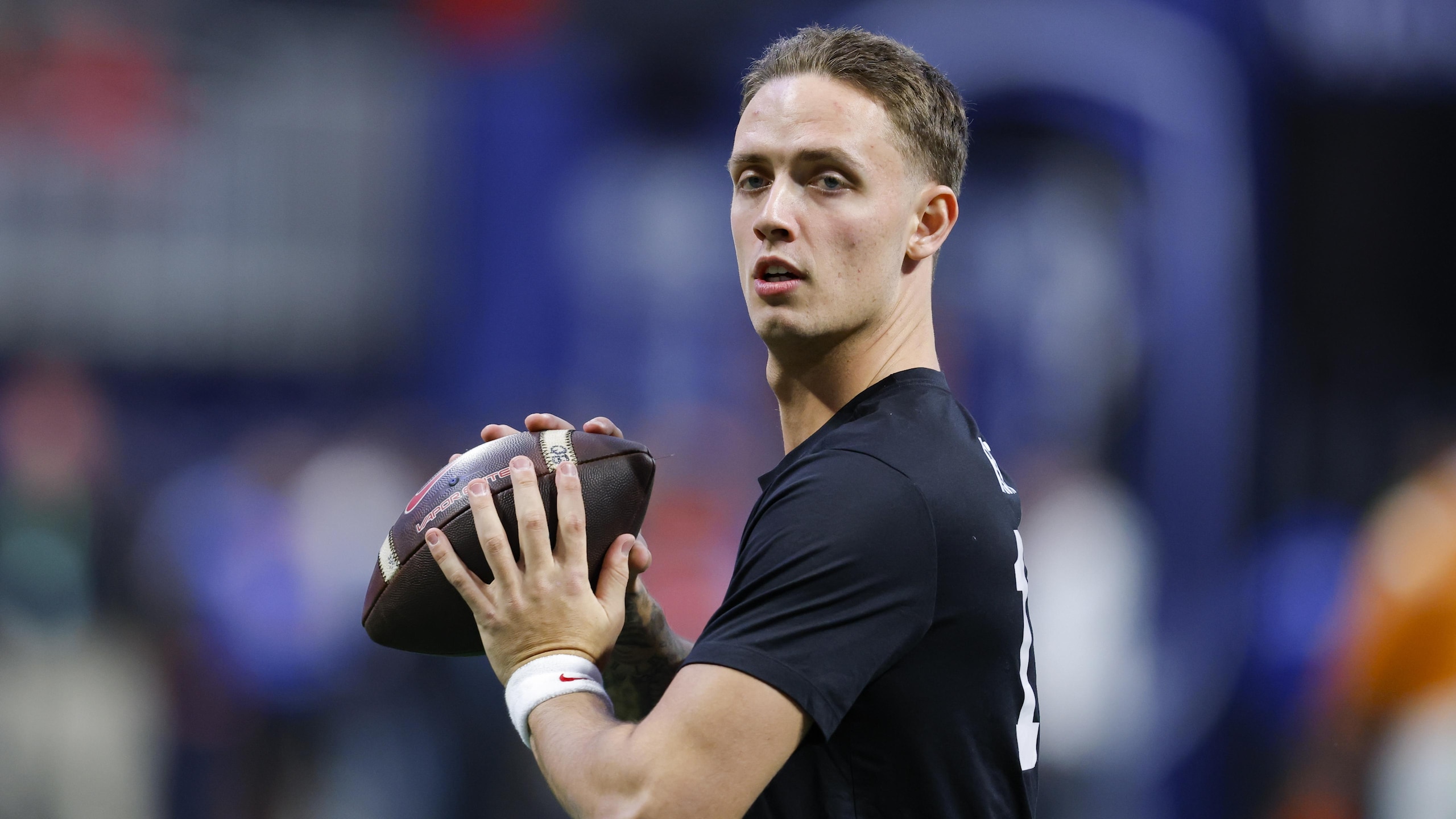
Sure, there are fair questions to ask about Drew Allar, Cade Klubnik, Garrett Nussmeier and veterans of their caliber.
We essentially know what to expect from them, though. The real curiosity is centered on transfers—think Miami's Carson Beck or Oklahoma's John Mateer—and players set to have a first chance at leading an offense for a full season, such as Florida's DJ Lagway and Texas' Arch Manning.
Alabama's Ty Simpson, Notre Dame's CJ Carr, Ohio State's Julian Sayin and Oregon's Dante Moore are merely four other examples of a deep conversation.
In these situations, the talent is clear.
However, these QBs are tasked with either commanding a new roster and system or embracing the pressure of being the guy from Day 1.
Some will thrive. Some will falter. And it will shape the season.
True Seeding in CFP
5 of 5
When the CFP unveiled the 12-team format, a glaring issue emerged. Rather than reward the nation's four highest-ranked teams with a first-round bye, those byes belonged to the four highest-ranked conference champions.
In short: Those two things should not be expected to align.
Unsurprisingly, it took but one season for that problem to show up. Oregon and Georgia ranked first and second, respectively, but Boise State (ninth), Arizona State (12th) and Clemson (16th) were not remotely close in the final CFP poll.
The result was Penn State—which finished fourth—ended up having a far more favorable CFP outlook than top-seeded Oregon despite not having a bye.
To be the best, you have to beat the best. Heard. True.
But also, Penn State certainly felt better about playing No. 9 Boise State in the quarterfinals than Oregon matching up with Ohio State—the No. 6 team.
The switch to a true seeding model in 2025 where the four highest-ranked teams receive a bye is both a proper modification and one that will have a major influence on how we view the CFP bracket.