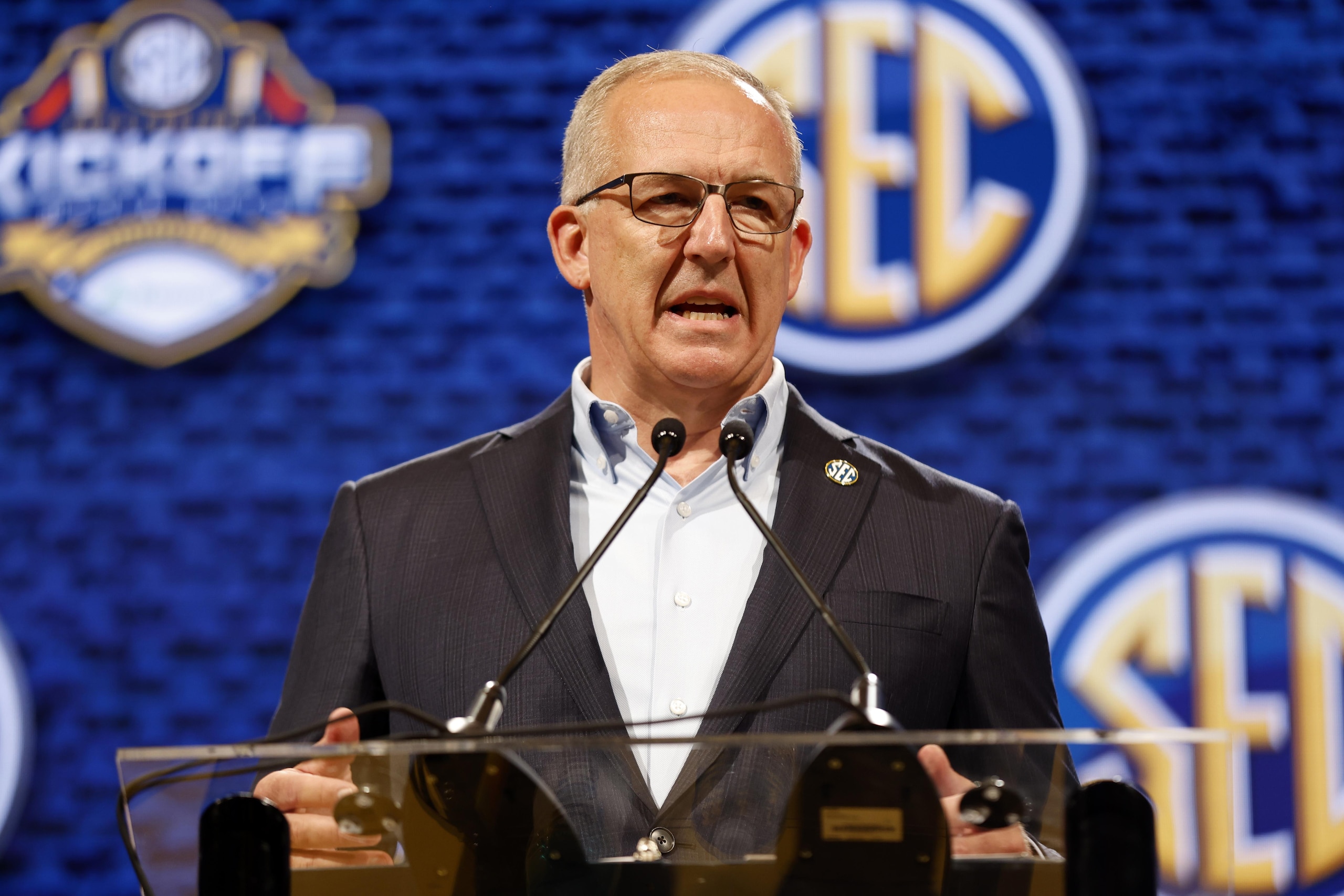

SEC's Greg Sankey 'Not Committed' to Any CFP Format amid Potential Rule Changes
The only constant in college football lately has been change, and SEC commissioner Greg Sankey isn't committing to anything at this point.
"We are not committed to any particular format," he told reporters Monday when discussing conversations about potential College Football Playoff changes for the 2026 season and beyond:
TOP NEWS
Colorado State DC gets fired mid-game during blowout loss
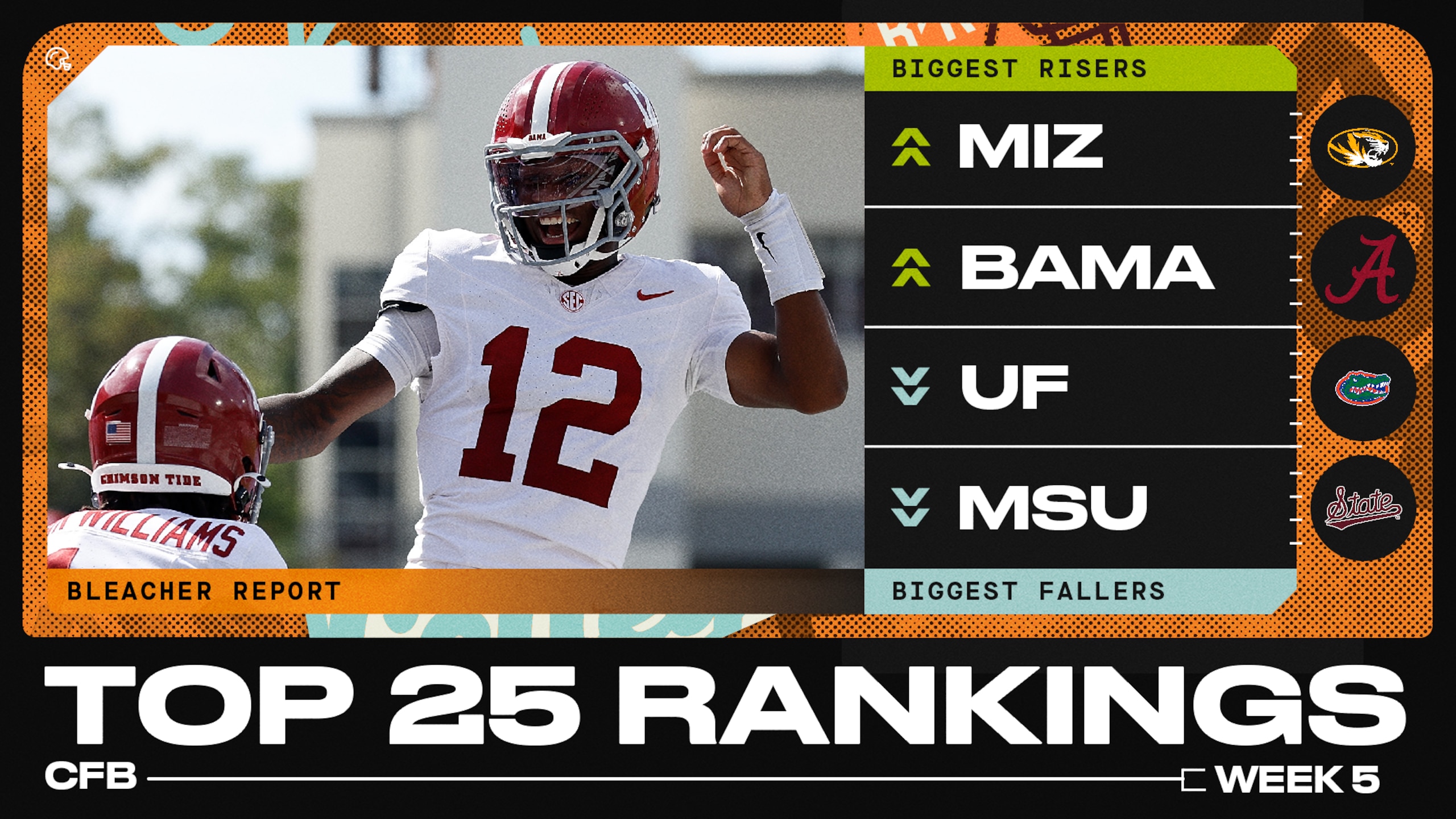
Massive Shakeup in CFB Top 25 List 🔢
_0.png?w=2560)
Week 5 Winners & Losers 📊
The comments come after the CFP announced Thursday it was changing the seeding and bye policies of the current 12-team format that was just instituted for the first time last season. In that first year of the format, the four highest-ranked conference champions received first-round byes.
However, that will not be the case in 2025.
While the five highest-ranked conference champions will still receive automatic bids, the four highest-ranked ones are not guaranteed to receive byes. Instead, the four teams that are ranked the highest in the final CFP selection committee rankings will get those byes.
Boise State was ranked ninth and Arizona State was ranked 12th in the final rankings last season, but they received first-round byes as two of the four highest-ranked conference champions. That would not be the case in 2025.
Yet the bigger question is what will happen in 2026 when the field could expand.
Ross Dellenger of Yahoo Sports reported Thursday the Big Ten and SEC support a 16-team playoff called the "4-4-2-2-1" model that would give those two leagues four automatic qualifiers each, the Big 12 and ACC two automatic qualifiers each, one bid to the highest-ranked Group of Six conference champion, and three at-large selections.
One of those at-large selections would go to Notre Dame if the Fighting Irish were in the top 16.
Dellenger noted the Big Ten and SEC are also considering holding season-ending matchups to determine some of their automatic qualifier spots a la a conference tournament in college basketball. In such instances, the third-place team could host the sixth-place team while the fourth- and fifth-place teams face each other for the final two bids.
Still, Sankey suggested such a format could "cost" his league bids since the SEC may be in position to get five or six teams in during certain years given recent history:
There are still discussions and debates to be had, and different conferences will surely have different opinions about what should happen.
But it is always going to make headlines when Sankey addresses the situation given the power the SEC and Big Ten hold compared to the other leagues. And, for now, he seems open to considering multiple options.
.jpg?w=2560 "Rap: Lions, LaPorta End Contract Talks")

.jpg?w=2560 "Report: Baker May Miss Up to 6 Weeks")

.jpg?w=2560 "EVERY Fantasy Football Update")

.jpg?w=2560 "Commanders May Change Logo 👀")