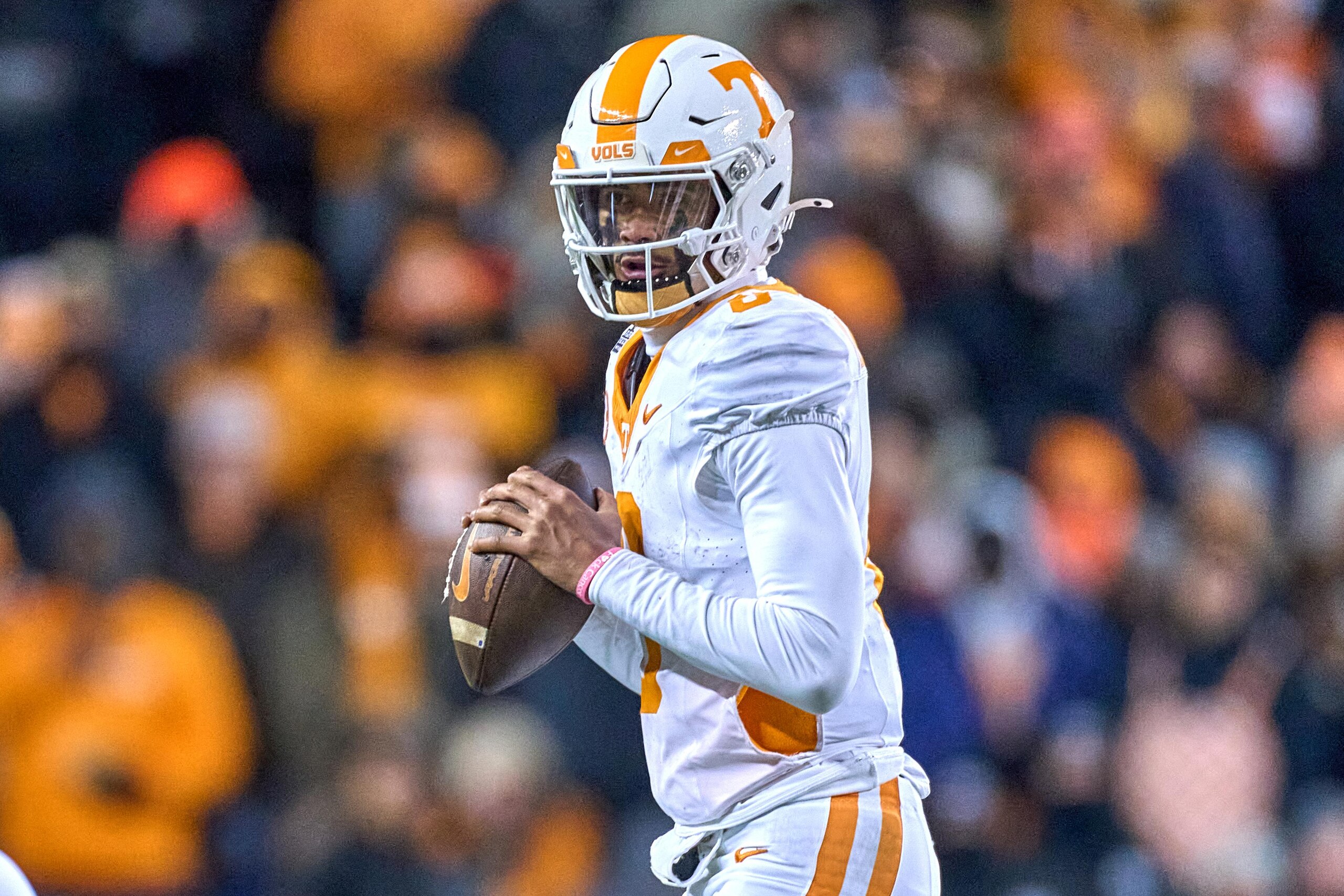

Nico Iamaleava and Tennessee's NIL Breakup Is CFB's Tipping Point
The inevitable has arrived. The lawless, structureless, complicated universe of college football in the NIL era has produced its first—and certainly not last—high-profile breakup.
Perhaps the only surprise is that it took this long for turmoil to arise. Now, one can only hope that actual change is coming next.
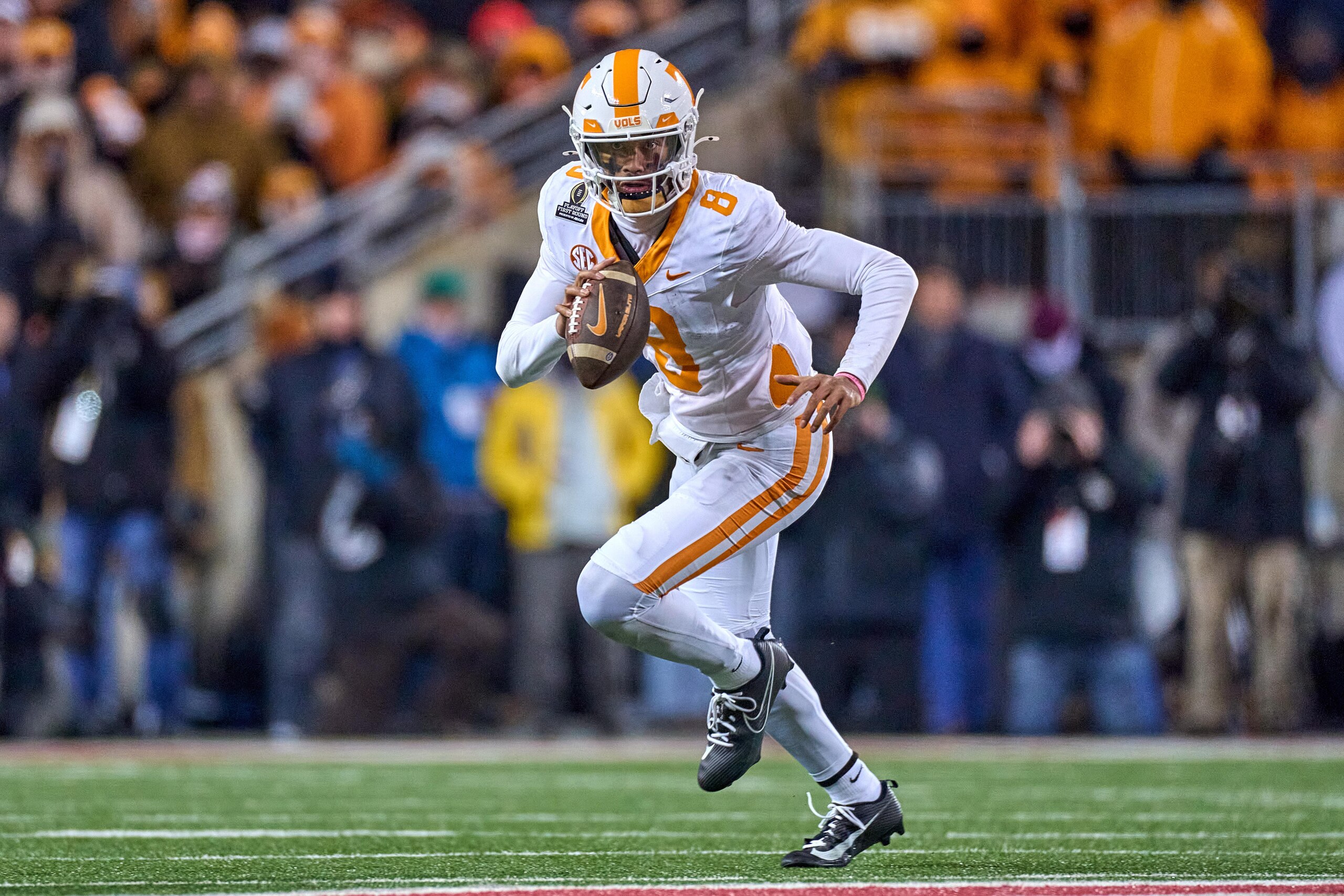
For Tennessee, that turmoil has come and gone. The team's starting quarterback from a season ago, Nico Iamaleava, one of the biggest recruits this program has ever produced, is gone. Just like that.
TOP NEWS

Updated CFP Bracket Projections 🔮

Week 5 AP Top 25 Poll 🔢
Top Overreactions after Week 5 of CFB Season 😧
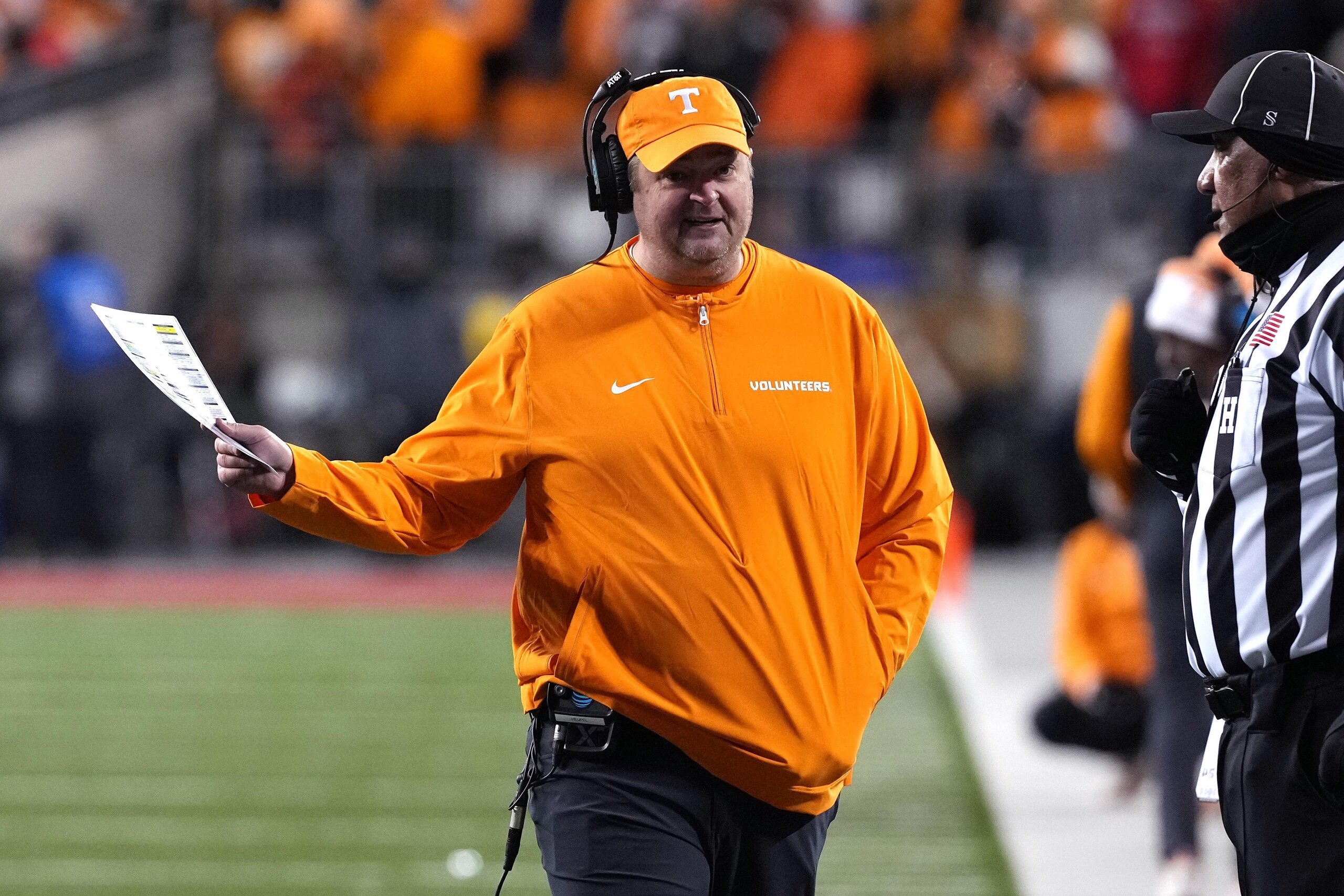
The details surrounding the breakup may vary depending on the source, which is typical surrounding messy separations. Regardless of how we arrived here, the Vols made the news official Saturday as the program’s spring game loomed.
"I want to thank him for everything he's done since he's gotten here, as a recruit and who he was as a player and how he competed inside the building," Tennessee head coach Josh Heupel said. "Obviously, we're moving forward as a program without him. I said it to the guys today. There's no one that's bigger than the Power T. That includes me."
The rumors of missed meetings, unfulfilled NIL obligations and other dirt that often materializes in these situations has surfaced since the news went public. Make no mistake about it, however: This decision comes down to money. Well, and leverage.
Iamaleava was reportedly scheduled to make $2.4 million this season, and his representation was looking for more.
In his first year as the program’s starting QB, Iamaleava threw for 2,616 yards and accounted for 22 touchdowns. While his game-to-game performance was often up and down, he led Tennessee to the College Football Playoff.
When backed into a corner, Tennessee, which has the resources to meet Iamaleava’s reported demands of $4 million, decided to end the relationship there. And in doing so both suddenly and emphatically, perhaps the universities will gain some influence for the first time in quite a while.
"This program has been around for a long time," Heupel added. "There are a lot of great coaches, a lot of great players who came before that laid the cornerstone pieces, the legacy, the tradition that is Tennessee football. It's going to be around a long time after I'm gone and after they're gone."
Years ago, before paying players was legal, “bag men” were the true market-movers. The drama between a player, his family and the school would be handled behind closed doors.
No one benefited from these disagreements going public. The stakes for both the athletes and schools were too high. Thus, any issues, no matter the source, were largely kept under wraps.
But now?
It’s all very public. It’s all very messy.
Although up until now, players (and their representatives) have found a way to make it work with schools through both recruiting and the transfer portal. Coaches have bemoaned the process every step of the way, seemingly begging for help, and it’s hard not to see why.
With rosters turning over each and every year—multiple times a year—the only constant currently blanketing college athletics is that of self-indulgence and change.
Tennessee’s situation in itself should represent the desperate need for something more. There is now real, tangible evidence of just how warped this universe has become, even if we knew this long before things turned.
Whether you commend Tennessee for holding firm or not seems almost unimportant. Regardless of what side you choose, neither Tennessee nor Iamaleava should have been put in the position to blow up this arrangement to begin with.
There must be structure. There must be rules. There must be a protocol to pay players and keep players on the roster, without seeing the sport swallow itself whole in the transfer portal every year.
The players must be protected. The schools must be protected. The sport must be given more tools to maintain integrity across conferences, unifying in a way it simply hasn’t cared to approach.
This isn’t an Iamaleava problem, whether you agree with the negotiating tactics or not. This is a product of creating an unstable environment and choosing to do nothing about it.
Even larger, this is what happens when a fractured sport consumed by wealth finds itself in a state of paralysis time and time again.
Institutions are in for revenue—through television dollars or enrollment benefits. Conferences are looking out for their members, in constant search of income streams, playoff access and other methods of profitability.
Players undoubtedly care about general fit, coaching staff and classic program attributes, but the dollars now speak loudest of all. And the NCAA, once a roadblock to change, is now largely along for the ride after various courtrooms deconstructed its rulebook over the past decade.
So, who is looking out for the sport as a whole?
The answer, quite simply, is no one. We’ve batted around the idea of a commissioner for some while. Heck, Nick Saban’s name has been floated a time or two since he retired from the sideline.
But like most things surrounding college football, the best ideas often take a while to materialize. Some never truly do.
If there’s anything that can come from this nastiness, it’s a hope for change. It’s a hope that teams, conferences and perhaps even the government can align to produce a system that still allows for players to be compensated in more direct and understandable ways.
And that’s not all. The transfer portal, which serves as the gasoline to this colossal dumpster fire, needs an overhaul. From the rules to the tampering to the dates that the portal opens, a change that needs to be revisited most of all, must be reexamined.
We’ve seen now what a structureless world can produce. We’ve heard from those operating in this world and how much they detest it.
It’s not the money; it’s the inability to create a stable landscape. It’s a world that needs immense repairs, although no one quite knows where to begin.
Tennessee, in a way, has changed the conversation in one weekend. A major football program has shown as publicly and emphatically as it possibly can that this cannot be the standard.
This has to be the turning point. The thing that was always going to happen with sanity and structure sitting this out has happened. Now, once and for all, through whatever means necessary, it must change.
_0.png?w=2560)



.jpg?w=2560 "Viral Rams Coach Vid 🖕")
.jpg?w=2560 "Injury-stricken Seahawks signing veteran RB")
.jpg?w=2560 "2 NFL Officials Suspended")


.jpg?w=2560 "Mahomes' Wife Trolls Kubiak 💀")

.jpg?w=2560 "Grading WWE Raw 🔠")