

5 of the Most Interesting Radio Messages from British Grand Prix
Team radio played a crucial role in the outcome of the 2015 British Grand Prix.
In a stop-start race featuring a safety car, a virtual safety car and changeable weather conditions, the Silverstone event—by far the most thrilling of the season—came down to cool, calm decision-making.
This was particularly important at the front of the field, where reigning world champions Mercedes and Williams dueled for the win in a four-car fight.
Williams made one of the worst decisions of the day when leading the pack in the early stages of the race but later made up for the error, while Lewis Hamilton and Nico Rosberg found their hopes of victory hanging on instinctive, split-second decisions.
Here are five of the most interesting radio messages from the British GP weekend.
Max Verstappen's Inexperience Shows for the First Time
1 of 5
We were quite excited about the prospect of Max Verstappen driving around Silverstone, one of the oldest, fastest tracks on the grand prix calendar.
With Scuderia Toro Rosso's STR10 car particularly strong in high-speed corners, it was going to be marvellous to watch how brave Verstappen would be at a corner such as Copse, how he would attack the Maggots-Becketts-Chapel complex and how much speed he would carry through Stowe.
And for a while, it was.
Verstappen and his team-mate, fellow rookie Carlos Sainz Jr., were nearly perfect in practice, finishing fifth and sixth, respectively.
It looked like Toro Rosso were potentially on course for a third-row start. But while Sainz was able to carry his pace into qualifying, where he was classified eighth, Verstappen's form deserted him, and the Dutchman was unable to understand why his car, which had performed so well just three hours earlier, was suddenly his worst enemy.
"I have no rear support at all. I have no traction. Completely nothing," Verstappen said, according to the FIA television feed, toward the end of Q1.
Despite progressing into the second segment of qualifying, Verstappen's complaints continued as he reported midway through Q2, "I can't do anything. I'm just...I have no traction at all. I can't combine. I'm just losing the rear all the time."
Although he managed to split the Mercedes-powered Lotuses of Romain Grosjean and Pastor Maldonado, the No. 33 car ended the session 13th, and a day that had promised so much had ended prematurely.
As he returned to the pits, a flustered Verstappen offered some final thoughts to the team, whining, "It's really...I don't know what happened. It's just so bad compared to the practice. I don't feel one corner the same. It's just no grip."
Verstappen has shown maturity way beyond his 17 years over the first half of his debut season, but his lack of experience—so often a strength across the opening eight races—was exposed for the first time in qualifying.
His troubles with the rear continued into the race, where, on cold tyres, he spun into retirement on Lap 4.
The boy wonder has produced a number of memorable moments in his short time in F1, but the British Grand Prix was a weekend to forget.
Williams Give Mixed Messages to Valtteri Bottas, Felipe Massa
2 of 5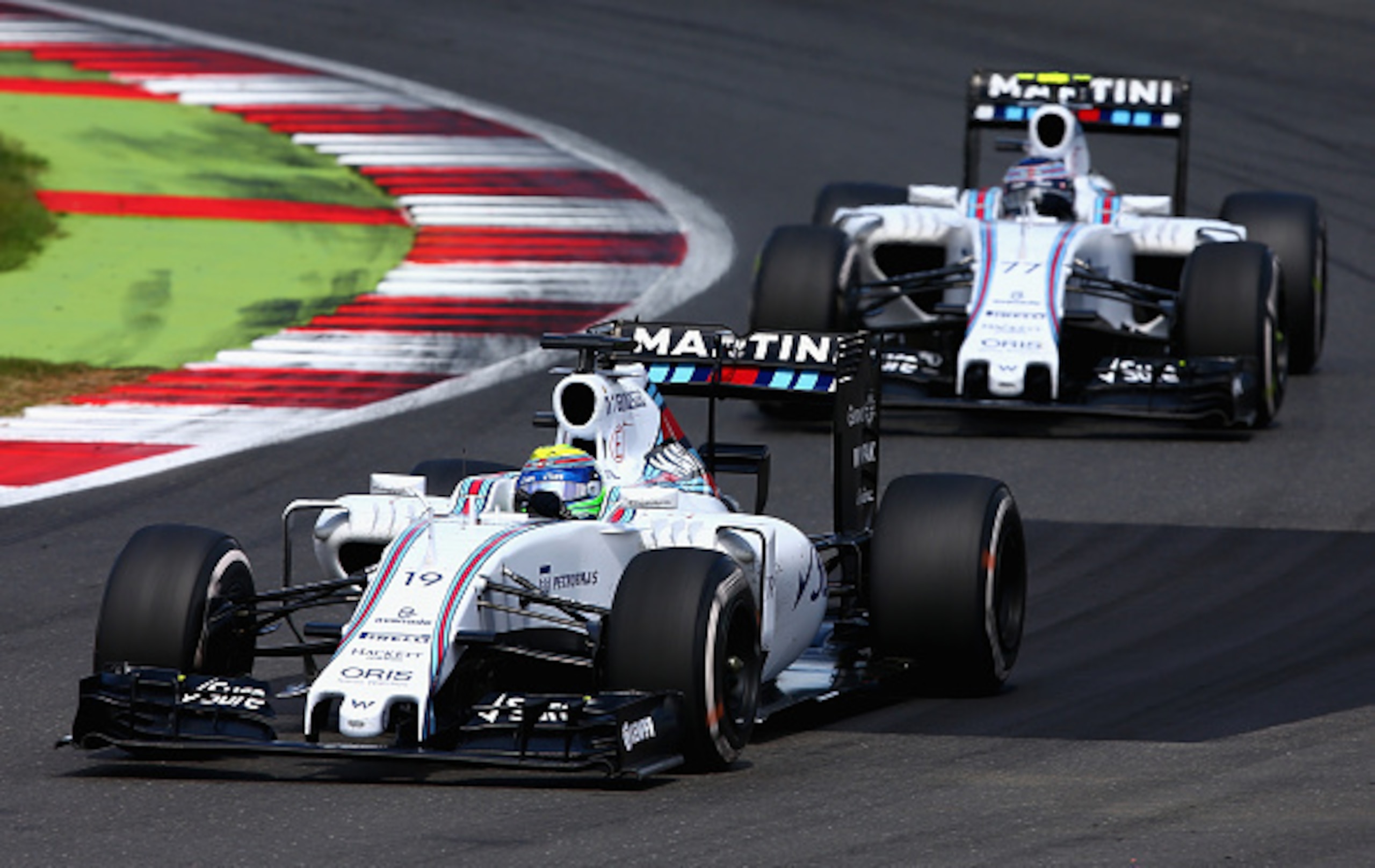
Formula One teams hold countless meetings over a grand prix weekend, and it is hard to believe that an outfit starting from the second row of the grid wouldn't discuss the eventuality of leading the race.
That, however, appeared to be the case with Williams, who were inexplicably naive as they found themselves in the lead at the start of the British Grand Prix.
As we noted after the race, Valtteri Bottas' passing Lewis Hamilton for second place at the restart at the end of Lap 3 was probably the worst-case scenario for Williams, for it complicated matters and gave them a decision to make, rather than simply letting them go with the flow of Felipe Massa at the front.
Even as Massa and Bottas ran first and second respectively, it took Williams almost six laps to decide on a plan of action in their bid to keep the Mercedes' of Hamilton and Nico Rosberg behind.
According to the FIA television feed, Bottas was told on Lap 9, "Instruction: No racing your team-mate for now. No racing your team-mate."
Massa received a nearly identical message at the same time, with his race engineer stating: "OK Felipe, this is good. So, we are not racing with your team-mate. Let's pull away together, we need to pull away together from the Mercs."
The problem with Williams' master plan, though, was that Massa was actually pushing his team-mate, who was evidently faster at that stage of the race, back into the path of the Mercedes. Unable to contain his speed, Bottas ran close to the Brazilian on a number of occasions, with the team reprimanding the Finn for challenging their authority.
"Do not race your team-mate," the pit wall reminded him on Lap 11.
"I have more pace," Bottas hit back. "Can I overtake? I can do it in the back straight."
A slight delay followed before his race engineer permitted his request, confirming, "It has to be a very clean move, and you need to pull away when you're in front. Clean move—"
"Copy," Bottas interrupted.
With their swift shift in stance and indecision, Williams—despite being led by shrewd, title-winning paddock figures including Pat Symonds and Rob Smedley—panicked when they found themselves in the unnatural position of leading a race.
Their inability to make a firm, strong-minded decision—never mind the right one of switching their drivers' positions—meant Williams backed themselves into a corner and were bound to be vulnerable to Mercedes.
Nico Rosberg Told to Pull His Finger Out by Mercedes
3 of 5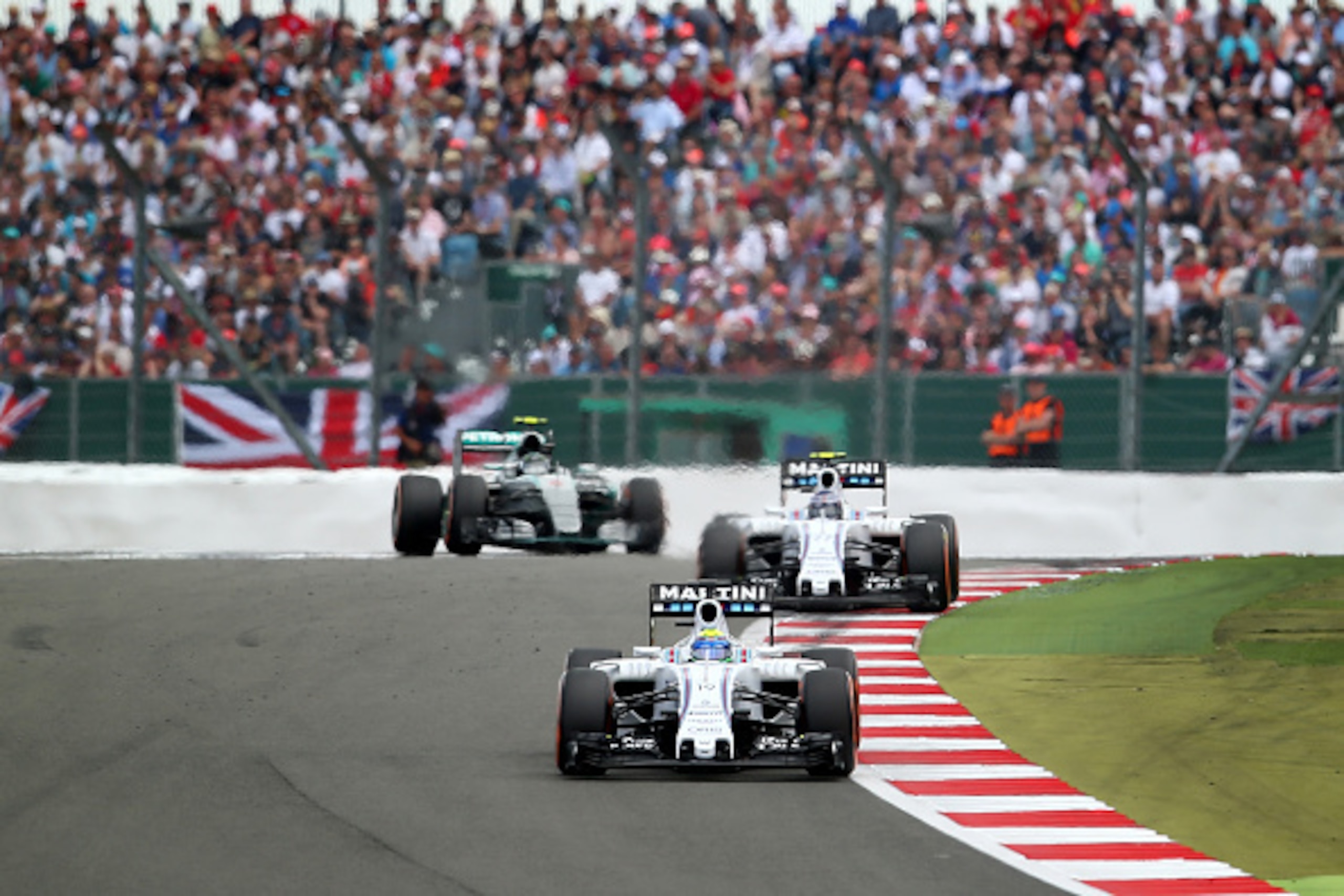
Despite spending much of the first stint in third place, Lewis Hamilton made easy work of the Williams drivers.
As the first of the front-runners to pit on Lap 19, the reigning world champion benefited from fresher tyres and clear air to not only jump Valtteri Bottas and Felipe Massa, but establish a relatively comfortable lead after the first round of pit stops.
It was a classic execution of the undercut technique by Mercedes, but the team found it more difficult to get Nico Rosberg in front of the Williams pair.
Forced to pit a lap later than his team-mate, at the same time as Massa, Rosberg failed to muscle the Brazilian aside on the exit of the pit lane, and the German's misery was compounded the following lap when Bottas, after a brief scuffle at The Loop and Aintree, clung on to third place.
Rosberg, having finished in the top three in each of the opening eight races, was fourth and unable to retaliate.
Perhaps he was wary, in such a close title fight with Hamilton, of risking his front wing in an all-or-nothing lunge on Bottas. Perhaps Rosberg, stuck in the dirty air of two cars, was unable to get close enough to even consider a pass. Or maybe Bottas and Massa were just driving better than the German.
Whatever the reason, Rosberg was unable to do anything about the Williams team-mates, and with 20 laps remaining, Mercedes were getting anxious.
"Er, Nico," began his race engineer, Tony Ross, according to the FIA TV feed, on Lap 32. "Give it everything. Give it everything."
The timing of Mercedes' message suggests they were beginning to fear their 100 per cent podium-finishing record in 2015 was in severe jeopardy, but Rosberg was soon given a helping hand by Mother Nature.
The arrival of rain allowed the German to simply sail by, passing Bottas at Maggots on Lap 39 and outbraking Massa at Village two laps later, before challenging Hamilton for the win.
Rosberg's race was a reminder of how quickly fortunes can change in Formula One, but there is little doubt that even Mercedes themselves thought all was lost when their driver stared at Bottas' rear wing.
.jpg?w=2560 "Texans Titans Football")
.jpg?w=2560)
.jpg?w=2560 "Broncos Chargers Football")
Williams Save Valtteri Bottas from Himself as Rain Hits Silverstone
4 of 5
As the rain arrived in the latter stages of the British Grand Prix, good timing and calm decision-making became all-important.
For the drivers with nothing to lose, switching to intermediate tyres at the first sight of droplets on the visor was a gamble worth taking and, in some cases, the only way to salvage something, anything, from the race.
But for those at the front, it often pays to be patient, playing it safe and waiting until the last possible moment to trade dry tyres for wet-weather rubber.
Valtteri Bottas, running in fifth, belonged to the latter group of drivers, but requested a pit stop at a ridiculously early stage on Lap 36.
"Yeah, there are drops of rain arriving," the Finn reported, via the FIA TV feed. "We need to stop."
The only drivers to pit for intermediates on the 36th lap were Will Stevens and Roberto Merhi of Manor Marussia, whose entire race had been geared toward changing to wet tyres after spending a mammoth first stint of 36 laps on the medium-compound tyres.
Indeed, the only other drivers to gamble on inters were Marcus Ericsson and Kimi Raikkonen, who took inters on Laps 37 and 38, respectively.
Had Williams pitted Bottas on Lap 36, it would have been motor-racing suicide, and even as Raikkonen trundled down the pit lane on Lap 38, the team were adamant that it was not yet time to make the move, telling Bottas, "Still not wet enough for an inter."
However, Valtteri—though behind the wheel of a car that has struggled in wet conditions since last year—wouldn't take no for an answer and ordered intermediates on the very same lap, stating, "We need to pit."
"The rest of the track is dry, and it's stopped raining here (on the pit straight)," came the assertive response. "We'll kill the tyres if we pit."
Bottas' composure has helped him record several excellent results over the last 12 months, but it betrayed him as the rain hit Silverstone. And although Williams received plenty of criticism for one strategic error in the British GP, deciding to pit the Finn on Lap 44, solidifying his fifth-place finish was one call they got right.
If the decision had been left to Bottas, it could have been much, much worse.
Lewis Hamilton Makes Perfect Call as Nico Rosberg Continues
5 of 5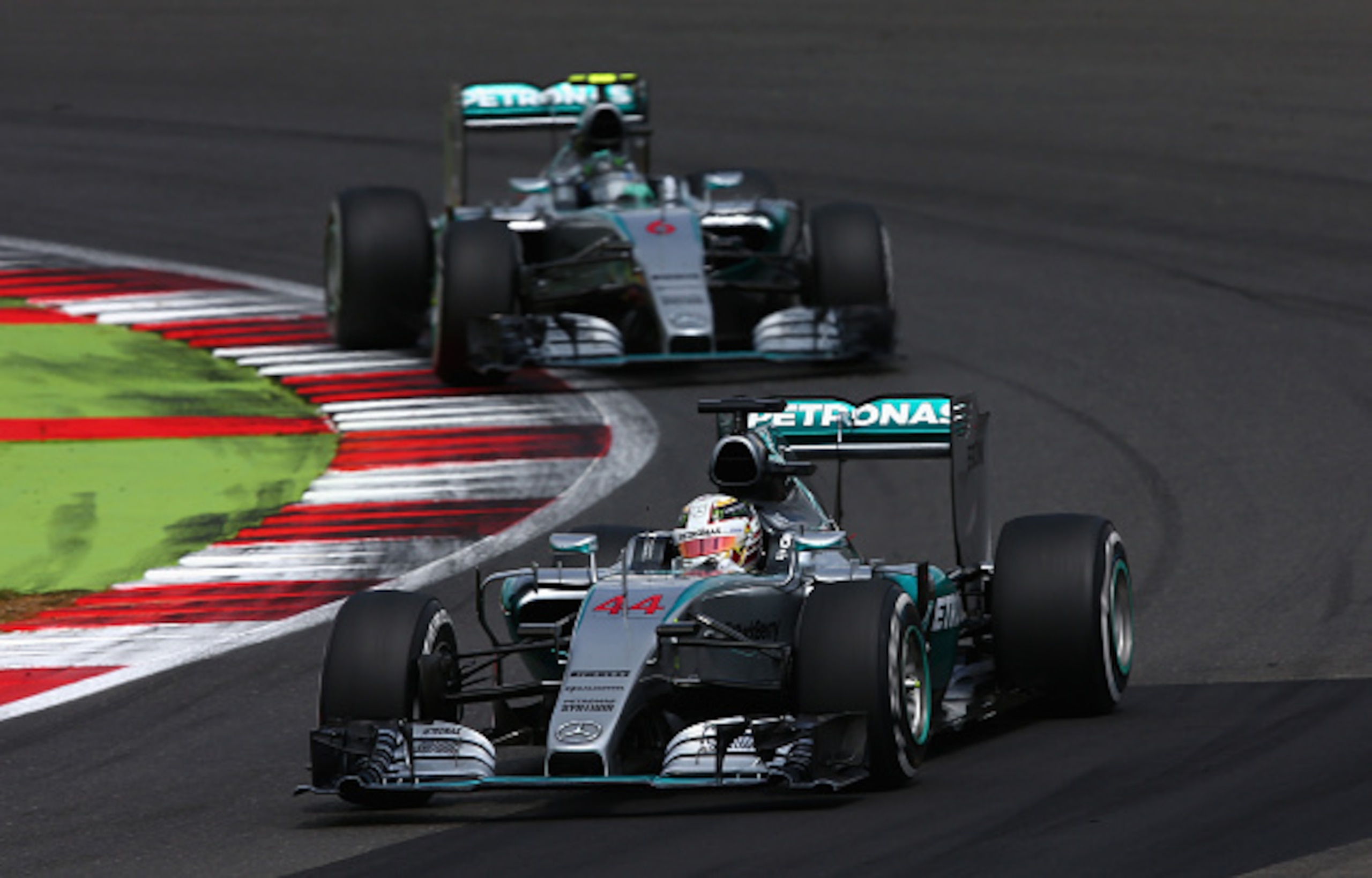
Free from the Williams drivers, Nico Rosberg came alive in the damp conditions and was rapidly hunting down his team-mate as the British Grand Prix entered its latter stages.
Lewis Hamilton would have thought the race was won when he scampered away after the first round of pit stops, but as the rain came down, the temperature dropped and the sister Mercedes car grew larger in his rearview mirrors, it was slipping from his grasp.
"I see more rain now," reported an audibly agitated Hamilton on Lap 43, via the FIA TV feed.
As Rosberg tracked his team-mate around the far end of the circuit, his race engineer, Tony Ross—perhaps unhelpfully, considering the circumstances—requested information about the track conditions, stating, "Keep us advised on the tyres, Nico. Keep us advised, (we) may go to inter."
Switching to intermediate tyres had become the only option for Hamilton, who having struggled to retain heat in his rubber was being caught by two seconds per lap.
"I've got no grip on these tyres, guys," the reigning world champion fretted in a radio interaction that—little did he know it at the time—rescued his race.
Hamilton headed for the pit lane, forsaking first place to switch to intermediate tyres, as Rosberg continued on hard-compound rubber.
The German later told Sky Sports' Pete Gill how he was "pretty sure" his team-mate had made a strategy error, but in just a matter of corners into the 44th lap realised it was, in fact, he who had got it wrong.
"So just keep us advised," Ross repeated, suggesting Rosberg, in his pursuit of Hamilton, had forgotten to keep the team aware of the conditions.
"Yeah, box this lap I think!" Rosberg replied.
According to the FIA's Race Lap Analysis data, Rosberg's in-lap was almost 11.8 seconds slower than his previous effort, confirming where the race was ultimately won and lost.
.jpg?w=2560 "Cardinals Giants Football")

.jpg?w=2560 "MHJ Bought Own Jugs Machine")