

Carolina Panthers: Full Breakdown and Depth-Chart Analysis at Running Back
For the first time since 2005, the Carolina Panthers will be without the services of DeAngelo Williams. The Panthers’ leading rusher in franchise history, Williams started more than 70 percent of Carolina’s games the past seven seasons and received more than 35 percent of Carolina’s rushing attempts over that period. While injuries and age slowed him down in recent years, it’s still not an insignificant amount of production to replace.
Jonathan Stewart is penciled in as the primary back for now, but he’s had his own injury concerns over the years. It’s very unlikely he’ll be able to handle both his workload and Williams’, so someone else is going to have to step in and take a share of the carries.
Last season saw Fozzy Whittaker and Darrin Reaves combine for some of Williams’ carries while he was out with a broken hand, but there’s no guarantee that they’ll get primary backup snaps in 2015.
Let’s take a quick look at the complete running back depth chart as it looks currently, between minicamp and training camp. While there’s less uncertainty about who will make the team than there is about, say, the wide receivers, the actual hierarchy is still very much up in the air. Stewart will start at running back, and Mike Tolbert will start at fullback, but every other slot on the depth chart is up for grabs.
Jonathan Stewart
1 of 8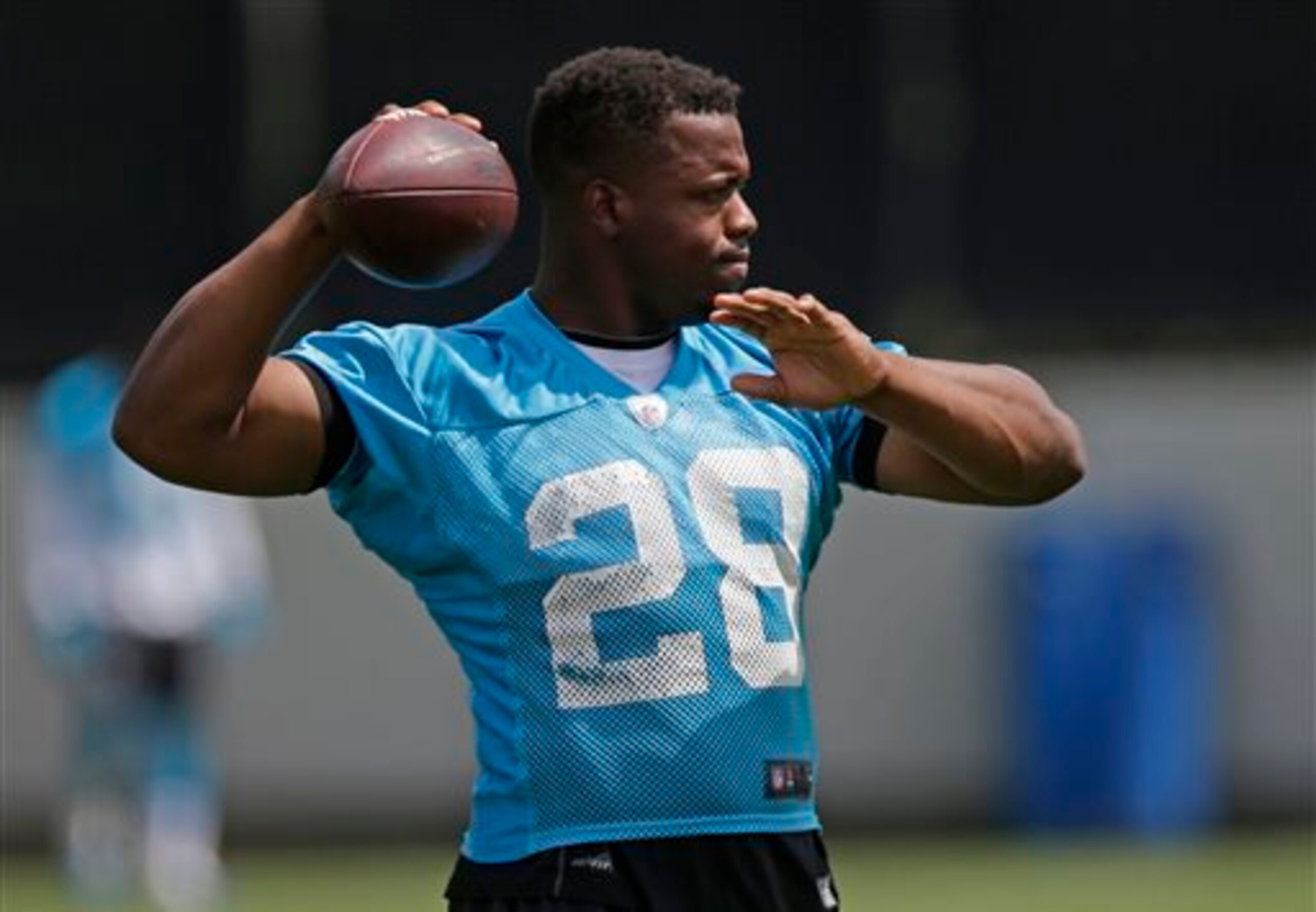
2014: 175 carries, 809 yards, three touchdowns; 25 receptions, 181 yards, one touchdown
2013: 48 carries, 180 yards; seven receptions, 44 yards
2012: 93 carries, 336 yards, one touchdown; 17 receptions, 157 yards, one touchdown
For the first time in his NFL career, Jonathan Stewart is the undisputed starter in a backfield. He’s always had to split carries with DeAngelo Williams, and he’s never been featured. It’s his opportunity to really break out and shine.
It’s unrealistic to assume his end-of-season success will fully carry over into 2015. Stewart’s career yards-per-carry average is 4.6, but over the last five regular-season games of 2014, Stewart was carrying the ball at a 5.3 yard-per-carry rate. That doesn’t mesh with what we’ve seen from Stewart the last three seasons, and also not with what he was doing early last year.
However, Stewart did average more than that in 2011, the last season in which he received 100 or more carries before last year. Perhaps the injury-plagued 2012 and 2013 seasons, where Stewart suffered through ankle, toe and knee problems lowered his effectiveness, as did the poor state of the offensive line at the beginning of last season. There’s an argument to be constructed that Stewart was being held back for two-and-a-half years thanks to being banged-up.
I wouldn’t count on him averaging more than five yards a carry in 2015. Only four running backs managed that feat last season, so we’re talking the very cream of the crop. We also have no idea how well Stewart will handle a full load; he’s never received more than 221 carries in a season and only topped that 200-carry mark once. He last appeared in all 16 games in a season in 2011, thanks to a passel of injuries.
Still, the end of last season was very promising. If he can bring any significant fraction of that performance into 2015, then the ultra-elusive Stewart is going to have significant success.
Mike Tolbert
2 of 8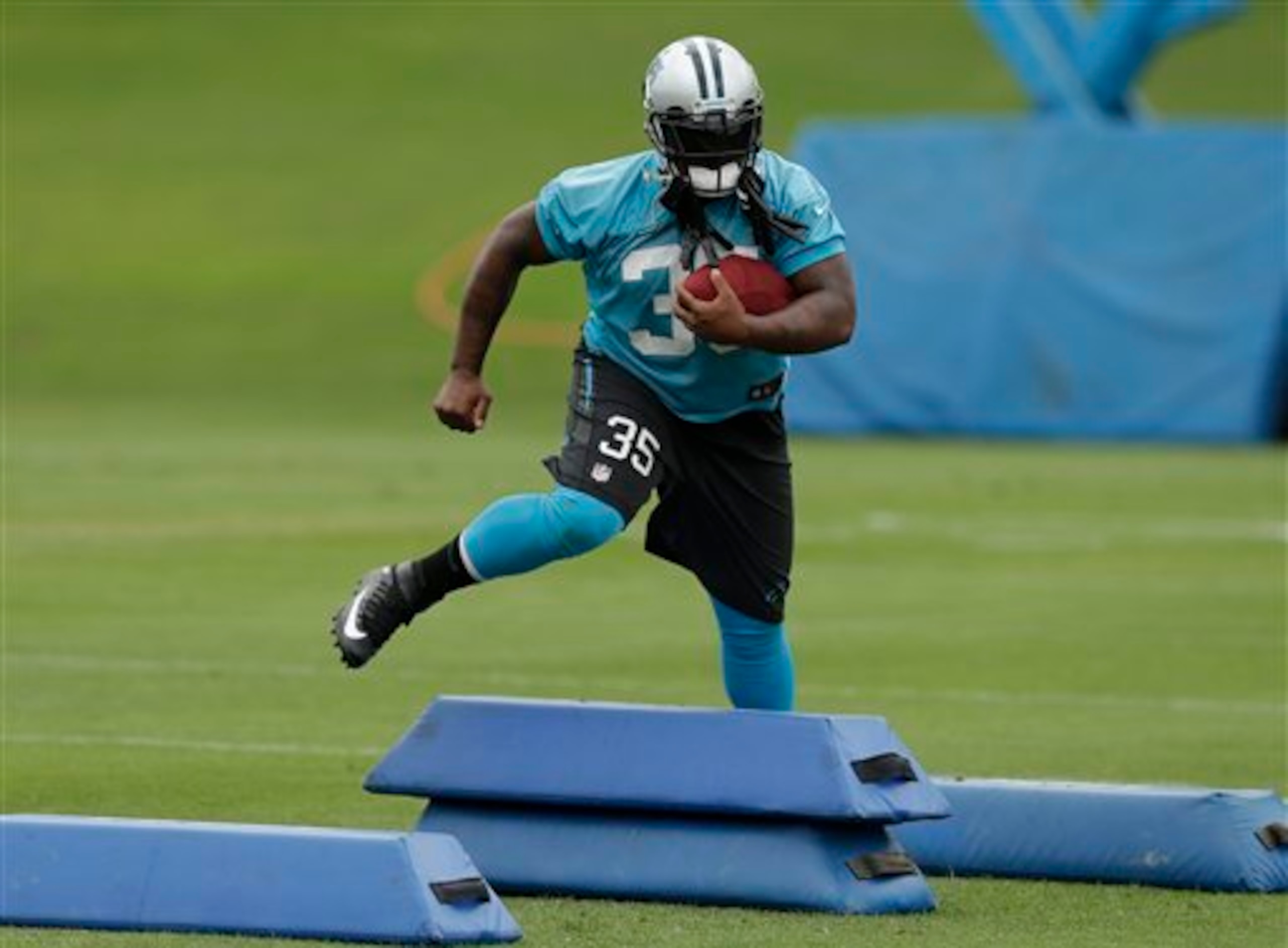
2014: 37 attempts, 78 yards; 12 receptions, 93 yards
2013: 101 attempts, 361 yards, five touchdowns; 27 receptions, 184 yards, two touchdowns
2012: 54 attempts, 183 yards, seven touchdowns; 27 receptions, 268 yards
Ah, the fullback. A dying breed in the NFL. Pro Football Focus only charted 6,323 snaps for fullbacks in 2014 or somewhere around 18 percent of all offensive snaps. A lot of those fullback snaps went to tight ends, second running backs or defensive tackles in goal-line situations, as well—the true, dedicated fullback is mostly a thing of the past in the NFL.
The Panthers still use a fullback, however, in Mike Tolbert. In 2013, he was the All-Pro at the position, though his relatively high carry count may have had something to do with that.
Last season didn’t go as well, however. Leg and knee injuries cost him half of last season, and even when he was on the field, he didn’t look like the same player. He’s always been more of a power back than a traditional blocking fullback, but he fell to just 2.1 yards per attempt last season, a career low.
Tolbert is never going to put up massive yard-per-carry numbers because he’s asked to carry the ball in goal-line and short yardage situations so often, but even by those standards he was poor last season.
You might be able to blame a lot of that on lingering effects from the hairline fracture he suffered against Pittsburgh. That’s bound to slow a 245-pound back down, even if he was able to rejoin the team halfway through the season. A healthy Tolbert is likely to be more effective, at any rate.
You do have to wonder how much longer Tolbert, who will turn 30 midway through the year, will be able to continue to contribute. He’s reaching the age where running backs tend to fall off a cliff. I don’t think Panthers fans need to worry about him being replaced this season, but Tolbert surely has a very limited number of years left in him at this point.
Fozzy Whittaker
3 of 8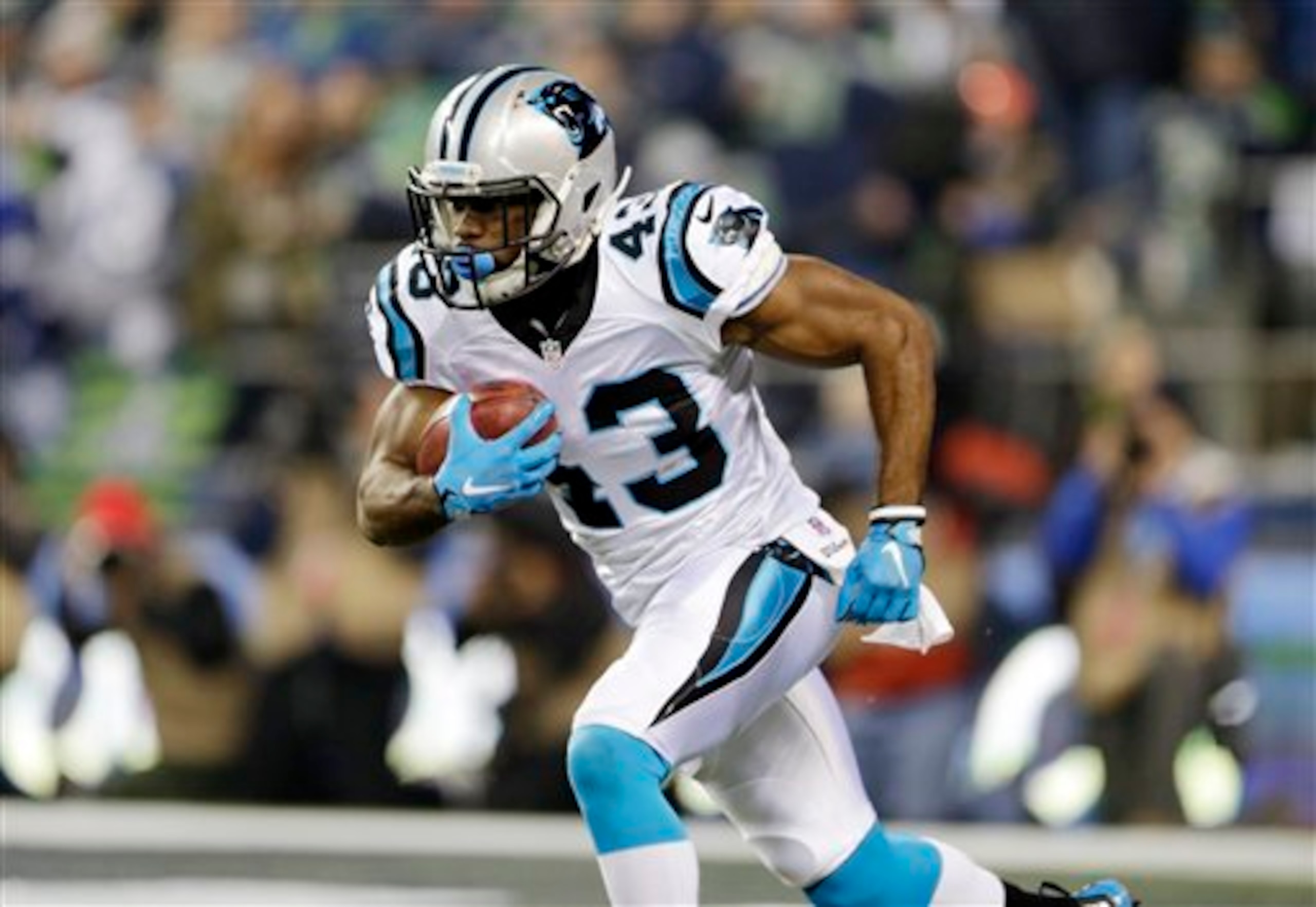
2014: 32 carries, 145 yards, one touchdown; five receptions, 60 yards, one touchdown
2013 (Cleveland): 28 carries, 79 yards; 21 receptions, 155 yards, two touchdowns
2012 (Arizona): Practice Squad
The competition for Stewart's backup running back should be fierce, and I’m only giving Fozzy Whittaker the nod here thanks to veteran’s privilege. It’s a dead heat between him and Cameron Artis-Payne, with Jordan Todman and Darrin Reaves also very much in the mix.
By Week 10 last season, Whittaker had passed Reaves on the depth chart, though Reaves received more snaps overall thanks to being the only healthy running back for a three-week period. His performance was enough to inspire the Panthers to give the journeyman a two-year deal this offseason. Not bad for a guy who was cut by three teams in a year and a half, and only joined the Panthers late in training camp last season thanks to injuries.
His hype last season should be tempered somewhat by the fact that he didn’t even participate in 100 offensive snaps, per Pro Football Focus, and never even had 10 snaps in a single game. However, he’s clearly risen in the coaches’ eyes from afterthought to solid backup, and flashed explosiveness at times, highlighted by his 39-yard touchdown in the Wild Card Round. There’s definitely talent here.
If there’s anything working against Whittaker, it’s that he’s the same body type as Stewart—a quick-twitch, undersized player. The Panthers might want to couple Stewart with more of a power back. Maybe that’s Tolbert, which would mean Whittaker’s fine as the occasional substitute. Or perhaps they’ll turn to a rookie.
.jpg?w=2560 "Seahawks Chiefs Football")


Cameron Artis-Payne
4 of 8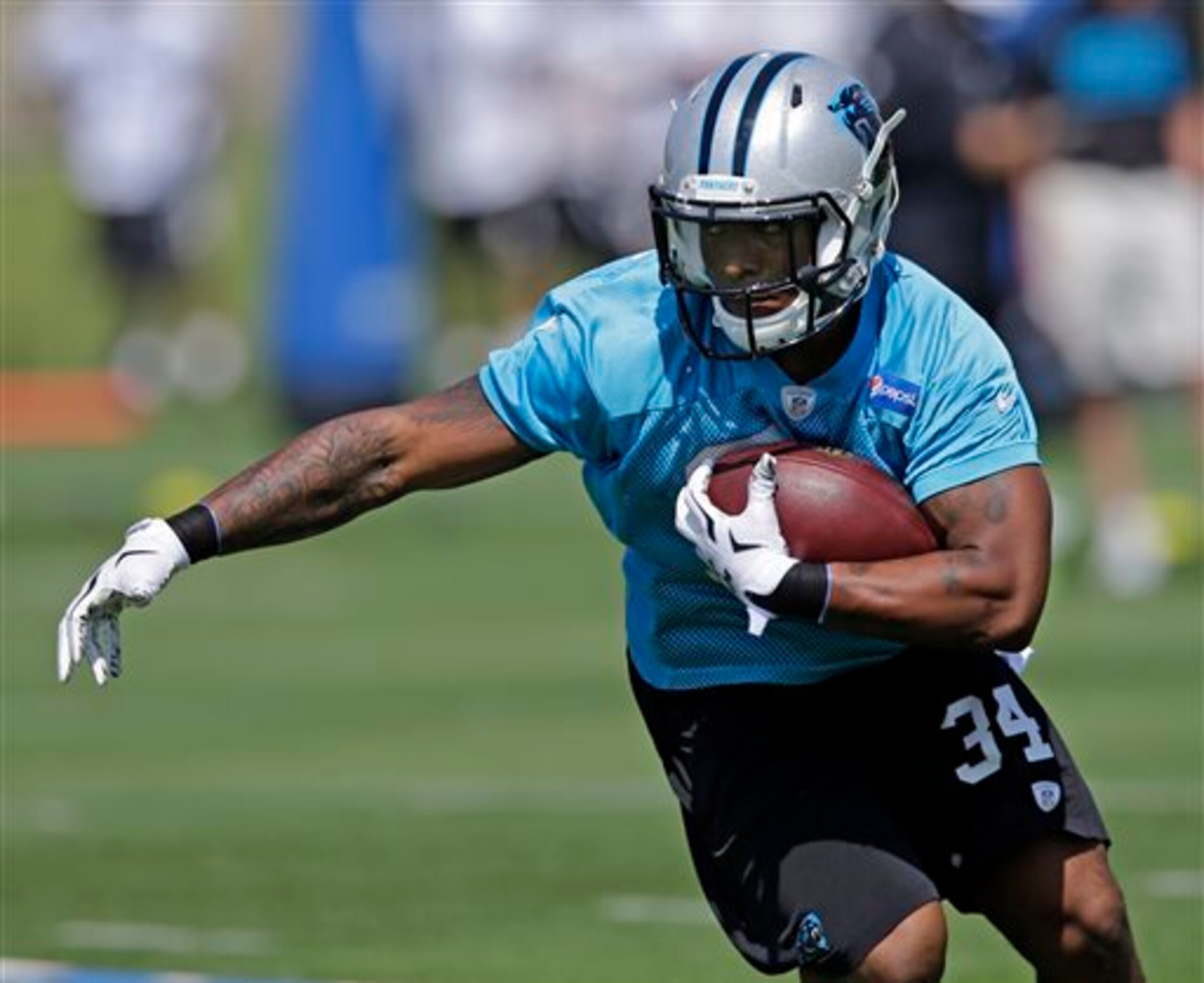
2014 (Auburn): 303 carries; 1,608 yards; 13 touchdowns; 13 receptions; 147 yards
2013 (Auburn): 91 carries, 610 yards, six touchdowns; one reception, four yards.
2012 (Allan Hancock): 261 carries; 2,048 yards; 25 touchdowns; seven receptions; 52 yards
We don’t have a lot to go on for fifth-round pick Cameron Artis-Payne. You can see we have to go back to his junior-college days at Allan Hancock just to get three years’ worth of statistics on him, and he received less than 100 carries as a junior in 2013. Artis-Payne’s hype basically comes thanks to one season at Auburn.
But what a season it was! The 1,608 yards Artis-Payne put up is the third-most in Auburn’s history, behind a couple of guys named Bo Jackson and Tre Mason. That’s a pretty impressive list to be on. He also showed pass-protection chops as well.
Don’t get too blown away, however; there’s a reason he was a fifth-round pick. He’s not a particularly special athlete; his 4.53-second 40-yard dash is solid enough, but he showed a lack of explosion, both on tape and in the jumping and cone-drill tests at the combine. He’s a tough grinder, in other words, and not someone who’s going to run over people with his raw skills.
That being said, however, there’s a lot to like in Artis-Payne. He’s a north-south runner who showed patience, letting his offensive line open holes and then attacking them. He’s willing to bang between the tackles and fight through crowds for yardage—in other words, he’s a very different type of runner than Stewart is, which may make him a more ideal complement than Whittaker.
Artis-Payne also comes out of Auburn’s spread offense, which has a similar tempo and philosophy to the Panthers’ offense. A lot of Carolina’s offense was put in to help Cam Newton, who also came from Auburn—Newton’s college offensive coordinator was Artis-Payne’s college head coach.
A lot of the philosophies and packages Artis-Payne will encounter at the NFL level will be familiar to him, which will give him a leg up on getting ready to contribute in the NFL.
My gut is that Whittaker starts as the primary backup, with Artis-Payne getting more and more carries as the season goes on. I really think it will be a tight battle between those two for primary backup snaps in 2015.
Jordan Todman
5 of 8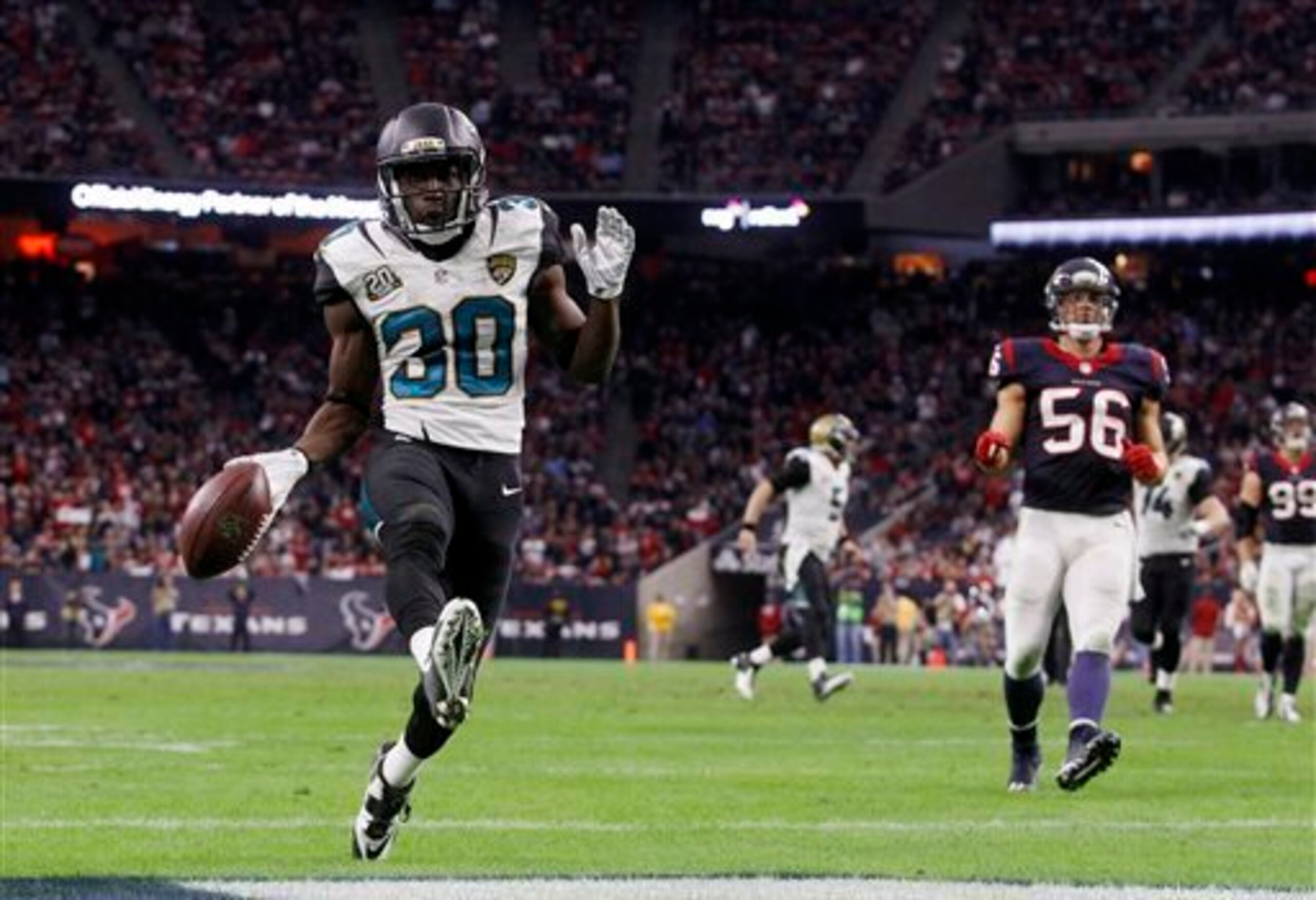
2014 (Jacksonville): 32 carries, 186 yards, one touchdown; 25 receptions, 198 yards, one touchdown
2013 (Jacksonville): 76 carries, 256 yards, two touchdowns; 14 receptions, 116 yards, one touchdown
2012 (Jacksonville): Three carries, eight yards; one reception, zero yards
The first four names on this list will be on the 53-man roster when the season starts, barring an injury or highly surprising roster move. That might be all they keep, honestly—they only had four backs on the active roster at the beginning of last season. However, five is far from out of the question, especially if they only keep two quarterbacks on the active roster.
If the Panthers do keep five backs, then it should be a battle between the returning Darrin Reaves and free-agent acquisition Jordan Todman for that last roster spot.
Todman’s argument for earning a spot primarily comes from special teams value. While he had some running success on limited carries last season, he was also Jacksonville’s primary kick returner, returning 38 kicks for 972 yards, or an average of 25.6 yards per return. That’s not going to wow anyone, but it’s better than what Whittaker or Philly Brown could put up last year, so perhaps Todman can win that battle.
It’s actually a better average than Ted Ginn managed in Arizona as well; Ginn’s much better as a punt returner at this point in his career, though he handled both roles for the Cardinals. If the Panthers decide to platoon the role, with Ginn handling punts only, then Todman has a much-better shot of earning a roster spot.
That’s almost assuredly why Todman was brought in. He doesn’t add anything to the running game that other backs don’t bring as well, but the Panthers were 24th in the league in average kick return last season and the year before. Todman might help swing the field-position game a little bit more in Carolina’s favor.
Darrin Reaves
6 of 8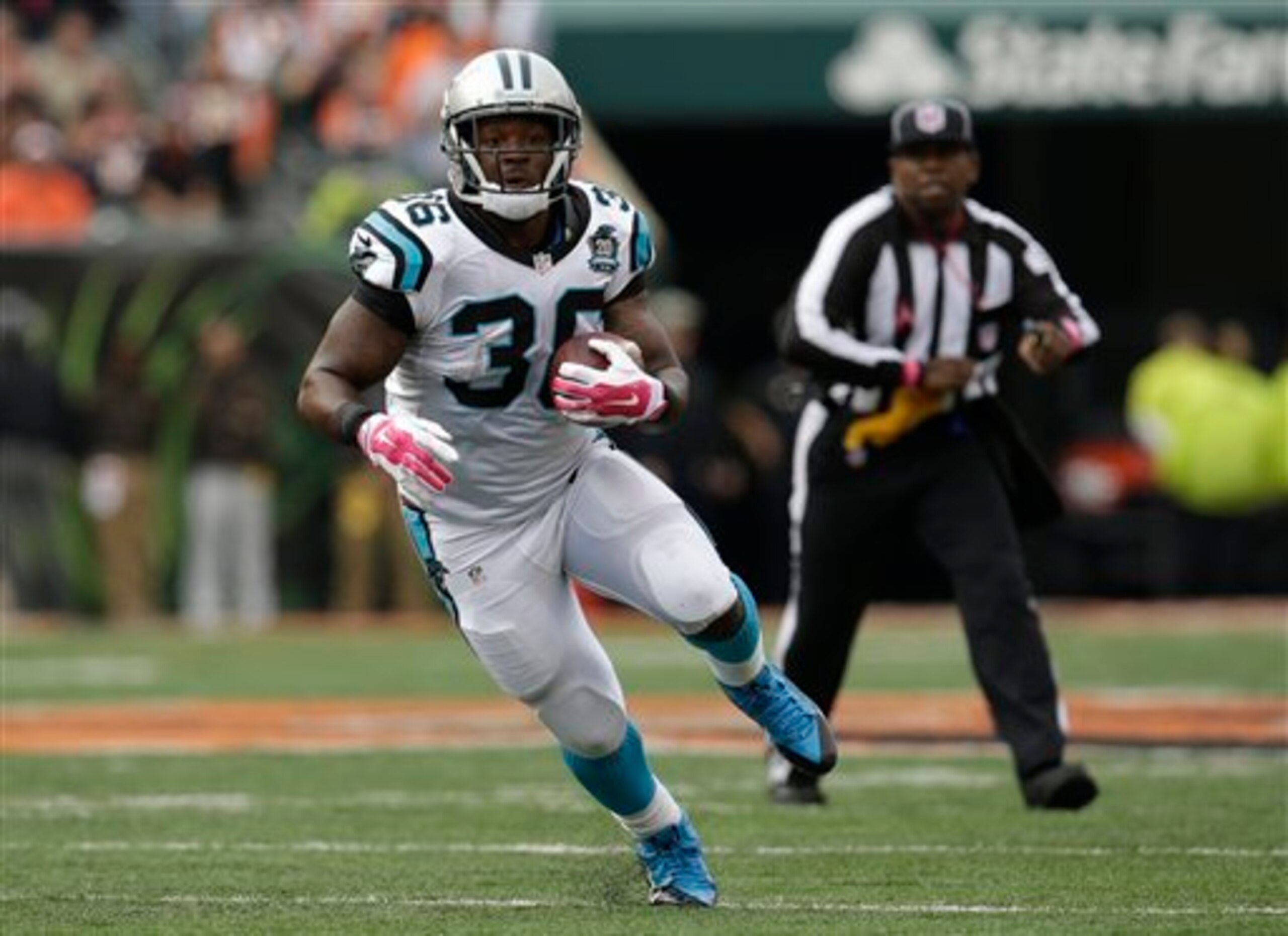
2014: 31 carries, 78 yards; five receptions, 31 yards
2013 (Alabama-Birmingham): 201 carries, 928 yards, 12 touchdowns; 29 receptions, 294 yards, two touchdowns
2012 (Alabama-Birmingham): 215 carries; 1,037 yards, 13 touchdowns; 41 receptions, 302 yards, one touchdown
Darrin Reaves started 2014 on Carolina’s practice squad, but the undrafted free agent didn’t stay there for long. Reaves was activated by the third week of the season and was the primary running back in Weeks 4-6, as both Jonathan Stewart and Mike Tolbert went down with injuries.
In those three games, Reaves averaged just 2.57 yards per carry, and he only received one more carry after that point. He was waived and returned to the practice squad. It’s pretty clear he wasn’t ready for prime time, as it were.
Reaves actually left school early last year after receiving a fourth-round grade from the NFL Draft Advisory Board. That didn’t turn out well for him, as he went undrafted entirely. He lacks elite speed or nay explosive qualities, but he is a determined runner with decent hands out of the backfield and a low center of gravity. Perhaps a full year on the practice squad has made him more ready for the pressures of the NFL.
I doubt he makes the final roster this season; he was only called up last year because of the sheer number of injuries, and he wasn’t particularly impressive in his opportunity. He’s definitely a solid practice-squad candidate, however.
Brandon Wegher
7 of 8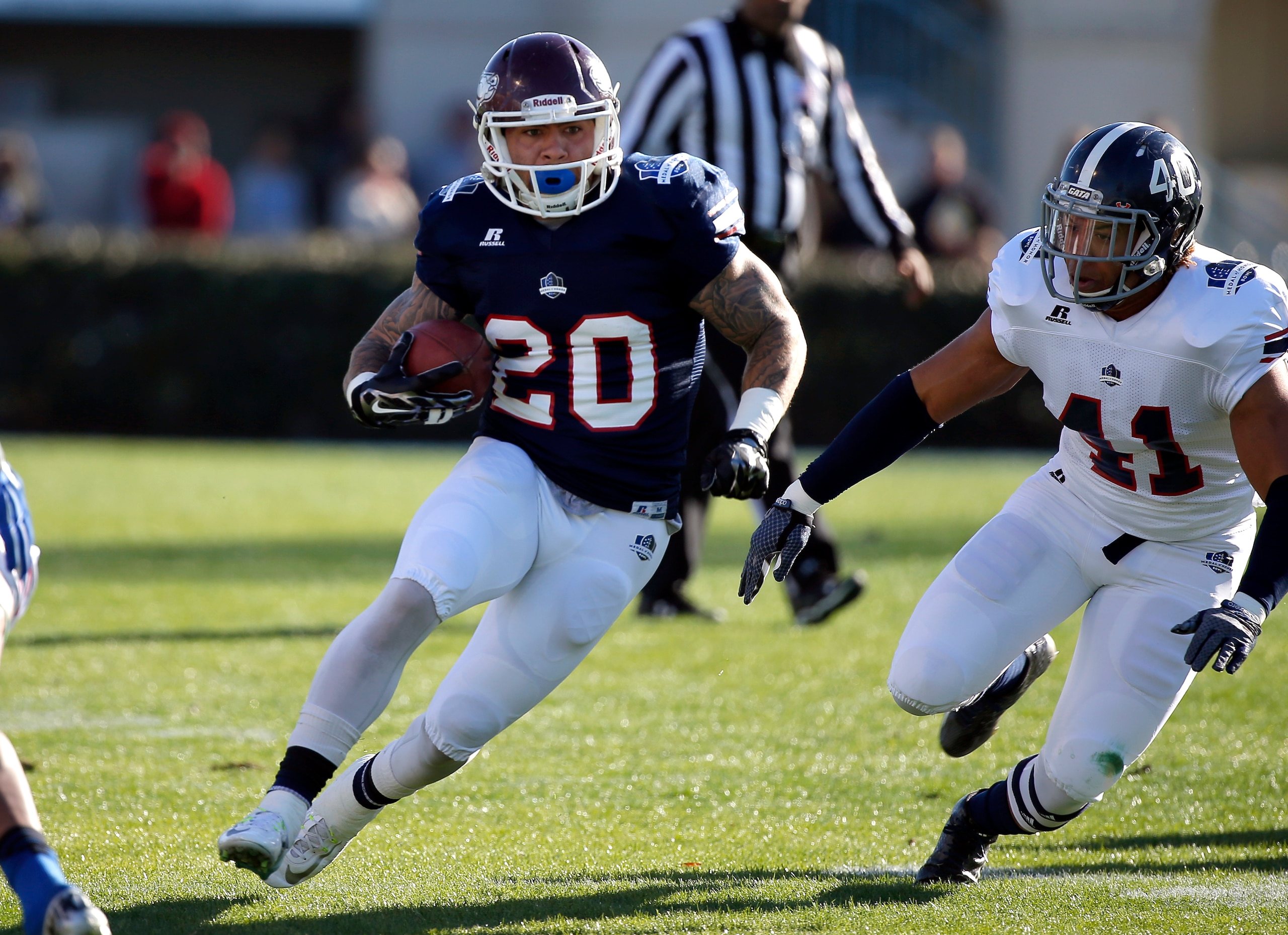
2014 (Morningside): 327 carries, 2,610 yards, 39 touchdowns; 29 receptions, 429 yards, four touchdowns
2013 (Morningside): 208 carries, 1,205 yards, nine touchdowns; 19 receptions, 107 yards
2012: Out of Football
Morningside is an NAIA school that plays in the Great Plains Athletic Conference. Over the last two seasons, Morningside has rumbled to a combined 22-4 record, winning the conference each year. Part of that is thanks to Wegher’s running skills; he led the NAIA in all-purpose yards and scoring last season.
Brandon Wegher actually started his college career back in 2009 at Iowa, where he had moderate success as a freshman. A series of transfers and personal life events kept him out of football for three years, before he rejoined a tiny NAIA team. As Wegher is older and more experienced than most of his competitors, it perhaps shouldn’t be too surprising he set the NAIA record for rushing yards in a season.
This is a long-winded way of saying that Wegher is a long shot to make a roster. It’s certainly not impossible, and it’s nice to see that he’s put his life back together after some rough patches, but I’d be surprised if Wegher even ends up on the practice squad. Acquiring 2,600 rushing yards is impressive no matter what level it’s done on, but it’s been a long time since he was a breakout freshman at Iowa.
Ron Rivera was quoted as saying, “He’s got some potential and ability,” but he only mentioned him in the context of giving the team “a good showing at running back going through training camp” (via Sporting News). Wegher has an uphill battle to earn a practice-squad slot.
Lee Ward
8 of 8
2014 (Stanford): One carry, 11 yards; two receptions, five yards
2013 (Stanford): No carries, no receptions
2012 (Stanford): One reception, nine yards
Lee Ward’s probably the least likely running back in camp to make the main roster, because he’s a fullback. Most teams don’t carry one fullback, much less two, and Ward is extremely unlikely to unseat Mike Tolbert this season.
However, remember that Tolbert’s turning 30 this year and won’t be around forever. Ward might be the fullback of the future, but that future is not in 2015. Ward has a very good shot to make the practice squad and sit and wait for his chance to participate.
Ward was a dominant run-blocker at Stanford. He is your traditional blocking fullback, unlike Tolbert who is a big short-yardage running back first and a blocker second. He was an average pass-blocker, but what made him stick out was the fact that he wins at the point of attack, regularly. He just essentially never touched the ball in college. In his four-year career at Stanford, Ward had just four receptions and one carry. That doesn’t necessarily mean he can’t run the football, just that’s not at all in his recent skill set.
Ward is very good at a position most teams do not use. That limits the market for his services dramatically, but if he can find that system that wants that power-blocker, he has every chance to stick in the NFL. I predict he sits on the practice squad for a year, and we go from there.
Bryan Knowles is a Featured Columnist for Bleacher Report, covering the Carolina Panthers. Follow him @BryKno on Twitter.
.jpg?w=2560 "Raiders Saints Football")



