Is Brian Hoyer a Good Fit for the Houston Texans Offense?
The Houston Texans ended their offseason program on Thursday, canceling the final minicamp practice and starting summer vacation one day early. Surely large football men joyously grabbed giant inflatable pizzas and sprinted for the nearest pool.
But the occasion may not have been filled with the same glee for Texans head coach Bill O’Brien, as he’s still facing a familiar offseason riddle.
In a league where quarterback play is king and has been for quite some time, how will he go about winning games with only adequate performances from the position? And between Ryan Mallett and Brian Hoyer, who’s best suited for the task of avoiding colossal mistakes?

.jpg?w=2560 "Seahawks Chiefs Football")
.jpg?w=2560)
There’s still some uncertainty with both questions. But slowly answers are emerging in this order: more play action, and Hoyer.
O’Brien will likely be forced to award the starting quarterback job by default and not on merit. The second-year head coach knows what he’s dealing with: one quarterback who sprayed balls in 2014 on his way to a passer rating of 76.5 (Hoyer) and another who has completed only 53.2 percent of his 79 career regular-season pass attempts (Mallett).
His mission then is to win games with dominant defense, an offense anchored by running back Arian Foster and a quarterback who, when asked seldomly, can make a key throw.
That describes Hoyer, but only in a specific setting.
Please recall the state of Hoyer’s universe just after Week 11 in 2014, when the Cleveland Browns had won three of their last four games and held a 6-4 record. At one point, the Browns still won a game when Hoyer completed eight passes. Eight!
What fueled that madness? The comfort of movement.
"Browns QB Brian Hoyer leads the league with 1101 yards and 11.0 yards/attempt coming off play action.
— Pro Football Focus (@PFF) November 19, 2014"
Of course, you know how the 2014 season ended for Hoyer. He was eventually benched in favor of Johnny Manziel and then suffered a shoulder injury.
But focus more on the path for Hoyer’s success, because it’s one O’Brien needs to explore now.
Although he may not use it as much as the NFL’s other leading offensive minds, O’Brien knows the value of play action and the importance of a quarterback who’s at ease while rolling out from the pocket.
“I think that Brian Hoyer did a lot of that in Cleveland and he was very good at it,” O’Brien said when asked about his quarterbacks and their ability to run play action and bootlegs, via ProFootballTalk.
He went on to describe rollouts as a tool that’s “always been part of our offense.” Which is true, but if O’Brien favors Hoyer to be his starter—as he should, and as John McClain of the Houston Chronicle forecasts—then movement should be featured more often.
Quarterback movement stretches the field and creates space. It allows the quarterback to focus on one side of the formation, scan quickly and make a decision, which has now become easier.
The choices are intentionally limited, so one of usually two possible openings are either there, or the ball is launched at a fifth-row beer vendor. Play action has a similar space-creating effect, with linebackers and safeties held for that crucial split second.
Overall, an offensive environment rooted in simplicity is formed, which was the foundation for Hoyer’s brief success in 2014.
| Tom Brady | 1,366 | 9.0 | 104.9 |
| Peyton Manning | 1,354 | 10.3 | 86.5 |
| Brian Hoyer | 1,311 | 10.1 | 99.2 |
| Aaron Rodgers | 1,267 | 9.8 | 119.2 |
| Alex Smith | 1,265 | 8.1 | 98.3 |
It’s fine if seeing Hoyer’s name sandwiched between those elites in any category makes you check to confirm non-flying animals haven’t grown wings. I’ll be here when you get back.
The ultimate barometer for Hoyer’s cozy feelings while managing play action is how successful he was amid red-zone chaos. Of his 12 touchdown passes in 2014, seven came on play action, per Pro Football Focus. Play action is also how he accumulated 41.4 percent of his total passing yards.
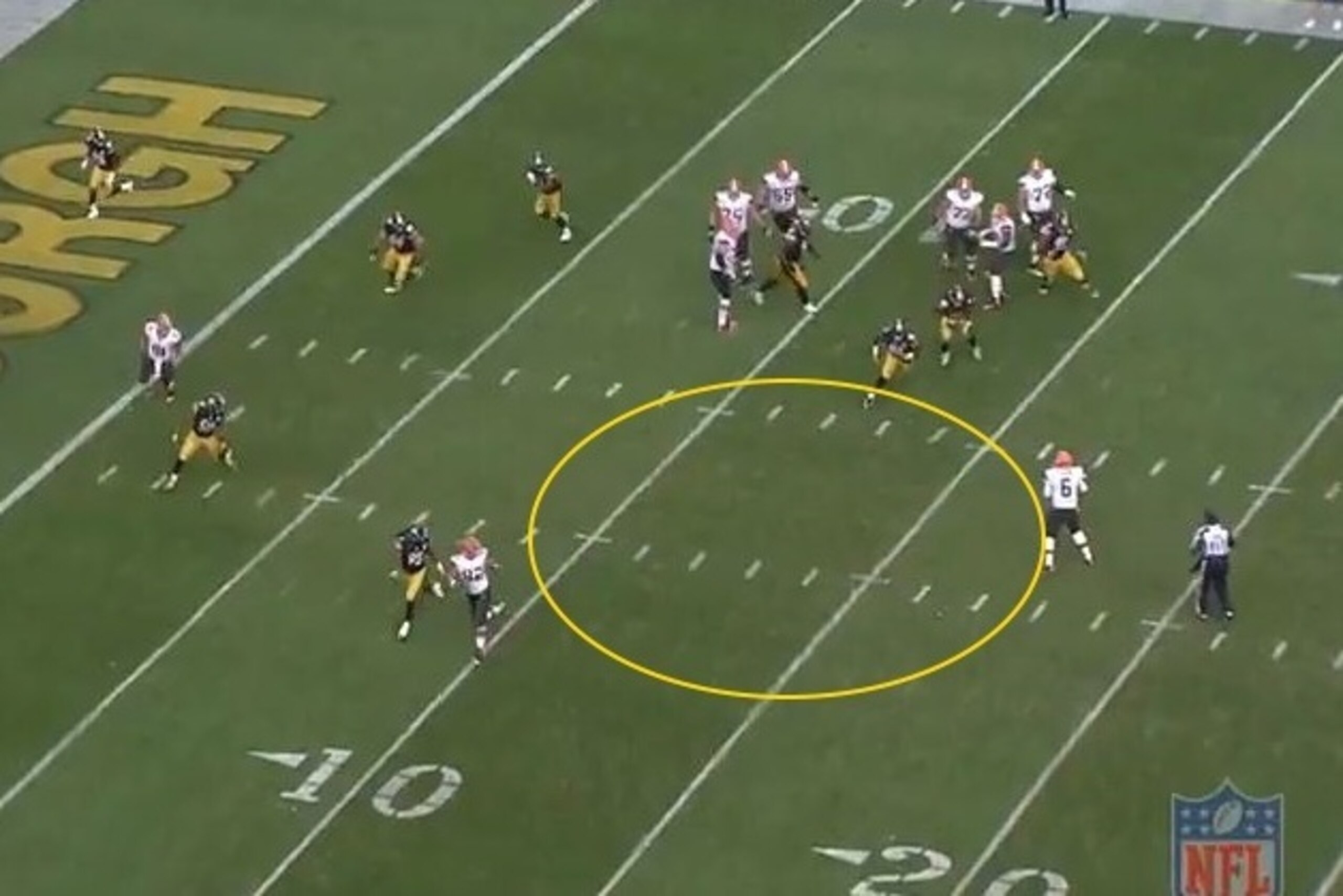
When Hoyer is humming along nicely in his play-action haven, gaping areas where a large yellow circle can be plopped are constantly staring back at you after pressing pause on his game film. It's a phenomenon O’Brien knows well, because he watched it from the sideline during Week 11 in 2014.
Note the ample space between Hoyer and the nearest defender here after a play fake to running back Isaiah Crowell. With the offensive line blocking left, Hoyer rolled to his right, where he was greeted by both a safe short target and a deep option streaking across the field.
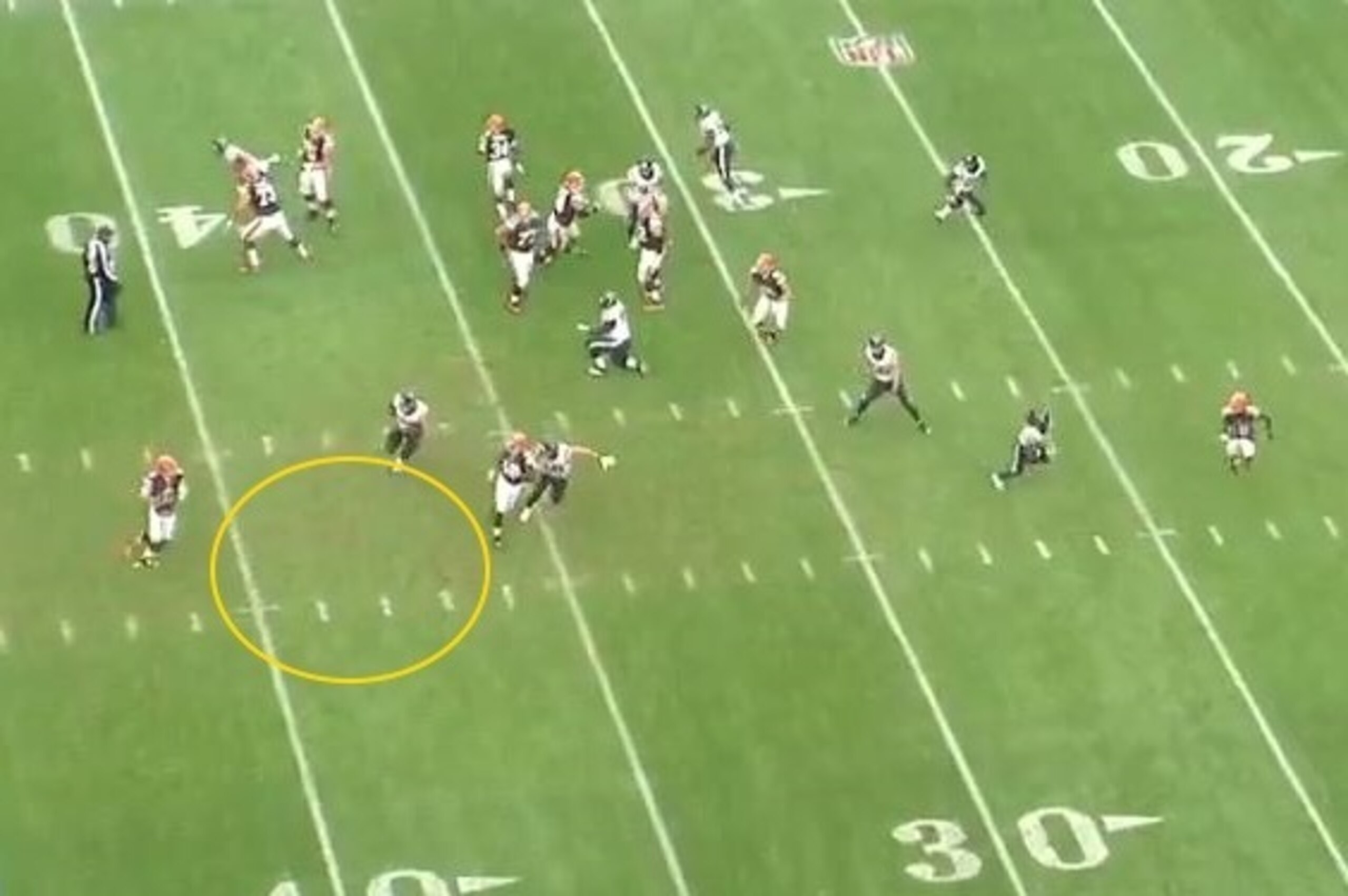
Hoyer chose the latter, using the time given to him by a four-yard buffer to square his shoulders and fire a strike into the mitts of wide receiver Andrew Hawkins for a 32-yard touchdown.
That was textbook bootleg execution, and it came three snaps after play action again erased any sense of panic.
Football tends to feel more like pleasant backyard catch when play action first freezes the blitzing linebacker for just a beat…
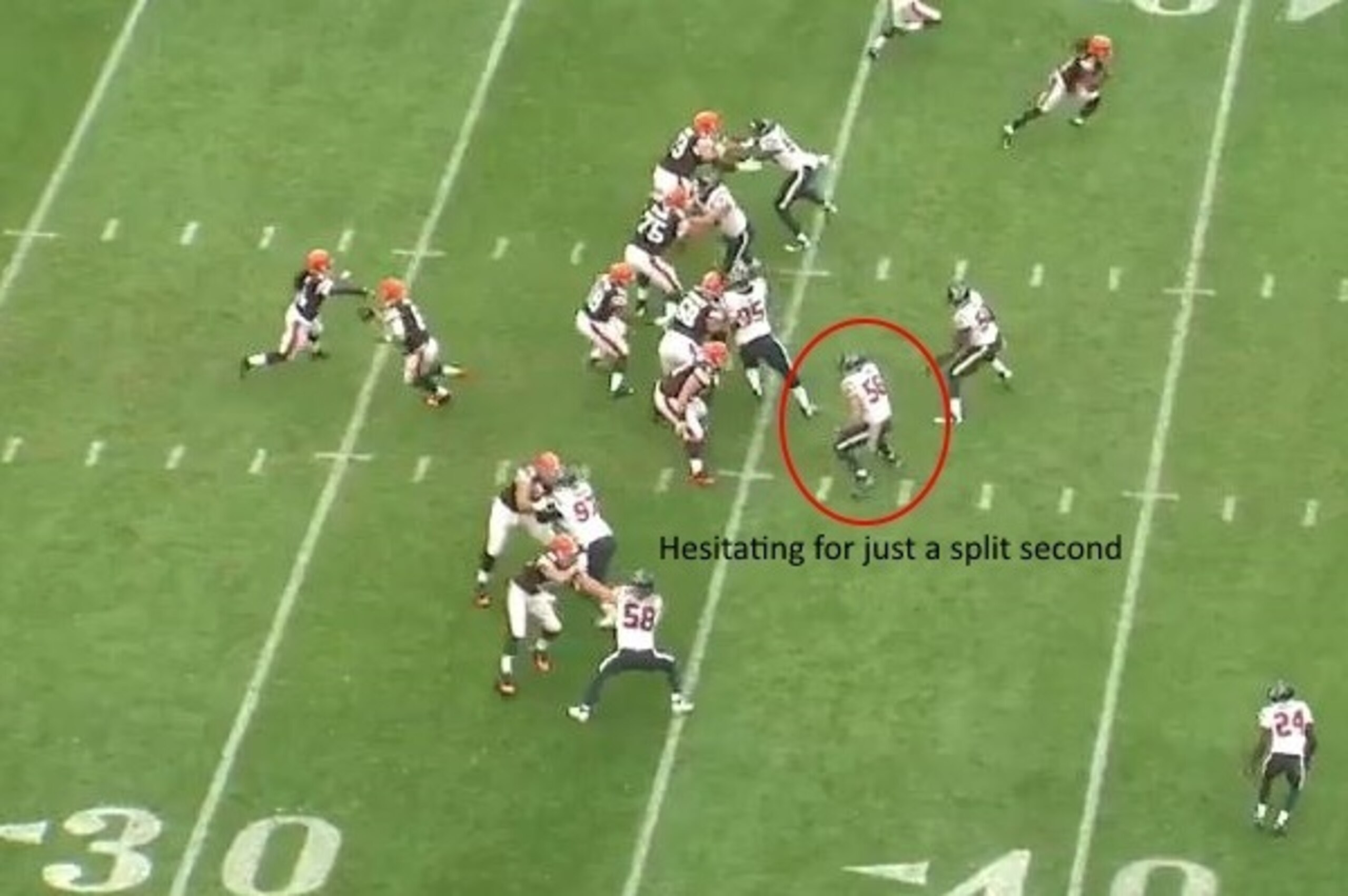
And then the quarterback is left with enough time to run a few errands before slinging a throw downfield to wide receiver Taylor Gabriel for a 23-yard gain.
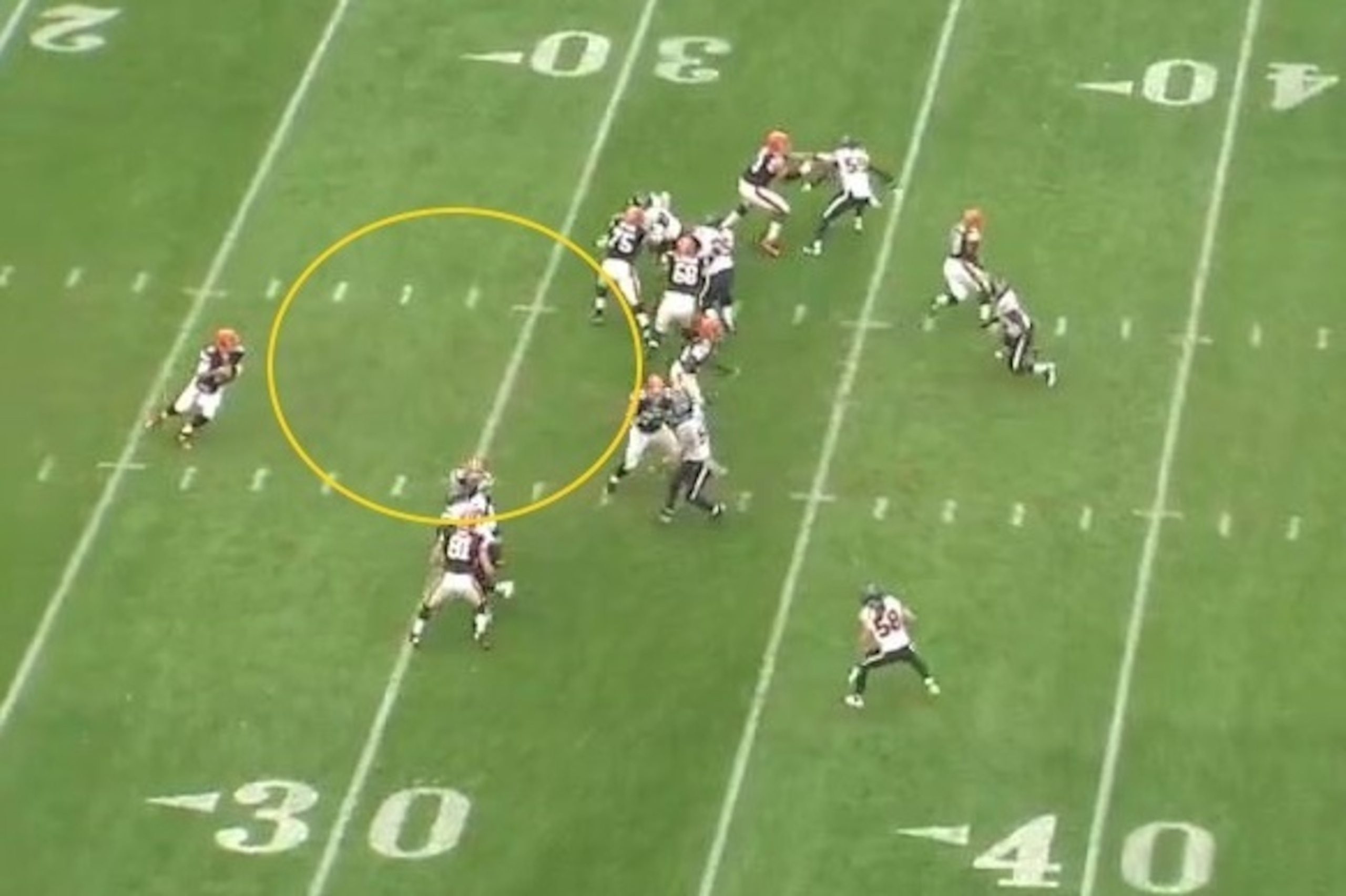
Play action and power running are staples of a Kyle Shanahan offense. The former Browns offensive coordinator used both to great effect with Hoyer, placing him in his comfort zone by calling play action on 29.2 percent of his dropbacks. That high volume ranked third among the 27 passers who took at least 50 percent of their team’s snaps in 2014, per PFF.
The Browns' 2014 season is filled with examples of how to focus on a quarterback’s strengths and, more importantly, how to gently massage the limited skill of a passer like Hoyer.
The successful offensive caretaker is regularly placed in situations where risk is minimized and the difficulty level is decreased. He faces plays where the chances of a drive-destroying mistake are lowered, and his goal is clear.
Mostly, he faces this…
O’Brien won’t match Shanahan’s play-action percentage, but he wasn’t just tossing out a standard coachspeak line either while talking about bootlegs and movement being used as elements in his passing game.
In 2014, Ryan Fitzpatrick threw the overwhelming majority of Houston’s pass attempts (312 of 485) prior to his season getting cut short due to a leg injury. Fitzpatrick’s mobility matches Hoyer’s in that he’s certainly not a blazer, but he is still a confident thrower outside of the pocket—which is why under O’Brien, 20.3 percent of his throws took place off play action, per PFF.
That’s still a significant chunk and if Hoyer wins the starting gig, it’s not hard to see a future with play action utilized on about a quarter of his dropbacks. O’Brien knows his quarterback's strengths, and he has Foster’s powerful backfield presence—along with his 4.8 yards per carry in 2014—at his disposal.
Hoyer fits O’Brien’s system, and the familiarity between the two from their time with the New England Patriots is what brought him to Houston. Now if the Texans are to win games by starting him and making the quarterback matter less, the structure around their chosen passer will need to matter more.
.jpg?w=2560 "Super Bowl Halftime Jay-Z")

.jpg?w=2560 "WWE Raw Live Grades 🔠")