
The 5 Biggest Issues Facing Denver Broncos with OTAs Wrapped
The Denver Broncos wrapped up minicamp on Thursday. They’ve got one more week of OTAs (Phase 3) before they get time off before training camp.
The development of the team will continue once we get to training camp, but now the Broncos are armed with better information about what they will need to work on.
Head coach Gary Kubiak was pleased with the team’s performance during the week.
“I thought it was really good. We had a purpose and that purpose was to work our older players very, very hard in individual—a lot of conditioning work, individual work.” Kubiak continued, “That’s our mission right now before we walk out of here next week and we’ll come back next week. We’ve got a good four days so it’s been good.”
Here are the five biggest issues facing the Broncos with OTAs wrapped up.
5. Who Is Starting at Left Guard?
1 of 5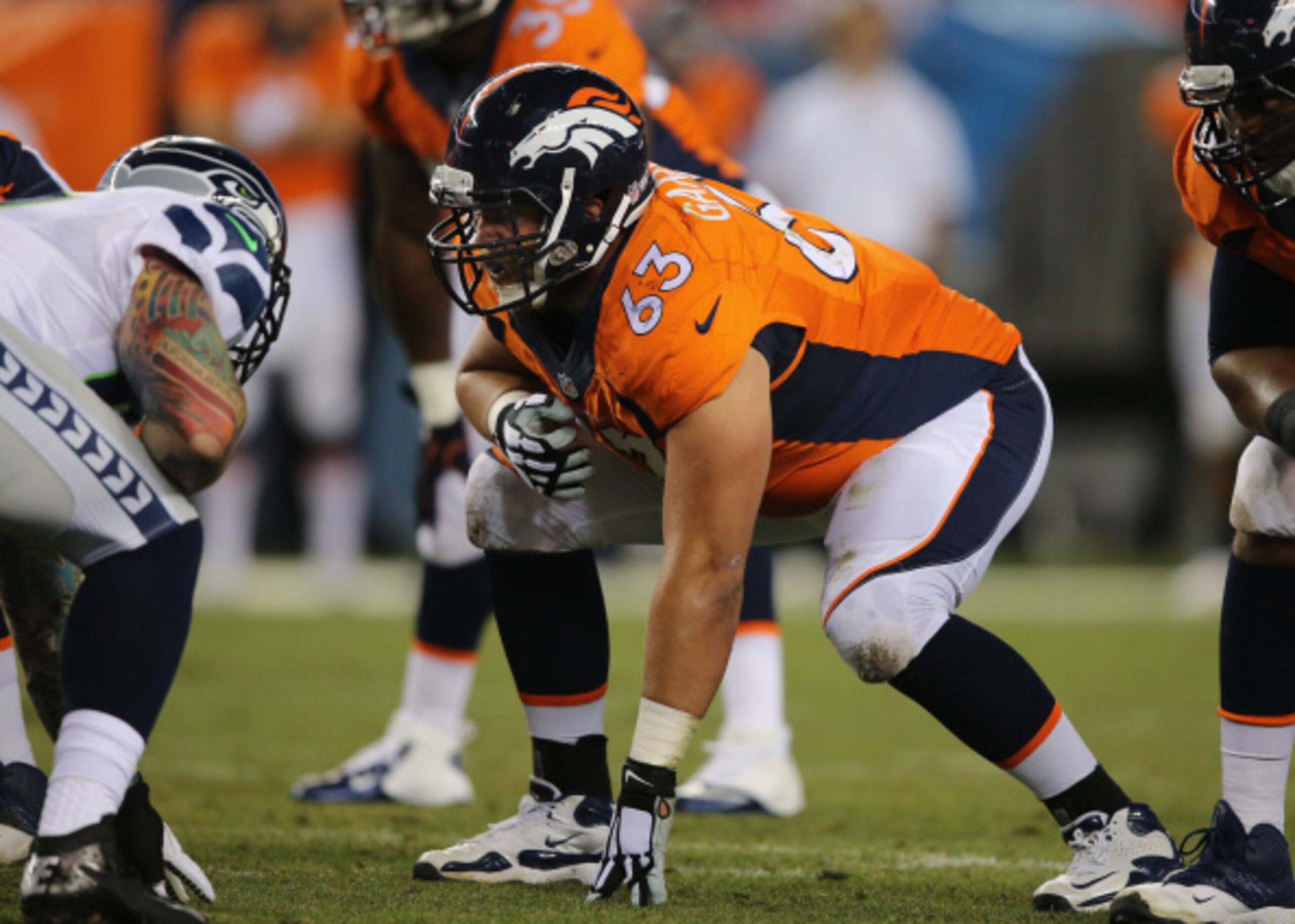
The Broncos offensive line is in a state of upheaval this offseason. Four of the five starters on the line will be different from the group that ended the 2014 season.
Left guard is one of the positions up for grabs. Ben Garland has been playing guard for two years after switching from defensive tackle in 2013. The Broncos brought in Shelley Smith as a free agent to compete with Garland for the starting job.
Along with Smith, rookie Max Garcia may also get some looks at guard. In addition to Garland, Smith and Garcia, we might also see second-year pro Michael Schofield get an opportunity to compete at guard. Right now, Schofield is trying to prove himself as a swing tackle. Garland is currently the front-runner in the battle for the starting left guard position.
Even though he’s at the top of the depth chart at left guard, Garland isn’t taking anything for granted.
“Not at all. I’m going to bring my lunch pail and I’m going to work," he said. "Every single day I’m going to work as hard as I can to get better, and hopefully I can make this team better because of it.”
Garland is the starter now, but he’ll have to continue playing well when the pads come on in training camp if he wants to stay at the top of the depth chart.
4. Can Chris Clark Be Effective at Right Tackle?
2 of 5
Chris Clark is getting a chance to redeem himself at right tackle this year. He began last year as the starting right tackle, but he was eventually replaced due to his on-field struggles. Now, the Broncos are looking for Clark to shore up the right side of the line.
On a line with so much upheaval this season, having a guy like Clark is a real asset because of his experience.
After Ryan Clady went down with a season-ending knee injury, Kubiak offered some insight about the offensive line. “I think the thought right now is to leave [T] Chris [Clark] on the right side. They’re going to move around. Those guys have to play everywhere.”
Clark is going to have to outplay free-agent addition Ryan Harris. The Broncos added Harris earlier this month because of his experience working in the zone-blocking system. Clark should be a better fit for this system, but Harris is a natural in this scheme.
The Broncos also have the option of putting Michael Schofield at right tackle. He started at both right tackle and left guard during his time in college with the Michigan Wolverines. Schofield is working as a swing tackle this offseason, but he might be an emergency option if Clark and Harris struggle.
3. Is Sylvester Williams the Best Option at Nose Tackle?
3 of 5
In 2013, the Broncos selected Sylvester Williams in the first round of the draft with the idea that he could be a disruptive playmaker at the NFL level. That hasn’t happened yet, and Williams has failed to produce the way some thought he could.
The Broncos are moving to a 3-4 defense this year, and they need to find a quality player who can man the nose tackle position.
Defensive coordinator Wade Phillips has been impressed by Williams this offseason.
“I think ‘Sly’ has done an exceptional job. I feel real good about him. Sly has been exceptional. I think he’s really taken over the nose guard position.” Phillips emphasized, “I think he can play a 3-technique, but I think he’s done really well. I’m really pleased with where he is.”
Williams is the front-runner for the starting nose tackle job. He’ll have to prove that he can be a better starter than veteran Marvin Austin.
The Broncos brought Austin in last year as a free agent. The former second-round pick of the New York Giants (2011) had struggled with injuries and inconsistencies before arriving in the Mile High City. As a part-time player last year, Austin impressed on the field because of his size, strength and quickness off the snap.
Denver also drafted Darius Kilgo this year out of Maryland. He’s a mountain of a man who can be relied on as a two-down run-stuffer for the defense. Kilgo won’t generate much interior pressure on the quarterback, but he might be able to fill a part-time role.
Williams is in a make-or-break season in 2015. It’s time for him to start producing up to the expected level or the Broncos may find a replacement for him at nose tackle.


.jpg?w=2560 "Seahawks Chiefs Football")
2. Who Makes the Team at Running Back?
4 of 5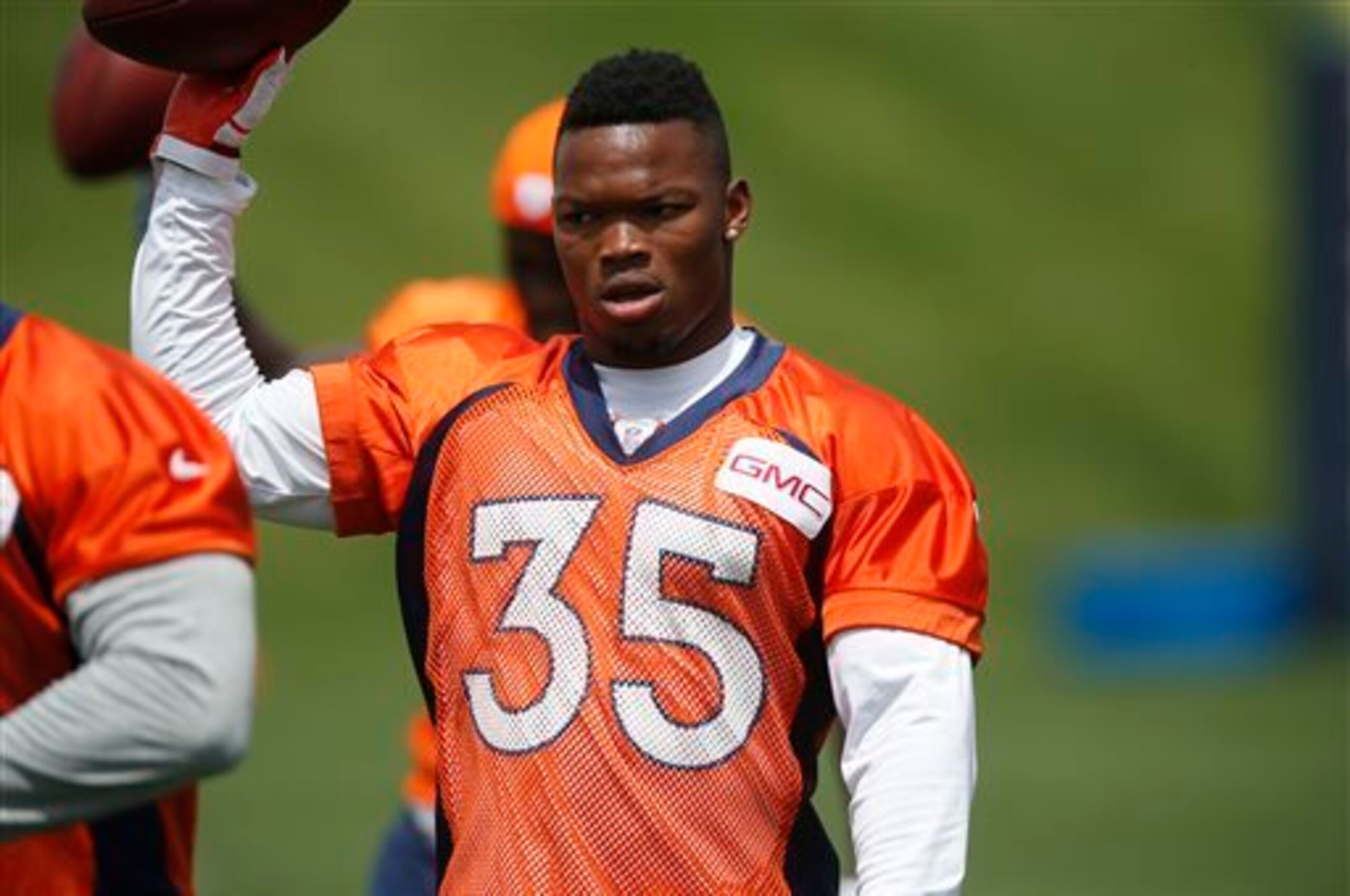
The Broncos have a talented-filled backfield. C.J. Anderson has the ability to be a superstar in the NFL, and he leads the way at the running back position. Behind him is former second-round pick (2013) Montee Ball, and he's looked impressive out on the practice field this offseason after suffering through a disappointing 2014.
Anderson sits atop the depth chart, and he likes the competition at the position.
“We’re pushing each other as a group. It starts up front, and it really starts with our coach, [running backs coach] Eric Studesville. He’s pushing us every day just to make sure we’re going out there and that we’re keeping a grind—we keep pushing it and we’re keeping it going.” Anderson concluded, “We’re all pushing each other and we all know we have the talent and the ability to make this team go.”
Behind Anderson and Ball is Juwan Thompson. He’s a power back who can contribute as a runner, blocker or receiver out of the backfield. Thompson is listed as a running back, but he can also play fullback if needed. His ability on short-yardage carries could be critical for the Broncos this year.
Ronnie Hillman is in the last year of his deal, and he’s hoping that his speed will make him an effective change-of-pace back. However, Hillman is an odd fit in the zone-blocking system. He’s fast, but Hillman dances too much in the backfield. This hesitation and lack of patience doesn’t work well in this scheme.
Kapri Bibbs will push Hillman for the fourth (and likely final) spot on the depth chart. The second-year player from Colorado State has looked great at OTAs, and the Broncos may not be able to sneak him through to the practice squad this year. Bibbs has a nose for the end zone, and he’s got the balance and burst to work well in the zone-blocking system.
Even Jeremy Stewart could make a play for the final roster. Stewart made the team last year and was active for a few games. He has a slashing style and can run through arm tackles regularly.
At this time, Anderson, Ball and Thompson could be considered “locks” to make the final roster. There’s likely one more spot remaining in the running back corps, and there will be fierce competition for that final spot.
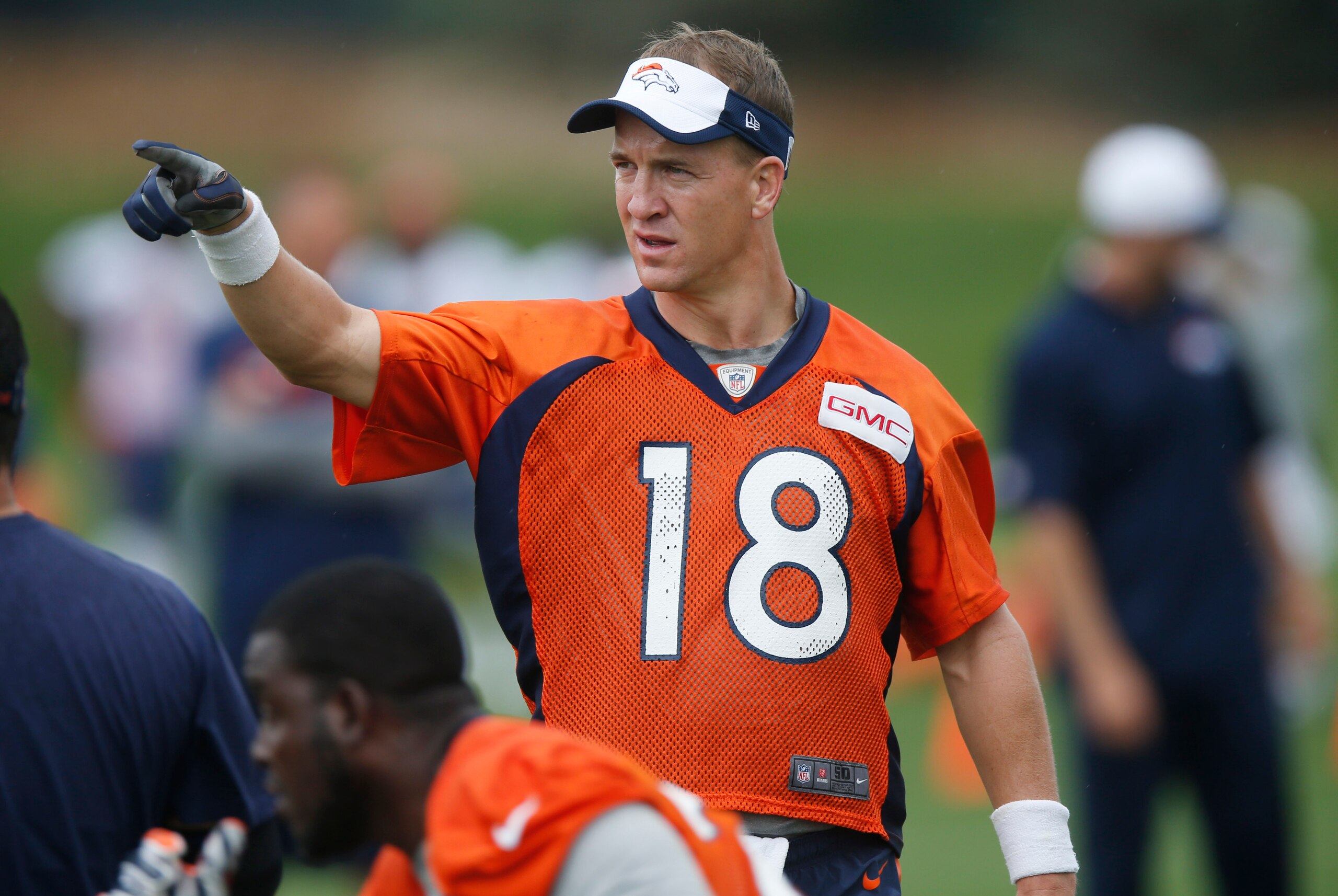
1. How Does Peyton Manning Mesh with Gary Kubiak's Offense
5 of 5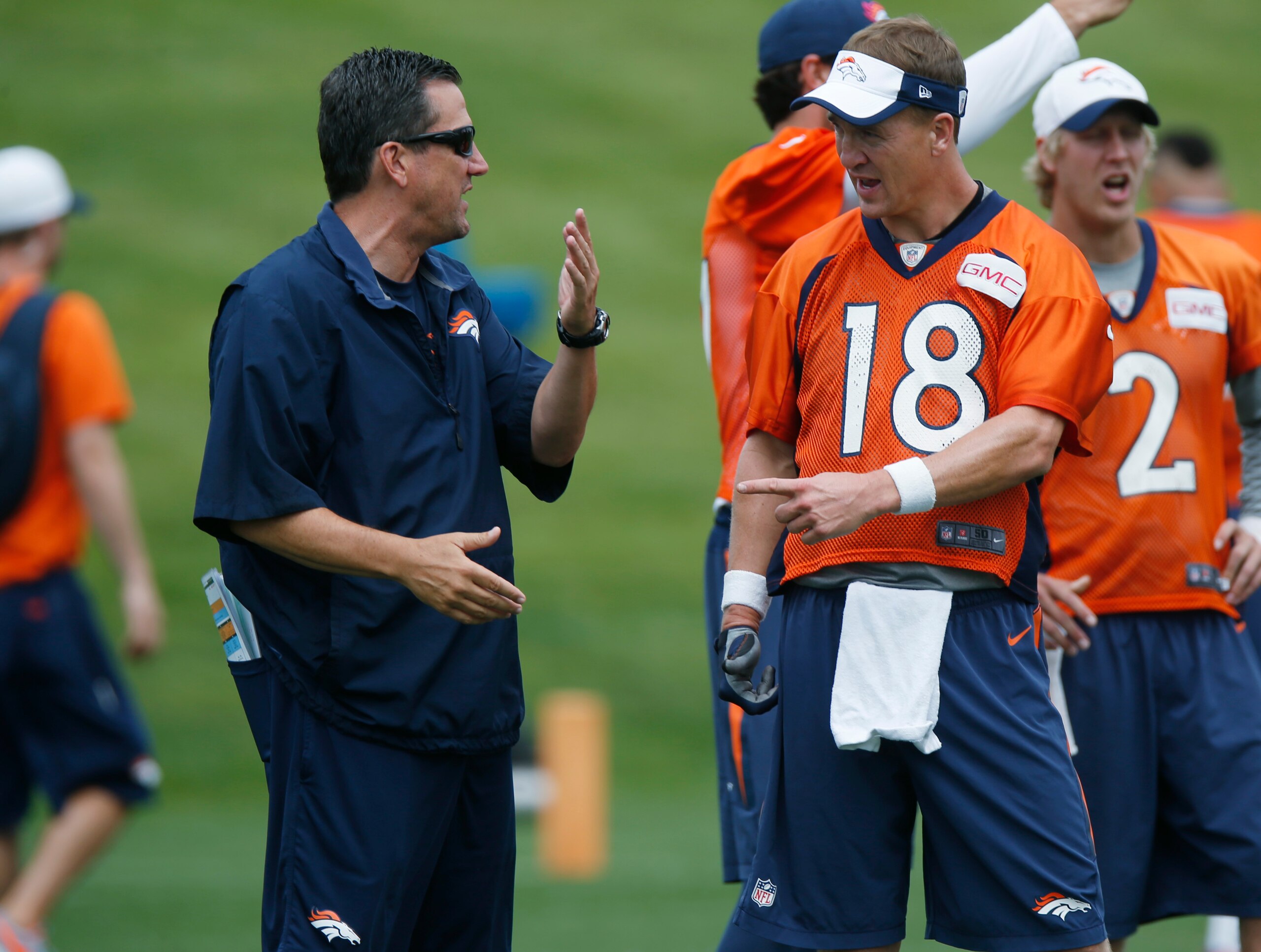
The biggest question for the Broncos has to do with Peyton Manning’s fit in the Gary Kubiak offense. The future Hall of Fame quarterback is best known for working out of the shotgun in a pass-happy offense.
That will change this year under Kubiak.
The Kubiak system frequently has the quarterback line up under the center. Quarterbacks are asked to drop back and diagnose the defense as they scissor step backward after the snap.
Manning is putting in the work, and he’s invigorated by learning this new system.
“I think it’s still a part of the process. There are different phases. We’re kind of in the offseason phase here, and then training camp is important. The repetitions that you get hopefully shows some improvement from OTAs into training camp. Everybody has been working hard, but we’ve still got to improve the rest of this week.” Manning emphasized, “I think next week is important. I think training camp will be really important.”
Manning needs to prove that he can comfortably drop back from under center. He’ll have to show quick feet when executing play-action passes. Manning is a master when it comes to making play fakes with the ball. He’ll have to show that he can trick the defense before striking with his arm in the passing game.
The Kubiak system does ask the quarterback to run some bootleg plays from time to time. That should be reduced with Manning. We could see Kubiak modify the bootleg and have Manning only roll out to the tackles instead of outside the tackles.
Manning is a seasoned pro, and he should have no problem adapting to what this new offense calls for from the quarterback position. He may not put up astronomical numbers as a passer, but Manning could be more efficient as a quarterback. The team may also be able to get further in the playoffs because of what Manning is able to do under Kubiak.
All quotes and injury/practice observations obtained firsthand. Record/statistical information provided via the Broncos' media department unless otherwise noted.
Contract and salary-cap information provided by Spotrac. Transaction history provided by Pro Sports Transactions.



.jpg?w=2560 "Latest Peyton-Colts Rumors")