When the second round of the 2015 NBA draft rolls around on June 25, you should ignore the temptation to flip the channel. While the second round is mostly a crapshoot, there's always a chance your favorite team unearths a future All-Star.
Unsurprisingly, second-rounders don't often have long, successful careers in the Association. In 2009, Basketball-Reference.com's Justin Kubatko calculated the estimated win shares for every pick, 1-60, and found that no second-round pick was expected to accrue more than 12.3 win shares over the course of his career.
Though most second-rounders will amount to little, a few diamonds in the rough wind up surpassing any reasonable expectations. A number of this summer's top-tier free agents—Marc Gasol, Paul Millsap, Draymond Green, Goran Dragic and DeAndre Jordan—all belong to this exclusive group.
Which active players should be considered the cream of the second-round crop? Using a combination of per-game production and advanced statistics from the 2014-15 season, along with a dash of subjectivity to evaluate each player's upside, the following 15 stand out as the league's best second-rounders currently playing.
Career Award: Manu Ginobili
1 of 18
Drafted: No. 57 overall, 1999, San Antonio Spurs
Since these rankings largely rely upon 2014-15 production, San Antonio Spurs guard Manu Ginobili failed to earn a spot in the top 15. However, not featuring Ginobili on a list of the NBA's best active second-round picks would be like failing to mention Michael Jordan in the greatest-of-all-time conversation.
Yes, Ginobili has been that impactful throughout his 13-year career.
By any measure, the Argentinian is one of the league's best-ever second-round picks. He has the sixth-most career win shares and most career win shares per 48 minutes among all second-round picks in NBA history with at least 100 games under their belts, ahead of Hall of Famers such as Dennis Rodman, Tiny Archibald and Willis Reed in both categories.
The 2007-08 Sixth Man of the Year has two All-NBA selections, two All-Star appearances and four NBA championships to his name, along with the 29th-most MVP award shares among active players. Ginobili also ranks 34th in league history in three-point field goals (1,272) and 42nd in career player efficiency rating (21.1).
Though the 37-year-old averaged the second-fewest points (10.5) and minutes (22.7) of his career this past season, he still managed to finish tied for 62nd in ESPN.com's wins above replacement and tied for 42nd in real plus-minus. Even if Ginobili decides to call it a career this summer, every NBA executive will always dream of snagging a future Hall of Famer like him with a second-round pick.
Other Career Award: Carlos Boozer, PF, Los Angeles Lakers (No. 34 overall, 2002, Cleveland Cavaliers)
Honorable Mentions
2 of 18
The following three players fell just shy of qualifying for the top 15, but merit recognition as high-quality second-round picks nevertheless.
Mo Williams, PG, Charlotte Hornets (No. 47 overall, 2003, Utah Jazz): Twelve years into his NBA career, Mo Williams can still pour in points when needed. He tied for the fourth-highest-scoring game of the 2014-15 season when he dropped 52 on the Indiana Pacers in mid-January, outpacing the best efforts of eventual MVP Stephen Curry and MVP runner-up James Harden.
The University of Alabama product is the textbook definition of a high-volume, low-efficiency scorer and doesn't provide much help defensively, but his ability to erupt for 20 points in a moment's notice still gives him value. Though he performed admirably as the Charlotte Hornets' short-term starter with Kemba Walker sidelined by a torn meniscus, he's best suited for a sixth-man role at this point in his career.
Patrick Beverley, PG, Houston Rockets (No. 42 overall, 2009, Los Angeles Lakers): Patrick Beverley is the polar opposite of Mo Williams, having never once scored more than 20 points throughout his three-year career. What he lacks in scoring potential he makes up for in defensive aptitude, as he was one of just four players in 2014-15 to accrue 1.8 or more defensive win shares in 56 games or fewer.
Having increased his volume of triples each year, Beverley is morphing into a true three-and-D player, albeit one who you can't trust to orchestrate an offense on a full-time basis. For teams with a ball-dominant 2-guard, the 26-year-old is an ideal backcourt complement.
Nikola Pekovic, C, Minnesota Timberwolves (No. 31 overall, 2008, Minnesota Timberwolves): Nikola Pekovic hasn't managed to stay healthy over the past few seasons, but he's an absolute bear on offense when injury-free.
Persistent ankle soreness limited him to 12.5 points on a career-worst 42.4 percent shooting and 7.5 rebounds per game this past season, but the Montenegrin bruiser averaged 17.5 points and 8.7 boards in 2013-14 before an ankle injury knocked him out of the lineup.
"There are not very many centers who have the ability to score in the low post. Pek does—he's one of the best, if not the best," Minnesota's president of basketball operations Flip Saunders told Mark Remme of the team's website. The Timberwolves can only hope he's finally able to put his ongoing injury woes behind him in 2015-16.
Other HMs: Lance Stephenson, SG, Charlotte Hornets (No. 40 overall, 2010, Indiana Pacers); Omer Asik, C, New Orleans Pelicans (No. 36 overall, 2008, Portland Trail Blazers, traded to Chicago Bulls); Ersan Ilyasova, PF, Detroit Pistons (No. 36 overall, 2005, Milwaukee Bucks)
15. Lou Williams, PG/SG, Toronto Raptors
3 of 18
Drafted: No. 45 overall, 2005, Philadelphia 76ers
Like Manu Ginobili, Lou Williams has made a long NBA career for himself by thriving off the bench. In fact, over his 10 years in the Association, he's started just 54 of the 634 games in which he's appeared.
Williams, a stalwart of the mid-2000s Philadelphia 76ers, experienced his greatest professional success this past season with the Toronto Raptors. The combo guard racked up a career-high 15.5 points in 25.2 minutes per game en route to the Sixth Man of the Year award, making Drake look prescient in the process.
Two years after shredding his right ACL, Williams managed to set personal bests in win shares (6.6) and offensive box plus/minus (4.0) in 2014-15. His 19.9 PER, 0.564 true shooting percentage and 0.157 win shares per 48 minutes were each the second-highest marks of his career, and he tied his second-best value over replacement player (1.5), too.
Williams doesn't provide much value aside from being a scorer—he averaged just 1.9 rebounds and 2.1 assists per game—which came back to haunt Toronto during the playoffs. The Georgia native averaged 12.8 points per game on just 31.4 percent shooting, which led to the Washington Wizards outscoring the Raptors by 16.3 points per 100 possessions with him on the court.
Though Sweet Lou isn't likely to ever be a well-rounded offensive threat, he nearly tripled the expected career win shares of a No. 45 overall pick (2.5) this past season alone (6.6). The combo guard figures to have little trouble sticking in the league as a microwave scorer off the bench as he moves into his 30s.

14. Isaiah Thomas, PG, Boston Celtics
4 of 18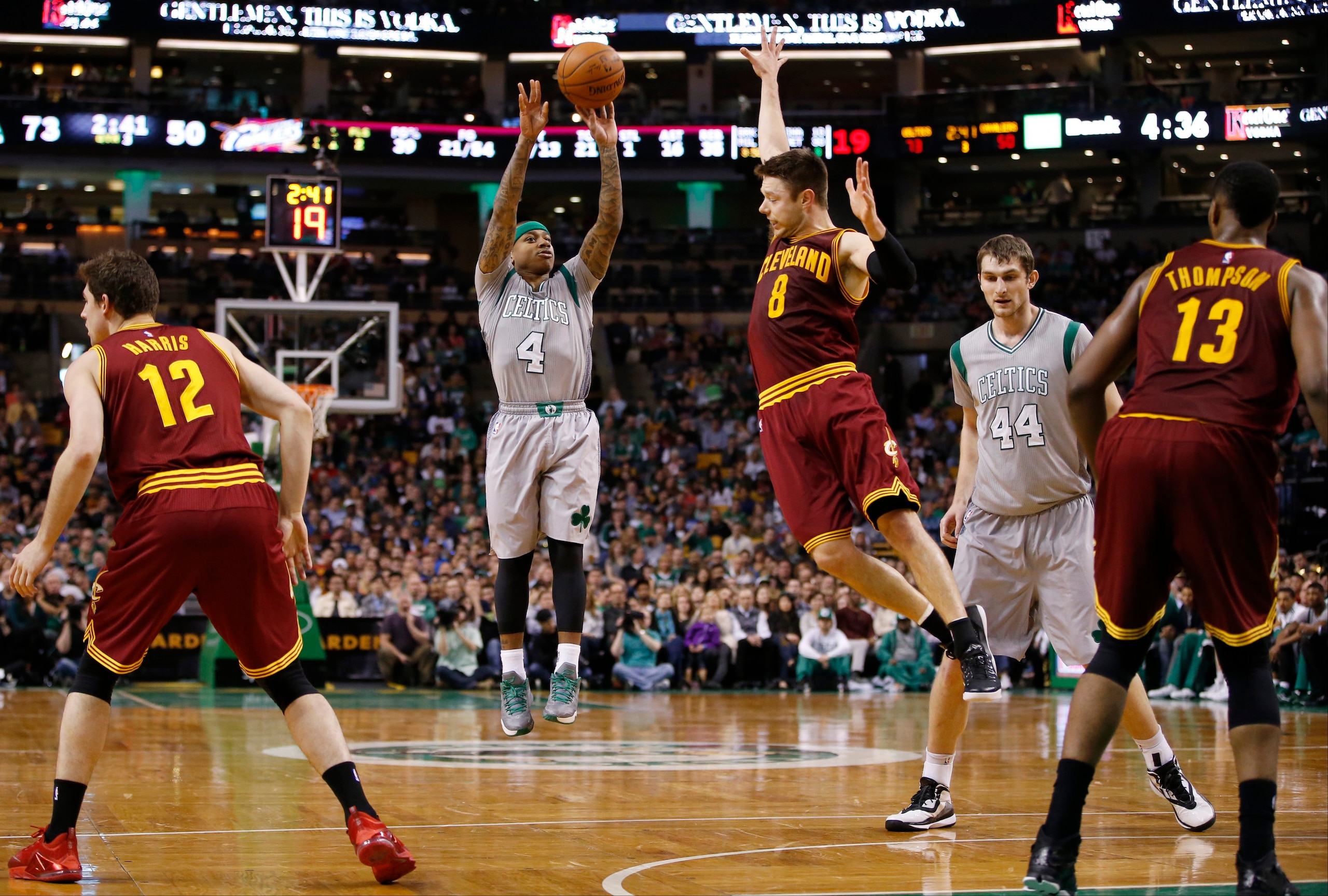
Drafted: No. 60 overall, 2011, Sacramento Kings
Like Lou Williams, Isaiah Thomas works best as a team's second-unit spark plug. Though he started 153 of his 216 games with the Sacramento Kings during his first three seasons, he flourished in a full-time bench role with the Phoenix Suns and Boston Celtics this past year.
Shooting a career-low 42.0 percent from the field in 2014-15, Thomas still racked up 16.4 points in 25.8 minutes per game. He smashed his previous per-36-minute personal bests in points (23.0), triples (2.7), three-point attempts (7.2) and free-throw attempts (7.3), fearlessly driving to the basket despite standing just 5'9".
What sets Thomas apart from Williams is his ability to impact the game in ways beyond scoring. Whereas Sweet Lou has averaged at least four assists just once in his 10-year career, the Washington native has surpassed that threshold during each of his four professional seasons, with a career-high 6.3 assists per game in 2013-14.
Key to Thomas' effectiveness in 2014-15 was his prolificacy from downtown, as he knocked down a career-high 129 triples on the year. After never attempting more than 38.6 percent of his shots from long range heading into the season, he bombed away from deep 43.4 percent of the time with Phoenix and Boston.
Thomas didn't fare as well in advanced metrics that took into account his lackluster play on defense—he ranked 92nd in real plus-minus and 90th in wins above replacement. But given his small stature, defensive struggles should come as no surprise. As the highest-scoring No. 60 overall pick in NBA history, Thomas deserves considerable praise for his offensive aptitude.
13. Trevor Ariza, SF, Houston Rockets
5 of 18
Drafted: No. 43 overall, 2004, New York Knicks
Trevor Ariza's evolution into one of the league's most feared marksmen from the corners is frankly stunning.
During his first four seasons—in which he went from the New York Knicks to the Orlando Magic and ultimately to the Los Angeles Lakers—he attempted 43 triples, hitting just nine of them. This past year with the Houston Rockets, he went 194-of-555 from deep (35.0 percent).
Ariza initially found his three-point groove with the Washington Wizards from 2012-14, with John Wall feeding him a bevy of open looks on the corners off drive-and-kick opportunities. During his two years with the Wizards, 121 of his 256 triples came from either corner (47.3 percent), and that trend continued with Houston this past season, where he knocked down 88 of his 194 treys from the corners.
The former UCLA Bruin only shot 31.1 percent on above-the-break three-pointers in 2014-15, but drilling 41.1 percent of his corner triples helped make up for that. Like with Wall in Washington, Ariza frequently benefited from James Harden driving into the paint and kicking it out to him for an open shot on the wing.
Throw in some lockdown defense—the 11-year veteran accrued a career-high 3.9 defensive win shares for the second-seeded Rockets—and it's clear why the Rockets shelled out a four-year, $32 million contract for him last summer. Ariza isn't a No. 1 option on a title contender, but he's an ideal complement to any roster as one of the league's premier three-and-D players.
12. Hassan Whiteside, C, Miami Heat
6 of 18
Drafted: No. 33 overall, 2010, Sacramento Kings
If ranking active second-round picks based on upside alone, Hassan Whiteside very well might top the list.
After bouncing around the D-League and international waters in 2012-13 and 2013-14, Whiteside was a revelation for the Miami Heat this past season. The big man burst onto the national scene in his 18th appearance of the year with a 14-point, 13-rebound, 12-block triple-double against the Chicago Bulls in late January and didn't slow down much from there.
The shot-swatting, board-gobbling 7-footer averaged a preposterous 17.8 points, 15.2 rebounds and 3.9 blocks per-36 minutes for Miami, quickly emerging as a potential franchise cornerstone.
Among players with at least 1,000 minutes under their belts, Whiteside led the league in total rebounding percentage (25.4) and ranked second in block percentage (9.2), just one-tenth of a percentage point behind Milwaukee's John Henson.
Though the Marshall University product shined in a per-minute capacity, advanced metrics don't look so kindly upon his 2014-15 campaign. He ranked 148th in wins over replacement and 122nd in real plus-minus, the latter of which was the lowest mark of any player featured here in the top 15.
Whiteside also inserted his name in the NBA record books for all the wrong reasons, becoming the lone player to ever record six or fewer assists despite playing at least 1,000 minutes in a single season. If the Heat big man expands his offensive repertoire in 2015-16—a contract year for him—he'll go skyrocketing up the list of top active second-round picks.
11. Marcin Gortat, C, Washington Wizards
7 of 18
Drafted: No. 57 overall, 2005, Phoenix Suns (traded to Orlando Magic)
Marcin Gortat might not have Whiteside's enormous upside or preposterous per-minute production, but at this point in their respective careers, he's the more well-rounded of the two.
Gortat isn't a focal point of the Washington Wizards' offense, using just 17.6 percent of plays when he was on the floor in 2014-15. However, his ability to step away from the basket and knock down a mid-range jumper—he drilled 43.8 percent of his 10- to 16-foot shots—helps space the floor and draw opponents from the paint, something not yet in Whiteside's arsenal.
No one will mistake Gortat for a prolific passing big man such as Marc Gasol or Joakim Noah, but he's likewise miles ahead of Whiteside in that regard. After recording just 33 helpers over his first three seasons combined, the Polish Hammer totaled 50 or more dimes in each of the past five years, including 97 in 82 games during this second go-round with the Wizards.
Though Gortat averaged just 8.7 rebounds and 1.3 blocks per game—a far cry from Whiteside's 10.0 and 2.6, respectively—he still managed to finish with a significantly higher mark in defensive box plus/minus (2.3) than the Heat big man (0.7). The 31-year-old also held the advantage over Whiteside in value over replacement player, real plus-minus and wins above replacement.
Unfortunately for Gortat, hard screens set and quality shot contests don't show up in a typical box score, which diminishes his perceived value to casual fans. Dig deep enough, however, and you'll soon realize just how integral the eight-year veteran is to Washington's success.
10. Danny Green, SG, San Antonio Spurs
8 of 18
Drafted: No. 46 overall, 2009, Cleveland Cavaliers
If not for the influence of San Antonio Spurs head coach Gregg Popovich, Danny Green almost certainly would be nowhere to be found in these rankings.
The Cleveland Cavaliers initially drafted Green in 2009, but he barely cracked their rotation that season, playing just 115 total minutes between stints in the D-League. He struggled during the 2010-11 preseason, as Bob Finnan of the News-Herald noted at the time, which led the Cavaliers to ultimately release him in mid-October before $125,000 of his contract became guaranteed.
The Spurs swooped in and signed Green one month later, but waived him just six days afterward. He went on to resurrect his career in the D-League with the Reno Bighorns, which led San Antonio to sign him for the remainder of the season in March 2011. Two years later, he set an NBA Finals record for the most made three-pointers.
From 2011-12 through 2014-15, Green started 257 of a possible 295 games for the Spurs, averaging 10.2 points, 3.5 rebounds, 1.7 assists, 1.1 steals and 0.8 blocks, while shooting 42.3 percent from downtown. He's become an invaluable part of their starting lineup, emerging as one of the league's top three-and-D wings over the past few seasons.
In 2014-15, Green set career highs in points per game (11.7), win shares (7.8), PER (16.5), box plus/minus (5.0) and value over replacement player (4.1). Don't be surprised if he receives an eight-figure annual deal in free agency this offseason, cementing one of the most impressive career turnabouts in recent memory.
9. Kyle Korver, SG, Atlanta Hawks
9 of 18
Drafted: No. 51 overall, 2003, New Jersey Nets (traded to the Philadelphia 76ers)
Kyle Korver just finished one of the best shooting seasons in NBA history. That's not hyperbole; it's fact.
The vaunted Atlanta Hawks marksman nearly became the league's first qualified 50-50-90 player, shooting 48.7 percent overall, 49.2 percent on three-point attempts and 89.8 percent from the charity stripe. He's one of only two qualified players to ever post those shooting percentages, joining former Chicago Bulls 2-guard Steve Kerr, who achieved the feat during the Bulls' legendary 1995-96 season.
Korver wound up with the league's eighth-most three-point attempts on the year, which makes his conversion rate from downtown even more preposterous. He was one of only two players who shot at least 45 percent on treys, while attempting more than 70 of them, joining New Orleans Pelicans swingman Luke Babbitt.
Though the Creighton product's per-game averages were almost identical to Danny Green's, few players can match his gravitational pull. Opponents had to stay glued to Korver at all times, as the risk of him sneaking behind a screen for an open three-point attempt meant a nearly automatic bucket.
The 12-year veteran has never been an elite defender, although opponents did shoot 1.3 percentage points below their average when facing off against him in 2014-15. Instead, it's his sharpshooting ability—he led the league in three-point field-goal percentage in three of the past six seasons—that truly sets him apart as one of the league's top active second-rounders.
8. Monta Ellis, PG/SG, Dallas Mavericks
10 of 18
Drafted: No. 40 overall, 2005, Golden State Warriors
Few second-round picks can pour in points better than Monta Ellis. Unlike Danny Green and Kyle Korver, who largely serve as perimeter specialists offensively, Ellis is capable of singlehandedly taking over a game with his explosive scoring ability.
While neither Green nor Korver have ever averaged 15 points in a single season, Ellis hasn't put up fewer than 16.5 points per contest since his rookie year. The Dallas Mavericks combo guard had 10 games with at least 30 points in 2014-15; Korver and Green combined for exactly zero.
To put things into perspective: Ellis has the fifth-highest scoring average of all second-round picks in NBA history. Though he finished this past season with his third-lowest points-per-game average, much of that was due to a dip in playing time, as he churned out the third-highest points per 36 minutes of his career.
Ellis isn't just a one-trick scoring pony, either. He's not a pass-first guard by any means, but he did average at least five assists per game over each of the past five years heading into this season. And he wasn't far off that pace before the Mavericks traded for Rajon Rondo in mid-December.
Advanced metrics don't look kindly upon Ellis—he finished with a negative rating in box plus/minus (minus-0.1) and had the fewest win shares (3.6) and win shares per 48 minutes (0.065) of any player featured in these rankings. Given his ability to take over a game at a moment's notice, however, he deserved a spot just above Green and Korver, despite his middling shooting percentages and defensive deficiencies.
7. Chandler Parsons, SF, Dallas Mavericks
11 of 18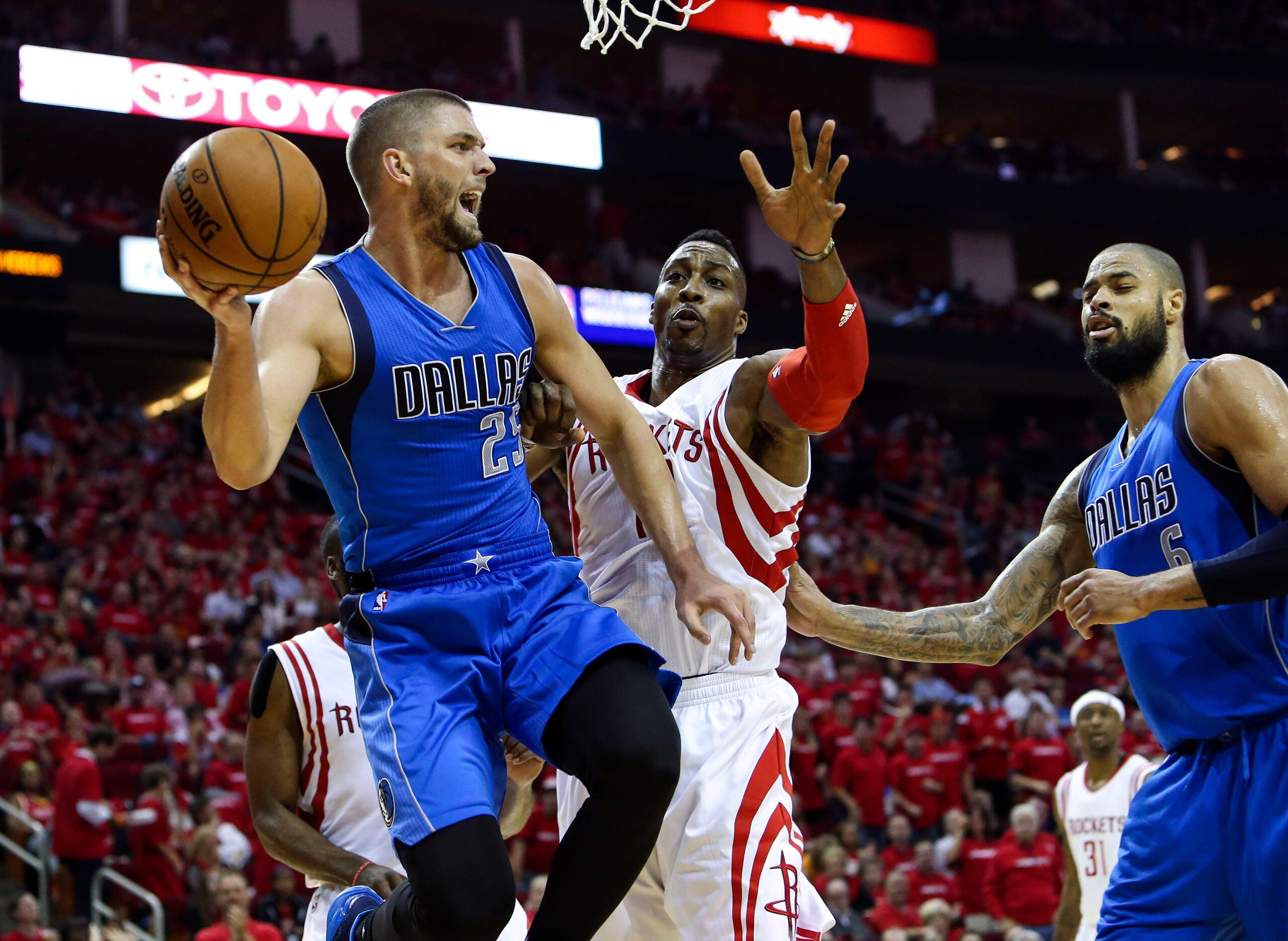
Drafted: No. 38 overall, 2011, Houston Rockets
"Chandler Parsons is about to become the go-to name for league executives who trumpet the value of second-round picks," Grantland's Zach Lowe wrote back in April 2014. It's not hard to see why—he's one of just seven second-round picks in NBA history with career averages of at least 14 points, five rebounds and three assists and only one of two to do so in the lottery era.
Parsons' per-game statistics almost uniformly dipped during his first season as a Dallas Maverick, but don't let his early struggles deceive you: He remains one of the league's most versatile young forwards. The University of Florida product isn't just a fine shooter from deep—with a career three-point shooting percentage of .373—he's also a capable ball-handler and playmaker, something Dallas likely hopes to exploit.
"He's not only a shooter and a scorer, but he's a playmaker," Mavericks coach Rick Carlisle told Mavs.com's Earl K. Sneed. "He's a defender and a rebounder. He's one of our best all-around players. As the season went on, his responsibilities grew. And they will continue to grow going forward."
Parsons averaged just 4.9 rebounds and 2.4 assists per game with the Mavericks last year, the second-lowest totals of his career in both categories, but he still chipped in 15.7 points on 46.2 percent shooting. He also led all Dallas players with 132 triples on the season, despite playing just 66 games.
Assuming Parsons recovers fully after undergoing arthroscopic surgery for a cartilage injury to his right knee, he figures to carve out a huge role with the Mavericks next season. If he develops more consistent focus on defense, he will quickly become one of the league's top two-way wings.
6. Khris Middleton, SF, Milwaukee Bucks
12 of 18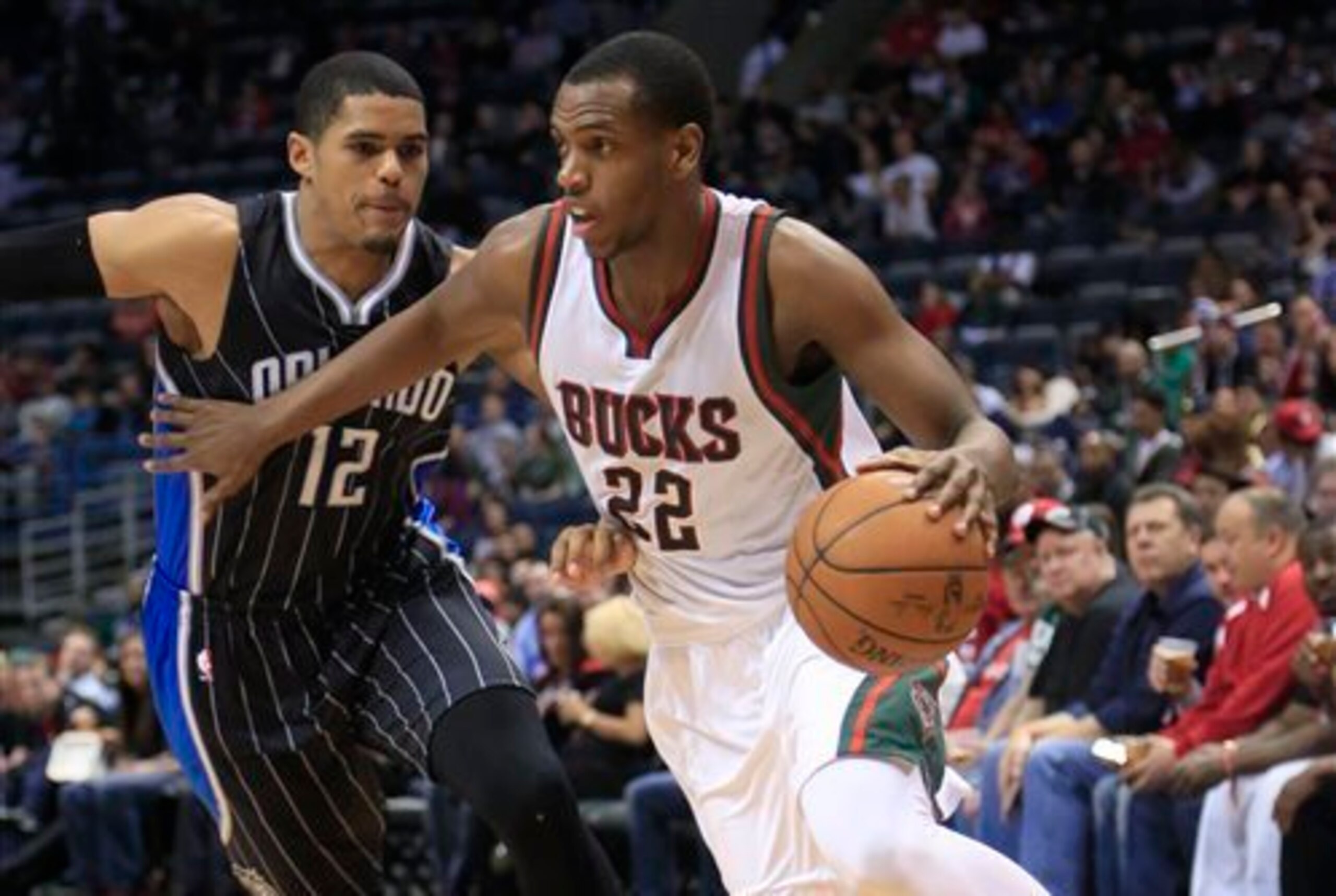
Drafted: No. 39 overall, 2012, Detroit Pistons
With three-and-D players becoming all the rage in today's NBA, Khris Middleton should thank his lucky stars that he came into the league when he did.
"He is exactly the kind hybrid forward teams love to see these days: consistent with the three-point shot, athletic enough to defend small forwards and long enough to handle power forwards," Sean Deveney of Sporting News wrote. Accordingly, the Milwaukee Bucks forward could command a contract worth upward of $15 million per year in free agency this summer, a league executive told Deveney.
Though his per-game averages of 13.4 points, 4.4 rebounds and 2.3 assists don't scream "superstar," his versatility sets him apart from many of his contemporaries. The third-year forward knocked down 40.7 percent of three-point looks and stifled opponents defensively, holding them to 4.3 percentage points below their shooting average and 39.5 percent shooting overall.
"The more versatile you can be, the more valuable you’re going to be, the more you’re going to help your team win games," Middleton told Bleacher Report's Zach Buckley back in March. "It helps in all ways possible right now."
He finished the season with top-10 marks in both wins above replacement and real plus-minus, finishing ahead of such superstars as John Wall, Jimmy Butler and LaMarcus Aldridge. The Bucks were 14 points per 100 possessions better with him on the court. Accordingly, the idea of him commanding a deal worth $15-plus million annually shouldn't catch anyone by surprise.
5. Goran Dragic, PG, Miami Heat
13 of 18
Drafted: No. 45 overall, 2008, San Antonio Spurs (traded to Phoenix Suns)
After toiling away in relative obscurity during the first three years of his NBA career, Goran Dragic has emerged as one of the league's better point guards over the past four seasons.
Dragic's true breakout campaign came in 2013-14 with the Phoenix Suns, when he averaged a career-high 20.3 points on 50.5 percent shooting, 5.9 assists, 3.2 rebounds and 1.4 steals in 35.1 minutes per game. He obliterated his personal bests in many advanced metrics, nearly helping guide the Suns to an unexpected playoff berth and earning a spot on the All-NBA third team.
The Slovenian floor general regressed somewhat this past season, as the Suns' decision to sign Isaiah Thomas in free agency backfired and eroded the former's faith in his team. Phoenix ultimately opted to ship him to the Miami Heat at the trade deadline, where he promptly began looking like a star once more.
During his 26 contests as a member of the Heat, Dragic averaged 16.6 points on 50.2 percent shooting, 5.3 assists, 3.4 rebounds and 1.1 steals, almost singlehandedly keeping Miami's playoff hopes alive at times. His PER (18.8), true shooting percentage (.586), win shares per 48 minutes (.146) and offensive box plus/minus (3.4) with the Heat all would have been the second-highest marks of his career.
Though Dragic clearly prefers to play the point, he proved during his Phoenix days that he's more than capable of sliding over to the 2 at times. That versatility will make him a highly sought-after free agent this summer, putting him in line to transition from an afterthought on draft night to a $100 million man.
4. Draymond Green, PF, Golden State Warriors
14 of 18
Drafted: No. 35 overall, 2012, Golden State Warriors
Without Draymond Green, the Golden State Warriors wouldn't be a 67-win squad on the precipice of winning the 2015 NBA title. As Grantland's Zach Lowe recently wrote, the Michigan State product is integral to the Dubs' success both offensively and defensively:
"Green on offense sucks an opposing big man a few feet farther from the paint than [David] Lee could, and he is the roaring soul of the league’s best defense — a human Tetris piece capable of switching onto almost any player and filling whatever need emerges at a given moment.
"
Green doesn't fit the traditional mold of a superstar, as he's best suited to be a complementary option on offense rather than a go-to scorer. However, as his per-game averages of 11.7 points, 8.2 rebounds, 3.7 assists, 1.6 steals, 1.4 triples and 1.3 blocks suggest, he's capable of impacting the game in a variety of ways, making him invaluable for this year's Golden State squad.
"I had no idea Draymond was going to be this good," Warriors head coach Steve Kerr told Lowe. "But you look at the way the game is played now, and it's all about versatility and two-way players. Can you score a basket and then go guard three positions?"
Green is undersized for a power forward at just 6'7", but his aggressiveness on defense helps compensate for his physical shortcomings, and his ability to step out and hit treys makes him a nightmare cover for opposing 4s. Assuming the Dubs retain him in restricted free agency this summer, his career arc figures to only keep shooting skyward.
3. Paul Millsap, PF, Atlanta Hawks
15 of 18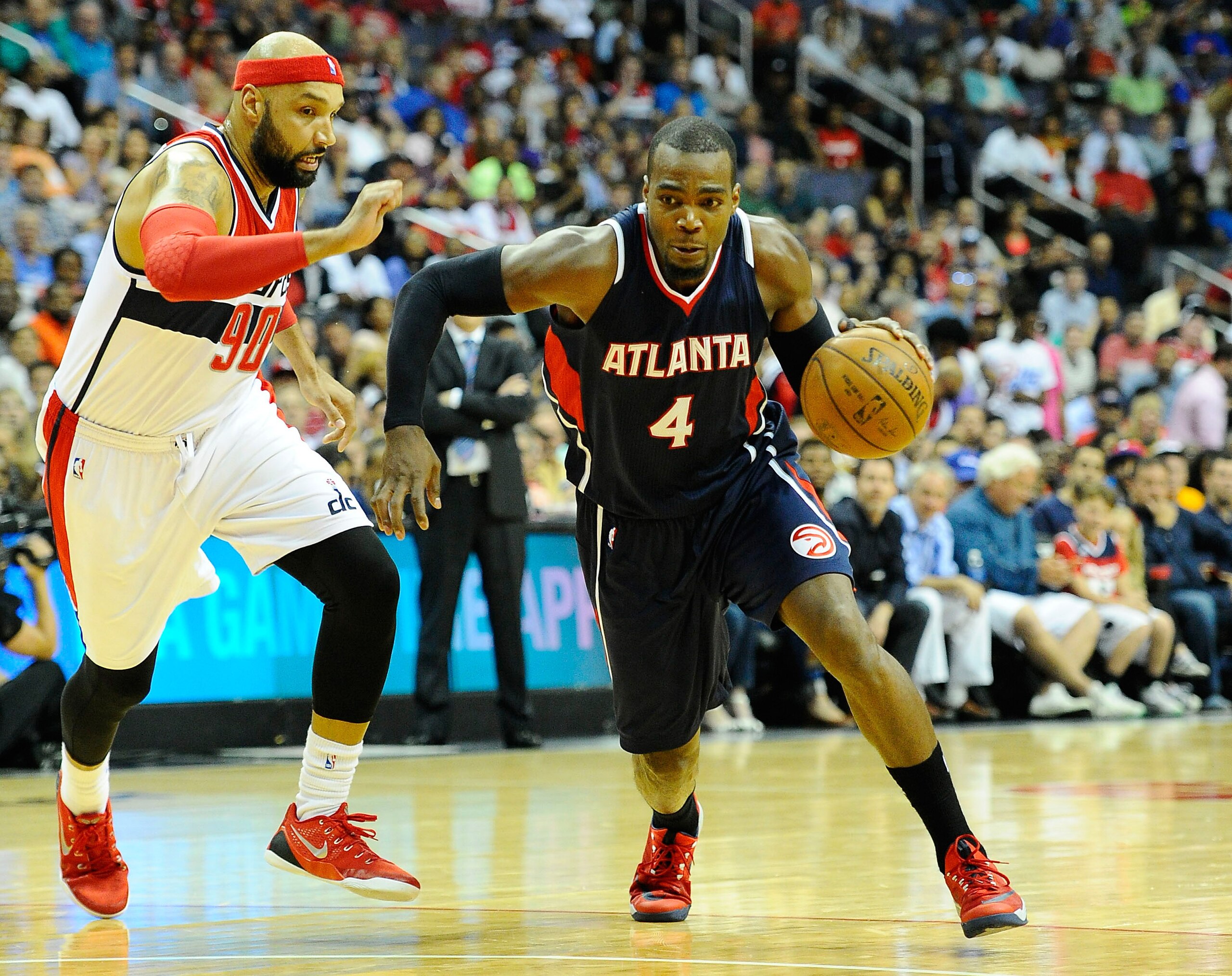
Drafted: No. 47 overall, 2006, Utah Jazz
Paul Millsap might not attract the national attention of a guy like Blake Griffin, but his flying under the radar isn't an indictment of his considerable talents. Back in February, Michael Pina explained for Rolling Stone what makes the Atlanta Hawks power forward such a force with which to be reckoned:
"Few players exhibit his versatile balance on offense and defense, and an even smaller number are able to maintain such all-around consistency. Millsap does it all, and on the occasion of his 30th birthday, it's worth noting he's doing it at [an] age when most NBA careers begin to plateau. In short, he's a rarity – a brawny pearl of a player.
"
The Louisiana Tech product consistently averaged around 16 points and eight rebounds over his final three seasons with the Utah Jazz, but his arrival in Atlanta helped him vault into the top tier of power forwards. This past season, he was one of just three players to average 18 points, eight rebounds and three assists per 36 minutes, and he was the only one with any semblance of three-point range.
Throughout his seven-year tenure in Utah, Millsap attempted just 113 triples, knocking down 31 of those attempts (27.4 percent). Since joining the Hawks two summers ago, he has gone 153-of-428 from deep (35.7 percent), and he managed to record a career-high 8.3 win shares this past season, too.
Much like Draymond Green, Millsap doesn't thrive in any one particular category, but his well-roundedness makes him one of the Hawks' most valued assets. Green figures to surpass him in effectiveness over the coming years, but Millsap's back-to-back All-Star appearances over the past two seasons suggest he's still ahead of the Golden State Warriors' Swiss army knife at the moment.
2. DeAndre Jordan, C, Los Angeles Clippers
16 of 18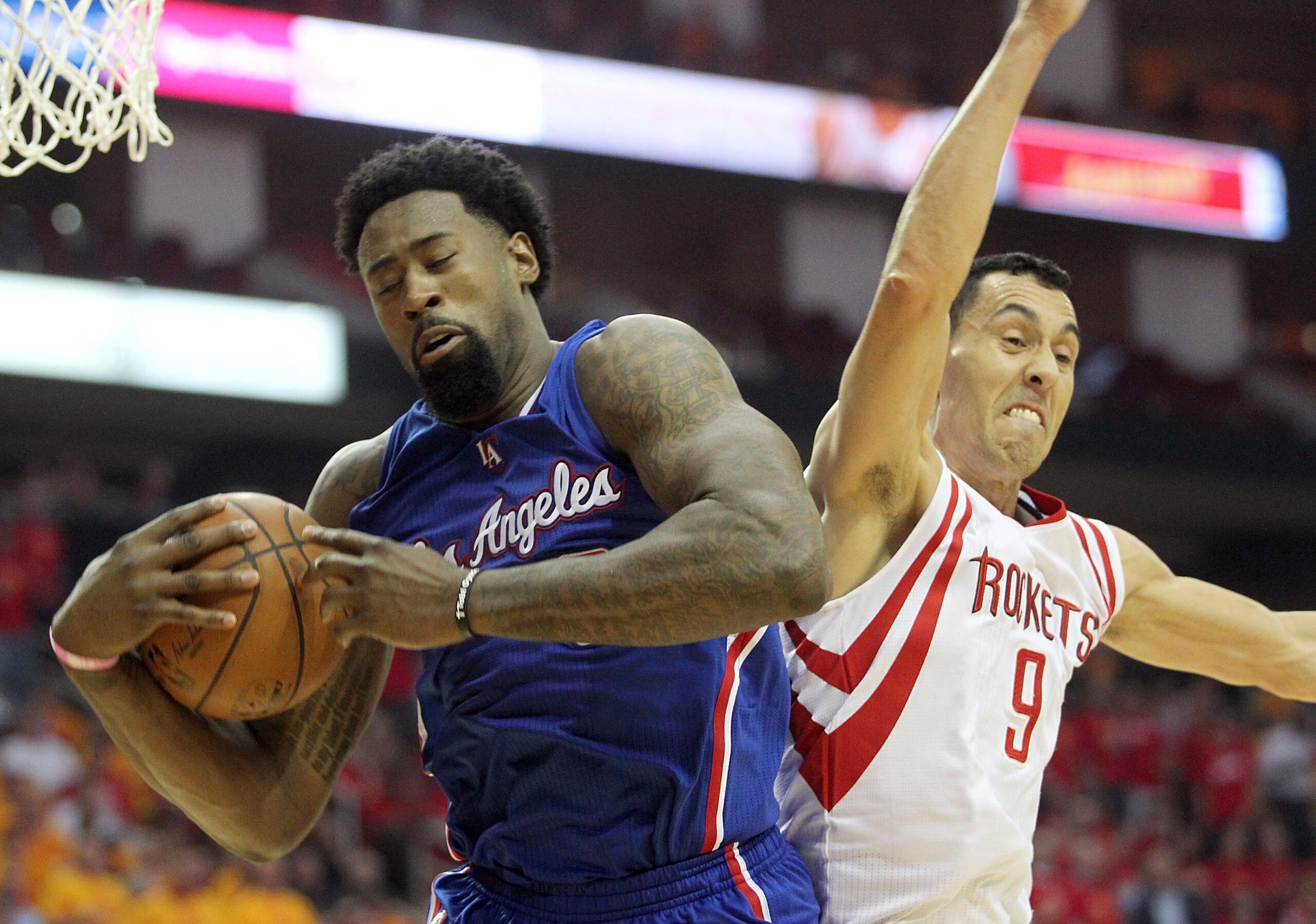
Drafted: No. 35 overall, 2008, Los Angeles Clippers
DeAndre Jordan isn't the league's most well-rounded center by any means, but give credit where credit's due: He knows what makes him valuable, and he stays in his lane accordingly.
The Los Angeles Clippers center has led the league in field-goal percentage for each of the past three seasons, largely because he limits himself to easy opportunities in the immediate vicinity of the basket. Of his 615 shot attempts over the regular campaign and the playoffs this past season, 558 came within three feet of the hoop, while just six were from 10 feet or further.
Meanwhile, Jordan is a board-gobbling machine, having led the league in rebounds per game over each of the past two seasons. Among qualified players, the Texas A&M product ranked first in both total rebound percentage and defensive rebound percentage, swallowing up a preposterous 32.4 percent of the available defensive boards when he was on the floor.
Though the Defensive Player of the Year campaign from Clippers head coach Doc Rivers was overblown, as Kelly Scaletta explained in detail for BBALLBREAKDOWN, the big man is certainly no pushover on defense. He recorded 183 blocks in 82 games this season, the league's third-highest total behind Anthony Davis of the New Orleans Pelicans and Utah Jazz center Rudy Gobert.
While Jordan isn't nearly as well-rounded as a guy like Paul Millsap, few active players can match his ability to swat shots into the stands, clean the glass and convert a bevy of bunnies offensively. If he ever improves his free-throw shooting—he knocked down just 39.7 percent of his tries at the charity stripe in 2014-15—he'll be damn near unstoppable.
1. Marc Gasol, C, Memphis Grizzlies
17 of 18
Drafted: No. 48 overall, 2007, Los Angeles Lakers
Remember when the Los Angeles Lakers and Memphis Grizzlies swapped Pau Gasol for Marc Gasol (among other parts) in February 2008, sending much of the league into histrionics? Looking back on that deal four years later, Tom Lorenzo of Grizzly Bear Blues called it the best trade in Grizzlies franchise history, largely due to the younger Gasol developing into an All-Star-caliber center.
While Pau went on to help the Lakers win two championships and made four All-Star appearances following the trade, Marc has emerged as one of the league's best two-way bigs. He received the 2012-13 Defensive Player of the Year award along with a second-team All-Defensive nod that season and has two appearances on one of the three All-NBA teams over the past three years.
In 2014-15, Big Spain took it upon himself to shoulder more offensive responsibility, averaging a career-high 17.4 points to go with 7.8 rebounds, 3.8 assists, 1.6 blocks and 0.9 steals in 33.2 minutes per game. He was the only player to rack up that points-rebounds-assists combination this season, cementing him as one of the league's most unique and irreplaceable big men.
In terms of career win shares, the 30-year-old is already the most successful 48th overall pick in NBA history, and he's set to only widen the gap from this point forward. He's also accrued the fourth-most win shares per 48 minutes (.161) among all second-round picks in NBA history with at least 250 games under their belts, trailing just Manu Ginobili, Bill Sharman and Chet Walker, the latter two of whom played before the NBA-ABA merger.
Gasol combines the defensive dominance of DeAndre Jordan with the versatility of Paul Millsap, sans the three-point shooting. The two-time All-Star is a truly elite two-way big man, which makes him the league's best active second-round pick, not to mention possibly the hottest commodity in free agency this offseason.
Jonathan Wasserman's Big Board
18 of 18Now that you've seen the star-caliber players unearthed during the second round in years past, check out the big board from Bleacher Report's Jonathan Wasserman to see who might follow in their footsteps from the 2015 draft class.
All statistics via Basketball-Reference.com, ESPN.com or NBA.com, unless otherwise noted.


.jpg?w=2560 "Chiefs, Steelers Eye WR Trades")