New York Jets: Full Position Breakdown and Depth Chart Analysis at Running Back
If you thought the New York Jets' days as a ground-and-pound offense were done with the arrival of offensive coordinator Chan Gailey, I'm afraid I've got some bad news.
As it turns out, head coach Todd Bowles brought on Gailey not solely because of his reputation for running a spread offense with a pass-heavy approach, but also for his ability to incorporate the running game into his offense.
"What appealed to me was when he was at Pittsburgh, he was able to run the football," Bowles said. "When he was at Georgia Tech, he was able to run the football and obviously the passing game he had speaks for itself, so that makes him a balanced coordinator, which was more what I was looking for."
.jpg?w=2560 "Seahawks Chiefs Football")


Thus, while the volume of the running game in the Jets offense may change, the importance will remain the same.
It makes perfect sense, then, that the Jets would continue to place a premium on depth at the running back position this offseason. They brought in Zac Stacy and Stevan Ridley to round out the depth chart, and with Chris Ivory and Bilal Powell still on the roster, the Jets have a fearsome foursome in their backfield.
How does the depth chart stack up? Here's a rundown of the Jets' running back position as it currently stands.
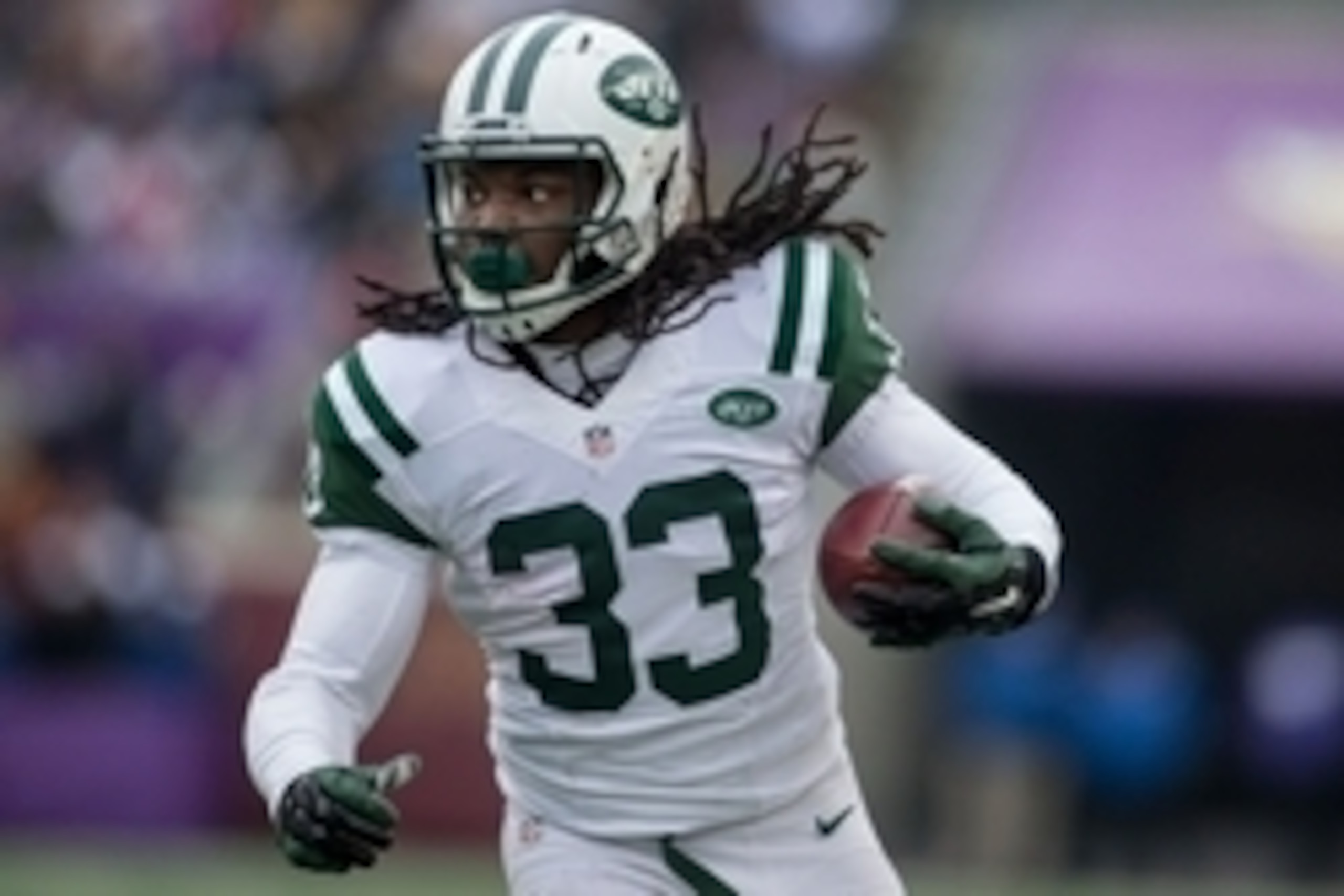
Chris Ivory
The Jets' lead back of 2013 and 2014 figures to be the bell cow once again in 2015.
With a total of 380 carries for 1,654 yards and nine touchdowns over the past two seasons, Ivory has proven he can carry the load for the offense. His hard running style, decisiveness, burst and between-the-tackles feel have made him more than a viable option.
Ivory isn't just a bulldozer, either; according to Pro Football Focus, he was the league's fifth-most elusive back last season overall, with an average of 2.46 yards after contact per rush attempt, 52 missed tackles rushing and four missed tackles receiving. He was the fifth-most elusive back in 2013, as well.
The Jets may not run with the same volume that they ran with under Rex Ryan (top 10 in rush attempts in five of Ryan's six years as head coach), but Ivory's talents will still be required in taking some of the pressure off of the Jets quarterback—whomever that may be.

Bilal Powell
The Jets may not have a "true" scatback on the roster, but Bilal Powell is probably their best bet in that role.
Powell played mostly on passing downs in 2014, serving 187 of his 242 snaps in the passing game (132 as a receiver, 55 as a blocker). He played more frequently in pass protection than any other back on the Jets roster, but when it came to catching the ball, his impact was not as noteworthy; he notched only 11 receptions on 132 pass routes.
With Gailey calling the shots, the Jets may not need a true "receiving back" as much as one would think; with such a high volume of three- and four-receiver spread sets, the Jets may not want or need their backs running patterns as much as they will need them to be effective in pass protection.
Powell's skill set may not make him the best option on passing downs, but he may not need to be an explosive playmaker to make an impact in that role anyway.
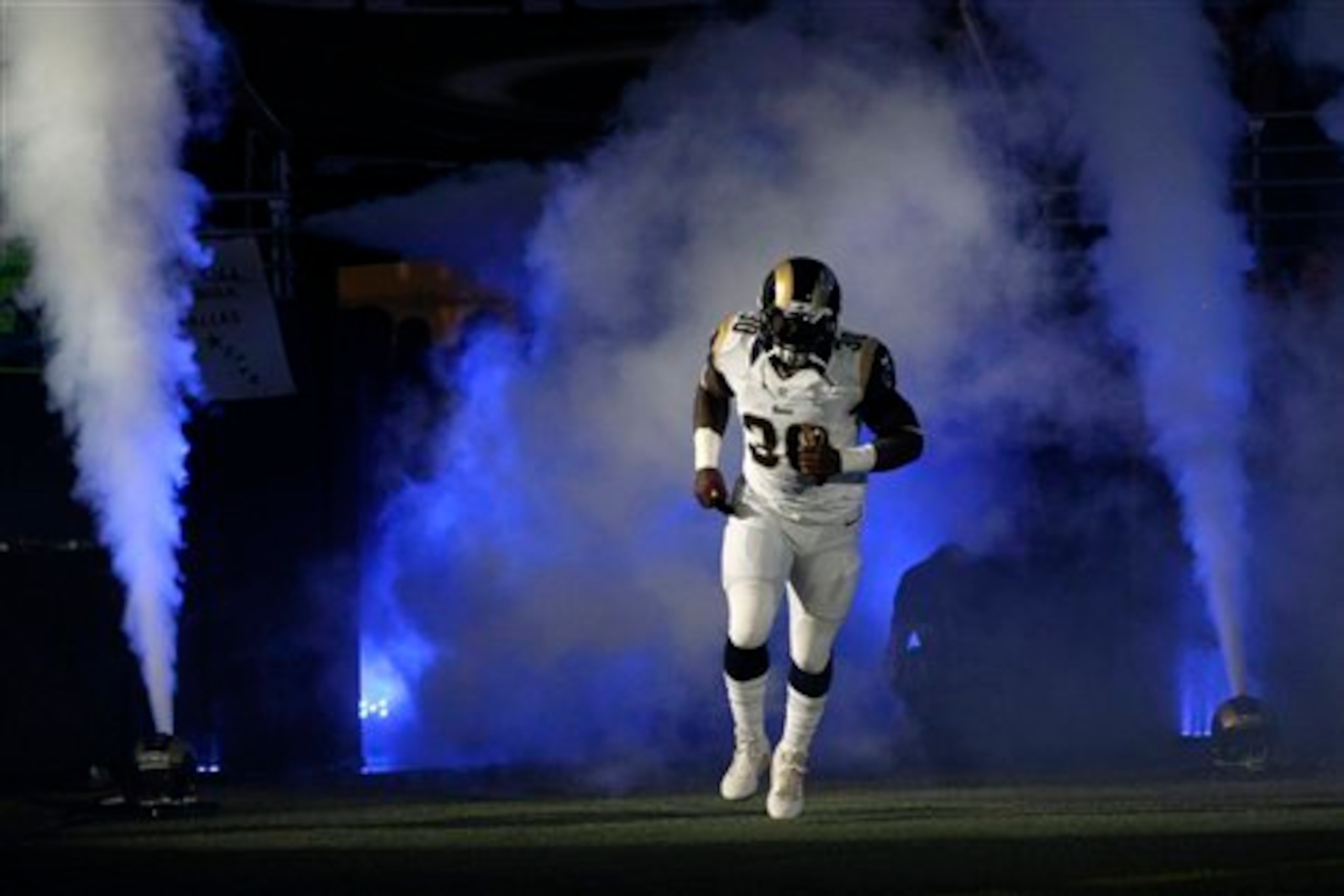
Zac Stacy
The Jets' trade for Zac Stacy is the definition of a flier. For the price of a seventh-round pick, the Jets traded for a back who was only marginally effective in his two-year career with the St. Louis Rams.
Stacy notched 326 carries for 1,266 yards (3.9 yards per carry) and eight touchdowns, but his role took a big hit in 2014 when he was passed by rookie Tre Mason on the Rams' depth chart. Once the Rams handed in their first-round selection card for Georgia running back Todd Gurley, the writing was on the wall, and Stacy sent (and then deleted) a one-word tweet: "Yikes."
Coming out of Vanderbilt, Tony Pauline of DraftInsider.net described Stacy as a "tough, interior runner with outstanding vision and instincts" but said Stacy "lacks the speed necessary to beat defenders into the open field." Those are the primary skills that Stacy has exhibited since entering the NFL, and that's exactly what the Jets should expect to get from him.

Stevan Ridley
Stevan Ridley is coming off a season-ending knee injury (torn ACL and MCL), so it's not a surprise that his contract with the Jets is the very definition of a low-risk, high-reward contract.
According to Over the Cap, Ridley's deal is worth $1.25 million, but only $80,000 of that is guaranteed. That means that if Ridley is ineffective or does not appear to be the same player he was before his injury, the Jets could cut him and hardly feel a pinch on their pocketbook.
That being said, given the talent that Ridley has exhibited in his NFL career, he could still prove to be a valuable piece to an offense.
He had a breakout 2012 campaign with 290 carries for 1,263 yards and 12 touchdowns, but he was plagued by fumbles throughout his Patriots career, and his workload diminished greatly as a result. He had 272 carries for 1,113 yards and nine touchdowns in the next two years, with carries going to LeGarrette Blount instead.
He appeared to be headed to a career resurgence last year, with 94 carries, 340 yards and two touchdowns in six games, but lo and behold, the knee injury took him out. If he can find the same explosiveness he showed early in his career and hang onto the football in the process, Ridley could challenge anyone for the No. 2 role in the Jets offense.
Unless otherwise noted, all quotes obtained via team news release. Advanced statistics provided by Pro Football Focus.
.jpg?w=2560 "Raiders Saints Football")