
Arsene Wenger Kept His Word About Winning in Style
Whatever else you can say about Arsene Wenger, the Arsenal manager is a man of his word.
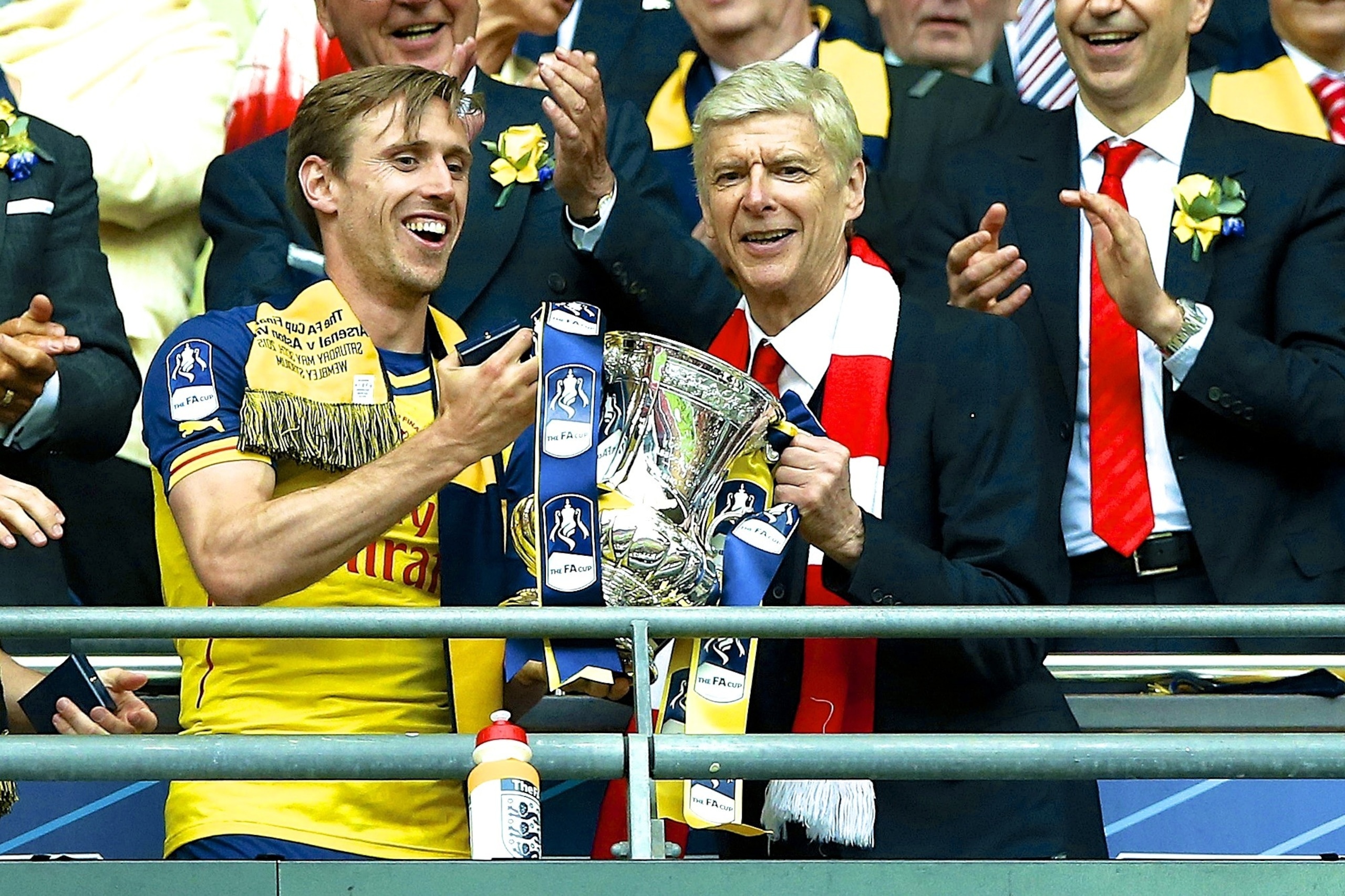
As he lifted a record-equalling sixth FA Cup after his latest Gunners vintage demolished Aston Villa, 4-0, Wenger knew that as much as anything else he's won, this trophy had been claimed in style.
Winning in style, wherever possible, is the foundation of Wenger's admirable football philosophy. He made that clear before the Wembley final during an interview with BBC's World at One (h/t Goal.com's Sam Lee): "I believe big clubs have a responsibility to win but to win with style."

The way Arsenal bedevilled Villa certainly was stylish. Quick and intricate passing combinations, exceptional technique, natural flair and creative intent were all obvious as Arsenal's style kings glided around Villa.

It was fitting that in a performance where every participant merited high marks, Arsenal's three best players were the most gifted attacking talents in the squad.
Rob Hughes of the New York Times highlighted the Gunners' terrific trio: "No participants on Saturday were more influential, or pleasing to the eye, than Santi Cazorla, Alexis Sanchez and Mesut Ozil. This trio, from Spain, Chile and Germany, respectively, ran for Arsenal until they were spent."
There aren't many managers in the ruthlessly pragmatic modern era of football who would indulge the presence of three talisman-like attacking forces. Problems with balance and the need for solid structures, tactical shape and defensive discipline (current parlance for "acceptable negativity"), would preclude at least one of that group from regularly featuring in the starting XI.
But Wenger is one manager willing to not only indulge those who can inspire the attractive, expansive football he demands but also make room for those players even if it might cost him and his team.
The desire to incorporate all three, along with Aaron Ramsey, another mercurial creator, has prompted several shifts in Arsenal's formation this season. Two changes in particular stand out.
Before the midpoint of this season, would many have thought natural No. 10 and occasional winger Cazorla could work as a deep-lying playmaker? Not only has Cazorla made the grade playing closer to his own defence, but he's become the essential conductor of the game all trophy-winning teams need.
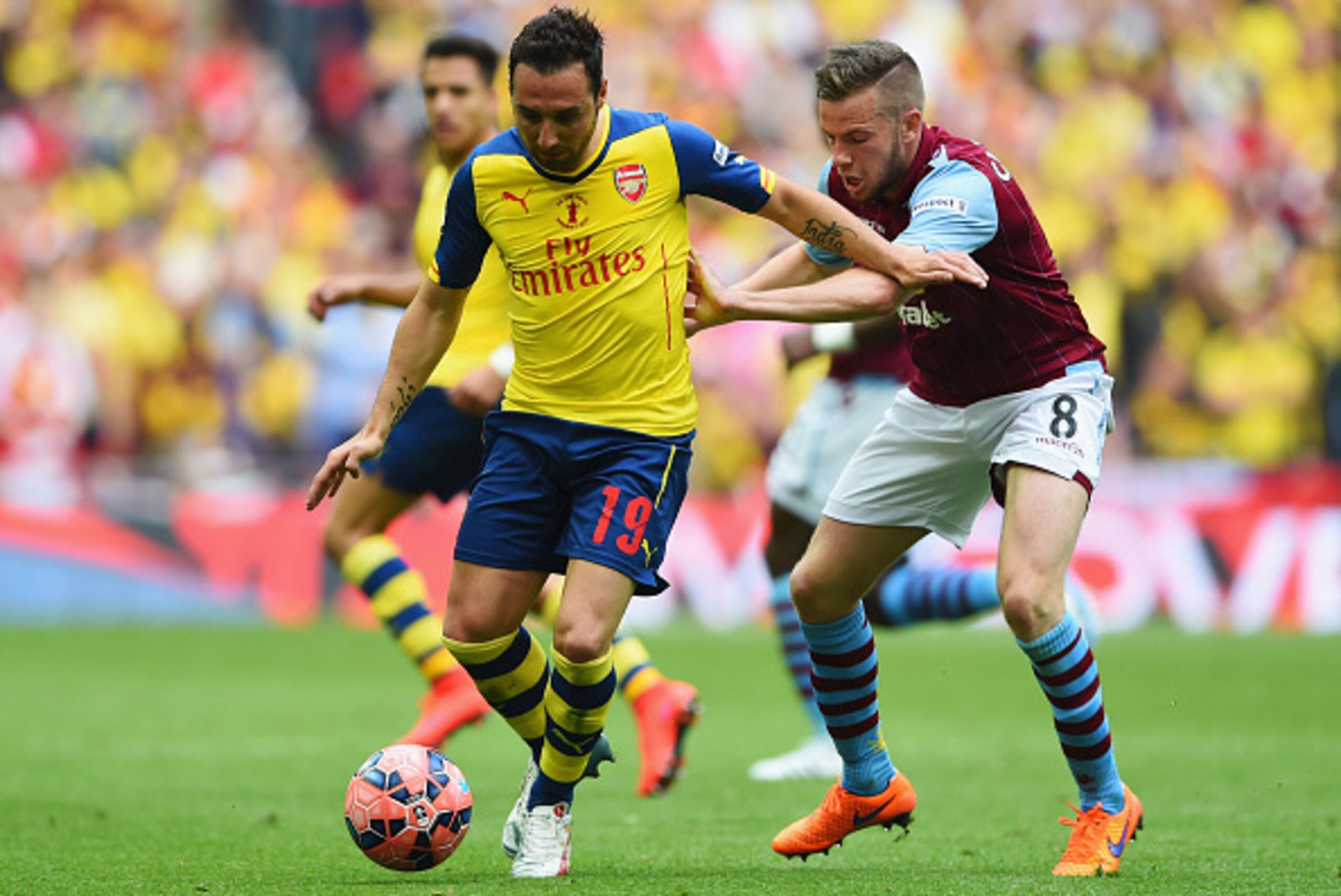
Arsenal's magnificent, matchbox-sized metronome is the one who establishes the quality and consistency of the Gunners' passing. It was Cazorla who ran the show at Wembley, leaving Arsenal's Midlands opponents hopelessly chasing shadows.
BBC commentator and one-time Premier League midfield schemer Danny Murphy was left wowed by Cazorla's efforts (h/t Squawka's Harry De Cosemo): "There have been some brilliant performances but it has been an amazing pleasure to watch Santi Cazorla. He ran the game from Minute 1 and dictated the play for Arsenal. He showed so many clever passes, touches and tricks."
But can Arsenal win the Premier League title with diminutive pass-master Cazorla at the base of midfield alongside Francis Coquelin? Can they consistently win the tough away games, where the physical battles are always more gruelling, with this combination?
Does Cazorla create the kind of platform to win at Stamford Bridge, home of champions Chelsea? Is the base solid enough to overcome Europe's best in the UEFA Champions League?
Wenger will perhaps be willing to find out, even if it puts a potential title challenge at greater risk. The reward of a team playing the attractive football he preaches is worth the risk and doesn't rule out the ultimate prize.
There are always doubts when style is favoured over pragmatism. Taking the leap in the league may yet demand a more physically robust, box-to-box powerhouse next to Coquelin.
It's easy to think so whenever the Gunners lose. But Wenger persists with Cazorla because he wants a technical artist dictating play, a midfielder defined more by skill than strength.
He also wants a way to get Cazorla and Ozil in the same starting XI. For most of the latter's two seasons in north London, that's seemed like an either-or debate.

Yet Wenger has stayed faithful to the idea he can have his two best creators on the pitch together and still win the big games, the tough encounters. Speaking of Ozil, many managers may not have indulged this classy yet ultra-languid stroller in the frenetic environment of the Premier League, particularly away from home.
But on Wenger's watch, Ozil, a beacon of technical quality and style, is an ever-present. The manager's faith was rewarded as Ozil hovered across the Wembley grass, sliding passes between the lines at will.
Getting Ozil and Cazorla in the same XI isn't where Wenger's fidelity to on-pitch style ends. There's no other way to explain the decision to convert Aaron Ramsey from the middle to winger.
No longer a centralised workhorse, Ramsey is now a roaming, Freddie Ljungberg-style right-sided attacker. While the ploy no doubt has its critics, it does answer one of Wenger's main dilemmas: How can he get all of his top creative players on the pitch together?
Not many teams would risk the damage to structural integrity created by playing a central midfielder out wide, where natural width is essential for a solid defensive shape. But Wenger takes the chance because he wants at least four of his gifted central playmakers in the team at the same time.

Even with Ramsey moved out wide, you get the feeling Arsenal's chief would still love to find a way to make room for at least one of Jack Wilshere, Alex Oxlade-Chamberlain or Tomas Rosicky.
The main theme here is making concessions to form a team that can "win with style as often as possible." It's easy to do when nothing's at stake, but it's particularly laudable at a big club where expectations are sky-high and reputations are always on the line.
That's the point often missed by those who try to establish defensive cynicism as some kind of zen-like requirement for winning. Step forward, Chelsea boss Jose Mourinho.
Nobody can dispute his record, just like nobody can cheapen Mourinho's knack for engineering results in big games. What does defame Mourinho's legacy is the constant attempts to try to make spoiling tactics seem endearing, along with the repeated mockery of those who believe in attractive, attacking football come what may.
Both of these irritable odes to pragmatism were obvious in Mourinho's tacky, graceless and quite frankly embarrassing end-of-season speech ridiculing Chelsea's title rivals, via Sky Sports.
Never mind asking what ever happened to just being happy with lifting a league title. Mourinho's mockery was the worst kind of inverted snobbery.

Obviously, no team can win with style every time. That's impossible. But those who stay faithful to the ideal shouldn't be dismissed and ridiculed as naive or less tactically aware than those who pack numbers deep.
It's easier to destroy than it is to create, even if the former often reaps more rewards. Teams can't stay faithful to attractive, attacking football every time, but that's the result for which top clubs should at least aim.
Of course, sometimes occasions and the way a game plays out enforce caution. For all his principles, Wenger hasn't been above such enforced changes.
He wasn't when he reshaped an Arsenal team being overrun and mauled by a rampant Manchester United in the 2005 FA Cup final. Wenger admitted to choosing defence over attack, result over style, via Matt Law of the Telegraph: "We did not deserve to win. At the start, I didn't set up like that, and suddenly Manchester United were all over us and I realised that physically we were not able to compete, so I said, ‘OK, let's defend as long as we can.'"
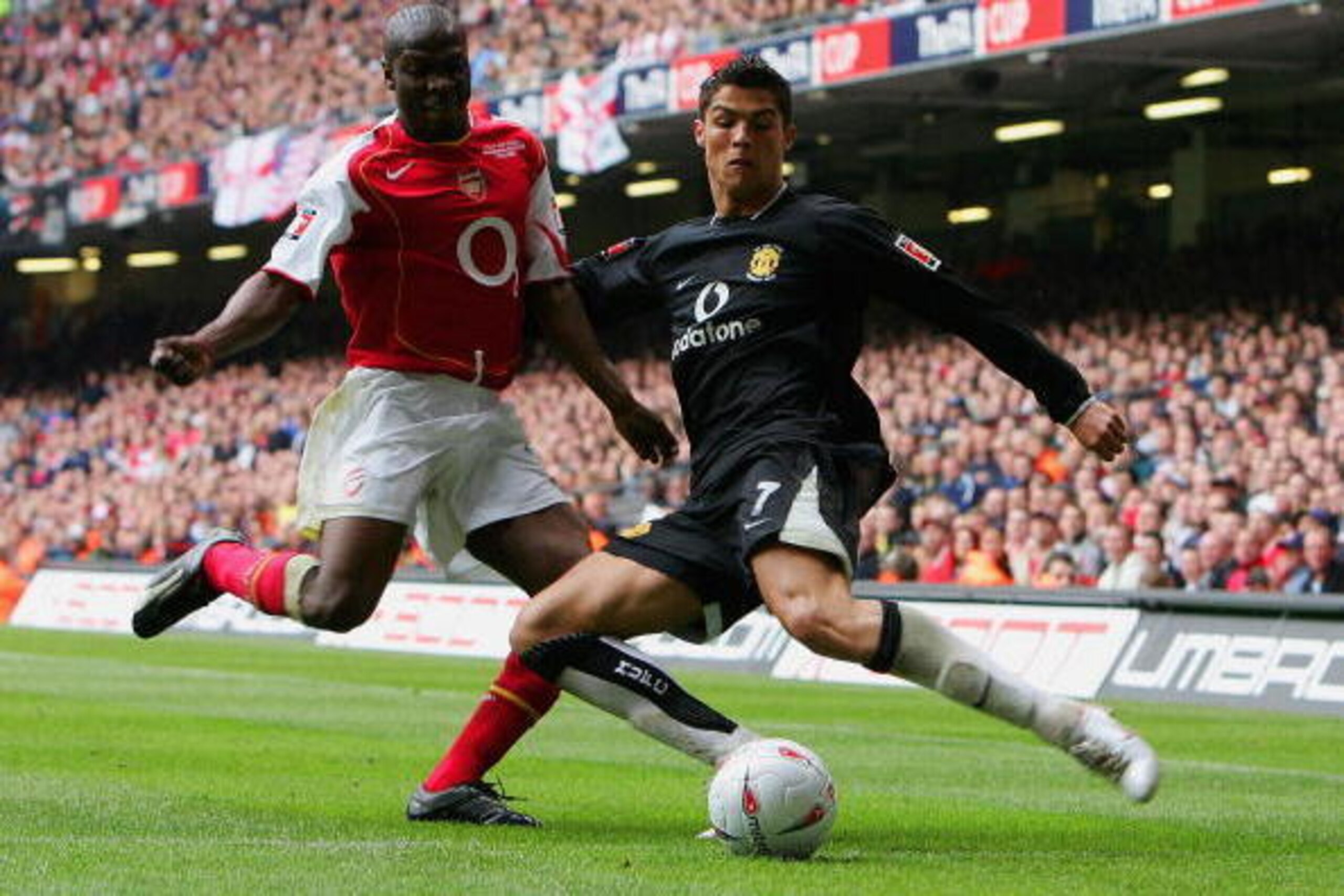
Playing a little cagier can be a natural consequence of the stakes' getting higher.
Mourinho's fondness for shutting up shop is why he's outlasted so many rivals in title races in four different countries. Similarly, Wenger's fidelity to the perfect expression of forward-thinking verve is why he's generally fared better in cup tournaments than league competition.
An environment conducive to one-off performances suits a team committed to imposing its own game no matter what. But the dirty work of winning a marathon demands occasionally bottling the edge.
Yet the Mourinho way isn't the only way. Nor do the lines of divide between grinding out results and earning them with style need to be so fiercely drawn.
It's possible to embody both, but the latter is what top clubs should aspire to. Playing with style should be a badge of honour, not something for hipster, wannabe "tacticians" to deride.
Ignoring that when paying the highest wages and transfer fees for premium players is beyond embarrassing.
Aiming to win in style is something to be proud of. Wenger certainly expressed his pride in realising the ideal on the Wembley stage, via Rob Kelly of the Gunners official site: "I think it shows as well that this team has moved forward since the beginning of last season. We are now a much more mature team, who knows its way and plays as well fantastic football."
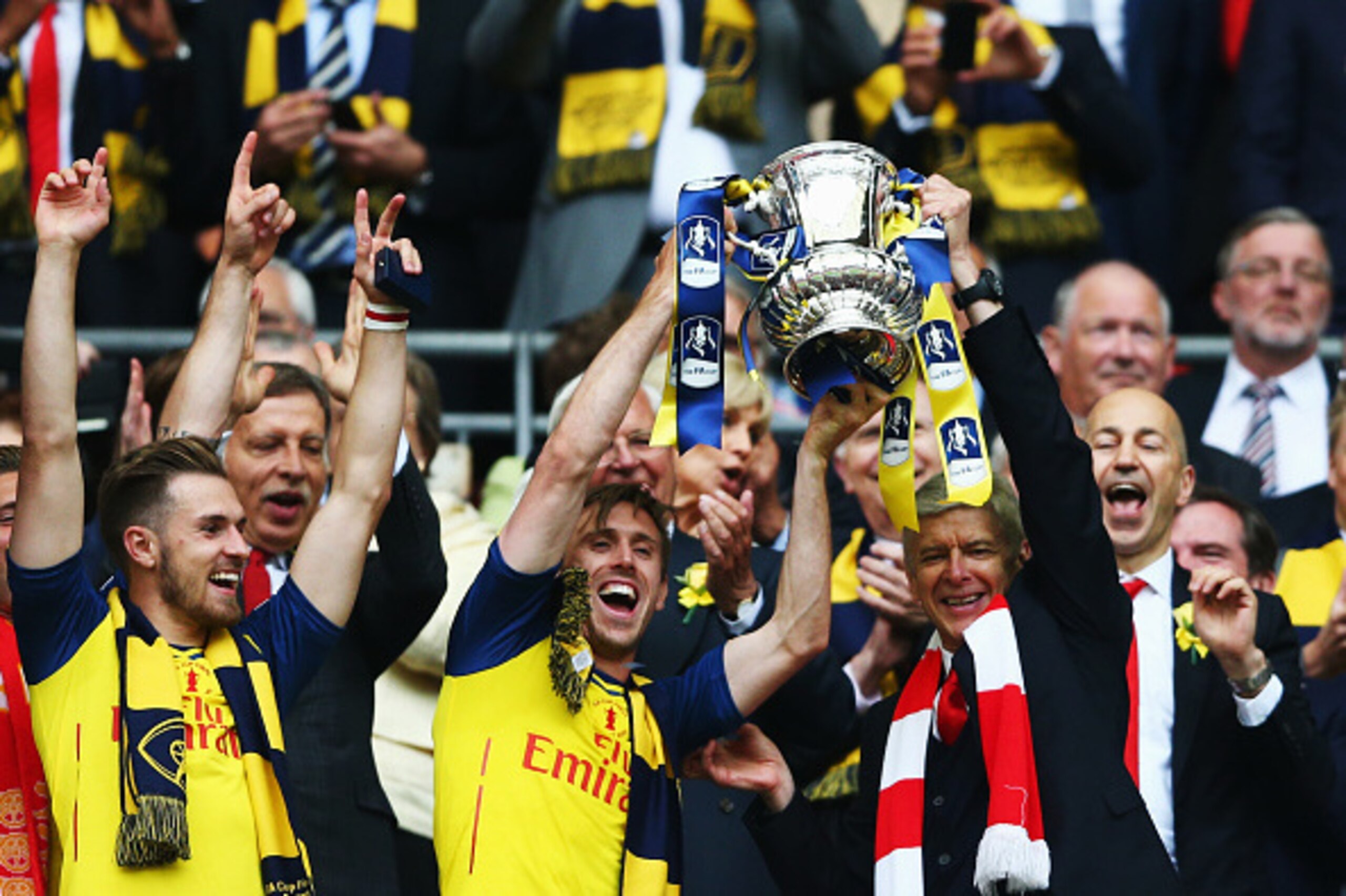
The insistence on football that stays in the mind as fantastic has often been a stick to beat Wenger with when the results haven't matched performances. But Wenger has stuck to his beliefs despite the mounting criticism and pressure, the true test of any principle.
In a way, Villa were fitting opposition for Arsenal to win a trophy after producing one of their most attractive performances of the season. It was during a 3-1 home defeat to the Birmingham club at the start of last season that Wenger endured some of the most vocal and vicious dissent of his Arsenal career, as noted by BBC Sport.
Wenger weathered the pressure and made Arsenal better not by changing his ways but by keeping his belief about winning with style.
After claiming his ninth major trophy with the Gunners, Wenger's word and Arsenal's style remain intact.

.jpg?w=2560 "FIFA Congo Player Eligibility")

.jpg?w=2560 "CJGJ Shares Cryptic Post 🤔")
.jpg?w=2560 "Terrell Owens Being Sued for Defamation")
.jpg?w=2560 "Buyers or Sellers for NFL's Most Surprising Teams 🏈")
.jpg?w=2560 "Report: Seahawks Not Signing Mixon 😯")