College Football Teams with Longest Heisman Droughts
Early odds are out for who should win this year's Heisman Trophy (per OddsShark), and assuming the field of top candidates remains the same once the season gets going, we could see some teams in position to end long Heisman droughts.
Since the Heisman was first awarded in 1935, there have been winners from 35 different schools that are currently playing at the FBS level. Eleven of those schools have had a Heisman honoree this century, with USC players claiming three awards and Oklahoma players getting selected twice.
It's been quite a bit longer for other schools, including some that have had multiple Heisman winners in their history.
Here's a look at the 10 current FBS programs that have gone the longest since last having a player win the Heisman, along with a look at their near misses since then.
UCLA
1 of 10
Last win: 1967
Top finishers since: Troy Aikman (3rd, 1988) and Cade McNown (3rd, 1998)
When quarterback Gary Beban won the Heisman as a senior, it culminated a stellar career in which he also placed fourth in the voting in 1966. While at UCLA Beban threw for 23 touchdowns but also ran for 35, which still ranks 22nd in Pac-12 history (per Sports-Reference.com).
After Beban graduated, though, the Bruins had a handful of players earn Heisman consideration, but none were a serious contender until Aikman came along in the late 1980s.
A transfer from Oklahoma, Aikman started for UCLA as a junior and senior, winning Pac-12 Offensive Player of the Year honors in 1987 and a consensus All-American nod in 1988 when he led the Pac-12 with 24 passing TDs. But that only made him a distant third to Oklahoma State's Barry Sanders, who set the FBS single-season rushing record that year, and USC quarterback Rodney Peete.
A decade later, McNown nearly beat out Kansas State quarterback Michael Bishop for second place after leading UCLA to a 10-0 start, but Texas' Ricky Williams was the runaway winner that season.
2015 Heisman hopeful: Running back Paul Perkins led the Pac-12 in rushing as a sophomore, and this season he could become an even bigger part of UCLA's offense with the Bruins possibly starting a freshman at quarterback.
"For a Heisman to creep closer into the equation, Perkins and the Bruins will both have perform at an elite level all year long," Bleacher Report's Adam Kramer wrote.
Perkins has been given early 18-to-1 odds to win the Heisman, according to OddsShark.
Navy
2 of 10
Last win: 1963
Top finisher since: Napoleon McCallum (6th, 1983)
Quarterback Roger Staubach was the second Navy player to win the Heisman in a four-year span, following halfback Joe Bellino's win in 1960. The Midshipmen were regulars on the ballot for the first 30 years of the award, then almost completely disappeared from consideration after Staubach won as a junior in 1963.
As a senior, Staubach didn't make the top 10 in voting, nor did anyone else from the U.S. Naval Academy for another 20 years.
McCallum is the only Midshipmen to do so since Staubach's victory, finishing sixth in 1983 and then seventh in 1985. He had 1,587 and 1,327 rushing yards, respectively, in those seasons, finishing with 4,179 yards for his career.
2015 Heisman hopeful: Quarterback Keenan Reynolds holds the FBS records for rushing touchdowns by a quarterback in a game (seven) and season (31), and with 14 more rushing scores he'll surpass Wisconsin's Montee Ball as the all-time FBS leader in that category.
Oregon State
3 of 10
Last win: 1962
Top finisher since: Ken Simonton (9th, 2000)
Terry Baker was taken first overall in the 1963 NFL draft after a monster senior year with Oregon State, finishing second in the country with 1,738 passing yards and an NCAA-best 15 touchdowns. The Beavers' 9-2 record that year would be their best until winning 11 games in 2000.
In between, though, were a lot of really bad years, including one winless season and eight others with only one victory. As a result, OSU hardly got even a fleeting sniff of Heisman consideration during that span.
It wasn't until that breakout year in 2000, when former Miami (Florida) coach Dennis Erickson piloted the Beavers to a magical 11-1 season that included a win over Notre Dame in the Fiesta Bowl, did OSU get back on the ballot. And Simonton, who ran for 1,559 yards and 19 TDs as a junior, only got one first-place vote.
2015 Heisman hopeful: With Pac-12 career passing leader Sean Mannion graduating and Gary Andersen taking over the program from Mike Riley, Oregon State's offense is going to look completely new this season. Andersen's Wisconsin teams were run-heavy, with Melvin Gordon finishing second in the Heisman in 2014, but if there's a Beaver that could get a look for the Heisman it would be wide receiver Victor Bolden.
Bolden had 72 receptions for 798 yards and two TDs as a sophomore.

Syracuse
4 of 10
Last win: 1961
Top finisher since: Don McPherson (2nd, 1987)
Ernie Davis' 823 rushing yards as a senior was only good enough for sixth in the country, but it was enough to top Ohio State fullback Bob Ferguson for the Heisman. He was one of several great Syracuse players to wear jersey No. 44, including Floyd Little and Jim Brown, but neither of them were able to claim the trophy.
The school retired that number in 1998, but announced last month it would form a committee to award that jersey to a new player each season in an effort to return Syracuse football to its glory days. The Orange were 3-9 last year, their sixth losing record since 2005.
Four Syracuse players who did not wear No. 44 have made the top 10 in Heisman voting, three of those coming between 1987-2001. McPherson, a quarterback, finished second to Notre Dame receiver Tim Brown in 1987, while quarterback Donovan McNabb was fifth in 1998 and defensive end Dwight Freeney placed ninth in 2001.
2015 Heisman hopeful: After missing more than half of last season with a broken leg, dual-threat quarterback Terrel Hunt returns for his senior year. His injury sent Syracuse's season into a tailspin, and despite missing the final seven games he still led the team in total offense.
Hunt has thrown 11 touchdown passes and ran for 13 scores in parts of two seasons as the Orange's starter.
LSU
5 of 10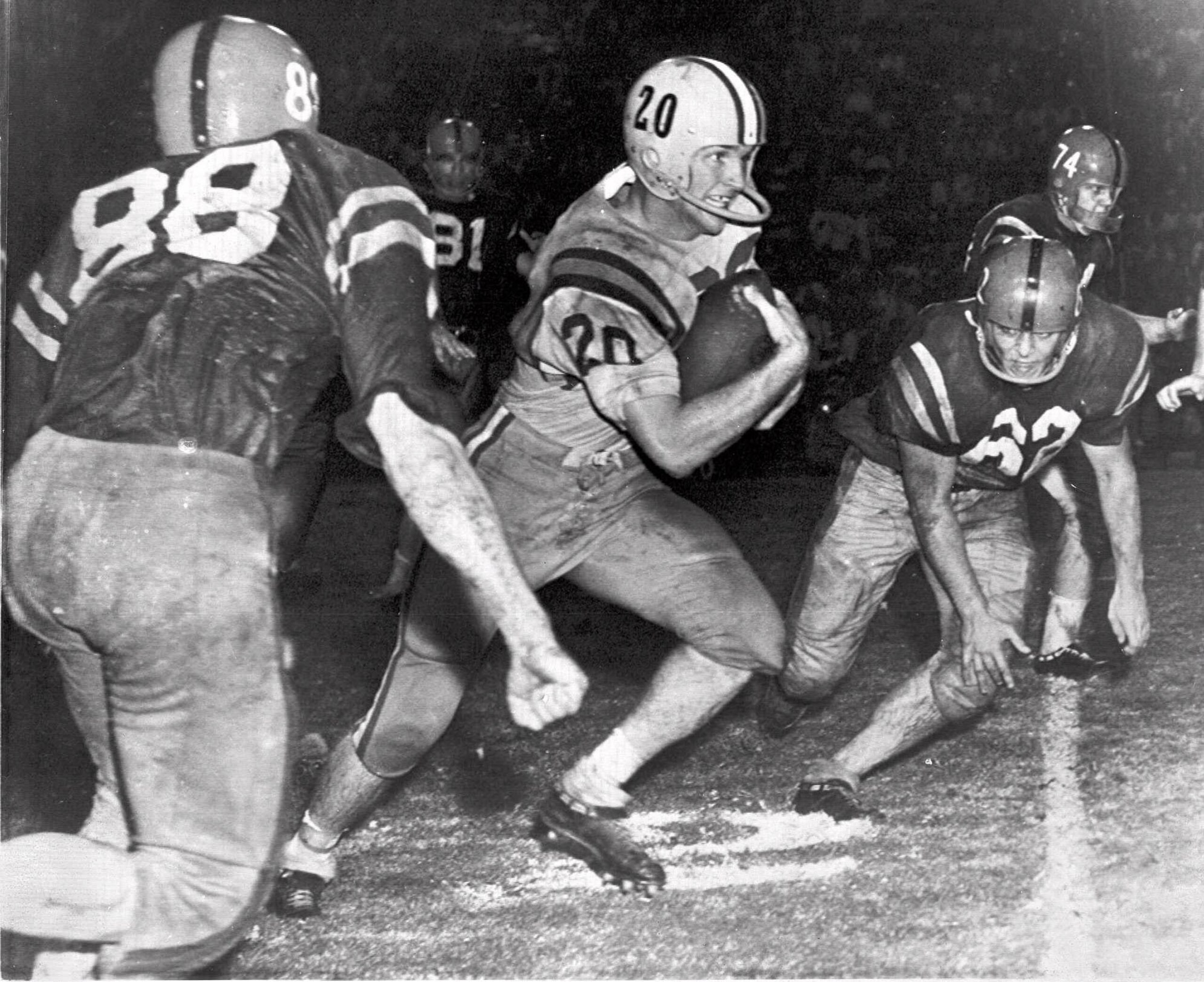
Last win: 1959
Top finisher since: Jerry Stovall (2nd, 1962)
After finishing third the year before, Billy Cannon claimed LSU's only Heisman in 1959 with a modest 598 rushing yards and five touchdowns. That's only 35 percent of the 1,686 that Charles Alexander had in 1977 when he set the Tigers' school record, yet Alexander finished a distant fifth in the Heisman voting that year to Oklahoma's Billy Sims.
The school came very close to getting a second Heisman winner three years after Cannon, with halfback Stovall losing out to Oregon State quarterback Terry Baker in 1962, and then quarterback Bert Jones finished fourth in 1972.
Since Alexander's fifth-place finish in 1978, though, the only other LSU players to make the top 10 have been of the defensive and/or specialist variety. Defensive end Glenn Dorsey was ninth in 2007, and in 2011 cornerback/punt returner Tyrann Mathieu placed fifth but had less than 20 percent of the points that winner Robert Griffin III of Baylor garnered.
2015 Heisman hopeful: At 15-to-2, running back Leonard Fournette is second only to Ohio State rusher Ezekiel Elliott (6-to-1) on OddsShark's early Heisman odds list. And after setting a school freshman rushing record with 1,034 yards, Fournette is once again heading into a season with plenty of hype after entering college with some of the loftiest expectations placed on any prep player.
"Judging from the reports of Fournette's impressive work this spring, it might not take him long to assume front-runner status," Jeff Duncan of NOLA.com wrote. "Fournette has attacked his first spring of major college football with a vengeance. He's spent the offseason reshaping his body. He's five pounds lighter but significantly stronger and faster. At 225 pounds, he said he can still clock a 4.3 40, which should be terrifying news for SEC opponents."
Army
6 of 10
Last win: 1958
Top finisher since: Mike Mayweather (10th, 1990)
With three Heisman winners, Army is tied for fifth among FBS school in terms of players who have won the award. Yet all the other schools with at least three Heisman honorees have have had a winner since 1987, while the Black Knights have been shut out since running back Pete Dawkins claimed the trophy in 1958.
From 1935 until Dawkins' win, 14 Army players either won or finished in the top 10 of the Heisman balloting, including three apiece in 1944 and 1946. But after Dawkins won, the only other Knight to get enough points to finish in the top 10 was Mayweather, and it wasn't much. In 1990 the running back ran for 1,338 yards and 10 touchdowns as a senior, but that only got him three first-place votes and 10 total.
2015 Heisman hopeful: None. Army heads into its second season under coach Jeff Monken having finished with a losing record in four straight years. And the Knights' top three offensive players from 2014 have graduated.
SMU
7 of 10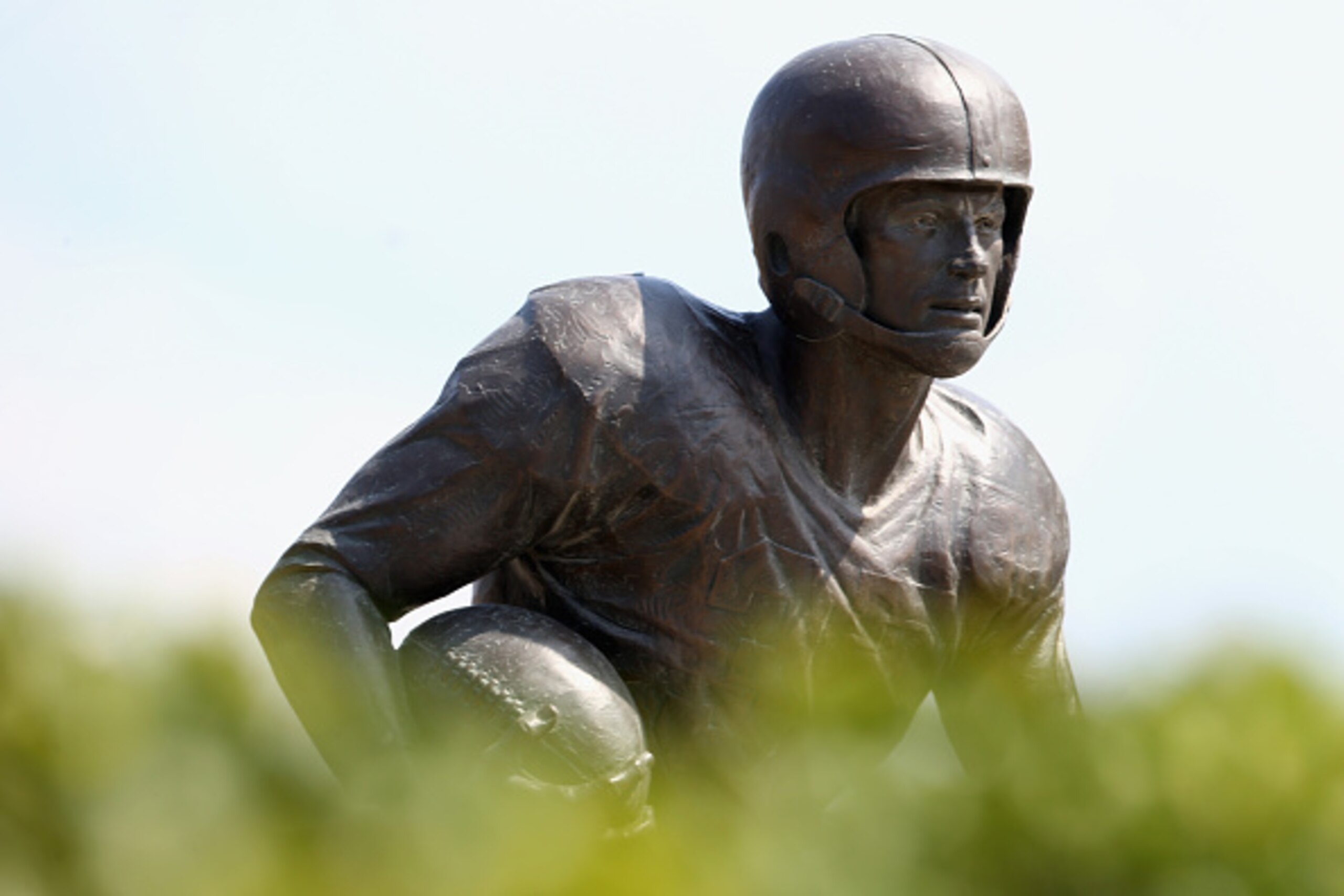
Last win: 1948
Top finisher since: Kyle Rote (2nd, 1950)
Doak Walker was a top-three Heisman finisher in every season he played at SMU, winning it as a junior while getting third the year before and after. His successor in the Mustangs' backfield, Kyle Rote, was runner-up to Ohio State's Vic Janowicz in 1950, then SMU quarterback Don Meredith finished ninth and third, respectively, in 1958-59.
It was another 23 years before SMU would get another player into the running for the Heisman, when Eric Dickerson finished third in 1982 behind Stanford quarterback John Elway and winner Herschel Walker of Georgia. A few years later, SMU was hit with the NCAA's death penalty, getting its program shut down for the 1987 season and has stayed at or near the bottom of the FBS ranks ever since.
2015 Heisman hopeful: None. New coach Chad Morris has come to Dallas with plenty of promise, after creating a dynamic offensive attack as Clemson's coordinator, but his first season isn't likely to produce any individual players that warrant Heisman consideration.
Minnesota
8 of 10
Last win: 1941
Top finisher since: Paul Giel (2nd, 1953) and Tom Brown (2nd, 1960)
Minnesota has never produced a 3,000-yard passer, so it's not surprising that its lone Heisman winner—quarterback Bruce Smith—threw for just 320 yards and two touchdowns in winning the award in 1941. Smith also ran for 473 yards and five TDs, which is what ultimately enabled him to beat out Notre Dame's Angelo Bertelli (who would win the Heisman two years later) that season.
The Golden Gophers had a few other Heisman near-misses in the 1950s and 60s, with tailback Giel getting edged out by Notre Dame halfback John Lattner in 1953 and Brown (a guard) losing out to Navy halfback Joe Bellino in 1960. Quarterback Sandy Stephens was fourth in 1961 and tackle took third in 1962, then Minnesota fell off the Heisman map.
No Gophers have made the top 10 in the past 52 years, with not even standout tight end Maxx Williams getting any love last season.
2015 Heisman hopeful: After redshirting last season, freshman running back Jeff Jones is set to step in for 1,600-yard rusher David Cobb. With Minnesota once again expected to be a run-first team, if Jones were to have a huge first year and the Gophers were to claim the Big Ten's West Division title, he could have a chance at being the third freshman in the past four seasons to win the Heisman.
Iowa
9 of 10
Last win: 1939
Top finisher since: Alex Karras (2nd, 1957), Randy Duncan (2nd, 1958), Chuck Long (2nd, 1985), Brad Banks (2nd, 2002)
You know it's been a long Heisman drought for a school when it plays its games in a stadium named for the program's one and only winner.
Halfback Nile Kinnick beat out Michigan halfback Tom Harman for the award in 1941, rushing for 374 yards and five touchdowns and adding 11 passing TDs for the Hawkeyes.
Four other Iowa players have been runner-up for the trophy, most recently quarterback Banks in 2002 when he finished behind USC quarterback Carson Palmer. The player with the best chance was Long, a quarterback who was only 45 points behind Auburn running back Bo Jackson in 1985.
The last Iowa player to make the top 10 was running back Shonn Greene, who was a distant sixth to Oklahoma quarterback Sam Bradford in 2008.
Iowa's football field was renamed Kinnick Stadium in 1972, 29 years after Kinnick's death while training for World War II combat. Had any of those other Hawkeyes won the Heisman, they might be playing in a stadium with a hyphenated name.
2015 Heisman hopeful: Iowa hasn't had a star (other than offensive and defensive linemen) in several years, but quarterback C.J. Beathard could reverse that trend if he's able to handle the job on a full-time basis. Beathard started only one game in 2014, but coach Kirk Ferentz tabbed him as the starter during the offseason, which prompted fellow passer Jake Rudock to transfer to Michigan.
TCU
10 of 10
Last win: 1938
Top finisher since: Jim Swink (2nd, 1955)
TCU had three players earn Heisman votes in the first four years of the award, including when Davey O'Brien claimed the fourth edition of the trophy in 1938. The school has had a handful of viable candidates in the 76 years since then, but none have come close to claiming another award.
Swink's runner-up finish in 1955 wasn't as impressive as it sounds, as the halfback's 742 points were less than one-third the number that Ohio State halfback Howard Cassady claimed. That was the second most-lopsided Heisman race to date, but it's still the most points any TCU player has gotten in one year.
Running back LaDainian Tomlinson ran for 2,158 yards in 2000, but that was only good enough to get him 566 points and a fourth-place finish. Florida State quarterback Chris Weinke edged out Oklahoma passer Josh Heupel that year.
And in 1984, Kenneth Davis finished fifth but had only 86 points, compared to the 2,240 that Boston College quarterback Doug Flutie earned in victory.
2015 Heisman hopeful: Trevone Boykin was fourth in the 2014 race, with just seven first-place votes and 218 total points, but with the top three finishers all moving on he is among the best candidates for this year's award.
"If recent history is any indication, Boykin's style of play will greatly help his chances of winning college football's ultimate award," Matt Murschel of the Orlando Sentinel wrote. "He combined for more than 4,600 total yards of offense (in 2014) with 41 total touchdowns—a must in this offensive day and age."
Oddsshark gives him an 8-to-1 chance to win, which is tied with Georgia running back Nick Chubb and Mississippi State quarterback Dak Prescott for third-best.
Follow Brian J. Pedersen on Twitter at @realBJP.
.png?w=2560)
.png?w=2560)
.jpg?w=2560 "Chiefs, Steelers Eye WR Trades")