

2015 NBA Draft Prospects Who Can Solve Boston Celtics' 3-Point Shooting Crisis
Boston Celtics head coach Brad Stevens models his team’s offense on a simple pace and space system. It’s an increasingly popular scheme in the NBA that relies on a team’s ability to play fast and spread the floor. The theory is simple: perimeter shooters creating high-percentage scoring opportunities.
During the 2014-15 season, the Celtics were able to achieve the “pace” part of that offensive plan, despite playing with a mismatched roster. Aided by the late-season acquisition of speedy point guard Isaiah Thomas, Boston managed to average 98.4 possessions per game, the fifth-highest mark in the league.
While the Celtics played with tempo and moved the ball constantly, they regularly failed to take advantage of the space created within the team’s offense thanks to unreliable three-point shooting. With an impressive crop of shooting prospects available in the 2015 NBA draft, the Celtics should target one of those players this June and let him help solve the team's three-point shooting crisis.



Boston ranked a paltry 27th in that department, hitting just 32.7 percent of its threes. The Celtics managed to overcome this subpar accuracy during the regular season and earn the Eastern Conference's No. 7 seed in the playoff field, but the Cleveland Cavaliers exposed Boston’s shooting shortfalls during their first-round series sweep.
The Celtics hit just 25.6 percent from downtown in those four games, failing to punish the Cavs for collapsing on Evan Turner and Thomas on their drives to the paint.
While Boston’s poor postseason performance could be chalked up to an untimely slump, only late-season addition Jonas Jerebko and Avery Bradley kept defenses honest with their outside shooting during the regular season. Jerebko (40.6 percent) and Bradley (35.2 percent) were the only Celtics rotation players who shot better than the league average (35 percent) from beyond the arc.
The 6’10’’ Jerebko is an unrestricted free agent, and it’s unclear whether general manager Danny Ainge intends to bring him back due to a glut of big men. With no other reliable shooting options signed to the roster next year outside of Bradley, Stevens acknowledged the need for additional floor-spacers in a recent interview with Celtics.com.
"Our shooting needs to improve," Stevens said. “That is something that I think we can improve with work in the summer."
The Celtics have two first-round picks (Nos. 16 and 28), and two second-round picks (Nos. 33 and 45).
With many teams placing a high priority on addressing their needs for outside shooting, the Celtics will be best served by trying to find a shooter with a strong track record earlier in the first round, rather than risk the possibility of coming up empty later in the draft.
Here is a look at four sharpshooters who could be available at No. 16.
Devin Booker, Kentucky, 6'6", SG, Freshman
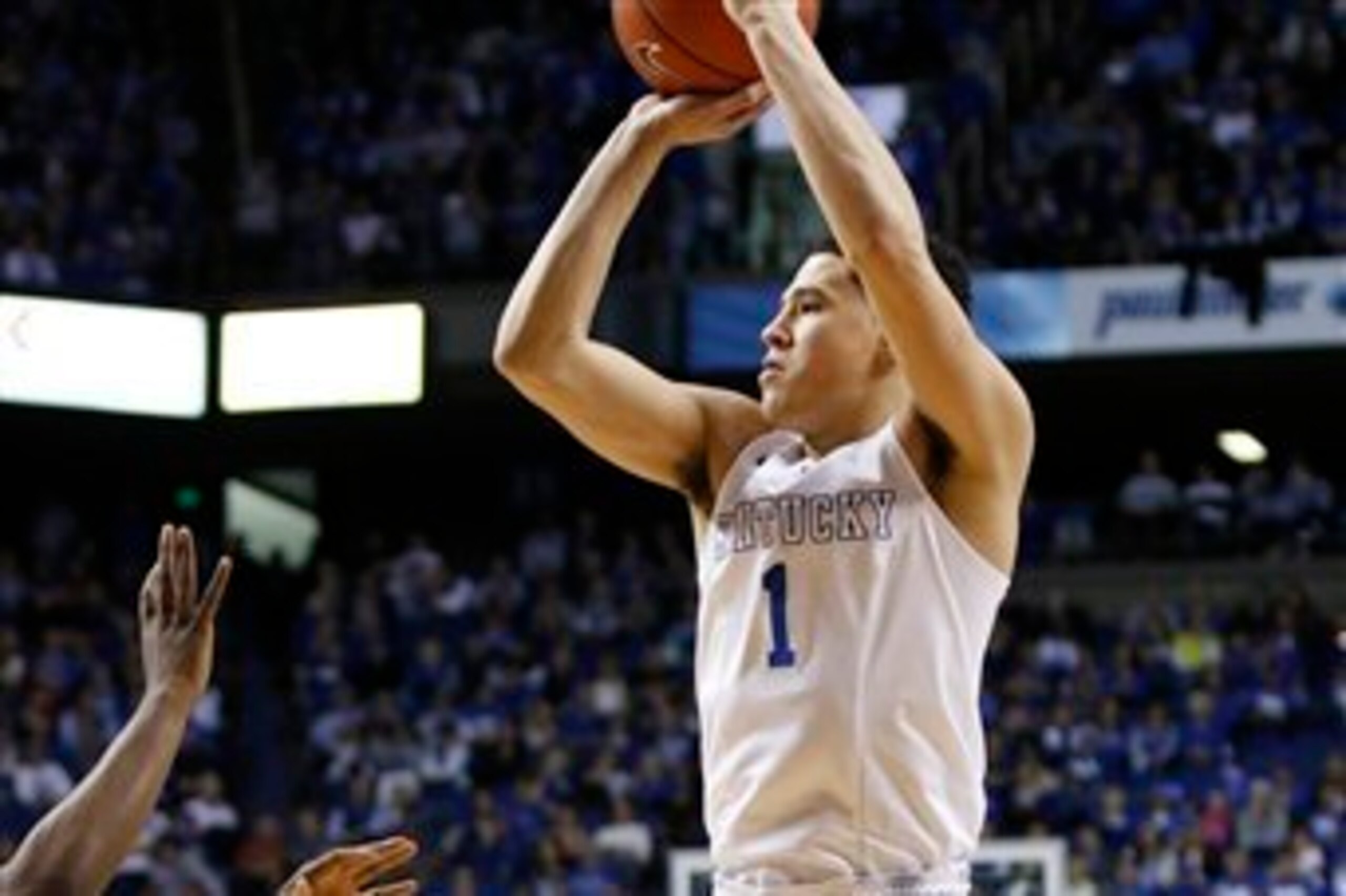
2014-15 Stats: 10.0 PPG, 2.0 RPG, 1.1 APG, 47.0 FG%, 41.1 3P%
Booker, 18, is one of the youngest prospects in this year’s draft class, but that should not diminish the possibility of his immediate contributions to an NBA offense. The shooting guard took nearly half of his 287 field-goal attempts from three-point range (141) and ranked second in the SEC in three-point shooting percentage.
The frequency (3.7 attempts per game) and efficiency of Booker’s outside shooting should translate well to Boston’s offense. The team has a pair of offensive creators in Thomas and Turner who can create open looks from the perimeter with regularity. Booker can take advantage of those opportunities with his consistent, compact shooting mechanics that allow him to release the ball quickly on jump shots.
As DraftExpress’ Jonathan Givony writes, "He has outstanding footwork and balance, allowing him to be more than just a spot-up floor-spacer as someone who makes shots running off screens, attacking closeouts, and punishing defenders for going underneath on the pick and roll."
The Celtics may have to move up a few picks in order to land the sharpshooter, but Ainge has the assets to get a deal done, if needed.
Justin Anderson, Virginia, 6'6", SF, Junior
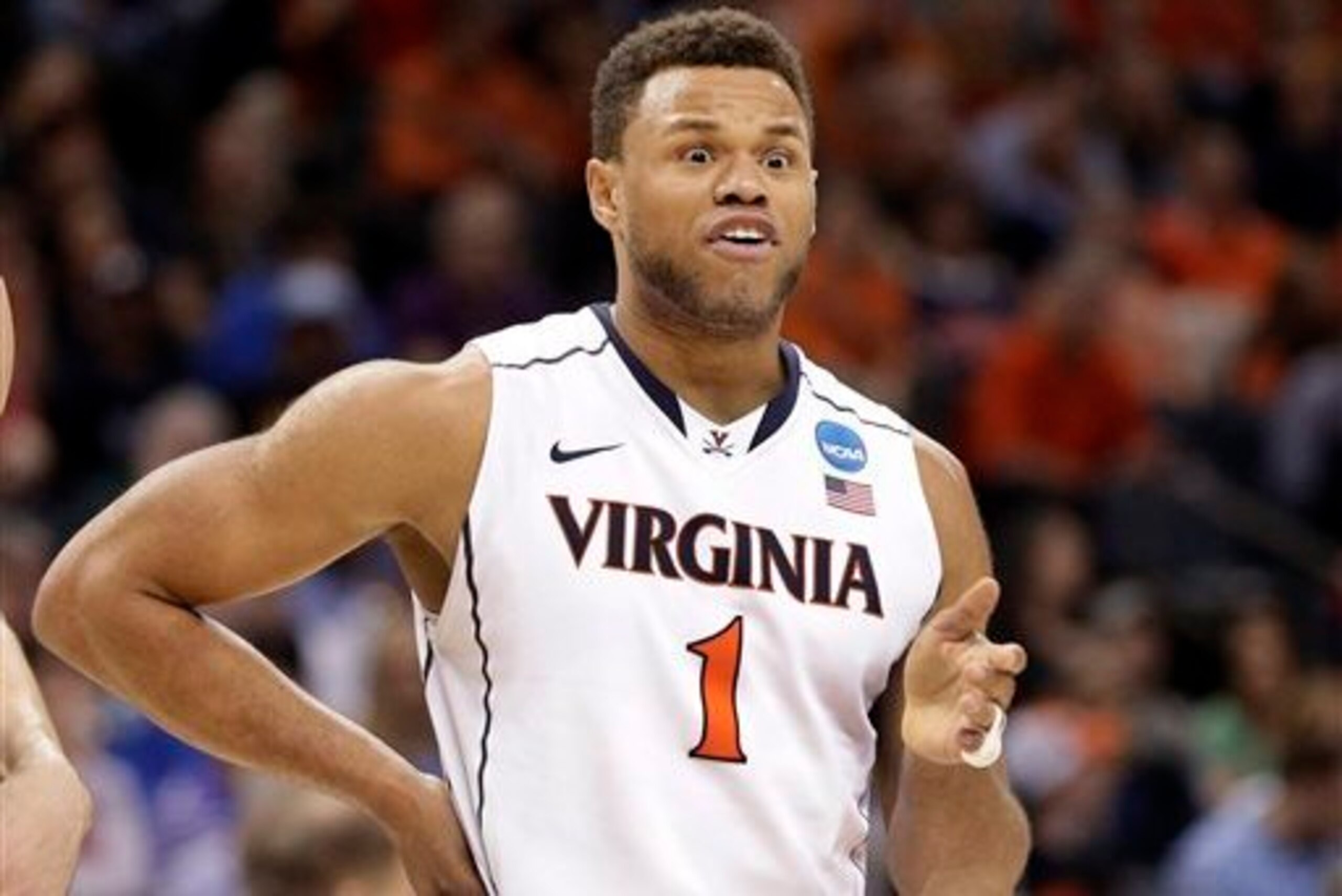
2014-15 Stats: 12.2 PPG, 4.0 RPG, 1.7 APG, 46.6 FG%, 45.2 3P%
Anderson is one of the more experienced shooting prospects available in the draft after seeing regular minutes in his three seasons at Virginia. That seasoning paid off for the 21-year-old, who developed into one of the top three-point shooters in the country last season, improving on his 2013-14 accuracy by 14 percentage points.
The rate of Anderson’s attempts from beyond the arc (4.0 per game) should be encouraging to scouts. He hit just 29.7 percent of his shots from downtown in his first two collegiate seasons, which may make teams wonder if last season’s jump was an outlier.
Still, Stevens is desperate for shooting on the wing after seeing Turner and Jae Crowder hit less than 30 percent of their three-point attempts last season. Anderson also has the defensive tools and athleticism to be an asset, making him a worthy selection at No. 16.
Frank Kaminsky, Wisconsin, 7'0'', C/PF, Senior
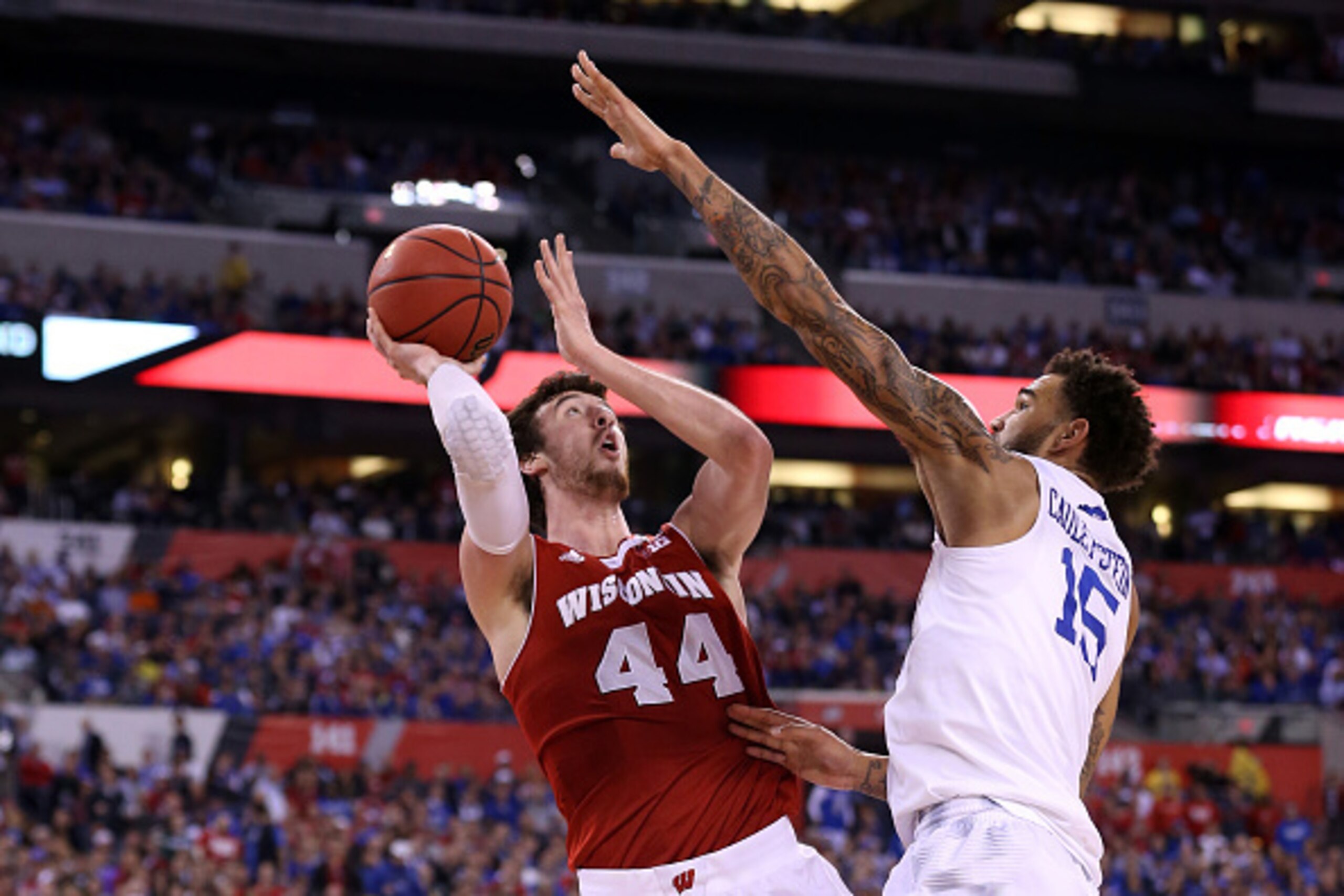
2014-15 Stats: 18.8 PPG, 8.2 RPG, 2.6 APG, 54.7 FG%, 41.6 3P%
Frontcourt shooting may be Boston’s biggest area of weakness heading into the offseason. Last season’s starters (Brandon Bass and Tyler Zeller) did not have three-point shooting range, while top reserves Jared Sullinger and Kelly Olynyk failed to hit regular open looks from beyond the arc.
Kaminsky, 22, is a player who could help solve that problem immediately for Stevens. He showed dramatic growth during his four years at Wisconsin while carrying the additional burden of leading his team’s offense (12.5 field-goal attempts per game).
Kaminsky regularly excelled in pick-and-rolls with Badger teammates, showing the ability to drag opposing big men out of the paint with his reliable outside shot. Boston already has a dangerous weapon in Thomas to handle the ball in pick-and-roll situations. Adding a seven-footer like Kaminsky to pick-and-pop with Thomas would force defenses to respect his range, allowing more space for the rest of the Celtics offense to operate.
As Bleacher Report's Jonathan Wasserman notes, "The good news for Kaminsky—he's going to essentially enter the NBA draft with a life preserver around his waist. That blend of shooting touch, 7-foot size and passing instincts should ultimately keep him afloat no matter how rough things get."
R.J. Hunter, Georgia State, 6'5'', SG, Junior
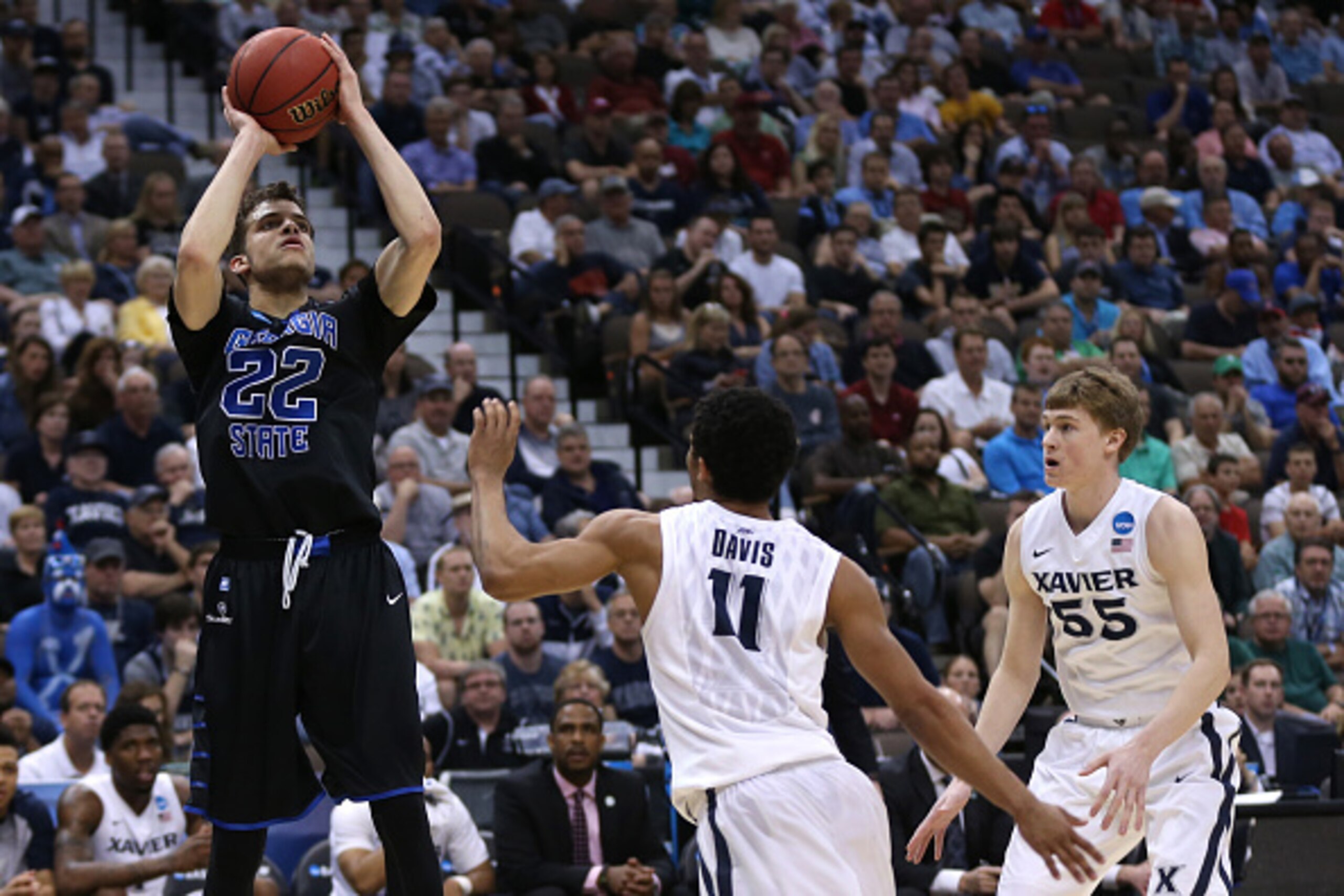
2014-15 Stats: 19.7 PPG, 4.7 RPG, 3.6 APG, 39.5 FG%, 30.5 3P%
The shooting numbers weren’t pretty for Hunter last year, but they were also a consequence of Georgia State’s lackluster offensive weapons. Opposing defenses were able to key in on Hunter, forcing frequent contested looks that were partially responsible for the dramatic dip in his accuracy.
Hunter addressed his uninspiring numbers with SB Nation's Kevin O'Connor at the NBA Draft combine last week.
"When asked about how he received Kyle Korver-like attention from the defense, Hunter took the blame and said his struggles were due to poor shot selection and a minor mechanical issue. He said he was flicking his wrist and pulling it back instead of following through with the ball.
"
The good news for NBA teams is that the 21-year-old shot 38.9 percent from downtown over his first two collegiate seasons. That strong track record makes him one of the most highly regarded shooters in this draft. Unlike other prospects, Hunter has shown the ability to hit spot-ups, shoot off screens or pull up off the dribble from three-point range.
That kind of versatility will serve him well at the next level. He won’t be expected to carry the load of an offense, only take advantage of the open looks he’s given. If Hunter stays smart with his shot selection, he could provide a big boost to the Celtics bench.

.jpg?w=2560 "Raiders Could Start Mendoza")

.jpg?w=2560 "Rodgers Iced Out on Plane 💎")
.jpg?w=2560 "🚨 Week 8 AP Top 25 Poll")
.jpg?w=2560 "Packers Safety Slams Refs 🤬")
