

Michael Wacha Filling Adam Wainwright's Ace Shoes for MLB-Best Cardinals

You'd think it would be impossible to downplay Adam Wainwright's season-ending injury and its effect on the St. Louis Cardinals. It's not like you can just snap your fingers and replace a guy like that.
Unless, apparently, you have a Michael Wacha.
It's been about three weeks since Wainwright was ruled out for the remainder of the 2015 season with a torn left Achilles tendon, and Wacha is a big reason why you may have already forgotten about that. It's largely because of his pitching that the Cardinals have an MLB-best 26-13 record.
TOP NEWS

Brewers Closer Blasts Tropicana Field Roof

Latest MLB Trade Rumors 👂

Best Fits for Cubs' Star FAs 🧩
The latest chapter in this narrative was written Tuesday night at Citi Field, where Wacha led the Cardinals to a 10-2 victory over the New York Mets with seven innings of two-run ball that featured five strikeouts, two walks and only four hits allowed.
The 23-year-old right-hander now has a 2.13 ERA, one of the best in the majors, across 50.2 innings in eight starts. If you're into such things, Wacha also has a perfect 6-0 record that, as ESPN Stats & Info points out, might have been 8-0 under different circumstances:
Before we continue, let's clarify that we're not taking anything away from Wainwright. The 33-year-old veteran had a 1.44 ERA in his four starts this year, and he owns a 2.61 ERA over 493.2 innings dating back to 2013. When the Cardinals lost him, they lost one of baseball's elite aces.
For that matter, let's not take anything away from the rest of the Cardinals' rotation, either. Lance Lynn and John Lackey also have ERAs under 3.00, and as a whole, the group has an MLB-best 3.16 ERA.
But it's not by accident that Wacha has pushed his way into Wainwright's ace-sized shoes. He came into 2015 as a talented pitcher, and he's found new ways to make the most of his talent.
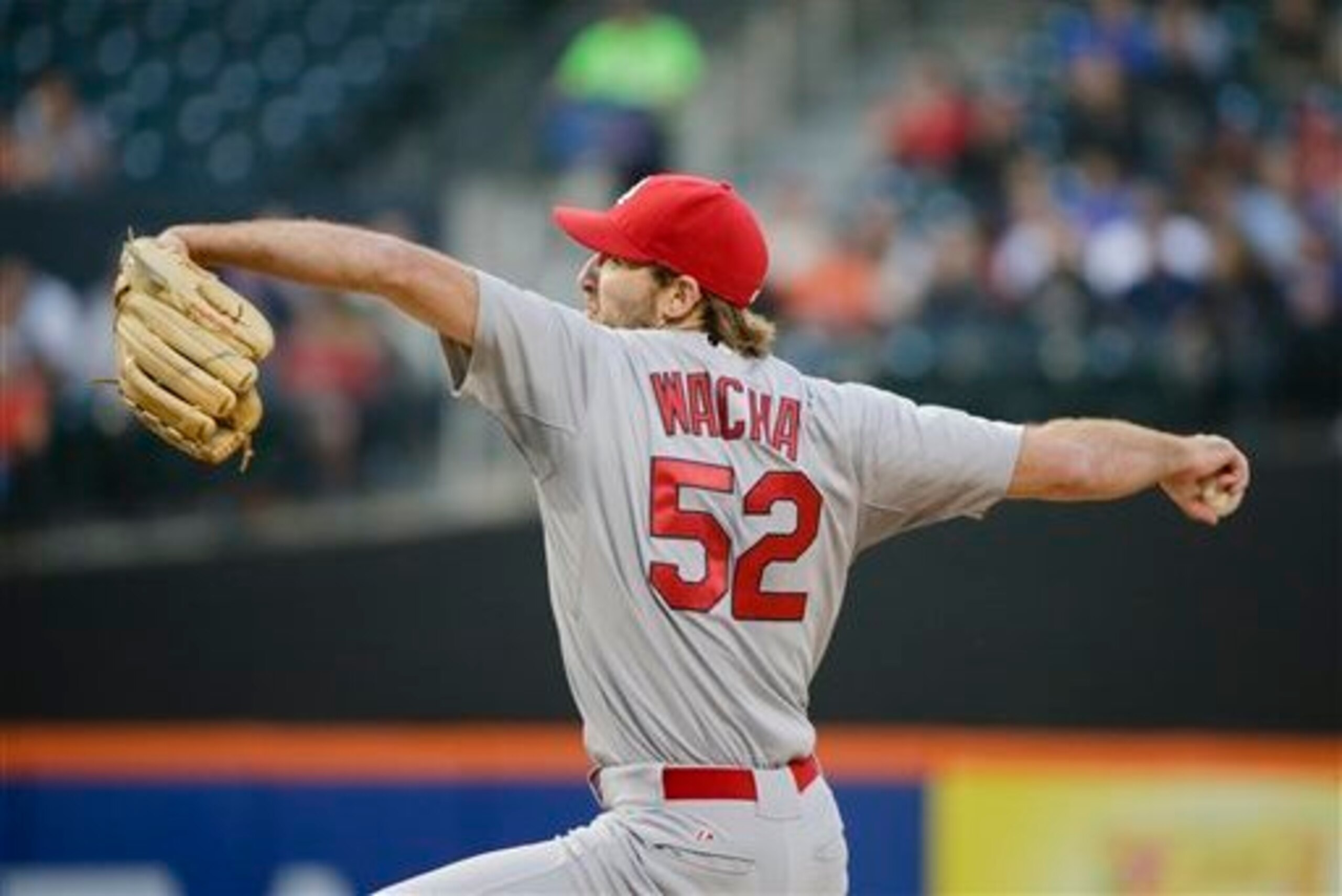
The notion that Wacha came into the season as a talented pitcher shouldn't need much support. He was the 19th overall pick in the 2012 draft, and he was a top-100 prospect when he debuted in 2013. That season saw him post a 2.78 ERA in 15 regular-season appearances before a star-making turn in the postseason, and he was pretty good (3.20 ERA) in an injury-shortened 2014 season, too.
Still, it is understandable if you're skeptical of Wacha's 2015 performance.
The thing that stands out most as a red flag is that Wacha isn't racking up K's. After posting a 9.0 K/9 in 2013 and a 7.9 K/9 in 2014, he's striking out only 5.5 batters per nine innings this year, per FanGraphs. That's well below the starter average of 7.3, and it suggests that Wacha owes much of his success to a mixture of good defense and good luck.
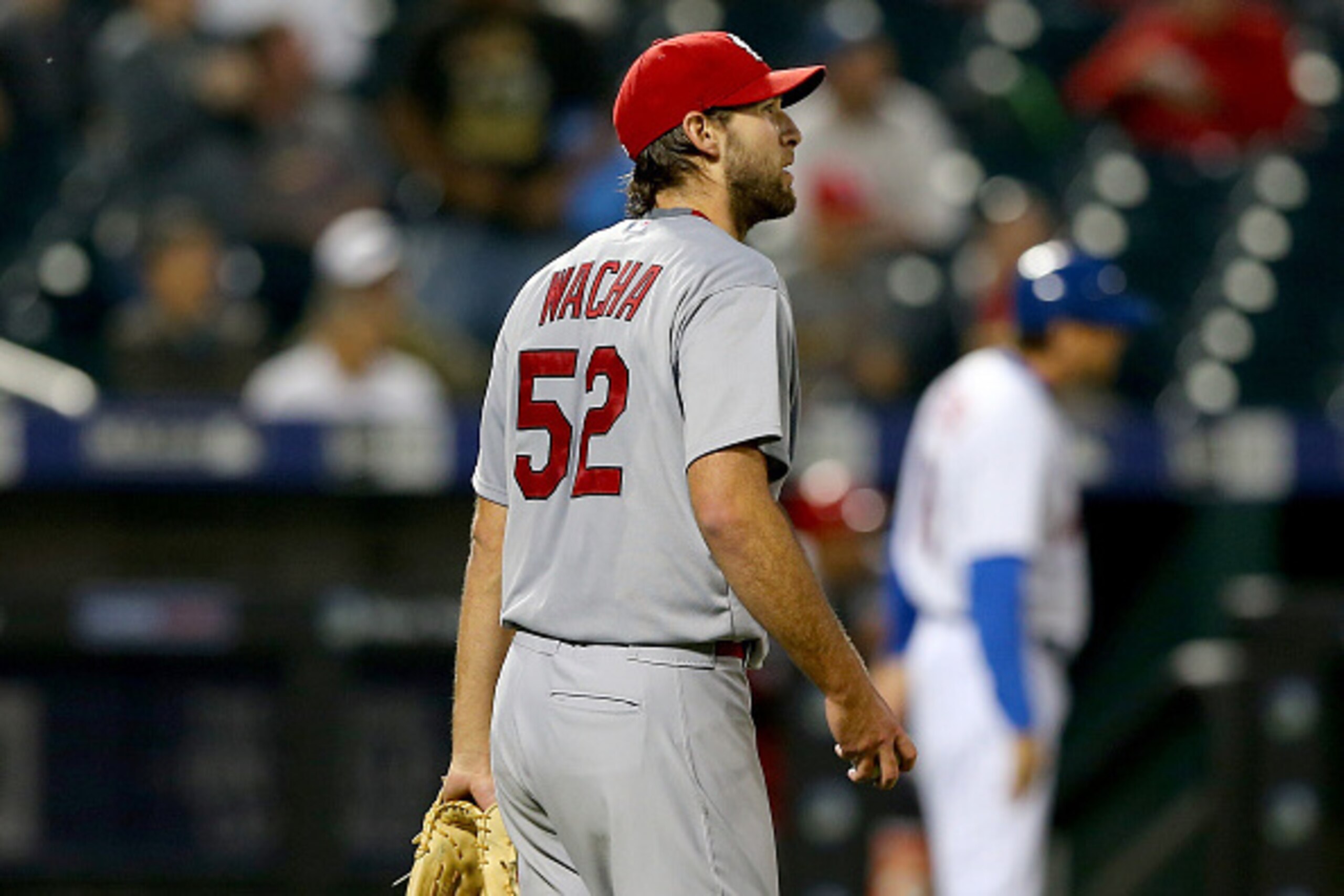
Another stat that says the same thing is Wacha's BABIP (batting average on balls in play), which stands at .231. That's way below the starter average of .296, which opens up fears that what's currently down will eventually go up.
Either that or Wacha is actually doing his part to earn such a low BABIP. A pitcher can pull off such a trick if he's really good at managing contact, and that's quietly where much of Wacha's success this season is coming from.
For one, Wacha has become an above-average ground-ball artist, pushing his GB% from the low 40s to 51.5 heading into his Tuesday night start. As Jonah Keri wrote at Grantland, that "highlights a [former Cardinals pitching coach] Dave Duncan lesson that’s carried forward to a new generation of Cards pitchers: Keep the ball down in the zone, and good things will happen."
But it's not all about ground balls. For two, FanGraphs shows the rate of hard contact against Wacha heading into Tuesday night's outing had hit a new low:
A stat that backs this up is exit velocity. According to Baseball Savant, Wacha went into Tuesday's outing allowing an average of 86.55 miles per hour off the bat. Among qualified starters, that put him among the top 15 in quiet contact allowed.
As for where this is coming from, we know two things that are very useful in the contact-management department are good command and overpowering stuff. Wacha's 2.1 BB/9 is a fine reflection of the fact that he has outstanding command. And with a fastball that sits 93-95, he certainly has power stuff.
But the real key? That would be Wacha's pitch selection. He has a reputation as a mere fastball/changeup pitcher, but Brooks Baseball can show he's evolved beyond that in 2015:
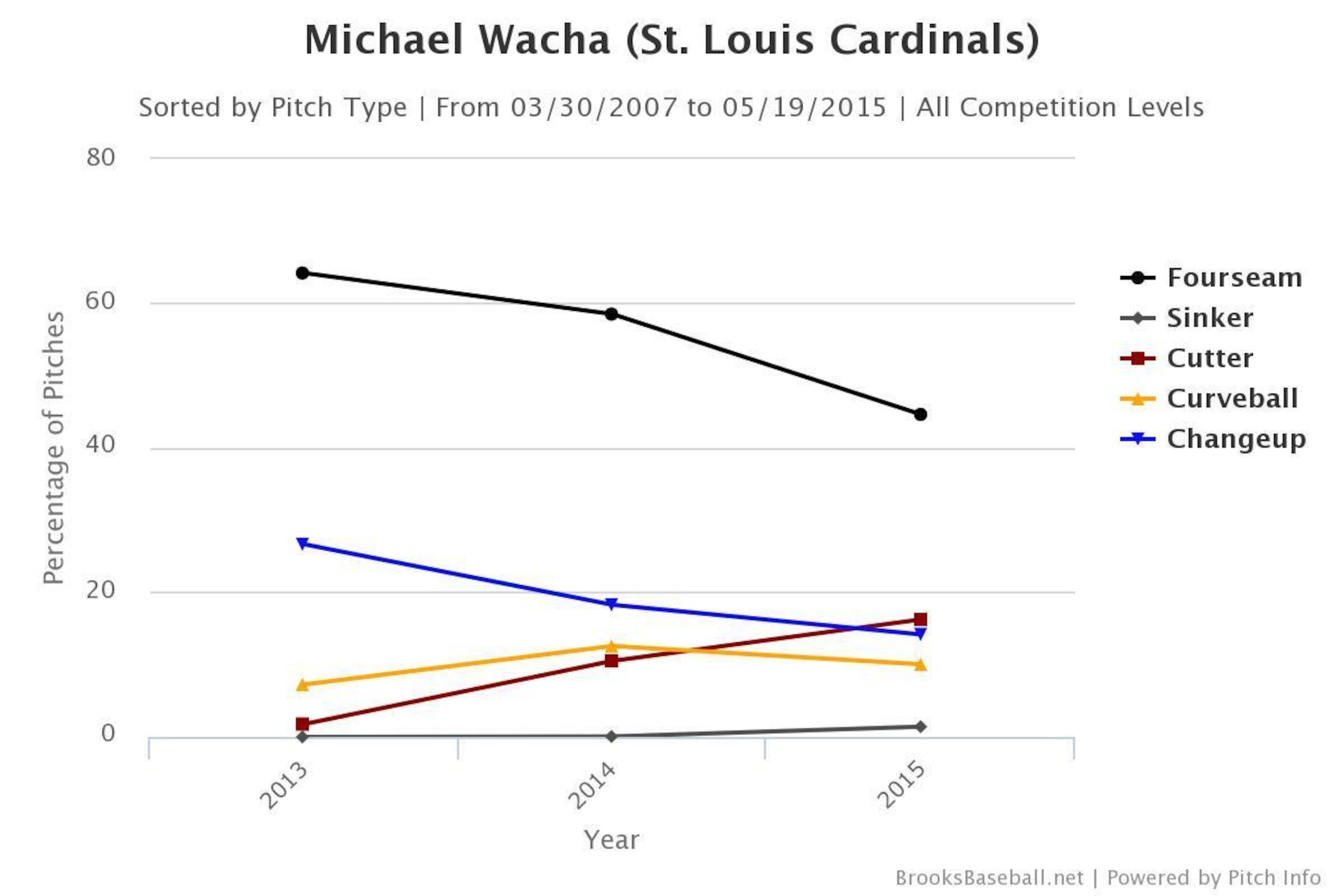
Wacha was indeed a two-pitch pitcher back in 2013, but he's increasingly become a four-pitch pitcher as he's put more trust in his cutter and curveball.
"He's just becoming a more versatile pitcher and that makes him less predictable," said Cardinals skipper Mike Matheny to Jenifer Langosch of MLB.com. "I think that's what takes a young pitcher to the next level."
The value of Wacha putting more trust in his curveball isn't hard to decipher. Along with his changeup, it gives two pitches that are getting ground balls better than 60 percent of the time they're put in play. As nice as it would be if they were getting whiffs, ground balls are also awesome.
But it's Wacha's cutter that's really emerging as his money pitch, as hitters were hitting just .216 against it at the start of play on Tuesday. According to the man himself, this has much to do with how the pitch has similar movement to his changeup but in the opposite direction.
"It keeps something in the back of their head that I might be throwing it," Wacha told Langosch. "I've got confidence in every pitch, and I've had confidence in [my changeup and cutter]. It's just about being able to throw them for strikes and then expanding the zone with those pitches as well. I'm just trying to keep them off balance."
While Wacha's changeup tends to get ground balls, his cutter tends to get soft contact, period. Heading into Tuesday's action, Baseball Savant says batters were hitting it at an average of just 81.8 miles per hour when they put it in play. In a season full of soft contact, his cutter has drawn the softest.
In a way, Wacha has come to resemble the very guy in whose shoes he now stands.
Wainwright has never been a particularly lethal strikeout pitcher, and he became downright mediocre at striking guys out during the 2014 season. But thanks to his own diverse pitch mix, he more than compensated for that by improving his own contact-management skills.
Certainly, Wacha picked a heck of a guy to emulate for the next step of his career. And the longer he keeps it up, the longer the Cardinals won't really be missing their departed ace.
Note: Stats courtesy of Baseball-Reference.com unless otherwise noted/linked.
If you want to talk baseball, hit me up on Twitter.



.jpg?w=2560 "Raiders Could Start Mendoza")



.jpg?w=2560 "Rodgers Iced Out on Plane 💎")

.jpg?w=2560 "🚨 Week 8 AP Top 25 Poll")
.jpg?w=2560 "Packers Safety Slams Refs 🤬")